LA at night gets creepier, fast. This three-hour haunted bus loop pairs paranormal storytelling with iconic stops across Hollywood and Downtown Los Angeles, from the Cecil Hotel to the Black Dahlia sites.
I especially like the way the tour blends true crime with LA history, so the “spooky” parts never feel random. I also like that the narration is handled by a paranormal-focused guide, and people have praised guides like Heather and Jean for keeping it funny, informative, and smooth. One drawback to plan for: traffic can eat into time, and most stops are brief, with more outside views than inside exploration.
In This Review
- Key highlights of this Hollywood and Downtown ghost bus tour
- Why a 3-hour haunted bus ride works in Los Angeles
- Meeting at Formosa Cafe and getting ready for the night
- Hollywood Knickerbocker Apartments: Elvis, Irene Lentz, and Marilyn’s secret meetings
- Downtown starts at El Pueblo de Los Angeles and Ávila Adobe
- Calle Olvera’s La Golondrina and Pico House’s riot-linked past
- Fort Moore Pioneer Memorial and the gold-and-lizard twist
- The Cecil Hotel and Elisa Lam’s story you can’t ignore
- Biltmore Los Angeles and the Black Dahlia mystery
- Golden Gopher’s eerie atmosphere and Formosa’s classic Hollywood ties
- Hollywood Roosevelt, Chaplin’s studios, and the Tower-inspired Hollywood Tower
- How the guide keeps the stories entertaining and usable
- Timing and traffic: the practical downside to know
- Price and value: is $64 for a 3-hour ghost bus tour worth it?
- Who should book this Hollywood and Downtown Los Angeles ghost tour
- Should you book this tour?
- FAQ
- How long is the 3 Hour Ghost Bus Tour?
- How much does the tour cost?
- What time does the tour start?
- Where is the meeting point, and where does the tour end?
- Is there a mobile ticket?
- How large is the group?
- Is the tour suitable if I cannot walk at least 0.5 miles?
- Are alcoholic beverages included?
- What is the cancellation policy?
Key highlights of this Hollywood and Downtown ghost bus tour
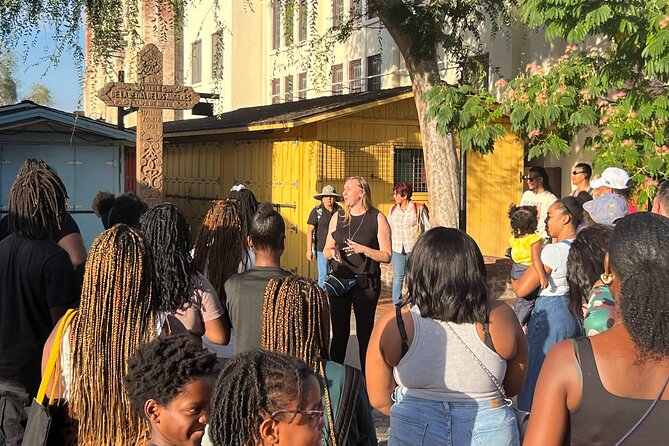
- Comfortable bus for a fast loop between Hollywood and Downtown without driving yourself
- Cecil Hotel + Elisa Lam story spotlight, tied to the hotel’s dark reputation
- Black Dahlia at the Biltmore plus other unsolved-case themes in the narration
- Olvera Street + historical landmarks like El Pueblo de Los Angeles and Ávila Adobe
- A guide-led mix of fact and fiction, with familiar names like Richard Ramirez in the stories
- Short stop rhythm (with a longer break at Golden Gopher) that keeps the pace moving
Why a 3-hour haunted bus ride works in Los Angeles
Los Angeles is big, and at night it can feel even bigger. This tour solves that problem with a timed, guided loop that connects Hollywood and Downtown in one sitting, instead of bouncing between rideshare pickups and parking.
The evening format also changes the feel of the city. You’ll see well-known landmarks under night lighting, and the bus makes it easier to stay with the story instead of constantly hopping in and out to find the next spot.
The group size is capped at 26. That matters because you get the “not too small, not too chaotic” sweet spot for hearing the guide without shouting over a crowd.
Meeting at Formosa Cafe and getting ready for the night
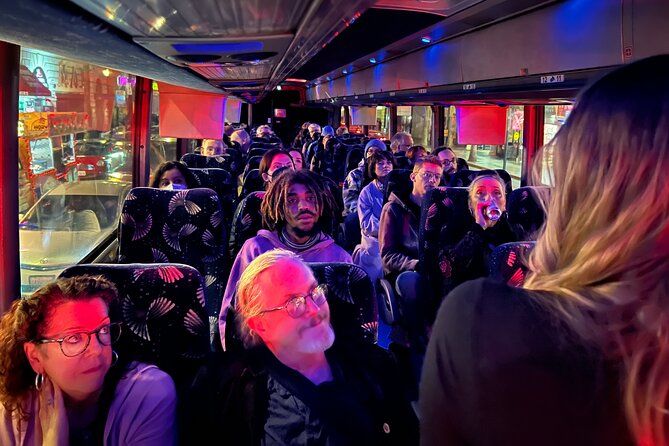
The tour starts at Formosa Cafe on Santa Monica Blvd in West Hollywood, with the ride ending back at the same meeting point. Since the start time is 7:00 pm and the tour runs about three hours, you’ll want to arrive with enough time to park or find the pickup area without rushing.
Good shoes are important here. The tour notes it is not recommended if you can’t walk at least 0.5 miles, so plan for short walks between curbside viewing points and a bit of standing while the guide talks.
Also, this is a bus tour, not a pub crawl. Alcoholic beverages are not included, so if you want a drink, budget time and money outside the tour.
Hollywood Knickerbocker Apartments: Elvis, Irene Lentz, and Marilyn’s secret meetings

One of the most cinematic stops is the Hollywood Knickerbocker Apartments, tied to the Hollywood Knickerbocker Hotel era that opened in 1929. The story stretches across famous names and darker turns, which is exactly why this stop feels so “LA.”
You’ll hear how Elvis Presley stayed there during filming of Love Me Tender in 1956, and you’ll also get the rumor-and-history thread about Marilyn Monroe and Joe DiMaggio slipping there during a secret affair. Then the narrative turns heavy with the case of Irene Lentz, a costume designer who reportedly committed suicide by leaping from her 11th-floor room window.
The best way to use your short time here is to look at the building like a timeline. Try to picture the hotel as it was in the 1920s and 1930s, then listen for the guide’s transitions between glamour and tragedy.
Downtown starts at El Pueblo de Los Angeles and Ávila Adobe
The tour shifts from movie-time Hollywood to the origin story of LA at El Pueblo de Los Angeles. You’ll learn the Spanish forces first saw this area from the sea in the 1700s, and later the Spanish sent 11 families from the Sinaloa region of Mexico to settle here in 1781. It’s a useful reminder that LA’s ghost stories aren’t only 20th-century—some of the roots are much older.
Right after that, you’ll see Ávila Adobe, built in 1818 by Don Francisco Jose Ávila. It’s presented as the oldest residence in the city and sits right on the historic Olvera Street area, so the stop links geography to storytelling in a concrete way.
This is also where the “haunted tour” label feels honest. Even when the spooky angle is debated, the place itself carries layers, and the guide’s job is to connect those layers into one narrative you can actually follow.
Calle Olvera’s La Golondrina and Pico House’s riot-linked past
At Calle Olvera, the tour keeps one foot in folklore and one in real LA landmarks. You’ll hear about the street’s opening date—April 30, 1930—and that it helped bring traditional Mexican flavors to the neighborhood with mariachi bands and dancers.
Then comes the darker bit: the story of a haunting tied to La Golondrina, described as appearing around the upper floors. Since this is a bus tour with short windows, treat this as a story you can hold onto while you look around, not as a “wait for a ghost” situation.
Next, you’ll move to Pico House, with construction beginning in 1869. The building is described as aiming to be the most luxurious hotel west of the Mississippi River, built by Don Pío de Jesús Pico, and it also sits at the site of what’s described here as the bloodiest riot in LA history.
That contrast—luxury and violence—sets up a key theme for the whole ride. LA glamour and LA harm often share the same streets.
Fort Moore Pioneer Memorial and the gold-and-lizard twist
At Fort Moore Pioneer Memorial, the guide gives you something that feels different from hotel horror: a large military memorial with a very specific origin story. The bas-relief memorial is described as the largest of its kind in the US, honoring groups including the Mormon Battalion, the U.S. 1st Dragoons, and the New York Volunteers, and it’s tied to raising the American flag on July 4, 1847.
Then the narration takes a sharp left. Under the hill, the story claims a geological engineer later believed he could find gold and also uncover an ancient race of lizard people. Whether you treat it as legend or rumor, it fits the tour’s style: it keeps LA’s past feeling strange in the best way.
If you’re the type who likes to see how a guide connects “official history” to “campfire stories,” this stop is a good bet.
The Cecil Hotel and Elisa Lam’s story you can’t ignore
The Cecil Hotel is widely linked here with unexplained accidents, deaths, murders, and suicides, and it’s easy to see why it’s a main attraction on a ghost bus route. Even if you’re not focused on hauntings, the story theme is clear: people associate the Cecil with a cluster of high-profile tragedies.
The biggest named case in the tour description is Elisa Lam. Her body was reportedly found in the hotel’s water tank two weeks after her planned checkout, and that detail is one of the reasons her name shows up again and again in true-crime conversations.
This is also a good stop for remembering the tour’s promised approach: the guide is framed as separating fact from fiction in famous stories. That matters because these are real-world events, and the goal should be careful storytelling, not sensational guessing.
Biltmore Los Angeles and the Black Dahlia mystery
At the Biltmore Los Angeles, the narration focuses on a troubled past and unresolved darkness. The tour description points directly to Elizabeth Short, known as the Black Dahlia, and her unsolved murder from 1947.
This stop is built for listeners who like true crime. You’ll hear how she headed out for an evening at the Biltmore in 1947 and was discovered the next morning in a field outside town, with the case remaining unsolved.
What makes this stop valuable is the emotional pacing. The tour doesn’t just say “it’s haunted.” It gives you a reason the story sticks in people’s minds, which is the difference between a theme park scare and a real place you can’t forget.
Golden Gopher’s eerie atmosphere and Formosa’s classic Hollywood ties
Downtown LA gets a more casual moment at Golden Gopher, where the tour pauses for 30 minutes, longer than most other stops. The story here is that the place dates to 1905 and was among early post-Prohibition liquor license holders in Los Angeles.
The narration adds the “spooky” side with reports tied to the atmosphere: unexplained noises, sudden cold drafts, and the feeling of being watched. Even if you don’t buy ghosts, this kind of description works because it’s grounded in what people experience on-site.
Then the tour hits Formosa Cafe again as part of the ride’s story chain. You’ll hear it was founded in 1925 by prize-fighter Jimmy Bernstein, and you’ll also hear that the Samuel Goldwyn movie studio was opposite the cafe. Famous names tied to the cafe include James Dean, Clark Gable, and Humphrey Bogart.
This is a practical benefit for you if you’re a fan of old Hollywood. Formosa helps you connect movie-era LA to modern walking zones, without needing a lot of museum time.
Hollywood Roosevelt, Chaplin’s studios, and the Tower-inspired Hollywood Tower
The Hollywood Roosevelt stop brings big-name Hollywood back into the mix. The tour ties the hotel to its builders, including Louis B. Meyer, Sid Grauman, Douglas Fairbanks, and Mary Pickford, and it notes how early Academy Awards ran about 15 minutes and took place here. That’s a neat angle because it explains why the building feels like it belongs to film history, not just architectural nostalgia.
For the haunting stories, you’ll hear about the apparently empty swimming pool with guests splashing, the rooftop training story involving Babe Ruth, and a ghostly reflection of Marilyn Monroe in her own bedroom mirror. Again, keep expectations realistic: you’re getting stories with a strong mood, not proof.
Next up is the Jim Henson Company / Chaplin Studios area. The tour description notes the land was once a lemon grove and that Charlie Chaplin bought it early in Hollywood’s rise. The point for modern visitors is the Kermit the Frog detail on the studio tower dressed in Chaplin’s famously ill-fitting suit, which connects eras in a single glance.
Finally, Hollywood Tower Apartments rounds out the ride with a theme of organized crime and thrill-ride energy. The tower’s reputation is presented through gangster stories, mafia connections, and murder-for-hire ideas, and it’s also described as the inspiration behind Disney’s Tower of Terror.
This trio of stops is where the tour feels most like LA pop culture history plus ghost lore in one package.
How the guide keeps the stories entertaining and usable
A good ghost tour does two things: it gives you mood and it gives you structure. This one is framed around an expert in paranormal experiences, and that structure shows up in how the stories are delivered.
The tour description promises a mix of famous sightings and unexplained events, but it also promises that the guide helps you separate fact from fiction in well-known cases. Names included in the framing include Richard Ramirez, the Night Stalker, the Hillside Strangler, and the Black Dahlia.
In real-world terms, that means you’re less likely to walk away with a blur of “spooky stuff.” Instead, you get story categories—hotel tragedies, true crime cases, and landmark myths—so you can remember what you heard and decide what to research later.
The guides also seem to land in the right tone. People have praised Heather and Jean specifically for a mix of funny and spooky, plus clear explanations while you’re driving between stops. That matters because a bus tour lives or dies on narration quality.
Timing and traffic: the practical downside to know
One issue to take seriously: traffic. If the route runs into slowdowns, you can end up losing minutes that might have gone to longer looks at places. There’s also a known rhythm problem with short stops late in the tour—people can get drowsy as the narration continues.
So plan for energy management. Eat beforehand, bring a layer (vehicles can cool down fast), and avoid scheduling anything tight right after the tour ends. Golden Gopher gets 30 minutes, which can help break the rhythm, but most other stops are 10–15 minutes.
Also, you should set your expectation that this is not a “go inside haunted buildings for hours” format. One critique that makes sense is the wish for more interior time. With a bus tour, the tradeoff is coverage: you see more landmarks, but you don’t linger inside.
Price and value: is $64 for a 3-hour ghost bus tour worth it?
At $64 per person for about three hours, you’re paying roughly $21 per hour (based on the approximate duration). That’s not cheap, but it’s not just for a scary story either.
You’re getting:
- A comfortable bus ride tying together Hollywood and Downtown
- A professionally guided route focused on haunted legends and true-crime themes
- Multiple major stops, including the Cecil Hotel and Biltmore area stories
- Free admission noted for many of the stops listed for the ride
The value improves if you’re coming from outside LA or if you don’t want the stress of coordinating your own driving and parking across neighborhoods at night. If you want a guided “LA at night” overview that focuses on famous dark stories, this price can make sense.
The cost doesn’t include alcoholic beverages, so if you expect drinks to be part of the fun, you’ll need to plan that separately.
Who should book this Hollywood and Downtown Los Angeles ghost tour
This tour is a strong match if you like:
- True crime names and unsolved mysteries tied to LA places
- A guided bus loop that covers a lot in a short time
- Nighttime storytelling with a humorous tone
- LA film-era locations and architecture you can spot from the street
It’s less ideal if you want extended time inside buildings or if you’re sensitive to slow city traffic. Also, the walking note means you should only book if you can comfortably handle the amount of walking required around stops.
If you’re traveling solo, this format is often easier than a self-guided route. If you’re traveling with friends who argue over whether LA is “too spooky” or “too historical,” this tour gives them both angles.
Should you book this tour?
I think it’s worth booking if you want one guided evening that hits major haunted and true-crime LA touchstones without you building a driving plan. The combination of the Cecil Hotel story, the Black Dahlia focus, and the historical stops around Olvera Street makes the tour feel like more than just jump-scare folklore.
Skip it if your top priority is lots of inside access, because the stop times are brief and the schedule depends on traffic. And if walking is an issue, don’t force it—this one isn’t built for minimal-movement sightseeing.
If you like your LA night with a story in your ear and a comfortable seat under you, this ghost bus loop is a solid pick.
FAQ
How long is the 3 Hour Ghost Bus Tour?
It runs for approximately 3 hours.
How much does the tour cost?
The price is $64.00 per person.
What time does the tour start?
The start time is 7:00 pm.
Where is the meeting point, and where does the tour end?
The meeting point is Formosa Cafe, 7156 Santa Monica Blvd, West Hollywood, CA 90046, USA. The tour ends back at the same meeting point.
Is there a mobile ticket?
Yes, the tour uses a mobile ticket.
How large is the group?
The maximum group size is 26 travelers.
Is the tour suitable if I cannot walk at least 0.5 miles?
The tour is not recommended for travelers who cannot walk at least 0.5 miles.
Are alcoholic beverages included?
No, alcoholic beverages are not included.
What is the cancellation policy?
You can cancel for a full refund if you cancel up to 24 hours in advance of the experience’s start time.