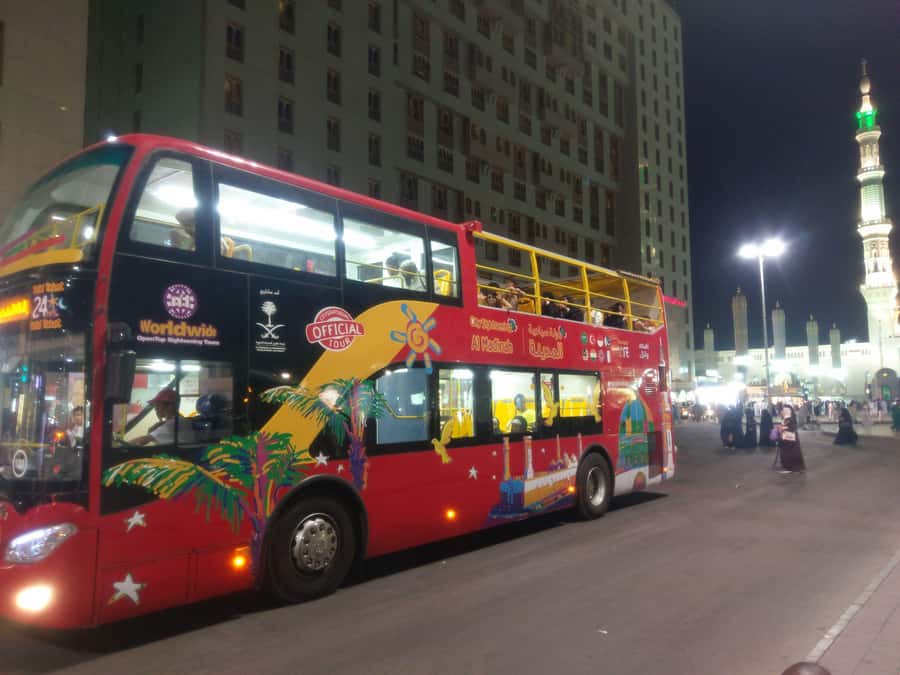
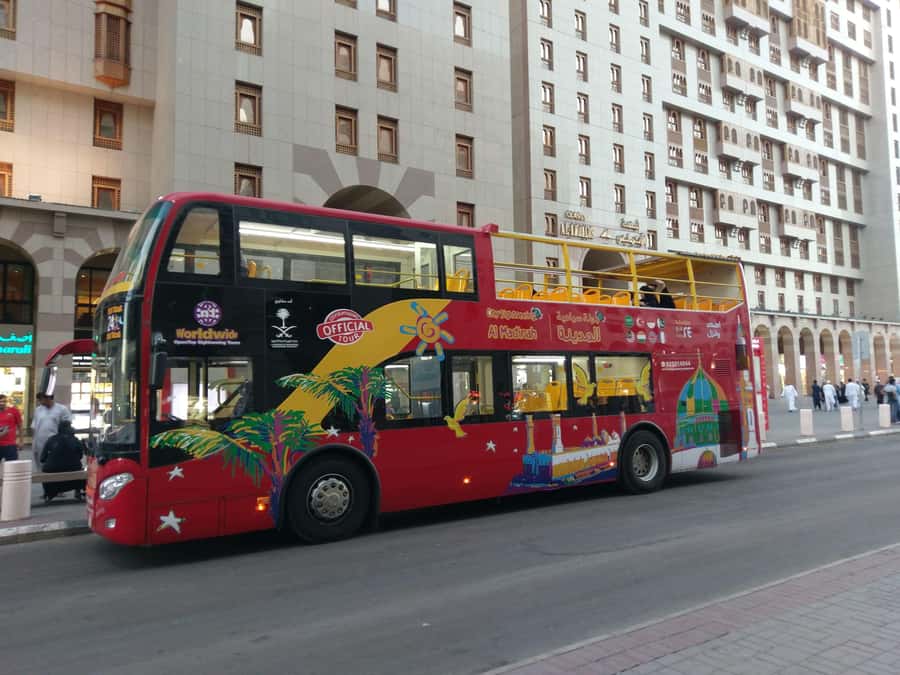
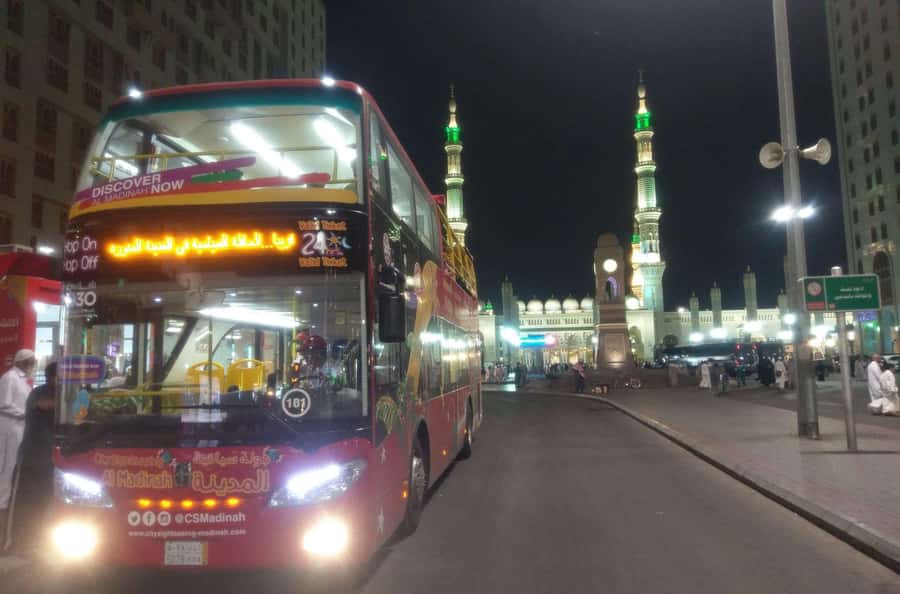
Two routes, twelve stops, and you control the pace. This Al Madinah open-top hop-on hop-off tour strings together the big-name sights across two loop routes, so you can spend more time where you care most.
I especially like the open-top double-decker rides for getting easy sightlines through town. I also like the 16-language audio commentary (with headphones) that helps you make sense of what you’re seeing as you roll between sites.
One key consideration: stop 11 (Hijaz Railway Museum) is currently inaccessible due to construction, and you won’t be able to enter the museum itself.
In This Review
- Key things that make this tour work
- How the 24-Hour Hop-On Hop-Off Ticket Works
- Where you board
- What’s included vs. not included
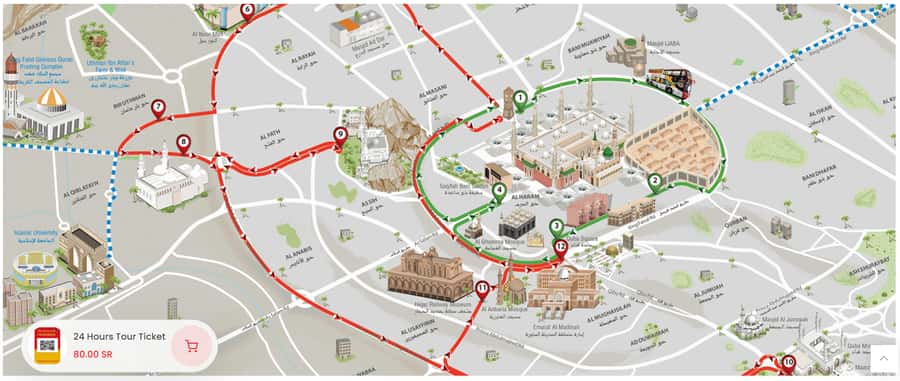
- Green Route: Al Masjid an Nabawi, Al Baqi’, and Al Salam Gate
- Stop 1: Al Masjid an Nabawi
- Stop 2: Al Baqi’
- Stop 3: Al Manakha Square
- Stop 4: Al Salam Gate
- How to use the Green Route best
- Red Route: Uhud Battlefield, the Trench, and Quba Mosque
- Stop 5: Uhud Battlefield
- Stop 6: Al Noor Mall
- Stop 7: Abu Bakr, Al Saddiq Road, Sultanah
- Stop 8: Al Qiblatain Mosque
- Stop 9: The Trench Battlefield
- Stop 10: Quba Mosque
- Stop 11: Al Hijaz Railway Station (Hijaz Railway Museum access unavailable)
- Stop 12: Quba Square
- How to use the Red Route best
- On-Board Commentary, Headphones, and Open-Top Views
- Why the open-top matters
- Al-Noor Mall and the Smart Break in the Middle of Your Day
- Price and Value: Is $22 a Good Deal for Al Madinah?
- Practical Details: What to Bring and How to Plan Your Day
- A simple way to plan your route
- Should You Book This Hop-On Hop-Off Bus Tour?
- FAQ
- How long does the Al Madinah hop-on hop-off bus tour last?
- How often do the buses run?
- Where can I start the tour?
- Are audio headphones included?
- Is Wi-Fi available on the bus?
- Is entry to attractions included in the price?
- What are the AM and PM tour shifts?
- Is every stop on the route currently accessible?
Key things that make this tour work
- 24-hour ticket + hop on/off: You’re not locked into one rigid order.
- Two routes with 12 stops: Green Route and Red Route cover the core highlights.
- Audio in 16 languages: You get guided context without needing a separate guide.
- Open-top views: Great for seeing the Prophet’s Mosque area from above as you travel.
- Buses every 30 minutes: Practical waiting time if you want longer at a stop.
- Note on stop 11: Hijaz Railway Museum is shut for construction right now.
How the 24-Hour Hop-On Hop-Off Ticket Works
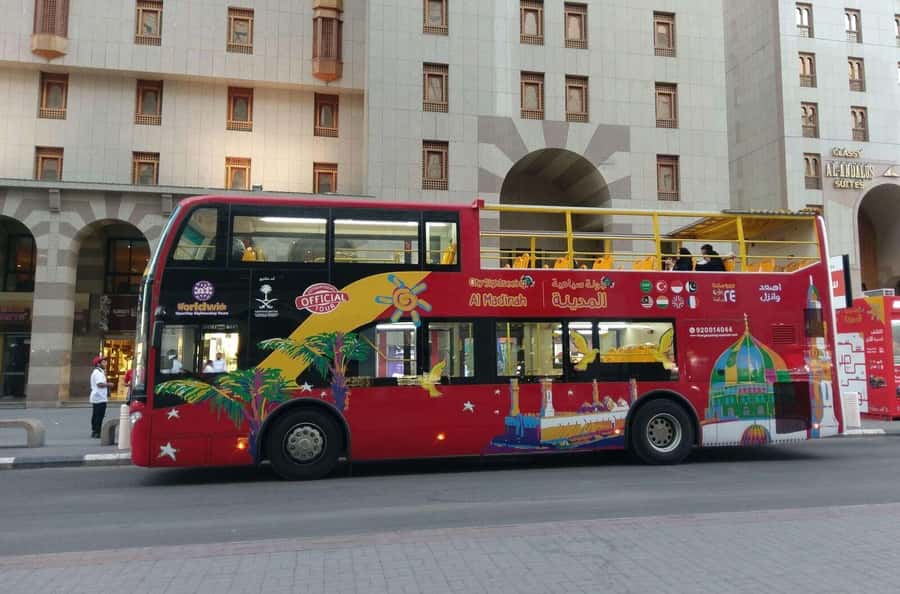
This is a 1-day ticket with a 24-hour hop-on hop-off setup. In plain terms: buses run on two routes, and you can get on at the start or at any listed stop, ride to the next point, then step off to explore and hop back on later.
Each route runs about 60 minutes end-to-end, so you get an easy rhythm: ride a loop, pause at the places you want, then catch the next bus back on. Buses run every 30 minutes, which is frequent enough that you’re usually not stuck wondering when the next one will show up.
You also get two operating windows, split into shifts:
- AM shift: 6am to 1pm
- PM shift: 4pm to 12am
That matters in Al Madinah. If you’re planning around prayer times, cooler morning hours, or an evening break, this schedule gives you flexibility. If you want to do a lot in one day, I’d aim to start on the Green Route early and then switch to the Red Route later (or the other way around), based on where you want the most time.
Where you board
You can hop on at any stop, but the tour’s first stops are:
- Green Route: Al Masjid an Nabawi
- Red Route: Uhud Battlefield
What’s included vs. not included
Included:
- 12 hop-on hop-off stops across both routes
- Audio commentary in 16 languages, with headphones
- Wi-Fi onboard
Not included:
- Entry to sights
- Food and drink
So think of this bus as transportation + narration. For anything that requires a paid ticket or timed entry, you’ll need to arrange that separately.
Green Route: Al Masjid an Nabawi, Al Baqi’, and Al Salam Gate
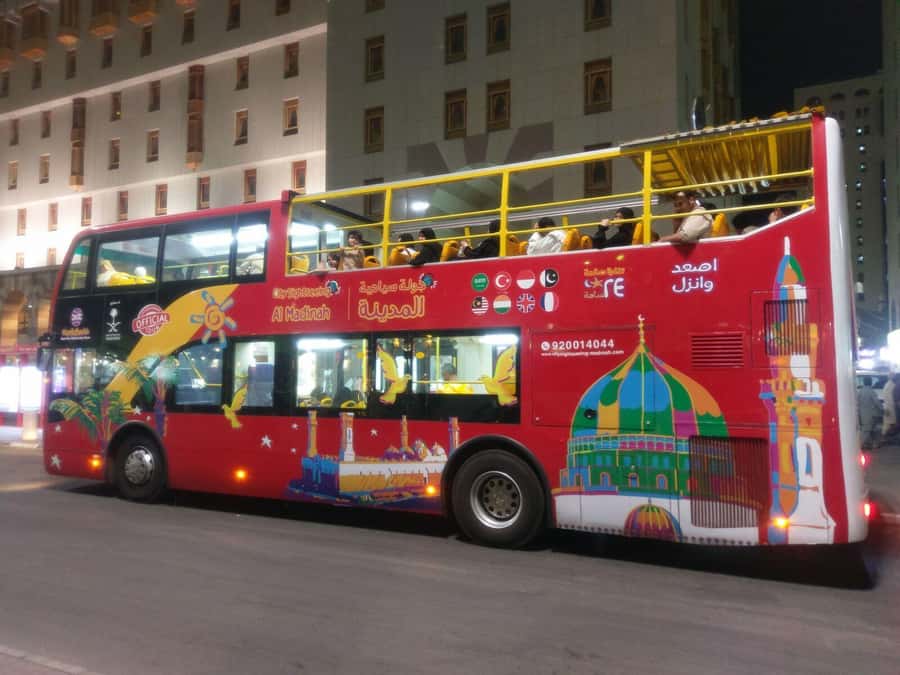
The Green Route is your starting point for the most iconic Al Madinah atmosphere. It’s designed to get you oriented fast, with stops that connect religious landmarks and historical context.
Stop 1: Al Masjid an Nabawi
This is the big anchor of the whole Green Route and the first stop for boarding. The tour is built for quick orientation here, especially because you can watch the area change as the bus approaches, then get off to spend time around the Prophet’s Mosque. The audio guide helps you understand what you’re seeing, and the open-top layout gives you a different view angle than being on foot.
Practical tip: if you plan to do this stop for longer, consider doing it earlier in the shift so you’re not rushing later.
Stop 2: Al Baqi’
Al Baqi’ is listed as a significant cemetery connected to the Prophet Muhammad’s relatives and companions. Even if you don’t have time for a long visit, this is the kind of stop where narration and context matter. The audio commentary is useful here because it frames why this place is important before you ever step out.
Consideration: a cemetery setting can feel quiet and reflective, so plan your timing accordingly and keep the day calm.
Stop 3: Al Manakha Square
This stop is more of a “get your bearings” point. The tour description doesn’t go into specific attractions here, but it’s still valuable: squares are often the easiest places to walk briefly, reposition, and gauge what you want next.
Stop 4: Al Salam Gate
Another quick orientation stop. Gates are also good for seeing how the city flows around major religious areas. If you prefer short breaks between heavier stops (like the mosque and cemetery), this is a solid place to step off, look around, and then continue.
How to use the Green Route best
If you’re trying to cover a lot without feeling frantic, treat the Green Route like your “core introduction.” Do Al Masjid an Nabawi first, then choose whether you want a deeper stop at Al Baqi’ or a lighter stop at Al Manakha Square and Al Salam Gate.
Because the route is about 60 minutes total, you can also do a quick loop first, then ride again later if something pulls you in.
Red Route: Uhud Battlefield, the Trench, and Quba Mosque
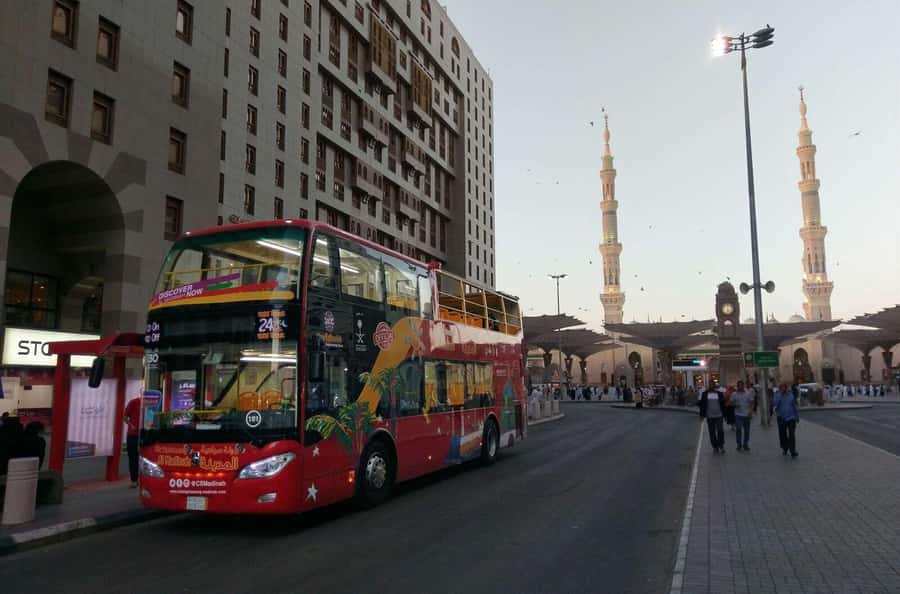
The Red Route shifts the focus toward major Islamic battle sites and other landmark stops. If your trip has room for history you can almost feel in the ground, this is the part that gives you that sense of place.
Stop 5: Uhud Battlefield
Uhud Battlefield is one of the key historic locations on the route. The tour description directly ties it to major wars involving the Muslim army. From the bus, you get context while the narration runs, then you can decide whether you want a short stop or longer time on foot.
Timing tip: if you want photos, plan your stop when light looks best to you, since you’ll be balancing views with walking.
Stop 6: Al Noor Mall
This is your built-in break from religious and battlefield sites. Al Noor Mall is described as a place to shop, and it’s a smart mid-route reset. If your day includes multiple stops that are emotionally intense or physically demanding, the mall stop is practical: you can eat something and breathe, then rejoin the bus.
Note: the tour doesn’t include food and drink, so you’ll be paying here if you grab a meal or snack.
Stop 7: Abu Bakr, Al Saddiq Road, Sultanah
This stop is named like a key road area. Think of it as a corridor stop that helps you connect locations without relying on taxi rides. Even if there’s no single “headline attraction” named in the tour description, road-side stops can be useful if you want to explore nearby streets briefly.
Stop 8: Al Qiblatain Mosque
This mosque stop is one of the major religious landmarks on the Red Route. The audio guide gives background while you move through the area, helping you understand why it’s a named stop on the route rather than a random pass-by.
Stop 9: The Trench Battlefield
The Trench Battlefield is listed as another well-known battlefield, tied to major Muslim army wars. If you liked Uhud, you’ll likely appreciate this one as the second major historical anchor of the Red Route.
Practical consideration: battlefield sites can vary in how much walking is required once you get off. Since you’re doing hop-on hop-off, plan to wear comfortable shoes.
Stop 10: Quba Mosque
Quba Mosque is on the Red Route and is one of the classic mosque stops. The bus route gives you quick access so you can fit it into your day without planning a separate transfer.
Stop 11: Al Hijaz Railway Station (Hijaz Railway Museum access unavailable)
This is important: stop 11 is currently inaccessible due to construction work, and there is no access to the museum itself. So if you were hoping for the Hijaz Railway Museum, don’t base your day on it.
Still, you may use this stop as a pass-through point. Just keep your expectations realistic.
Stop 12: Quba Square
The final stop rounds out the Red Route. Squares are convenient because they’re often easy places to step away from the bus and orient yourself for onward plans.
How to use the Red Route best
I’d treat the Red Route as your “history + reset” loop. Start with Uhud Battlefield, then decide if you want the mall break next, and finish with the mosque and square area. If you only have time for one deeper segment, the combination of Uhud + the Trench is the most specifically labeled battle-history experience on the tour.
On-Board Commentary, Headphones, and Open-Top Views
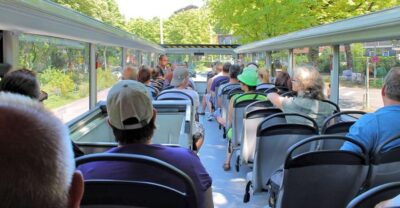
This bus tour is built to reduce confusion. You get on-board commentary in 16 languages, and headphones are included. That means you can keep moving while still learning—no need to stop every time you want context.
You also get Wi-Fi onboard, which can be handy if you’re checking maps, translating a few words, or confirming prayer times for your personal schedule.
Why the open-top matters
Open-top buses sound like a small detail until you’re there. From street level, cities can feel dense and visually repetitive. From above, you see the shape of districts and the way the major areas connect. The tour description explicitly highlights admiring the Prophet’s Mosque architecture from the top on the Green Route, which is exactly the kind of view you’ll get only from a bus like this.
Practical note: open-top means you may feel sun or breeze. Plan for weather comfort.
Al-Noor Mall and the Smart Break in the Middle of Your Day
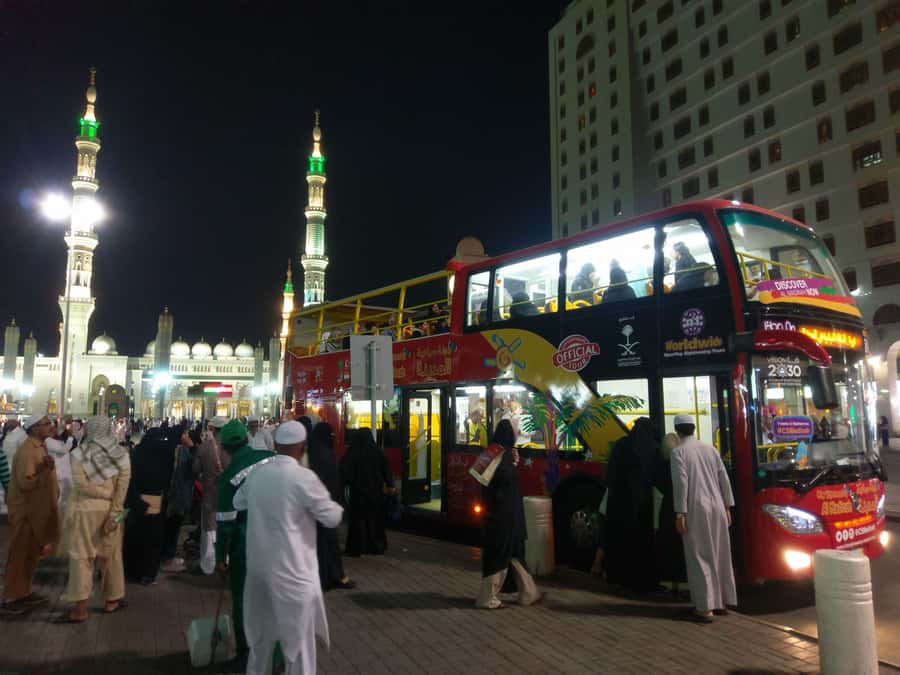
One of the smartest parts of this itinerary is the inclusion of Al Noor Mall on the Red Route. Not every hop-on hop-off bus gives you a real chance to step away from sightseeing and do something practical.
If your day includes several religious sites and battlefields, the mall stop can help you avoid the common problem of sightseeing fatigue. Use it for:
- a restroom break
- a quiet sit-down
- browsing if you want something simple to do
- any snack or meal you didn’t bring
And then you’re back on the bus—no extra transportation planning needed.
Price and Value: Is $22 a Good Deal for Al Madinah?
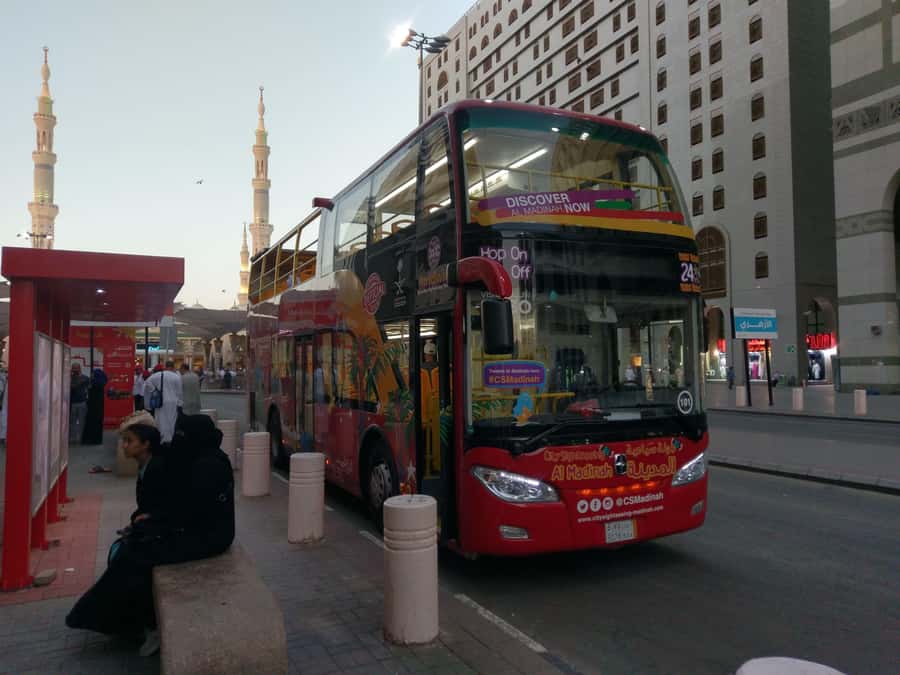
At $22 per person, the value comes from how much you get packaged into one ticket:
- 24-hour hop-on hop-off use
- two routes that cover 12 stops
- audio commentary in 16 languages
- headphones and Wi-Fi
If you compare this to doing multiple taxis or private transfers between far-apart sites, the bus can be a cost-saving way to build a full day without constant re-planning.
But there are two value cautions:
- Entry fees are not included, so any sights that require paid admission can add cost.
- Stop 11 is currently unavailable, so you’re not getting the Hijaz Railway Museum portion right now. If that museum is the reason you booked, you’ll need a Plan B.
Overall, this is best viewed as practical transportation plus guided context for a day of major highlights. If you want one easy, structured way to see more than just the closest neighborhood, it’s a solid buy.
Practical Details: What to Bring and How to Plan Your Day
Bring:
- Passport or ID card
Not allowed:
- Pets
- Smoking
Tour provider details also flag some helpful planning points:
- Vouchers can be used on any day within 12 months of your selected travel date at checkout.
- Both mobile and printed paper vouchers are accepted, and you can redeem at any of the route stops.
And because the tour runs in two shifts, it’s smart to decide whether you want more of the day in the AM window or spread sightseeing between the early and late hours.
A simple way to plan your route
If it helps, use this rough strategy:
- Morning: Green Route for the Prophet’s Mosque area and Al Baqi’
- Evening: Red Route for Uhud Battlefield, the Trench, then Quba Mosque and the square
- Mall stop: slot it in wherever your energy needs a reset
No perfect formula. The hop-on/off structure is the point—you can flex.
Should You Book This Hop-On Hop-Off Bus Tour?
Book it if you want:
- a low-stress way to connect major Al Madinah sights
- guided audio in your preferred language
- open-top views for the Prophet’s Mosque area
- a full day plan that you can adjust stop-by-stop
Skip it or reconsider if:
- the Hijaz Railway Museum (stop 11) is a must-see for you, since it’s currently inaccessible
- you already have your own transport and prefer a tightly scheduled itinerary with specific entry times
If your goal is to get your bearings fast and see the key religious and battlefield stops without constant logistics, this is one of the more practical ways to do it.
FAQ
How long does the Al Madinah hop-on hop-off bus tour last?
The ticket is for 1 day, and each route (Green or Red) is about 60 minutes from start to finish.
How often do the buses run?
The buses run every 30 minutes.
Where can I start the tour?
You can hop on at any stop, but the first stop on the Green Route is Al Masjid an Nabawi and the first stop on the Red Route is Uhud Battlefield.
Are audio headphones included?
Yes. Audio commentary is included in 16 languages, and headphones are provided.
Is Wi-Fi available on the bus?
Yes, there is Wi-Fi onboard.
Is entry to attractions included in the price?
No. Entry to sights is not included.
What are the AM and PM tour shifts?
The AM shift runs 6am to 1pm, and the PM shift runs 4pm to 12am.
Is every stop on the route currently accessible?
No. Stop 11 (Al Hijaz Railway Station / Hijaz Railway Museum) is currently inaccessible due to construction work, and there is no access to the museum itself.