
Athens is a city that rewards slow looking. This hop-on, hop-off bus gives you open-top panoramic views and a simple way to hit the big stops, from Syntagma Square to the Acropolis area. I also like the 14-language audio commentary and the fact you can start at multiple stops, so you are not stuck sprinting to one exact corner.
One thing to plan around: the headphone experience can be hit-or-miss because the bus has background audio, and one note from a rider says it can drown out the narration. If you are sensitive to that, keep your volume up and be ready to adjust.
In This Review
- Key things to know before you board
- Getting oriented fast: where to board the Big Bus in Athens
- The Red Route (Athens): Acropolis, Plaka, and the classic center of town
- Syntagma Square to Plaka: starting with the city’s rhythm
- New Acropolis Museum and the Acropolis approach
- Temple of Olympian Zeus and Parliament: two stops that shape the skyline
- Museums and stadiums: where Athens shows different sides
- The Purple Route (Piraeus): cruise-terminal convenience plus maritime mood
- Cruise terminals first, then the waterfront zone
- Cultural stops and a scenic break from monuments
- Piraeus to Athens: use transfers at the Acropolis intersection
- The Green Route (Athens Riviera): coastline views, plus why it can disappoint
- What you’ll see on the coast: marinas and beach stops
- A practical note about how to enjoy it
- Open-top bus strategy: how to ride smarter and hop off at the right moments
- Sit upstairs for the views, but be ready for sun
- Start with a full loop, then hop
- Plan around traffic, not just bus schedules
- Audio commentary and the 14-language headphones: good value, one tweak
- Price and value: what $23.71 buys you (and what it doesn’t)
- What each stop is really good for (and what you might skip)
- On the Red Route, prioritize these
- On the Purple Route, hop for the port mood
- On the Green Route, pick your stop based on your walking stamina
- Who this Athens bus tour fits best
- So, should you book it?
- FAQ
- How long is the tour valid?
- Where can I board the bus?
- Do the routes connect so I can transfer?
- Is hotel pick-up included?
- Is audio commentary included, and what languages are available?
- Is the tour wheelchair accessible?
Key things to know before you board
- Unlimited hop-on, hop-off for 48 or 72 hours, so you can pace your day instead of forcing one perfect route
- Three connected routes (Athens/Red, Piraeus/Purple, Riviera/Green) that all intersect near the Acropolis for easy transfers
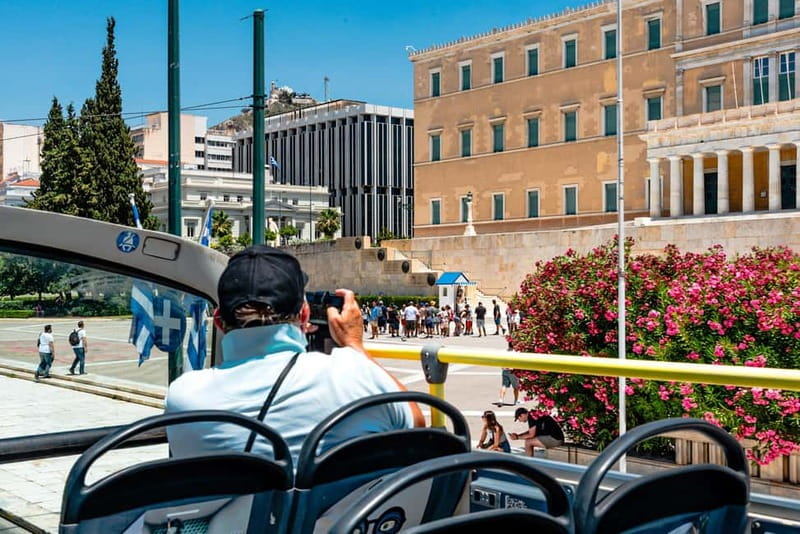
- Open-top double-decker buses for the views, especially when you sit upstairs
- More than 40 stop points across Athens, Piraeus, and the coast, which makes “just one more hop” easy
- Free Big Bus app for live tracking and service updates, a big help in a city with traffic
Getting oriented fast: where to board the Big Bus in Athens

The smartest part of this system is how flexible it feels. You can start from any Big Bus stop along the routes, not just one official departure point. That means you can build your day around where you’re staying or where you’re already standing.
If you want an easy starting point, Big Bus staff are placed at several recommended stops. The most convenient for first-timers are often:
- Syntagma Square (Stop 1), at Ermou Street by the Nike Store
- Plaka & South Entrance Acropolis (Stop 2), by Dionysios Areopagitou Street
- Temple of Zeus (Stop 5), by the main avenue near the temple entrance
- Parliament (Stop 6), right along the Vasilisis Amalias Avenue frontage
For cruise passengers, you can join from the port terminals: Cruise Terminal A (Stop 19) or Terminals B & C (Stop 20). This saves a lot of time when your ship schedule is tight, because you’re meeting the bus right where you are already docked.
Practical tip: use the Big Bus app before you start walking. It helps you catch the next bus without guessing, and it also gives service updates if something changes.
The Red Route (Athens): Acropolis, Plaka, and the classic center of town
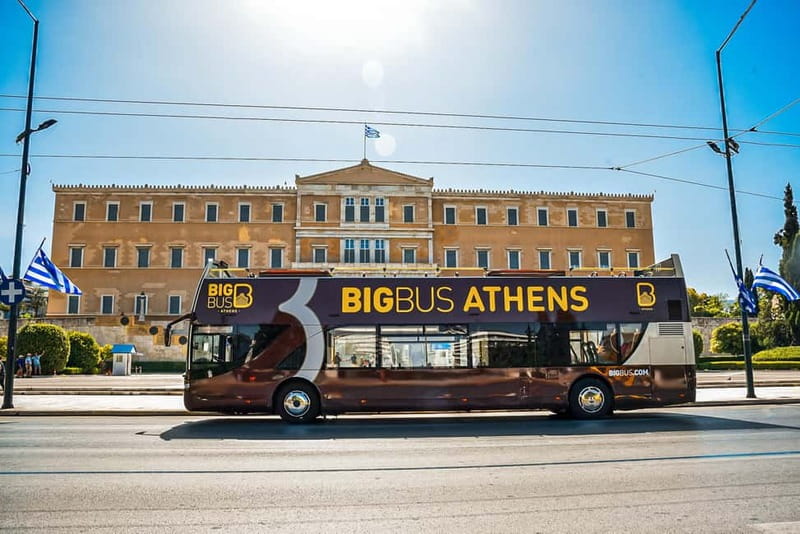
If you only do one route, do the Athens Red Route. It’s the backbone: the one that gets you closest to the key landmarks most people picture when they think of Athens.
Syntagma Square to Plaka: starting with the city’s rhythm
The Red Route begins at Syntagma Square, a good place to orient yourself. From here, the bus heads toward Plaka & the South Entrance Acropolis and then through the Acropolis museum area. The big win is perspective: you get the layout of how the old neighborhoods and the major monuments connect, and you can decide what’s worth hopping off for immediately.
New Acropolis Museum and the Acropolis approach
You’ll pass the New Acropolis Museum—handy if you want a museum break before the outdoor sites. Even if you don’t get off, the route helps you time your day, because you’ll see where the museum sits relative to the monument area.
Then comes the main event: Acropolis. This is where hop-on hop-off becomes more than convenience. If you have limited time, you can get off for a focused visit, then get back on when you’re ready to move on, instead of committing to a full walk across steep, busy areas.
Temple of Olympian Zeus and Parliament: two stops that shape the skyline
The route continues past the Temple of Zeus and toward the Parliament area. Temple of Zeus is huge and dramatic, and the bus viewpoint helps you gauge scale. It’s also a good moment to take a breather on the top deck, since you’ve already handled the hardest walking choices earlier.
Museums and stadiums: where Athens shows different sides
Between the iconic monuments, the Red Route includes stops like Benaki Museum, Panathenaic Stadium, and National Archaeological Museum. These add variety if you like art and artifacts, not only ancient ruins. Even if you skip the museum doors, the bus ride gives you a quick map of where those places are and what direction they sit in.
The route also touches Monastiraki Square, Kotzia Square (City Hall), and Omonia Square. These are useful for two reasons: they can act as convenient “reset” points when you want food, snacks, or simply a less intense stroll.
Small caution: Athens traffic can stretch routes. One rider note said you should allow plenty of time because traffic can slow buses. That’s not a dealbreaker, but it does mean you shouldn’t build your day around a single fixed minute.
The Purple Route (Piraeus): cruise-terminal convenience plus maritime mood
If you’re visiting Athens on a cruise or you want a break from the ancient core, the Piraeus Purple Route is a strong second day. It connects the cruise area with a more local, port-forward feel.
Cruise terminals first, then the waterfront zone
The route starts around the cruise terminal area (you’ll see Cruise Terminal A and Cruinals B & C). That’s a major value point: you can get sightseeing done without spending extra time figuring out transit from the port.
From there, you’ll ride past Pasalimani, Mikrolimano, and toward the hotel/venue cluster. The area around the water has a different rhythm than central Athens—more open views, more boats, and a calmer sense of place.
Cultural stops and a scenic break from monuments
The Purple Route also includes Stavros Niarchos Cultural Center and the Municipal Theatre, plus stops like Stavros Niarchos Cultural Center and Municipal Theatre near each other. These are great for a change of pace if you already feel a bit “monumented out.”
You’ll also see the Athens Marriott / Intercontinental / Intercontinental & Grand Hyatt (to Acropolis) hotel cluster. Even when you don’t get off, the bus ride helps you spot where modern Athens runs beside the older lanes.
Piraeus to Athens: use transfers at the Acropolis intersection
This is where the whole system shines. The routes intersect at the Acropolis area, so you can move between Red and Purple without starting over. If you want to do a morning in Piraeus and an afternoon on the Acropolis, you can set it up as a simple swap.
One rider also noted a mismatch where the bus didn’t go as far in Piraeus as stated in the guide. Their fix was practical: get off at the next stop and walk around the bay, then catch the bus again at a different stop. The lesson for you: if you’re chasing a specific spot, use the app and be ready to walk one short section if the bus stops short.
The Green Route (Athens Riviera): coastline views, plus why it can disappoint

The Green Route is the one that feels different in motion. Instead of monuments, it’s about the coast—marinas, beaches, and the long line of seaside towns.
It’s also a little more “hit or miss” depending on timing and how much you want beach scenery versus cultural stops. One rating summary noted the Riviera line felt disappointing because there wasn’t much to see at the time, and suggested it could be better when construction is done. That’s not unusual on coast routes: views can be great, but the experience can be affected by what’s open, what’s under work, and how far you can walk from stops.
What you’ll see on the coast: marinas and beach stops
The route includes Flisvos Marina, Alimos Marina, Ag. Kosmas Beach, Glyfada area stops including multiple marinas, and beach stops like Kavouri Beach and Astir Beach. It also passes Vouliagmeni Lake, which is a notable natural stop in the route list.
If your goal is to get perspective from the bus and pick out beach neighborhoods to explore later, this route is useful. If your goal is a packed schedule of major landmarks at every stop, it might feel lighter than the Athens and Piraeus routes.
A practical note about how to enjoy it
Try to schedule the Riviera for a time when you can actually walk a bit and when light is on your side. The open-top deck matters here because the value is partly the long-distance views from moving down the coast.
Also, remember the Riviera route includes places like Hellinikon Airport and the War Cemetery. That adds a more reflective tone compared with pure beach sightseeing, which helps balance the day.
Open-top bus strategy: how to ride smarter and hop off at the right moments

Yes, it’s a hop-on hop-off bus. But to make it worth your money, you need a plan for hopping.
Sit upstairs for the views, but be ready for sun
Open-top buses are best when you use the upper deck. That’s where you get the panoramic look at places like the Acropolis area and the skyline angles around the Temple of Zeus. Just keep a practical eye on weather: sun can be intense, and wind can make it feel cooler than it is.
Start with a full loop, then hop
A few practical notes came up repeatedly in the feedback style. One useful approach is doing a complete loop first so you understand where everything sits. Then hop off based on what you care about. It prevents the common mistake of jumping off too early, then spending the next hour checking what you missed.
Plan around traffic, not just bus schedules
Athens traffic can slow the trip, and one note warned you to leave time because buses can’t stay perfectly on schedule during heavy congestion. If you’re making time-sensitive plans—like a museum entry—build in buffer.
Audio commentary and the 14-language headphones: good value, one tweak

The tour includes multilingual audio commentary in 14 languages, and you’re given souvenir headphones. That’s a real help when you want context without paying for a guided tour inside each stop.
The languages listed are:
Arabic, Chinese, English, French, German, Greek, Italian, Japanese, Portuguese, Russian, Spanish, Turkish, Hebrew, Ukrainian.
What to watch for: one rider said the background music on the bus was so loud they couldn’t hear the commentary well, so they gave up listening partway through. If that happens to you, don’t stress. Use the audio for key segments—like the run-in to the Acropolis area or the Temple of Zeus approach—then enjoy the views for the rest.
Simple move: turn the volume up early and pause listening if you hit a noisy stretch. You’re paying for the flexibility, not for a constant narration stream.
Price and value: what $23.71 buys you (and what it doesn’t)

The price shown is $23.71 per person, and your ticket is valid for 2–3 days depending on the option. There’s also no hotel pickup or drop-off included, so you’ll meet the bus at the stops.
So is it worth it? Usually, yes—when you use it like a transportation tool, not just a sightseeing novelty.
Here’s how the value works:
- Unlimited hop-on hop-off means you can visit multiple stops over multiple days without worrying about missed times.
- The system covers a lot of ground: not only Athens, but also Piraeus and the Riviera with route overlap at the Acropolis area.
- The bus ride itself is part of the experience. The open-top deck turns transit into sightseeing, especially when you’re aiming to see views in less time than walking would allow.
What it doesn’t solve: if you only want one or two places, you might find it easier to handle those with walking or a single targeted taxi ride. This option shines when you expect to hop on and off more than once per day, or when you’re short on time and want a low-stress orientation.
What each stop is really good for (and what you might skip)
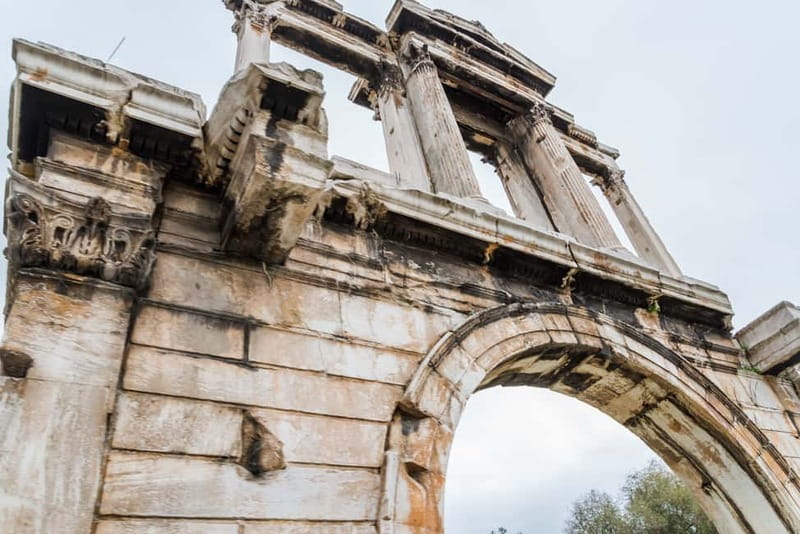
You’ll pass a long list of stops on all routes, so here’s a practical mindset for choosing where to hop.
On the Red Route, prioritize these
- Acropolis: the main payoff stop
- Temple of Zeus: big-scale landmark views
- Plaka & South Entrance Acropolis: good base for wandering after the bus ride
- New Acropolis Museum: helpful if you like understanding artifacts before going to ruins
- Panathenaic Stadium: a change of scenery beyond temples and museums
You can also hop at Monastiraki Square if you want a lively walk-and-snack break, then get back on when your feet start filing complaints.
On the Purple Route, hop for the port mood
- Cruise Terminals: convenient boarding if you’re docked in Piraeus
- Pasalimani and Mikrolimano: waterfront atmosphere
- Stavros Niarchos Cultural Center / Municipal Theatre: if you want modern Athens culture in the mix
If you are mainly hunting for ancient sites, you can keep Piraeus as your rest day, then reconnect with Red Route at the Acropolis area.
On the Green Route, pick your stop based on your walking stamina
- Marinas and beach areas (Flisvos, Alimos, Glyfada, Vouliagmeni): best for scenic pauses
- War Cemetery: a solemn stop if that fits your interests
- Edem and nearby stops: may be more about local flavor than famous ruins
If the Riviera feels underwhelming on the day you ride it, you can still treat it as a moving viewpoint and get off only when you want a photo or short stroll.
Who this Athens bus tour fits best

This is a strong fit for:
- First-timers who want a fast map of the city and coastline
- People with limited time who still want multiple landmark areas
- Cruise passengers docked in Piraeus who want easy sightseeing without extra transfers
- Travelers who like independent pacing, since you can hop off and back on at will
It’s less ideal if you want a tightly guided, stop-by-stop narrative with no flexibility, because this is audio commentary plus routes, not a full live guide at every moment.
So, should you book it?
I think this is worth booking if you plan to see the big Athens monuments and at least one extra area—either Piraeus or the Riviera. The value is strongest when you use the hop-on hop-off freedom across 48 or 72 hours, instead of treating it like a one-time ride.
If you’re mainly chasing just one classic stop and you’ll be walking everywhere else, you might decide it’s overkill. But if your goal is to reduce stress, keep options open, and get great views from an open-top deck, this is a practical, friendly way to do it.
FAQ
How long is the tour valid?
Your hop-on, hop-off pass is valid for 48 or 72 hours depending on the option you choose. You should check availability to see starting times.
Where can I board the bus?
You can start from any Big Bus stop along the routes. Big Bus staff are also located at several recommended starting points such as Syntagma Square, Plaka & South Entrance Acropolis, Temple of Zeus, Parliament, and Monastiraki Square.
Do the routes connect so I can transfer?
Yes. All routes intersect at the Acropolis, which makes transferring between Athens, Piraeus, and the Riviera straightforward.
Is hotel pick-up included?
No. Hotel pick-up and drop-off are not included.
Is audio commentary included, and what languages are available?
Yes. Audio commentary is included in 14 languages including English, Greek, French, German, Spanish, Italian, Russian, Turkish, and several others.
Is the tour wheelchair accessible?
Yes. The activity is listed as wheelchair accessible.