
Bangkok’s streets move fast, so this helps you pace it. This hop-on hop-off loop gives you a low-stress way to hit major sights across old Bangkok and modern malls, with unlimited rides for 24, 48, or 72 hours.
I especially like the big-picture value: 16 stops (market and temple stops plus shopping areas) mean you can build a day that matches your energy.
Second, I really like the comfort setup. You can choose the open-air views or a sheltered, cooler ride on the double-decker, and the route is narrated through GPS audio in 7 languages with free earphones.
One drawback to plan around: Bangkok traffic can stretch the time it takes to get from stop to stop, and the buses run only during daytime hours. So if you try to do everything in one quick loop, you may end up spending more time waiting or stuck in traffic than you expected.
In This Review
- Key Things to Know Before You Ride
- A Bangkok Loop That Helps You Get Oriented Fast
- 24, 48, or 72 Hours: Which Validity Actually Fits Your Plan
- Getting On: Siam Paragon or Central World, Then Show the Confirmation
- Open-Air Views vs. Air-Conditioned Comfort (And the Audio Setup)
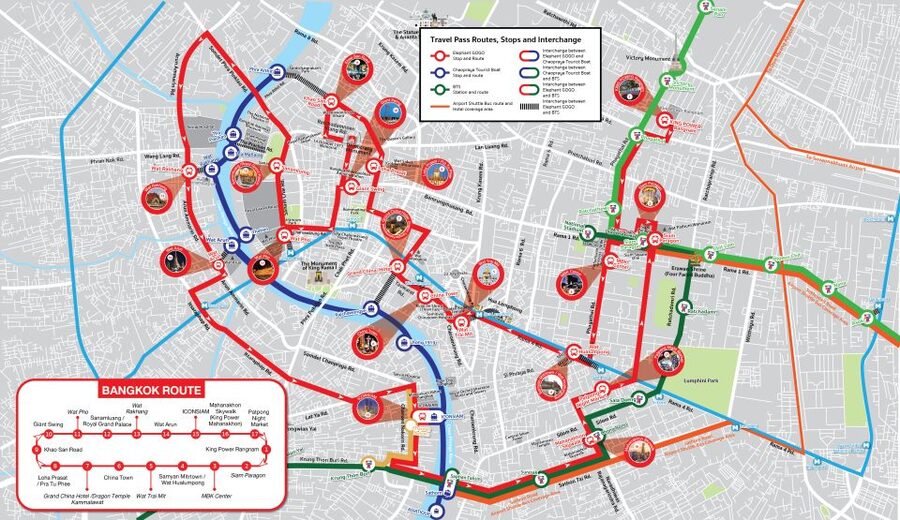
- The Stops, in Order: What to Expect and How Long to Stay
- Siam Paragon, MBK Center, and Samyan Mitrtown (Start With the City’s Rhythm)
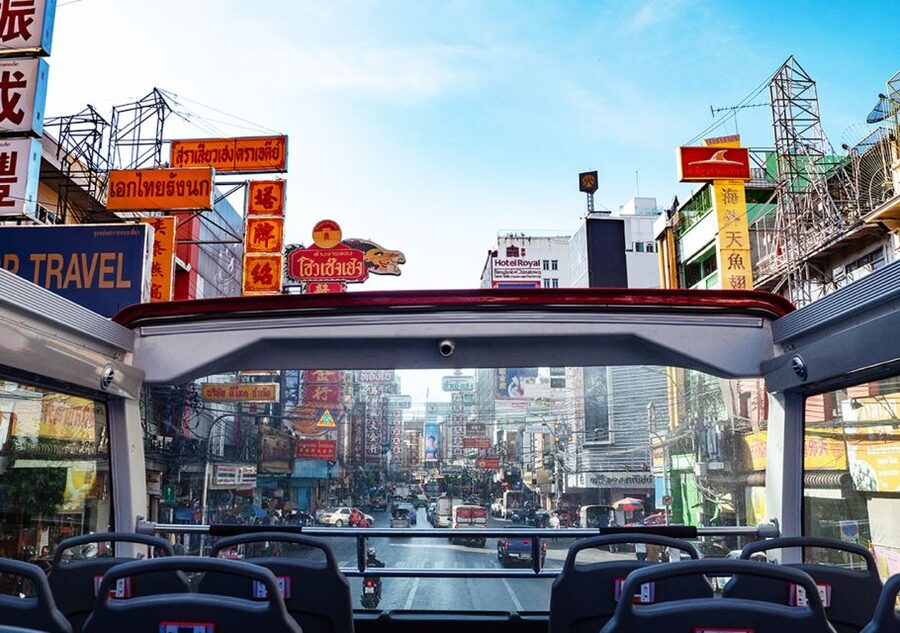
- Golden Buddha (Wat Trai Mit), Chinatown, and Grand China (Soak Up Old Bangkok Energy)
- Loha Prasat / Pra Tu Phee, Khao San Road, and the Giant Swing Area
- Wat Pho and the Sanamluang / Royal Grand Palace Zone (Plan for Focus)
- Wat Rakhangkhositaram and Wat Arun (Riverside Views That Change With the Light)
- ICONSIAM and King Power MahaNakhon (Modern Bangkok, Right on the Route)
- Patpong Night Market and Central World (End the Day With Energy)
- Timing, Traffic, and How Not to Get Stuck
- Cost and Value: Is This $25 Bus Pass Worth It?
- Who This Bus Pass Suits Best (And Who Should Consider Alternatives)
- Should You Book This Bus Pass?
- FAQ
- Where are the main meeting points?
- Do I need to redeem my ticket at the meeting point?
- What languages are available for the audio guide?
- How often do the buses depart?
- How long does the route take from the first to the last stop?
- Is the ticket valid all day or for 24 hours straight?
- Are children free?
Key Things to Know Before You Ride
- Pick your pass length: 24, 48, or 72 hours of unlimited hopping (validity counts from when you board).
- GPS audio guide in 7 languages with free headsets, triggered by where the bus is on the route.
- Open-air or sheltered seating on a double-decker, so you can balance views vs. comfort.
- The stops are real city stops, not hidden tourist zones, so you’ll rely on the map/pins and app tracking.
- Daytime route only: buses depart from the first stop from around late morning until mid-afternoon.
A Bangkok Loop That Helps You Get Oriented Fast

Bangkok can feel like a maze on your first day. This bus pass is built for that moment—when you want to see the city and learn how the pieces fit together without booking a new taxi every time your plans change. The route is designed to cover a mix of the must-see temples, busy historic areas, and modern hangouts.
What makes it practical is the hop-on/hop-off format. You can ride the whole stretch to get your bearings, or you can hop off at the exact places you want to spend time—then return when you’re ready. If you’re traveling with different interests (temples, food streets, shopping), this kind of route makes the decision-making less painful.
And yes, you’ll hear the story as you go. It’s a fully narrated route with pre-recorded audio triggered by GPS, so you’re not guessing what you’re passing.
24, 48, or 72 Hours: Which Validity Actually Fits Your Plan
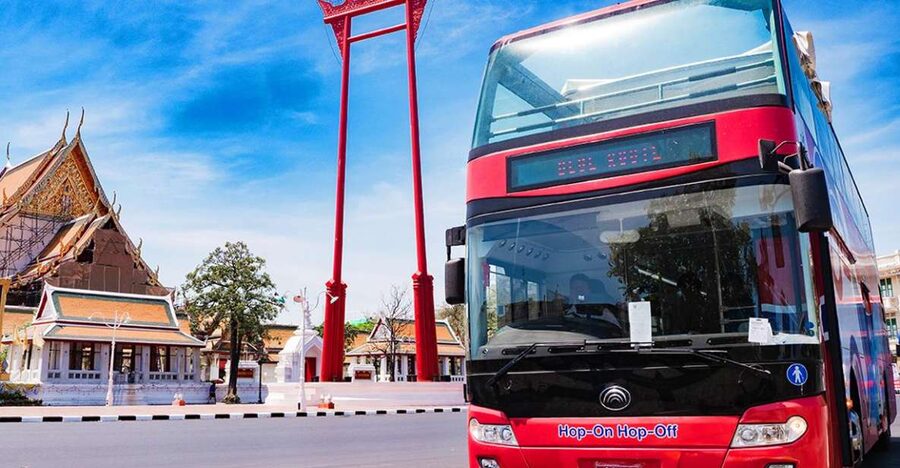
The pass is valid for 24, 48, or 72 hours, and the time runs from when you start riding. That matters because the bus doesn’t run 24 hours. So if you board late in the day, you can burn part of your validity window while the buses are already slowing down or finished for the day.
Here’s the simple way to choose:
- If you’re doing a tight first-day overview and expect to hop off just once or twice, 24 hours can be enough.
- If you want time at bigger-ticket stops like the temple area and riverside sights, 48 hours is a safer match.
- If you know you’ll linger, take breaks, and potentially redo stops on a second day, go 72 hours.
Traffic is another reason longer validity helps. Even though the bus route is designed to be time-effective, Bangkok road conditions can slow things down. With more time, you’re not forced into a rushed schedule.
Getting On: Siam Paragon or Central World, Then Show the Confirmation
Your main starting point is at Siam Paragon, in front of LOCK BOX Plus+ on the ground floor (South Gate) next to Bangkok Bank. There’s also a service counter at Central World, in front of Hug Thai Gate on the 1st floor.
Good news: you don’t have to redeem anything up front. You bring your confirmation and show it to staff or the driver at the bus stops. The driver then issues a ticket and you hop on.
My practical tip: arrive early. Aim to be at the stop about 10–15 minutes before the bus arrives, since delays can happen due to traffic or accidents. Bangkok runs on “be flexible” energy, and this bus is no exception.
Open-Air Views vs. Air-Conditioned Comfort (And the Audio Setup)
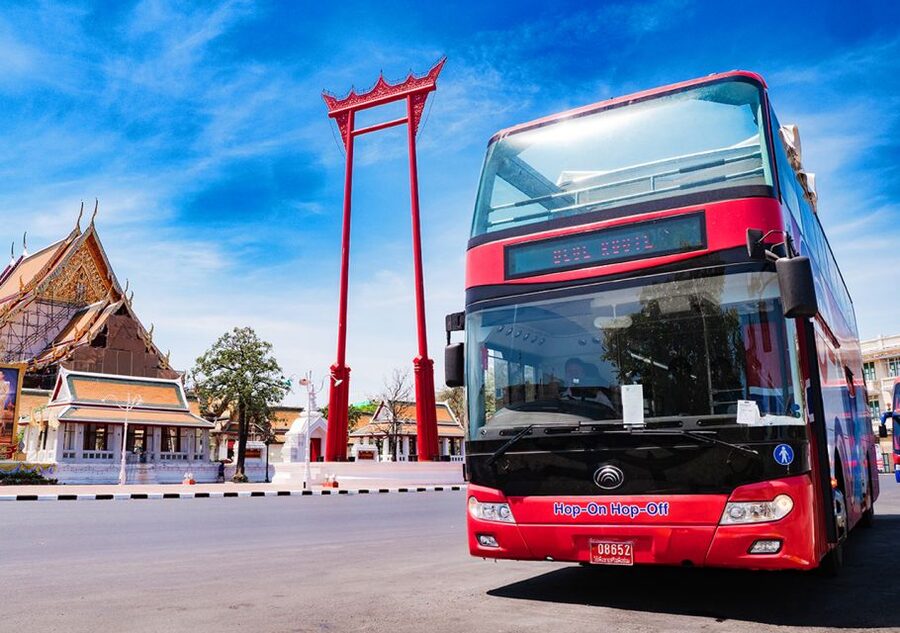
Bangkok heat is real. The double-decker layout helps you manage it:
- If you want skyline and street views, choose the open-air seating.
- If you want a break from sun and humidity, choose the sheltered or indoor section.
The route also comes with an onboard GPS audio guide in these languages:
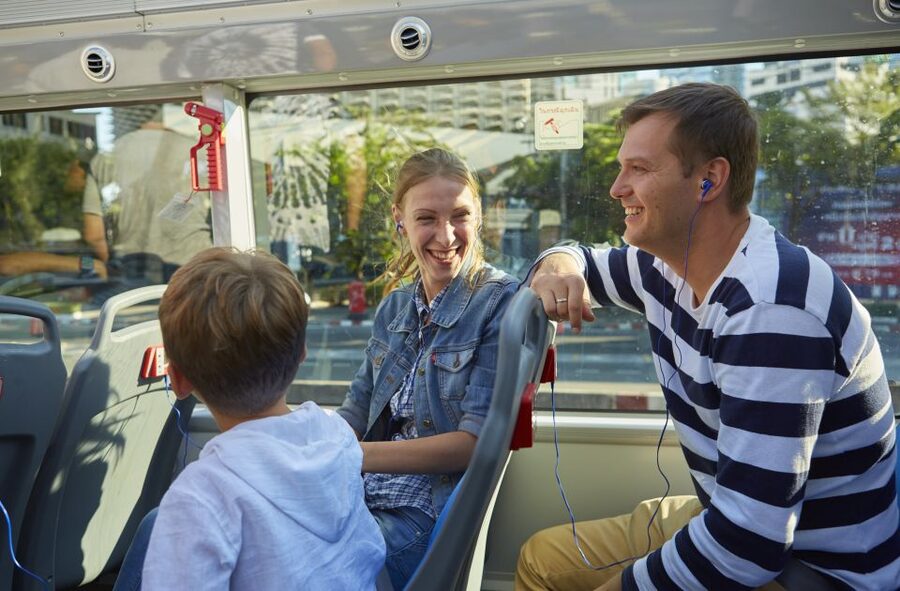
English, Spanish, Thai, German, French, Korean, and Chinese (Mandarin). Free earphones are included. As you move along the circuit, narration is triggered based on location.
Two practical notes:
- Because it’s GPS-triggered and pre-recorded, it won’t feel like a live guide answering your questions.
- You’ll get the most from it if you listen, then hop off when something catches your interest. Some stops reward being present on foot rather than only looking from the bus.
The Stops, in Order: What to Expect and How Long to Stay
The route covers a lot of ground. The full run from the first to the last stop takes about 3–3.5 hours if you stay on the bus the whole time, depending on traffic and closures. If you hop off often, plan for extra time.
Below is a practical walkthrough from start to finish so you can decide where you actually want to get off.
Siam Paragon, MBK Center, and Samyan Mitrtown (Start With the City’s Rhythm)
- Siam Paragon: This is your first big “modern Bangkok” anchor. It’s handy for boarding and also a useful area to orient yourself if you plan to combine bus time with shopping, meals, or a quick reset with air-conditioning.
- MBK Center: Expect a very Bangkok-style shopping scene. This is a good stop if you want something more casual and local-feeling rather than luxury-only.
- Samyan Mitrtown / Wat Hualumpong: This pairing is a nice reminder that Bangkok mixes daily life with landmark religion and architecture. If you want a taste of both without committing to a long walk, this is a manageable stop.
How to use this zone: great for your first hour. Ride through, listen to the guide, then decide whether you want to spend time on foot or save energy for temples later.
Golden Buddha (Wat Trai Mit), Chinatown, and Grand China (Soak Up Old Bangkok Energy)
- Golden Buddha Temple / Wat Trai Mit: If you’re aiming for a quick religious stop that feels distinctly Bangkok, this is a strong candidate.
- Chinatown: This area is perfect when you want street life, dense activity, and the kind of atmosphere you can’t recreate from inside a bus. Hop off here if you like walking through markets and side streets.
- Grand China / Dragon Temple Kammalawat: Another stop that keeps you in the Chinese community and historic temple vibe.
My advice: Chinatown is one of those places where time disappears fast. If you want shopping and photos, get off, wander, and come back when you’re ready—not when you feel pressured.
Loha Prasat / Pra Tu Phee, Khao San Road, and the Giant Swing Area
- Loha Prasat / Pra Tu Phee: A good temple-and-landmark stop. It’s also useful if you want an iconic view point that’s easier to reach than some deeper temple compounds.
- Khao San Road: This is where Bangkok’s backpacker energy and street scene become obvious. If you want the buzz and photo-stops, hop off. If you prefer quieter vibes, you might only need a short look from the street.
- Wat Suthat and the Giant Swing: This is one of the most “classic Bangkok” sequences on the route. If you only pick a few temple/landmark stops, don’t skip the Giant Swing area.
How to use this zone: If your day is limited, pick either Chinatown or Khao San for deeper wandering. Then make sure you get the Giant Swing/Wat Suthat stop, because that’s one you’ll likely want to see on foot.
Wat Pho and the Sanamluang / Royal Grand Palace Zone (Plan for Focus)
- Wat Pho: This temple stop is a must on the route. It’s the kind of place where you’ll want to slow down, even if you only do a portion.
- Sanamluang / Royal Grand Palace: This is a big-ticket area. Even if you don’t go into every building, just being in the space helps you understand Bangkok’s visual language.
Practical reality: this is where you can lose time. If you start early and keep your route flexible, it feels rewarding. If you squeeze it after a long traffic stretch, it can feel like you’re racing. Plan your day so the temple area is one of your earlier priorities.
Wat Rakhangkhositaram and Wat Arun (Riverside Views That Change With the Light)
- Wat Rakhangkhositaram: Another strong temple stop on the riverside corridor.
- Wat Arun: One of the most recognizable sights in the city. If you’re the type who likes to photograph architecture, this is a stop worth prioritizing.
My tip: combine listening on the bus with time outside on foot. Temples like these are more than shapes—they’re details. You’ll see more when you stand there and look upward.
ICONSIAM and King Power MahaNakhon (Modern Bangkok, Right on the Route)
- ICONSIAM: This is a shopping and riverside entertainment stop. It’s a nice change of pace after temples.
- Mahanakorn Skywalk: If you want a higher, more modern view concept, this is the kind of stop that makes sense for a second-day or late-afternoon segment.
How to use this zone: If you’re tired of the heat or want a clean break, hop off here. You can rest, recharge, and still feel like you’re progressing through the city’s highlights.
Patpong Night Market and Central World (End the Day With Energy)
- Patpong Night Market: This is a late-day stop for street energy. If night markets are your thing, this is a logical place to finish.
- Central World: Another major shopping hub for a convenient end point.
Practical note: because the bus route is daytime-focused, night market time is best as a quick stop or as a second-plan after a busy day of hopping.
Timing, Traffic, and How Not to Get Stuck
The bus departs from the first stop around 10:10 AM and runs until 3:25 PM (daytime service). Departures are roughly every 35–40 minutes, but Bangkok traffic can stretch those intervals.
From a planning standpoint, here’s the biggest thing to keep in your head: the circuit time is only “quick” if you treat the bus like transport, not as the main event. Hop off, do your sight, then return when you’re ready.
Also, don’t assume stops will be obvious. Some stops use regular public areas, and there may not be the clear red hop-on/hop-off signage you might expect from other cities. Your best friend is the free mobile app and its live GPS access to bus locations, plus the map/guidebook pins. Use them like navigation tools, not suggestions.
If you’re trying to fit a full loop plus lots of hopping into one day, you may end up frustrated. A better approach is to pick 3–5 stops you truly care about per day, then treat the rest as bonus scenery from the bus.
Cost and Value: Is This $25 Bus Pass Worth It?
At about $25 per person, this is one of the more budget-friendly ways to cover many of Bangkok’s top areas without turning your day into a taxi-queue exercise. The value comes from three things:
- Unlimited rides within your chosen validity window.
- Time savings compared to figuring out the best way to bounce between temples, historic neighborhoods, and malls.
- The GPS audio plus free earphones, which helps you understand what you’re seeing while you’re moving.
Is it “cheap”?
It’s not a deep discount when you compare it to a single attraction ticket. But compared to multiple paid rides and a day of transportation stress, it often feels like you bought yourself freedom.
The best value usually comes from people who actually hop off. If you stay on the bus the whole time and don’t explore on foot, you may feel like you paid for scenery instead of sights. If you plan structured stops, the cost-to-satisfaction ratio improves a lot.
Who This Bus Pass Suits Best (And Who Should Consider Alternatives)
This is a great fit if:
- You’re new to Bangkok and want to get oriented quickly.
- You like planning a flexible day and don’t want to lock into tours you can’t adjust.
- You want a comfortable, cooler way to connect hot spots across town.
- You enjoy audio narration and prefer information in your own language.
It may be less ideal if:
- You want a live guide, Q&A, or a deeply tailored explanation at each stop (there’s no live guide included).
- You only want to do one or two sights and you’re comfortable using public transit or rideshares instead.
Also, if you’re sensitive to waiting times, remember: traffic can make frequency feel slower later in the day.
Should You Book This Bus Pass?
If your goal is to see many of Bangkok’s headline areas without obsessing over logistics, I’d book it. The route is designed for both convenience and discovery—temples and classic neighborhoods on one side, modern landmarks on the other, with enough flexibility to shape your day around what you like.
Book it if you can:
- Use the app to track buses.
- Treat the bus as a connector, not a substitute for getting out and looking around.
- Choose the right validity window so traffic doesn’t cut into your sightseeing time.
Skip it or rethink it if:
- You plan to do just one temple and spend the rest of the day elsewhere far from the route.
- You’re hoping for a live guide experience at every stop.
In most cases, this pass is a smart “first or second day in Bangkok” tool. It helps you turn a complicated city into a workable plan—then you can decide what deserves your deeper time.
FAQ
Where are the main meeting points?
The main service counter is at Siam Paragon in front of LOCK BOX Plus+ on the ground floor (South Gate), next to Bangkok Bank. There’s also a service counter at Central World in front of Hug Thai Gate on the 1st floor.
Do I need to redeem my ticket at the meeting point?
No. You don’t need to redeem it at the meeting point. Show your confirmation to staff or the driver at any bus stop, and the driver will issue a ticket.
What languages are available for the audio guide?
The onboard GPS audio guide is available in English, Thai, German, Spanish, Korean, Chinese (Mandarin), and French.
How often do the buses depart?
Buses depart about every 35–40 minutes from the first stop, and they run daily from around 10:10 AM until 3:25 PM, depending on traffic conditions.
How long does the route take from the first to the last stop?
From the first stop to the last stop, the route takes about 3–3.5 hours without getting off, depending on traffic and road closures.
Is the ticket valid all day or for 24 hours straight?
The ticket is valid based on the validation time you start. The bus tours do not run 24 hours, so timing matters if you buy a 24-hour pass.
Are children free?
Children aged 5 and under are free of charge.