
Two bus routes, one easy city plan. On this hop-on hop-off experience, you ride a red double-decker at your pace, and I especially like how the 16-language audio keeps you oriented without forcing you into a rigid schedule. The trade-off is that big stops can get crowded, and on rainy days you may not be equally protected depending on where you sit.
What makes it work well in real life is the flexibility. You can start at any stop, show your voucher to the guide on board, and build your day around what you want to see most—whether that’s Sagrada Família’s symbolism or a slower walk near the water at Port Olímpic. Staff are friendly and the narration can be genuinely fun (I’ve heard Catalina is a hit with jokes and detail), but it’s still smart to expect occasional hiccups like seats with audio plug points that don’t work on every bus.
In This Review
- Key Things to Know Before You Go
- Why This Double-Decker Hop-On Hop-Off Tour Works in Barcelona
- How the Green and Orange Routes Change Your Day
- Green Route: Plaça Catalunya to Park Güell with Sagrada Família Stops
- Orange Route: FC Barcelona, Art Museum Area, and El Born Nights
- Timing That Fits Your Real Schedule: Winter vs Summer Last Departures
- On-Board Experience: Audio Guides, Maps, and a Staff You Can Ask
- Stop Strategy: How to Hop-Off Without Losing the Day
- Value Check: Is the $39 Price Fair for What You Get?
- Should You Book This Barcelona Hop-On Hop-Off Bus Tour?
- FAQ
- How long is the hop-on hop-off bus tour valid for?
- Can I start the tour at any stop?
- What’s included with the ticket besides bus transportation?
- What are the two routes, and what key sights do they cover?
- Is food or drinks included?
- What time does the service start and when do the last buses leave?
- Are you given headphones and can you listen in multiple languages?
- What should I bring before I board?
- Are pets allowed on the bus?
- What kinds of changes might affect the route?
Key Things to Know Before You Go
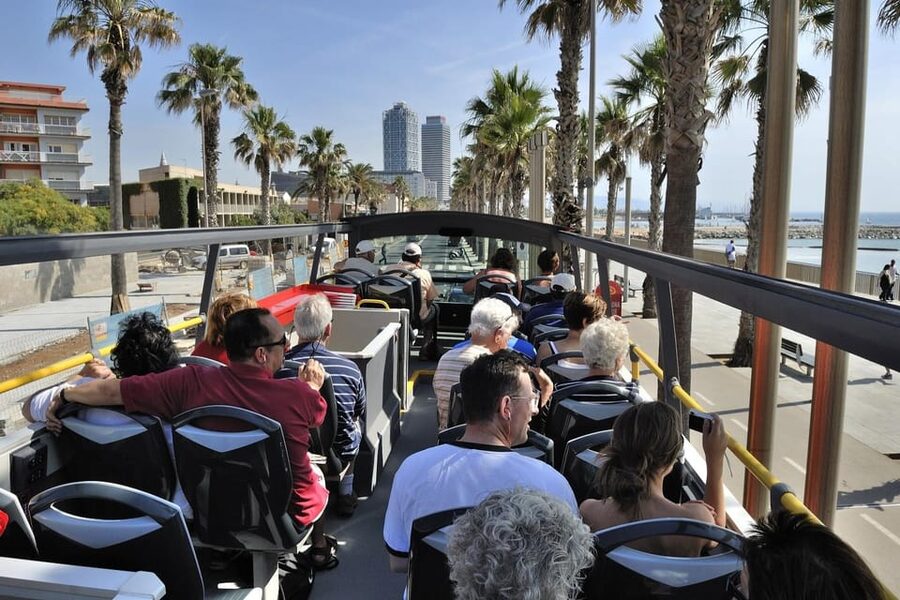
- Two routes with one ticket: do both circuits across 1 or 2 days for more coverage
- Big-name sights on the green route: Plaça Catalunya, Sagrada Família, and Parc Güell
- Western landmarks on the orange route: FC Barcelona stadium, a stop near the National Museum of Art of Catalonia, and El Born
- Hop-off museum time: you can get off for two museums and reboard once you’re done
- Audio for your ears: narrated in 16 languages, plus an audio system adapted for people with auditory disabilities
- Last-departure hours matter: timing changes by season, so plan your final hop-on early
Why This Double-Decker Hop-On Hop-Off Tour Works in Barcelona
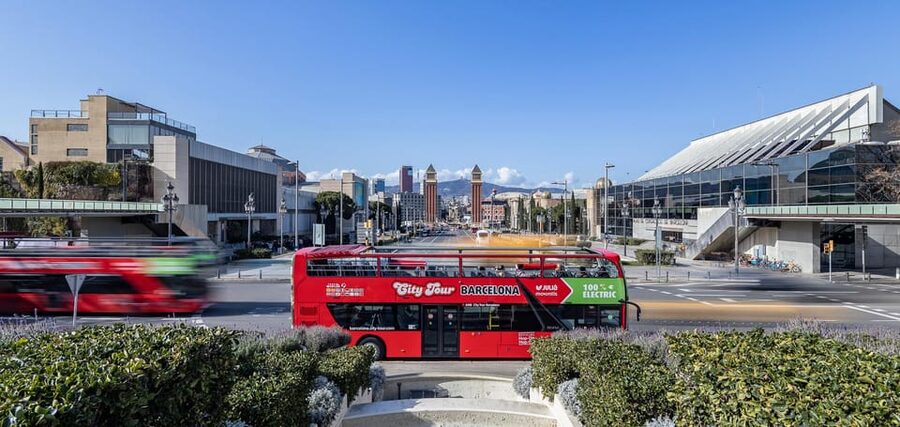
Barcelona has a way of stretching time. Distances feel short on a map, then you hit traffic, long blocks, and hills that pretend they’re not hills. This style of bus tour is useful because it gives you a reliable moving base while you decide what to explore on foot.
At about $39 per person, you’re paying for three things you’d otherwise stitch together: transport, guided narration, and a route map so you don’t waste your day guessing. The bus is air-conditioned, so even when the city feels like an oven, you’re in control. And because it’s hop-on hop-off, you can treat it like sightseeing first, museum homework later.
A small but important practical detail: the frequency varies by season. In shoulder seasons you may get good spacing; in peak periods the most in-demand stops can still get busy. That’s the only downside I’d mentally budget for—otherwise, the format is hard to beat when you want city coverage without planning every minute.
How the Green and Orange Routes Change Your Day
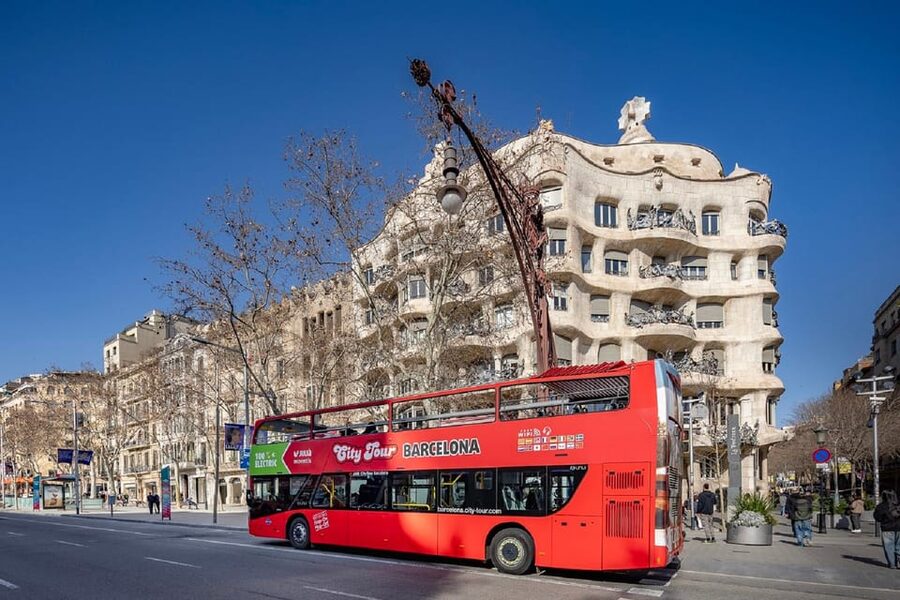
Think of the two routes as two lenses on the same city.
On the green route, you’re guided toward the city’s most art-forward side. It runs from Plaça Catalunya up toward Park Güell, with stops that include Sagrada Família. This circuit is built for people who want modernist architecture and symbolism, and who don’t mind spending time hopping off to look closely (not just snap photos at speed).
On the orange route, you go beyond the most emblematic modernist landmarks and into areas that feel broader and more local. This route covers an extensive circuit reaching FC Barcelona’s stadium and a stop near the National Museum of Art of Catalonia. It also connects you to El Born, one of Barcelona’s favorite eating-and-strolling zones.
You don’t need to choose one route forever. A single ticket lets you ride both across your 1–2 days. That’s the key value move: if you’re in town for a short stay, you can use one day for the green route’s iconic highlights, then use the orange route to widen the picture and get to neighborhoods you’d want to walk again later.
Green Route: Plaça Catalunya to Park Güell with Sagrada Família Stops

If you want the classic Barcelona sequence—big modernist moments—you’ll feel it on the green route.
You start around Plaça Catalunya, which is a convenient launchpad because it’s central and easy to orient from. As you ride, you’ll be able to sit back while the audio guide points out what to look for. That matters here because Sagrada Família in particular can feel like a blur if you don’t know what you’re looking at.
Sagrada Família is included as a stop, and the narration focuses on the facades and their symbolism—exactly the kind of detail that turns a monument from photo-op into understanding. From there, the route continues toward Parc Güell, the garden complex and UNESCO World Heritage Site. Parc Güell isn’t just a landmark; it’s a place you’ll want to walk slowly. The hop-off format helps because you’re not stuck doing it in a sprint.
Practical consideration: Park Güell and nearby viewpoints can mean more time on foot. If you’re planning other stops that day, don’t overload your schedule. Use the bus to move you between “slow zones,” not to rush through them.
Orange Route: FC Barcelona, Art Museum Area, and El Born Nights

The orange route is where you get more of Barcelona’s wider personality.
This circuit pushes you toward the city’s western landmarks, including the FC Barcelona stadium. Even if you’re not catching a match, it’s a distinct piece of the Barcelona identity puzzle. The narration helps you connect the stadium area to the broader city story instead of treating it like a random landmark.
You also pass the area for the National Museum of Art of Catalonia, and the tour format is built for exactly this kind of stop. You can hop off to visit, then hop back on when you’re ready to keep moving. The same idea applies to the two museum stops the route mentions, which is helpful if your interests lean toward art or if you want one “real visit” instead of sightseeing only from the window.
Then there’s El Born. On this route you can hop off and enjoy the neighborhood’s ambiance and cuisine, or simply use it as a place to wander. When you’re doing a hop-on hop-off, neighborhoods like El Born are where the tour really pays off. The bus drops you near activity; you decide how long you want to stay.
One more detail you’ll appreciate: the highlight list also calls out Port Olímpic and the promenade. If you’re aiming for sea air and a slower walk, time your hop-off so you can actually enjoy the waterfront rather than just passing it by.
Timing That Fits Your Real Schedule: Winter vs Summer Last Departures
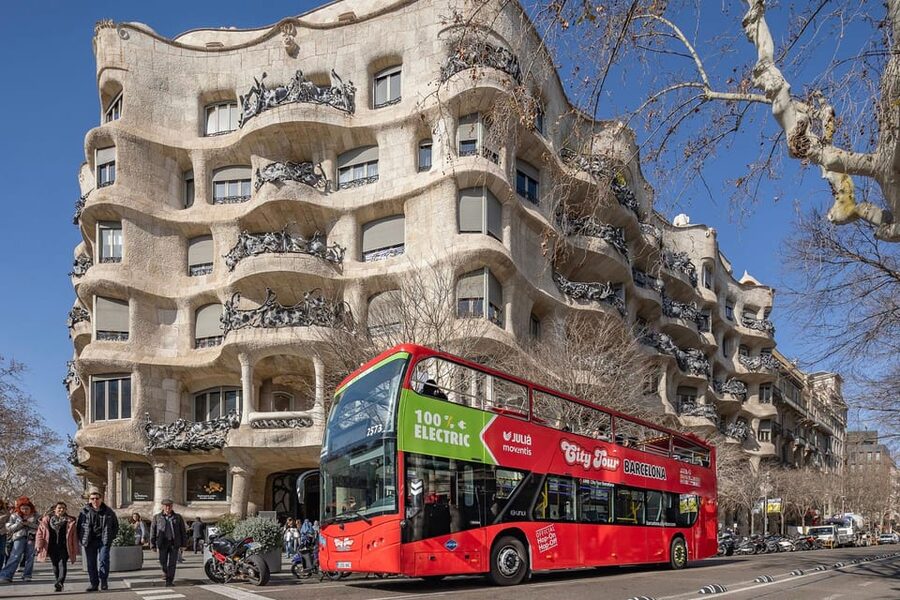
This is the part that keeps the trip stress-free: knowing how the day ends.
Service starts at 9:00 in winter (November–March) and 9:00 in summer (April–October). Where it changes is the last departure:
- Winter: last departure leaves at 18:00 from Plaça Catalunya on the green route, and 18:00 from Pedrera on the orange route.
- Summer: last departure leaves at 19:00 from Plaça Catalunya on the green route, and 19:00 from Pedrera on the orange route.
That means if you’re trying to see a long-museum stop or a later sunset view, don’t count on a last-minute hop-on. Instead, plan to finish your final big hop-off with enough time to catch your last bus.
Also, the itinerary can change due to events, demonstrations, sports and cultural events, official acts, or force majeure. It’s not something you can control. The best response is simple: if you see a detour in the middle of your route, treat it as a prompt to explore the area you’re currently in.
On-Board Experience: Audio Guides, Maps, and a Staff You Can Ask
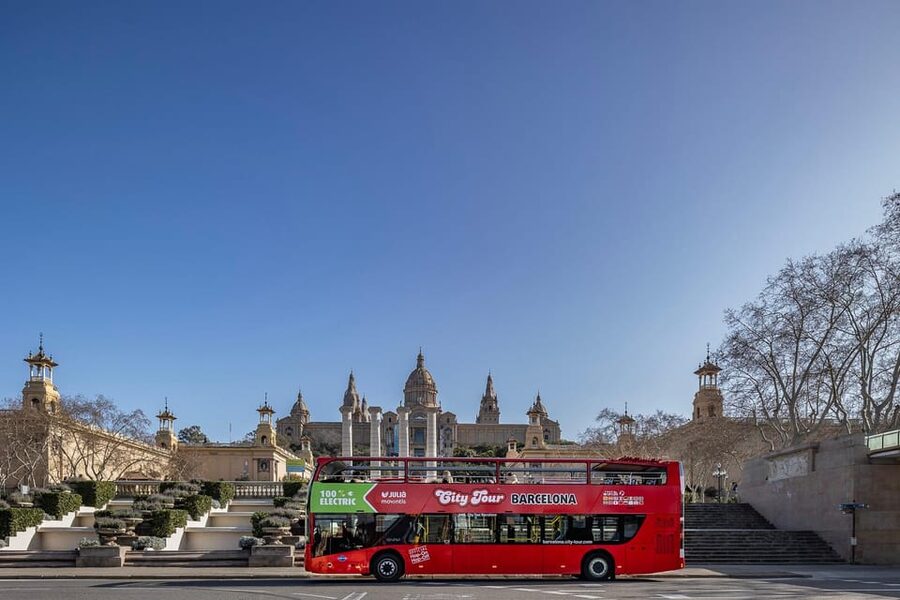
Here’s what you’re getting with your ticket, beyond just riding a bus:
You’ll have transport by air-conditioned coach, an audio guide in 16 languages, and a city map with detailed route and stop info. There’s also a discount booklet for shops and restaurants, plus a multilingual stewardess on board.
The audio system is a big deal. It includes a multilingual looping system adapted for people with auditory disabilities, so you can listen through headphones without wires. Seats that use this system are marked, and those passengers get priority. Even if you don’t need that specific setup, it’s a sign the company thought about how the experience is delivered, not just how it looks on paper.
What I’d watch for: audio quality is generally praised, but some seats have had issues like broken audio modules or non-working headphone plug points on certain buses. Translation: if you sit down and the audio doesn’t work right away, don’t panic. Move to another seat or ask the staff on board for help.
A practical tip from real usage: if you use a live tracking app, it can help you catch the correct departure time. Still, don’t blindly trust it if the route details seem off. The printed map and stop signage will always be your anchor.
Stop Strategy: How to Hop-Off Without Losing the Day
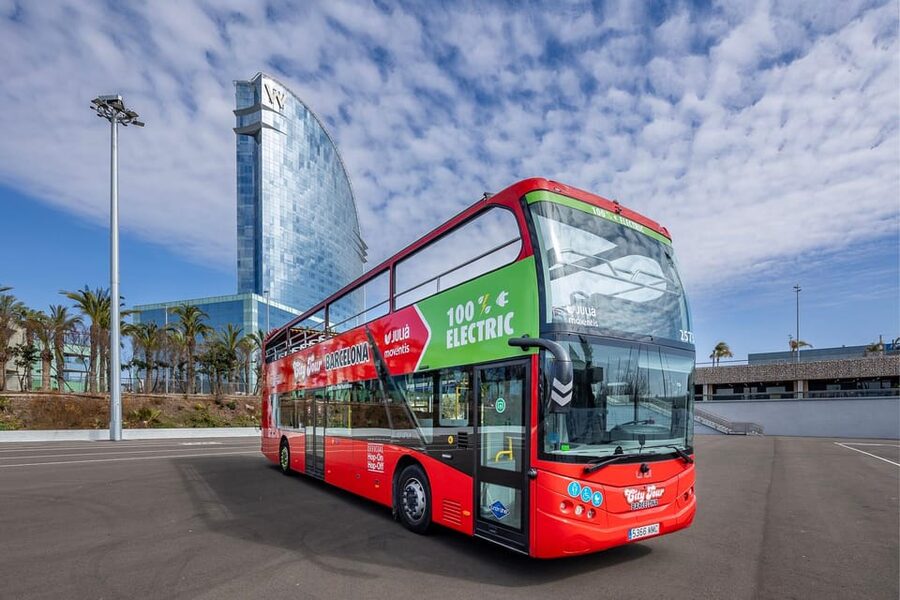
Hop-on hop-off tours are most fun when you use them like a tool, not a crutch. Here’s the simple system I recommend:
First, pick one route as your “main storyline.” If you want iconic Barcelona, do the green route for Sagrada Família and Parc Güell focus. Then use the orange route as your “neighborhood and variety” day, adding FC Barcelona, the art museum area, Port Olímpic, and El Born.
Second, plan your hop-offs in time blocks. Don’t hop off ten times for two minutes each. Instead, do a longer stop where you’ll actually walk and look (Parc Güell is a good example), then use the bus to get you to the next zone.
Third, think about weather. There’s an open-top element, and in rainy conditions you might get wet more than you expect. The easiest fix is obvious but often forgotten: bring a light rain layer and wear shoes that won’t turn your day into a mud slideshow.
Finally, use the bus to “position” yourself. A lot of people end up choosing their future itinerary based on what they see from the window. That’s a smart way to travel. Use the first ride to learn where you want to linger, then come back by foot.
Value Check: Is the $39 Price Fair for What You Get?
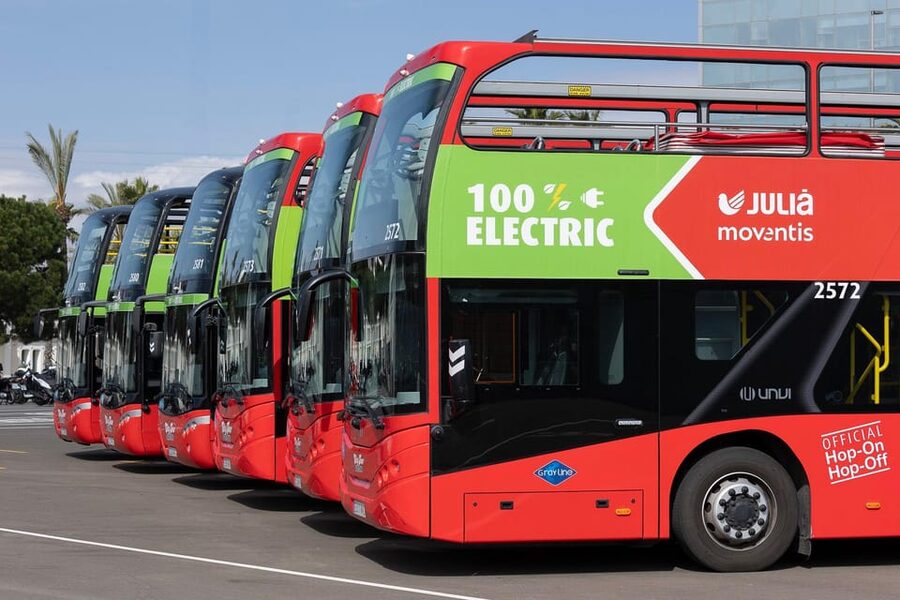
For many people, $39 feels like a splurge—until you list what’s included.
You’re paying for:
- air-conditioned transportation,
- an audio guide in 16 languages,
- a detailed route map,
- a discount booklet, and
- staff presence (including a multilingual stewardess).
More importantly, you’re buying time and decision-making. Barcelona can be tiring if you’re commuting between attractions all day. This ticket reduces that friction, especially if you’re trying to cover key sights like Sagrada Família and Parc Güell plus at least one neighborhood stop like El Born.
The biggest value factor is whether you’ll actually use both routes within your stay. If you can do one route per day, the ticket feels like a deal. If you only ride one route and treat it like a single-spot tour, you may feel like you paid for bus time you didn’t use.
My recommendation: if you’re short on time, do the full 1–2 day plan. If you have a longer stay, you can still use this to choose what you’ll revisit on your own.
Should You Book This Barcelona Hop-On Hop-Off Bus Tour?
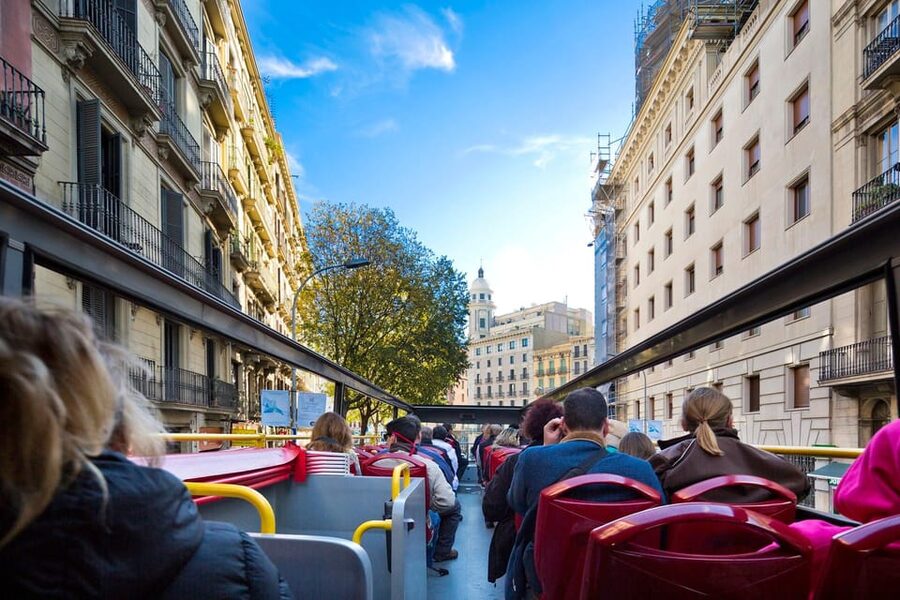
Book it if you want an easy way to see a lot fast, especially if it’s your first time in Barcelona or you have limited time and want to keep control of your schedule.
Skip it (or at least downsize your expectations) if you’re the type who hates waiting for buses at popular stops, or if you’re very sensitive to audio reliability and want guaranteed working headphones in every seat. Also note that there’s no hotel pickup, so you’ll need to get yourself to one of the stops.
If your plan includes Sagrada Família, Parc Güell, and at least one neighborhood walk (Port Olímpic and El Born are great targets), this is a practical, good-value way to stitch it together without over-planning. Start early, hop off for the parts you’ll actually enjoy on foot, and you’ll leave with a clear sense of Barcelona—and a list of what to explore next.
FAQ
How long is the hop-on hop-off bus tour valid for?
Your ticket is valid for 1 to 2 days, so you can ride across one or two days depending on your schedule.
Can I start the tour at any stop?
Yes. You can begin at any of the stops mentioned in the tour description by showing your voucher to the guide on board.
What’s included with the ticket besides bus transportation?
You get an audio guide in 16 languages, a city map showing route and stops, a discount booklet, and a multilingual stewardess on board. There is also an audio system adapted for people with auditory disabilities.
What are the two routes, and what key sights do they cover?
The green route covers the most artistic part of the city and runs from Plaça Catalunya to Park Güell, with stops including Sagrada Família. The orange route takes you beyond the most emblematic modernist buildings, including FC Barcelona stadium and the National Museum of Art of Catalonia area, plus El Born.
Is food or drinks included?
No. Food and drinks are not included.
What time does the service start and when do the last buses leave?
Service starts at 9:00 in both winter and summer. The last departures are:
- Winter: 18:00 from Plaça Catalunya (green route) and 18:00 from Pedrera (orange route)
- Summer: 19:00 from Plaça Catalunya (green route) and 19:00 from Pedrera (orange route)
Are you given headphones and can you listen in multiple languages?
The tour includes an audio guide and the audio system is designed for listening via headphones. The audio guide is offered in Spanish, Catalan, Chinese, Dutch, English, French, German, Italian, Japanese, Portuguese, Russian, Hebrew, Arabic, Swedish, Norwegian, and Turkish.
What should I bring before I board?
Bring a passport or ID card and wear comfortable shoes.
Are pets allowed on the bus?
Pets are not allowed. Assistance dogs are allowed, and pets can be allowed only if they are transported in a basket suitably prepared.
What kinds of changes might affect the route?
The itinerary can change due to events in the city (like demonstrations, sports and cultural events, official acts) or force majeure reasons.