Berlin has a lot going on. This open-top tour helps you tag the big landmarks quickly, with multilingual audio that keeps the story clear as you roll past them. I especially like that you can hop on and hop off at major squares and checkpoints instead of cramming everything into one long walk.
One heads-up: comfort can be inconsistent. If it’s rainy, the top-deck cover may not keep you fully dry, and headphone jacks (even with included headphones) can occasionally be temperamental.
If you want a smart first sweep of the city—then a targeted return to the places you care about—this bus is a practical move, not just a sightseeing loop.
In This Review
- Quick hits
- Why a hop-on hop-off bus works so well in Berlin
- Price and what $25 buys you (and what it doesn’t)
- Two routes: Classic Berlin versus East Berlin and the Wall
- Classic Route (the “main sights” backbone)
- Trendy East Berlin & Wall Route (Wall-era focus)
- Using the City Sightseeing app, headphones, and free Wi-Fi
- Classic Route stop-by-stop: Tauentzienstrasse to the Brandenburg Gate
- Western start: Tauentzienstrasse, KaDeWe, and Lützowplatz
- Kulturforum to Potsdamer Platz: big-city redevelopment in motion
- Checkpoint Charlie and Gendarmenmarkt: two very different feelings
- Neptunbrunnen, Rathaus, and Alexanderplatz: fountains to towers
- Lustgarten and Unter den Linden: the government-and-monuments corridor
- Brandenburg Gate and Reichstag: the postcard moment with real meaning
- Hauptbahnhof, Bellevue, Victory Column, and Zoo: keep the day moving
- Trendy East Berlin & Wall Route: Mauerpark, Karl-Marx-Allee, and the East Side Gallery
- Neptunbrunnen and Oranienburger Strasse: start where the stories overlap
- Mauer-Gedenkstätte and Mauerpark: outdoors, weather-dependent
- Alexanderplatz and Karl-Marx-Allee: Soviet-era city scale
- East Side Gallery and Ostbahnhof: the final memory hook
- Timing, frequency, and how to avoid wasted waiting
- Where this tour really shines (and where it doesn’t)
- The strengths
- The limitations
- What to do next: pairing your bus day with real Berlin
- So, should you book this Berlin bus tour?
- FAQ
- How long is the Classic Route, and how often do buses run?
- How long is the Trendy East Berlin & Wall Route, and how often do buses run?
- Can I start the tour from any bus stop?
- What languages are included with the audio guide?
- Is Wi-Fi available on the buses?
- Is the East Berlin & Wall route included with every ticket?
Quick hits

- Open-top deck for big-sky views across Berlin’s main corridors
- 13-language audio guide with headphones, plus free Wi-Fi onboard
- Two distinct routes: Classic Berlin plus a Trendy East Berlin and Wall option
- Frequent buses on the main loops, so waiting usually isn’t the whole day
- Staff at stops and an app that helps you spot your next bus
Why a hop-on hop-off bus works so well in Berlin
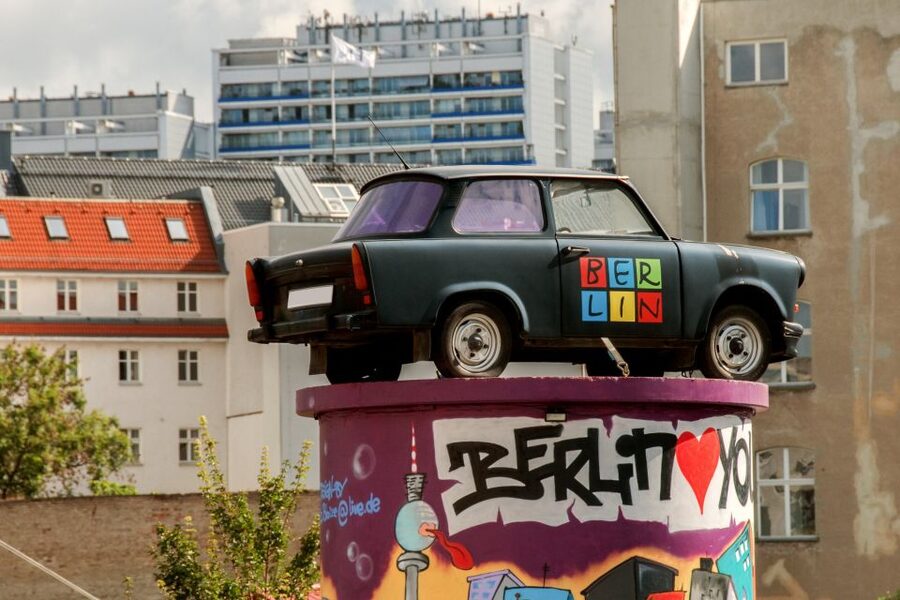
Berlin can feel huge even when you’re staying central. Distances add up fast, and the city’s layout can make your day zig-zag in annoying ways. The hop-on hop-off format solves that: you get a moving base that links the major sights in a repeatable way.
I like that it doesn’t try to replace walking. It sets you up so your walking is smarter. You ride first, listen as you go, then you choose what’s worth the stairs, the museum line, or the extra time outside.
Price and what $25 buys you (and what it doesn’t)
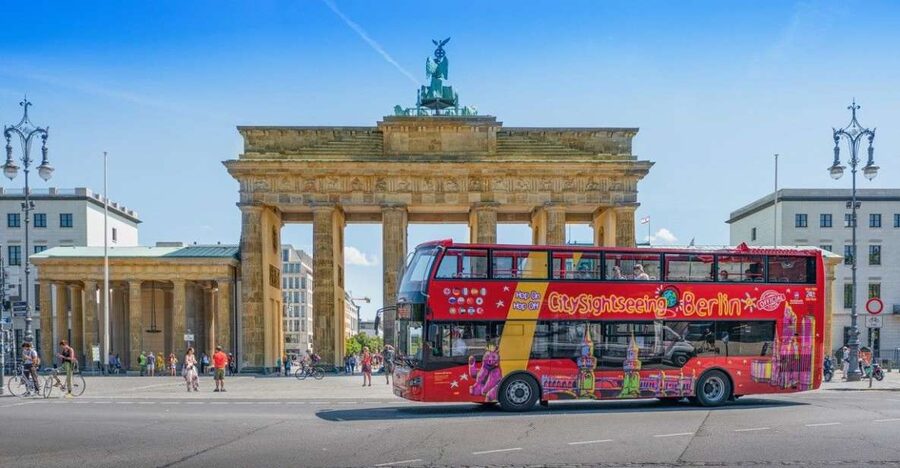
At about $25 per person, you’re paying for transportation, route access, and an audio guide system—not for any museum ticket or meal. The value comes from how much ground the route covers and how many key sites you can see without planning every transfer.
This is also one of those tours where the real value shows up if you use the “hop” part. The Classic route takes about 2 hours to complete as a loop, but with a 24- or 48-hour ticket you can spread it across a day or two. That means you can do a first pass, then come back to linger where you want.
Two routes: Classic Berlin versus East Berlin and the Wall
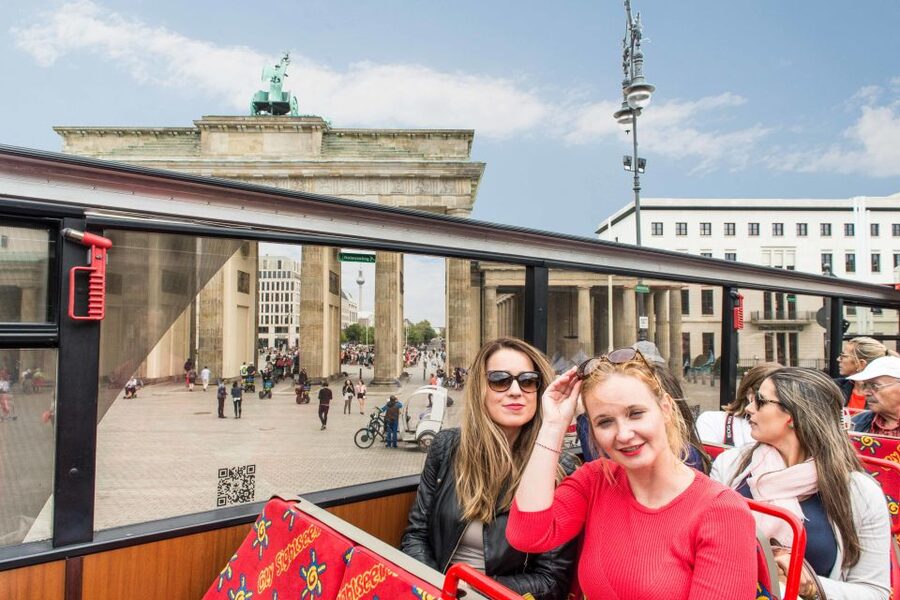
You’re effectively choosing between two different ways to read the city.
Classic Route (the “main sights” backbone)
The Classic route is built to cover Berlin’s most recognizable landmarks and central areas. With stops like Brandenburg Gate, Checkpoint Charlie, East Side Gallery, Unter den Linden, and Reichstag, it’s the fastest path to the highlights—especially if it’s your first day.
Trendy East Berlin & Wall Route (Wall-era focus)
The Trendy route leans more into East Berlin and Wall-related sites. You’ll pass the Mauer-Gedenkstätte, Mauerpark, Karl-Marx-Allee, and finish with East Side Gallery, plus Ostbahnhof. It’s shorter—about 1 hour for a loop—so it works well as a focused add-on.
If you pick the right ticket, you can do both. If you don’t, you’ll still get the Classic route, but the East Berlin and Wall line is only included if you select an All Lines ticket.
Using the City Sightseeing app, headphones, and free Wi-Fi

Before you ride, download the City Sightseeing Berlin app. That’s your real command center for up-to-date departure times and stop locations. It’s also how you avoid the classic frustration of wandering around a stop that might be 10 minutes away.
On the bus, you’ll get headphones and an audio guide in 13 languages. You can switch language as you go, and the setup is meant to make the story easy to follow while you watch the scenery slide by.
You also get free Wi-Fi on the buses. It’s a small perk, but it helps when you’re checking opening times for a stop you plan to revisit later.
One more practical note: at many stops you’ll find staff available to help with routes and what to do next. When you’re trying to decide where to hop off for lunch, that kind of guidance saves time.
Classic Route stop-by-stop: Tauentzienstrasse to the Brandenburg Gate
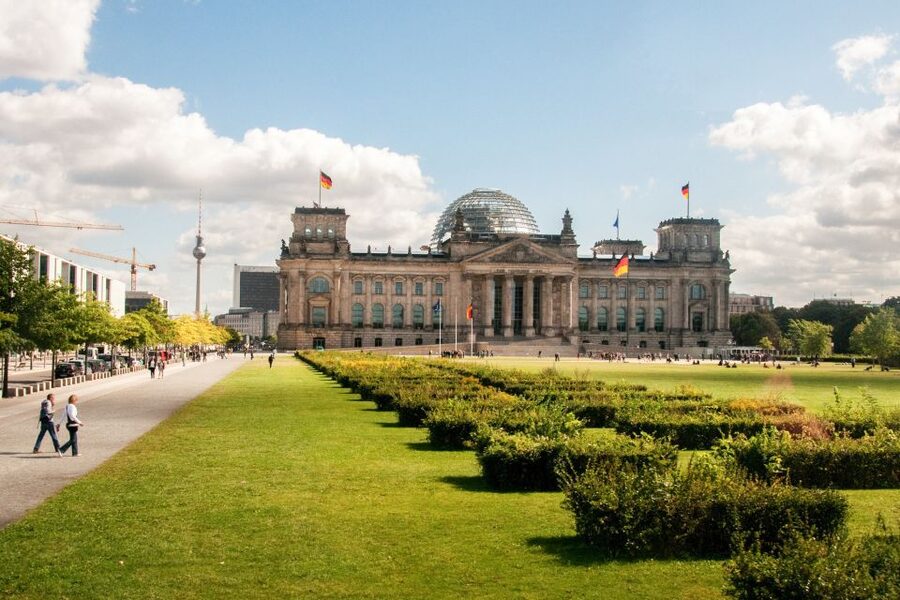
This is the route I’d start with if you want orientation. It’s built around big squares, famous streets, and the government-and-monuments section of Berlin.
Western start: Tauentzienstrasse, KaDeWe, and Lützowplatz
You begin around Tauentzienstrasse and pass by KaDeWe (yes, the famous department store area). Then you head toward Lützowplatz and the broader Kulturforum / Tiergarten zone.
What I like here: you get a quick feel for Berlin’s “old meets modern retail and museums” vibe. What to watch for: at major shopping stops, you may see longer pauses depending on traffic and passenger flow.
Kulturforum to Potsdamer Platz: big-city redevelopment in motion
Next you pass through Potsdamer Platz / Kolhoff-Hochhaus and onward to Gropiusbau. This area is one of Berlin’s best examples of post-war change and redevelopment, so it’s useful for understanding why the city looks the way it does.
If you’re the type who likes to picture what used to be here, this stretch helps. Keep an eye on the skyline views from the upper deck; they give context fast.
Checkpoint Charlie and Gendarmenmarkt: two very different feelings
Then you reach Checkpoint Charlie (Friedrichstrasse 45). It’s one of the most famous Cold War-era crossing points, and seeing it from the bus deck helps you understand how central it sits in today’s city.
After that, you pass Gendarmenmarkt, one of Berlin’s most striking squares. The contrast between these two stops—tense history versus elegant city center space—shows how layered Berlin is.
Neptunbrunnen, Rathaus, and Alexanderplatz: fountains to towers
You’ll stop at or pass by Neptunbrunnen and the Rotes Rathaus area, then head toward Alexanderplatz / Park Inn. This is a classic “Berlin center” sequence: civic buildings, public spaces, and major street intersections.
If you want an easy spot to reset—grab a snack, stretch your legs, and plan your next hop—this cluster is a strong choice.
Lustgarten and Unter den Linden: the government-and-monuments corridor
Next comes Lustgarten, then Unter den Linden / Friedrichstrasse. This is the kind of stretch where Berlin’s identity becomes very visible: grand avenues, iconic institutions, and a lot of photo opportunities that are genuinely worth stopping for.
And yes, it’s a long visual corridor. From the top deck, it’s perfect for quick photos and for letting the audio guide narrate what you’re seeing.
Brandenburg Gate and Reichstag: the postcard moment with real meaning
Then you reach Brandenburger Tor and Reichstag. These are the Berlin sights most people recognize instantly, and the bus makes it easy to see them without getting stuck in transportation puzzles.
Here’s the thing: seeing them from the bus doesn’t replace going there on foot, but it tells you which direction you’ll want to walk after. That’s a big part of the tour’s usefulness.
Hauptbahnhof, Bellevue, Victory Column, and Zoo: keep the day moving
The route also passes Berlin Central Station (Hauptbahnhof), Schloss Bellevue, and the Victory Column / Siegessäule area near Hofjägerallee. Then you get to Zoo / Elephant Gate (Elefantentor) and continue toward the Cafe Kranzler area.
Finally, you reach Kurfürstendamm (including Kurfürstendamm 236). This keeps you from spending your whole trip only on the most historic cores. You also get a taste of Berlin’s famous western boulevard energy.
A small comfort reality check: seats on open-top buses are great for the views, but a couple of hours can feel long. If you’re sensitive to sitting, plan your ride in segments and hop off often.
Trendy East Berlin & Wall Route: Mauerpark, Karl-Marx-Allee, and the East Side Gallery
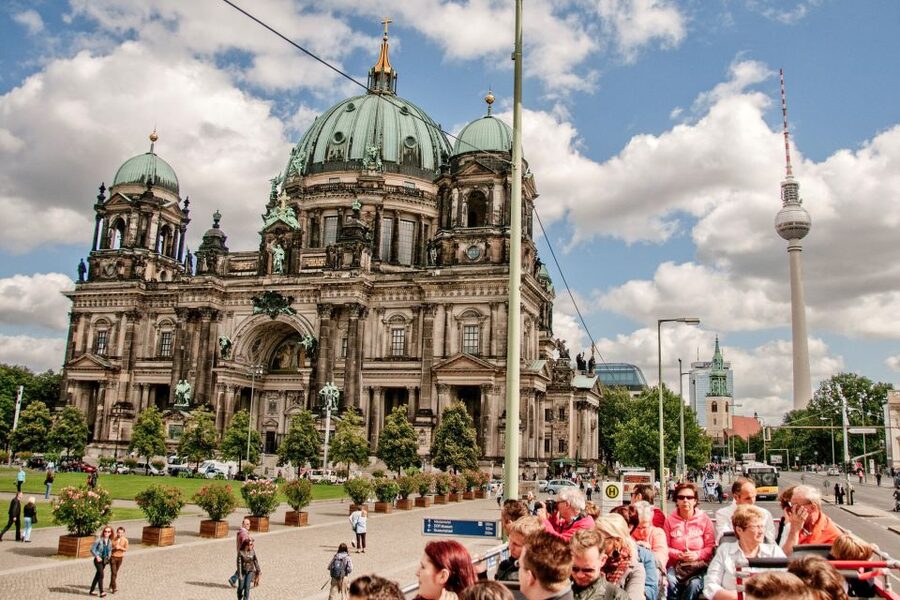
This is the route that helps you connect Berlin’s history to the neighborhoods you’re passing through.
Neptunbrunnen and Oranienburger Strasse: start where the stories overlap
It begins again around Neptunbrunnen / Rotes Rathaus, then moves to Oranienburger Strasse. The advantage here is that you get a consistent “anchor point” before heading deeper into the east side.
Mauer-Gedenkstätte and Mauerpark: outdoors, weather-dependent
Next comes Mauergedenkstatte and then Mauerpark. This part of the tour is where your day can change based on the weather since these are more open, park-and-memorial type stops.
If you plan to hop off and spend real time here, wear shoes that handle uneven ground and bring a layer. The bus ride is comfortable; the extras you do off-bus are on you.
Alexanderplatz and Karl-Marx-Allee: Soviet-era city scale
You’ll pass Alexanderplatz / Park Inn again, then continue to Karl-Marx-Allee. This stretch is about scale and architecture—big blocks, broad streets, and a strong sense of planned urban design.
From the top deck, you can see why this area feels different from the west side sections of Berlin.
East Side Gallery and Ostbahnhof: the final memory hook
The route finishes at East Side Gallery and continues to Ostbahnhof. East Side Gallery is one of the most famous Wall-related sites, and it’s also a place people love revisiting on foot. Pair it with a flexible plan: if you get off there, you may lose time in the best way—staring at details and reading what’s visible.
Timing, frequency, and how to avoid wasted waiting
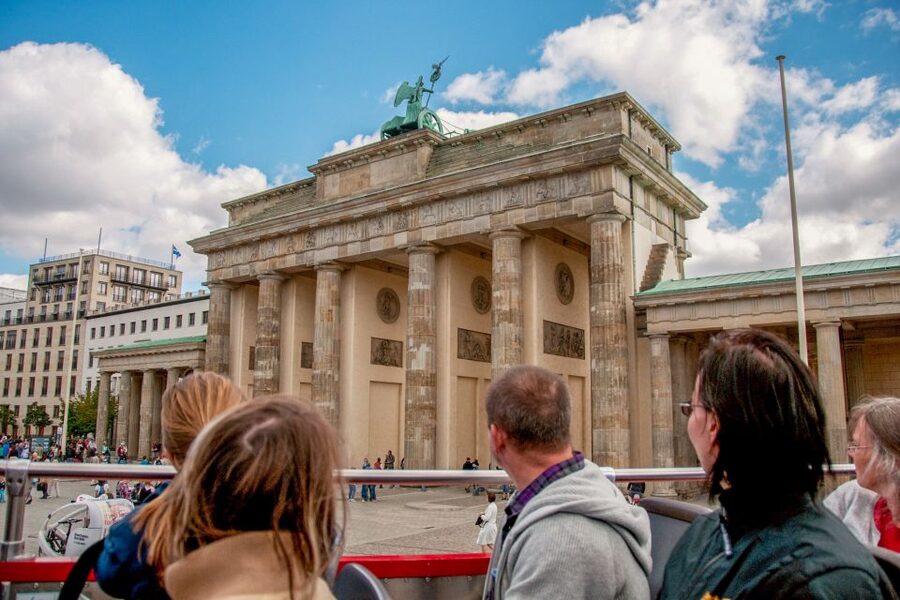
The Classic loop takes about 2 hours, with buses running about every 25 minutes. The first departure is 9:30am from the start stop, and the last departure is 5pm.
The Trendy East Berlin & Wall loop is shorter, about 1 hour, and runs about every 40 minutes. It starts later (first departure 10am) and also ends at 5pm.
This matters because Berlin can be a weather roulette. If rain starts, you’ll want to be sure you’re not stranded with hours between buses. The good news is frequency is frequent enough that you can plan around it without stress—especially on the Classic route.
One practical tip: don’t expect perfect timing if a bus fills up at a popular stop. I’ve found it helps to move early to the next stop instead of waiting for the perfect seat on the first bus that arrives.
Where this tour really shines (and where it doesn’t)
The strengths
- You learn what to prioritize. The audio guide gives context as you pass landmarks, so your next day planning gets easier.
- You can revisit without committing. Hop off for a square, return when you’re ready.
- You get views. The open-top deck makes Berlin’s streets and architecture feel more connected.
The limitations
- It’s not a replacement for museum time or walking tours. You’ll see a lot, but you won’t feel every corner the way you would on foot.
- Comfort can depend on the day. Rain and headphone quirks can turn a smooth ride into a minor headache.
- Some stops can feel longer than others, especially at major commercial areas.
What to do next: pairing your bus day with real Berlin

The bus works best when you treat it as your first draft. Do one full loop (or most of it) early, then choose your top 2 or 3 areas to explore on foot later.
For example:
- After Brandenburg Gate / Reichstag, plan a walking revisit so the scale lands.
- After Checkpoint Charlie, decide whether you want to go deeper into the history-focused parts nearby.
- After East Side Gallery, set aside time to wander, read, and take more than a quick photo.
Also, if you see the annual light festival option advertised, the Tour of Lights can be a nice change of pace. The information says it’s an open-top bus option with live commentary in English and German, but it must be booked separately.
So, should you book this Berlin bus tour?
Book it if you’re trying to make your first or second day in Berlin count. It’s a strong value at $25, especially because it combines transport, audio guidance, and access to two routes (depending on the ticket you pick). If you like structure but still want freedom, this is a good fit.
Skip it if you already have a tight plan with reservations, and you don’t need help figuring out where to spend time. For super-museum-focused trips or fully planned itineraries, a bus loop may feel like extra cost rather than a tool.
FAQ
How long is the Classic Route, and how often do buses run?
The Classic Route takes about 2 hours to complete. Buses run every 25 minutes, with the first departure at 9:30am and the last at 5pm.
How long is the Trendy East Berlin & Wall Route, and how often do buses run?
The Trendy East Berlin & Wall Route takes about 1 hour to complete. Buses run every 40 minutes, with the first departure at 10am and the last at 5pm.
Can I start the tour from any bus stop?
Yes. You can start the tour from any of the bus stops along the route.
What languages are included with the audio guide?
The audio guide is available in English, Spanish, French, German, Italian, Hebrew, Japanese, Chinese, Portuguese, Russian, Polish, Arabic, and Turkish.
Is Wi-Fi available on the buses?
Yes. Free Wi-Fi is available on all buses.
Is the East Berlin & Wall route included with every ticket?
The Classic Route is included with all tickets. The Trendy East Berlin & Wall route is only included if you select tickets that include all lines.