
Naxos surprises you fast. One day on this island bus loop gives you a smooth way to see more villages and ancient sights than you’d manage on your own in a single stretch, starting with the restored Demeter’s Temple. You get the basics without feeling rushed, and the pace is built for sightseeing, not stress.
What I like most is how the day mixes big-name monuments with smaller places that explain how people actually lived on Naxos. I also love that the guide and driver feel like a real team, making the route feel well organized even when you’re hopping between valleys, hill towns, and the coast. The main drawback to note is time: you can see a lot, but you may want a bit more roaming time in stops like Chalki and Apiranthos.
In This Review
- Key highlights I’d plan around
- An 8-hour circuit that gets your bearings on Naxos
- Demeter’s Temple and the museum: your first wow moment
- Damalas in the Tragea Valley: crafts you can almost touch
- Chalki: neoclassical alleys and a citron-focused break
- Apeiranthos, the marble village: where the streets do the talking
- Apollonas and the north edge: sea time and a softer landing
- The Kouros statue and the ride back with coastline views
- Price and what $35 really buys you
- Who this tour fits best (and who should skip it)
- Should you book this Naxos bus tour?
- FAQ
- How long is the Naxos bus tour?
- Where are the pick-up and drop-off locations?
- Is there a live guide, and what language is it in?
- What is the price per person?
- Are entrance tickets and meals included?
- What should I budget for besides the tour price?
- Is it worth it?
Key highlights I’d plan around
- Demeter’s Temple (c. 530 BC), newly restored, plus on-site museum finds
- Damalas village in the Tragea Valley with traditional pottery and a restored olive press
- Chalki’s neoclassical vibe plus a citron distillery/museum stop and espresso break
- Apeiranthos (marble village) for marble cobbled streets and serious photo ops
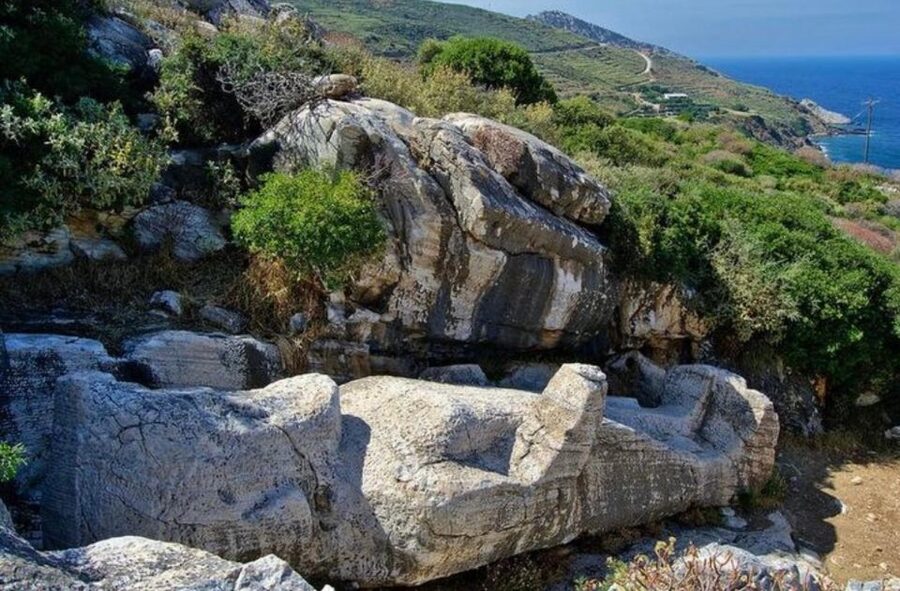
- Kouros statue viewpoint at the north edge, with the unfinished colossal 6th-century BC monument
An 8-hour circuit that gets your bearings on Naxos
This is one of those tours that helps you understand the island’s “shape.” Naxos isn’t just beaches. It has ancient ruins, craft valleys, mountain villages, and a north coast that feels different from the south. In 8 hours, you’ll cover a lot of that variety without needing to plan roads, parking, and timing.
You’ll also appreciate the simple logistics. The tour offers pick-up and drop-off from Naxos Town, Stelida, Ag Prokopios, Ag Anna, and Plaka. That matters on an island where getting from point A to point B can eat up your day if you’re doing it yourself.
Demeter’s Temple and the museum: your first wow moment

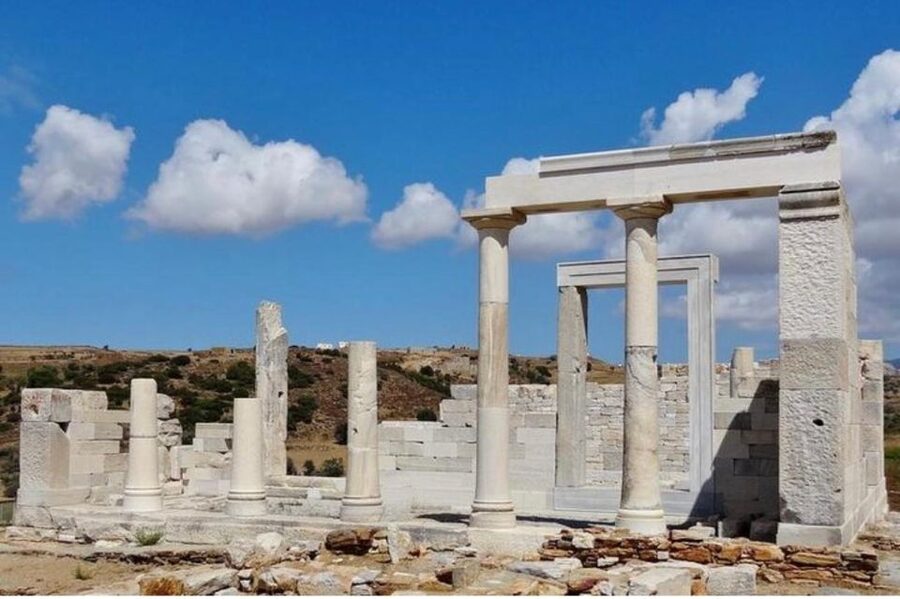
Your day kicks off at the impressive Demeter’s Temple, a restored ancient site dating to around 530 BC. Even before you get into details, the scale and condition of the restoration make it an easy place to focus. It’s not the kind of ruin you have to “imagine back into existence.”
The best part is you don’t stop at the monument. You can also visit the archaeological museum at the same area to see findings connected to the site. That extra context helps the temple feel less like a photo background and more like a place with evidence—tools, objects, and remnants that make the story tangible.
Practical tip: wear comfortable shoes. This is a temple area where you’ll likely move around at a walking pace, and you’ll want your feet to keep up with your curiosity.
Damalas in the Tragea Valley: crafts you can almost touch
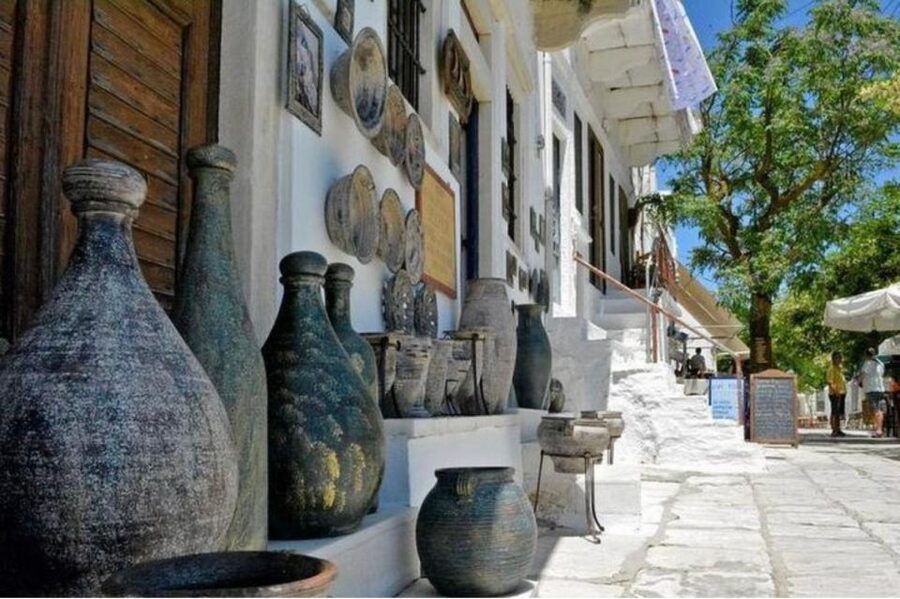
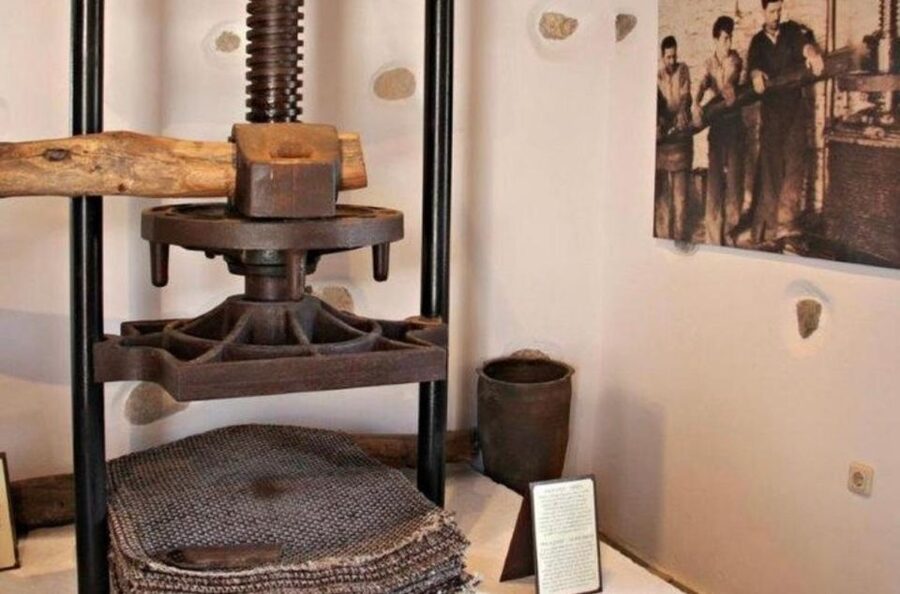
Next comes Damalas, a small village in the Tragea Valley. This is the stop that feels most hands-on, because you’re seeing traditional production rather than just looking at a view. You’ll get a demonstration linked to the only remaining traditional pottery workshop and you’ll also see a traditional restored olive press.
Even if you’re not a pottery person, pay attention to the process. The demonstrations help you understand why these places mattered locally: clay work and olive pressing weren’t hobbies. They were part of daily life and local survival. It’s the kind of stop that turns “I saw a village” into “I get why the village exists.”
One heads-up: if you’re the type who likes long, meandering museum time, this crafts stop may feel shorter than you want. Still, it’s a strong contrast to the ancient temple earlier.
Chalki: neoclassical alleys and a citron-focused break
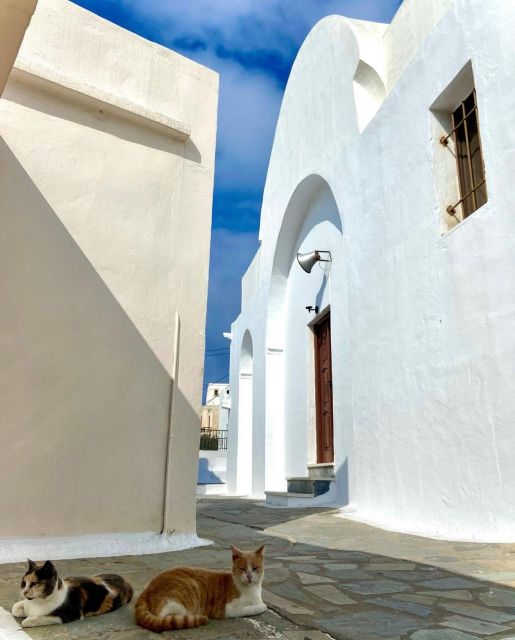
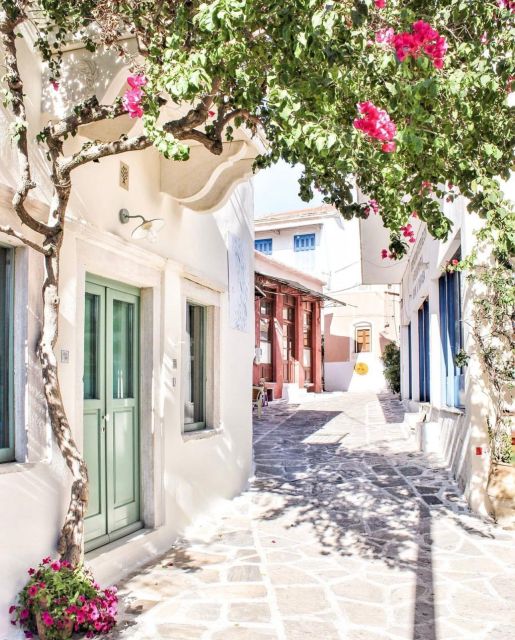
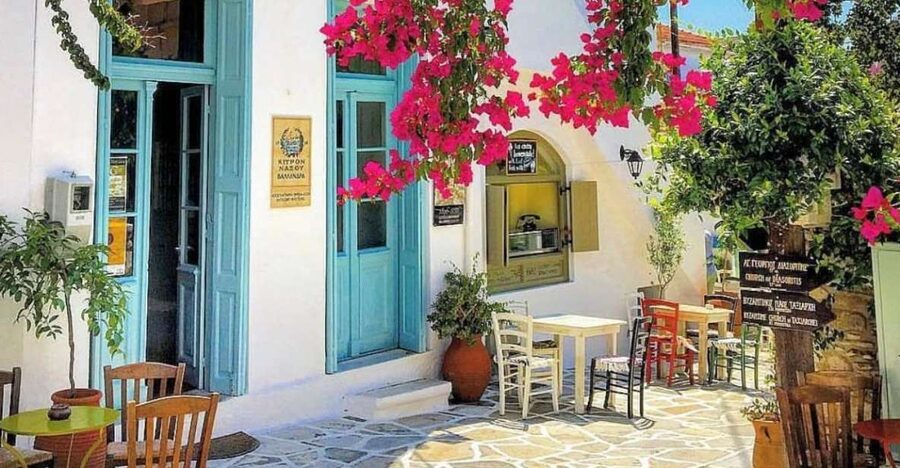
After the valley, the tour moves to Chalki, known for its neoclassical character. You’ll have time to walk around and enjoy picturesque alleys, which is a nice change from open archaeological sites. Chalki feels like a village built for strolling.
Then there’s the citron distillery/museum stop. It’s a smart choice because it connects Naxos to something practical and local: citrus production and the processes behind it. You also get a chance to have an espresso here, which is a small detail that makes the break feel civilized instead of rushed.
The drawback: this portion can feel like a “see it, taste it, move on” moment. If you want deep shopping time, Chalki may not give you enough room to do both browsing and sightseeing thoroughly.
Apeiranthos, the marble village: where the streets do the talking
The day’s biggest style moment is Apiranthos (often spelled Apeiranthos), famous as the marble village. This is where you’ll want your camera ready. The marble cobbled streets and the look of the village buildings create a built-in photo set, so even casual walking turns into a mini tour of textures.
What I like here is the change in environment. Earlier you’re dealing with ancient stone and valley workshops. At Apiranthos, the stone becomes the aesthetic. You’re moving through a place where materials shape the vibe.
Do plan for walking. Cobblestones look charming, but they can slow you down if you’re wearing shoes that aren’t comfortable. Also, budget your energy for this section because the rest of the day still includes a north-coast finish.
A note on pacing: if you want more time to sit, linger, or do slow town wandering, this may be the stop you’d love to stretch.
Apollonas and the north edge: sea time and a softer landing
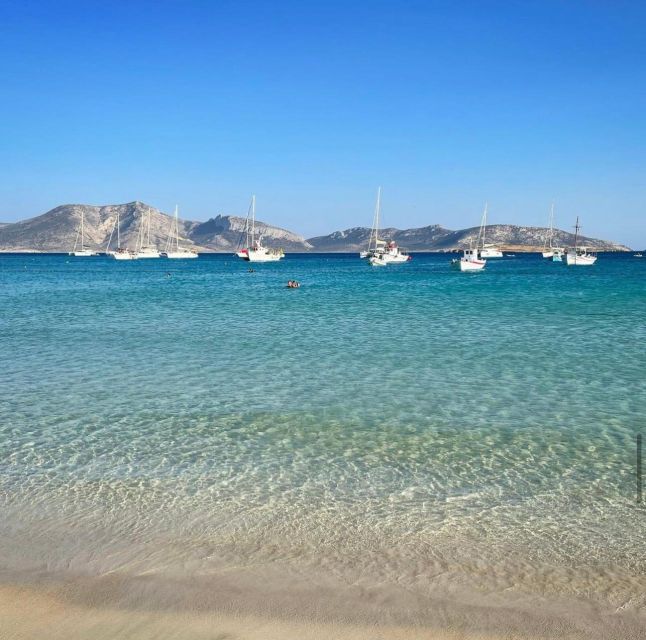
Next you head to the north part of Naxos, finishing on the north edge at Apollonas. This is a smaller Cycladic-style village by the sea, and it’s positioned well for a decompression moment. The tour keeps it flexible here: you can swim or simply relax at cafés along the water.
This part of the day is valuable because it balances the earlier schedule. After temples, crafts, and village walking, a coast-side pause helps the whole tour feel more pleasant instead of like a checklist.
Practical tip: bring swimwear if you can. The tour gives you the option to enjoy the sea at the end, and using it can turn a good sightseeing day into a memorable one.
The Kouros statue and the ride back with coastline views
On the way back, you’ll stop at a monumental Kouros statue. This is the unfinished colossal figure dating to the 6th century BC, and it’s the kind of ancient artifact you feel from a distance. You get the scale, and you also get the story tension that unfinished pieces carry.
Then the bus continues back to Chora, following the north-northwest coast. This is where you’ll appreciate traveling by road with regular stops. You get views of Agia tower and the North Cyclades islands, which helps you connect the dots between where you just were and what the island looks like overall.
If you’re prone to getting car-sick, sit where you feel most stable and try to look forward. The day includes multiple drives, and the coastal stretch can be calmer if you’re not fighting your stomach.
Price and what $35 really buys you
At $35 per person for an 8-hour tour, this is good value if your goal is variety. You’re paying for transportation, a live English guide, and a local multi-lingual escort working with the group. That means you’re buying time and mental energy back. You don’t have to coordinate separate rides for each village and ruin.
What’s not included matters. Entrance tickets are not included, and neither are food and drinks. So you’ll want to budget for museum/site entry costs plus at least one meal or snack. The espresso stop in Chalki is part of the day, but it’s still a drink you should expect to pay for unless your ticket specifically covers it (the tour data here only says food and drinks are not included).
For me, the best “value proof” is the mix:
- Ancient monument plus museum context
- Craft demonstrations tied to daily life
- Mountain village charm with marble streets
- North-coast village time by the sea
- A major statue stop plus coastal viewpoints
If you only wanted one village and one ruin, a half-day could be cheaper. If you want an island orientation with real stops, $35 is a fair trade.
Who this tour fits best (and who should skip it)
This tour fits you if you want maximum variety with minimal planning. It’s also a good choice when you’re staying in or near Naxos Town, Stelida, Ag Prokopios, Ag Anna, or Plaka and want an easy pick-up plan.
It may not fit you perfectly if you’re the type who wants deep, slow wandering in one place. The stops are well chosen, but the pacing means you’ll likely feel the time limit in Chalki and Apiranthos.
If you care about how the day runs, aim to be present and ready for the guide’s rhythm. The guide and driver teamwork comes through, and it can make the difference between a chaotic day and a smooth one. Based on the strongest feedback, the driver quality and the guide’s storytelling are big reasons people walk away happy.
Should you book this Naxos bus tour?
I’d book it if you want a smart first-or-second day on Naxos and you don’t want to spend your vacation figuring out logistics. The itinerary covers the island’s key personality traits: ancient sites, craft traditions, mountain-village beauty, and a north-coast sea break.
Skip it only if your priority is long stays in a couple of places. If that’s you, you’ll probably want to build your own schedule so you can linger where you feel like lingering.
If you do book, do one simple thing: pack comfortable shoes and plan for extra costs at entrances and for your own food. Then you’ll get the main payoff—a well paced, island-wide perspective in a single day.
FAQ
How long is the Naxos bus tour?
It lasts 8 hours.
Where are the pick-up and drop-off locations?
Pick-up and drop-off are available at Naxos Town, Stelida, Ag Prokopios, Ag Anna, and Plaka.
Is there a live guide, and what language is it in?
Yes. There is a live English tour guide, plus a local multi-lingual escort.
What is the price per person?
The price is $35 per person.
Are entrance tickets and meals included?
No. Entrance tickets and food and drinks are not included.
What should I budget for besides the tour price?
You should budget for entrance tickets, food, drinks, and personal expenses.
Is it worth it?
If you want Naxos in one day with ancient sights, mountain villages, and a sea-side finish, this is a strong way to do it. The combination of Demeter’s Temple, Damalas craft demonstrations, Apiranthos marble streets, and the north-coast time at Apollonas makes the day feel full without being nonstop chaos.