
A quick ride beats second-guessing Chester. This City Sightseeing loop is a hop-on hop-off bus that lets you pace yourself through Chester and Cheshire, with English commentary as you roll past the big landmarks and river views.
I love two things about it right away: the clear English narration that helps you understand what you’re looking at, and the flexibility of a 24- or 48-hour pass so you can ride once for orientation and again when you find something you want to linger on. One possible drawback: if you’re the type who hates waiting, some stops can feel a bit drawn out, so it helps to treat this as a sightseeing tool, not a fast transfer.
The full loop is about 60 minutes, and you can stay onboard the whole time or get off whenever a street, view, or story catches your eye. The buses are heated, too, which matters in the UK when the sky turns gray.
In This Review
- Key things I’d plan around before you ride
- The 60-minute loop that actually helps you plan Chester
- 24 vs 48 hours: choose based on how you like to travel
- If you’re short on time (24-hour pass)
- If you want a second day of flex (48-hour pass)
- Getting on: the bus stops that matter for timing and orientation
- Where the ride begins
- How often buses run (this affects your “hop-on” comfort)
- The route also ends at the station late in the day
- Stop-by-stop: what you can do with each place on the route
- Stop 1: 21 Waterside View, Chester Bus Interchange
- Stop 2: 86 Foregate St, Foregate Street
- Stop 3: Premier Inn Chester (Railway Station), City Road
- Stop 4: Railway Station (Stop S5), Chester Railway Station
- Stop 5: Vicar’s Lane (Stop G), St John’s Church, Vicar’s Lane
- Stop 6: The Groves, The Groves
- Stop 7: Six One Six Restaurant & Bar, Pepper Street
- Stop 8: Chester Bells Coach, Grosvenor Street
- Stop 9: 5 Overleigh Rd, Handbridge
- Stop 10: Kings Head Chester, Lower Bridge Street
- Stop 11: Black Friars, Nicholas Street
- Stop 12: Chester Racecourse, The Old Port
- Stop 13: Chester City Mission, Hunter Street Town Hall, Cathedral and New Market
- What the commentary and booklet give you (and when it feels best)
- Timing tips: when to ride and how to avoid the most common annoyances
- For the best first ride
- For comfort
- For photo lovers
- If you hate waiting
- Price and value: what you’re really paying for at about $13.88
- Should you book this Chester hop-on hop-off bus tour?
Key things I’d plan around before you ride
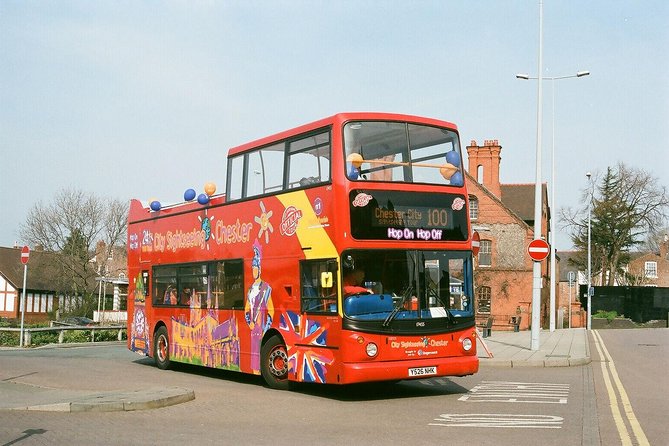
- 15+ marked stops, 13 named stops along one route, so you can hop back on without rethinking your whole day.
- River Dee views show up as part of the route story, which makes the bus feel less like transport and more like a moving postcard.
- English audio + live guide meaning you get narration you can follow, plus a human voice if you have questions.
- 24-hour and 48-hour options so you can split your sightseeing across one day or two.
- Buses every 60 minutes, or every 30 minutes in peak summer, which affects how “quick” your hop-ons will feel.
- Top-deck sightlines work well for photos, and several riders highlight that the commentary is loud enough to hear on open-air decks.
The 60-minute loop that actually helps you plan Chester
Chester can feel compact, but it’s not simple. You’ve got Roman-era walls, medieval streets, and riverside scenes that all sit in close proximity. The trick is knowing where the interesting parts are before you start walking in every direction.
This tour gives you that foundation fast. In roughly an hour you’ll get a guided sweep past major sights, plus context for what you’re seeing—especially the Roman and castle-side legends that get mentioned during the ride. If you’re new to Chester, that narrated “what is this and why does it matter” is the difference between sightseeing and just passing by buildings.
Also, you’re not trapped. You can ride the loop straight through for a clean first pass, or hop off mid-route, explore, and then come back on later. That’s the real value of a hop-on hop-off bus in a city like this: you buy time and reduce decision stress.
24 vs 48 hours: choose based on how you like to travel
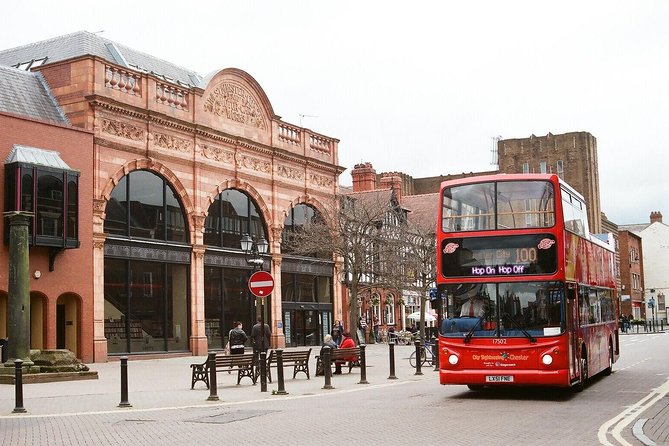
You can choose between a 24-hour or 48-hour pass, and that choice changes how useful the bus becomes.
If you’re short on time (24-hour pass)
A 24-hour option makes sense when:
- You want one strong intro ride to understand the layout.
- You plan to do museums or a couple of walks on your own after the bus points them out.
- You’re traveling with kids or anyone who wants breaks without stopping the whole day.
The bus loop is about 60 minutes, so think of the ticket as paying for that overview plus the chance to return to spots you actually care about.
If you want a second day of flex (48-hour pass)
A 48-hour pass is best if you:
- Want to explore slowly and don’t mind re-routing your walk based on what you notice.
- Prefer to come back to the river area or central streets when the light is better.
- Might do one attraction first, then decide later what else is worth the effort.
This is one of those cases where the extra day can turn the bus from “nice to have” into “smart planning,” especially if you find yourself stopping the first day to take extra photos or wandering down side streets after hearing the narration.
Getting on: the bus stops that matter for timing and orientation
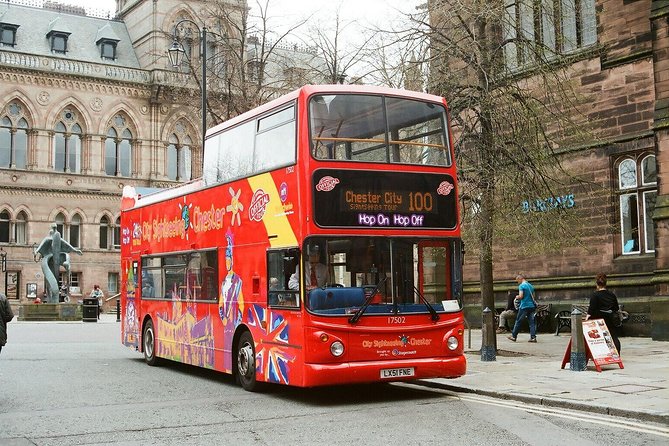
The tour uses one loop with multiple stops around central Chester. It’s designed so you can start at one place, hop off, and still pick up the route again later.
Where the ride begins
Stop 1 is 21 Waterside View / Chester Bus Interchange. First departure is at 9:20 AM, and last departure from Stop 1 is 6:20 PM during the operating season.
A practical note from real-life experience: if you’re arriving for your first ride, give yourself a little extra time to locate the exact starting stop. One rider even flagged a rough start in finding the starting place, and that’s the kind of stress you can avoid by arriving early and checking the stop signage.
How often buses run (this affects your “hop-on” comfort)
- Most of the season: buses run every 60 minutes.
- Peak period (24th May to 31st August): buses run every 30 minutes.
That difference matters. Every 30 minutes feels forgiving. Every 60 minutes can feel like you’re waiting, especially if you hop off and then realize you want to return sooner.
The route also ends at the station late in the day
The last two buses of the day end the route at Chester station. So if you’re planning a late stop far from the station, you’ll want to aim earlier rather than banking on a final hop back.
Stop-by-stop: what you can do with each place on the route
The route lists 13 named stops, and the narration covers major landmarks and areas that aren’t always right at the curb. Here’s how I’d think about each stop so you can use the bus like a tool.
Stop 1: 21 Waterside View, Chester Bus Interchange
This is a strong first boarding point because it’s a transit hub. It’s also the easiest stop to connect with if you’re arriving by bus and want an immediate orientation ride.
Why it’s useful: you can start, ride the loop, and then decide what to revisit without feeling lost.
Watch-outs: starting at the interchange can still be confusing the first time, so arrive a few minutes early.
Stop 2: 86 Foregate St, Foregate Street
Foregate Street is one of the city’s main drags, so it’s a good middle-of-the-action stop. If you want shopping, quick café breaks, or central wandering, this is the sort of place you can hop to and then build around.
Why it’s useful: you’re still near the core streets, so it’s easy to transition from bus to walking.
Stop 3: Premier Inn Chester (Railway Station), City Road
This stop ties into the rail area. If you’re starting the tour after a train arrival, it saves time because you don’t have to backtrack across town first.
Why it’s useful: it reduces the “where do I start?” problem.
Stop 4: Railway Station (Stop S5), Chester Railway Station
If you missed the earlier rail-area stop, this gives you another option close to the main station. It’s also a practical pickup point later if you’re hopping on and off.
Why it’s useful: it’s a reliable anchor point for the day.
Stop 5: Vicar’s Lane (Stop G), St John’s Church, Vicar’s Lane
Church-area stops often work best for short walks and calm photo breaks. Even if you don’t go inside, it’s a nice waypoint to reset your pace.
Why it’s useful: it’s a break from the busiest street corners.
Stop 6: The Groves, The Groves
The Groves is ideal when you want scenery that isn’t just buildings. This is a stop that can help you balance “sightseeing” with “a real pause,” especially if the weather is cooperative.
Why it’s useful: it gives you space to slow down for a bit.
Stop 7: Six One Six Restaurant & Bar, Pepper Street
This kind of stop is handy because it sits near places where you might actually want to spend time—meals, drinks, and casual wandering.
Why it’s useful: it makes the bus schedule feel less like a checklist.
Stop 8: Chester Bells Coach, Grosvenor Street
Grosvenor Street is where you can connect with museum interests. The route highlights the Grosvenor Street Museum, so this stop lines up well with that kind of stop-and-go planning.
Why it’s useful: it helps you turn the bus narration into a real visit without guessing too much.
Stop 9: 5 Overleigh Rd, Handbridge
Handbridge is a clue that you’re heading toward the river’s wider views and a more local-feeling side of Chester. If river scenes are part of your must-see list, this is a logical stop to get off and walk a little.
Why it’s useful: it can shift the vibe from central streets to river-side atmosphere.
Stop 10: Kings Head Chester, Lower Bridge Street
Lower Bridge Street is another smart “get off for views” stop. The bus route specifically calls out the River Dee scenery, so when you’re near bridge territory you’re positioned for great angles and a more cinematic walk.
Why it’s useful: it’s a strong pick if you want photos plus a short stroll.
Stop 11: Black Friars, Nicholas Street
This stop anchors you near areas that feel historic and older-street shaped. If you’re chasing atmosphere and architecture rather than just the biggest landmark names, this is the kind of stop that can pay off.
Why it’s useful: it supports slow walking, not just photo pauses.
Stop 12: Chester Racecourse, The Old Port
Even if you’re not attending an event, a racecourse stop gives you a wider view context. The route also ties in the Old Port area, and that riverside proximity is part of the tour’s appeal.
Why it’s useful: it adds variety beyond the tight historic core.
Stop 13: Chester City Mission, Hunter Street Town Hall, Cathedral and New Market
This is a heavy-hitter cluster stop. Town Hall, the Cathedral, and New Market are the kind of places that can anchor the rest of your day, especially if you want to end with food, shopping, and landmark time.
Why it’s useful: it’s a natural “wrap up here” location.
What the commentary and booklet give you (and when it feels best)
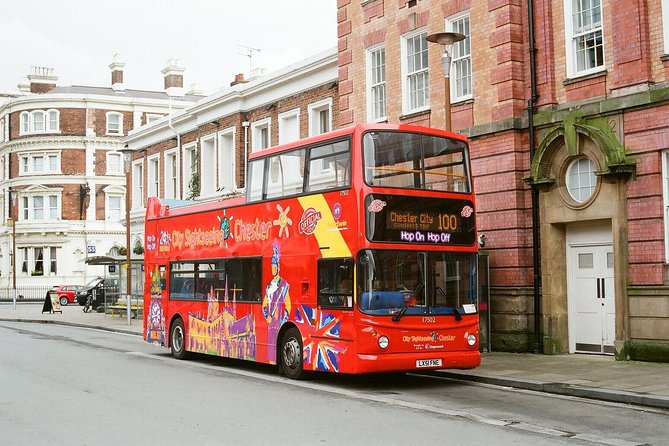
This tour offers audio guide commentary in English plus a live guide in English, and you’ll also get an information booklet with a map and local offers.
The narration is the main reason hop-on hop-off works here instead of just being a bus that passes by. It doesn’t just label places. It helps connect sights to the stories behind them, including:
- Legends tied to Chester Castle
- References connected to the Roman Amphitheatre
- A guided sense of place around the riverside, especially the River Dee
One more practical upside: multiple riders highlight that the commentary is easy to follow and loud enough. If you’re on the top deck, clear audio matters—otherwise you just get windy noise.
The booklet is also useful if you want to keep moving without checking your phone every five minutes. Even if you only skim it, having a map and tour info helps you turn the bus route into a plan you can actually use later.
Timing tips: when to ride and how to avoid the most common annoyances
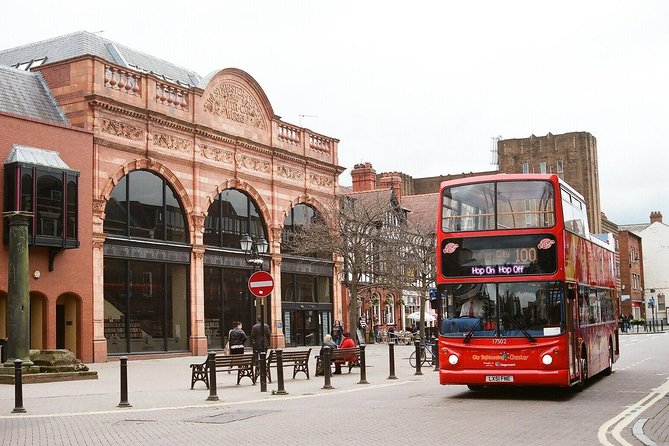
With a loop that’s about 60 minutes and buses running at 60-minute or 30-minute frequency depending on the period, planning your hop-on strategy matters.
For the best first ride
Go earlier in your day. You’ll have more chances to hop off, explore, and still catch another bus even if you lose time to photos or a detour. A first ride is your reconnaissance mission, and Chester is the type of place where that pays off.
For comfort
The bus has heating onboard, which I’d treat as a real plus if you’re riding in shoulder season or late in the day.
For photo lovers
A slow pace is not always bad. Some riders specifically praised that the driving felt slow enough to get photos and enjoy the route, which can make the top-deck experience more relaxing instead of rushed.
If you hate waiting
There are reviewers who felt certain stops took longer than they wanted. So if your patience is short, plan fewer hop-offs and do more walking from just 1–2 stops instead of getting on and off repeatedly.
Price and value: what you’re really paying for at about $13.88
The listed price is $13.88 per person, and the tour gives you about a one-hour loop with guided commentary plus the option of a 24- or 48-hour pass.
To judge value, I look at three things:
- Time saved: if you’d otherwise walk and keep rechecking directions, the bus helps you avoid that loop of second-guessing.
- Interpretation included: you’re not just riding around. You’re getting English narration tied to Chester’s landmarks and stories.
- Flexibility: the hop-on design means you can spend more time where you actually want it.
That said, balance is important. A few riders argued it’s better to walk because Chester is small and the route can feel like it covers the main streets anyway. So if your ideal day is long walking loops with no waiting, you may prefer self-guided walking.
Still, if your goal is an easy overview plus less friction in navigating, this bus has strong value—especially for families, first-timers, or anyone with limited time who wants to see more without exhausting their feet.
Should you book this Chester hop-on hop-off bus tour?
Book it if:
- You want a guided overview of Chester’s key sights fast.
- You like the idea of riding once to orient, then using the pass to return to specific areas.
- You’ll benefit from English audio plus live commentary rather than reading your way through the city.
- You’re traveling with kids or anyone who appreciates heated comfort and easy stops.
Consider skipping or downgrading your expectations if:
- You strongly prefer walking everywhere and don’t want any wait time.
- You’re likely to find the “hop off, wait for the next bus” rhythm annoying.
- You’re only interested in one or two places and can easily reach them on foot.
If you’re on the fence, here’s the simple rule: if Chester is new to you, I’d book. The bus is at its best as an orientation tool that helps you decide what to do next.