
A city bus that actually helps you connect the dots is rare. Lisbon’s Hop-On Hop-Off loop does that with three routes that skim major sights plus neighborhoods people usually only see from a viewpoint. I particularly like the green line approach for tight, hilly lanes, and I also appreciate that stops line up well with places like the tile museum and Belém waterfront. One thing to consider: based on mixed feedback, you should expect occasional wait times and some navigation confusion when stops are hard to spot.
This is one of those hop-on tours where the best experience comes from planning how you’ll hop, not just buying the ticket and hoping for the best. If you’re visiting for a short stay and want a low-effort way to sample multiple parts of Lisbon, it can be a solid move.
In This Review
- Quick Takes on City Sightseeing Lisbon Bus (What to Expect)
- Before You Ride: Tickets, Headphones, and Route Timing
- Red Line: Marquês Pombal to Oceanário Lisboa and the East-Side Pull
- Blue Line: Belém Waterfront, Jerónimos, and the Tagus River Story
- Green Line: Castelo, Miradouros, and the Narrow-Street Route
- The Night Tour and the Included Walking Tours (72-hour Ticket)
- Smart Stop Strategy: How to Hop Without Losing the Day
- Price and Value: Is $39.70 a Fair Deal?
- Should You Book This Lisbon Hop-On Hop-Off Bus?
- FAQ
- How long is the tour on each route?
- Which languages are available for the audio guide?
- Do they accept mobile tickets?
- What times do the Red and Blue routes run?
- How does the Green Line schedule work?
- What’s included with the 72-hour ticket besides bus access?
- Where do the included walking tours meet?
- Are there any discounts included with the ticket?
- Can I cancel for a full refund?
- Are any stops temporarily out of service?
Quick Takes on City Sightseeing Lisbon Bus (What to Expect)
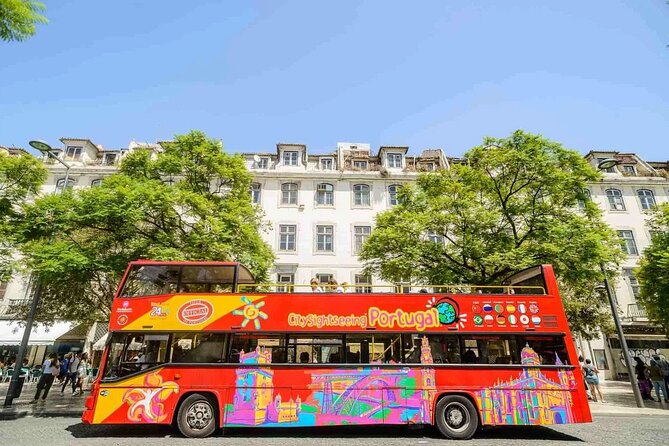
- Three routes that cover the city’s big “clusters”: waterfront/Belém, central viewpoints, and the newer east-side areas.
- Audio in 13 languages with free headphones, so you can ride without reading every sign.
- Simple hop strategy works best if you treat the bus like a moving transit line, not a single guided ride.
- Green Line uses smaller buses for narrow streets, which can be a win for comfort and access.
- 72-hour ticket adds extra walking tours plus a night bus that starts at Marques de Pombal.
- Big drawback to plan around: reliability and stop-finding can be hit-or-miss, especially late in the day.
Before You Ride: Tickets, Headphones, and Route Timing

You’re buying a 48 or 72-hour hop-on hop-off pass, with audio guide commentary in 13 languages and free headphones. You can use a mobile ticket (or printed vouchers), and you can redeem it at any stop along the route.
Each route ride segment is about 105 minutes, and buses run on set schedules:
- Red Route: first departure 9:30am from Marques de Pombal, last departure 5pm; about every 30 minutes.
- Blue Route: first departure 10am from Marques de Pombal, last departure 5pm; about every 40 minutes.
- Green Route (if you select all-routes): first departure 10am from Marques de Pombal, last departure 5pm; about every 30 minutes.
Two practical notes matter more than they sound:
1) Bring your patience for waiting at popular stops, especially mid-afternoon.
2) When you board, confirm you have working audio immediately, since headphone issues were a recurring complaint in feedback.
One small comfort perk: one review specifically mentioned a restroom behind the main stop available for no charge. That’s not something every bus tour includes, and it can save you time.
Red Line: Marquês Pombal to Oceanário Lisboa and the East-Side Pull

The Red Line is the one that leans toward Lisbon’s larger landmarks and newer/expansion areas, starting at Marquês de Pombal. If you want a route that mixes classic neighborhoods with major attractions that sit farther out, this is a good backbone.
Here’s what you’ll see as you move through it (and why it matters):
- Marquês de Pombal (Stop 1): a strong starting point because it feeds into lots of connections. It’s also where the night tour begins (on the 72-hour ticket).
- Campo Pequeno (Stop 3): a central reference point if you’re trying to time your hops around the city’s core.
- Santa Apolónia (Stop 5): useful for getting oriented on the east-to-central side.
- Museu da Água / Poseidon by PichiAvo (Stop 6): a street-art mural moment that’s quick to spot from the stop area. It’s a good “blink and you’ll miss it” photo stop if you’re the type to plan for one quick scenic break.
- Museu do Azulejo / Igreja Madre Deus (Stop 7): this is one of the strongest “get off and go” stops on the route if tiles are your thing. Even if you don’t go inside, the building area gives you that unmistakable Portuguese aesthetic context.
- Palácio Mitra / Poco do Bispo (Stop 8): a classic “we’re in a real neighborhood” kind of stop—good for a stroll if your legs are awake.
- Oceanário Lisboa (Stop 9): an easy target if you want a set-piece attraction rather than more wandering.
- C.C Vasco da Gama and Torre Vasco da Gama (Stops 10–11): these are your modern Lisbon anchors—perfect if you’re mixing sightseeing with a break at a mall or a viewpoint area.
- Estação Oriente (Stop 12): a major transit hub, helpful for re-positioning without stress.
- Entrecampos (Stop 13) and Jardim Zoológico (Stop 14): a reminder this route reaches beyond the “postcard core.”
- Jose Malhoa / Mercure and Novotel areas (Stops 15–16) and El Corte Inglés (Stop 17): if your hotel is in this corridor, you’ll appreciate the practical logistics.
- Parque Eduardo VII (Stop 18): a nice closing anchor because it connects you back toward the central viewpoints and easier walking.
The Red Line is usually easiest when you treat it like a set of jump points: ride until you hit a stop you truly want, hop off, and don’t overthink the in-between views.
Blue Line: Belém Waterfront, Jerónimos, and the Tagus River Story
The Blue Line is the “Lisbon postcard” route, stretching from Marques de Pombal through central hangouts and then out to Belém. If you’re here for first-timers’ must-sees and don’t want to navigate buses/metros all day, this is the one I’d prioritize.
Key stops and why they’re worth your attention:
- Príncipe Real (Stop 2): a central neighborhood vibe stop. It’s also a good “reset” point if you’ve been hopping and need a break.
- Cais do Sodré (Stop 3): a transit-friendly area that helps you keep moving without losing time.
- Mercado da Ribeira (Stop 4): ideal when you want food without committing to a specific restaurant at the start of the day.
- Pilar 7 – Bridge Experience (Stop 5): a quick add-on option if you like interactive viewpoints.
- Museu dos Coches at Estação Fluvial Belém (Stop 6): one of those “Belém is more than a river walk” stops.
- Mosteiro dos Jerónimos (Stop 7): one of the city’s signature sights. Even if you don’t go inside, you’ll feel why Belém gets so much attention.
- Torre de Belém (Stop 8): a must-see shoreline landmark. This is the kind of stop you build your day around.
- Padrão dos Descobrimentos (Stop 9): a strong history-plus-art stop for photos and pacing.
- MAAT / Museu da Electricidade (Stop 10): modern contrast to the older monuments. If you like variety, this is your “change the visual mood” stop.
- Doca Alcântara (Stop 11): helps you enjoy the waterfront approach rather than only seeing it at one fixed angle.
- Basilica da Estrela (Stop 12): a classic church focal point when you’re still moving but want something recognizable.
- Restauradores areas (Stops 13–14): these are useful for returning toward central shopping and easy walk routes.
A warning I’d give you based on common issues: some people reported confusion when trying to locate the correct bus line at check-in areas. If you’re switching from Blue to another route, don’t waste time guessing—ask the staff at the starting stop which route you’re on and where that bus will let you off.
Green Line: Castelo, Miradouros, and the Narrow-Street Route

The Green Line is the small-street specialist. It’s the one that goes toward Castelo S. Jorge, Miradouro da Graça, and the Feira da Ladra area, with Martim Moniz and Praça da Figueira in the mix. If you want Lisbon’s viewpoints without spending your whole day on steep back-and-forth climbing, this route is the smartest shortcut.
Stops in the Green Line order and what you should expect:
- Marques de Pombal → Restauradores (Stops 1–2): a central entry into the old-city climb zone.
- Martim Moniz (Stop 3): a practical starting point for orienting yourself near the older lanes.
- Castelo S. Jorge (Stop 4): the big one. This is a stop where you can realistically spend a lot of time because it’s not only the fortress area—it’s the panorama payoff.
- Miradouro da Graca (Stop 5): if you want the city spread out below you, this is the viewpoint target.
- Panteão Nacional (Stop 6): an architectural landmark that fits well with a viewpoint day.
- Feira da Ladra (Stop 7): a flexible stop for people who like markets or just want to wander a neighborhood lane.
- Praça da Figueira (Stop 8): a central square that’s a nice “come down from the hills” stop.
- Back through Restauradores (Stop 9): a return anchor.
One of the best-reviewed aspects of the experience is that the green line runs through narrow, hilly streets using smaller buses. That usually means you spend less time craning over crowds and more time feeling like you’re actually moving through Lisbon, not just around it.
If your goal is old Lisbon—castle views and miradouros—build your plan around getting on and off this route a few times rather than treating it like a one-time ride.
The Night Tour and the Included Walking Tours (72-hour Ticket)
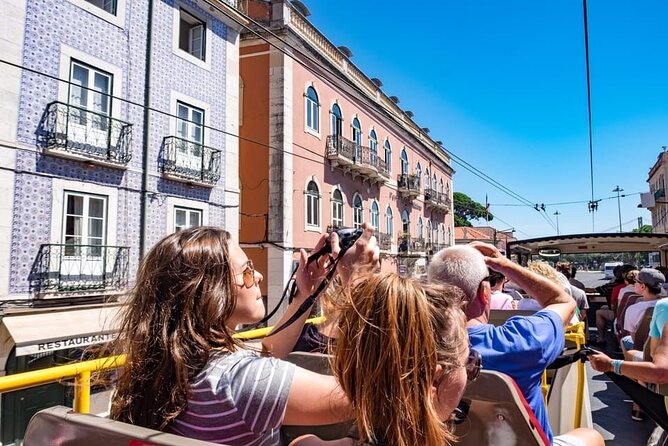
If you get the 72-hour option, you don’t just get more bus time. You also get:
- a Night Tour (starts at Stop 1 Marques de Pombal, departs daily at 8pm, about 1 hour)
- two included guided walking tours
The two walking tours are scheduled as:
- Carmo – Miradouro S. Pedro de Alcantara Walking Tour
Meeting point: Stop 13 on the Red Line / Stop 2 on the Green Line
Departs at 10am daily, about 1 hour
- Castelo – Alfama Walking Tour
Meeting point: Stop 4 on the Green Line (Castelo San Jorge)
Departs at 5pm daily, about 1 hour
Why this is valuable: hop-on buses are good for getting close. Walking tours are better for moving through the human-scale streets you can’t fully understand from a seat. This is especially true around miradouro zones where timing and route choices make your experience smoother.
One caution: night routes and timed walking elements are easier to mess up when you’re tired. If you’re the type who likes a strict schedule, go for it. If you prefer a loose plan, consider whether you can commit to the meeting times.
Smart Stop Strategy: How to Hop Without Losing the Day

Here’s how I’d use this tour to get maximum value out of it, even if bus timing or stop signage isn’t perfect.
First, pick your “musts” before you start boarding. Lisbon’s stops are dense, and once you start hopping you’ll be tempted to get off “just because.” If you only have one full day, choose one stop on each route that you truly care about:
- Red: Museu do Azulejo or Oceanário Lisboa
- Blue: Mosteiro dos Jerónimos or Torre de Belém
- Green: Castelo S. Jorge or Miradouro da Graca
Second, assume wait time will happen at peak moments. Some feedback mentioned buses arriving full and people needing to wait for the next one. That means you should keep your “must-see” blocks flexible, not hard-timed.
Third, be ready for audio-guide quirks. A few issues showed up repeatedly:
- headphone connections can be unreliable
- audio commentary can feel sparse between landmarks
- stops aren’t always announced clearly by the driver
So do this: when you board, plug in the headphones and test immediately. Then keep your eyes on the stop area rather than waiting for a spoken cue.
Fourth, don’t panic about confusion at the start. One review described checking in at a building that seemed tied to a different line, then getting pointed to the correct starting bus route by a staff member named Deborah. In practice, that tells you what to do: if the first stop area looks off, ask quickly rather than wandering for long stretches.
Price and Value: Is $39.70 a Fair Deal?

At $39.70 per person (for the experience as listed), you’re buying convenience: a timed network of stops that covers a lot of Lisbon with less decision fatigue. The key value driver is that you’re not paying per attraction—your ticket is really paying for transit and time-saving.
Where the value gets shaky is when buses run late, or when you spend extra time figuring out where the stops are or which line you’re on. If you’re the kind of traveler who hates uncertainty, that can cost you more than the ticket price.
Here’s the fair way to judge it:
- If you use the bus to connect major sights and neighborhoods, the price tends to feel reasonable.
- If you end up mostly waiting, missing your preferred boarding, or riding without stopping much, it can feel expensive.
The 72-hour add-ons can improve value if they fit your schedule. The night tour and the two walking tours (Carmo and Castelo/Afama) are the most “extra” part of the package, especially if you like structured orientation around viewpoints.
Should You Book This Lisbon Hop-On Hop-Off Bus?

Book it if you want an easy way to cover Lisbon in segments: Belém one day, viewpoints another, and the east-side attractions without micromanaging every connection.
Skip or adjust expectations if you’re very time-sensitive or you hate waiting for schedules you can’t control. Some of the negative feedback is serious—unreliability, app or audio problems, and difficulty finding stops quickly. If that’s your travel style, consider pairing this with Metro/Tram plans so you’re not trapped if a bus is delayed.
My practical recommendation: treat this tour as a planning tool. Use it to get close, then make your sightseeing choices once you’re at the stops that match your mood.
FAQ
How long is the tour on each route?
Each route ride is about 105 minutes.
Which languages are available for the audio guide?
The audio guide is available in 13 languages.
Do they accept mobile tickets?
Yes. Both mobile and printed paper vouchers are accepted, and you can redeem them at any stops along the routes.
What times do the Red and Blue routes run?
Red departs first at 9:30am from Marques de Pombal and last at 5pm, with departures about every 30 minutes. Blue departs first at 10am and last at 5pm, with frequency about every 40 minutes.
How does the Green Line schedule work?
Green (when you select the all-routes option) departs first at 10am and last at 5pm, with departures about every 30 minutes.
What’s included with the 72-hour ticket besides bus access?
The 72-hour ticket includes a night tour and two walking tours: Carmo – Miradouro S. Pedro de Alcantara (10am) and Castelo – Alfama (5pm).
Where do the included walking tours meet?
Carmo – Miradouro S. Pedro de Alcantara meets at Stop 13 on the Red Line or Stop 2 on the Green Line. Castelo – Alfama meets at Stop 4 on the Green Line at Castelo San Jorge.
Are there any discounts included with the ticket?
For the 72-hour ticket, there is a 15% discount at the Gulbenkian Modern Art Centre. You can also get a 10% discount at various City Lockers locations using promo code WELCOMEMADEIRA.
Can I cancel for a full refund?
Yes, you can cancel up to 24 hours in advance for a full refund.
Are any stops temporarily out of service?
Stop 11 is out of use from Wednesday 25th February to Sunday 1st March. Also, Stops 4, 5, and 6 on the Blue Line are temporarily out of service due to roadworks, with Stop 5 served in front of Terminal dos Cruzeiros.