Padua is an easy city to tour twice. This hop-on hop-off bus gives you a 24-hour loop so you can pop out near major sights, then ride on whenever your feet need a break. You’ll get live onboard commentary plus audio-style guidance as the bus rolls past the city’s highlights.
I especially like that you can build your own pace: do the full circuit in one go, or linger for a proper visit at places like the Basilica del Santo. Another plus is how practical it feels on a gray day; I’ve found the bus routine plus clear audio helps you keep moving without getting stuck in confusion.
One drawback to plan around: if you arrive and struggle to spot the right stop, you can lose time. So give yourself a little extra buffer at each boarding point, especially if you’re wet, rushed, or traveling for the first time.
In This Review
- Key Things to Know Before You Ride
- What This 24-Hour Hop-On Hop-Off Pass Gets You
- What’s not included (so you plan smart)
- Finding the Stops in Padua Without Stress
- How I’d Build a Route: Loop Once or Tailor It
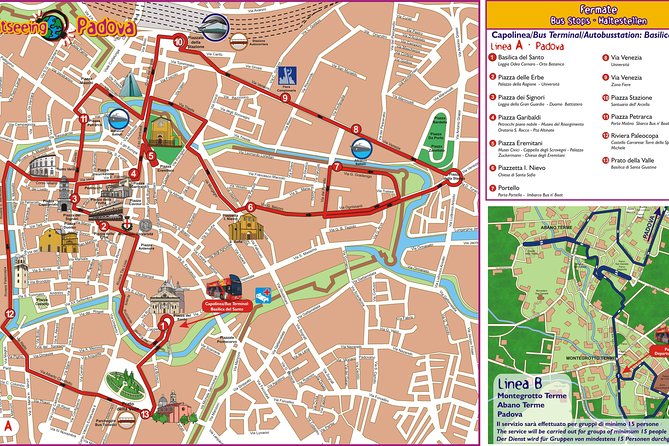
- Stop-by-Stop Guide: From Basilica del Santo to Santa Giustina
- Stop 1: Piazza del Santo 17 — Basilica del Santo
- Stop 2: Piazza delle Erbe — Palazzo della Ragione
- Stop 3: Via Dante Alighieri 17 — Piazza dei Signori
- Stop 4: Piazza Garibaldi — Museo del Risorgimento
- Stop 5: Piazza Eremitani — Cappella degli Scrovegni
- Stop 6: Via Giambattista Belzoni 18 — Chiesa di Santa Sofia
- Stop 7: Via Giovanni Gradenigo 4 — Porta Portello
- Stop 8: Via Venezia 13 — Università (University of Padua)
- Stop 9: Piazzale della Stazione — Santuario dell’Arcella
- Stop 10: Piazza Petrarca 9 — Porta Molino
- Stop 11: Riviera Paleocapa — Castello Carrarese
- Stop 12: Prato della Valle 57 — Basilica di Santa Giustina
- On-Board Comfort: Audio, Wi‑Fi, and Rain-Smart Touring
- Price and Value: Is $17.45 Worth It?
- Who Should Ride This Bus (and Who Might Not)
- Should You Book the Padua Hop-On Hop-Off Bus?
- FAQ
- How long is the ticket valid?
- What time does the bus start running?
- Is this tour open-top and can I hop on and off?
- Is there Wi‑Fi and commentary on the bus?
- Can I use a mobile ticket?
- Is food or hotel pickup included?
- Can I cancel for a full refund?
Key Things to Know Before You Ride
- 24 hours starts at your first bus ride, not at the time you pick up the ticket
- Live onboard commentary helps you connect the dots while you’re seated
- Free Wi‑Fi onboard keeps you online for maps and opening times
- Open-top rides are great for quick views, weather permitting
- 12 marked stops place you near big-name sights like Palazzo della Ragione and the Arena-area churches
- You can hop on and off as many times as you like to shape the day
What This 24-Hour Hop-On Hop-Off Pass Gets You
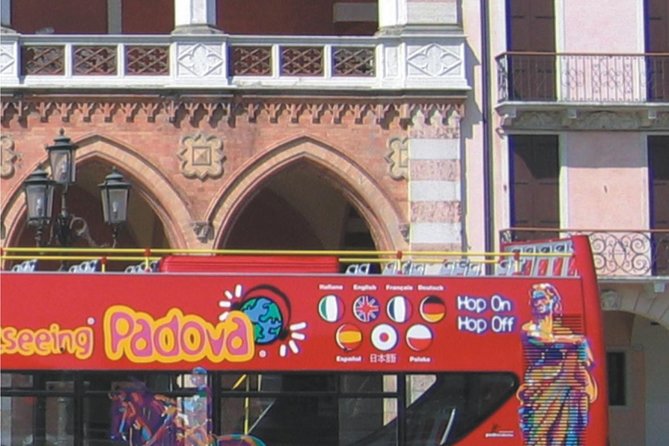
This is a straightforward way to see Padua without locking yourself into a walking tour pace. Your ticket runs for 24 hours and begins when you board your first bus. After that, you can get on and off across the day—continue the loop when you want, skip ahead if a stop looks more useful, and slow down where you’re most interested.
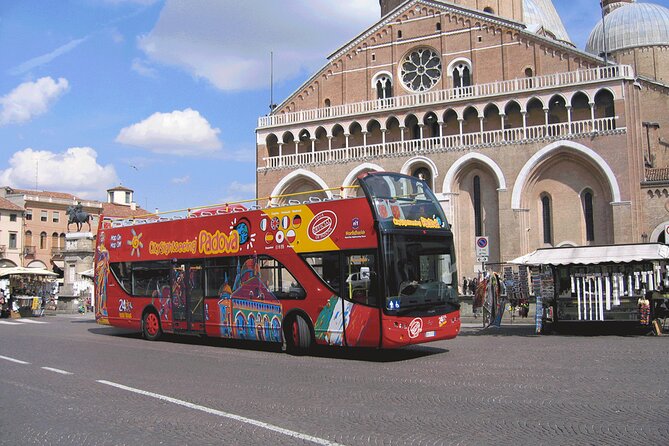
The bus itself is open-top, which matters because Padua is best experienced by noticing details: square layouts, church fronts, and the way neighborhoods connect. Even when you don’t jump off right away, the ride gives you that first “I get it now” understanding of where everything sits.
Onboard, you’ll have live commentary plus audio-style guidance as you pass sights. That combo is a big deal. When you’re hopping between stops, you don’t want to rely only on signboards and guesswork—you want the story while you’re still looking at what the story refers to. And yes, there’s free Wi‑Fi, which makes it easier to check what you want to see next.
What’s not included (so you plan smart)
You’ll pay for your own food and drinks, and there’s no hotel pickup/drop-off. That means you’ll do a short walk to your starting point and between stops when you decide to get off—normal city travel, not a door-to-door service.
Finding the Stops in Padua Without Stress
Here’s the practical warning: the biggest failure point for any hop-on hop-off bus is not the bus. It’s the stop.
One firsthand issue that sticks: a rider couldn’t find the right stops after running toward a bus and ended up unable to get it to stop. That’s not something you should gamble on. Instead, use a simple plan:
- Arrive at your stop a bit early for boarding.
- Know the stop name you’re aiming for (Padua uses a lot of piazzas and street addresses).
- When the bus approaches, be visible and ready to board rather than waving as it passes.
The good news is that service is positioned near public transportation, so you’re not stuck in a remote area. Still, these are real streets and real crowds, so a calm approach beats sprinting.
How I’d Build a Route: Loop Once or Tailor It
You can treat this like a “see it all” day or a “pick my favorites” day.
If you’re short on time, ride the entire loop through first. Then, on the second half of your 24 hours, come back off at the places that pulled you in—like the church you keep thinking about after the bus turns the corner.
If you like structure, I’d choose a base plan using the stop locations that correspond to Padua’s biggest anchors:
- start around the Basilica del Santo area,
- work through the historic center (squares and civic buildings),
- then move outward to the university and the larger religious sites.
The route’s stops also make it easy to split your day into “old town core” and “walkable highlights around the edges,” without committing to one long on-foot hike.
Stop-by-Stop Guide: From Basilica del Santo to Santa Giustina
Below is how I think about each stop—what it’s for and how it can fit into your day. Since hop-on hop-off buses are time-flexible, treat this like a menu: jump off at one, visit, then ride again at your pace.
Stop 1: Piazza del Santo 17 — Basilica del Santo
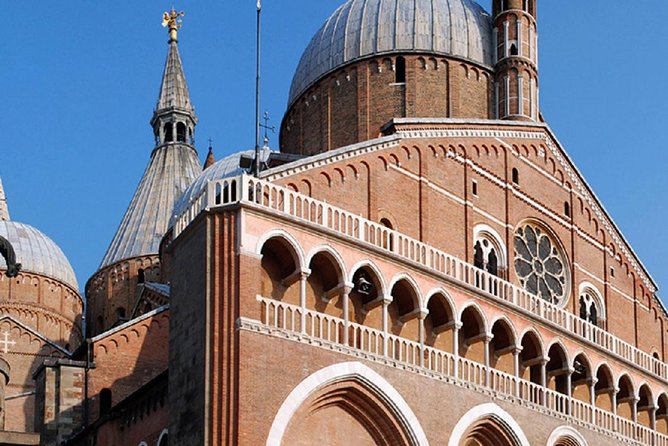
This is your big opener. You’re dropped right at the Basilica del Santo, known for a blend of Gothic and Romanesque architectural styles. If you only do a couple of “major” things in Padua, start here. It sets the tone fast—church architecture changes noticeably as you move between styles, and you’ll see that blend up close.
Possible drawback: if you’re expecting quick exterior photos only, you might feel rushed. This stop invites a real stop-and-look visit.
Stop 2: Piazza delle Erbe — Palazzo della Ragione
This is one of those stops where the square matters. Palazzo della Ragione is noted as 13th-century, which makes it a strong historical anchor for your day. Pair it with a stroll in Piazza delle Erbe, so you don’t treat the visit like a checklist item.
Tip: If you like civic architecture and public spaces, spend time here. If you’re tired, keep it shorter and move on—this area is great, but it can pull you into lingering.
Stop 3: Via Dante Alighieri 17 — Piazza dei Signori
You’ll reach Piazza dei Signori, which is a classic “let’s breathe for a minute” square stop. This is a good option between heavier sights—use it to reset, grab a photo, and check your next connection point for the bus.
What to watch for: plan your hop back on promptly. Squares are where you can accidentally lose 30 minutes just standing around admiring facades.
Stop 4: Piazza Garibaldi — Museo del Risorgimento
If you want more than church-and-palazzo viewing, this stop adds a museum angle: Museo del Risorgimento. It’s a sensible choice if you’re interested in Italy’s modern national story, or if your group includes someone who wants variety beyond architecture.
Consideration: a museum stop can eat time. If your ticket is your full day, that’s fine. If you’re only using part of the 24 hours, be picky.
Stop 5: Piazza Eremitani — Cappella degli Scrovegni
This stop is one of the most “art-focused” moments on the loop: Cappella degli Scrovegni. If you’re the type who wants one signature interior experience, make this your pick.
Possible drawback: interior visits are often the part where timing matters most. If you’re trying to pack the day tightly, keep your hop-on/off strategy flexible.
Stop 6: Via Giambattista Belzoni 18 — Chiesa di Santa Sofia
Now you pivot again to architecture and sacred spaces with Chiesa di Santa Sofia. This is a solid stop if you enjoy comparing different church styles across the city rather than repeating similar exteriors.
Tip: If it’s raining or you’re carrying a lot, this is the kind of stop where you’ll appreciate the bus ride between pockets of walking.
Stop 7: Via Giovanni Gradenigo 4 — Porta Portello
Not all stops are dramatic “attractions.” Porta Portello works well as a quick historical pause—something you can see, photograph, and then decide if you want extra time around the area.
Why it’s valuable: gates/portals give you context for how a city used to connect and control movement. You’ll feel the city’s layout more clearly after you spot these transitions.
Stop 8: Via Venezia 13 — Università (University of Padua)
This is your academic stop: the Università area. You can walk among the historic setting tied to the University of Padua. It’s a great counterbalance to church-heavy sightseeing because it shows another side of the city’s identity.
Best use: spend time here if you like urban life and everyday spaces, not only landmarks. Even if you don’t go deep into buildings, the surrounding atmosphere changes the feel of the day.
Stop 9: Piazzale della Stazione — Santuario dell’Arcella
This stop shifts toward a different part of town logic, anchored near Santuario dell’Arcella. It’s a good “outer” move in your hop-off plan, especially if you’re happy to explore beyond the dense core.
Possible drawback: it’s easier to lose the vibe of the center when you move this far out. If you’re chasing the most iconic sights, consider this as your later-day stop so you’re not drained early.
Stop 10: Piazza Petrarca 9 — Porta Molino
Another gate stop: Porta Molino is ideal if you’re collecting a theme—how Padua’s entrances shaped the city experience. You don’t need long here, which makes it excellent as a “quick hop-off, quick look” stop.
Tip: Pair this with a nearby short walk break instead of treating it as your main event.
Stop 11: Riviera Paleocapa — Castello Carrarese
Here’s the “palace-fortress” style stop: Castello Carrarese. This is a strong choice if you want one spot that feels more defensive or fortress-like in character, compared with the softer shapes of churches and civic squares.
Consideration: fortress-style stops can be hit-or-miss depending on what you like. If you enjoy architecture and walls, you’ll likely enjoy the stop. If you’re exhausted, keep it brief and ride on.
Stop 12: Prato della Valle 57 — Basilica di Santa Giustina
This is a perfect closing anchor: Basilica di Santa Giustina. Ending near a major basilica makes sense because you can wrap your day with a grand, recognizable destination, rather than finishing on a minor portal.
Why I like it as a finale: by the time you reach the final stop, you’ve already trained your eyes on the city’s styles. The last stop becomes the “comparison point” where you notice how Padua repeats and varies architectural language.
On-Board Comfort: Audio, Wi‑Fi, and Rain-Smart Touring
One of the most praised parts of this style of tour is how it keeps you comfortable while you learn. I like that the bus includes live commentary so you’re not stuck reading every street sign. And there’s free Wi‑Fi, which is practical for real travel tasks: checking directions, confirming what you want to see next, and syncing your day.
There’s also a simple comfort factor I’ve come to appreciate: on wet or messy weather days, the bus turns sightseeing into a series of short, protected rides with quick walks. Instead of committing to a long continuous stroll, you can hop off, see a highlight, and climb back aboard without treating rain like a life decision.
Price and Value: Is $17.45 Worth It?
At $17.45 per person, the question isn’t just the price tag. It’s what you get per hour and per stop.
You’re buying a 24-hour hop-on hop-off pass with live commentary and free Wi‑Fi, and you’re dropped near a full menu of major sights: Basilica del Santo, Palazzo della Ragione, the university area, and multiple gate and church stops. In other words, you’re paying for time savings plus guided context.
This value tends to be best when:
- you want to cover a lot of ground without planning every walk,
- you’re traveling with different interests (art, architecture, museum, and more),
- your schedule might shift because of weather or energy levels.
It might not be your best deal if you’re only going to visit one area of Padua. If your day is basically one neighborhood and a couple walks, you may spend less money using a simpler plan.
Who Should Ride This Bus (and Who Might Not)
You’ll likely enjoy this if you’re:
- seeing Padua for the first time and want an easy overview,
- the type who likes deciding on the spot where to spend time,
- traveling with limited time but strong curiosity,
- okay with a city day that includes walking short stretches between stops.
You might pass if:
- you strongly prefer guided tours with fixed timing and no bus waiting,
- you dislike hop-on hop-off formats and want one direct route without choices,
- you know you’ll only use a single stop and nothing else within the 24 hours.
Should You Book the Padua Hop-On Hop-Off Bus?
If you want a low-effort way to get your bearings and still choose your own pace, this is a solid booking. The combination of a 24-hour loop, live onboard commentary, and free Wi‑Fi makes it easy to mix big highlights with short, flexible visits.
Just don’t underestimate the one weak link: finding the right stops quickly. Come prepared—know stop names, allow extra minutes, and board calmly rather than sprinting. If you do that, you’ll get a very practical day of Padua sightseeing with far less guesswork than planning every route from scratch.
FAQ
How long is the ticket valid?
Your hop-on hop-off ticket is valid for 24 hours, and that validity begins when you board your first bus ride.
What time does the bus start running?
The start time listed for the experience is 10:30 am.
Is this tour open-top and can I hop on and off?
Yes. It’s an open-top hop-on hop-off bus, and you can get off and get back on as many times as you like during your 24-hour window.
Is there Wi‑Fi and commentary on the bus?
Yes. The experience includes live onboard commentary and free Wi‑Fi.
Can I use a mobile ticket?
Yes. You’ll use a mobile ticket.
Is food or hotel pickup included?
No. Food and drinks are not included, and there’s no hotel pickup or drop-off.
Can I cancel for a full refund?
Yes, you can cancel up to 24 hours in advance of the experience start time for a full refund.