You’ll see a lot of Saigon fast. This hop-on hop-off bus tour is built for first-time orientation, with two routes and audio-guide storytelling that helps you connect the big landmarks on your own schedule. I like the option of an open-top upstairs for skyline views (with an AC interior if weather turns), and the fact that it’s simple to pace yourself with frequent departures. One drawback to plan around: the onboard commentary can feel a bit dry, and the start points can be confusing if you mix up an online voucher with the local ticket exchange.
You’ll pass the names you’ve heard before—Saigon Opera House, War Remnants Museum, Ben Thanh Market, the Notre Dame Cathedral and Central Post Office—plus a string of neighborhoods that give the city its everyday texture. The ticket includes a free guidebook with maps, recommendations, timetables, and coupons, which is handy when you want to turn one bus ride into a fuller day.
Quick take: what you should know before you ride
- Two routes, flexible time: do a full loop or hop off, explore, and re-board at designated stops.
- Upstairs views, AC backup: exposed open-top seating can be great, but you’ll probably want the cool inside at some point.
- Audio guide in multiple languages: useful for context, even if the delivery won’t win any awards.
- High-value stops clustered together: museums, markets, and classic sights are spread across both routes.
- Frequent departures: every 30 minutes on the Red Route and about every 45 minutes on the Blue Route means you usually won’t wait long.
- Stops can be easy to miss: use the interactive map approach if you want to avoid wandering in circles.
In This Review
- Price and value: is $21 enough for a Saigon orientation ride?
- Riding style: open-top upstairs, AC inside, and audio you can skip
- Free Wi‑Fi: useful, but don’t let it distract you
- Red Route: Saigon Opera House to the museums and the classics (75 minutes)
- Stop 1: Saigon Opera House
- Stop 2: Nguyen Hue Street
- Stop 3: Nha Rong Wharf
- Stop 4: Tran Hung Dao Statue area (near Ramada)
- Stop 5: Ho Chi Minh Campaign Museum
- Stop 6: War Remnants Museum
- Stop 7: Pham Ngu Lao Street (Beer Street area)
- Stop 8: Ben Thanh Market
- Stop 9: Independent Palace
- Stop 10: Saigon Notre Dame Cathedral / Central Post Office
- Blue Route: markets, pagodas, and a more neighborhood-by-neighborhood day (about 80 minutes)
- Stop 1 (Blue Route start): Pham Ngu Lao Street area
- Stop 2: Ben Thanh Market
- Stop 3: War Remnants Museum
- Stop 4: Ho Thi Ky Flower Market (near Hùng Vương area)
- Stop 5: Phuoc An society’s premises
- Stop 6: Ong Bon Pagoda
- Stop 7: Binh Tay Market
- Stop 8: Thien Hau Pagoda
- Stop 9: Van Phat Pagoda
- How to switch lines without losing your day (and which stops connect)
- Getting started: where confusion happens and how to avoid it
- Timing strategy: how to plan a great day in 1–2 loops
- Ticket expectations: what’s included, what’s not, and what that means for your budget
- Small practical upgrades that make the tour smoother
- Should you book the City Sightseeing Saigon Bus Tour?
Price and value: is $21 enough for a Saigon orientation ride?
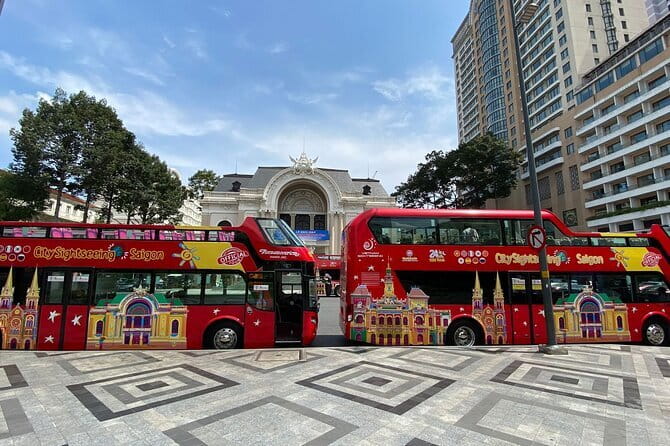
At around $21 per person, this is priced for people who want a practical “get my bearings” tour without committing to a guided walking day. The value is in the structure: you get major landmarks spread across two routes, plus a guidebook you can actually use to plan the next steps of your trip.
You’re not paying for attraction entry fees here. What you are paying for is transportation, frequent bus service, and the convenience of seeing the city without repeatedly figuring out local transit.
Riding style: open-top upstairs, AC inside, and audio you can skip
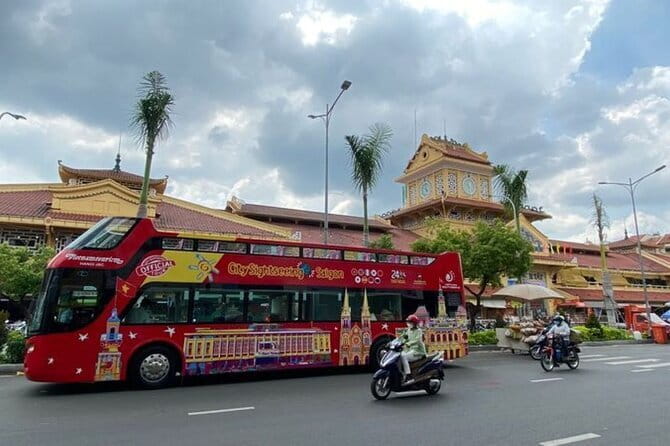
This tour is designed for comfort and views at the same time. From the open-top upper deck you’ll get a better shot at city panoramas, but be ready for Saigon’s changing weather—one review note calls out that upstairs can be exposed while the air-conditioned interior feels like the sensible plan.
The audio guide comes in multiple languages, which is a big plus if you’re traveling with mixed-language companions. That said, the delivery can be a little boring depending on the day and your mood, so treat the audio as background context, not the main event.
Free Wi‑Fi: useful, but don’t let it distract you
The tour includes free Wi‑Fi, which can help you look up addresses, translate signs, or check your next stop. It’s helpful at traffic-slow times, but you’ll still want to watch for the next designated stop so you don’t miss your chance to hop off.
Red Route: Saigon Opera House to the museums and the classics (75 minutes)
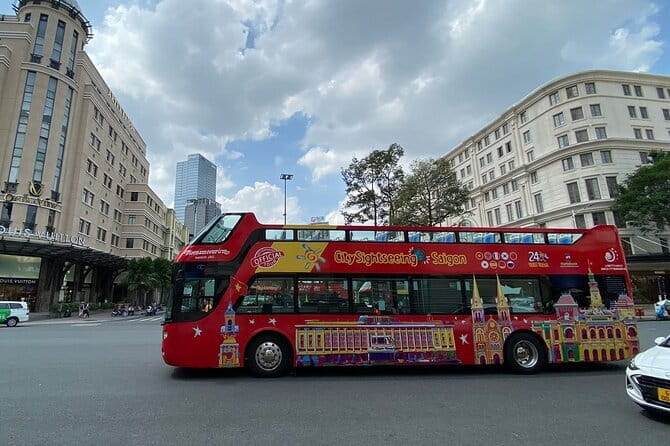
The Red Route gives you a tight loop of the central city landmarks, starting at Saigon Opera House. It runs from 9:00am to 4:00pm with buses every 30 minutes, and the circuit takes about 75 minutes—meaning you can do one loop, or hop off for a couple of key stops and still get back without sweating the clock.
Stop 1: Saigon Opera House
This is the cleanest “start here” anchor. If you’re doing the Red Route, it also matters for ticket logistics: the ticket exchange counter is located on the side of Saigon Opera House, facing the Continental Hotel. I like this kind of start point because it’s a recognizable landmark, not a random curb.
Quick tip: If you’re using an online voucher, don’t just show up and hope. Go to the exchange counter at the Opera House side.
Stop 2: Nguyen Hue Street
Nguyen Hue Street is one of the city’s main thoroughfares, a good place to get that first big-picture feel. It’s also a convenient hop-off if you want to wander storefront streets on foot rather than stay on the bus.
Stop 3: Nha Rong Wharf
Nha Rong Wharf is your reminder that Saigon isn’t just streets and buildings—it’s also tied to water and the life along it. If you hop off here, give yourself time for photos and slow walking, since waterfront areas can feel best when you’re not rushing.
Stop 4: Tran Hung Dao Statue area (near Ramada)
This stop drops you into the more monument-and-memorial type of zone. It can work well as a quick photo stop or a short stroll before you continue toward the museums.
Stop 5: Ho Chi Minh Campaign Museum
This is one of the stops aimed at deep context, and it tends to pair naturally with nearby history-focused sights. If you’re planning a history-heavy day, this can be a logical step before you reach War Remnants Museum.
Stop 6: War Remnants Museum
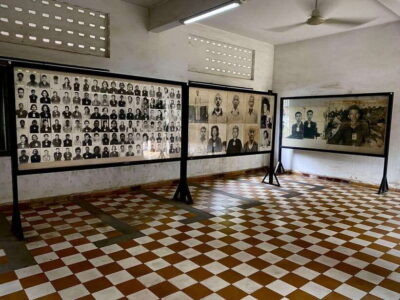
This is the Red Route’s big headline stop. Even if you don’t want a long museum day, it’s worth knowing this is positioned as a must-see on the route—so plan your timing around it.
A practical approach: if you’re trying to do the museum plus a market, treat the museum as your main block and keep your shopping stop for later when you’re done absorbing information.
Stop 7: Pham Ngu Lao Street (Beer Street area)
Once you’ve had your history dose, this area gives you a more everyday rhythm. It’s a neighborhood vibe stop where you’ll find casual food and street energy, and it’s also handy if you want a break from big-ticket sights.
One note to keep in mind: this is also where you’ll see the tour’s starting point on the Blue Route (so don’t treat these as two unrelated locations—some planning overlap is built in).
Stop 8: Ben Thanh Market
Ben Thanh Market is the classic shopping and people-watching stop. It’s a good place to hop off for a focused hour—pick up a few things, snack, and reset before you continue.
If you’re not shopping, you can still use it as a navigation anchor. Markets tend to be easier to return to than small streets, so this stop helps you plan.
Stop 9: Independent Palace
Independent Palace is a major landmark that’s ideal for visitors who want a single stop that feels like a whole chapter. If you’re short on time, you can still use this stop as a “see it from the outside and decide” moment, then return later if you feel like going in.
Stop 10: Saigon Notre Dame Cathedral / Central Post Office
This is where the city’s famous architecture cluster comes together. The cathedral and the Central Post Office area is perfect for photos and a slower walk, since the buildings here are designed to be looked at from multiple angles.
Blue Route: markets, pagodas, and a more neighborhood-by-neighborhood day (about 80 minutes)
The Blue Route starts at 187 Pham Ngu Lao Street, with the bus stop located in front of the Liberty Hotel. It runs 9:00am to 3:45pm, and the loop takes about 80 minutes with buses roughly every 45 minutes.
I like the Blue Route for visitors who want more than the core “postcard sights.” It shifts the focus toward markets and places that feel more like where locals actually spend time.
Stop 1 (Blue Route start): Pham Ngu Lao Street area
This ties into the same general central neighborhood you’ll see on the Red Route. That’s useful: it means you can switch plans mid-day without feeling like you have to restart from scratch.
Stop 2: Ben Thanh Market
Ben Thanh shows up again here, which makes sense. It’s one of those stops that works for lots of different itineraries, so it’s a great re-board point if you’re trying to connect both routes.
Stop 3: War Remnants Museum
War Remnants Museum is the shared anchor stop. If you want museum time but also want the Blue Route’s markets, you can use this as your “pivot point” in your day.
Stop 4: Ho Thi Ky Flower Market (near Hùng Vương area)
This stop is the kind of change of pace you want between heavier sights. A flower market can feel like a reset button for your senses, and it’s also great for photos that don’t look like every other tourist shot.
Stop 5: Phuoc An society’s premises
This is a specific stop name, and it suggests the route is reaching beyond the strictly famous sights. I’d use this stop as an extra-interest option—if you like exploring smaller, lesser-photographed places, it fits the bill.
Stop 6: Ong Bon Pagoda
A pagoda stop is a nice reminder that Saigon’s culture isn’t only museums and streets. If you hop off here, plan for a short walk and take the time to observe respectfully.
Stop 7: Binh Tay Market
Binh Tay Market is another market-style stop that can be rewarding for people who like browsing. It’s also the kind of place where you’ll see more daily routines than “tour-only” shopping.
Stop 8: Thien Hau Pagoda
Another temple stop, again leaning into the everyday-cultural side of the city. It’s a good fit if you want variety after museums and before heading back toward central zones.
Stop 9: Van Phat Pagoda
This is your final pagoda-style stop on the Blue Route. If your day is packed, use it as a quick visit point, or if you have time, slow down and let the area around the pagoda be part of the experience.
How to switch lines without losing your day (and which stops connect)
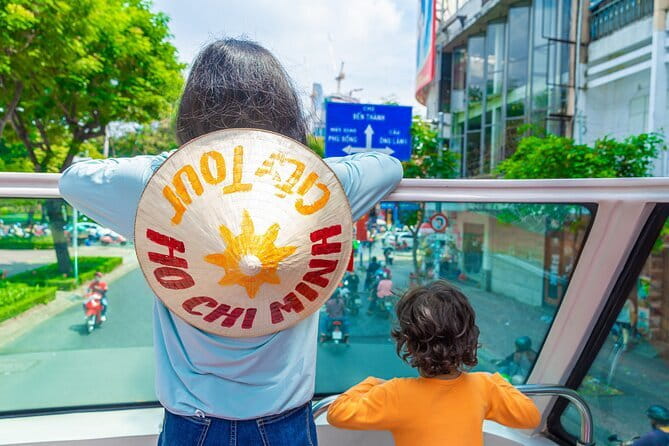
The tour is designed so you don’t have to decide everything upfront. The practical tip is this: the guidance says you can switch lines at Stops 6, 7, and 8 on the Red Route, and those correspond to Stops 1, 2, and 3 on the Blue Route.
That means you can do, for example, museum time, then switch toward markets and pagodas without backtracking across the city blindly. It also helps if the weather shifts and you want a different kind of stop next.
Getting started: where confusion happens and how to avoid it

The biggest real-world friction I’ve seen with hop-on hop-off tours is not the driving—it’s the first 10 minutes. One issue flagged in feedback is confusion between an online voucher and the local operation once you arrive. The fix is straightforward: go to the correct exchange point, and ask on-site staff for the right bus.
For the Red Route, start at Saigon Opera House, and use the ticket exchange counter on the side facing the Continental Hotel. For the Blue Route, the bus stop is in front of the Liberty Hotel on 187 Pham Ngu Lao Street.
Also note a small-but-real detail: buses on different routes can look similar, so don’t assume the route color instantly. Double-check the route before you climb on.
Timing strategy: how to plan a great day in 1–2 loops
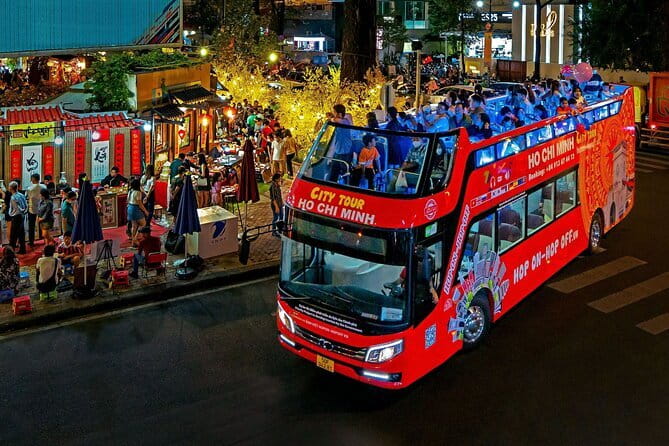
The loops are not long, so you can build a day without over-scheduling. Red Route runs until 4:00pm and Blue until 3:45pm, and each loop time is about 75–80 minutes, so you can often fit in one core loop plus a museum or market block.
Here’s the approach I’d use if you’re trying to maximize value:
- Pick your anchor first (War Remnants Museum is the most natural anchor).
- Use Red Route for the classic downtown cluster.
- Use Blue Route to shift toward flower markets and pagodas.
- Keep Ben Thanh Market as your flexible “hop off when ready” stop.
If you’re tempted to do everything, resist. The bus is a tool to move between sights; your time is best spent where you can actually slow down and look around.
Ticket expectations: what’s included, what’s not, and what that means for your budget

This tour includes the hop-on hop-off ride (1-day or 2-day options), access to two routes, and free Wi‑Fi. You also get a free guidebook with maps, recommendations, timetables, and coupons, which can help you plan your next stops with less guesswork.
What’s not included is just as important: there’s no hotel pickup/drop-off and no entry fees to attractions. So if you’re budgeting for a museum ticket or cathedral-area entry, plan that separately.
Small practical upgrades that make the tour smoother
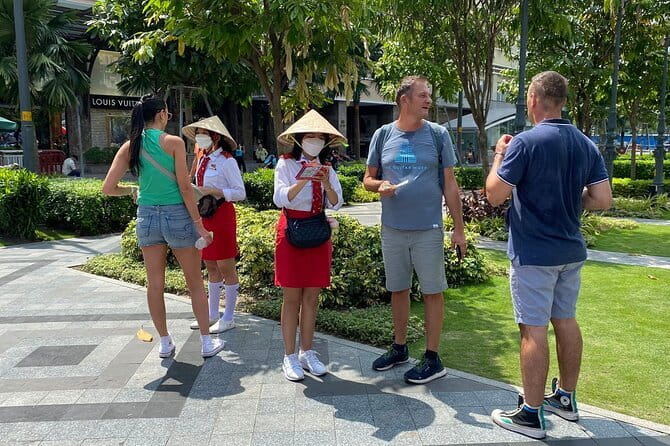
A simple trick from feedback: use the transport company’s interactive map on their website to locate bus stops quickly. That single step can save you the “walk two blocks, realize the stop is the other direction” frustration.
Also, don’t wait for a perfect seat choice. If upstairs is full or the sun/weather isn’t cooperating, the AC interior is there for a reason. Saigon comfort is about flexibility.
Finally, treat the audio guide as a helpful layer. If it starts to feel repetitive, you can turn your attention to what you can actually see outside the window—street life, architecture, and the way neighborhoods change block by block.
Should you book the City Sightseeing Saigon Bus Tour?
Yes, you should book it if you want an easy way to build a Saigon plan fast. It’s especially good for a first visit, for travelers who like seeing a spread of landmarks in limited time, and for anyone who wants a transport backbone that lets them choose when to hop off.
Skip or downgrade expectations if you’re looking for a top-tier guided narration. The audio guide can feel boring, and you may need to pay attention to route details at the start since vouchers and stop locations can cause confusion.
If your main goal is practical: see the big sights, get oriented, and decide later where you want to spend real time on foot, this is a solid value.