
A bus ride that helps you place everything. This Thessaloniki hop-on hop-off ticket lets you ride for 24 hours on a double-decker route with 360-degree sightlines and onboard audio in 12 languages. It’s a simple, low-stress way to see the key areas fast, even if your day gets messy.
My favorite part is how flexible it feels: you can hop off when something catches your eye, then roll right back onto the next bus. The other big win is the 360-degree upper-deck views and the fact that the narration is built in, so you’re not stuck reading in the heat. The main drawback to plan around is that stop timing can shift with traffic and road changes, so your exact stop-by-stop flow may not match what you hoped for.
Over a 75-minute loop, the buses run more often in spring and summer (about every 30 minutes), and less often in late fall. Your ticket covers the loop plus the “come back later” part, which is what makes it useful for first-time orientation, especially if you’re on a cruise day.
In This Review
- Key Points Before You Ride
- Price and Logistics: What You’re Really Paying For
- Lefkos Pyrgos (Stop 1): The Port-Friendly Starting Point
- How the 24-Hour Unlimited Ride Fits a Real Day
- White Tower and the Archaeological Museum: First Photos, Then Culture
- Saint Demetrius and Ano Poli: Old Town Access Without the Navigation Stress
- Leonida Iasonidou 2 and Egnatia: Where the City Starts to Feel Central
- Paleos Stathmos and the Port Loop: Ending Where the Day Resets
- 12-Language Audio and Headphones: When It Works, It Really Works
- Bus Frequency by Season: The Real Factor in Your Schedule
- A Cruise-Day Strategy That Keeps You Calm
- When This Tour Might Disappoint You
- Who Should Book This Hop-On Hop-Off Bus?
- Should You Book This Hop-On Hop-Off Bus In Thessaloniki?
- FAQ
- How long is the hop-on hop-off bus tour in Thessaloniki?
- Does the ticket include unlimited rides?
- Where do I exchange a mobile voucher?
- What hours does the bus run?
- How often do the buses run?
- Are museum or church entry tickets included?
- What languages are available for the audio?
Key Points Before You Ride
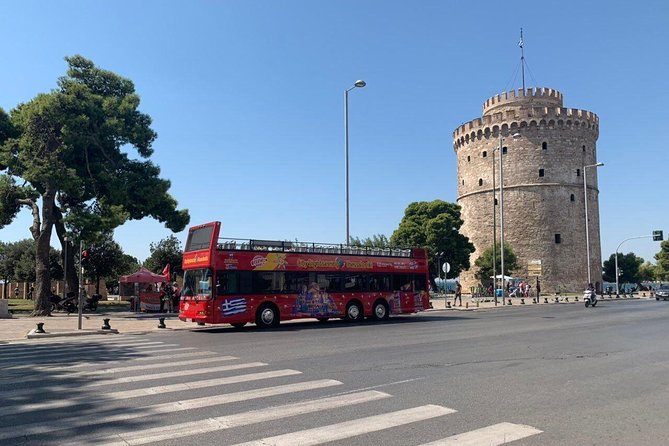
- 24-hour unlimited rides so you can pace your own sightseeing
- Double-decker upper deck for the best sightlines around Thessaloniki
- Audio narration in 12 languages with headphones included
- Major stops on the route including the White Tower area, old town access, and the port
- Seasonal frequency changes (roughly every 30 minutes in most months; much less frequent later)
- Voucher exchange needed at Stop 1 (Lefkos Pyrgos) or with the driver to board again
Price and Logistics: What You’re Really Paying For
At about $21.67 per person, this is priced like a value city pass rather than a premium guided tour. You’re not paying for museum entry or a private driver—you’re paying for easy transportation + interpretation while you’re moving.
That mix is smart when your time is tight. A full loop is only around 75 minutes, but the unlimited rides for 24 hours turn that loop into multiple mini-visits, which usually costs more if you do it with taxis.
One practical note: the route depends on real-world conditions. The operator estimates frequency and duration can change due to traffic and weather, so you’ll get more value if you build slack into your schedule.
Lefkos Pyrgos (Stop 1): The Port-Friendly Starting Point
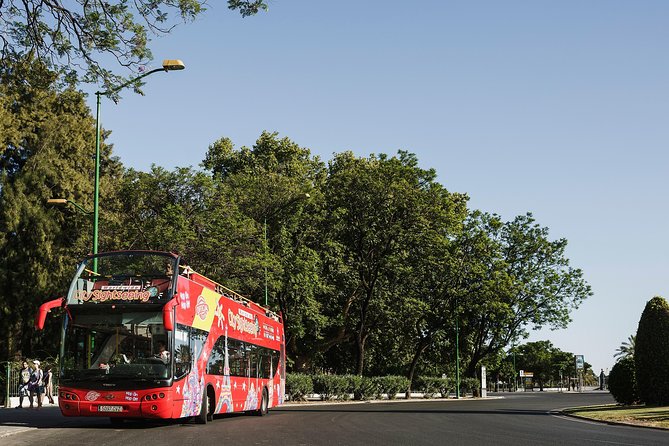
Your ride begins at Lefkos Pyrgos, which is also where you redeem mobile vouchers. This matters a lot if you’re arriving by cruise, because it’s the first “anchor” stop on the route and the one tied to ticket exchange.
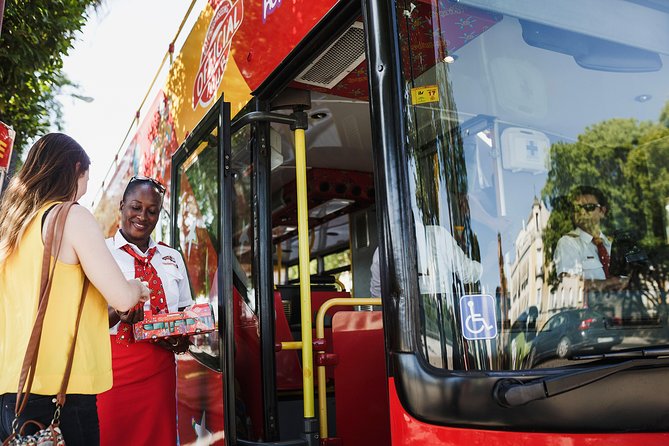
If you have a mobile ticket, plan to swap it for the tour ticket at Stop 1 with City Sightseeing staff. Some riders found the “proof” step easy to miss, and if you don’t exchange correctly, reboarding can turn into a frustrating wait.
Also keep your eyes open: a few people noted that stops aren’t always obvious with clear signage or announcements. I’d rather you treat the stop list as your safety net—check it on your phone before you step off.
How the 24-Hour Unlimited Ride Fits a Real Day
The schedule is the kind that rewards good timing. Buses run more frequently during April, May, June, July, August, and September (often about every 30 minutes), which gives you flexibility to hop off, return, and still see several areas.
In November, you should expect a very different rhythm: the last departure is earlier, and buses can run every 120 minutes. That doesn’t make it bad—it just means you’ll want a plan that assumes longer waits between buses.
The “hop-on hop-off” part works best if you use it like a city compass. I’d do one loop early to learn the layout, then ride it again later to focus on what you actually want to revisit.
White Tower and the Archaeological Museum: First Photos, Then Culture
Stop 1 is the White Tower of Thessaloniki area. This is where you get the classic city landmark vibe fast, without walking your whole day away before you even understand the neighborhoods.
Stop 2 is the Archaeological Museum of Thessaloniki area. If you want the museum later, this stop is useful because it drops you close enough to gauge the logistics—how long you’d need, whether it fits your time, and how the area feels compared to the waterfront and center.
A smart way to use these early stops: don’t commit to museum entry on the first pass unless you’re sure. Ride, look around, then decide when you’re not rushing.
Saint Demetrius and Ano Poli: Old Town Access Without the Navigation Stress
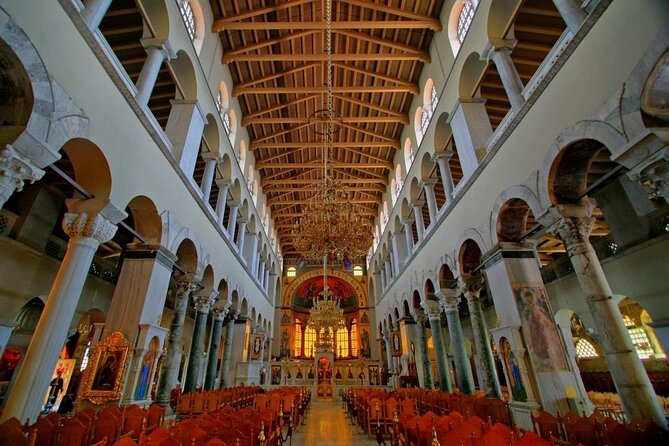
Next comes the Holy Church of Saint Demetrius. Churches and historic centers are usually easier to enjoy when you’re not fighting transport—so using the bus here can save your energy for the sightseeing itself.
Then you reach Ano Poli. This is your gateway to the old-town feel, where the streets tend to feel more like a place to wander than a place to rush through. Even if you only hop off briefly, it’s a great way to experience the neighborhood mood.
One thing to keep in mind: if you hop off here, you may be tempted to keep walking farther than you planned. Use the bus as your timekeeper—choose a clear return window so you don’t end up stuck waiting at the top.
Leonida Iasonidou 2 and Egnatia: Where the City Starts to Feel Central
Stop 5 is Leonida Iasonidou 2, and Stop 6 is Egnatia. These are the kinds of stops that help you connect the dots between the historic areas and the more urban grid.
In practical terms, these stops are valuable because they cut down the “how do I get there?” time. If you’re trying to fit in multiple areas around the center, hop-on hop-off routes like this often do better than planning one-by-one taxi rides.
If you’re picky about your viewing angles, spend time on the upper deck while you travel between these stops. That’s when you get the best continuous look at the city’s shape—less waiting, more seeing.
Paleos Stathmos and the Port Loop: Ending Where the Day Resets

Stop 7 is Paleos Stathmos, and Stop 8 is the Port of Thessaloniki. This pairing makes sense for a full-day ride because it ties together the “city-side” sights and the “how do I get back to my ship/transport” reality.
The port stop is a big reason many people feel the bus is worth it. One of the strongest comments was that cruise passengers found the port pickup/connection convenient, and that walking back with tired legs felt less painful.
If your day is cruise-based, treat the port stop as your safety plan. Even if you hop off multiple times, having the final endpoint near where you need to return reduces stress.
12-Language Audio and Headphones: When It Works, It Really Works
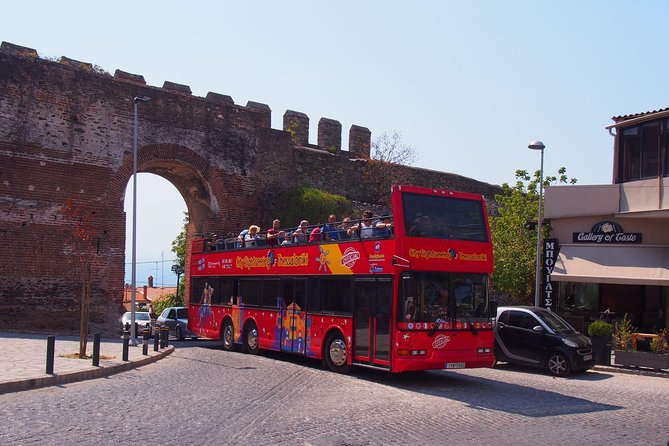
The tour includes audio commentary in 12 languages with headphones. For a hop-on hop-off bus, that’s the difference between just seeing buildings and understanding what you’re looking at while you ride.
Most people like that the headphones work and the narration adds structure. A few also noted occasional issues like audio that can be out of sync, or different channels across buses.
Here’s my practical fix: if the audio sounds wrong, switch channels (if available) or ask the driver which channel matches your language. Don’t wait too long—those delays add up fast when you’re timing buses.
Also, don’t expect live, on-demand expert answers. Some riders reported that there wasn’t a guide on board for questions, so the audio is the main “explainer,” not a Q&A service.
Bus Frequency by Season: The Real Factor in Your Schedule
Buses run every 30 minutes in many months, with the first and last departures depending on the season. In general:
- April and May: first departure 10:00 AM, last 4:00 PM; about every 30 minutes
- June to September: first departure 10:00 AM, last 6:00 PM; about every 30 minutes
- October: first departure 10:00 AM, last 4:00 PM; about every 30 minutes
- November: first departure 10:00 AM, last 2:00 PM; about every 120 minutes
That last point changes everything. If you’re visiting in November, plan to use the bus earlier in the day so you’re not relying on infrequent service late on.
And remember: frequency estimates are still subject to traffic and weather. In dense areas, the bus can get stuck, which affects your hop timing even if the schedule looks fine on paper.
A Cruise-Day Strategy That Keeps You Calm
If you’re doing this from the cruise port, build your day around the bus loop concept.
A solid plan:
- Start at Lefkos Pyrgos and do a full ride once, staying on top for the clearest orientation.
- Hop off once or twice for short walks near the areas you liked most (White Tower, old town access, or center stops).
- Keep your reboarding time conservative. It’s easier to find your way back to the port stop than it is to improvise new transport when the ship clock is ticking.
It also helps to be ready at the stop. Some people reported confusion around ticket exchange steps and stop clarity. If you already know where Stop 1 is and what to do with your voucher, you’ll waste less time.
When This Tour Might Disappoint You
This isn’t a bad tour. It’s just not perfect for everyone.
If you’re the type who wants a strict, museum-by-museum itinerary, you may feel annoyed if the bus skips stops or you end up with fewer stops than expected. Route flow can change due to road closures, and that can make the experience feel less “structured.”
If you really need lots of live answers, know that this is mostly audio narration, not a constant guide. You’ll get the commentary, but you won’t always get quick, personalized explanations on the spot.
Finally, because double-decker buses have limited seating, they can get crowded. On busy moments, you might have to wait longer for the next bus, which reduces spontaneity.
Who Should Book This Hop-On Hop-Off Bus?
This tour is a strong fit if you:
- Want an easy overview of Thessaloniki without planning multiple routes
- Are short on time and want a one-day orientation you can repeat within 24 hours
- Prefer audio narration while riding instead of a walking tour
- Are arriving by cruise and want a practical connection to the port area
It’s not ideal if you:
- Need maximum museum time included (entry tickets aren’t included)
- Expect a perfectly consistent stop order every single trip day
- Are traveling in late fall and can’t handle longer gaps between buses
Should You Book This Hop-On Hop-Off Bus In Thessaloniki?
I’d book this if your goal is getting your bearings fast and saving energy while still seeing the main parts of town. The value is strongest when you use the 24-hour unlimited rides like a second chance—hop off where you enjoy yourself, then circle back later.
I’d hesitate if you’re visiting in November and your itinerary is very time-sensitive, because bus frequency drops sharply. Also, if you’re the type who needs clear stop signage and constant announcements, you’ll want to rely on the stop list and audio guidance rather than expecting a lot of on-the-ground help.
Overall: for most people, this is a sensible, cost-effective way to see Thessaloniki’s highlights in one loop, then tailor the rest of the day around what you liked best.
FAQ
How long is the hop-on hop-off bus tour in Thessaloniki?
The tour lasts about 75 minutes for the loop.
Does the ticket include unlimited rides?
Yes. You get unlimited rides along the route for 24 hours.
Where do I exchange a mobile voucher?
Mobile vouchers must be redeemed at Bus Stop 1, which is Lefkos Pyrgos.
What hours does the bus run?
From April 1, 2026 through October 31, 2026, it runs daily from 10:00 AM to 4:00 PM, with seasonal variations. For example, in June–September the last departure is 6:00 PM, and in November it ends at 2:00 PM.
How often do the buses run?
It varies by season. In April, May, June–September, and October it’s generally about every 30 minutes, while in November it’s about every 120 minutes.
Are museum or church entry tickets included?
No. Entry to attractions isn’t included.
What languages are available for the audio?
The audio guide is available in 12 languages, and headphones are included with the ticket.