Copenhagen from a seat beats guesswork. I like that this headphones + audio guide setup keeps the city story going while you’re riding past the big sights. It’s a simple way to learn as you go, without staring at a screen.
I also like the 24–72 hour ticket flexibility and the fact there are three route options. You’re not forced to sprint through Copenhagen in one go—you can hop off, wander, then rejoin later.
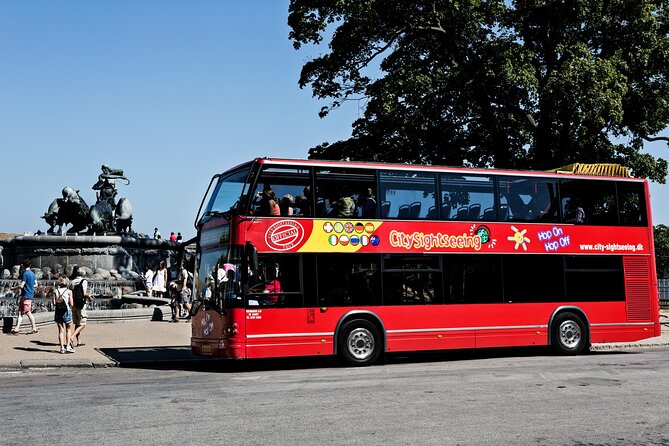
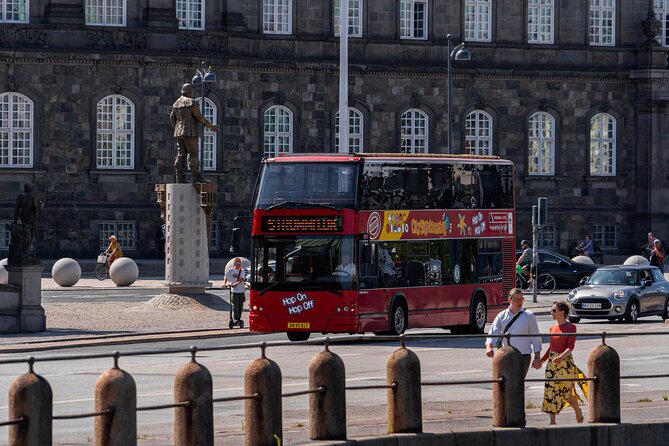
The main drawback to plan around is organization at the curb. There are other red hop-on hop-off operators in the city, and on a cold or windy day you’ll want to make sure you’re at the right stop and the right bus.
In This Review
- Key points to know before you ride
- Price and value: what $46.39 buys you
- How the 24–72 hour pass changes your sightseeing
- Finding the right bus: stops, Stromma ticket office, and curb stress
- Route overview: three different Copenhagen flavors
- Loop 1: Central classics and the postcard sights
- Loop 2: Christianshavn and Christiania energy
- Loop 3: Zoo, Carlsberg, and the food-and-neighborhood feel
- Stop-by-stop: central Copenhagen you can plan around
- Ved Stranden 26 (Stromma Ticket Office)
- Kongens Nytorv
- Frederik’s Church
- Gefion Fountain
- The Little Mermaid
- Langelinie on cruise days only
- Rosenborg Castle
- Gammeltorv
- Rådhuspladsen (City Hall area)
- Tivoli Gardens (Vesterbrogade 6a)
- The Copenhagen Zoo and Carlsberg side: what to do with it
- Jacob Kanstrup (close to the Horticultural Gardens of the University of Copenhagen)
- Copenhagen Zoo
- Home of Carlsberg
- Scandic Kødbyen
- Christianshavn and Christiania: where the tour feels more human
- Christianshavn
- Freetown Christiania
- Ekvipagemestervej 10
- Reffen / Skøjteøen
- Casino Copenhagen
- Audio guide and headphones: using them without getting bored
- The big reality check: walking vs. bussing
- Who should book this, and who should skip it
- So, should you book Stromma’s Copenhagen Hop On Hop Off?
- FAQ
- How long is the Copenhagen Hop On Hop Off bus tour?
- What ticket lengths can I choose?
- What’s included with the ticket?
- Do I need a printed ticket?
- Are service animals allowed?
- Is free cancellation available?
Key points to know before you ride
- Headphones are included, so you can use the audio guide right away.
- 24, 48, or 72 hours gives you time to repeat areas you liked.
- Three different route loops cover historic center, Christiania/Christianshavn, and sights like Copenhagen Zoo and Carlsberg.
- Langelinie is only shown on cruise days, so don’t count on it.
- Multiple hop-off points keep you close to landmarks like Tivoli, Rosenborg Castle, and Copenhagen City Hall.
- Build in extra time at stops in case buses are running late or routes are easy to mix up.
Price and value: what $46.39 buys you
At about $46.39 per person, this hop-on hop-off bus is priced like a “time-saving sightseeing layer,” not like a cheap way to get around. You’re paying for three things at once: access to multiple areas of Copenhagen, an on-board audio guide, and the freedom to choose when to get off.
Whether it’s a great value comes down to how you travel. If your plan is to see Nyhavn, Tivoli, the Little Mermaid area, and then also reach neighborhoods like Christianshavn/Christiania or spots around Copenhagen Zoo and Carlsberg, walking can turn into a long day. This bus helps you compress that into something more manageable—especially if you’re juggling museum time or dinner plans.
On the other hand, you’re not locked into a full-day excursion. If you’re the kind of traveler who enjoys walking everywhere and staying in one tight radius (and you’ve got the legs for it), you might feel the bus is optional. That’s not a flaw of the tour. It’s just the math of Copenhagen: lots of the best scenery is very walkable.
How the 24–72 hour pass changes your sightseeing
The biggest practical benefit is the ticket window: you can use it for 24, 48, or 72 hours. In real life, that means you can split your day without losing time.
Example strategy:
- If you only have one day, use the bus to cover the “must-see” loop areas first, then hop off where you want to spend extra time.
- If you have two or three days, you can repeat routes on different days, which is often better than trying to cram everything into one ride.
Also, the routes overlap in the center, which helps. You can start around the historic core and then gradually expand outward to places like Rosenborg Castle, Tivoli, and Copenhagen City Hall.
One note to keep expectations realistic: the tour is designed as a multi-area system. If you try to hit everything on the same day, you may end up rushing. The bus gives flexibility, but it doesn’t replace planning.
Finding the right bus: stops, Stromma ticket office, and curb stress
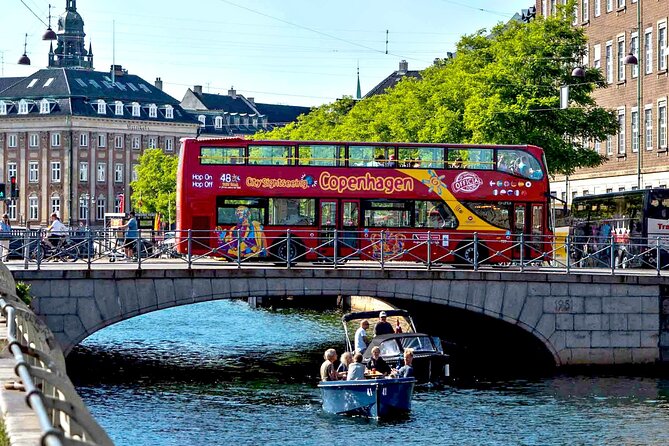
Start smart. Your first move is figuring out where you’ll actually board. The tour lists clear stop points, and one of the starting anchors is:
- Ved Stranden 26 — Stromma Ticket Office
From there, you also have major hop-on hubs listed around the city, including:
- Kongens Nytorv (near the little coffee tower on the square)
- Frederik’s Church (behind the church, next to the Metro)
- Rådhuspladsen with a stop around Vestervoldgade / Regnburepladsen
- Tivoli Gardens — Vesterbrogade 6a
- Fisketorvet Copenhagen Mall in front of Tivoli Hotel
- Copenhagen Marriott Hotel
- and others across the other route loops
Here’s the thing: multiple companies run red hop-on hop-off buses in Copenhagen. One practical way to avoid curb confusion is to:
- double-check your stop marker and the company/operator on your ticket before you join the line
- take note of nearby landmarks (like the coffee tower at Kongens Nytorv) so you’re not guessing
And do yourself a favor: if the weather is rough, don’t wait until you’re hungry and cold. If you’re aiming for a specific start time at a landmark, build a little buffer at the stop.
Route overview: three different Copenhagen flavors
This is what makes the tour feel useful. It’s not just “one circle.” You get three route loops that each highlight a different side of the city.
Loop 1: Central classics and the postcard sights
This route threads through big-name Copenhagen spots, including:
- Gefion Fountain
- The Little Mermaid
- Langelinie on cruise days only
- Rosenborg Castle
- Gammeltorv
- Copenhagen City Hall area
- Tivoli Gardens
It also includes several central squares and hotel-area stops that make it easier to rejoin the bus.
Loop 2: Christianshavn and Christiania energy
This is where the city gets less museum-like and more character-filled:
- Christianshavn
- Freetown Christiania
- Reffen / Skøjteøen
- Casino Copenhagen
- and it connects back toward Tivoli Gardens
If your idea of Copenhagen includes street-level oddball charm, this loop is the one to prioritize.
Loop 3: Zoo, Carlsberg, and the food-and-neighborhood feel
This loop reaches more “local day” areas:
- Værnedamsvej
- Horticultural Gardens area (close to Jacob Kanstrup)
- Copenhagen Zoo
- Home of Carlsberg
- Scandic Kødbyen
It’s also a good match if you want to pair sightseeing with food stops, even if you keep it low-key.
Stop-by-stop: central Copenhagen you can plan around
Let’s translate the stop list into a practical game plan. Use this section like a menu.
Ved Stranden 26 (Stromma Ticket Office)
This is your easiest “kickoff” point. If you’re starting from the waterfront area, boarding here can keep your morning simple. It’s also a good stop if you want to jump back on later after a walk along the water.
Kongens Nytorv
This is a classic central square area. It’s useful because it’s close to transport connections and makes a clean place to refuel or reset before you move toward sights like City Center churches and fountains.
Frederik’s Church
You’ll see it as a stop because it’s visually obvious once you’re there. The advantage of making this a bus stop is timing: if you want to look up close, you can get off near the Metro side instead of planning the route on foot every time.
Gefion Fountain
Fountains are one of those Copenhagen details that feel like they belong to “real life,” not just photos. Getting off here works well if you want a short break and then move onward to the more iconic waterfront scenes.
The Little Mermaid
This is the stop people recognize instantly. Even if you don’t spend loads of time here, it’s valuable as a reference point. You can get off, take your photos, then continue—rather than trying to locate the area from scratch.
Langelinie on cruise days only
This is important. If you’re hoping for the Langelinie stop, remember it’s only on cruise days. If you’re visiting on a non-cruise day, don’t expect that part of the route to show up.
Rosenborg Castle
Rosenborg is a great “hop-off and commit” stop. If you want to add an actual attraction visit (not just a quick look), this is the kind of stop that justifies time.
Gammeltorv
Gammeltorv is a useful connector stop. It’s often easier to navigate when you have a known square to aim for, and this stop gives you that anchor before you head toward major civic sights.
Rådhuspladsen (City Hall area)
This is a high-impact viewing area. If you want a sense of Copenhagen’s center and city scale, this stop is a good one to hit, especially if your travel day includes shopping, food, and longer walks.
Tivoli Gardens (Vesterbrogade 6a)
This one is obvious for a reason. Tivoli is a natural “pause point.” If you want to spend serious time there, hop off and treat it as part of your day, not just a stop you pass.
You also have related rejoin options nearby, like:
- Fisketorvet Copenhagen Mall (in front of Tivoli Hotel)
- Copenhagen Marriott Hotel
Those extra stops help you avoid the common problem of needing to walk back just to catch the bus.
The Copenhagen Zoo and Carlsberg side: what to do with it
If your Copenhagen plan includes animals, breweries, or neighborhoods with more everyday energy, the third route is where you’ll feel the bus earns its keep.
Here are the key stops and how to use them:
Jacob Kanstrup (close to the Horticultural Gardens of the University of Copenhagen)
This is a “quiet focus” stop. If you like garden time or want a breather away from the biggest crowd magnets, this is a good off-ramp. It also helps you make a smarter day schedule because it’s not tied to only one mega-sight.
Copenhagen Zoo
If you’re visiting the zoo, treat the bus stop as your timing tool. It’s better to plan your day around a fixed zoo visit than to rely on random transit decisions when you’re hungry or tired.
Home of Carlsberg
The stop is named directly, which makes it easier to plan your timing. If you’re curious about Copenhagen’s brewing roots or want a destination that’s more niche than the classic postcard sights, hop off here and spend your time intentionally.
Scandic Kødbyen
This is a strong “neighborhood and food” connector. Even if you’re not locked into a single plan, it’s convenient for pairing your day with a meal and then moving on to another route stop.
Christianshavn and Christiania: where the tour feels more human

The second route loop shifts the vibe. Instead of only iconic sights, it leans into neighborhoods where Copenhagen feels like it’s lived in.
Christianshavn
This stop makes it easier to reach the canals-and-street side of the city. The benefit of having it on a bus route is simple: you can spend time exploring without worrying about getting back.
Freetown Christiania
This is one of the most distinctive places in Copenhagen, and making it a hop-off stop matters. You can choose how long you want to be there and avoid the frustration of trying to map the area from scratch.
Ekvipagemestervej 10
This is a location-specific stop, which helps if you already know you want to be in that part of Christiania/Christianshavn. For me, location-specific stops reduce uncertainty—especially when you’re on a tight schedule.
Reffen / Skøjteøen
This stop is a great option if you want to break up your day with a food-and-people atmosphere. Even if you keep the plan flexible, having a known stop near the Reffen/Skøjteøen area lets you structure your afternoon.
Casino Copenhagen
This is useful as a “rejoin point” too. If you’re moving between neighborhood time and Tivoli-classic time, stops like this can help you keep the flow.
Audio guide and headphones: using them without getting bored
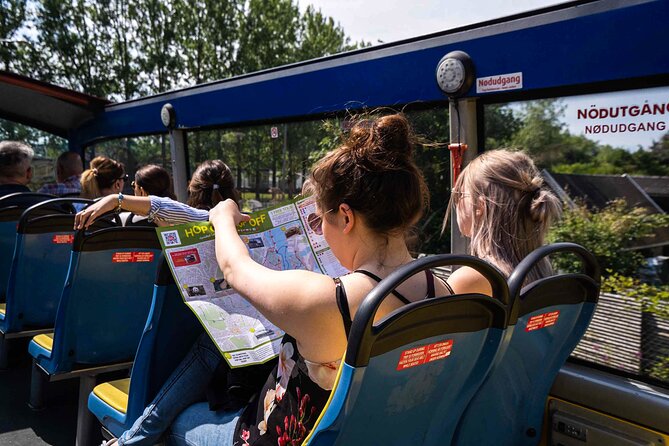
The bus includes headphones, and you can listen to the audio guide as you ride. That matters more than it sounds.
When you’re sightseeing on foot, it’s easy to miss context. On the bus, the audio guide helps you connect what you’re seeing to a story. You’ll also be moving between areas, so you’re using your travel time instead of treating it like dead time.
Practical tip: listen for the first few stops, then switch to “watch mode” when you get closer to something you want to explore. The audio guide is useful, but you don’t need to follow it like a lecture.
The big reality check: walking vs. bussing
Here’s the honest trade-off. Copenhagen is walkable, so a hop-on hop-off bus can feel unnecessary if your plan is one concentrated area and lots of foot time.
But if any of these apply, the bus makes more sense:
- you’ve only got part of the day
- you want to see far-apart sights without turning your trip into a marathon
- you’re juggling multiple neighborhoods and you’d rather spend time inside places than on long transfers
- you don’t want to spend energy figuring out directions between each stop
Also, the tour is clearly built for people who want flexibility. You can stay on the bus and let the audio guide do the work, or hop off and switch to full explore mode.
The one caution: organization at stops. If you’ve got timed plans later that day, don’t treat the bus like magic. Assume you’ll need patience.
Who should book this, and who should skip it
Book it if you want a structured, low-effort way to sample Copenhagen’s main areas across multiple days. It’s especially good if:
- you like “arrive, walk around, rejoin, repeat”
- you want the Little Mermaid, Tivoli, Rosenborg Castle, and City Hall zones covered without backtracking
- you care about reaching Copenhagen Zoo and Carlsberg-area stops without planning every leg of transit
Skip it if:
- your plan is just one compact neighborhood and you love walking
- you hate waiting at curb stops when buses run late
- you’re the type who already has a tight personal route and prefers to navigate by yourself
In other words: this isn’t a replacement for exploring on foot. It’s a tool for managing distance and time.
So, should you book Stromma’s Copenhagen Hop On Hop Off?
I’d book it if your Copenhagen trip needs a “cover ground” solution that still gives you freedom. The 24–72 hour window is the big win, and the stop list puts you near landmarks like Tivoli, Rosenborg Castle, and City Hall, plus the more distinct neighborhoods around Christianshavn and Christiania.
Just go in with two expectations:
1) plan for some curb confusion because there are multiple similar red hop-on operators
2) give yourself buffer time at stops, especially if the weather is miserable
If you do that, you’ll likely come away feeling like you got your bearings fast and spent more time enjoying Copenhagen—and less time spending the day figuring out how to get from A to B.
FAQ
How long is the Copenhagen Hop On Hop Off bus tour?
The ride is listed at about 1 hour 30 minutes (approximately).
What ticket lengths can I choose?
You can choose a ticket valid for 24, 48, or 72 hours.
What’s included with the ticket?
Headphones are included, and you’ll be able to use the audio guide while you ride.
Do I need a printed ticket?
No. This tour uses a mobile ticket.
Are service animals allowed?
Yes, service animals are allowed.
Is free cancellation available?
Yes. You can cancel up to 24 hours in advance for a full refund. Cancellation less than 24 hours before the start time isn’t refundable.