Washington, D.C. without the walking marathon.
This 2-hour monuments and history van tour hits the big-name sights—White House, Capitol Hill, Washington Monument, and the memorials around the National Mall—while you stay comfortable in a roomy, climate-controlled vehicle with photo stops. I like the mix of real-world stops (quick chances to get out and take pictures) plus guide storytelling that helps the monuments make sense, not just look impressive. One thing to consider: in truly hot weather, the air conditioning can struggle, and the tour’s short breaks mean you still need solid shoes and a quick pace.
I also like that you can choose a daytime or evening run, so you’re not stuck seeing everything in the same light. The meeting point is easy to find—in front of Arlo Hotel DC—and the route is built for seeing a lot efficiently.
Here’s the key idea: this is a fast, organized way to get your bearings and understand the place, with enough time at stops to turn photos into memories.
In This Review
- Key highlights worth your attention
- Two Hours That Cover Washington’s Biggest Hits
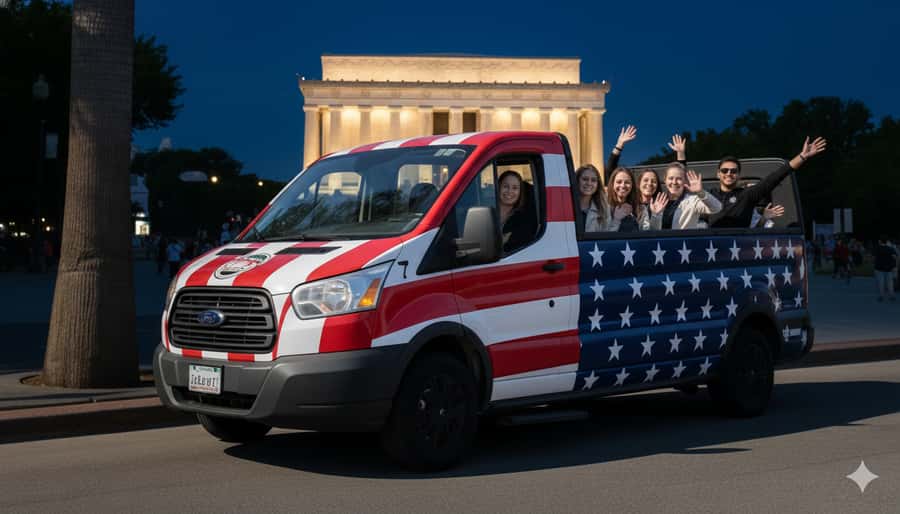
- Inside The American Stylish Van: Comfort Plus Photo-Ready Views
- Capitol Hill And The White House From The Road
- Washington Monument: A Stop Built For Scale (And Photos)
- Lincoln Memorial And The MLK Legacy: More Than A Photo Stop
- Vietnam, Korea, World War II: Turning Names Into Meaning
- Franklin Delano Roosevelt And Thomas Jefferson: Government Meets Storytelling
- Evening Vs. Daytime: When The Same Landmarks Feel New
- Who This Tour Is Best For (And Who Should Rethink It)
- Price And Value: Is $40 Worth It?
- Should You Book This DC Monuments And History Van Tour?
- FAQ
- FAQ
- How long is the D.C. monuments and history tour?
- What does the tour include?
- Where do I meet the guide?
- What landmarks can I expect to see?
- Is the tour wheelchair accessible?
- Is there air conditioning in the van?
- Are there photo stops?
- What should I bring?
- What is not allowed on the vehicle?
Key highlights worth your attention
- Photo stops that actually help you switch from sightseeing to pictures without feeling rushed
- American Stylish Van comfort with large windows, plush seating, and a smooth ride
- Monuments with context from guides who connect what you’re seeing to the events behind it
- Day or night viewpoints so the city feels different, even when the landmarks stay the same
- Short on-foot windows (often around 5–20 minutes) that suit limited mobility better than a long walk
- Eco-friendly, low-emission vehicle that keeps things quieter and more comfortable
Two Hours That Cover Washington’s Biggest Hits
This tour is built for people who want the “greatest hits” of Washington, D.C., without spending the whole day piecing things together. In a tight 2 hours, you’ll pass and stop at major government buildings and major memorials tied to U.S. history. The result is a fast mental map: you’ll see where the White House sits relative to Capitol Hill, how the National Mall stretches out, and how the memorial sites create a story in order.
The smart part is that the pacing is designed around brief, timed moments at landmark areas. Many tours either force you to stand and watch from the sidewalk or dump you with too little context. Here, you get expert commentary plus short windows to step out, look around, and grab photos—then you’re back on the van, ready for the next stop.
If you’re visiting for a day and you’re trying to decide what to do next, this kind of tour can be the foundation. You’ll leave knowing which spots you want to return to for longer, more relaxed time.
Inside The American Stylish Van: Comfort Plus Photo-Ready Views
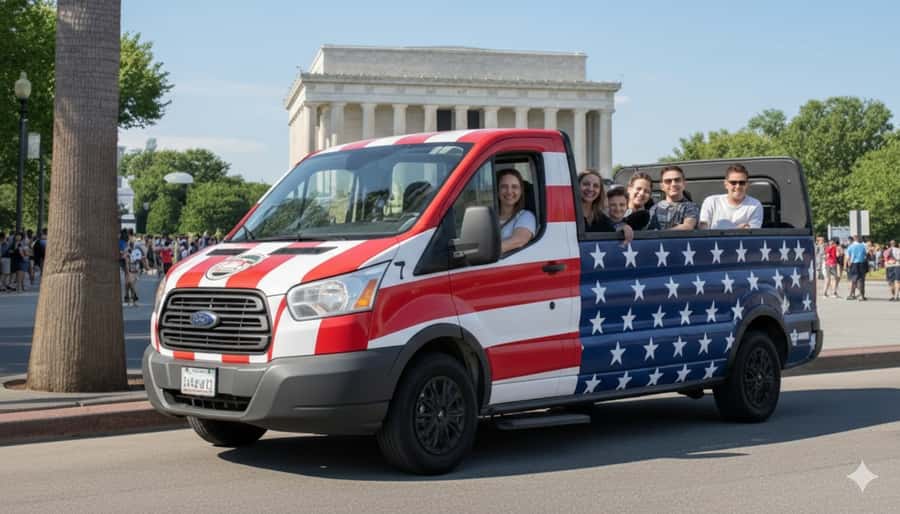
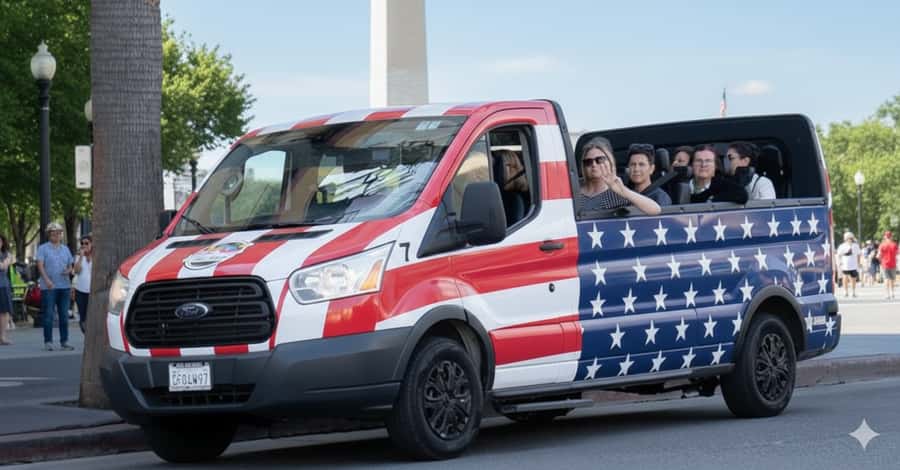
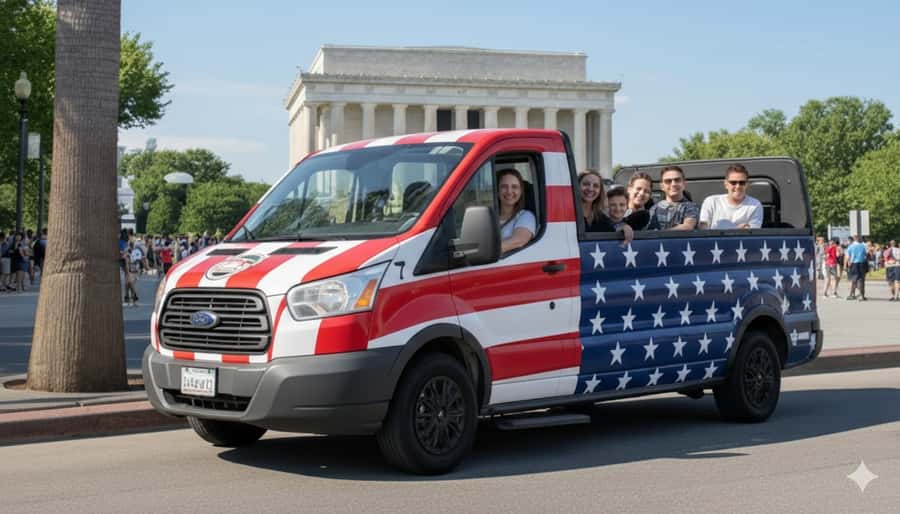
You’re riding in an American Stylish Van built for comfort and panoramic viewing. That matters more than it sounds. Washington landmarks are spread out, and the best views often happen while you’re moving and positioned at the right angle—especially for the Capitol-area skyline and the long stretches of the National Mall.
The van is described as sleek, spacious, and eco-conscious with a low-emission setup. In plain terms: it’s meant to feel smooth and quiet enough that you can actually hear the guide without fighting traffic noise.
Most important for day-to-day comfort: the ride is climate-controlled. On hot days, that can be the difference between enjoying the tour and just surviving it. Even with air conditioning, some days run so hot that you might feel it during stops or when the vehicle sits. Still, the overall comfort level is a big reason people rate this experience highly.
One more practical note: you’ll be expected to buckle your seat belt at all times. That’s not just policy—plan your body movement around it. Quick out-and-in photo moments are part of the design, but safety rules run the show.
Capitol Hill And The White House From The Road
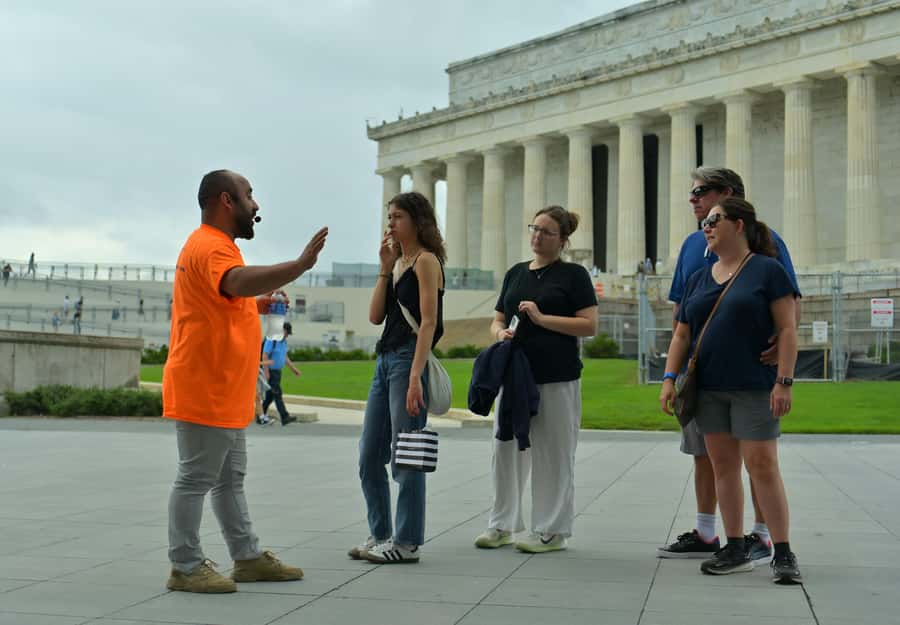
The tour’s opening stretch is where first-timers tend to feel the “wow” factor quickly. You’ll head toward Capitol Hill, passing the seat of the U.S. Congress and getting commentary that frames why this area matters—politically and symbolically. Even if you’ve read about it before, the live orientation helps. You start to understand how Washington’s layout supports the idea of government as both a workplace and a national stage.
Then it’s on to the White House, the official residence and workplace of the U.S. President. From the van, you can catch the building in context with surrounding landmarks and road angles, which helps when you later try to navigate on your own. It’s also the kind of stop where short photo breaks work well, since the building doesn’t require hours of wandering to be seen.
This is also where good guiding pays off. People love the humor and warmth that some guides bring—so the facts land without turning into a lecture. If your priority is to learn what you’re looking at quickly, this is the best early payoff.
Washington Monument: A Stop Built For Scale (And Photos)
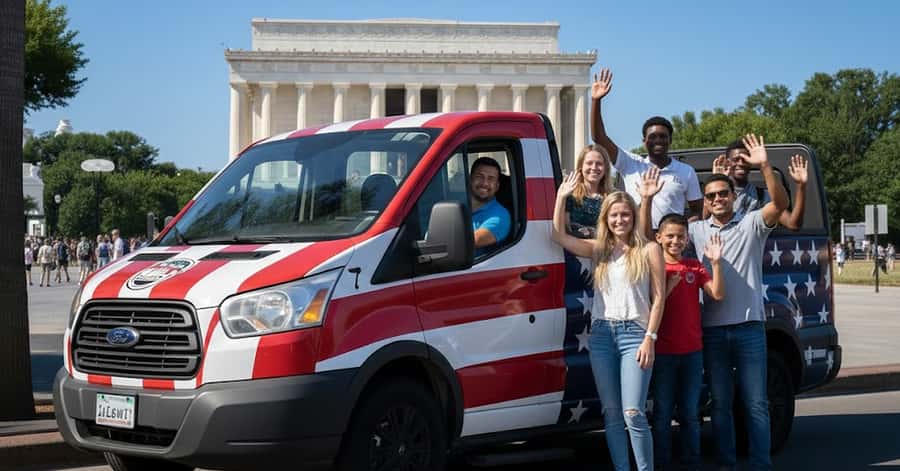
Next comes the Washington Monument, where the main challenge is scale. It’s tall enough that from the wrong spot you’ll think you’re looking at a tiny point. The guided timing and positioning help you see it as the defining vertical landmark it is.
If you love pictures, you’ll appreciate how the tour uses short pauses for photo-taking rather than expecting everyone to sprint between viewpoints. That’s also useful if your group includes older adults or anyone who doesn’t want a long walk.
What I like about this stop on a tour like this: it gives you a clear anchor. Once you’ve seen the monument from the right perspective, the rest of the National Mall area starts to “click” in your head—so later, when you plan your own time, you’ll know what goes with what.
Lincoln Memorial And The MLK Legacy: More Than A Photo Stop
The Lincoln Memorial stop is one of the most emotional parts of Washington sightseeing, and this tour treats it accordingly. You’re reminded of Dr. Martin Luther King Jr.’s I Have a Dream speech at the site connected to the civil rights movement. That context matters, because the space isn’t just a backdrop—it’s a place tied to public memory and national change.
You’ll also visit the Martin Luther King Jr. Memorial, which shifts the tone from the famous speech area to the legacy that continued after it. Even though both stops are on or near the National Mall corridor, they feel different. One is about a historic moment. The other is about enduring impact you can see in the design and symbolism.
In practical terms, these stops benefit from the tour structure. You don’t need entry tickets or a long self-guided route to get value. You get a quick orientation, enough time to stand and look, and commentary that helps you interpret what you’re seeing.
If you’re traveling with family, this is where the tour tends to keep everyone engaged—short bursts of story, then time to absorb the space.
Vietnam, Korea, World War II: Turning Names Into Meaning
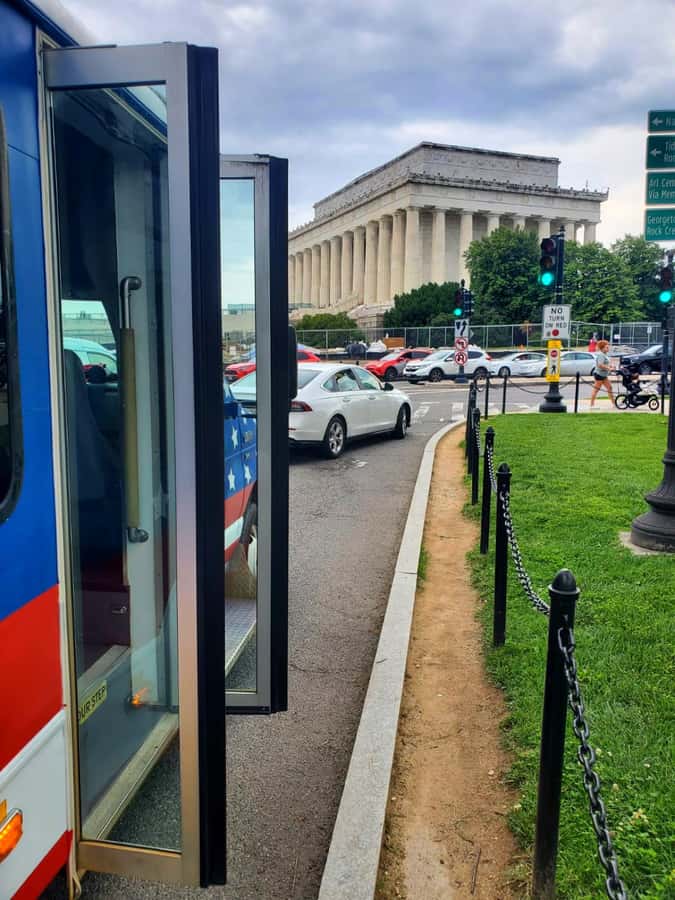
Then the tour moves into the memorial sequence, including the Vietnam Veterans Memorial and the Korean War Veterans Memorial. These sites can feel heavy. What helps is having someone explain the why behind the design and the significance of honoring those who served.
From there, you’ll visit the World War II Memorial and also hear context around the Greatest Generation concept tied to this area. A tour like this is useful because you’re not just seeing plaques and walls; you’re getting the chain of meaning laid out in a logical order.
This is also where I think the small-group setup matters. When everyone is packed into a huge group, it’s harder to hear and it’s harder to pause thoughtfully. Here, the minibus format makes it easier to manage the short stops and keep the mood respectful.
If your goal is to leave Washington with a clearer grasp of modern U.S. history, these memorials are where you’ll feel the value most. You’ll likely want to return later, but this tour gives you the first understanding.
Franklin Delano Roosevelt And Thomas Jefferson: Government Meets Storytelling
Two stops often make the tour feel like more than a “monuments circuit.”
First is the Franklin Delano Roosevelt Memorial, tied to his four terms in office. Even people who know the broad outline of FDR’s presidency often need a little framing for how his legacy is presented here. A guide can connect the dots quickly—why he mattered, what this memorial is trying to communicate, and how it fits into the broader U.S. story.
Then there’s the Thomas Jefferson Memorial, a neoclassical tribute to the third U.S. President. This stop helps you see Washington’s monument style isn’t random. Neoclassical design, symbolism, and placement all play a role in how the city “teaches” history.
The best guides don’t just list names. They connect the building blocks—leadership, major eras, and the public meaning of each site. That’s why guides you might encounter—people like Fernando, Sonny, Sully, Feyzi, Brianna, Alex, and John—tend to be praised for mixing facts with personality and keeping the group moving at a pace that doesn’t feel frantic.
Evening Vs. Daytime: When The Same Landmarks Feel New
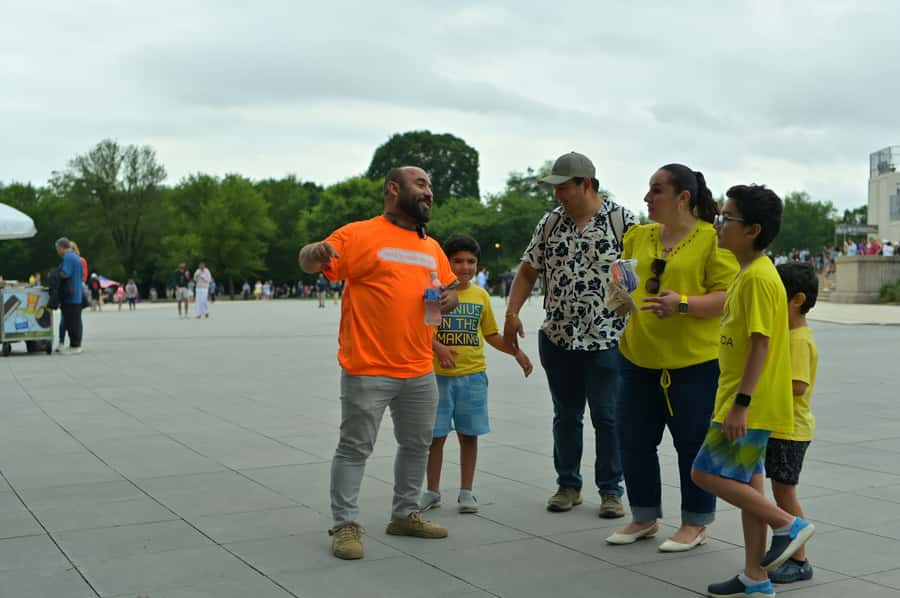
One of the smartest perks is the option to do this tour in the daytime or evening. The landmarks don’t change, but your experience does. Evening often makes the mood calmer and the light gentler for photos. Daytime gives you clearer views and easier orientation—especially if you’re trying to plan the rest of your trip.
Pick your version based on your energy and your itinerary. If you have limited time and want a quick first sweep, daytime can help you understand the layout fast. If you’re more interested in atmosphere and photos, an evening tour may give you that extra “Washington at night” feeling.
Either way, the core value remains: you’re seeing the big DC points in a short window with guide context and practical photo pauses.
Who This Tour Is Best For (And Who Should Rethink It)
This tour is a strong match if you want to:
- See major monuments without hours of walking
- Get the story behind what you’re looking at
- Take photos efficiently
- Travel with mixed-age groups, including people who prefer short steps over long ones
It’s also helpful if you’re the type who likes to learn first, then roam. After this, you’ll know what to return to on your own—because the tour helps you understand how the city sections connect.
That said, there are a couple of considerations that matter.
- The vehicle format includes rules like no food, no alcohol, and no smoking, and you’ll be expected to buckle your own seat belt. If that’s not your thing, plan ahead.
- Accessibility information is a bit confusing. The activity info says wheelchair accessible, but the safety notice states the tour is not suitable for wheelchair users. If you need mobility support, you’ll want to confirm with the operator before booking.
Also, while the van is climate-controlled, you should still bring water and comfy shoes. Stops are short, but you’ll still be out long enough to feel the weather.
Price And Value: Is $40 Worth It?
At around $40 per person for a 2-hour guided tour, you’re paying for three things: transportation, interpretation, and time-saving pacing.
If you were to do Washington “solo,” you’d likely spend time figuring out routes, parking, where to stand for good photos, and what to pay attention to. Even when you drive yourself, you’ll still want context. That’s what the guide provides—explaining how memorials connect to events and why certain landmarks matter.
Then there’s the biggest value driver: the tour squeezes a lot into a short window. People come to DC with limited days, and this style of tour gives you a fast overview you can build on. You’re not paying to sit on a bus and watch everything disappear behind glass. You’re paying for brief stop time plus guided storytelling plus comfort.
In other words, this works best when you’re optimizing time. If you have days to wander and you love long self-guided walks, you might not need it. But if you’re trying to get oriented quickly and learn the meaning of the monuments in a focused way, this price tends to feel fair.
Should You Book This DC Monuments And History Van Tour?
Book it if you want a quick, comfortable intro to Washington, D.C. with photo stops, meaningful guide commentary, and a route that covers the landmark highlights in a tight timeframe. It’s a particularly good option for first-timers, families, and anyone who doesn’t want to spend the whole day walking the National Mall.
Hold off or confirm details first if accessibility is a priority, since the info provided includes conflicting statements. Also, if you’re visiting during extreme heat, plan for the possibility that the air conditioning may not fully erase the weather during stops.
If you’re on the fence, here’s the simplest way to decide: if you want to learn the map and the story fast, this tour is a solid bet. If you already know where everything is and you prefer deep, slow exploration, you may want a different plan.
FAQ
FAQ
How long is the D.C. monuments and history tour?
The tour duration is 2 hours.
What does the tour include?
You’ll get a guided tour of Washington, D.C.’s landmarks with transportation in a stylish, comfortable van, expert commentary, and stops for photo opportunities at major landmarks.
Where do I meet the guide?
You meet in front of Arlo Hotel DC.
What landmarks can I expect to see?
The tour includes stops and/or views of the White House, Capitol Hill, Washington Monument, Lincoln Memorial, Martin Luther King Jr. Memorial, Vietnam Veterans Memorial, Korean War Veterans Memorial, World War II Memorial, Franklin Delano Roosevelt Memorial, and Thomas Jefferson Memorial.
Is the tour wheelchair accessible?
The activity information lists wheelchair accessible, but the safety notice says the tour is not suitable for wheelchair users. If you rely on a wheelchair, confirm with the provider before booking.
Is there air conditioning in the van?
The van is described as climate-controlled. Reviews also mention air conditioning being a relief, especially on hot days.
Are there photo stops?
Yes. The tour includes convenient stops for photo opportunities at major landmarks, with time to get out for short periods.
What should I bring?
Bring comfortable shoes, a camera, and water.
What is not allowed on the vehicle?
Smoking, food, and alcoholic drinks are not allowed in the van.