Ushuaia in 70 minutes feels like a cheat code. This double-decker bus tour is built for first-timers who want a smart overview of town fast, from government buildings and chapels to hilltop panoramas and the harbor area. It’s compact, low-stress, and especially handy when weather or time limits your options.
I love how the route checks off major Ushuaia landmarks without asking you to commit to a full-day plan. I also like that you get English and Spanish narration (plus headset options in multiple languages), so you can follow along even while you’re busy snapping photos. One thing to keep in mind: this is a quick ride with brief stops, so it is not the kind of tour where you get to linger or go deep at every site.
In This Review
- The 6 best reasons this bus loop works in Ushuaia
- Why a double-decker bus loop makes sense in Ushuaia
- Meeting point and timing: what to expect from the schedule
- The route: from Antigua Casa de Gobierno to the Naval Pier
- Stop 1: Antigua Casa de Gobierno (and the First Chapel)
- Stop 2: Lucinda Otero House
- Stop 3: Malvinas Memorial
- Stop 4: Cementerio Antiguo de Ushuaia
- Stop 5: Universidad Nacional de Tierra del Fuego + panoramic hills
- Stop 6–7: Río Pipo, Nuevos Barrios, and Camino de los Presos
- Stop 8: Laguna del Diablo + Italian Barrio and the local hospital area
- Stop 9: Museo del Fin del Mundo (including shipwreck context)
- Stop 10: Naval Pier and the Fournier Monument
- Views and photo stops: how to get the best results in short breaks
- The narration and language setup (and how to avoid sound problems)
- Comfort on the top deck: warm buses, tight stairs, and bumpy roads
- Price and value: is $32 worth it?
- Who should book this bus tour (and who should skip it)
- Quick FAQ before you go
- FAQ
- How long is the Ushuaia double-decker bus tour?
- Where does the tour start and end?
- Is hotel pickup included?
- What languages are available on the tour?
- Is the tour only available in certain months?
- Are the admissions at the stops free?
- What if the weather is bad?
- Is this a small group tour?
- Should you book this Ushuaia double-decker bus tour?
The 6 best reasons this bus loop works in Ushuaia

- Fast orientation for your first day: you leave understanding where the city landmarks sit.
- Hilltop viewpoints included: you’ll reach areas with big panoramas over Ushuaia.
- Multiple stops that match the city’s story: government, church, memorials, cemeteries, and education.
- Photo time without the logistics headache: you’re dropped off with short breaks for pictures.
- Headset-friendly language options: use a jack with your own headphones for extra languages.
- Small group size: capped at 20 travelers, which helps keep it orderly.
Why a double-decker bus loop makes sense in Ushuaia

Ushuaia is scenic, but it is also spread out. On a cold, windy day, that makes “just walk around and explore” a little unrealistic. This tour gives you a practical middle ground: enough stops to feel like you saw the real city, without the strain of connecting lots of separate taxis or buses.
The double-decker format matters here. Higher seating usually means better angles for harbor views and hilltop scenery, and you also get a sense of the city’s shape. Even if the weather is moody, you still get the flow of the sights—big parts of Ushuaia are more about where things are than about one single museum.
This is also one of the better fits if you’re juggling a tight itinerary. If you’re here for a short visit (cruise stop, quick land trip, or pre/post adventure), a compact overview tour is often the move.
Meeting point and timing: what to expect from the schedule
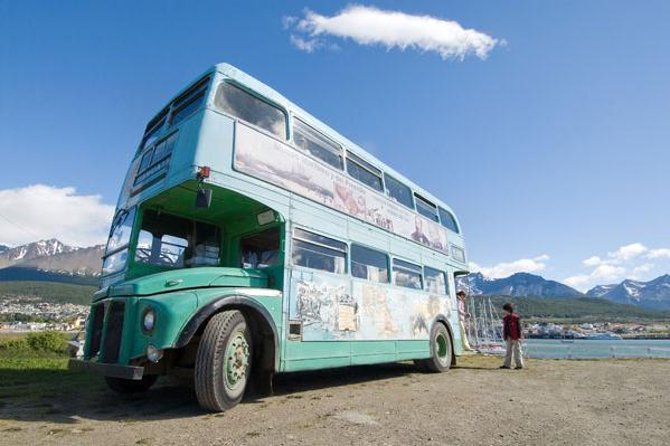
You meet at Civic Plaza Ushuaia (Av. Maipú 420-498) and the tour ends back at the same spot. There’s no hotel pickup, so plan to arrive a little early and get settled before departure.
The tour runs about 1 hour 10 minutes (roughly an hour-plus). That timing sounds short, but the route is designed around quick, targeted stops—so you get a “great hits” circuit rather than a slow meander. If you’re thinking you’ll see everything in full detail, you’ll want a longer guided option. If you’re thinking you need orientation plus a few key photo chances, this hits the mark.
Season matters too. From October to April, it’s operated as a double-decker. In winter, it switches to a Bondi 4×4 in Spanish only.
The route: from Antigua Casa de Gobierno to the Naval Pier
This tour is basically a highlights map with smart pacing. You’re moved through different parts of town—old civic roots, memorial spaces, education and science areas, and the waterfront where the city’s maritime identity shows up.
Stop 1: Antigua Casa de Gobierno (and the First Chapel)
The tour starts at the Antigua Gobernación area and moves through emblematic civic sites, including a first school connected to the region’s educational and governmental past, then the First Chapel. You’ll have about 15 minutes, with admission listed as free.
What I like about this start is that it frames Ushuaia early. Before you go looking for views, you get context for what the city became and why those early institutions mattered.
Stop 2: Lucinda Otero House
Next is the Lucinda Otero house, an architectural and spiritual highlight. The stop is brief—about 5 minutes—but it’s a good reminder that Ushuaia’s story isn’t only about geography and war; it’s also about local homes and beliefs.
Stop 3: Malvinas Memorial
Then comes the Malvinas Memorial, with about 10 minutes. This is one of the most serious stops on the route, and the timing gives you a moment to take it in rather than just passing by.
If you’re the type who likes meaning over selfies, this is a stop you’ll appreciate. It’s also a good contrast to the more scenic viewpoints later.
Stop 4: Cementerio Antiguo de Ushuaia
The First Cemetery is a short 5-minute reflection stop. Admission is noted as free, and the short duration is probably intentional—this isn’t about an extended visit, it’s about not skipping something important.
If you prefer quiet stops, be ready for the fact that the bus schedule keeps things moving.
Stop 5: Universidad Nacional de Tierra del Fuego + panoramic hills
You’ll pass the CADIC and the Universidad Nacional de Tierra del Fuego, with a focus on scientific and educational advancement. The tour also reaches Monte Gallinero and Monte Vigía for panoramic views of the city.
This is one of the most “Ushuaia” parts of the loop because you finally see the city’s relationship to surrounding terrain. Even if your stop time is only around 5 minutes here, you get a meaningful angle that you’d be hard-pressed to catch on your own without planning.
Stop 6–7: Río Pipo, Nuevos Barrios, and Camino de los Presos
The bus passes along Río Pipo and through the Nuevos Barrios, then enters the Camino de los Presos (Prisoners’ Road). You get two segments: about 5 minutes passing along the story-linked areas, then another short 5-minute stop emphasis on the road itself.
These stops are where the tour becomes more than postcard sightseeing. If you like understanding how the city evolved (and how it was shaped by harsh conditions), these brief moments can feel surprisingly informative.
Stop 8: Laguna del Diablo + Italian Barrio and the local hospital area
At Laguna del Diablo, you actually get off the bus for pictures and a short break—about 10 minutes. Then the tour passes through Barrio de los Italianos and the area near the local hospital.
This is often the stop that makes the whole tour feel worth it, because you get to pause, step out, and take in the setting rather than just watching it from the top deck.
Stop 9: Museo del Fin del Mundo (including shipwreck context)
The route includes the Museo del Fin del Mundo, plus the Saint Christopher shipwreck context. Your time here is listed as about 5 minutes, with admission noted as free for the stop itself.
The museum stop is short, so think of it as a highlight introduction rather than a deep museum visit. If you want a longer dive, you’ll likely plan a separate visit later.
Stop 10: Naval Pier and the Fournier Monument
You finish at the Naval Pier area and the Fournier Monument, which connect to Ushuaia’s maritime history and pioneer stories. The final 5-minute closer-to-the-water timing gives you a sense of where the city’s identity turns toward the sea.
It also makes for an easy wrap-up. You’re back at the starting point afterward, so it’s simple to keep your day moving.
Views and photo stops: how to get the best results in short breaks
This tour is built around quick photo windows. That can be frustrating if you want long walks, but it’s great if you want a tight run of angles in limited time.
If you want the best payoff, come with a clear idea of what you want photos of: harbor views, hilltop city angles, and the laguna stop. The hilltop segment (Monte Gallinero and Monte Vigía) is where your camera usually earns its keep, because you’re going from streets into “big picture” sightlines.
Also, bring the practical gear Ushuaia demands. Reviews consistently hint at rain and bumpy rides, so having a rain layer ready helps you stay comfortable during stops when you might be stepping out for pictures. Wind can also make standing outside for a few minutes feel longer than expected.
The narration and language setup (and how to avoid sound problems)

In summer, you’ll have a professional guide who speaks English and Spanish. In winter, the operation shifts to Spanish only. Across the tour, there’s also a narration system where other languages are available at each seat using equipment with a jack connection for your own headphones.
If you forget headphones, you might want to plan to buy or use what’s available at the seats (the tour notes equipment options for languages like German, Chinese, Russian, Italian, French, and Portuguese). That flexibility matters because Ushuaia’s tours can be hit-or-miss on language coverage, especially in winter.
One practical tip: keep an eye on the sound environment. If others are chatting loudly above the narration, it can be hard to hear. The tour works best when the group settles enough to let the audio do its job.
Comfort on the top deck: warm buses, tight stairs, and bumpy roads
The bus ride is designed to keep you moving and seeing things, and that comes with a few physical realities.
First, the top deck can feel a bit bumpy on uneven streets. Second, reaching the upper seats involves stairs that are often described as narrow and a little work-involved. The tradeoff is that your viewing angles tend to be better up there, and the photos usually turn out more dramatic.
On the plus side, the ride is often described as warm and comfortable. If it’s cold out, that’s not a small deal. On a day when Ushuaia wants to test your patience, comfort turns a short sightseeing loop into a relaxing one.
Price and value: is $32 worth it?
At $32 per person, this tour is positioned as a budget-friendly way to see the town’s highlights in one go. The value comes from coverage: you hit civic heritage, memorials, the cemetery, education and science areas, major viewpoints, and the waterfront in a single compact circuit.
The “gotcha” in value is expectations. This is not a long-form tour where each site gets detailed explanation. Stops are intentionally short, so you won’t have time to read everything, explore museums deeply, or wander off the main path.
Still, if you’re paying to solve a real problem—lack of time, bad weather, or needing orientation—this is one of the simpler “yes” options. You can treat it like the foundation tour, then build the rest of your Ushuaia day with targeted add-ons where you want more time.
Who should book this bus tour (and who should skip it)
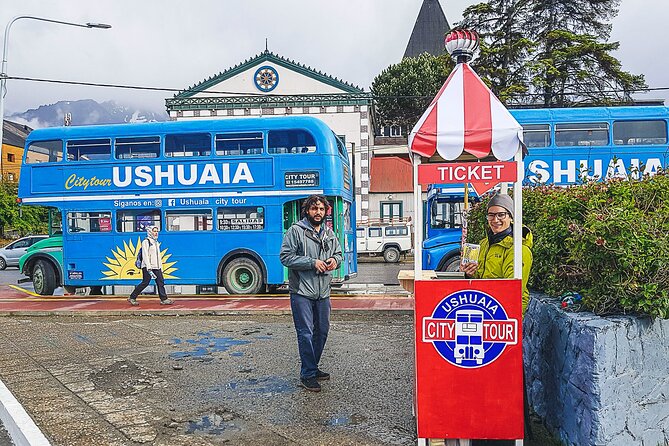
This tour is ideal if:
- You’re in Ushuaia for a short visit and want quick orientation.
- You’re traveling as a couple, solo, or with friends and want an easy plan with minimal decision-making.
- You want a warm, straightforward overview even if rain or wind shows up.
You might consider skipping or supplementing it if:
- You’re looking for a deep historical breakdown at every stop.
- You’re specifically hunting for a particular glacier or ski-lift-style viewpoint that isn’t part of this city highlights circuit.
- You hate crowds or dislike quick turns with photo stops.
A smart strategy is to do this early in your trip. Once you understand where things are (especially the waterfront and the hill viewpoints), it becomes easier to choose what to revisit on your own.
Quick FAQ before you go
FAQ
How long is the Ushuaia double-decker bus tour?
It lasts about 1 hour 10 minutes (approximately).
Where does the tour start and end?
The meeting point is Civic Plaza Ushuaia on Av. Maipú 420-498, and the tour ends back at the same meeting point.
Is hotel pickup included?
No. There is no hotel pickup or drop-off listed.
What languages are available on the tour?
In summer, the guide is professional and speaks English and Spanish. In winter, it runs in Spanish only. Other languages may be available at each seat via equipment that uses a jack for your own headphones.
Is the tour only available in certain months?
The double-decker operates from October to April. During winter it switches to a Bondi 4×4 in Spanish only.
Are the admissions at the stops free?
The tour lists admission tickets as free for the stops included on the route.
What if the weather is bad?
The experience requires good weather. If it’s canceled due to poor weather, you’ll be offered a different date or a full refund.
Is this a small group tour?
Yes. It has a maximum of 20 travelers.
Should you book this Ushuaia double-decker bus tour?
If you want a practical first look at Ushuaia and you’re okay with brief stops, I think this is a solid buy. For the price, you get a well-paced circuit through the city’s key landmarks, plus viewpoint time that helps you orient quickly for the rest of your trip.
Book it early in your day if you can. You’ll leave with a mental map, better photo priorities, and less wasted time bouncing between sights on your own. If your goal is deep museum time or long nature walks, plan those separately—but as an efficient overview, this one is hard to beat.