
Jerusalem in one long, guided day. This full-day trip from Tel Aviv strings together Old City landmarks and New City highlights with a powerful stop at Yad Vashem, so you get both the sacred and the historical in one organized route.
I love the way the morning starts with sweeping Mount of Olives viewpoints, giving you instant orientation before you start walking. I also love how the guide style—people like Avi, Itamar, and Kobi come up again and again—keeps the day clear and entertaining while you move through dense neighborhoods.
One thing to plan for: it’s a big, busy day with plenty of walking and short time windows at many stops, so you won’t linger the way you might on a solo visit.
In This Review
- Key takeaways before you go
- Mount of Olives views: your orientation shortcut
- Old City walking route: Jewish Quarter, Cardo, and the Armenian Quarter
- Wailing Wall and Temple Mount area: what to expect and what may vary
- Via Dolorosa and the Church of the Holy Sepulcher: expect a holy maze
- Mt. Zion: views, symbolism, and the Saturday add-ons
- Yad Vashem: the emotional center of the day
- Price and logistics: is $95 good value?
- Pacing, walking, and staying sane in Jerusalem heat
- Shopping stops and souvenir timing: manage your expectations
- Who this tour suits best (and who should skip)
- Should you book Bein Harim’s Jerusalem Old & New City Bus Tour?
- FAQ
- Is food included in the Jerusalem tour from Tel Aviv?
- What sites are included on this tour?
- Are entry fees included in the price?
- How is Yad Vashem handled if the museum is closed?
- What languages does the tour offer?
- Do I need modest clothing for holy sites?
- Can kids go to Yad Vashem on this tour?
- Is the tour suitable for wheelchair users?
- Is a Russian-speaking guide available at Yad Vashem?
- What should I bring?
- Is the tour suitable for very young children?
Key takeaways before you go
- Mount of Olives panoramas first: you get the city’s layout in your head before entering the Old City.
- Old City walking route: Jewish Quarter streets, the Armenian Quarter, and the restored Roman road of the Cardo.
- Major holy-site sequence: Western Wall to the Via Dolorosa to the Church of the Holy Sepulcher.
- Mt. Zion + Saturday extras: and on Saturdays, options like the Hall of the Last Supper and David’s Tomb.
- Yad Vashem with audio: headphones are included, and the guide focus shifts from walking to reflection.
Mount of Olives views: your orientation shortcut
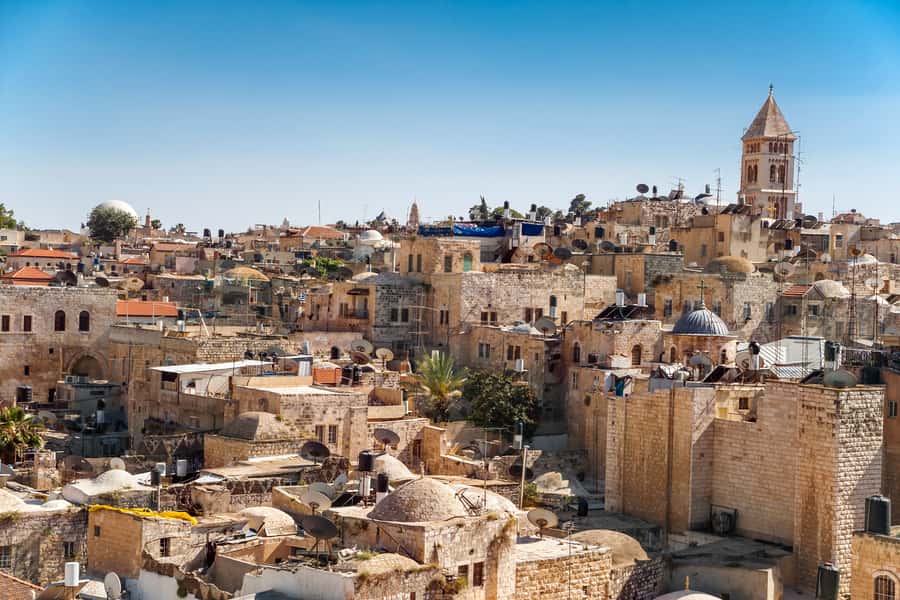
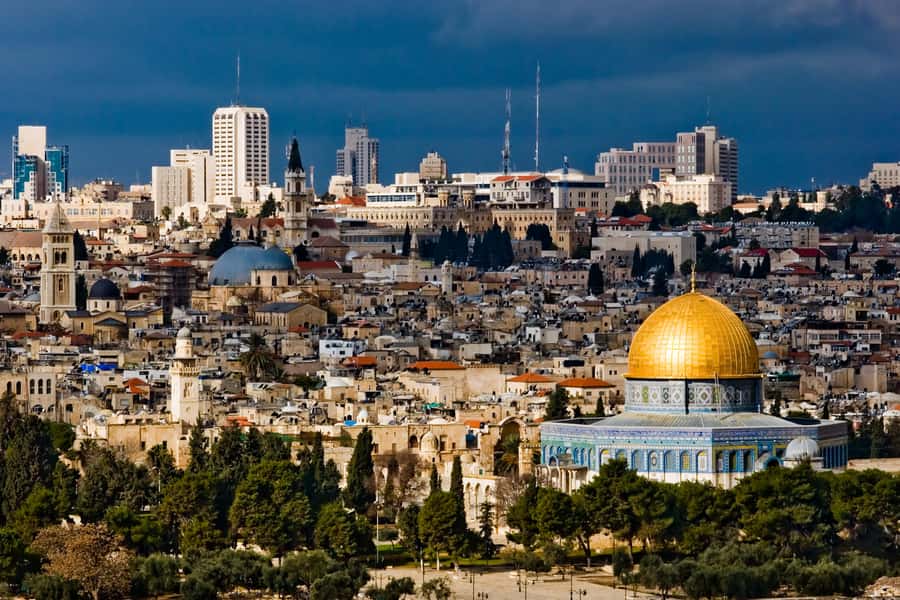
The day starts with the kind of viewpoint that turns Jerusalem from confusing to readable. From the Mount of Olives, you can take in the Old City and the newer neighborhoods spread out below. It’s not just a photo moment; it helps you understand why the tour’s route makes sense once you’re down in the streets.
This is also where the tour earns its “full-day” label. After you see the geography, the Old City stops start clicking: which areas are uphill, where the walls line up, and how the holy sites are clustered.
Old City walking route: Jewish Quarter, Cardo, and the Armenian Quarter
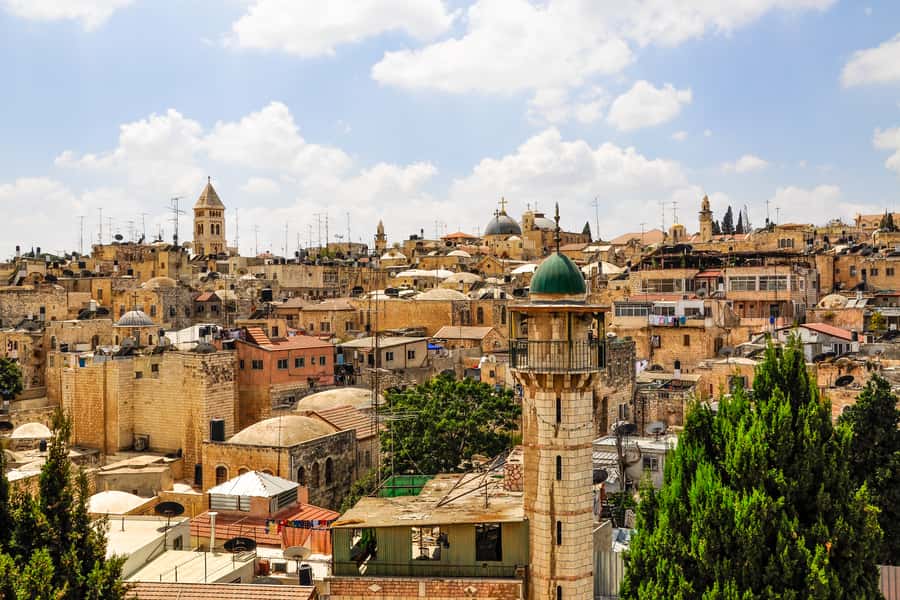
Once you enter the Old City, you’re not just stopping at signs. You’re walking through the Jewish and Armenian Quarters, with time to wander and get your bearings in the bazaars and side streets.
The tour highlights the Cardo, the restored Roman road. If you’ve ever wondered how ancient city life shapes a modern Old City layout, this is one of the more practical stops. You can physically see the old street plan still guiding the way people move.
The pace matters here. The tour covers a lot of ground, so you’ll want to keep your energy up. Wear good walking shoes and don’t expect every alleyway to feel like a museum exhibit—this is a living neighborhood.
Wailing Wall and Temple Mount area: what to expect and what may vary
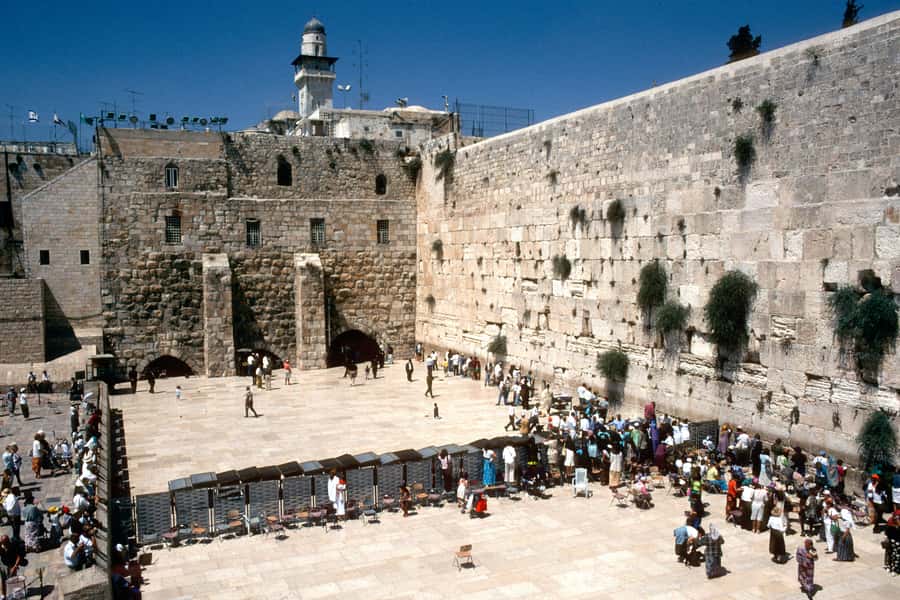
The Western Wall (the Kotel) is a key stop, and it’s easy to see why people build whole trips around it. You’ll also hear the city’s layered story as you move through the area where Judaism, Christianity, and Islam overlap in space and meaning.
The tour description includes the Temple Mount area and the Dome of the Rock as part of the main sights. In practice, access can be time-limited on some days, and your guide will follow what’s possible when you arrive. Plan to treat this as a structured overview, not a guarantee of long, unhurried time in every exact spot.
If you want your visit to feel personal, use the walking segments to watch how different visitors behave—quiet prayers, quick photos, short conversations—then bring that energy back later at Yad Vashem.
Via Dolorosa and the Church of the Holy Sepulcher: expect a holy maze
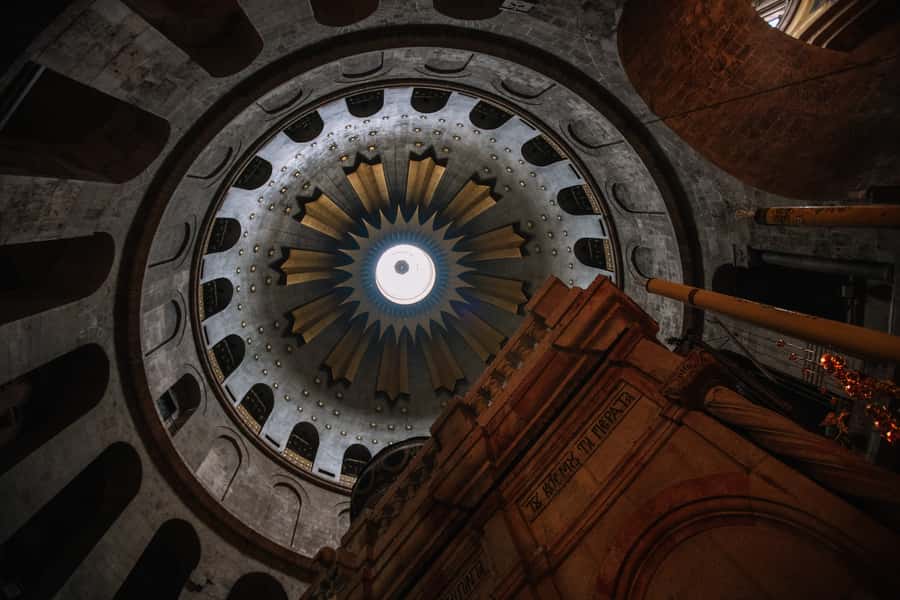
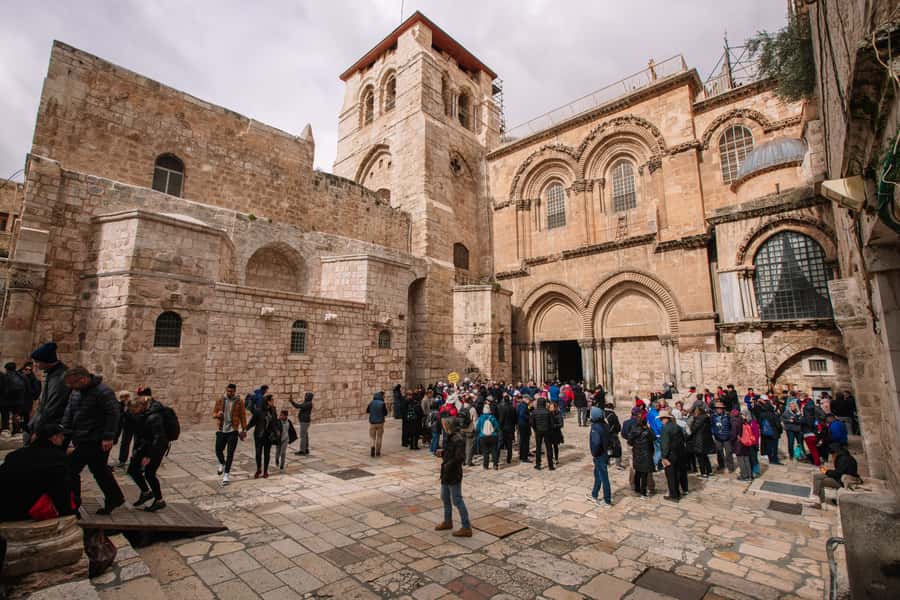
After the Western Wall, you head toward the Via Dolorosa and then to the Church of the Holy Sepulcher, also referred to as the Church of the Resurrection. The religious importance is central to the experience, since it’s said to be the place where Jesus is buried and was resurrected.
This part can feel intense. Jerusalem’s old streets get crowded, signage gets dense, and there are multiple devotion paths that overlap. The value of a guided day shows up here: you don’t waste time guessing where to go next.
You should also know that the time windows are tight. Several descriptions note that you may only get a few minutes at each location, so go with a flexible mindset. Quick stops can still be meaningful if you focus on what you came for: the route, the context, and the feeling of the place.
Mt. Zion: views, symbolism, and the Saturday add-ons
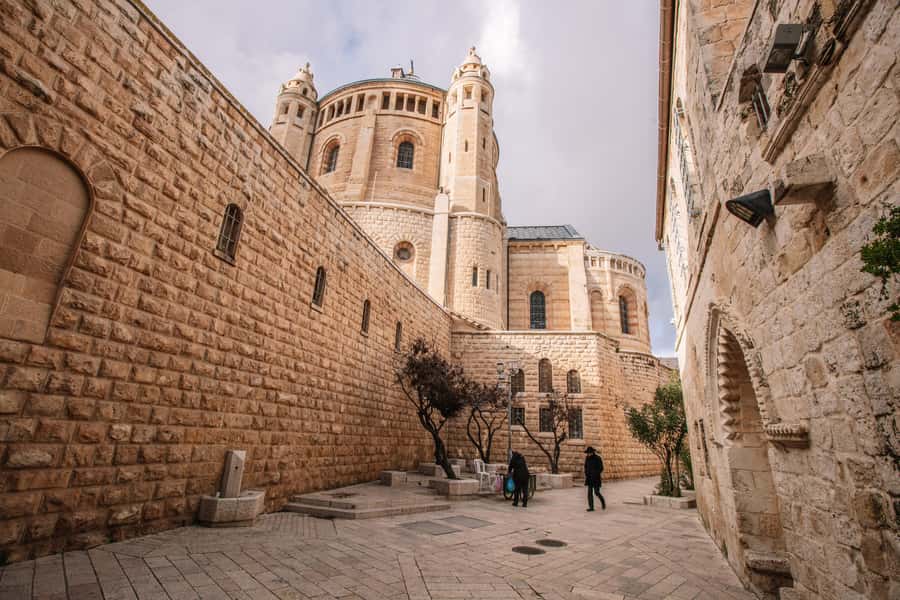
Next up is Mt. Zion. Even from a distance, it feels like a different chapter of the city—still Jerusalem, but with its own mood and religious markers.
The tour notes that on Saturdays you can visit the Hall of the Last Supper and David’s Tomb. If your travel dates line up, that’s a big bonus, because it adds extra layers beyond the standard Old City circuit.
In any case, Mt. Zion works as a bridge. You start the day in high viewpoints, then walk through quarters and churches, and finally you end up on a hill where the meaning of the earlier stops feels clearer.
Yad Vashem: the emotional center of the day
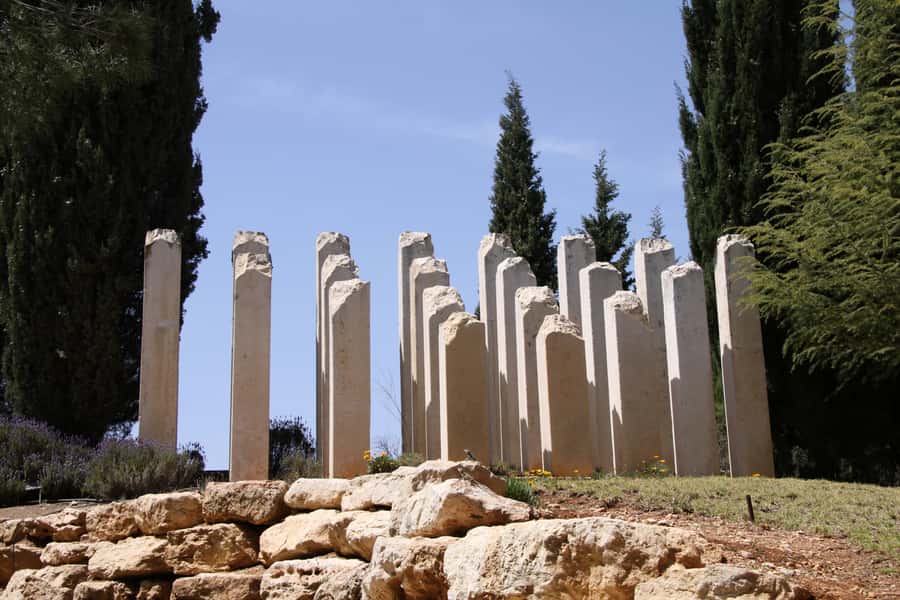
Yad Vashem is the stop that changes the tone. It’s not a quick photo stop, and it’s also not just one room. You’ll see the museum as a sprawling complex with several sections, including the museum building itself.
The tour specifically mentions the Hall of Remembrance and the Hall of Names. Those two are usually the most difficult to forget, especially when you’re coming straight from centuries of city history and trying to stay focused on facts, not just sights.
Important practical notes:
- On Fridays, Saturdays, and Jewish holidays, the Holocaust Museum is closed, and the tour switches to alternatives like King David’s Tomb, the Hall of Last Supper, and the Church of all Nations at the Garden of Gethsemane.
- At Yad Vashem, there is no Russian-speaking guide. Audio guiding and headphones are provided instead.
There’s also an age rule: children under 10 are not permitted to enter the museum. If you’re traveling with kids, plan around that early.
Price and logistics: is $95 good value?
At $95 per person, you’re paying for more than a bus ride. The tour includes entry fees, a professional guide, and transport by air-conditioned coach with pickup and drop-off.
That matters because Jerusalem is not a simple city for self-guided hopping. Your time gets spent walking between sites that are close on a map but far in real life—crowds, traffic, and limited access zones add up fast. Having a guide helps you move through those bottlenecks without feeling lost.
The trade-off is time. Even with a well-run schedule, it’s still a single day. Some descriptions mention short stops, limited time for the museum itself, and occasional delays from group logistics. If you want long sits inside churches or extra breathing room at one neighborhood, you’ll need a second visit—or a different style of tour.
Comfort check: the coach is described as large and air-conditioned, and the pickup/drop-off from Tel Aviv hotels is a real convenience. Still, bring your own plan for drinks since food and drink aren’t included.
Pacing, walking, and staying sane in Jerusalem heat
This tour involves a walking day through uneven old streets. One description mentions walking for most of the day in temperatures around 25 to 35°C, which is a good reminder to take the heat seriously.
A few practical tips that fit the reality of the route:
- Bring sunglasses, sunscreen, and a sun hat (the tour explicitly asks for these).
- Dress modestly for holy sites.
- Expect tight meeting points. Jerusalem crowds make it easy to lose sight of your group if you wander too far.
Also keep in mind the “big-group effect.” Some descriptions describe efficient crowd control, while others mention time spent regrouping people. That’s not a failure of the guide; it’s what happens when multiple pickup patterns and stop schedules collide in a city like this.
Shopping stops and souvenir timing: manage your expectations
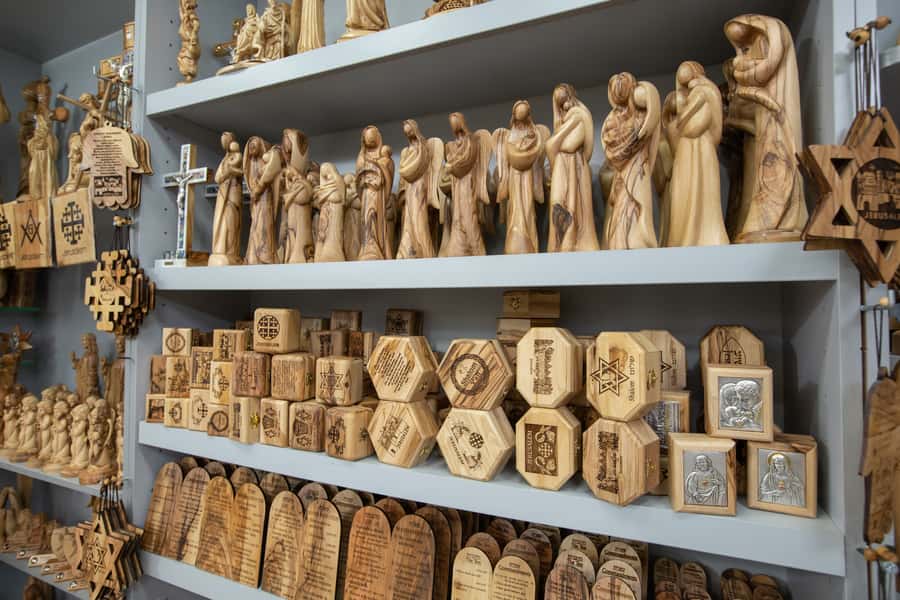
You may run into shopping-focused breaks. Some descriptions call out tourist-trap style stops that feel less educational than expected, including a bazaar stop and other commercial breaks along the way.
Here’s the best way to handle this: decide before you go what you want to buy. If you’re happy to treat it as a short cultural break, it’s fine. If you hate being pulled away from holy-site time, be firm with your own priorities and don’t feel pressured to stay.
If you’re more interested in the Church of the Holy Sepulcher or in Yad Vashem than in browsing, focus on doing those stops justice and treat shopping as optional.
Who this tour suits best (and who should skip)
This is a strong pick if you want an organized first introduction to Jerusalem and you care about hitting the big icons in one day: Mount of Olives, Old City quarters, Western Wall, Via Dolorosa, Church of the Holy Sepulcher, Mt. Zion, and Yad Vashem.
It’s also a good choice if you value guide energy. Many descriptions praise guides for humor, storytelling, and keeping the group together calmly through busy areas. Names like Itamar, Amir, and Kobi show up with high marks for engagement.
But consider other options if:
- You need long time at a single site.
- You want to explore Temple Mount at leisure (access can be time-limited).
- You’re traveling with a child who can’t enter Yad Vashem (under 10 is not permitted).
- You need wheelchair accessibility (the tour is not suitable for wheelchair users).
- You’re very sensitive to crowded navigation and quick stopovers.
Should you book Bein Harim’s Jerusalem Old & New City Bus Tour?
I’d book this when your goal is clarity and coverage. For many people, $95 feels fair because it’s not just sightseeing—it’s structured logistics from Tel Aviv plus entry fees and a guide narrative that ties it all together.
Skip it if you want a slow, deep, spend-the-afternoon-in-one-church kind of day. This itinerary is built for movement, not lingering. If you do it, do it with the mindset of a smart overview—and then plan to return on your own for the one or two places you can’t stop thinking about.
FAQ
Is food included in the Jerusalem tour from Tel Aviv?
No. Food and drink are not included, so you’ll want to budget for meals or bring snacks if that helps you manage the day.
What sites are included on this tour?
The tour includes stops around the Old City and New City highlights such as the Mount of Olives, Jewish and Armenian Quarters, the Cardo, the Western Wall, the Via Dolorosa, the Church of the Holy Sepulcher, Mt. Zion, and Yad Vashem.
Are entry fees included in the price?
Yes. Entry fees are included.
How is Yad Vashem handled if the museum is closed?
On Fridays, Saturdays, and Jewish holidays, the Holocaust Museum is closed. The tour then visits alternatives such as King David’s Tomb, the Hall of Last Supper, and the Church of all Nations at the Garden of Gethsemane.
What languages does the tour offer?
The tour lists German, English, French, and Spanish.
Do I need modest clothing for holy sites?
Yes. Modest dress is required for holy sites.
Can kids go to Yad Vashem on this tour?
Children under 10 years old are not permitted to enter the Holocaust Museum (Yad Vashem).
Is the tour suitable for wheelchair users?
No. The tour is not suitable for wheelchair users.
Is a Russian-speaking guide available at Yad Vashem?
No. A Russian-speaking guide is not available at Yad Vashem. Audio guiding and headphones are provided instead.
What should I bring?
Sunglasses, a sun hat, and sunscreen are recommended by the tour.
Is the tour suitable for very young children?
Children under 4 years old are not permitted to join the tour.