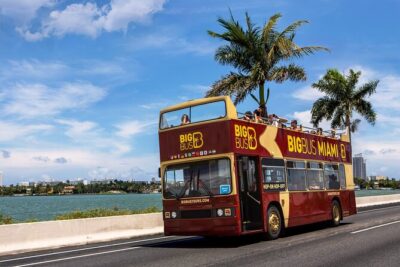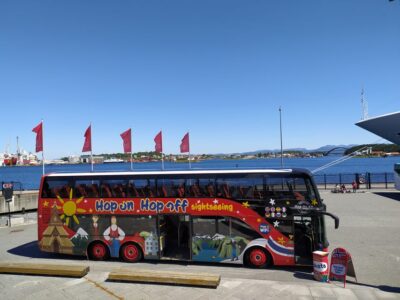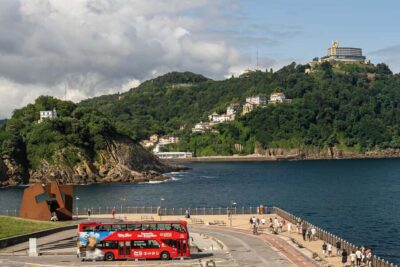
One bus, most of Gozo’s best sights. This is Gozo’s only hop-on hop-off sightseeing bus, so you can jump off, wander, then catch the next ride.
What makes it work so well is the mix of big landmarks (temples and sanctuaries), seafront time (Ramla, Xlendi, Marsalforn), and a proper spin through Victoria.
I especially like the open-top format for real viewing, not just looking out a window. I also like the built-in audio commentary in 16 languages, with English-speaking drivers—so you’re not guessing what you’re looking at.
The main thing to plan around: the buses run from 09:40 to 15:00, and some stops are time-limited or can change on the ground (for example, the well-known sea-arch area at Dwejra is not what it used to be). Audio can also be a little hit-or-miss on some rides.
In This Review
- Key things I’d zoom in on
- Getting on at Mgarr Harbour: the easiest way to start your Gozo day
- How the timing actually feels: 09:40 to 15:00 is real-life limiting
- Your stop list: what each place is good for (and what to watch)
- Ramla Bay: beach time without the logistics headache
- Savina Creativity Centre: art-and-craft energy
- Ggantija Temples and Ta’ Kola Windmill: the big cultural punch
- Calypso Cave: a 10-minute photo stop
- Marsalforn Bay: beaches and possible salt-pan detours
- Victoria Bus Station: Gozo’s capital city, close to everything
- Ta’ Pinu Sanctuary: spiritual stop with a bit of walking
- Ta’ Dbiegi Crafts Village: a practical shopping and culture stop
- Dwejra sea-arch area (the famous arch viewpoint): check what’s left
- Xlendi Bay: an easy seaside finish
- Fontana Xewkija Square: a handy wrap-up point
- What I like most: the bus experience itself (not just the stops)
- The small annoyances to plan for: headphones, older buses, and stop reality
- Value check: $29 for a full-day routing plan (what you pay extra for)
- Who should book this bus tour?
- Should you book the Gozo Sightseeing Hop On Hop Off Tour?
- FAQ
- Where do the buses depart?
- How long is the ticket valid?
- How often do the buses run?
- What are the operating hours?
- Is the audio guide included?
- What languages are available on the audio guide?
- Who speaks on board for driving or guidance?
- What stops are included on the route?
- What’s included in the price, and what isn’t?
- Is the tour wheelchair accessible?
Key things I’d zoom in on
- Gozo’s only hop-on hop-off sightseeing bus for a full one-day island plan
- Open-top views across the coast and over to the inland hills
- Audio guide in 16 languages plus English-speaking drivers
- Frequent service every 45 minutes from 09:40 to 15:00
- Stops built for variety: temples, craft village, beaches, and Victoria
- Wheelchair accessible for a smoother day on wheels
Getting on at Mgarr Harbour: the easiest way to start your Gozo day
If your day starts on Gozo, you start with the ferry side of life. The buses depart from the Gozo Ferry Terminal at Mgarr Harbour, so you’re not hunting for a meeting point deep in town. Catching the bus right after you arrive is what makes the hop-on hop-off model feel stress-free.
The route is set up for you to explore at your own pace. You don’t need to “do everything.” You just hop off when something grabs you—then hop back on later at the next stop that works for your timing.
The service runs often enough that you don’t feel trapped. Buses depart roughly every 45 minutes, which is a great rhythm for a one-day island visit. It’s frequent enough to wait a bit, but not so frequent that you feel like you’re on a schedule all day.
How the timing actually feels: 09:40 to 15:00 is real-life limiting
On paper, one day sounds like plenty. In practice, buses run from 09:40 until 15:00, so you’ll want to plan your longer stops earlier rather than later.
A simple strategy works well:
- Pick one “anchor” site you want to linger at (temples, sanctuary, or beaches).
- Keep one other stop shorter and photo-focused.
- Be back onboard early enough that the 15:00 end time doesn’t sneak up on you.
If you’re traveling between ferries and the bus, I’d treat your ferry timing like part of the itinerary. From personal planning habits (and what I’ve seen others run into), the day goes much smoother if you take an early ferry to Gozo and plan a late enough return so you’re not sprinting back to the harbor.
Your stop list: what each place is good for (and what to watch)
This is a full island route, but the bus isn’t a magic carpet. Each stop has its own vibe, and a few are more “look and snap” than “wander all morning.”
Ramla Bay: beach time without the logistics headache
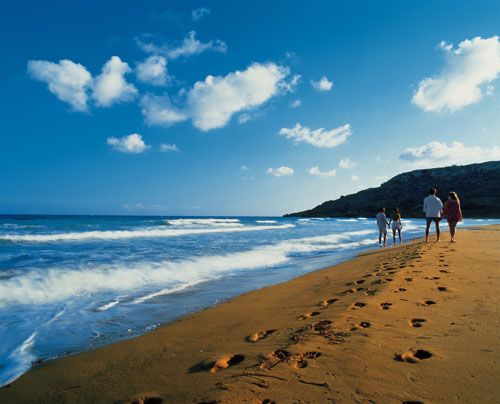
Ramla Bay is one of the best starting points for a coastal mood. It’s a sandy bay, and it’s the kind of stop that makes you glad you skipped the car rental idea. You can stretch your legs, grab a snack, and reset for the inland sights next.
If you like beach colors, Ramla can deliver. One good planning tip: treat it as a relaxed stop, not a workout. Gozo days add up fast.
Savina Creativity Centre: art-and-craft energy
Next up is the Savina Creativity Centre, a stop that gives you more than just stone-and-sea scenery. It’s the kind of place where you can slow down and look at what people are making now, not just what they built hundreds (or thousands) of years ago.
This is also a nice break from outdoor walking. If the sun is strong or you need a calmer moment, this stop helps balance the day.
Ggantija Temples and Ta’ Kola Windmill: the big cultural punch
Ggantija Temples are one of Gozo’s headline sights, and the bus route pairs them with Ta’ Kola Windmill. This combo is smart. Temples give you the “wow, this island is old” feeling, and the windmill area makes it easier to soak in the views right after.
My advice: start here early in the day if you can. It’s the sort of site where a little extra time makes your visit more satisfying.
Also, note the practical side: museum entrance isn’t included in the ticket. So if you plan to go inside ticketed parts of the experience, budget for those entries separately.
Calypso Cave: a 10-minute photo stop
The Calypso Cave stop is listed as a 10-minute photo stop. That’s not a long visit. Think of it as a quick look from the outside and a chance to say you saw the spot, not a deep exploration.
If you want cave time, plan for an additional stop beyond the bus day—or just treat this as a quick checkmark. The bus works best when you respect the time limits on certain stops.
Marsalforn Bay: beaches and possible salt-pan detours
Marsalforn Bay is another seafront option. It’s a nice place to break the day with water views and shoreline strolling.
One caution: the salt pans area near Marsalforn can be affected by on-the-day access changes. I’ve seen situations where construction closures limited plans to reach the salt pans directly. If that’s on your personal must-see list, treat it as flexible and be ready to adjust.
Victoria Bus Station: Gozo’s capital city, close to everything
Stopping at Victoria Bus Station puts you near Gozo’s capital. This is where you can switch from “scenery hopping” to “city wandering.” Victoria is a strong change of pace from beaches and countryside drives.
You can also use Victoria as your “reset stop.” If you’ve had a long morning, grab food, find a viewpoint, and then decide what you want to do next.
A practical point: Victoria can eat time. It’s easy to underestimate how long you’ll want to walk.
Ta’ Pinu Sanctuary: spiritual stop with a bit of walking
Ta’ Pinu Sanctuary is a standout stop because it combines a major site with space to slow down. The grounds give you room to breathe, and there’s also the option to do a short uphill walk toward the stations of the cross area.
If you like places where you can sit quietly, this one is worth building into your schedule. Gozo is calm. Ta’ Pinu matches that pace.
As with other major sights, museum entrance is not included, so plan on separate entry costs if the sanctuary experience you want requires them.
Ta’ Dbiegi Crafts Village: a practical shopping and culture stop
Ta’ Dbiegi Crafts Village is where your Gozo day starts looking and feeling local. This stop is especially good if you want souvenirs that don’t feel mass-produced.
It’s also a “good in-between” stop. After temples and bays, crafts help you shift gears without committing to another long hike.
Dwejra sea-arch area (the famous arch viewpoint): check what’s left
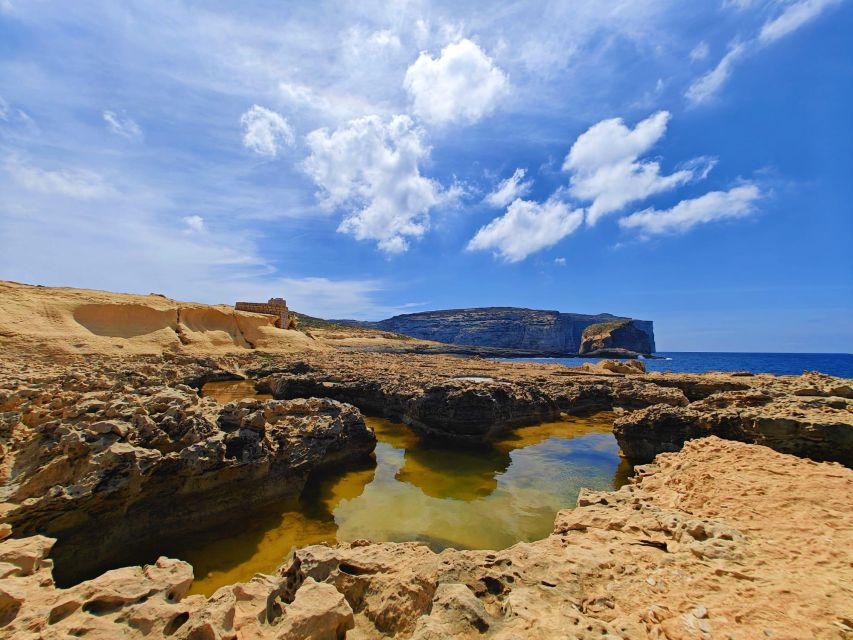
The route includes the Dwejra stop, associated with the famous sea-arch viewpoint. Here’s the honest planning note: the well-known arch area is not the same as it was in the past, and the bus stop still gets marketed with that name in some references.
So when you arrive, don’t treat it like a “perfect photo reenactment.” Treat it like a coastline viewpoint where the dramatic geology is still there, even if the famous feature has changed. This is one of those places where expectations need a reality check.
Xlendi Bay: an easy seaside finish
Xlendi Bay is a great late-day option because it’s scenic and comfortable. It’s the kind of stop where you can grab a drink, stroll near the water, and watch the island life slow down.
This is also a nice place to end if you want your last hours to feel light before heading back toward Victoria and the return ferry.
Fontana Xewkija Square: a handy wrap-up point
The route also includes Fontana Xewkija Square, which can work as a final “one more look” stop before you finish your day.
I like having a square at the end of a route. It’s easier to spot your bearings and decide if you’re done exploring or if you want one last quick wander.
What I like most: the bus experience itself (not just the stops)
A hop-on hop-off bus lives or dies on three things: clarity, pacing, and how easy it is to rejoin later.
This one scores well because:
- You’re guided to each stop so you don’t feel lost.
- Drivers are English speaking, which helps if you need to confirm timing.
- The audio commentary runs across a wide set of languages, including Spanish, English, French, German, Italian, Russian, Chinese, Danish, Greek, Hungarian, Maltese, Portuguese, Polish, Dutch, Japanese, and Swedish.
That’s a lot of coverage for a one-day format, and it means you can listen for context instead of staring at a brochure. Even when you’re not listening the whole time, the audio helps you connect what you’re seeing with what it is.
Also, the open-top format matters more than it sounds. Gozo has long views and bright light. A bus with open sightlines makes the ride feel like part of the sightseeing, not just transport.
The small annoyances to plan for: headphones, older buses, and stop reality
No tour is perfect, and this one has a few quirks worth knowing.
First, the audio experience can vary. I’ve seen mentions where headphones didn’t work or there was no audio on some afternoon buses. On top of that, headphone jacks have been reported as unreliable. If you’re relying on audio heavily, consider bringing your own earphones as a backup option.
Second, bus age can be a factor. Some comments describe buses as older. That doesn’t automatically mean poor service, but it’s good to set expectations: this is functional sightseeing, not luxury transit.
Third, the itinerary can meet real-world limits. The stop list is strong, but occasional closures or changes can happen near certain attractions. For example, the salt-pan area access near Marsalforn has been affected by construction in at least one case. And the Dwejra sea-arch area has changed over time.
Your best defense is flexibility. If a stop turns into a “quick look,” you can still keep the day winning by focusing on the other anchor points.
Value check: $29 for a full-day routing plan (what you pay extra for)
At $29 per person for a one-day ticket, the big value is simple: you’re buying transportation between many of Gozo’s top sights without needing to figure out local buses or taxis all day.
But you should plan for what isn’t included:
- Ferry tickets are not included.
- Museum entrance is not included.
So the real math is: $29 covers the hop-on hop-off sightseeing ride. Any entry fees for temples, sanctuaries, or other ticketed sites will be on you. If you’re the type who likes to step inside every major stop, your total spend will be higher. If you’re okay with a mix of inside-and-outside time (especially at bays), this stays a very fair deal.
Also, because buses run until 15:00, you’re paying for a route that fits a “day trip” tempo. That’s good value if you plan your time with the end time in mind.
Who should book this bus tour?
This tour fits best if:
- You’re visiting Gozo for one day and want a straightforward island plan.
- You don’t want to drive or constantly reorganize rides.
- You like learning as you go, thanks to audio in 16 languages.
- You want a mix of temples, crafts, and shoreline stops without deep logistical stress.
It might feel less ideal if:
- You want a long, unhurried visit at every site on the route.
- You’re planning cave or salt-pan explorations that can require access beyond what a bus stop allows.
- You’re very sensitive to small technology hiccups (like headphone/audio reliability).
Should you book the Gozo Sightseeing Hop On Hop Off Tour?
Yes, if your goal is a smooth, efficient Gozo day. This bus is a practical way to hit the island’s main sights—Ggantija, Ta’ Pinu, Victoria, Ramla, Xlendi, and the bays in between—without turning your day into a puzzle.
I’d say book it especially if you like the idea of choosing your own “off-bus time” instead of committing to a fixed guided itinerary. Just build your schedule around the 09:40 to 15:00 service window, and don’t treat each stop as a guaranteed long visit.
If you can stay flexible at Dwejra and plan for separate entry costs at ticketed places, this is one of the easiest ways to see Gozo in limited time.
FAQ
Where do the buses depart?
Buses depart from the Gozo Ferry Terminal at Mgarr Harbour.
How long is the ticket valid?
The ticket is valid for 1 full day.
How often do the buses run?
Buses run every 45 minutes.
What are the operating hours?
Buses run from 09:40 until 15:00.
Is the audio guide included?
Yes. Audio commentary is included on board the open-top bus.
What languages are available on the audio guide?
Spanish, English, French, German, Italian, Russian, Chinese, Danish, Greek, Hungarian, Maltese, Portuguese, Polish, Dutch, Japanese, and Swedish.
Who speaks on board for driving or guidance?
Drivers are English speaking.
What stops are included on the route?
The route includes stops such as Ramla Bay, Savina Creativity Centre, Ggantija Temples & Ta’ Kola Windmill, Calypso Cave (10-minute photo stop), Marsalforn Bay, Victoria Bus Station, Ta’ Pinu Sanctuary, Ta’ Dbiegi Crafts Village, Dwejra, Xlendi Bay, and Fontana Xewkija Square.
What’s included in the price, and what isn’t?
Included: sightseeing tour. Not included: ferry tickets and museum entrance.
Is the tour wheelchair accessible?
Yes, it is wheelchair accessible.