
Saigon hits your eyes fast, and this open-top bus helps you make sense of it. I like the panoramic, front-and-back city views from a double-decker bus, and I like that the ride comes with audio commentary in several languages. One thing to weigh: the tour lasts about 1 hour, so you’ll want to plan which landmarks you actually want to jump off for.
You start at a kiosk beside the Saigon Opera House, grab your ticket, and settle in for an easy loop that passes famous French colonial sights like Notre-Dame Cathedral and the Central Post Office. Along the way, you’ll also see the street-level texture—markets, temples, and wide, tree-lined boulevards—without the stress of driving or navigating. My one drawback note: audio can be hit-or-miss if something isn’t working at the start, so you should check early and speak up right away.
In This Review
- Key points to know before you ride
- Saigon from an open-top double-decker: why this format works
- The French colonial photo loop: Notre-Dame, Central Post Office, Opera House
- Notre-Dame Cathedral (Cathedral Basilica) from the road
- Central Post Office: the big, recognizable landmark
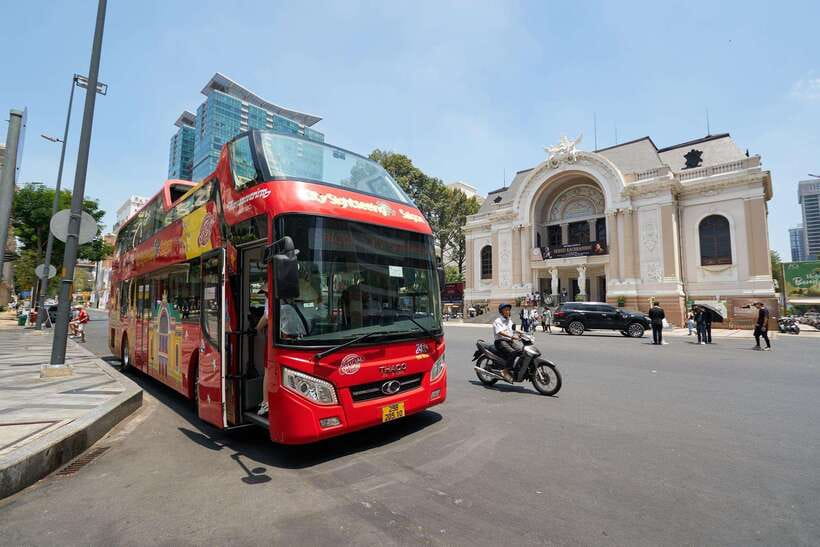
- Saigon Opera House: your starting (and ending) landmark
- Hop-on hop-off in just 1 hour: how to use the short time well
- Audio commentary: make sure you’re actually getting it
- What the bus route adds beyond the big sights
- Comfort, weather, and what to bring (so you don’t regret it)
- Price and value: is $10 worth it?
- Who should book this bus tour?
- Should you book Vistra’s Ho Chi Minh City hop-on hop-off bus?
Key points to know before you ride
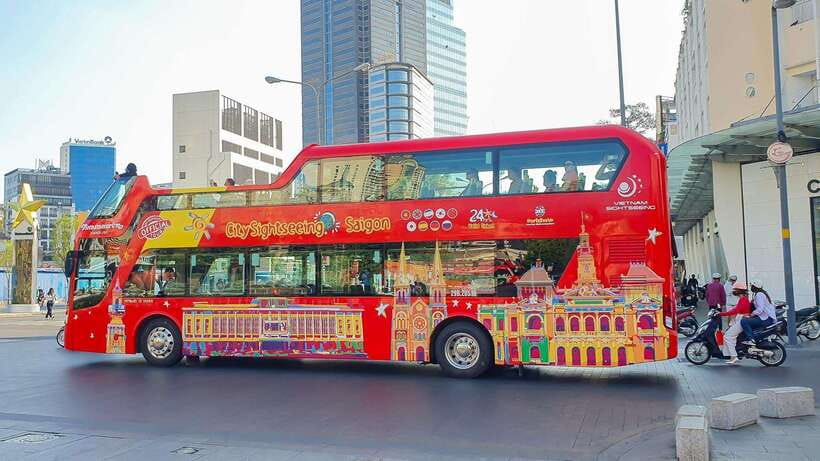
- Open-top double-decker views for photos and quick orientation around key landmarks
- French colonial highlights on the route, including Notre-Dame and the Central Post Office
- Audio commentary included with options in multiple languages
- Hop-on hop-off at your pace, but with a short ride time you’ll need to choose your stops
- Start and finish near the Saigon Opera House, making it easy to return and regroup
Saigon from an open-top double-decker: why this format works
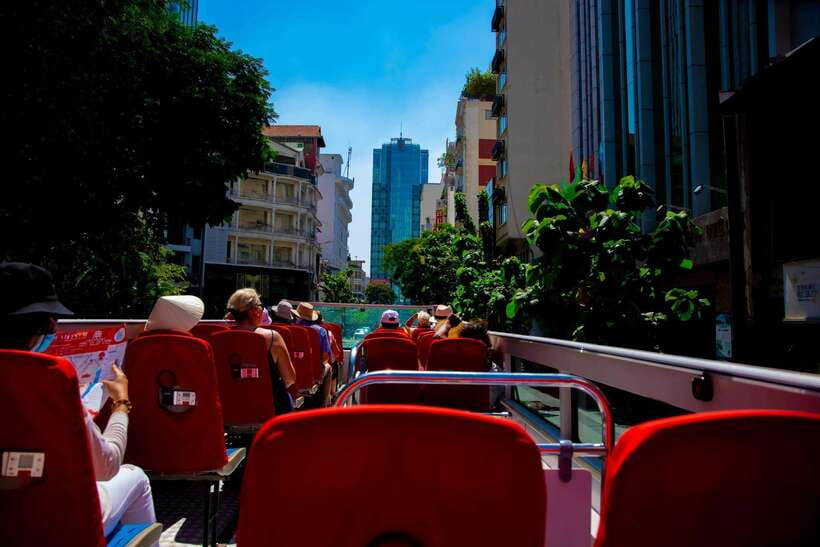
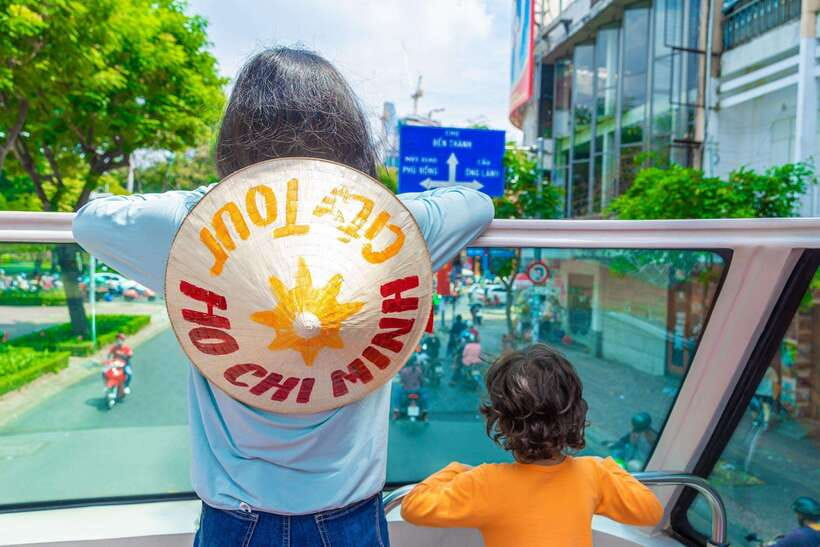
This is the kind of tour that makes the city feel readable. From the top deck, your eyes get a wide frame: the big monuments, the street geometry, and the mix of old façades with newer movement. If you’re arriving with jet lag or just want an instant sense of “where things are,” an open-top ride is a practical first step.
The double-decker setup matters more than people think. It’s not just height for photos. It’s about seeing traffic flow, the spacing of major streets, and how landmarks relate to each other. That gives you a map in your head—then when you walk later, you spend less time guessing.
There’s also a simple comfort angle. You can sit, look, and let the city come to you. The tour includes audio commentary, which is meant to turn what you see into something you can remember, not just pass by.
The French colonial photo loop: Notre-Dame, Central Post Office, Opera House
The route focuses on major sights associated with Saigon’s French colonial past. You won’t just hear the names—you’ll see the architecture as you pass, with clear landmarks like:
Notre-Dame Cathedral (Cathedral Basilica) from the road
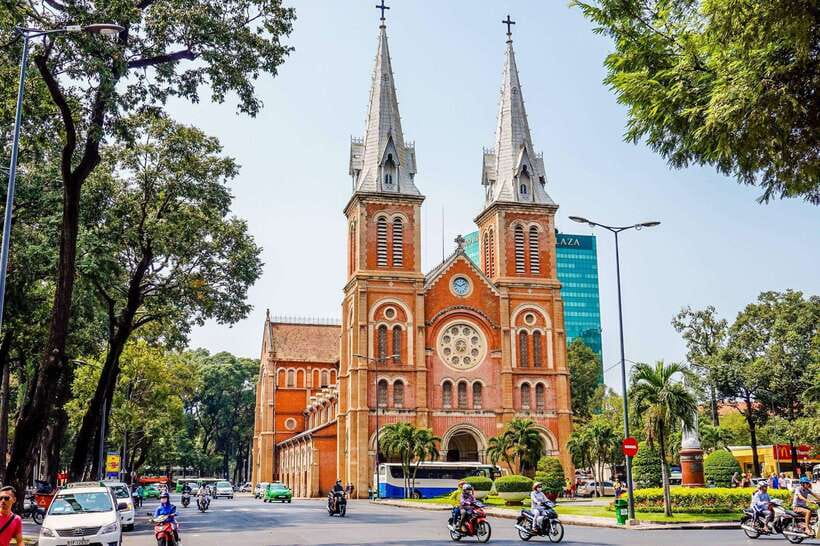
Notre-Dame is one of those buildings that reads instantly even from a distance. On the bus, you get a clean view of the structure and its street context, which is great for framing your next move. If you want closer photos or to step inside, you’ll need to use the hop-off option—but even staying on board gives you a solid first impression.
A practical drawback: since this is a ride-by experience, the best angles depend on the bus timing and where you’re seated. If you care about photos, sit so you have an unobstructed line of sight whenever the bus approaches major landmarks.
Central Post Office: the big, recognizable landmark
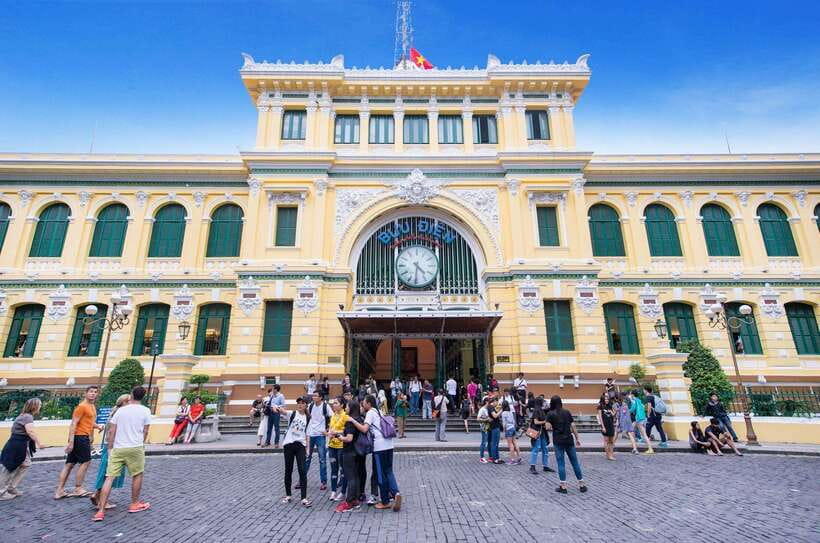
The grand Central Post Office is another anchor point on this circuit. From the top deck, you’ll likely get broad views that show the building’s shape against surrounding streets. That’s useful if you’re the type who likes to orient yourself visually before committing time to an attraction.
The main limitation is the same as any bus pass: you’re seeing it in motion. If you’re hoping for long looks, you’ll want to jump off—bearing in mind the tour runs for about 1 hour, so hop-off time can be tight.
Saigon Opera House: your starting (and ending) landmark
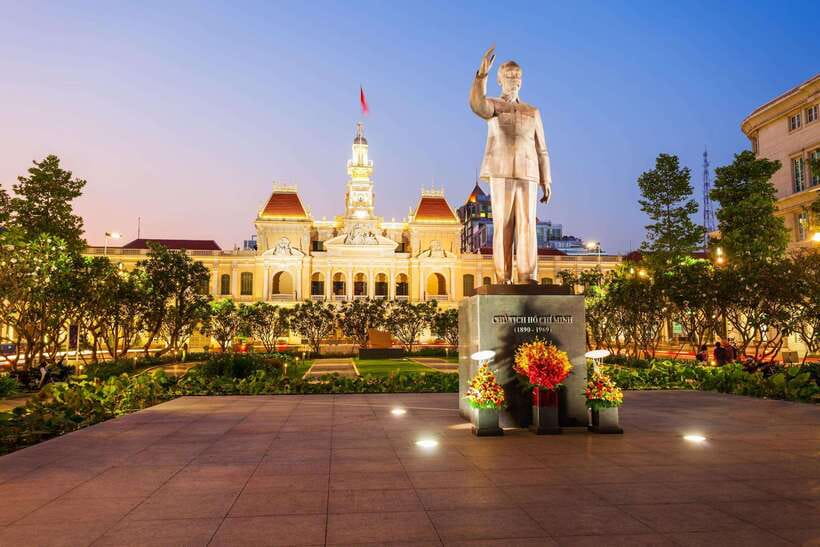
The bus tour is bookended by the Saigon Opera House area. You redeem your ticket at a kiosk next to it, and the tour ends back at the meeting point. That matters because it keeps logistics simple: you don’t have to figure out how to get back across town after your sightseeing loop.
If you’re thinking about timing, this also helps you build an easy day. You can do the bus, then walk from the Opera House zone to nearby places without wrestling with transport right away.
Hop-on hop-off in just 1 hour: how to use the short time well
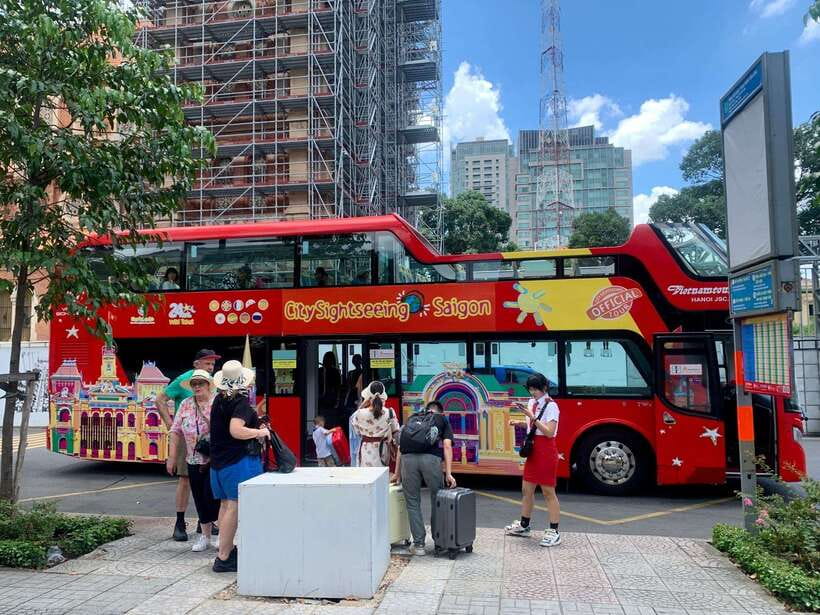
This tour is about 1 hour, and you should check availability for the exact starting times. With that short duration, hop-on hop-off isn’t meant for a slow crawl. It’s best for a fast strategy.
Here’s how to use the time well:
- Pick one or two “must-see up close” stops (for example, Notre-Dame or the Central Post Office), then accept that the rest are best viewed from the bus.
- If you’re mainly doing orientation, stay on the bus and treat it like a moving overview.
- If you do hop off, plan for a quick walk-to-photo and back rhythm. Don’t assume you’ll have time for a full, deep visit.
The value of this format is that it reduces decision fatigue. You’re not committing to a detailed walking route before you understand the layout. After the bus loop, you’ll usually have a clearer sense of what’s worth returning to on foot.
Audio commentary: make sure you’re actually getting it
The tour includes audio commentary, and the language options listed are: English, Spanish, German, French, Chinese, Japanese, Korean, Vietnamese, and Russian.
That’s a big plus for a short experience. In one hour, seeing landmarks can blur together. Audio is what turns the trip into something more memorable—names, context, and key details tied to each stop.
One caution based on the real-world experience of some riders: the audio may not play (or may not come through clearly) right away. If the bus is rolling and you aren’t hearing anything, don’t wait. Flag it at the start so you can switch languages or get help. It’s the difference between a scenic ride and a true tour.
What the bus route adds beyond the big sights

Even if you focus on Notre-Dame and the Central Post Office, the route has extra payoff: you pass through the everyday city layers. You’ll see lively markets, colorful temples, and wide boulevards lined with lush trees. That street-level mix is part of why a bus loop works for first-timers.
These details help you understand the city’s texture. You’re not only looking at monuments. You’re seeing how people actually move, where major streets open up, and how different architectural styles sit side by side.
A small practical note: since the tour includes open-top panoramic views, you’ll get great visibility—but you’ll also feel sun and wind more. Treat it as an outdoor activity.
Comfort, weather, and what to bring (so you don’t regret it)

This one is straightforward: bring what keeps you comfortable for an outdoor ride and light walking if you hop off.
Bring:
- Comfortable shoes
- Hat
- Camera
- Sunscreen
- Water
That water tip is more important than it sounds in Saigon. The ride is short, but standing in the sun waiting to hop off (or walking a bit for photos) adds up fast.
Also note: smoking isn’t allowed. Plan around that if you’re sensitive to smoke.
And keep weather in mind. The information says conditions can vary, so dress like you might deal with sudden heat or short rain bursts. If you know you run cold or hot, plan for it.
Price and value: is $10 worth it?
At about $10 per person, the price is hard to beat for one hour of orientation plus audio commentary. The main “value question” is what you want out of the time.
This tour is worth it if:
- You want panoramic views with minimal effort
- You’d like to pass major French colonial landmarks quickly
- You prefer not to arrange complex transit for a first pass through town
- You’re using hop-on hop-off mainly to choose which sights to return to later
It’s less worth it if you want:
- A full guided walk-through at each landmark
- Long visits or time for detailed museum-style stops
- A deeply structured narration for the entire loop without any gaps
Remember: it’s not marketed as a multi-hour guided deep dive. It’s a quick, efficient way to get bearings and see iconic buildings from the street.
Who should book this bus tour?
This tour fits best if you’re:
- Doing your first days in Ho Chi Minh City and want an easy orientation tool
- Short on time but still want to see the headline sights, including Notre-Dame and the Central Post Office
- Interested in a low-stress way to compare architecture, streets, and neighborhoods from the same viewpoint
It’s also a good choice if you like flexible sightseeing. Hop on when you want. Stay seated when you don’t.
One limiting factor: the tour isn’t suitable for wheelchair users, so plan an alternate option if accessibility is a priority.
Should you book Vistra’s Ho Chi Minh City hop-on hop-off bus?
I’d book it if you want a simple, affordable way to connect the dots between big landmarks and the everyday city around them. The meeting point beside the Saigon Opera House is convenient, the bus format is built for panoramic photos, and the multi-language audio is a strong match for a short ride.
Skip it or choose another format if you specifically need guaranteed narration throughout. If you’re the type who values audio accuracy, show up early, check that you can hear the commentary when you board, and ask immediately if something seems off.
If you want a fast, practical introduction to Saigon’s key sights, this one-hour open-top bus is a solid value for the price.