A full Hokkaido day, minus the stress. This tour strings together the top sights from Sapporo into one time-saving route, with up-close animals at Asahiyama Zoo and the photo-famous Blue Pond in Biei. I like that it’s built for people who want the highlights without juggling train schedules, and I like that admissions are handled for key stops so you can spend more of the day outside.
The main thing to watch is how compressed it feels: you get a tight schedule, and during peak season traffic can be rough. That can mean less time for lingering, and there’s a real chance you might miss timed moments at the zoo if delays snowball.
In This Review
- Key highlights (what makes this day work)
- A one-day sweep of Asahikawa, Furano, and Biei by bus
- Morning pickup at ANA Crowne Plaza and the first 15-minute reset
- Farm Tomita: lavender hills and Irodori no Batake time on the clock
- Shirogane Blue Pond and the blue that shows up twice
- Patchwork Road: the famous trees you see from the bus
- Asahiyama Zoo in a natural setting (plus Mogumogu Time risk)
- Service-area breaks, app interpretation, and how you’ll actually feel on the bus
- Price and value: is $85.20 a good deal?
- Who should book this Hokkaido day tour (and who should skip it)
- Should you book this Hokkaido Asahiyama Zoo, Furano and Biei bus tour?
- FAQ
- What’s the total length of the tour?
- Is admission included for the main stops?
- How long do I spend at Farm Tomita and Shirogane Blue Pond?
- What about Mogumogu Time at the zoo?
- Will I have a guide on the bus?
- Does the tour include lunch?
- What happens if the weather is bad?
Key highlights (what makes this day work)
- Asahiyama Zoo on a naturalistic set-up with keeper-style feeding moments, plus an included admission window of about 2 hours
- Farm Tomita lavender fields and Irodori no Batake (seasonal timing affects how long you can stroll)
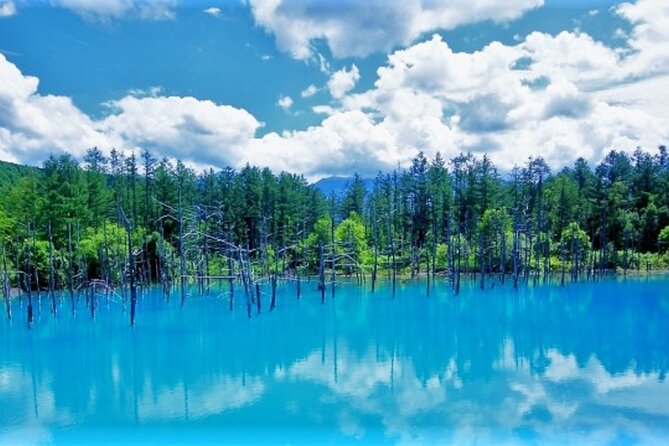
- Shirogane Blue Pond in a quick photo window plus the odd-but-cool fact that nearby water reflects the same blue hue
- Patchwork Road views from the bus so you still get the Seven Star Tree and Ken and Mary Tree without extra stops on foot
- Small-ish group max of 40 and an air-conditioned coach that keeps everyone moving
- English support with interpretation via app (you may also hear both English and Mandarin from staff)
A one-day sweep of Asahikawa, Furano, and Biei by bus
This is a classic Hokkaido “big best-of day” tour. You start early in Sapporo, ride a comfortable air-conditioned bus, and return before the evening is fully gone. The value is in stacking multiple regions—Asahikawa/Asahiyama area plus Furano and Biei—without needing a car.
What you’re really buying is convenience and certainty. Admissions are included where they matter, and the route includes a couple of short service-area breaks so you’re not stuck in one long seat all day. If you’re the type who gets itchy when plans aren’t locked in, this kind of schedule can feel like a relief.
The trade-off is you won’t have the freedom to linger for hours at any one stop. This works best if you treat each location like a “hit and enjoy” stop: get your bearings, take photos, walk the key areas, then move on.
Morning pickup at ANA Crowne Plaza and the first 15-minute reset

Pickup starts at ANA Crowne Plaza Sapporo by IHG Kita 3-Jo at 7:45 am. You’ll meet the bus near public transportation, which makes it easier to arrive without stress (especially if you’re staying downtown).
Right after you get going, there’s a first break planned at Iwamizawa Service Area for about 15 minutes. This is a smart buffer stop. Even if you’re excited, it helps to use the bathroom and grab a drink before you hit the longer stretches toward the main sightseeing points.
One practical tip: this tour departs on time and doesn’t wait for late arrivals. So I’d rather you show up a bit early, then spend that time checking where the seats are and how the app interpretation works (if you plan to use it).
Farm Tomita: lavender hills and Irodori no Batake time on the clock
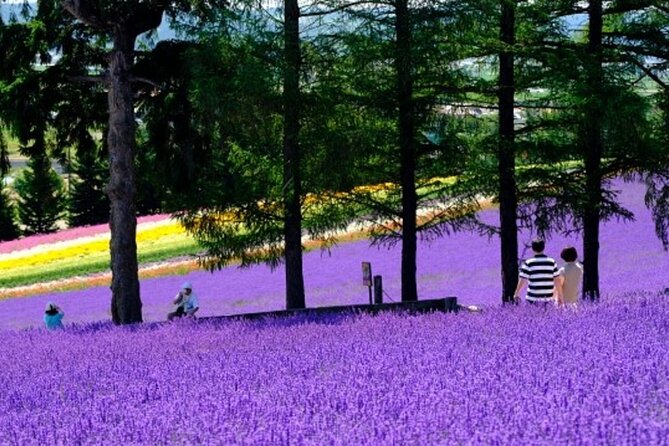
Farm Tomita is your first major “walk and smell the air” stop. The tour schedules it for a 30-minute stay during April 26–May 31 and after October, and for 50 minutes during June–September departures. If you’re visiting at peak summer, you’ll likely get the longer window.
What you should expect during that short time:
- Rolling hills covered in lavender (seasonal conditions depend on weather)
- Multiple flower areas, including Irodori no Batake, a hillside flower display that’s ideal for photos
Because the time is timed, I recommend moving with purpose. Pick your photo spot first, then do a second loop at a slower pace if the group isn’t already rushing. If you’re chasing the best light, pay attention to the sun direction when you arrive—then don’t lose time searching for the perfect view.
Also, note a small detail that can matter: your first impression might be that the farm is centered far from the parking area. With a bus group, you can miss orientation if nobody points it out clearly. So when you arrive, take 30 seconds to look around and confirm the walking direction before you start.
Shirogane Blue Pond and the blue that shows up twice

Next comes Shirogane Blue Pond, with about 30 minutes on site. This is one of those places that earns its reputation fast: the pond has a distinctive blue hue, and near the riverside you’ll notice the color echoed in reflections. It’s the kind of visual trick that feels unreal until you see it.
Because you’re working with a short stop, timing matters. Here’s how to get the most:
- Take a first wide shot immediately to lock in the composition
- Then walk along the near-water viewpoint for reflection angles
- Don’t spend your whole time waiting for the “perfect” person-free frame—your bus window is limited
Traffic is also a real factor. The tour info warns heavy tourist-season traffic and says the sightseeing location may be changed to the Northwestern Hills depending on conditions. That means your plan is partly weather- and road-dependent. If you’re counting on exact timing for photos, keep your expectations flexible.
Patchwork Road: the famous trees you see from the bus

Between pond time and the zoo, you’ll get the signature Patchwork Road sightseeing. This stop is mainly about what you can see from the road—named for the grid-like, patchwork pattern created by different crops.
You’ll also pass by iconic highlights that are visible from the bus:
- Seven Star Tree
- Ken and Mary Tree
The practical advantage is obvious: you don’t burn time hiking to roadside viewpoints. The downside is equally obvious: you’ll want to be ready with your phone/camera when the view lines up, because you likely won’t have a long, slow stop-and-stroll window here.
If you’re trying to do photos like a local—multiple angles, different crops, different distances—this part won’t give you that level of control. Think of it as “grab the memorable shot” scenery, then move on.
Asahiyama Zoo in a natural setting (plus Mogumogu Time risk)

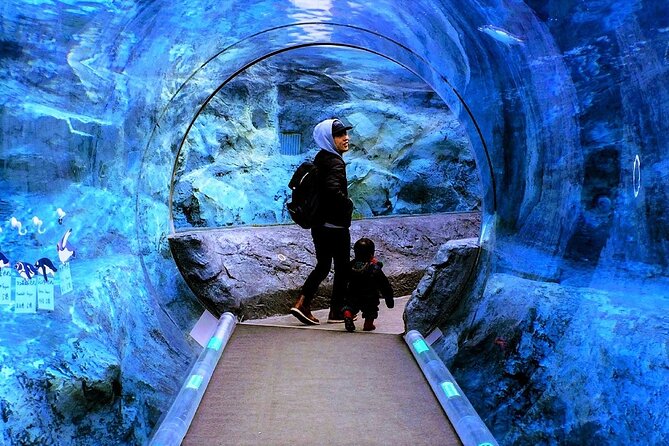
The big-ticket experience on the schedule is Asahiyama Zoo. You get about 2 hours and the admission fee is included.
What makes this zoo different from the “quick look and leave” style is the way it’s set up to resemble natural habitats. That’s not just an aesthetic detail—it changes how animals behave and how you watch. Instead of passively seeing creatures behind barriers, you get a more active, lifelike feel.
Also, don’t miss Mogumogu Time if it lines up with your arrival. This is when zookeepers share insights while feeding the animals, and it’s a memorable kind of animal encounter because it adds context, not just visuals.
The catch: the tour notes that schedules can shift due to road conditions, and the timing adjustments may cause you to miss planned events like Mogumogu Time. So I’d treat it as a bonus, not a guaranteed must-see. If you’re arriving hoping for a specific timed moment, keep in mind the day is part sightseeing, part road logistics.
Service-area breaks, app interpretation, and how you’ll actually feel on the bus
Beyond sightseeing, this tour is about momentum. You get:
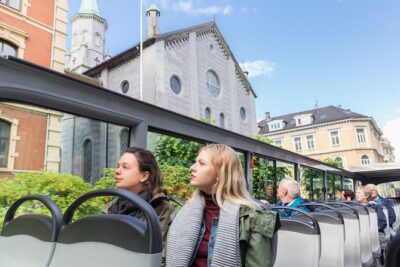
- Air-conditioned vehicle (worth it in summer and in colder months)
- An assistant staff member on board (not a full tour conductor)
- Interpretation that may be provided via an app
If you’ve done other group tours in Japan, you’ll know the difference between an on-bus “guide voice” versus an assistant support role. Here, you’re not promised the constant narration style of some tours. Instead, the info is delivered with help from staff and an interpretation tool.
That said, one helpful detail from actual experiences: guides may give information in English and Mandarin. So if you rely on language support, you should be fine in most cases, but it’s still smart to download/prepare any app or instructions your booking provides.
There’s also another short rest stop at Sunagawa Service Area for about 15 minutes near the end. And based on the tour’s timing, you should return to Sapporo before 6 pm, which is a big deal if you still want dinner, or if you’re not staying out late.
Price and value: is $85.20 a good deal?

At $85.20 per person, this tour is priced like a “convenience package.” The math makes sense when you compare it to paying admissions on your own while also trying to string together Furano/Biei from Sapporo.
Here’s what improves the value:
- Multiple major stops in one day (zoo + lavender farm + Blue Pond + Patchwork Road views)
- Admission fees included where they apply (notably the zoo)
- Other stops list admission ticket free, so you’re mainly paying for transportation plus the organized schedule
- You get staff support plus interpretation options, which reduces confusion when time is tight
What doesn’t magically get fixed by the price is time pressure. You still have about 10 hours 30 minutes total, so you’re paying for logistics, not for breathing room. If you want slow travel and long walks, you’ll feel that compression.
Also, lunch isn’t included. The tour usually leaves you with the zoo area as the only meaningful meal window, and that can be crowded at busy hours. If food matters a lot to you, plan around it: eat before you go to the zoo when possible, or keep your expectations realistic once you’re there.
Who should book this Hokkaido day tour (and who should skip it)
This tour is a strong fit if:
- You’re on a tight schedule in Sapporo and want to hit Furano/Biei highlights without extra planning
- You like zoos that focus on active viewing, not just quick exhibits
- You want a structured day with short breaks and staff support
- You’re comfortable with short walking windows and moving on when the group moves
You might want to choose something else if:
- You hate rushed stops and prefer independent pacing
- You’re traveling with someone who struggles with long bus rides
- You want a full, uncut day at one place rather than a sampling tour
One more timing note: the tour information suggests avoiding booking on your last day in Hokkaido/Sapporo. Bus delays aren’t compensated, and the day is road-condition sensitive. If you have a flight the same evening, build in buffer with another plan day.
Should you book this Hokkaido Asahiyama Zoo, Furano and Biei bus tour?
If your dream Hokkaido day includes Asahiyama Zoo, Farm Tomita lavender, and Shirogane Blue Pond, this is an efficient way to get there. The tour is good value because it bundles big-name stops, keeps the day moving, and handles key admissions.
I’d book it if you’re the type who enjoys ticking off priorities with a camera in hand. I’d be cautious if your top priority is spending unhurried time at just one location, since this is built around a tight schedule and peak-season traffic realities.
A smart compromise mindset helps: treat each stop as a “best-of moment,” not an all-day hangout. Do that, and you’ll leave with photos you came for—and a day that feels full without needing to plan every turn.
FAQ
What’s the total length of the tour?
The tour runs for about 10 hours 30 minutes (approx.). It starts at 7:45 am and returns to the Sapporo Station area in the evening.
Is admission included for the main stops?
Asahiyama Zoo admission is included. Farm Tomita and Shirogane Blue Pond are listed as admission free for this tour, and the service-area stops are rest breaks.
How long do I spend at Farm Tomita and Shirogane Blue Pond?
Farm Tomita stop time depends on departure season: 30 minutes in April 26–May 31 and after October, and 50 minutes in June–September. Shirogane Blue Pond is scheduled for 30 minutes.
What about Mogumogu Time at the zoo?
Mogumogu Time is part of the Asahiyama Zoo experience, but the tour notes that timing can shift due to road conditions. That means it might be missed if the schedule gets adjusted.
Will I have a guide on the bus?
There is assistant staff on the bus, and interpretation may be provided via an app. Staff may provide information in languages such as English and Mandarin depending on the setup.
Does the tour include lunch?
No, lunch isn’t included. The day is structured with short breaks, so plan meals around the limited time at the zoo.
What happens if the weather is bad?
The experience requires good weather. If it’s canceled due to poor weather, you’ll be offered a different date or a full refund. If you cancel for personal reasons, it’s non-refundable per the policy.