
Hue gets easier with one red bus. Hue City Sightseeing is interesting because it turns a big day of walking into a simple rhythm: ride, listen, then hop off when something grabs you. I especially like the multilingual audio guide and the hop-on hop-off flexibility that lets you build your own plan along the way. One thing to keep in mind: if you try to pack too much into each stop, the overall timing can feel tight.
I also like that paper or mobile vouchers work, so you can keep your planning lightweight. And with stops that cluster the must-dos—like Dong Ba Market and the Hue Imperial Citadel—it’s a smart way to orient yourself in a city where sights can be scattered.
The main drawback is not the concept. It’s the reality of bus logistics: on some days the service hasn’t run as perfectly as you’d hope, and audio can be spotty in bad weather. You’ll still get value, but go in with a little patience and a Plan B mindset.
In This Review
- Key points worth knowing before you ride
- The value question: is $19 really enough for Hue?
- How the 90-minute loop and 40-minute frequency actually shape your day
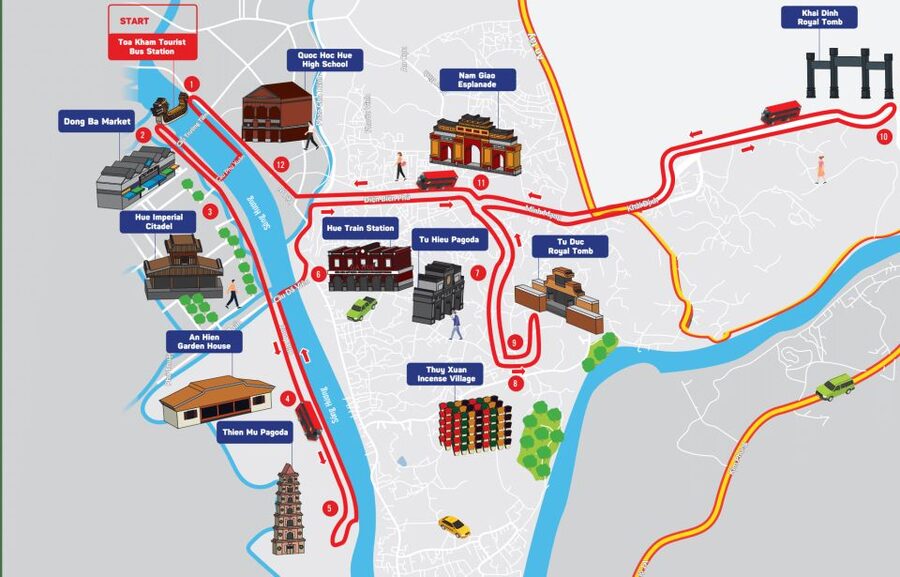
- Stop-by-stop: where the route shines (and where you should plan carefully)
- 1) Toa Kham Boat Wharf
- 2) Dong Ba Market
- 3) Hue Imperial Citadel
- 4) An Hien Garden House
- 5) Thien Mu Pagoda
- 6) Hue Train Station
- 7) Tu Hieu Pagoda
- 8) Pilgrimage Village
- 9) Tu Duc Tomb
- 10) Khai Dinh Tomb
- 11) Nam Giao Explanade
- 12) Quoc Hoc Hue
- Hue Imperial Citadel: when to linger for the guard ceremony
- Audio guide reality: multilingual help, plus the rainy-day issues
- When the bus is late or doesn’t show: how to protect your plan
- Comfort and logistics: vouchers, Wi-Fi, and what to bring
- Who should book this Hue bus (and who might want a different plan)
- Should you book the Hue City Sightseeing Hop-On Hop-Off Bus?
- FAQ
- What does the ticket include?
- How long is the bus tour ride?
- How often does the bus run?
- Where can I redeem my voucher?
- What languages are available for the audio guide?
- What are the first and last departures?
- What date changes affect the tour?
- What do I need to bring, and what’s not allowed?
Key points worth knowing before you ride
- Multilingual audio on board (English plus multiple other languages) helps you understand what you’re seeing without guessing.
- Hop on and off as often as you like with 90-minute rides and buses running every 40 minutes.
- Voucher flexibility: mobile or printed vouchers are accepted and can be redeemed at the stops.
- Major Hue sights in one route including Dong Ba Market, Thien Mu Pagoda, Tu Duc Tomb, and the UNESCO Hue Imperial Citadel area.
- Weather affects comfort: when it rains, you may end up on lower seating, and audio can cut out at times.
- Attraction entry is not included, so you’ll want to budget separately for tickets and opening hours.
The value question: is $19 really enough for Hue?
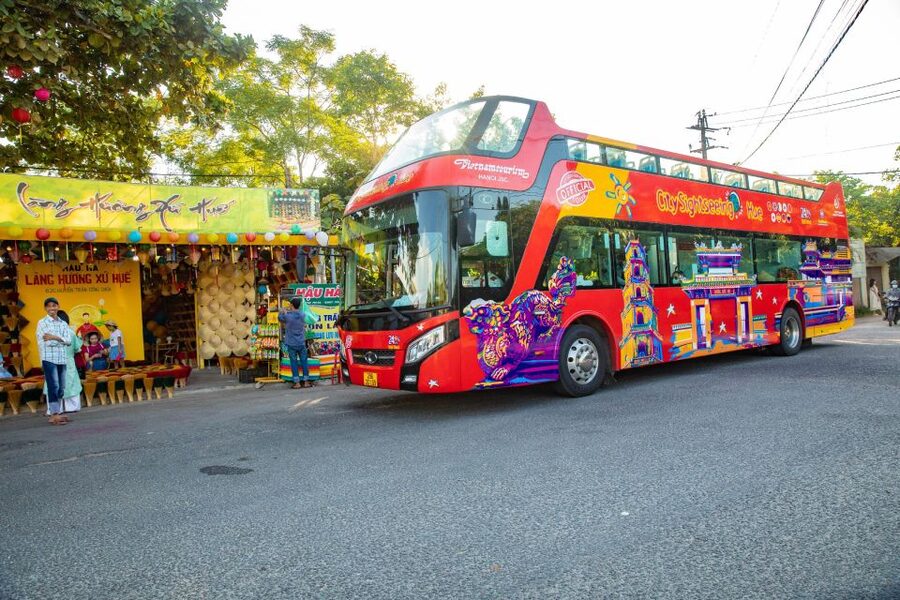
At $19 per person (for a 1–2 day option), the price only feels fair when you understand what you’re buying. This is not a guided walking tour where entry fees and tickets are bundled. Instead, you’re paying for transportation between top sites plus an audio guide and a stop list designed to cover the classic Hue highlights efficiently.
That makes this ticket a good deal if you do two things:
1) Use the bus to get your bearings fast, then
2) Spend your time at the stops that actually fit your interests.
If you’re the type who likes to linger (markets, tombs, pagodas, photography), a 2-day ticket is where the value shows. If you only have one day, pick fewer stops and don’t treat it like a checklist race—this route gives options, but time still moves forward.
How the 90-minute loop and 40-minute frequency actually shape your day
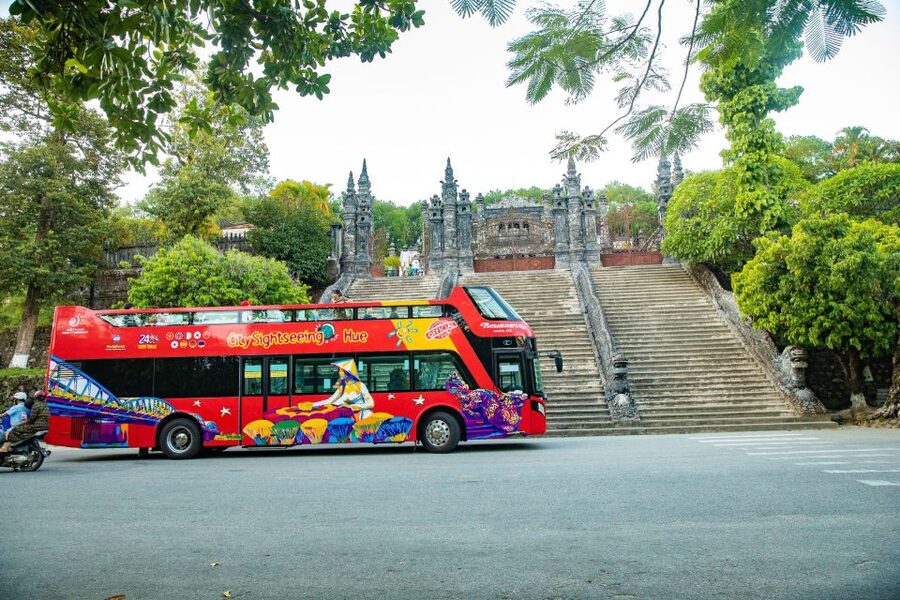
The ride time is listed as 90 minutes, and buses depart the start stop from 8:00am to 4:00pm. Service frequency is every 40 minutes. That means the bus loop is your backbone, not the whole trip.
Here’s the practical way to think about it:
- You can ride to reposition yourself, then hop off to explore.
- If you want time for a tomb, a pagoda, or a market meal stop, you’ll likely need to return later on the next bus rather than expecting to do everything in a quick walk.
- Because buses run every 40 minutes, you’ll do better if you plan a realistic visit window per stop.
Also note: the bus is set up so you can redeem mobile or printed vouchers at any of the stops along the route. That’s handy if you’re bouncing between places and don’t want to stress about a single fixed redemption moment.
Stop-by-stop: where the route shines (and where you should plan carefully)
1) Toa Kham Boat Wharf
This is a useful starting point area if you like to ease in with views along the river/waterfront vibe. The key benefit here is orientation. Use it to judge distances and to get moving without wasting the first part of your day.
2) Dong Ba Market
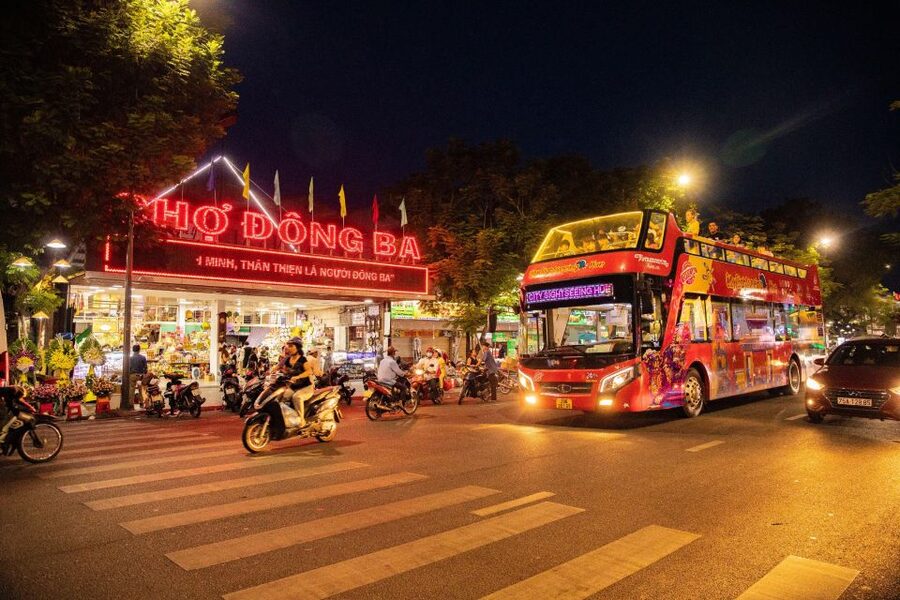
If Hue has a “start here” place for first-timers, it’s Dong Ba Market. This is where shopping and snack breaks meet. The market is known for spices and souvenirs, plus everyday goods that make it feel real rather than staged.
A smart move: keep your shopping light on the first loop, then go back on the next ride with a clearer sense of what you actually want. And yes, there’s a food you should not skip: bánh khoai, the sweet, crispy pancakes people usually rave about.
Time tip: Don’t underestimate how long market wandering takes. This is where you can lose track of time in the best way, but it can also steal time from nearby sites if you don’t guard it.
3) Hue Imperial Citadel
This is the big one. The Hue Imperial Citadel is a UNESCO World Heritage Site, and it works as your history anchor for the city. Expect gates, temple areas, and the feeling of a mini-city within Hue—full of scale and geometry.
Plan around your curiosity. Some people just want a photo walk. Others want to understand how the imperial complex functioned. Either way, this stop rewards you for staying long enough to move beyond the first courtyard.
Also, there’s a detail that’s worth planning around: the changing of the guard ceremony is impressive, and it’s worth sticking around.
One more history angle: if you’re into museums, work in time for the Hue Museum of Royal Antiquities. The best strategy is to treat this as part of your Citadel-day block so you’re not constantly rushing between locations.
4) An Hien Garden House
This is a calmer, more “local pace” kind of stop compared with the heavy hitters. It can be a breather if you’ve been busy with markets and tombs. Use it when you want a pause rather than a full-on must-see sprint.
5) Thien Mu Pagoda
Thien Mu Pagoda is one of the sights that gives Hue its spiritual signature. Even if you’re not a temple expert, it’s worth a stop for the views, the atmosphere, and the sense that you’re seeing one of the city’s identity anchors.
Practical tip: if you’re visiting during busy hours, give yourself a little space. You’ll likely want to take photos from a few angles, and crowded conditions can slow you down.
6) Hue Train Station
This stop is less about a single “wow” building and more about context. Hue’s train station area helps you understand how the city moves—where people connect to travel and daily life. It’s useful as a repositioning stop too.
7) Tu Hieu Pagoda
Another spiritual stop that tends to reward slower exploration. If you’re aiming for a mix day (market + imperial + pagoda calm), Tu Hieu Pagoda helps balance your route.
Drawback to watch: pagodas are not “quick photo only” places if you care about atmosphere. Build in time so you don’t feel rushed.
8) Pilgrimage Village
This is where the route expands beyond the headline monuments. It’s a good stop if you like cultural textures—everyday life, crafts, and the real human side of a place.
If you prefer only major monuments, you might treat this as a short wander instead of a long detour.
9) Tu Duc Tomb
Tu Duc Tomb is a standout for anyone who likes stories behind the stones. Here, the Vietnamese emperor Tu Duc and his Empress rest, and you’ll pick up fascinating context about Tu Duc’s life of extravagance and luxury.
This is also a stop where audio helps, because tombs are easier to appreciate when you have the background.
Time suggestion: don’t try to skim. These sites reward walking at a human pace, and the grounds can take longer than you think.
10) Khai Dinh Tomb
Khai Dinh Tomb is a separate stop with its own identity. It’s a good follow-up after Tu Duc, especially if you’re building a “royal tomb” day.
Practical note: if you’re sensitive to heat or rain, bring a plan for comfort. Tomb visits often involve more standing and uneven walking.
11) Nam Giao Explanade
This stop works well for visitors who like ceremonial or historical sites. It’s not the same vibe as market browsing or pagoda atmosphere, but it adds variety to your imperial timeline.
12) Quoc Hoc Hue
This final stop rounds out the route with an education/civic feel. Use it as your endpoint or as a transition stop if you’re shaping a two-day schedule.
Hue Imperial Citadel: when to linger for the guard ceremony
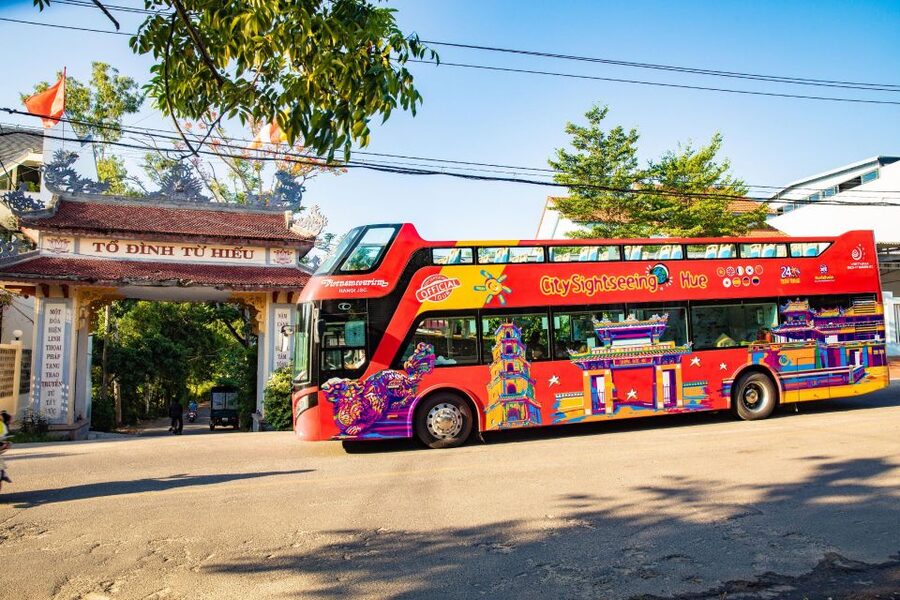
The Hue Imperial Citadel is UNESCO-level big, but what makes it special for many people is how much it feels like stepping into another layer of Hue. You’re walking through a complex with gates, temple areas, and palace zones that show why emperors needed space—and why the layout mattered.
The highlight detail here is the changing of the guard ceremony. That’s the kind of moment that changes a visit from scenery to story. The practical move: don’t treat your Citadel stop as a quick loop. Plan to stay long enough that you’re not sprinting for photos.
Also remember: entry to attractions isn’t included. So even with the bus, your real schedule depends on ticket lines and attraction opening hours.
Audio guide reality: multilingual help, plus the rainy-day issues

The bus includes an audio guide in 9 languages: English, Vietnamese, French, Chinese, Korean, Japanese, Spanish, Russian, and German. For many travelers, that’s the difference between seeing shapes and understanding what you’re looking at.
There’s also a practical warning sign from real-world experience: on a rainy day, audio can be inconsistent and you may need to switch seats to hear it better. If it’s raining, you might end up on lower seating, and the sound can cut out at times.
What you can do:
- Bring your flexibility. If the audio stutters, it’s still worth stepping off and exploring because the sights are what you came for.
- When you hear the guide cut out, reposition yourself rather than waiting for it to fix itself.
- Keep your expectations realistic: audio is included, not perfect.
When the bus is late or doesn’t show: how to protect your plan
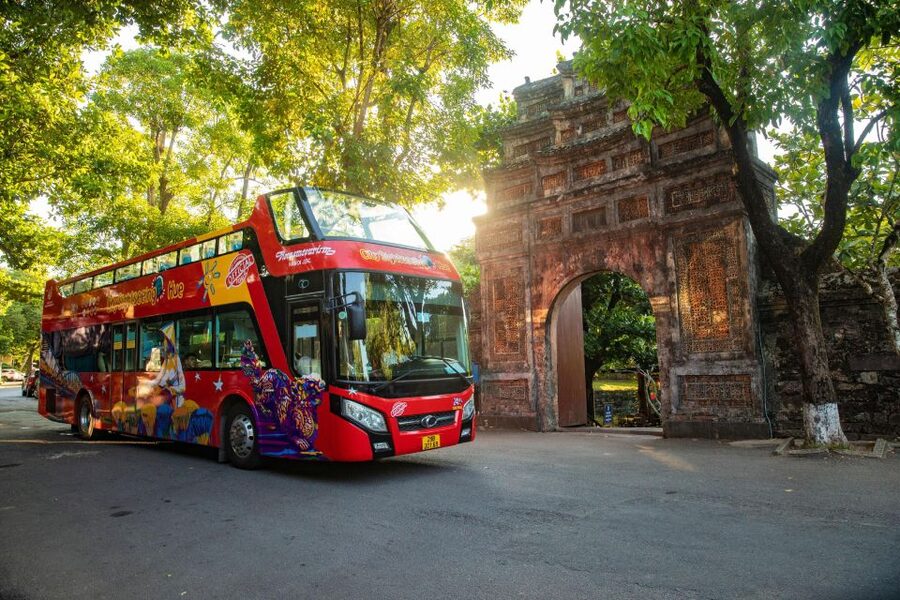
A hop-on hop-off bus is supposed to simplify your day. But service problems can happen. Some experiences have included buses arriving late or, in worse cases, not showing up at all.
So here’s how you protect your trip without turning it into stress:
- Don’t schedule your most time-sensitive stop as the only visit of your day.
- If you can, choose a 2-day ticket. It gives you a second chance to catch the route and revisit.
- Build in buffer time for market and tomb stops, since you’ll likely want longer than you think.
If you’re traveling on a day with special events, keep an eye on the only date-specific note provided: February 16 the tour doesn’t operate due to Lunar New Year. February 17 it runs from 10:15am until 9pm.
Comfort and logistics: vouchers, Wi-Fi, and what to bring
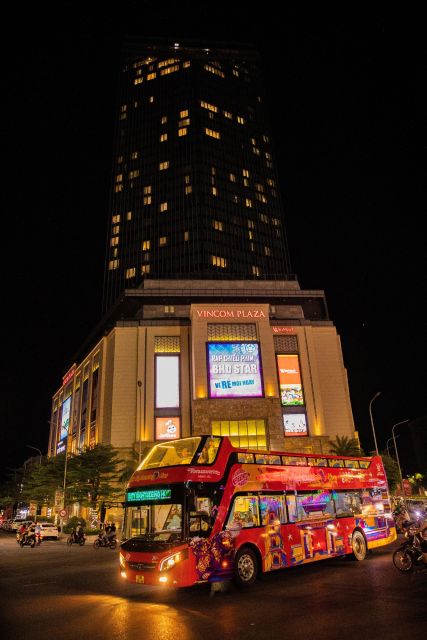
This tour includes free Wi‑Fi onboard, which can help if you want to look up opening times while you’re moving between stops. The big convenience is vouchers: both mobile and paper vouchers are accepted, and they can be redeemed at any stop on the route.
What to bring is simple and specific: passport or ID card.
Small behavior rules are also clearly stated:
- No pets
- No smoking
And the service is wheelchair accessible, so the route is built to include mobility needs.
Who should book this Hue bus (and who might want a different plan)
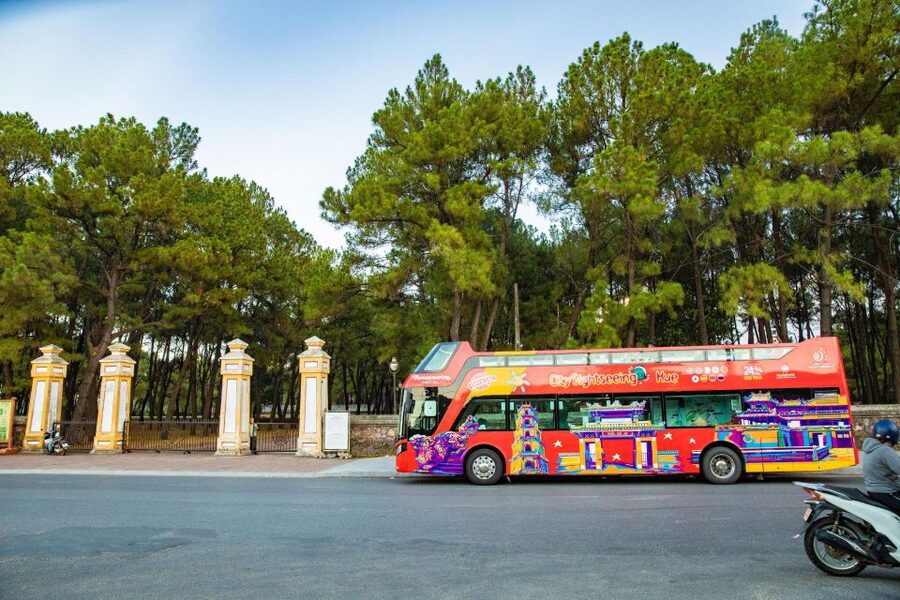
This tour is a strong match if you want:
- an efficient way to connect multiple major Hue sights in one system
- audio guidance so you can understand what you’re looking at without paying for extra guides
- flexibility to hop on and off without committing to a single fixed itinerary
It may frustrate you if:
- you only have one day and you try to do every stop
- you expect to see everything from the bus window
- you need a strict, minute-by-minute schedule
If you’re history-focused, this route is particularly useful because it strings together royal and cultural landmarks like the Hue Imperial Citadel and the tomb sites (Tu Duc and Khai Dinh). If you’re food/shopping-focused, Dong Ba Market plus a second circuit works nicely.
Should you book the Hue City Sightseeing Hop-On Hop-Off Bus?
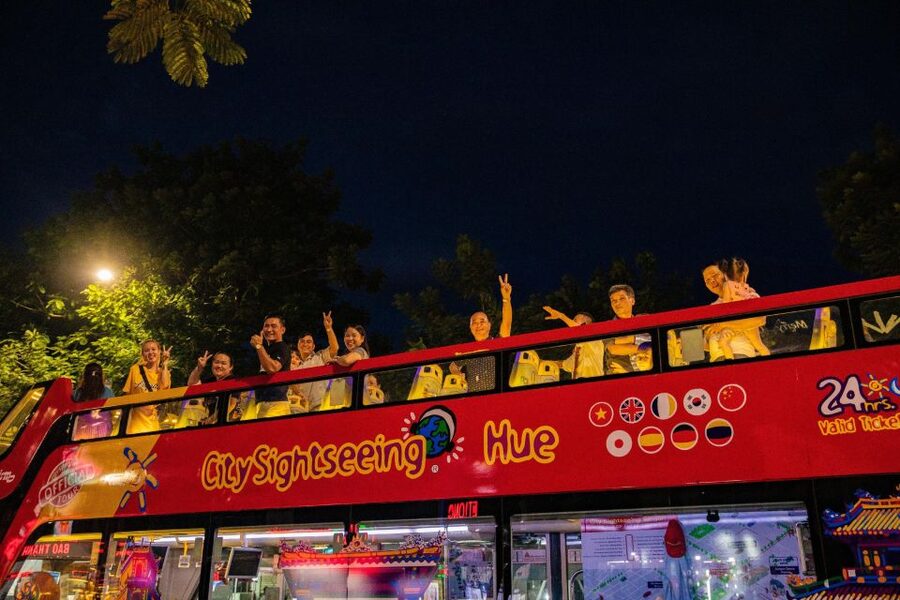
Book it if you want a practical framework for Hue. For many visitors, the combination of a 90-minute hop loop, 40-minute frequency, multilingual audio, and stops that hit the big names makes this a smart way to get oriented and then decide where you want to spend extra time.
Skip or upgrade your expectations if you’re the type who needs every connection to be flawless. The service can be inconsistent on some days, and weather can affect audio performance and seating comfort. The way to win anyway is simple: plan with a buffer, consider the 2-day option, and don’t overstuff your schedule.
If your goal is to choose where you want to linger—then ride when you’re ready—this bus fits that style very well.
FAQ
What does the ticket include?
The ticket includes a 1-day or 2-day hop-on hop-off bus tour, stops near major sights, an audio guide in 9 languages, and free Wi‑Fi. Entry to attractions is not included.
How long is the bus tour ride?
The tour duration is listed as 90 minutes per loop.
How often does the bus run?
The frequency is every 40 minutes.
Where can I redeem my voucher?
Both mobile and printed paper vouchers are accepted, and you can redeem them at any stop along the route.
What languages are available for the audio guide?
The audio guide is available in English, Vietnamese, French, Chinese, Korean, Japanese, Spanish, Russian, and German.
What are the first and last departures?
The first tour departs from Stop 1 at 8:00am, and the last tour departs from Stop 1 at 4:00pm.
What date changes affect the tour?
The tour does not operate on February 16 due to Lunar New Year. On February 17, it runs from 10:15am until 9pm.
What do I need to bring, and what’s not allowed?
Bring your passport or ID card. Pets are not allowed, and smoking is not allowed.