
Istanbul can feel big fast, so this bus ticket is a smart shortcut. You get a hop-on hop-off double-decker setup plus pre-recorded multilingual audio to help you connect the sights as you pass.
Two things I really like: the freedom to shape your own day, and the practical onboard extras like Wi‑Fi and earphones.
The main thing to consider is clarity—at certain stop numbers, the route pattern can feel confusing if you expect two completely separate lines. Also, this isn’t a good fit if you have heart problems, since it’s not described as a low-sensory option.
In This Review
- Key things that matter before you board
- Why this bus ticket is a strong “first Istanbul” move
- The double-decker experience: panoramic views, real downtime, and less friction
- Routes blue and red: how to think about the hop-on hop-off system
- Stop-by-stop strategy: using stop numbers without getting overwhelmed
- Audio guide in 8 languages: what it does for your understanding
- Onboard Wi‑Fi and earphones: small perks that prevent big headaches
- Hosts and greeters: help when you need it
- Price and value: is $84 for 48 hours fair?
- How to make the most of two days without wasting time
- Practical tips that keep your day smooth
- Who should book this bus ticket
- Should you book?
- FAQ
- How long is this Istanbul bus ticket valid?
- Are the buses hop-on hop-off?
- How many routes are included?
- What languages are available on the audio guide?
- Is Wi‑Fi provided on the bus?
- Are earphones included?
- Does the tour include a host or greeter?
- Where does the bus end?
- Is alcohol allowed on board?
Key things that matter before you board

- 48 hours from first activation gives you real flexibility for a two-day visit
- Two routes (blue and red) let you cover more without “planning perfection”
- Audio guide in 8 languages (English, French, German, Spanish, Russian, Turkish, Persian, Arabic) helps you understand what you’re seeing
- Wi‑Fi and earphones onboard make the ride more than just transportation
- Hop-on hop-off timing can vary by day—your best strategy is to spread your hop times
- Ends at the starting stop, so plan your final ride early enough to avoid a scramble
Why this bus ticket is a strong “first Istanbul” move

If you’re trying to make sense of Istanbul without turning your trip into a spreadsheet, this style of ticket works. You’re above the street, you can see across neighborhoods, and the audio narration gives you context while you’re moving. It’s not the same thing as a walking tour, but it’s a useful backbone: it helps you decide what deserves more time on foot.
I also like the “stay flexible” design. A 48-hour pass means you’re not locked into one route order. You can start with views, hop off for photos, grab coffee, then re-board when you’re ready—no pressure to keep pace with anyone else.
The double-decker experience: panoramic views, real downtime, and less friction
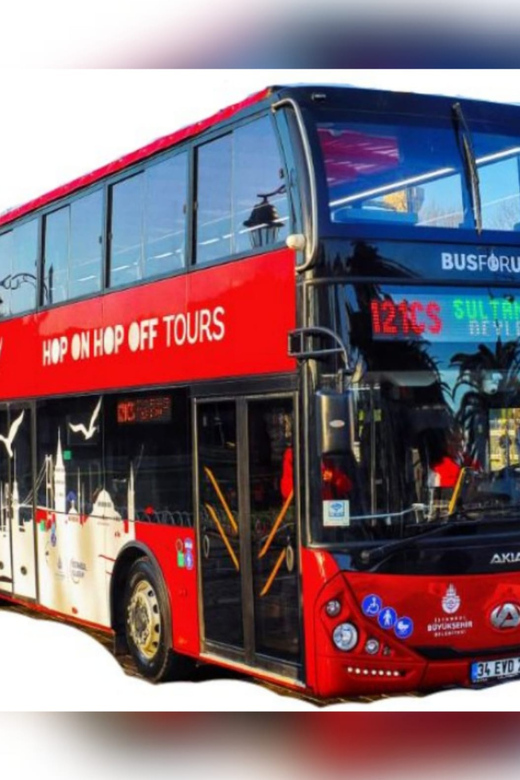
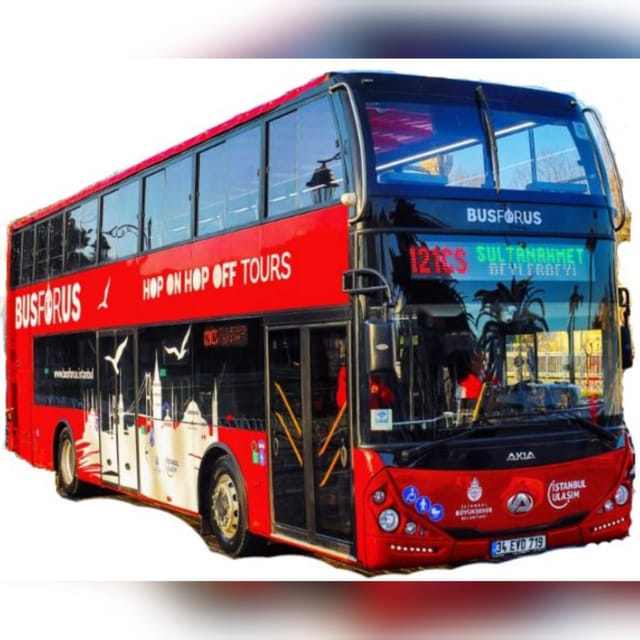
This is an open-top double-decker bus, so you’re in the best seat for skyline-style sightlines and quick neighborhood orientation. Even when you’re not hopping off, you get something valuable: a guided sense of direction. The ride turns long distances into something you can enjoy instead of just endure.
Onboard, you get a pre-recorded audio guide and earphones, plus Wi‑Fi. That combination matters more than it sounds. Wi‑Fi can help when you’re checking maps or figuring out your next stop, while the audio keeps you from feeling lost when you’re between major areas.
Small practical note: it’s not described as a quiet, low-movement activity. If you’re sensitive to crowds or have a heart condition, this is listed as not suitable for people with heart problems.
Routes blue and red: how to think about the hop-on hop-off system

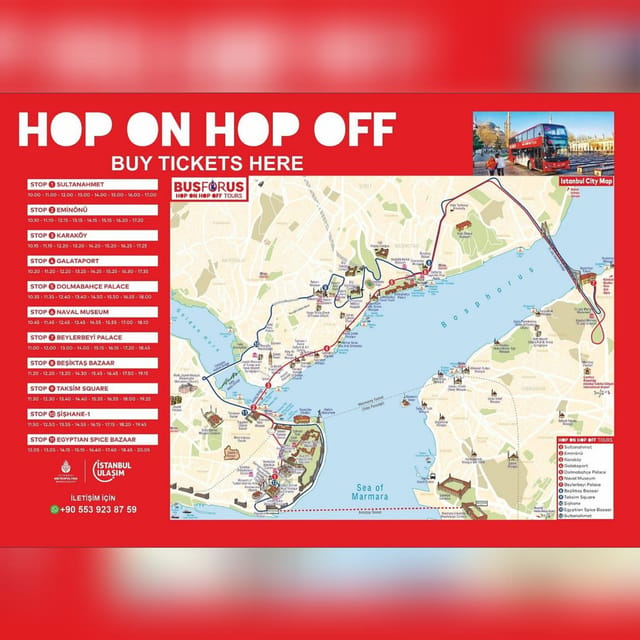
You’ll see two routes: blue and red. The key is to treat this ticket like a network, not a single straight line. The idea is simple: you can hop on at one stop, ride to another, then return later and continue building your day.
Here’s the part that can surprise people: one rider pointed out that it may not be two totally separate buses in the way you expect. The note they shared says the bus runs the red line up to stop 7, then continues from stop 7 on into the blue line to the end at stop 11. In other words, you may be on the same vehicle for both route colors depending on where you board.
So your best approach:
- When you’re at a stop, check you’re boarding the color you want.
- Keep an eye on stop numbers, not just color branding.
- If you’re timing a final hop, give yourself a buffer—because the schedule can feel tighter later in the day.
Also remember: the bus ends at the starting stop. That affects your last ride more than it affects your first. Plan your final hop so you’re not rushing back to “catch the end.”
Stop-by-stop strategy: using stop numbers without getting overwhelmed

Because the tour info you have here is stop-number based (and not listing named attractions per stop), I’d plan your “stop routine” around numbers and your personal interests.
Think of each stop like a menu option:
- Hop off when you want a break, photos, or a slower pace.
- Re-board when the next section looks useful from the upper deck.
- Use the audio as a reminder of what you want to return to later.
If you’re trying to cover a lot in two days, I suggest doing it in cycles:
- Day 1: treat the bus like an orientation loop. Hop off less, watch more, and use audio to learn what areas feel right for walking.
- Day 2: focus on a few neighborhoods you actually want to explore. Hop off more deliberately and don’t keep bouncing for the sake of “completing stops.”
One more reality check from the ride pattern: one person described getting stuck in crowding on one day due to a cruise ship surge, then having a much easier time the next day. Translation: your ride comfort can depend on the day. If you want less crowd stress, aim for off-peak hops.
Audio guide in 8 languages: what it does for your understanding
The pre-recorded commentary is available in English, French, German, Spanish, Russian, Turkish, Persian, and Arabic. That’s a big deal in Istanbul because the city’s layers can feel abstract from the street unless someone explains what you’re seeing.
Even if you don’t understand every detail, the narration helps you connect:
- What a building or area is known for
- Why certain neighborhoods developed the way they did
- How landmarks relate to each other across the city
And because the audio is on board, you don’t have to stop and read while traffic noise fights your attention. You can listen while the bus does the heavy lifting, then hop off with a clearer mission.
Onboard Wi‑Fi and earphones: small perks that prevent big headaches
Wi‑Fi sounds like a throwaway until you’re halfway through your day and trying to answer questions like:
- Where exactly is the next stop relative to what I want to see?
- How long will it take to walk back?
- Is there a fast way to re-board without doubling back?
Earphones also matter. Without them, you’d be stuck relying on your own device volume or missing key audio segments. Here, earphones are included, so you can start listening right away.
Hosts and greeters: help when you need it
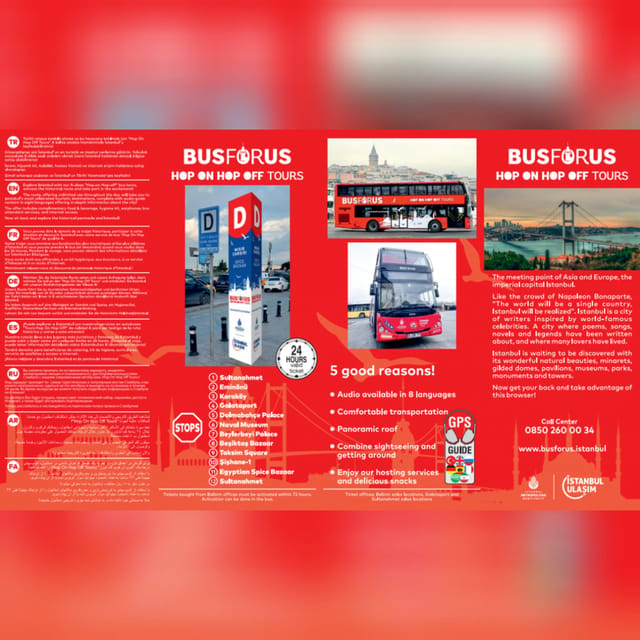
There’s a host or greeter available in English, German, Russian, Spanish, Arabic, Turkish, and French. That’s useful for the times when you’re not sure what color bus to take, how re-boarding works at a specific stop, or how to interpret where the route is heading next.
You’ll still want to keep your expectations practical. This is a bus ticket built for self-guided movement, not a private guide with a custom route. Think of the host as your on-the-spot problem solver.
Price and value: is $84 for 48 hours fair?
At $84 per person for 2 days (starting from first activation), the question isn’t the number—it’s what kind of freedom you need.
This pass can be good value if:
- You want to cover multiple areas without booking separate tours
- You like the flexibility of hopping off, then returning later
- You will actually use the audio and re-board at least a few times across two days
It may feel less worth it if:
- You’re planning to stay in one small zone and walk only
- You want deep, stop-specific storytelling rather than onboard orientation
One caution: a negative experience shared by a rider argued the itinerary felt overpriced for what they expected, and they said route labeling and timing were confusing late in the day. I can’t verify the specifics of that person’s experience, but it points to the bigger lesson: before you commit, decide whether you’ll use the full two-day benefit.
How to make the most of two days without wasting time

Here’s a simple way to use the pass so you actually get value from it.
Day 1: get oriented
- Start early so you can ride the network loop without rush.
- Use the audio narration to pick what you want to explore later.
- Hop off only when you feel your interest level jump. If you hop off every time, you’ll spend your day in transit.
Day 2: refine
- Focus on the areas you liked most the day before.
- Use the bus to reach places you don’t want to walk across twice.
- Treat the afternoon like your “exploration window,” because late-day re-boarding can feel less forgiving.
Because the ticket ends at the starting stop, your final ride is about logistics, not sight-hunting. Decide where you want to be at the end of day 2 and use the bus to bring you there.
Practical tips that keep your day smooth
These are the details that can make or break a stress-free bus day:
- Bring your electronic ticket. You’re expected to have it with you for boarding.
- Keep track of the stop numbers. If the route continues from red to blue at stop 7, that makes stop-number awareness more important than color alone.
- Don’t rely on a last-second sprint. Even with good planning, one rider noted no more buses at their intended hop-on time, despite knowing the last hop-on time for their earlier stop. Build in buffer time for your last hop.
- Alcohol and drugs are not allowed on board.
- If you’re sensitive to heart conditions, this is listed as not suitable.
Who should book this bus ticket
This works best for you if:
- You want an easy first pass at Istanbul and you like having options
- You value panoramic views and onboard interpretation
- You want a self-guided plan for two days, not a rigid schedule
It’s less ideal if:
- You want a highly detailed, stop-specific walking experience
- You only plan to see one neighborhood and do minimal re-boarding
- You have heart problems (it’s specifically noted as not suitable)
Should you book?
If you’re spending two days in Istanbul and you want an efficient, low-effort way to get your bearings, this pass is a strong choice—especially with the multilingual audio and onboard extras like Wi‑Fi and earphones. The biggest “make-or-break” factor is how you’ll use your time: if you’ll hop off more than once and take advantage of the full 48 hours, $84 can feel reasonable.
But if you prefer super clear route separation or you’re the type who needs strict, predictable timing for late-day plans, go in with realistic expectations and keep a close eye on stop numbers and re-boarding times.
FAQ
How long is this Istanbul bus ticket valid?
It’s valid for 2 days, starting from your first activation.
Are the buses hop-on hop-off?
Yes. You can hop on and off at stops during your valid period.
How many routes are included?
The ticket includes two routes: blue and red.
What languages are available on the audio guide?
The audio guide is available in English, French, Russian, Spanish, Arabic, German, Persian, and Turkish.
Is Wi‑Fi provided on the bus?
Yes, Wi‑Fi is included.
Are earphones included?
Yes, earphones are included.
Does the tour include a host or greeter?
A host or greeter is available, with support in English, German, Russian, Spanish, Arabic, Turkish, and French.
Where does the bus end?
It ends at the starting stop.
Is alcohol allowed on board?
No. Alcohol and drugs are not allowed.