Jeju’s east side runs like a highlight reel. This 9-hour UNESCO-focused bus tour strings together five major sights with an air-conditioned vehicle and a licensed guide, starting at 9:00 am. You’ll start with standout coastline, then move inland to Jeju’s living culture and volcanic landscapes.
I especially like how the day packs in big names without nickel-and-diming you. Entrance fees and parking are included, so you can focus on the sites instead of budgeting stop-by-stop, and you can also message on WhatsApp for quick help. I also appreciate the guide caliber—people like Steven Yamato and Jason are reported to have strong English and a genuinely patient, fun teaching style.
One thing to think about: this experience needs good weather. If conditions are rough, some parts that rely on outdoor access or cave conditions can be limited, and there’s no lunch included—so eat before you go or plan your timing.
In This Review
- Key points to know before you ride
- The vibe: a practical UNESCO day on Jeju’s east coast
- Hamdeok Beach and Seoubong: postcards with some real Jeju texture
- Haenyeo Museum: the UNESCO story you can actually understand
- Seongsan Ilchulbong: the tuff cone you’ll remember
- Ilchul Land and the Micheon Cave system: when Jeju goes underground
- Seongeup Folk Village: traditional houses, songs, and Jeju dialect
- Price and value: why $61.88 can feel fair here
- Comfort, group size, and how the guides shape the day
- Weather, pace, and what to pack so the day stays fun
- Who should book this Jeju Eastern UNESCO bus tour
- Should you book it or skip it?
- FAQ
- How long is the Jeju Eastern UNESCO bus tour?
- What is the price per person?
- What’s included in the tour price?
- Is lunch included?
- What time does the tour start?
- Do I get a mobile ticket?
- Is there a limit on group size?
- What happens if the weather is poor?
- What fitness level do I need?
Key points to know before you ride
- A full east-day route that hits coast, UNESCO tuff cone views, and cultural villages in one long outing
- Entrance fees and parking included, so the price feels more predictable
- Licensed guides with strong English, including guides such as Jason and Steven Yamato
- Ilchul Land + the Micheon Cave system vibe: an underground-looking stop tied to Jeju’s volcanic story
- Smaller group feel (up to 99 people), which helps the day stay orderly
- Weather matters, especially for any cave access and outdoor viewing
The vibe: a practical UNESCO day on Jeju’s east coast
This is the kind of tour that makes sense when you want the “greatest hits” of Jeju’s east side without chaining together multiple buses and taxis. You get a set route, a guide, and admission costs handled up front, which is a big deal on an island where you’ll otherwise spend time solving transport between sights.
Expect a fast rhythm. It’s a 9-hour day, and five stops means you’ll spend most of the day moving between locations and walking around each attraction’s main areas. The good news: the stops are chosen so each one feels like a different Jeju chapter—sea views, a UNESCO intangible heritage story, volcanic geology, underground nature, then traditional village life.
The tour is also designed to be easy to manage if you’re not traveling with a lot of extra planning. You’ll receive confirmation at booking, and the operator provides quick communication through WhatsApp. That matters when Jeju weather or schedules shift.
Hamdeok Beach and Seoubong: postcards with some real Jeju texture
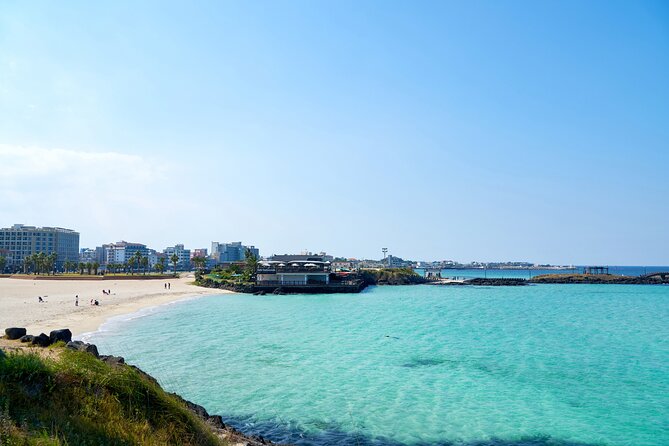
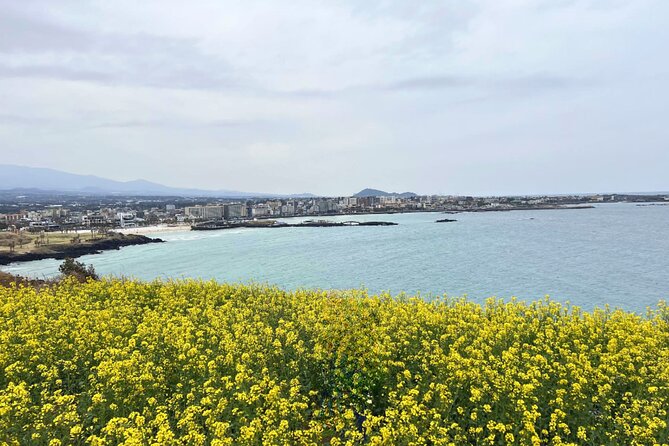
The day starts at Hamdeok Beach, a classic east-coast stop known for emerald-blue water and white sand. It sits on Jeju Olle Trail Course 19, so you’ll feel the connection to the island’s walking culture, not just a roadside beach stop.
A key detail here is the Seoubong volcanic cone nearby. The area is often talked about in terms of the view, but the volcanic backdrop is part of why it looks so dramatic—like the landscape is still doing its geological “show.” There’s also a bridge built over the water to the western end of the beach, plus a grassy area that’s handy if you want a quick sit-down break.
This is also a good stop for timing. The coastline is especially popular in summer evenings for a night-sea feel, while spring brings a different look when the cone area changes. The practical takeaway: even if your day is moving fast, this first stop is one of the easiest places to reset—sit, take photos, and enjoy the ocean without needing a big hike.
If there’s a drawback, it’s that beach conditions can change quickly. If you’re traveling when it’s windy or rainy, expect the beach scenery to look different, and plan clothing you can layer.
Haenyeo Museum: the UNESCO story you can actually understand
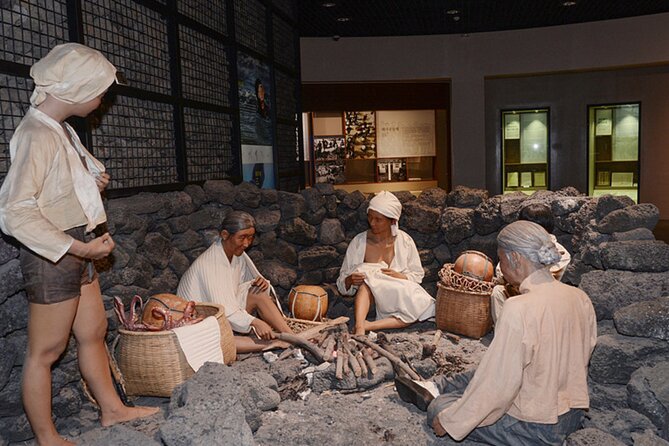
After the coastline, you switch to culture at the Haenyeo Museum, dedicated to haenyeo—Jeju’s female divers. This is recognized as a UNESCO Intangible Cultural Heritage of Humanity, and the museum’s approach helps you grasp why that matters beyond a label.
The exhibits cover the haenyeo story through time and include items donated by the haenyeo themselves. There’s also a replica haenyeo house, which is a useful bridge between “this is a tradition” and “this is how people lived and worked.” You’ll also see how the haenyeo culture connects to food culture, upbringing, and a hybrid lifestyle that mixes semi-agriculture and semi-fishing.
One more detail that makes this stop worthwhile: the museum doesn’t treat food and daily life as an afterthought. It includes cultural practices such as yeongdeunggut, so you get the sense of a whole system—work, community, and ritual—not just diving gear and ocean shots.
If you’re hoping for a traditional-performance type of experience, this stop is more education than show. Still, it’s a strong “why Jeju is different” stop, and it sets context before you move to the island’s volcanic monuments.
Seongsan Ilchulbong: the tuff cone you’ll remember
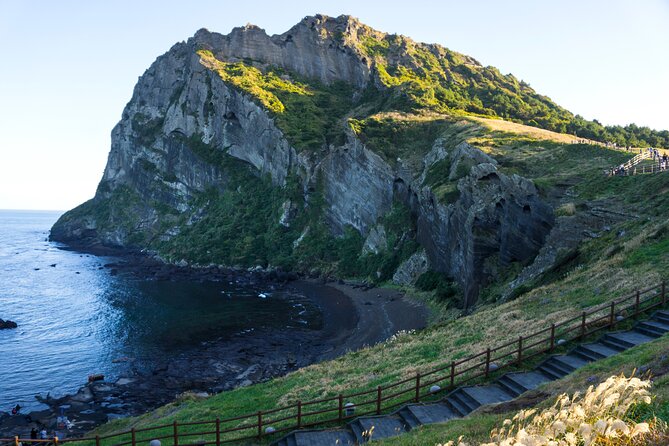
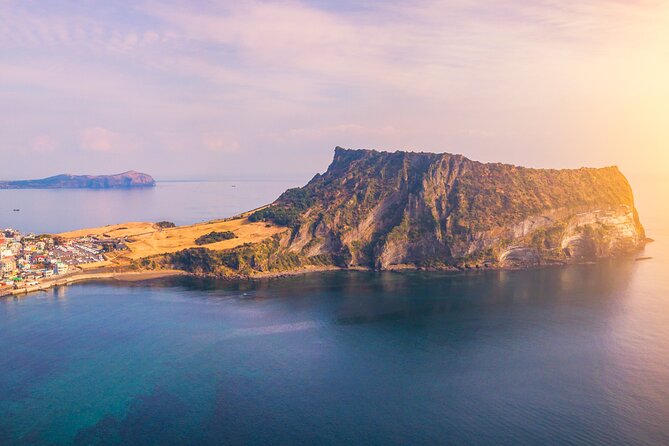
Next comes Seongsan Ilchulbong, the UNESCO World Heritage tuff cone that rises about 180 meters above sea level. The formation story is wild: a magma flow under the sea about 5,000 years ago shaped the cone, and the crater formed as hot lava mixed with cold ocean water.
From a visitor’s perspective, what matters is how this geology turns into views. At the summit, you can see Udo Island, and the site is famously associated with sunrise. Even if you’re not timing your visit for dawn, the crater and the overall scale are the point—this isn’t a tiny hill, it’s a dramatic volcanic feature.
A few other practical notes from the way this place is described: the crater area is about 600 meters across and around 90 meters deep, and today it’s given over to silver grass rather than agriculture. If you’re visiting outside peak growing seasons, the color of the hillside may shift, but the crater geometry stays impressive.
As with any volcanic viewpoint, wear comfortable shoes. The route around the summit areas can involve uneven ground and steps. Your day is already active, so this is where good footwear saves you from sore feet later.
Ilchul Land and the Micheon Cave system: when Jeju goes underground
Then you head to Ilchul Land, a botanical garden with a more contemplative, abstract feel, built around Jeju’s underground story: Micheon Cave and its lava tube system.
The big reason this stop belongs on an east-side UNESCO day is that it keeps the volcanic theme going in a different direction. You go from a crater above ground to a preserved underground environment, and the tour gives you context for why the underground space matters culturally and academically, not just visually.
Ilchul Land is described as having academic, touristic, and cultural value, and the Micheon Cave element is key. If you’re the type of traveler who likes to connect “how it looks” with “how it formed,” this stop delivers. Even if you don’t consider yourself a geology person, the vibe is about mystery and structure—how volcanic processes turned into a system that people can still interpret today.
One real-world caution: this experience requires good weather, and cave-type access can be affected by conditions. In bad weather, some cave components may close. I’d treat Ilchul Land as “plan A is underground, plan B is still a good garden/stop,” not as a guaranteed cave-through-the-whole-experience every day.
Seongeup Folk Village: traditional houses, songs, and Jeju dialect
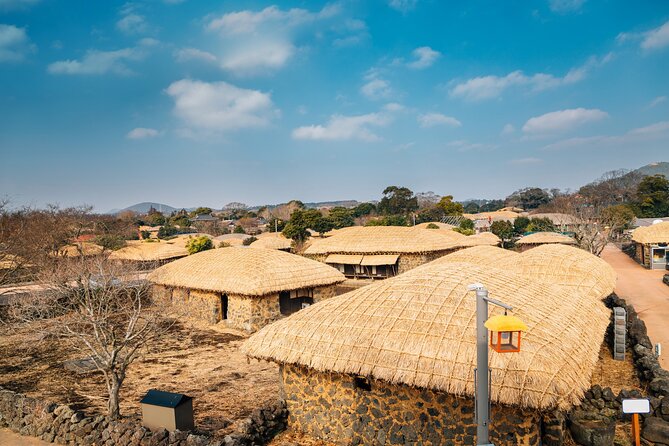
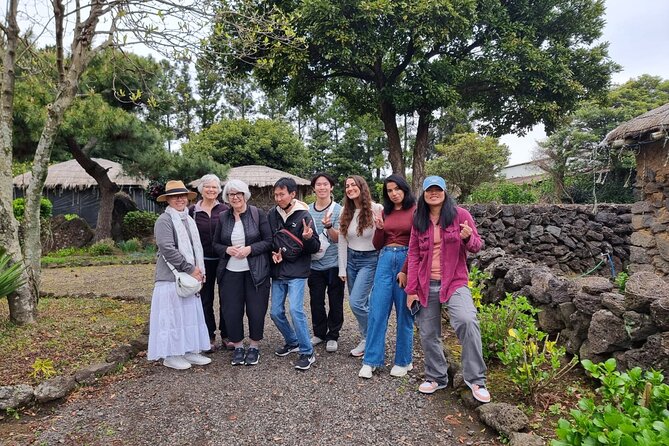
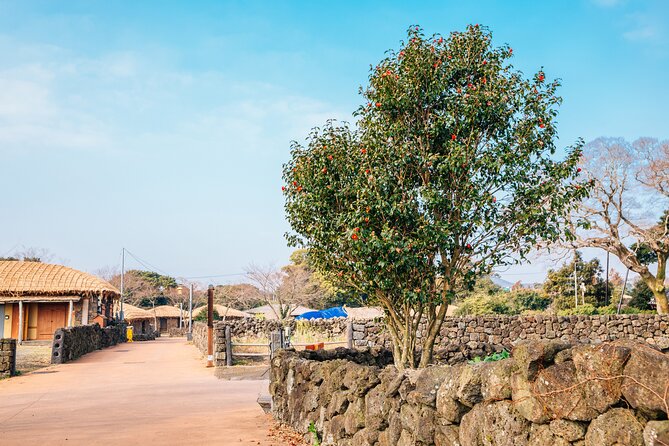
Finally, you land at Seongeup Folk Village, a protected folk village that focuses on Jeju’s older private houses. This isn’t just a photo stop. It’s about continuity—how tangible and intangible heritage get passed along.
The village’s emphasis includes local folk songs and games, plus traditional foods and craftmanship. You also hear about the Jeju dialect as part of what’s preserved. That matters because it turns “culture” into something more concrete: the way people speak, eat, play, and build.
The village also offers traditional culture and house experience elements. There are cultural events every October and November, so if you’re visiting in those months, you may catch something special. Even when events aren’t happening, the structure of the village and the preserved houses make the place feel like a lived-in memory rather than a staged set.
A drawback to plan for: this is still a full day. After beaches and volcanic sites, folk village walking can feel like a “one more round.” The upside is that it’s slower and more human-scaled, and that gives your brain a rest from cliffs and craters.
Price and value: why $61.88 can feel fair here
At $61.88 per person for about 9 hours, this tour can feel like strong value—mainly because it includes several costs that usually add up quickly on day trips. The price covers admission fees and parking, plus you get a licensed guide and an air-conditioned vehicle.
What you’re buying isn’t just tickets. You’re buying time and stress reduction. On Jeju, the cost of transport mistakes can be real: wasted hours, extra rides, and the headache of coordinating timing across multiple locations. Here, the route is set, and entrance fees are handled so you don’t hit surprise bills at each stop.
Is it perfect value for everyone? Not necessarily. It’s still a fixed schedule, and there’s no lunch included. If you’re the type who needs a long sit-down meal midday, you’ll likely want to eat before you start and then plan what you can do during free time (which may be limited). Also, if you’re traveling in the high season, you’ll want to expect crowds at popular sights like Seongsan Ilchulbong.
Still, for a single-day “Jeju east highlights” hit with admissions included, this is priced reasonably—and the day feels built for first-timers.
Comfort, group size, and how the guides shape the day
The tour operates with a maximum of 99 travelers, and the setup is meant to keep the day organized. It’s not a private charter experience, but it also isn’t the kind of massive bus chaos that can make conversation impossible.
What really affects your day is the guide. From the guide descriptions tied to the experience, English ability is a strong point. People like Steven Yamato and Jason are described as having perfect English, being passionate about Jeju history and culture, and staying patient throughout the day. That kind of guiding matters because the stops are layered: volcano formation, intangible cultural heritage, and traditional village life all need explanation to land well.
Also worth noting: there’s fast communication via WhatsApp. If you’re unsure about where to be at a specific point in the schedule, having that messaging channel makes the day easier.
Weather, pace, and what to pack so the day stays fun
Because this tour requires good weather, you should treat weather like part of your planning. If conditions are bad, some outdoor viewing may not go the way you hoped, and cave access can be affected. That’s not something to fear—but it is something to expect.
Your best strategy is simple:
- Bring comfortable walking shoes for uneven or stepped areas.
- Pack a light layer for changes in sea breeze and summit wind.
- Plan for a long day without lunch included, so you’re not hungry and cranky at the wrong moment.
Also remember the tour ends in a different location from where it starts. That isn’t a problem, but it means you should confirm your onward plan rather than assuming you’ll return exactly to the starting point.
Who should book this Jeju Eastern UNESCO bus tour
This tour is a strong match if:
- You want a structured east-coast day with multiple major sights
- You’d rather pay a fair set price than figure out admissions and transport for each stop
- You like having context from a licensed guide, especially for the haenyeo heritage and UNESCO volcano setting
- You’re comfortable with moderate walking and a full 9-hour schedule
You might choose a different style of trip if:
- You hate fixed schedules and would rather wander independently
- You need guaranteed long lunch time included
- You’re traveling during periods when weather reliability is low and you’re unwilling to adapt if cave access or outdoor viewing changes
Should you book it or skip it?
Book it if you want the east-side story of Jeju in one day, with admissions handled and a guide who can explain what you’re seeing. The value improves because entrance fees and parking are included, and the route hits both UNESCO and Jeju’s living culture—coast + volcanic geology + haenyeo heritage + a traditional village.
Skip or compare alternatives if you’re very sensitive to weather changes or you want a more flexible, choose-your-own-adventure day. This tour runs like a plan, not like a buffet where you can move stops around freely.
FAQ
How long is the Jeju Eastern UNESCO bus tour?
It runs for about 9 hours.
What is the price per person?
The price is $61.88 per person.
What’s included in the tour price?
Admission fees, parking fees, and an air-conditioned vehicle are included.
Is lunch included?
No. Lunch (or any meal) is not included.
What time does the tour start?
The start time is 9:00 am.
Do I get a mobile ticket?
Yes, the tour uses a mobile ticket.
Is there a limit on group size?
Yes. The maximum number of travelers is 99.
What happens if the weather is poor?
This experience requires good weather. If it’s canceled due to poor weather, you’ll be offered a different date or a full refund.
What fitness level do I need?
You should have a moderate physical fitness level.