A two-day shortcut through Jeju is hard to beat. This Jeju Island UNESCO Heritage Bus Tour is built for time-poor travelers who still want top geology and culture, with a tight East/West rhythm and English support that helps you make sense of what you’re seeing. I like how the route stacks major UNESCO sites (including Seongsan Ilchulbong and Jusangjeolli Cliff) alongside local culture like Seongeup Folk Village and Haenyeo themes. One thing to keep in mind: if the group is small, you may ride in a smaller vehicle and get a different level of guidance than a full professional guide.
You’ll also appreciate the practical planning baked into this tour: morning-to-evening timing, mobile tickets, and clear alternatives when weather or closures interfere (like Manjanggul Lava Tube being closed during anti-falling construction). And yes, it’s popular—on average it’s booked about 37 days in advance—so picking your date early helps.
In This Review
- Key highlights you’ll feel fast
- Two days, not a headache: how this Jeju UNESCO route works
- Price and what you actually get for around $125
- Your day-by-day plan: Day 1 on Eastern UNESCO highlights
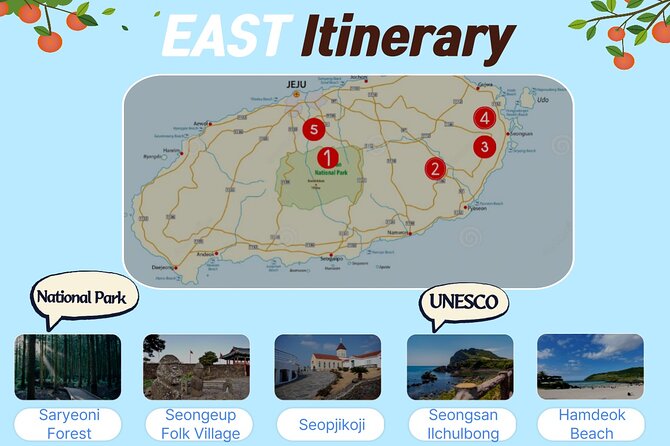
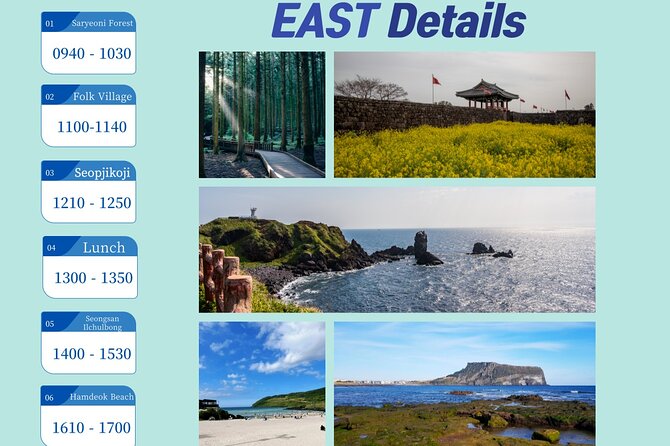
- Stop 1: Saryeoni Forest Path
- Stop 2: Seongeup Folk Village
- Stop 3: Seopjikoji (often swapped for Sangumburi in October)
- Stop 4: Seongsan Ilchulbong (UNESCO) with women diver show
- Stop 5: Jongdal-ri coastline (plus seasonal hydrangeas)
- Stop 6: Hamdeok Beach (or Haenyeo Museum on rainy days)
- Manjanggul Lava Tube replacement: what’s happening now
- Day 2: Hallasan, tea culture, crater vibes, and UNESCO cliffs
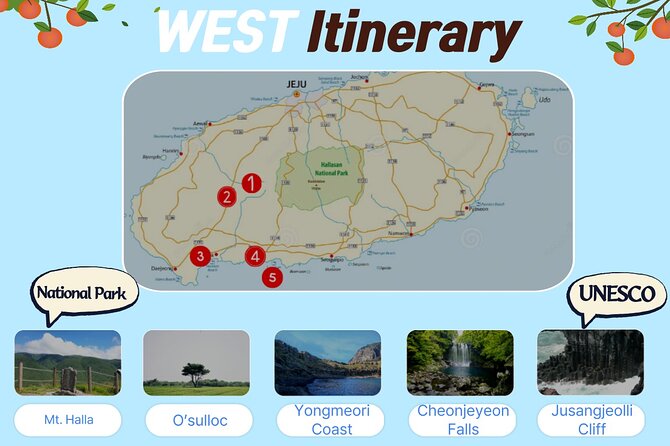
- Stop 1: Hallasan National Park (Eoseungsaengak)
- Stop 2: O’sulloc Tea Museum
- Stop 3: Sanbangsan Mountain
- Stop 4: Yongmeori Coast (and the tide rule)
- Stop 5: Cheonjeyeon Falls
- Stop 6: Daepo Haean Jusangjeolli Cliff (UNESCO Global Geopark)
- Stop 7: Jeju Art Circus (rainy-day alternative)
- Weather swaps that keep your itinerary alive
- English support: what you can expect with Lucas Travel
- Best for: who will love this tour the most
- Should you book the Jeju Island UNESCO Heritage Bus Tour?
- FAQ
- FAQ
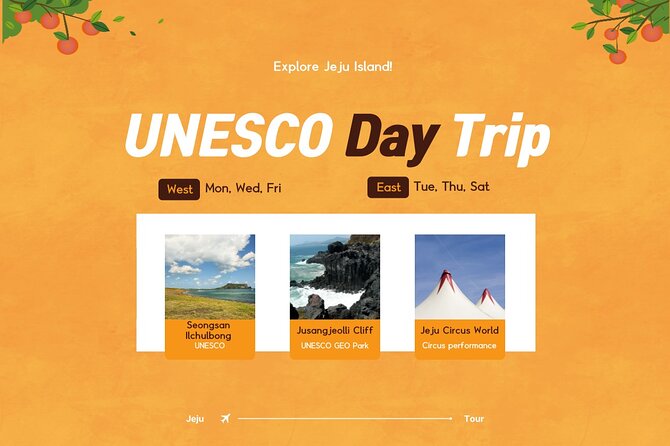
- Which days are the East vs Western UNESCO routes scheduled?
- How long is the tour?
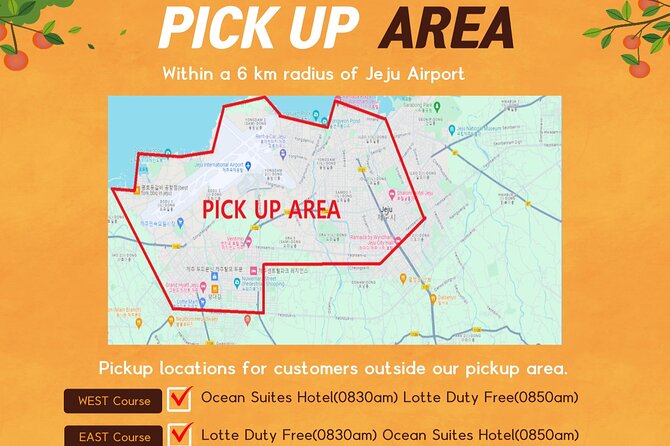
- Is hotel pickup included?
- What if my hotel is outside downtown Jeju City?
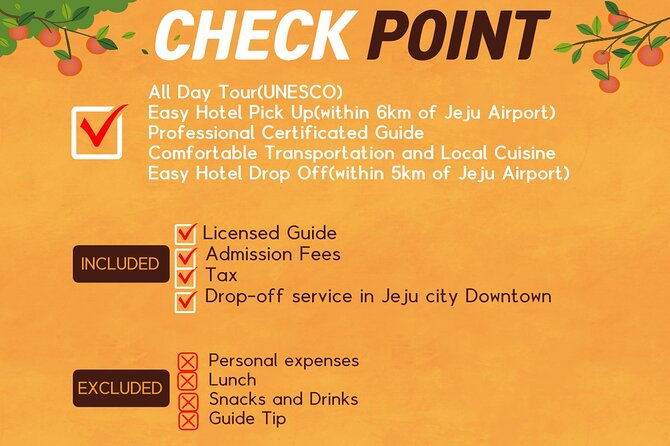
- What’s included in the tour price?
- Are meals included?
- Are attraction tickets included?
- What happens if Manjanggul Lava Tube is closed?
- What if Yongmeori Coast can’t be entered due to tides or bad weather?
- Is a professional English guide always guaranteed?
- What’s the cancellation policy?
Key highlights you’ll feel fast
- East/West UNESCO structure by day of week so you can match the trip to your schedule
- Seongsan Ilchulbong with women diver show included, not just a quick photo stop
- Seongeup Folk Village preserved Joseon-era stone defenses against harsh winds
- Smart swap rules when Manjanggul or other sites aren’t available
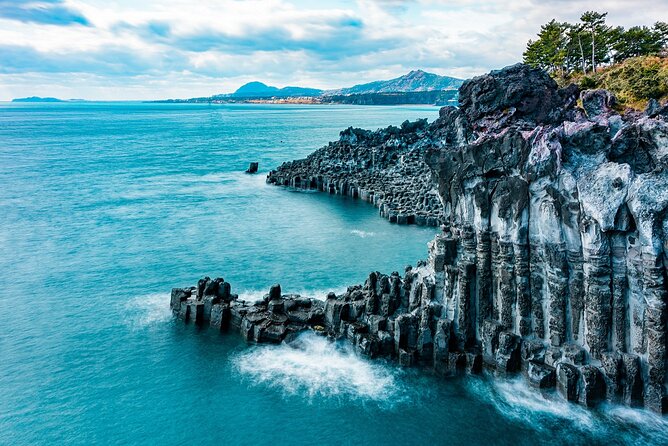
- Jungmun-area UNESCO Geopark stop at Daepo Haean Jusangjeolli Cliff
- English support that scales from taxi-driver English to guided small groups
Two days, not a headache: how this Jeju UNESCO route works
This tour is basically a Jeju “greatest hits” plan with built-in logic. The biggest benefit is that you don’t have to stitch together bus schedules, admission tickets, and driving between far-flung corners. Jeju’s distances are no joke, and a two-day loop lets you cover a lot without feeling like you’re constantly moving your whole life from one bus to the next.
The second big win is context. Jeju’s attractions are more than scenic stops—they’re tied to geology, local livelihoods, and a distinct island culture. When you know why Seongsan Ilchulbong looks the way it does (a tuff cone formed by hydrovolcanic eruptions) or why Haenyeo culture matters, the same view feels more meaningful.
The only real caution: this is a group tour with a minimum of 13 travelers. If you’re traveling with a small party or your date doesn’t meet the threshold, you might not get the exact same setup you pictured (vehicle size can change, and the level of staff support can shift).
Price and what you actually get for around $125
At about $125 per person for two days, the value depends on how you travel.
If you’re the type who would otherwise rent a car or piece together private drivers, you’ll likely feel this is fair—especially because hotel pickup/drop-off is included for Jeju city downtown, and transportation covers a lot of moving time. You also get a mix of stops where admission is included (for example Seongsan Ilchulbong, Hallasan’s Eoseungsaengak, Sanbangsan, Yongmeori Coast, Cheonjeyeon Falls, and Daepo Haean Jusangjeolli Cliff), plus several places where admission is free.
What you should compare is “time saved vs. control.” This tour controls the pace. You’ll get a structured route and fewer decisions. If you’d rather linger at beaches or spend extra time inside one museum, you may feel slightly rushed at certain points.
Your day-by-day plan: Day 1 on Eastern UNESCO highlights

Day 1 is the heavier day for famous East-side natural sights and cultural stops. It’s also the day where the tour really flexes its UNESCO focus.
Stop 1: Saryeoni Forest Path
This forest trail is known for being well protected, and it’s one of the outdoor-friendly Jeju experiences that doesn’t feel like a theme park. If you like walking that stays cooler than open coastline, this is a good reset after travel.
Practical note: it’s a short time block (about 50 minutes), so wear shoes you trust.
Stop 2: Seongeup Folk Village
Seongeup Folk Village is one of those places where the architecture teaches you something. The stone piles built to protect roofs from wind are not just charming details—they’re part of a real survival strategy on an island with strong weather swings. The buildings remaining intact from the Joseon Dynasty era gives the whole place a grounded, living quality.
Why it’s worth the stop: it’s not just a “look and leave” village. You get to see how people adapted locally—then you watch the rest of the day’s scenery with that same lens.
Stop 3: Seopjikoji (often swapped for Sangumburi in October)
Seopjikoji is a dramatic coastal viewpoint at the end of Jeju’s eastern shore. In April, canola flowers can fill the area, which is why this stop gets timed seasonally. The name also has a local flavor: Seopji is the old name, and Koji refers to a sudden bump in the land (Jeju dialect).
If you’re going in autumn, you’ll likely see a different but related stop: Sangumburi. The tour notes a seasonal switch, and October is when many people start chasing that golden, grass-covered look.
Stop 4: Seongsan Ilchulbong (UNESCO) with women diver show
This is the marquee stop. Seongsan Ilchulbong—often called Sunrise Peak—is a preserved bowl-like crater formed from hydrovolcanic activity thousands of years ago. The fact that you’re walking around a tuff cone makes the scenery feel geologically “accurate,” not just pretty.
Also: the women diver show is included here. That combination—UNESCO geology plus a living island tradition—makes this stop one of the most memorable on the whole itinerary.
Stop 5: Jongdal-ri coastline (plus seasonal hydrangeas)
You’ll ride along a beautiful stretch of North-Eastern Jeju and pass beaches like Hado and Saehwa on the way toward the Manjang-gul area. In summer, Jongdal-ri Shore Road is known for hydrangeas, which can add a color pop to an otherwise rugged coastline day.
Stop 6: Hamdeok Beach (or Haenyeo Museum on rainy days)
Hamdeok Beach is a classic coastal break, but the tour keeps options ready. On rainy days, Hamdeok Beach can be replaced by the Haenyeo Museum.
The museum is designed to reframe Haenyeo culture—recording, preserving, and teaching the story of their social, economic, and historical contributions. It’s the kind of indoor stop that doesn’t feel like a random detour because Haenyeo connects directly back to the morning’s Seongsan experience.
Manjanggul Lava Tube replacement: what’s happening now
Manjanggul Lava Tube is listed as UNESCO World Heritage, and it’s described as the world’s largest known lava tube—highlighting even a Stone Turtle formation that visitors often photograph. But there’s a real-world wrinkle: it’s currently closed due to anti-falling construction, with a scheduled reopening in August 2025.
During the closure, the tour substitutes with Hamdeok Beach. If your travel window is before reopening, don’t assume you’ll see the lava tube itself—plan around the beach/museum alternatives.
Day 2: Hallasan, tea culture, crater vibes, and UNESCO cliffs
Day 2 leans more into Jeju’s inland-to-south geography, plus a few signature stops that work well even if the weather turns.
Stop 1: Hallasan National Park (Eoseungsaengak)
Hallasan is Jeju’s central mountain presence, and this tour includes Eoseungsaengak, described as a baby volcano called an oreum of Halla Mountain. It’s the kind of stop that helps you understand why Jeju looks volcanic everywhere you turn.
On rainy days, Hallasan is swapped for Circus World. That trade is practical: you still get an indoor “show” stop instead of spending your day stuck in weather.
Stop 2: O’sulloc Tea Museum
O’sulloc Tea Museum is Korea’s first tea museum, opened in 2001. Next to it is the O’sulloc Tea Stone (built in 2013), offering tea experience and cultural activity programs.
This stop is a nice pacing change. After geology and ocean air, you get a more calm, grounded cultural side of Jeju—especially if you like learning while you sample.
Stop 3: Sanbangsan Mountain
Sanbangsan is a low, dome-shaped craterless volcano with a cave that forms the namesake story: Sanbanggulsa Temple inside the mountain. The tour also notes a legend about tears of love from a protective goddess—basically folklore that explains why the cave water is such a big deal.
This is a short stop (about 30 minutes), so use it for viewpoint energy and temple-cave context rather than expecting a long hike day.
Stop 4: Yongmeori Coast (and the tide rule)
Yongmeori Coast is volcanic ash beach scenery, formed from explosions when hot magma met cold seawater. The route description says you’ll go down a narrow path and that entrance may be restricted during rising tides or bad weather.
If Yongmeori Coast closes, the tour substitutes Mt. Songaksan. I like this because it means you don’t lose the day’s momentum to coastal weather rules.
Stop 5: Cheonjeyeon Falls
Cheonjeyeon Falls is “The Pond of God,” with three sections. The water system is described as multiple drops that start from a cave area and flow down into pools before reaching two more waterfalls and then the sea. There’s also mention of plant life around the falls, including rare solimnan reeds.
It’s a good “reset stop.” Even when Jeju clouds roll in, a waterfall still gives you a sensory payoff.
Stop 6: Daepo Haean Jusangjeolli Cliff (UNESCO Global Geopark)
This stop is all about columnar joints—hexagonal black stone pillars formed over time. The tour links it to UNESCO Geo Park status, and it’s known for dramatic views with ocean waves crashing against the columns.
This is one of those places where you can stand still and keep noticing new angles as waves change the light.
Stop 7: Jeju Art Circus (rainy-day alternative)
On rainy days, Hallasan gets replaced by Jeju Art Circus, a Chinese-technique circus performance that includes Arirang and other show elements like a motorcycle performance. It’s described as having earned awards and approval for performance culture.
Even if you’re not a circus person, it can be a smart way to avoid losing your second day to weather.
Weather swaps that keep your itinerary alive
Jeju weather doesn’t politely wait for your schedule. This tour is built around that reality with multiple contingency plans:
- Manjanggul Lava Tube is affected by construction and may be replaced by Hamdeok Beach.
- Rain can trigger Haenyeo Museum instead of beach stops.
- Hallasan can be swapped for Circus World when conditions don’t cooperate.
- Yongmeori Coast can be restricted because of tides or bad weather, with Mt. Songaksan as the backup.
That kind of planning matters. Otherwise you’ll end up in “standby mode” while everyone waits for decisions. Here, the tour keeps you moving toward something you can still enjoy.
English support: what you can expect with Lucas Travel
This is where the reviews lean strongly. The tour description promises English support, but it scales with group size:
- Up to 4 people may join at the same price with a regular taxi driver who has advanced English skills.
- Groups of 5 to 10 get a professional English-speaking guide.
- Larger groups (10+) aim for a professional English-speaking guide with a larger vehicle (van, minibus, or bus up to stated capacities).
In past experiences tied to this tour style, names like Terry (English-speaking driver) and guides such as Andy, Lee, and Kim show up. You shouldn’t expect the same person on every date, but it’s a helpful sign: English support isn’t an afterthought here.
Small caution: one negative experience in the feedback pool highlighted a mismatch between expectations and the actual guide setup when the group composition changed. The safe takeaway for you is simple: know that staff type can vary by group size, and don’t assume a full guide will appear in the exact format you want.
Best for: who will love this tour the most
I’d point this tour at you if you fit one of these:
- You want both UNESCO geology and Jeju culture in two packed days without planning routes.
- You’re short on time and want a structured way to cover East and South favorites.
- You like history and place meaning, not just photos (Seongeup Folk Village and Haenyeo framing are built for that).
- You’re okay with moderate walking and viewpoint time blocks, not long hikes.
Should you book the Jeju Island UNESCO Heritage Bus Tour?
Book it if you want efficiency with strong stop selection. At around $125, hotel pickup (downtown Jeju city), transportation, and a mix of included admissions make it a decent value for visitors who would otherwise spend hours coordinating. The standout combination is Seongsan Ilchulbong’s UNESCO setting paired with the women diver show, plus the way the tour keeps cultural context connected to the scenery.
Skip or approach carefully if you need a guaranteed full professional guide in a large bus for every day, or if you’re the type who hates schedule swaps. Because this tour can change vehicles and staffing depending on the minimum traveler count, it’s best for flexible people who just want the trip to run smoothly.
FAQ
FAQ
Which days are the East vs Western UNESCO routes scheduled?
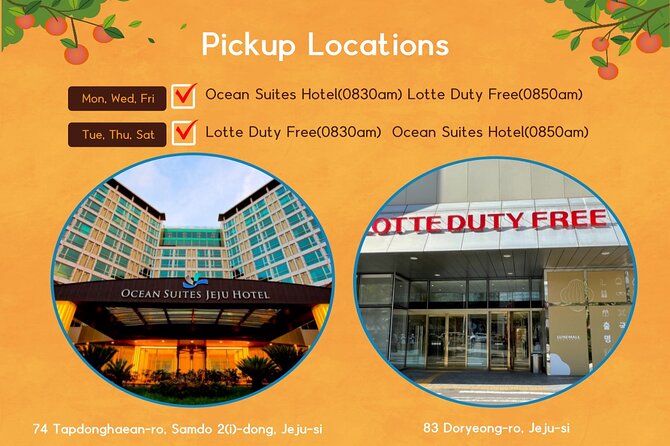
The schedule is organized by weekday: Mon, Wed, Fri run Western Jeju UNESCO, while Tue, Thu, Sat run East Jeju UNESCO.
How long is the tour?
The experience runs for about 2 days.
Is hotel pickup included?
Yes, hotel pickup and drop-off are included within Jeju city downtown area only.
What if my hotel is outside downtown Jeju City?
Pickup and drop-off outside downtown Jeju City require an extra charge of 80,000 KRW one way.
What’s included in the tour price?
Included items are hotel pickup/drop-off (downtown), transportation (15-seater van/minibus/bus), and driver/professional English tour guide.
Are meals included?
No. Meals and drinks are not included, and you’ll cover personal expenses.
Are attraction tickets included?
Some attractions have admission ticket included (for example Seongsan Ilchulbong, Hallasan Eoseungsaengak, Sanbangsan, Yongmeori Coast, Cheonjeyeon Falls, and Daepo Haean Jusangjeolli Cliff). Other stops are listed as free admission or may be replaced by alternatives.
What happens if Manjanggul Lava Tube is closed?
Manjanggul Lava Tube is currently closed due to construction and is scheduled to reopen in August 2025. During closure, the tour replaces it with Hamdeok Beach.
What if Yongmeori Coast can’t be entered due to tides or bad weather?
If Yongmeori Coast is closed, Mt. Songaksan is used as an alternative tour course.
Is a professional English guide always guaranteed?
It depends on group size. Up to 4 people may be with a regular taxi driver with advanced English skills. For groups of 5 to 10, a professional English-speaking guide is provided.
What’s the cancellation policy?
Free cancellation is available up to 24 hours in advance for a full refund. The tour may also be rescheduled or refunded if canceled due to poor weather or if the minimum number of travelers isn’t met.