Thousands of torii gates in one day. This Kyoto bus tour is interesting because it strings together classic sites fast, with a professional English-speaking guide and the big showpiece: Fushimi Inari. You get a tight route that keeps you moving across town without wrestling transit every time the light changes.
I especially like the mix of major temples plus story-driven stops, not just photos-in-and-out. I also like that the day comes with multilingual audio headsets and includes entry tickets for several big sights, so you’re not guessing what you’re looking at. One drawback: it’s a full, walking-heavy day with stairs and hills, so it can feel intense if you prefer slow sightseeing.
In This Review
- Key things that make this Kyoto day tour work
- One-Day Kyoto: Why This Route Feels Efficient
- Timing and meeting at Tully’s Coffee (Kyoto Avanti)
- Coach comfort: Wi‑Fi, ventilation, and the small things
- Kiyomizudera: the morning view stop that sets the tone
- Sanjusangen-do: 1,001 Kannon statues and Japan’s scale
- Arashiyama and Togetsukyo Bridge: lunch with a classic Kyoto backdrop
- About lunch and dietary options
- Sagano Bamboo Forest: a short walk that can feel surprisingly calm
- Tenryu-ji: garden time in the middle of a fast day
- Kinkaku-ji (Golden Temple) and the Nijo Castle pass-by
- Fushimi Inari Taisha: walking under the torii gates
- Price and logistics: is $122 good value for this kind of day?
- Who this tour is best for (and who should skip it)
- Should you book the Kyoto Fushimi Inari bus tour?
- FAQ
- Where is the meeting point and when does the tour start?
- How long is the tour?
- Is there an English guide, and what languages are available for audio?
- What World Heritage sites do you visit?
- Is lunch included, and are there dietary options?
- Does the tour include temple entry tickets?
- Is Wi‑Fi available on the coach?
- Is this tour suitable for wheelchair users?
Key things that make this Kyoto day tour work
- Fushimi Inari’s torii tunnel is treated like the main event, with enough time to actually experience the gates.
- World Heritage coverage in one run means you’re seeing multiple UNESCO-listed sites without planning separate trips.
- A professional live guide in English plus audio headsets helps you keep up even when the group moves quickly.
- A comfortable coach with free Wi‑Fi helps when you’re bouncing between east and west Kyoto.
- Arashiyama time includes the Togetsukyo Bridge area plus a Japanese buffet lunch option.
- Bamboo grove + Tenryu-ji garden gives you a quieter, slower-feeling contrast to the busy shrines.
One-Day Kyoto: Why This Route Feels Efficient
Kyoto is spread out, and a lot of the best spots sit in different directions. This is why I like this format: you get a one-day “greatest hits” sweep that’s built around minimizing backtracking. Instead of hopping trains and buses all day, you’re on an air-conditioned coach that handles the travel between neighborhoods.
The day is also structured so you get variety. You start with iconic temple architecture and views, then shift into statue-filled halls, then into Arashiyama’s riverside area and bamboo. By the time you reach the Golden Temple and Fushimi Inari, the contrast makes the final walk feel even more dramatic.
One more practical point: this tour is designed around being guided, not just escorted. When the guide is strong (and names like Den and At-Chan come up often in real-world feedback), you spend less time wondering what matters and more time enjoying the moment.
Timing and meeting at Tully’s Coffee (Kyoto Avanti)
Check-in is at 7:50 AM and departure is 8:00 AM. Your meeting point is in front of Tully’s Coffee, Kyoto Avanti Store, at 31 Higashikujo Nishisannocho, Minami Ward.
Why start here? It’s a central, easy-to-find spot that tends to work well for the morning crowd. I also like that you’re told exactly where to look for the Japan Panoramic Tours green and white flag, because early-day stress is the enemy of good sightseeing.
A detail worth taking seriously: the tour can adjust the order based on traffic, weather, and operations. That’s normal in Kyoto, where crowds and timing can swing fast. It means you should keep your expectations flexible, but the overall “must-see” list stays the focus.
Coach comfort: Wi‑Fi, ventilation, and the small things
You’ll ride in a comfortable air-conditioned coach with free Wi‑Fi. The vehicle also uses antibacterial coating and has regular ventilation, which helps on a long day when you’re doing plenty of boarding and disembarking.
This matters more than it sounds. Long temple days can wear you down, and the ability to check a map, send a message, or just rest your phone battery for the next stop is genuinely useful. The coach time also gives you small breaks between hills and stairs, so you keep energy for the torii gates later.
Kiyomizudera: the morning view stop that sets the tone
Your first major visit is Kiyomizudera Temple. Expect about one hour on-site.
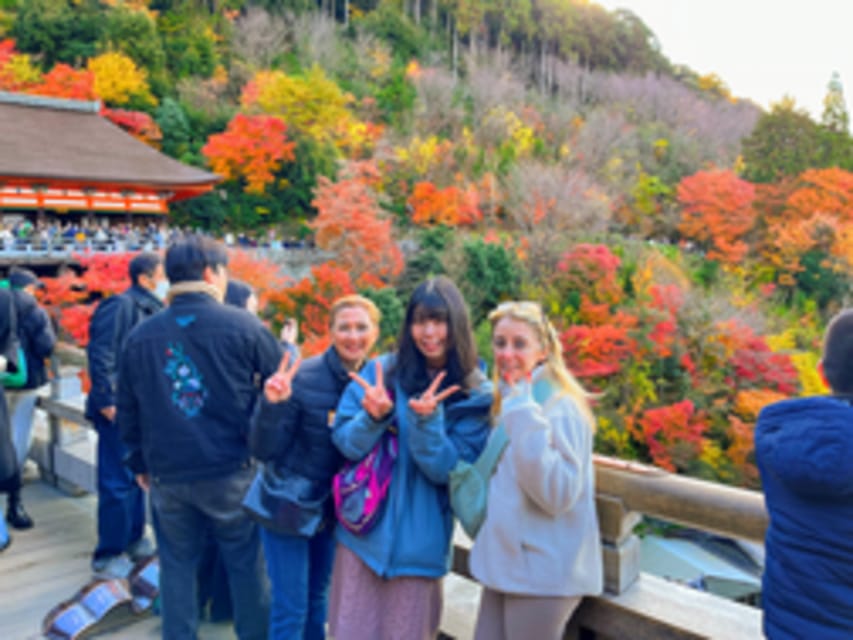
Kiyomizudera is famous for its terrace views. Even if the weather isn’t perfect, you’ll get that Kyoto sense of “city below, temple above.” It’s also a UNESCO-listed World Heritage site, so you’re not just seeing something pretty—you’re seeing a landmark with long historical significance.
What I’d watch for during your time here:
- Take a slower walk toward the main viewpoints rather than rushing straight to the most obvious spots.
- If the crowd is heavy, it’s often better to angle yourself for calmer views, then circle back.
Also remember: you’ll walk stairs and hills during the day. Kiyomizudera usually warms you up for that reality.
Sanjusangen-do: 1,001 Kannon statues and Japan’s scale
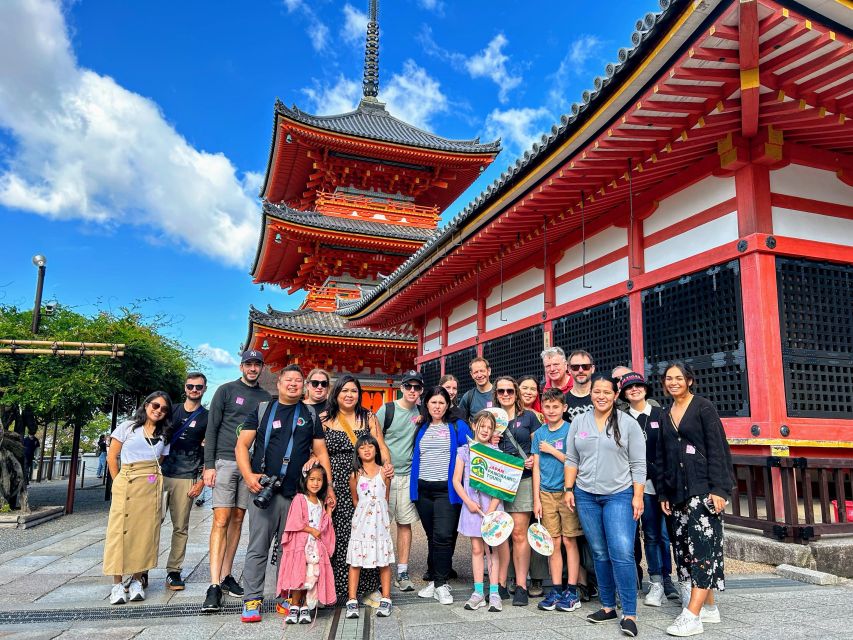
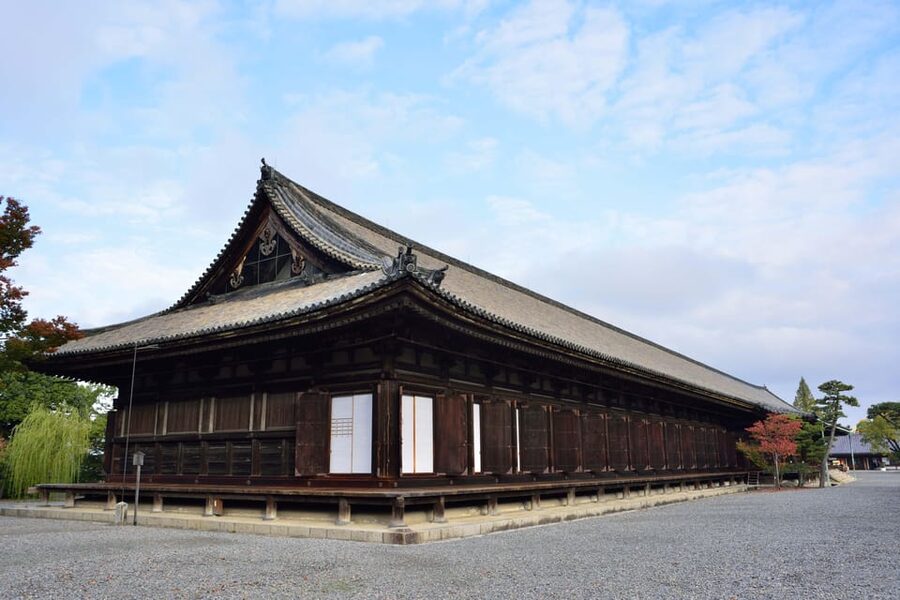
Next up is Sanjusangen-do, also known as Rengo-In, for its long wooden hall. You’ll have about 40 minutes here.
The headline is the one thousand and one Kannon statues. That number isn’t a gimmick. The scale of repeating figures can make the hall feel almost immersive in its own way—more about attention and rhythm than about one single view.
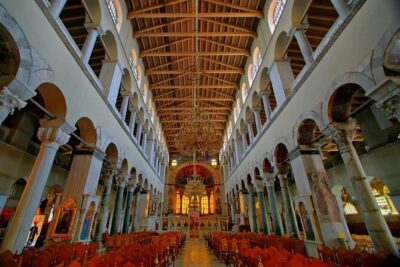
This is also a great stop if you like specifics. The hall is known as Japan’s longest wooden structure and is divided into parts by columns. Even if you don’t read every sign, the space itself tells you it’s built for concentrated viewing.
A tip for getting value from the time: don’t treat it like a quick photo stop. Look across the hall first to get the layout, then zoom in to see how the details repeat.
Arashiyama and Togetsukyo Bridge: lunch with a classic Kyoto backdrop
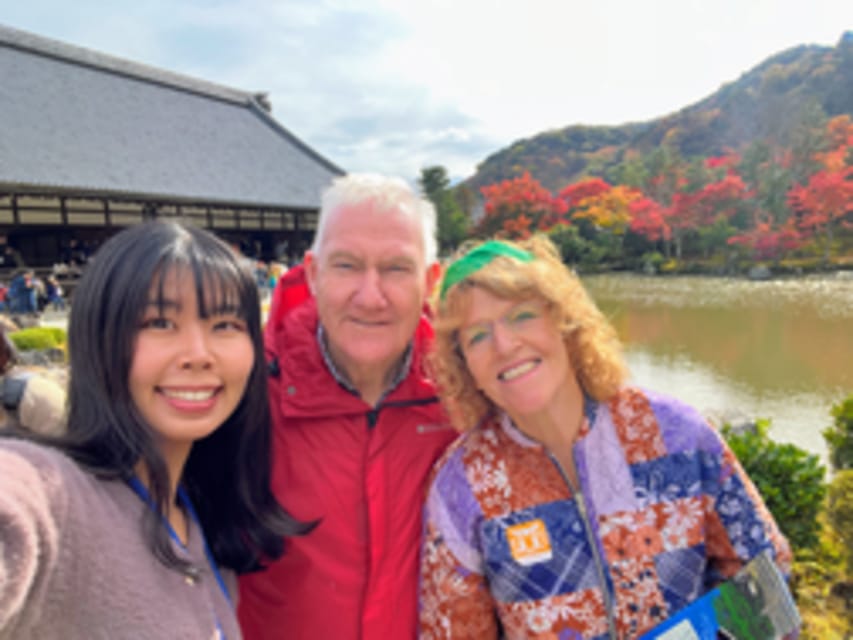
After Sanjusangen-do, you head toward Arashiyama. Lunch time is built in for about 50 minutes, with time afterward to explore nearby areas.
You’ll have a Japanese buffet meal made with seasonal ingredients while looking at the Arashiyama area and its atmosphere. Arashiyama’s big landmark is Togetsukyo Bridge, and the area is also where you’ll spot small shops and places to eat before you move on.
Here’s how I’d make this section work for you:
- Arrive at lunch hungry, because it’s your main sit-down energy reset.
- If you want photos, aim to step out near Togetsukyo Bridge when there’s a lull between arrivals rather than during the tightest crowd surge.
About lunch and dietary options
Lunch is included only if you choose the tour option with lunch, and the lunch is a buffet. Vegetarian dishes are available, but the tour info states there are no Muslim-friendly, allergy-friendly, lactose-free, gluten-free meals. If you have a serious allergy, the safer choice is booking the tour option without lunch so you can manage food yourself.
That said, in real-world cases, some guides have helped people navigate lunch concerns by finding alternatives. The key is: don’t rely on this. Plan for worst-case food constraints and use the without-lunch option if you need to.
Sagano Bamboo Forest: a short walk that can feel surprisingly calm
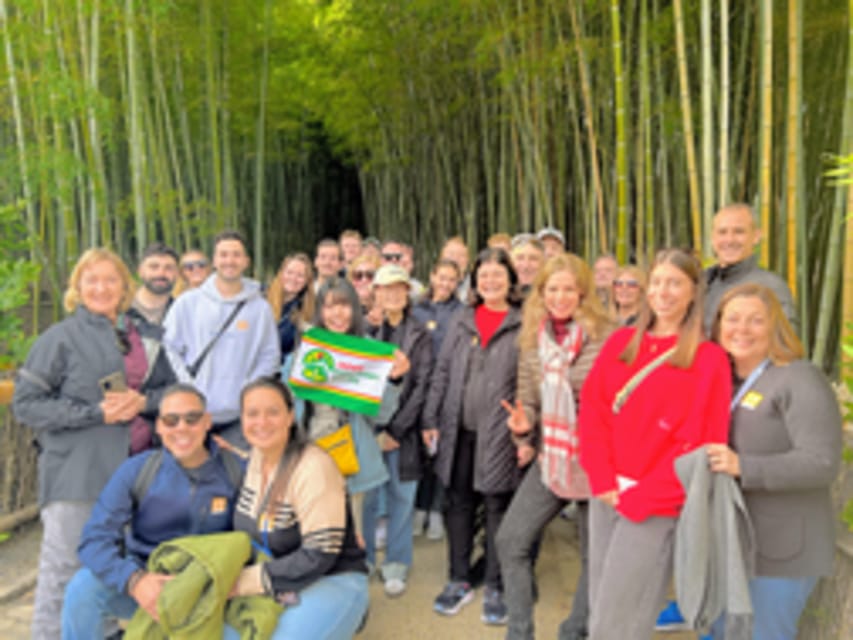
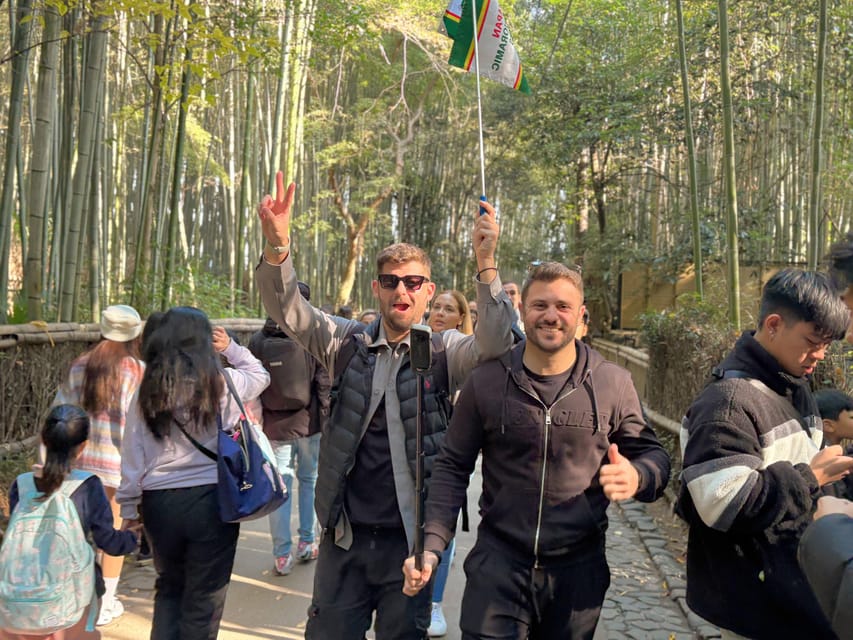
After lunch, it’s time for the Sagano Bamboo Forest. You’ll have about 20 minutes for a photo stop and a walk through the bamboo.
This is the part of Kyoto that people talk about for a reason: you’re walking through “green tunnels,” with paths cutting through bamboo groves. When there’s even a light wind, the stalks sway slightly, and it changes the feel of the walk in a way you can’t get from photos alone.
What to do in that brief time:
- Wear comfortable shoes. You’re moving on paths, and you’ll likely feel the unevenness.
- Slow down right at the tunnel sections. That’s where the atmosphere is strongest.
- Take a few wide shots, then one or two close details. Bamboo looks repetitive until you start noticing how light hits at different angles.
Tenryu-ji: garden time in the middle of a fast day
Next is Tenryu-ji Temple, with about 30 minutes on-site.
Tenryu-ji is a World Heritage site, and the big reason to go is the beauty of its Japanese garden through the seasons. Even if you can’t see every seasonal variation in a single visit, the garden layout is designed to be read like a sequence. You see different compositions depending on where you pause.
This stop also breaks up the day emotionally. Bamboo is cool and rhythmic. Tenryu-ji is more about quiet observation. If you’ve been moving hard since the morning, this is where you can recover a little without losing value.
Practical note: the day includes hills and stairs, so give yourself permission to take pauses. Tenryu-ji is the right place to do it.
Kinkaku-ji (Golden Temple) and the Nijo Castle pass-by
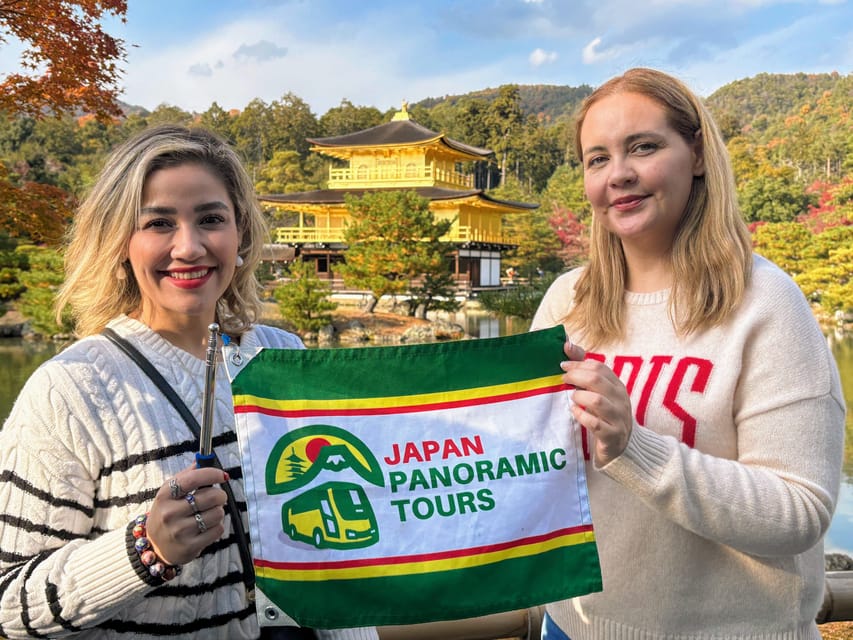
Then you head to Kinkaku-ji, the Golden Temple, with about 40 minutes.
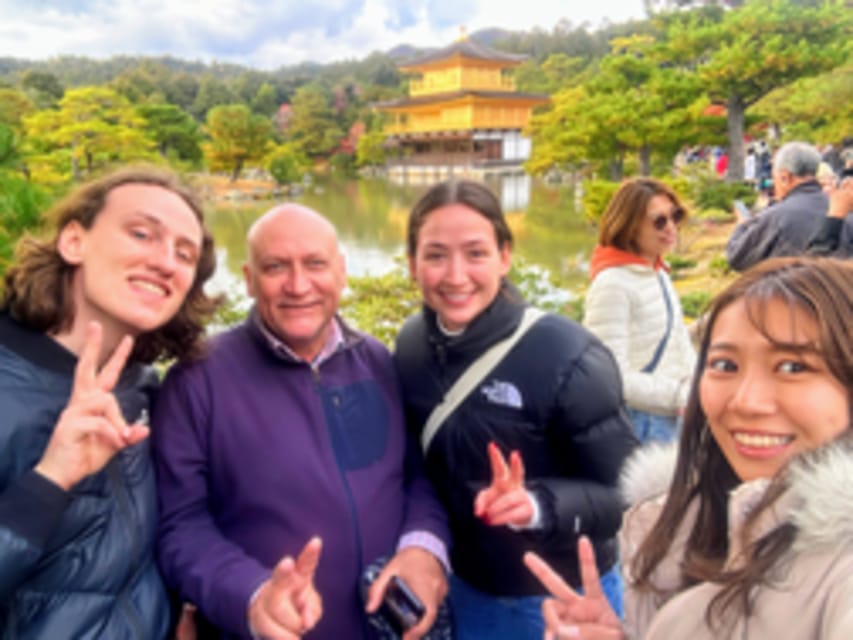
Kinkaku-ji, as you’d expect, is all about visual impact. It’s iconic for a reason: the gilded look is eye-catching, and the surroundings help the whole scene feel framed. You’ll want time here for both close viewing and a step back to see how the temple sits in its setting.
After that, you’ll pass by Nijo Castle. You won’t be visiting it in this run, but you get the chance to see it from the route. It’s a nice “if you want more” teaser for your next Kyoto day.
Fushimi Inari Taisha: walking under the torii gates
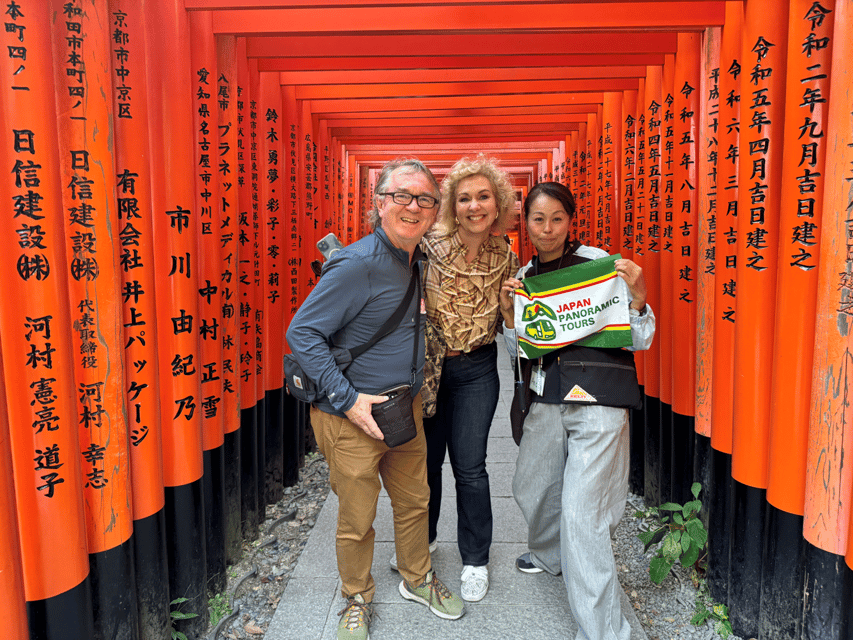
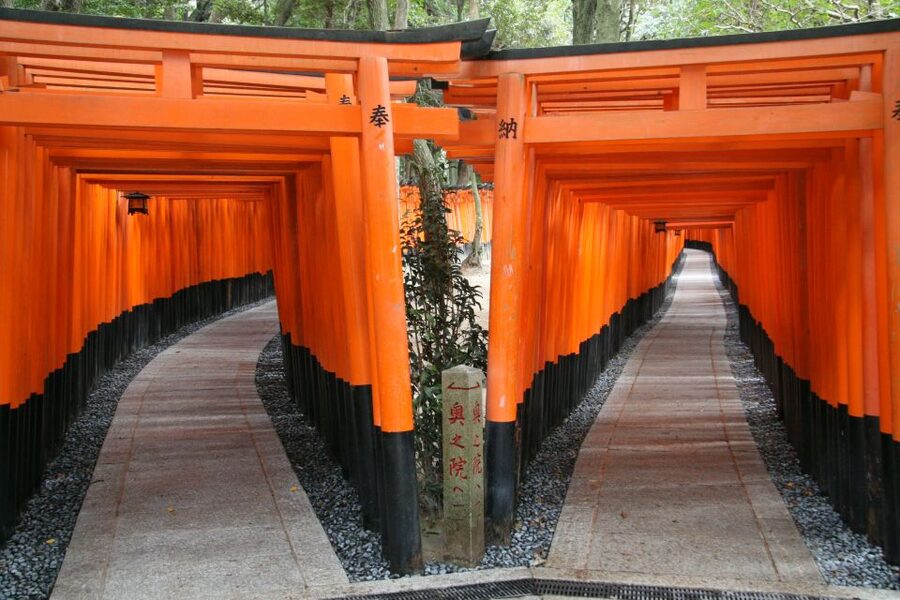
Finally, you reach the real memory-maker: Fushimi Inari Taisha for about one hour.
The experience is exactly what it sounds like. You’ll walk under thousands of red torii gates and move through a tunnel of shrine gates that feels both spiritual and oddly cinematic.
This is where timing and mindset matter. A one-hour window is enough to do a meaningful stretch, but you should decide early what you want:
- Do you want a steady walk and photos along the way?
- Or do you want to push deeper for quieter sections and a bigger payoff at the back?
I like doing a “two speed” plan. Start moving steadily for the first part to build momentum. Then slow down later to soak up the gate rhythm and the views between towers.
One last practical thing: it’s common to feel the walking here more than you expect because the path keeps going. Comfortable shoes are non-negotiable.
Price and logistics: is $122 good value for this kind of day?
At $122 per person for about 9 hours, this tour can be a strong deal if you value convenience and guided context.
Here’s what the price includes:
- Transportation by air-conditioned coach with free Wi‑Fi
- A professional English-speaking guide
- Audio headsets (Spanish, French, Italian, German, Portuguese, Ukrainian)
- Entry tickets for Kiyomizudera, Sanjusangen-do, Tenryu-ji, and Kinkaku-ji
- A buffet lunch only if you select the lunch option
- Wi-Fi and headset gear help you get more from each stop without extra setup
Not included:
- Additional food and drinks
- Hotel pick-up/drop-off
So the value question becomes: do you want to spend your limited Kyoto time planning, navigating, and ticketing? If your answer is no, this is the kind of structured day that pays you back in stress reduction. If you love going solo and taking your own pace at temples (and you’re comfortable planning transport), you might prefer building your own route. But for a first Kyoto visit or a short stay, this “do-the-major-things” approach is hard to beat.
Who this tour is best for (and who should skip it)
This tour is a good fit if:
- You want a guided day that covers top Kyoto highlights without extra thinking.
- You like temples and want the context to make the spaces feel more than photo backgrounds.
- You appreciate bus logistics that move you between neighborhoods.
It’s not a good fit if:
- You use a wheelchair or have mobility impairments. The tour involves walking, stairs, and hills, and it’s listed as not suitable for wheelchair users.
If you’re traveling as a solo person, it’s also a nice setup because group members often get picture help from the guide. In the feedback I read, guides like Den and At-Chan are repeatedly praised for taking time to help people with photos and keeping the group comfortable.
Should you book the Kyoto Fushimi Inari bus tour?
Book it if you’re on a tight schedule and want the major Kyoto landmarks in one day with guide storytelling, audio support, and included temple entry tickets. It’s also a solid choice when you don’t want the hassle of arranging separate transport legs and tickets.
Skip it (or choose a lighter day) if you’re sensitive to long walking, you hate crowd-heavy sites, or you have strict dietary needs that the lunch option may not accommodate. If you do book, pack the basics: comfortable shoes and a realistic expectation that this is a full-day circuit, not a slow stroll.
FAQ
Where is the meeting point and when does the tour start?
You meet in front of Tully’s Coffee (Kyoto Avanti Store). Check-in is at 7:50 AM and departure is at 8:00 AM.
How long is the tour?
The tour runs 510 minutes, which is about 9 hours.
Is there an English guide, and what languages are available for audio?
The live tour guide speaks English. Multilingual audio headsets are available in Spanish, French, Italian, German, Portuguese, and Ukrainian.
What World Heritage sites do you visit?
The tour includes visits to Kiyomizudera Temple, Sanjusangen-do (Rengo-In), Tenryu-ji Temple, and Kinkaku-ji (Golden Temple), all listed as World Heritage sites.
Is lunch included, and are there dietary options?
Lunch is included only if you choose the option with lunch. The tour uses a Japanese buffet with vegetarian dishes, but it states there are no Muslim-friendly, allergy-friendly, lactose-free, or gluten-free meals. If you need special options, the tour notes recommend booking the option without lunch.
Does the tour include temple entry tickets?
Yes. Entry tickets are included for Kiyomizudera, Sanjusangen-do, Tenryu-ji, and Kinkaku-ji.
Is Wi‑Fi available on the coach?
Yes. The coach includes free Wi‑Fi.
Is this tour suitable for wheelchair users?
No. It is listed as not suitable for wheelchair users and people with mobility impairments.