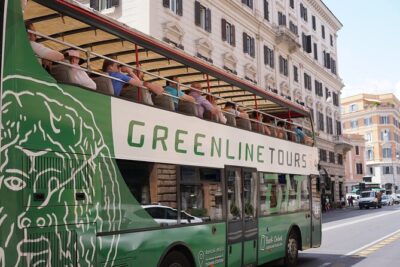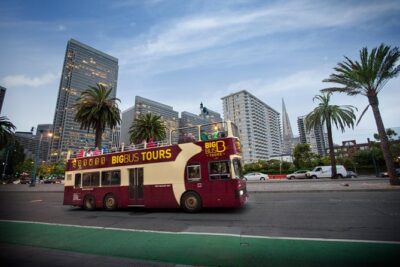
Kyoto’s sights are spread out. This hop-on hop-off bus turns that sprawl into an easy day—or two—by letting you ride a single loop and step out exactly where you want. You get open-top views from a double-decker, plus pre-recorded audio in multiple languages, so the ride itself helps you plan your walking time.
I especially like the mix of convenience and payoff: you can hop off near major landmarks (including UNESCO sites like Nijo Castle, Kinkakuji, and Kiyomizu-Dera) and then return when you’re done. I also like the freedom of unlimited rides during your ticket window, which is perfect when Kyoto’s crowds and lines push you to change your pace.
One drawback to plan for: the open top means real sun exposure (and direct weather), and bus spacing can feel long at certain times—so you’ll want a loose schedule and a backup plan for heat or rain.
In This Review
- Key things to know before you board
- Price and what $27 buys you (and what it doesn’t)
- Where the bus stops: Kyoto Station is your anchor
- How the hop-on hop-off format works in real Kyoto time
- Open-top views, sun, and weather reality
- Stop-by-stop: Kyoto Station to Nishiki Market (the easiest warm-up)
- Kyoto Station
- Nishihonganji (Kyoto Tokyu Hotel area)
- Shijo Karasuma / Nishiki-ichiba Market
- Nijo Castle and the temple belt: where the UNESCO stops pay off
- Nijo-jo Castle (Nijo Castle)
- Kitano-tenmangu Shrine / Kamishichiken
- Kinkakuji (Golden Pavilion)
- Daitokuji Temple
- Kyoto Imperial Palace, Ginkakuji, and Heian-jingu: the quieter beauty arc
- Kyoto Imperial Palace (listed near Doshisha University)
- Ginkakuji (Silver Pavilion)
- Heian-jingu Shrine / Okazaki Park
- Gion and the Kiyomizu-Dera area: where timing becomes the real tour
- Gion (Kotowa-Kyoto Yasaka)
- Gojozaka (Kiyomizu-dera Temple / Gion)
- Sanjusangendo and the museum option: a good “finish strong” stop
- Sanjusangendo / Kyoto National Museum (Hyatt Regency Kyoto)
- Audio commentary in 7 languages: helpful context, not a full lecture
- Small onboard rules that can trip you up
- 1 day vs 2 days: how to choose the right ticket
- Who this bus is for (and who should consider a different plan)
- Should you book this Kyoto hop-on hop-off bus?
- FAQ
- How long is the Kyoto bus ticket valid for?
- Where can I board the bus?
- Is audio commentary included, and what languages are available?
- Can children ride for free?
- Are umbrellas, selfie sticks, or food allowed on the bus?
- Is Wi-Fi included?
- What happens if the weather is bad?
Key things to know before you board
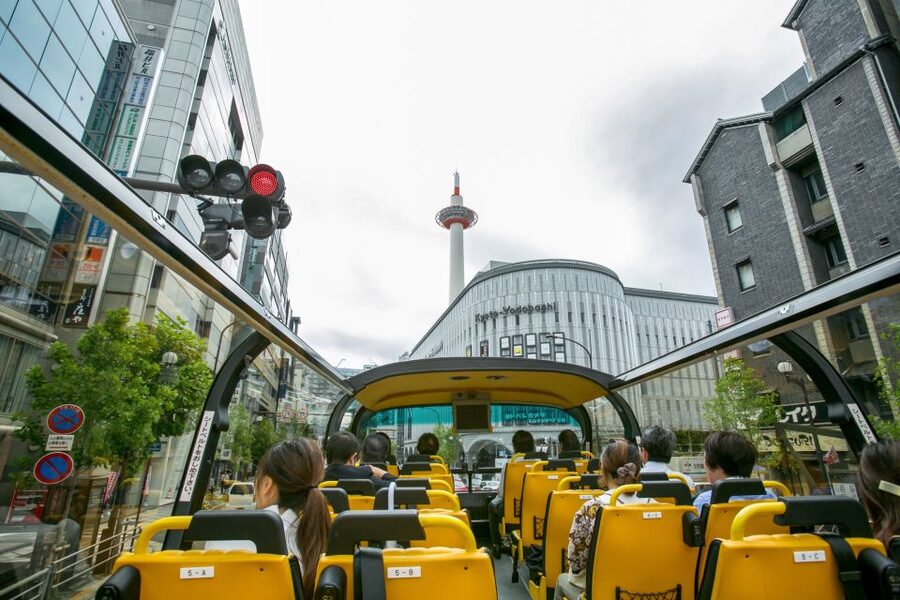
- Unlimited rides during your 1-day or 2-day validity, so you can pace yourself instead of rushing.
- 7-language audio commentary on board to give context as you roll past the sights.
- Open-top double-decker panoramas for quick city orientation and great viewing angles.
- Major stops across Kyoto from Kyoto Station to Gion, Kiyomizu-dera area, and the temple belt on the outskirts.
- Clear starting point at Kyoto Station near the Isetan department store, with the first stop right there.
- Weather rules matter: raincoats are provided in wet weather, but severe storms can cancel service.
Price and what $27 buys you (and what it doesn’t)
At about $27 per person for a 1–2 day ticket, this is a value play for Kyoto’s main problem: getting around efficiently without burning time figuring out trains, buses, and transfers. Think of it as transportation plus orientation.
What’s not included is also important. You still pay entrance fees at temples and museums, and the bus doesn’t feed you. You’re basically buying time-saving routing, not full guided entry.
If you’re trying to cover a lot of ground quickly—especially on a first Kyoto visit—the price feels fair because the route is built around the big-name sights. If you’re staying somewhere central and already know you’ll focus on just one neighborhood deeply, you might not need the whole loop.
Where the bus stops: Kyoto Station is your anchor
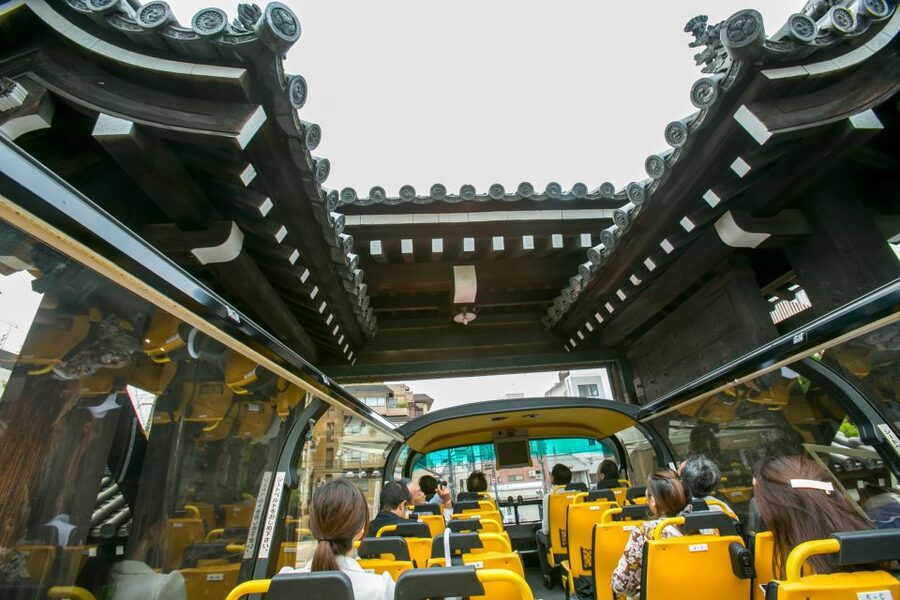
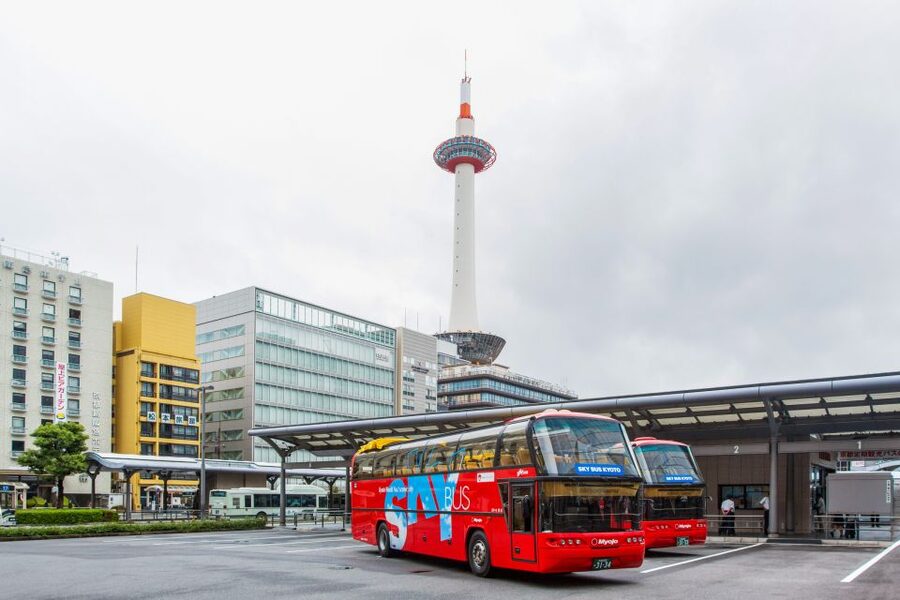
Your most stress-free move is to start at Kyoto Station. The bus stop is on the north central exit side, directly in front of the Isetan department store, and you can board at any stop along the route afterward.
Why this matters: Kyoto Station is where your energy usually resets. You can grab water, re-check your plan, and choose the next neighborhood to walk. The stop locations are designed so you don’t have to long-distance scramble once you get off.
Also, because you can board from multiple stops, you can “build” your days around what you actually feel like doing—temples, markets, or wandering Gion-style streets—without committing to a single order.
How the hop-on hop-off format works in real Kyoto time
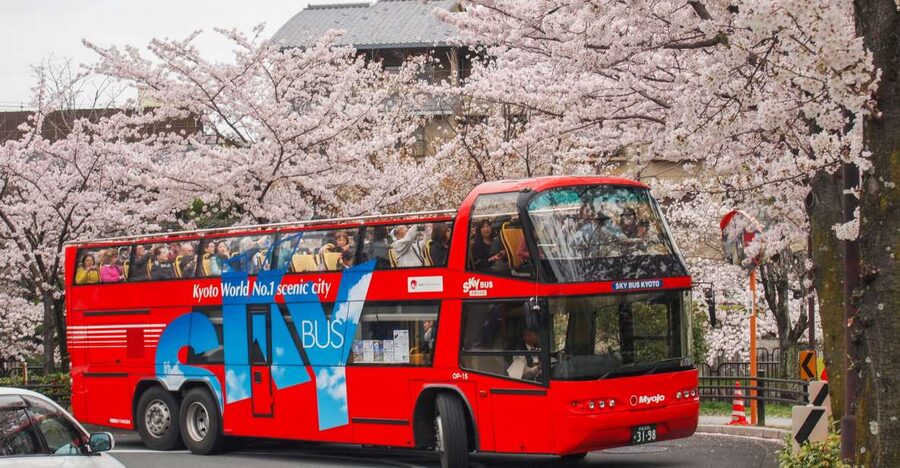
This is a simple system: ride the route, then hop off at a stop, walk around, and hop back on later as long as your ticket is valid. The ride time and walking time are yours to manage.
A couple practical notes based on how people experience it:
- Bus departures can feel spaced out. If you’re trying to make tight temple-entry windows, you’ll want buffer time.
- The audio and stop announcements help you decide when to get off, but you’ll still do best with a quick mental checklist before you stand up.
For many people, the smartest rhythm looks like this: do one side of Kyoto at a relaxed pace on Day 1, then slow down at the exact places you want more time for on Day 2.
Open-top views, sun, and weather reality
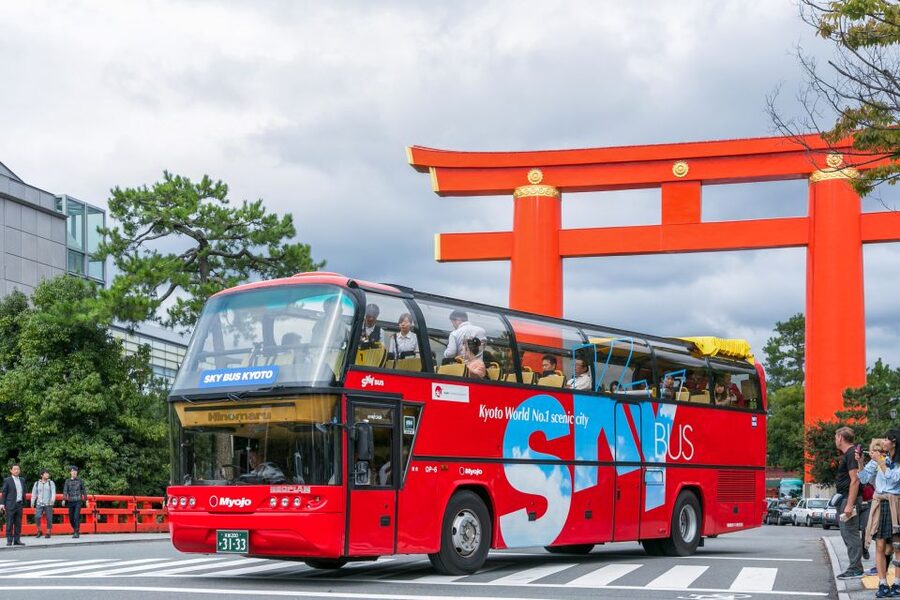
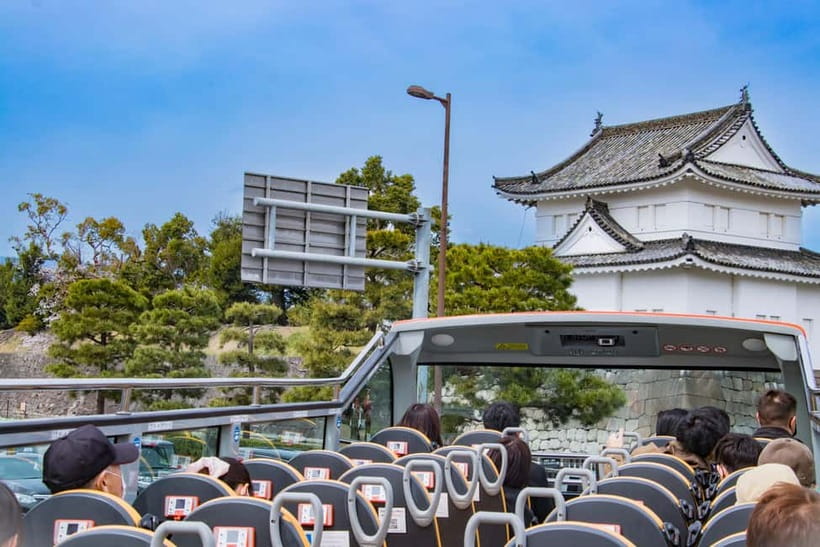
The double-decker top deck is where you’ll get that panoramic Kyoto feeling. You’ll also feel everything else. Because the bus has an open top, you’re in direct sunlight, which can be a big deal in warm months.
Good to know:
- In wet weather, raincoats are provided.
- In severe weather such as typhoons or thunderstorms, buses may not operate.
- Wi‑Fi is listed as included, but it’s temporarily suspended—so plan on enjoying the ride without counting on internet.
My advice: bring a hat and sunscreen mindset even if the day looks mild. And if you’re rain-friendly, keep an easy layer in your day bag. The bus handles rain, but it can’t turn direct weather into comfort.
Stop-by-stop: Kyoto Station to Nishiki Market (the easiest warm-up)
Starting with Kyoto Station is more than convenience—it’s a smart warm-up zone. From there, you head toward some of Kyoto’s liveliest walking areas.
Kyoto Station
You’re set up for easy access to your day. It’s also a practical place to regroup if you misjudge how long you want to stay somewhere.
Nishihonganji (Kyoto Tokyu Hotel area)
This stop is your gateway into the western part of Kyoto’s temple and neighborhood grid. It’s a handy anchor if you want to begin the temple day without committing to the far edges right away.
Shijo Karasuma / Nishiki-ichiba Market
This is the Kyoto choice point: do you want a shopping-and-snacking walk, or do you want to move quickly toward temples? Nishiki Market is famous enough that it can get crowded, but it also makes the bus worthwhile because you can step off without navigating multiple transfers.
What I like here is the flexibility. You can do a quick bite, a short stroll, and still catch the next section on the bus instead of losing an entire afternoon.
Nijo Castle and the temple belt: where the UNESCO stops pay off
This is the “big sights” stretch of the route, and it’s also where Kyoto feels most iconic.
Nijo-jo Castle (Nijo Castle)
Nijo Castle is a UNESCO World Heritage stop on the route, meaning it’s a major reason to book this bus in the first place. It’s also the kind of place that rewards arriving with a bit of time and calm, not just a quick photo stop.
If your goal is to hit one or two major cultural anchors without over-planning, this is one of the best dividends on the route.
Kitano-tenmangu Shrine / Kamishichiken
This stop gives you a different Kyoto mood than the central tourist lanes. Kitano-tenmangu is a shrine destination, while the Kamishichiken area carries a more traditional atmosphere.
It’s a good place to slow down and notice the shift in streetscape and pacing.
Kinkakuji (Golden Pavilion)
Kinkakuji is another UNESCO anchor, and the route is built to get you there efficiently. One practical heads-up: the Golden Pavilion can have cash-only entry (and there may not be an ATM on site), so bring cash if you can.
Also, Kinkakuji is popular, so your best move is to plan for crowds and focus on enjoying the experience rather than expecting a quiet walk.
Daitokuji Temple
Daitokuji is a calmer counterweight after the headline monument energy around Kinkakuji. It’s a good option if you want temples that feel a little less like a single-photo mission.
Even with crowds elsewhere, this stop can help you re-center your day.
Kyoto Imperial Palace, Ginkakuji, and Heian-jingu: the quieter beauty arc
This portion is ideal for people who like Kyoto’s “walk and linger” style.
Kyoto Imperial Palace (listed near Doshisha University)
This stop sets you up for a more stately pace. It’s not just about the building; it’s about that bigger sense of space and formality that comes with palace areas.
Ginkakuji (Silver Pavilion)
Ginkakuji is a classic temple stop on the route and pairs naturally with the palace area nearby. Expect it to be photogenic, but also expect you’ll get the most out of it if you take breaks rather than sprint from viewpoint to viewpoint.
Heian-jingu Shrine / Okazaki Park
This stop is useful because it mixes a shrine visit with a park-style setting. Okazaki Park is a nice change of pace when temples stack up.
If you’ve got the 2-day ticket, this is the kind of stop you can revisit with fresh eyes when you’re not rushing to cover everything.
Gion and the Kiyomizu-Dera area: where timing becomes the real tour
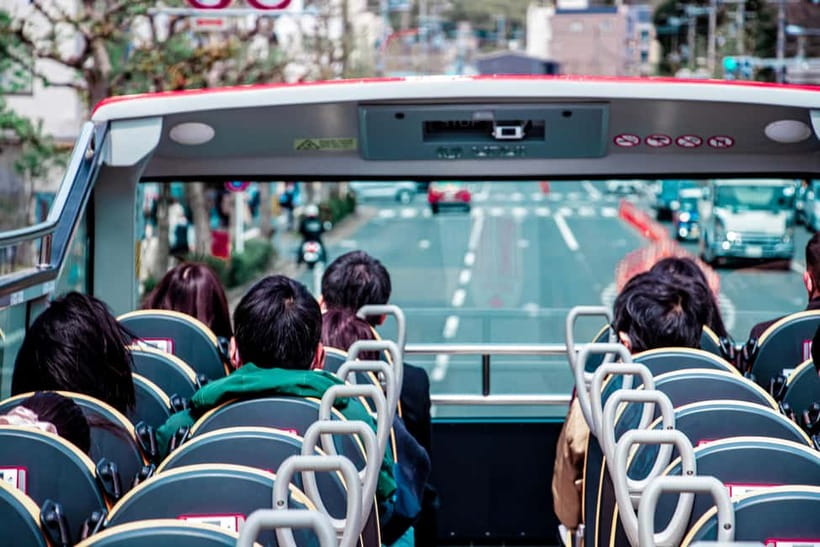
Gion is one of Kyoto’s most recognizable neighborhoods, and the bus route is set up to put you close without forcing you into complicated transit.
Gion (Kotowa-Kyoto Yasaka)
This is a great stop for evening-style wandering. You can step out, browse, and get a feel for the area’s character without committing to a long bus-hop from far away.
Gojozaka (Kiyomizu-dera Temple / Gion)
This stop ties directly into one of Kyoto’s biggest UNESCO draws: Kiyomizu-Dera Temple. Gojozaka is also the right kind of approach area—so even the walk can feel like part of the experience.
Practical advice: go with a plan for how long you’ll want to stand in line or move through busy parts, and use the bus to reset when your energy dips.
Sanjusangendo and the museum option: a good “finish strong” stop
Sanjusangendo / Kyoto National Museum (Hyatt Regency Kyoto)
This stop is perfect for people who want something a little different from the main temple loop. Sanjusangendo and the national museum pairing can give your day variety: temple atmosphere plus indoor/cultural time.
It’s also a convenient last act. When you’ve had enough outdoor walking, an option like a museum stop can make your remaining hours feel manageable instead of exhausting.
Audio commentary in 7 languages: helpful context, not a full lecture
The bus includes pre-recorded audio guidance in English, French, Japanese, Korean, Chinese, Spanish, and German. This is one of the best “low-effort, high-return” features because it helps you understand what you’re seeing while you’re moving between neighborhoods.
A fair expectation: the narration is more about orientation than deep academic detail. If you want history in-depth, you’ll still want to do your own reading at key stops. But as a way to stop feeling lost and start making smart walking choices, it’s very effective.
Tip: when the narration shifts as you approach a stop, use that moment to look up at what’s around you. Stand up, then decide. That saves you from getting off at the wrong time and doing extra walking later.
Small onboard rules that can trip you up
Kyoto is easy to mess up with the little rules, so check these before you board:
- No smoking on the vehicle.
- No selfie sticks.
- No food in the vehicle.
- No umbrellas.
- No alcoholic drinks in the vehicle.
For drinks: only soft drinks with lids (like plastic bottles or coffee) are allowed. These rules are simple, but they affect what you carry. If you’re the type to snack on the go, save it for a stop.
Also, since Wi‑Fi can be unavailable (temporarily suspended), don’t build your plan around loading maps in real time from the bus.
1 day vs 2 days: how to choose the right ticket
If you’re short on time and want the essentials, the 1-day ticket can work well because the route hits Kyoto Station, market area, major temples, Gion, and Kiyomizu-Dera territory.
But if you want a calmer pace—especially when crowds build—go for the 2-day option. The big advantage of two days is that you’re not forced into “see it, sprint off, repeat.” You can ride the loop on Day 1 to learn the geography, then use Day 2 to slow down at the stops you actually loved.
My practical suggestion:
- 1 day fits a tight schedule or a quick introduction.
- 2 days fits first-time visitors who want time to breathe and a backup plan when weather shifts.
Who this bus is for (and who should consider a different plan)
This hop-on hop-off bus is a strong fit if you:
- Want an easy overview of Kyoto’s top sights.
- Don’t want to figure out transit across multiple neighborhoods.
- Prefer freedom over a fixed walking pace.
- Like the idea of open-top panoramas for orientation.
It may feel less ideal if you:
- Plan to spend most of your time in just one neighborhood.
- Are chasing very specific, off-route sights that require extra transit.
- Need nonstop service every few minutes. There can be longer gaps during certain times.
In other words: it’s best as a backbone for your day, not as your entire plan.
Should you book this Kyoto hop-on hop-off bus?
Yes, if you want an efficient, low-stress way to connect Kyoto’s biggest sights without complicated routing. At around $27, the value comes from stacking major stops on one loop, the unlimited rides flexibility, and the 7-language audio that keeps you oriented as you move.
If you’re deciding between 1 and 2 days, I’d lean toward 2 unless your schedule is truly tight. Two days give you the breathing room Kyoto deserves—especially around popular stops like Kinkakuji and the Kiyomizu-Dera area.
One last practical check before you go: bring a small amount of cash for temple entry risk at places like the Golden Pavilion, and pack for direct sun since the top deck is open. Do those two things, and this bus becomes a smooth, sensible way to experience Kyoto’s highlights on your own terms.
FAQ
How long is the Kyoto bus ticket valid for?
You can choose a 1-day or 2-day ticket. The pass is valid for the period selected, and you can ride as long as it’s within that validity window.
Where can I board the bus?
You can board at any of the listed stops along the route. The first stop is Kyoto Station, where you’ll find the sightseeing bus stop in front of the Isetan department store at the north central exit.
Is audio commentary included, and what languages are available?
Yes. Audio commentary is included and available in English, French, Japanese, Korean, Chinese, Spanish, and German.
Can children ride for free?
Children aged 0–5 do not need a ticket if they sit on an adult’s lap with a ticket (1 child per passenger with ticket).
Are umbrellas, selfie sticks, or food allowed on the bus?
No. Umbrellas, selfie sticks, and food are not allowed on the vehicle. Alcoholic drinks are also not allowed.
Is Wi-Fi included?
Wi-Fi on board is included, but it’s temporarily suspended.
What happens if the weather is bad?
Buses may not operate in severe weather such as typhoons or thunderstorms. In wet weather, raincoats are provided.