One day in Kyoto feels like ten—fast, guided, and photo-ready. This bus tour is built to get you to the big-ticket sites with bilingual commentary and smart timing, including Arashiyama Bamboo Grove early in the morning.
What I like most is how the guide experience actually helps you “read” Kyoto while you travel, not just pose for pictures. I also love the flexibility: you can choose ticket options for Kinkaku-ji, Nijo Castle, and Kiyomizu-dera, and you can add lunch if you want a smoother day.
One caution: this is a long, packed outing that can be brutally hot in summer. Build in your own hydration plan and expect limited downtime between stops.
In This Review
- Quick, Practical Highlights
- Why This Kyoto Highlights Bus Tour Works for First Timers
- Starting at 7:00 AM: The Smoothest Way to Beat Kyoto’s Crowds
- Stop 1 and Stop 2: Arashiyama Bamboo Grove Early Access
- Stop 3: Kinkaku-ji (Golden Pavilion) and the Ticket Reality
- Stop 4: Nijo Castle UNESCO—Architecture Meets Gardens
- Stop 5: Kiyomizu-dera’s Hilltop Views (Plus Enough Time)
- Stop 6: Fushimi Inari Taisha—Thousands of Torii Gates
- Stop 7: Returning to the Meeting Point (Plan for a Late Finish)
- Guide Commentary: The Real Secret Sauce
- Price and Value: Is $51.80 a Good Deal?
- What to Watch Out For (A Balanced Reality Check)
- Who This Kyoto Tour Is Best For
- Should You Book This Kyoto Bus Tour?
- FAQ
- What time does the Kyoto tour start?
- How long is the tour?
- Where do I meet the group?
- Is it a mobile ticket?
- Is lunch included?
- Are the temple and castle admission tickets included?
- Is the tour guided?
- How many people are in the group?
- Is there free cancellation?
- Can the itinerary change on the day?
Quick, Practical Highlights
- Arashiyama Bamboo Grove early access so you’re not fighting the biggest crowd wave right away
- Kinkaku-ji ticket option (Golden Pavilion admission included only if you pick the right package)
- UNESCO Nijo Castle with time for gardens and classic Kyoto architecture
- Kiyomizu-dera hillside views plus enough time to actually walk around, not just snap and go
- Fushimi Inari Taisha torii-gate walk with free time to explore at your own pace
- Small-group feel for a bus tour with a maximum of 30 travelers
Why This Kyoto Highlights Bus Tour Works for First Timers
Kyoto is the kind of city where you can easily burn an entire day just deciding where to go next. This tour is efficient by design: you get a guided route that hits the core icons—Arashiyama, Kinkaku-ji, Nijo Castle, Kiyomizu-dera, and Fushimi Inari—without you needing to manage trains, transfers, and ticket lines across town.
I also like the “guided but not trapped” rhythm. You’ll ride together with commentary in English/Spanish, then you get time on your own at key photo and walking stops. That balance matters because Kyoto isn’t only about viewpoints—it’s also about small moments: temple details, garden paths, and the way crowds thin or thicken as the morning turns into afternoon.
The day is long (about 10 hours 45 minutes), so it’s not for people who want a slow, café-hopping stroll. If you want maximum Kyoto per hour, though, this is a strong match—and it’s popular, too, with a 4.9/5 rating and a 97% recommendation rate.
Starting at 7:00 AM: The Smoothest Way to Beat Kyoto’s Crowds
You start early, at 7:00 am, at Hotel Keihan Kyoto Grande. That matters more than it sounds. Kyoto’s most famous places attract people like magnets, and a morning start helps you arrive before the day fully loads up.
The meeting point is close to public transportation, so it’s easier to get there the morning of your tour. You’ll also use a mobile ticket, which tends to reduce the “where do I stand?” stress—especially when you’re traveling solo or in a small group.
And since it’s a bus tour with a set route, the schedule is a big part of the value. You’re paying for reduced decision fatigue: you show up, follow the plan, and spend your energy looking at Kyoto instead of calculating how to get between neighborhoods.
Stop 1 and Stop 2: Arashiyama Bamboo Grove Early Access
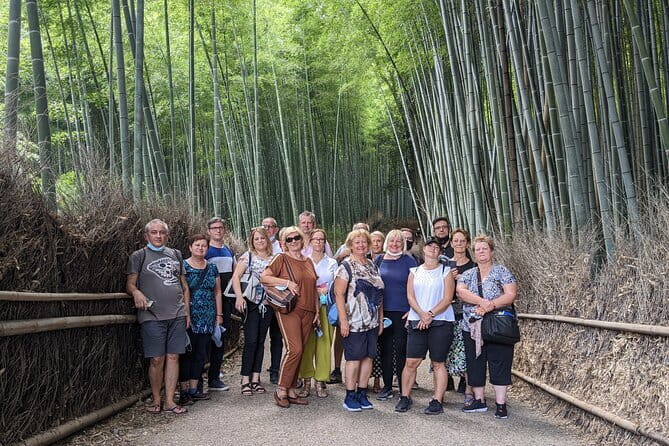
The first major moment is the Arashiyama Bamboo Grove. You’ll ride to the area and then get early access, which is the difference between bamboo that feels cinematic and bamboo that feels like a traffic bottleneck.
What makes this stop special is how quickly the vibe changes once you’re inside the grove. Outside, it’s normal city motion. Inside, it’s a tunnel of sound and shadow—people still chat and take photos, but the scale of the bamboo does the heavy lifting for atmosphere.
Practical note: the grove is free (no admission ticket listed for this stop), so you’re really paying for time efficiency and arrival timing. Wear shoes you don’t mind walking in—your best photos come from strolling a bit, not just standing at one spot.
Stop 3: Kinkaku-ji (Golden Pavilion) and the Ticket Reality
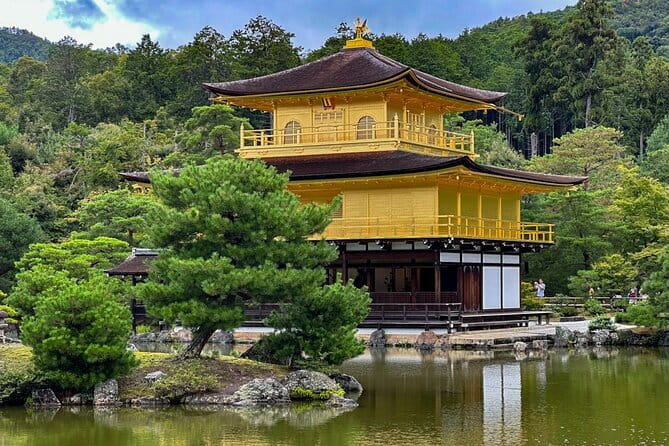
Next up is Kinkaku-ji, also called the Golden Pavilion. The big thing to understand is tickets: admission is not included by default. You’ll be able to explore Kinkaku-ji only if you selected the package option that includes entry (the tour lists this as ticket not included unless you choose the right add-on).
Time-wise, you’re looking at roughly 45 minutes at this stop. That’s enough for the main view and a slower look around the most important areas, but it’s not a “wander for hours” situation. Go with a goal: decide what you want most—front pond reflections, the pavilion itself, or the route that lets you take photos from slightly different angles.
This is also where the “one-day pace” shows. If you arrive and the line or crowd movement is slow, you’ll feel it. Still, if Kinkaku-ji is on your must-see list, this tour gives you a straightforward way to make it happen without extra planning.
Stop 4: Nijo Castle UNESCO—Architecture Meets Gardens

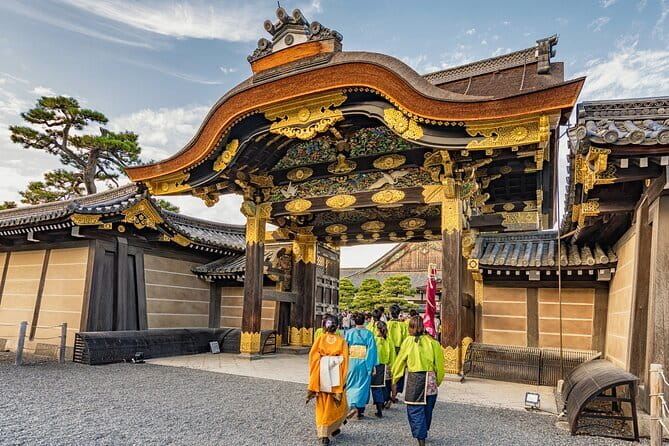
After Arashiyama and Kinkaku-ji, you’ll head to Nijo Castle, a UNESCO site famous for its architecture and garden areas. Like Kinkaku-ji, admission is ticket-dependent—the tour notes Nijo Castle entry is only if you previously purchased the ticket (or chose the option that includes it).
You’ll have about 1 hour 30 minutes here, which is a healthier amount of time than a pure “quick stop” model. This matters because castles and palace interiors are harder to enjoy when you’re rushing. You want at least some space to slow down, spot details, and walk the grounds.
One nice aspect for value: since Nijo Castle is a major historical highlight, you’re essentially buying “transport plus guided routing” that keeps you from losing half the day on transit. This is the kind of stop that can go from overwhelming to enjoyable when you’re not juggling maps.
Stop 5: Kiyomizu-dera’s Hilltop Views (Plus Enough Time)

Then comes Kiyomizu-dera, perched on a hillside and known for dramatic city views. Admission is again option-based—the tour lists Kiyomizu-dera as ticket not included unless you select the entry option.
This is one of the longer stops, around 2 hours 30 minutes, which gives you time to do more than just reach the main viewpoint. With a hilltop site, your enjoyment depends on walking the approach, navigating stair paths, and taking breaks when the crowd flow slows down.
What to expect: your legs will get a workout. Even if you move at a normal pace, Kiyomizu-dera’s layout encourages stairs and short climbs. If you’re sensitive to heat or exertion, this is the stop where you’ll feel it most—so plan your pacing and don’t assume you’ll “power through” every climb quickly.
Stop 6: Fushimi Inari Taisha—Thousands of Torii Gates
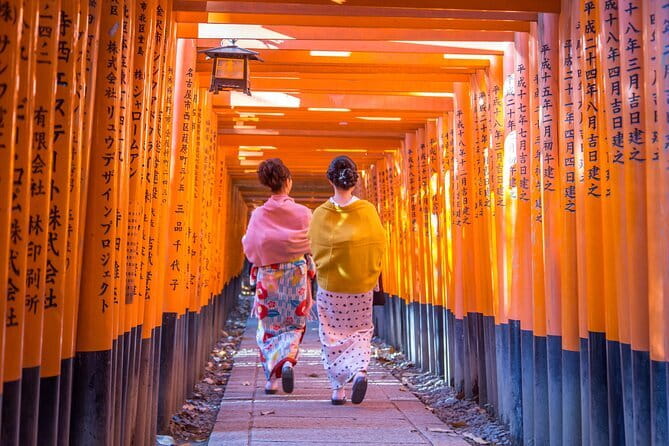
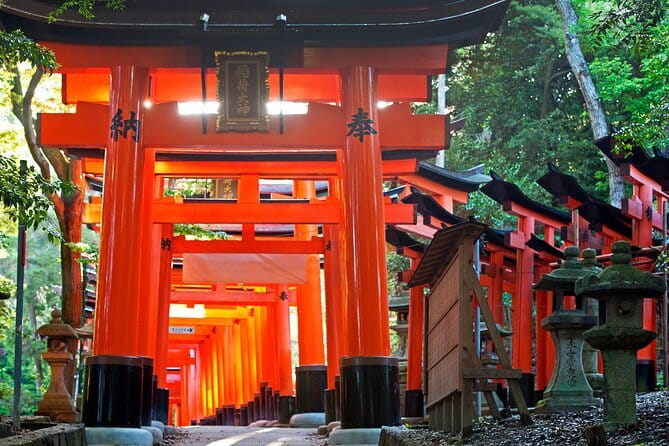
If you only do one walking stop that feels totally Kyoto, it’s often Fushimi Inari Taisha. The iconic part is the long corridor of vermillion torii gates climbing up the mountain pathway, creating that instantly recognizable visual rhythm.
Good news: this stop is listed as free for admission, so you’re paying for time and guidance, not an extra ticket here. You’ll get about 1 hour 30 minutes, which is enough for a meaningful loop and some photo time without forcing you to reach the very top if you’d rather conserve energy.
The torii gates also change your experience depending on timing. Earlier tends to feel calmer and more spacious. Later can feel crowded but also more lively. The bus route timing helps put you in a better window than you’d likely manage on your own in a tight one-day schedule.
Stop 7: Returning to the Meeting Point (Plan for a Late Finish)
You wrap up by returning to the meeting point, and the ride back is roughly 30 minutes. That closing segment is when you’ll feel the day most clearly: lots of walking, some waiting at major sights, and bus travel between neighborhoods.
Since the schedule is subject to change due to weather, traffic, or road closures, don’t treat the timeline like a rail timetable. The tour aims for efficiency, but Japan traffic and weather can still reshape the exact pace.
The good part of ending back at the meeting point is simplicity. You don’t need to figure out trains at the end of a long day when everyone’s tired and hungry.
Guide Commentary: The Real Secret Sauce
The best-rated experiences repeatedly credit the guides. Names that show up include Ángeles, Cesar, and Paula, with one driver called out as Nishimura-san. What I take from that isn’t just personality—it’s how commentary changes what you notice.
When the guide explains context while you ride, it turns temple exteriors into stories you can place in your head. You’re not only seeing places; you’re learning how Kyoto’s landmarks connect to power, ritual, and daily life.
This also helps with photo timing. A good guide knows where to pause so you get an angle before the crowd surge moves through. Even if you’re not an expert photographer, those small instructions can make your pictures look like you planned more than you did.
Price and Value: Is $51.80 a Good Deal?
At $51.80 per person, this tour sits in the “one-day highlights” category, where the real question is what you’re buying: convenience, transportation, and guided sequencing.
Here’s the value logic:
- You’re covering several top Kyoto hits in a single day without managing transit.
- You’re getting bilingual guide commentary and a route designed for sightseeing flow.
- You may include entry fees for Kinkaku-ji, Nijo Castle, and Kiyomizu-dera depending on your selected option.
The potential downside is that ticket costs can affect your final total. The tour clearly marks some admissions as not included unless you choose the right package. If you arrive wanting to see everything inside, make sure you’ve selected the ticket options ahead of time so you’re not stuck making last-minute decisions on the fly.
Also, remember the day is long. If you’d rather spend your time resting between attractions, this “pay less time planning” approach might feel intense. If you want maximum Kyoto coverage and you like having a plan, the price makes sense.
What to Watch Out For (A Balanced Reality Check)
Most experiences are described as organized and high-energy, but there are a few practical considerations worth taking seriously.
First, heat and long duration can be a real issue. One piece of feedback highlights the need for better hydration access and more breaks on extremely hot days. So bring your own water strategy, and consider lightweight layers even if you’re traveling in summer.
Second, language experience can vary in comfort. The tour is bilingual (English and Spanish), and some people found the switching distracting or not consistently clear. If language clarity is a must for you, you might prefer a tour that runs in a single language—or at least be mentally ready for bilingual logistics.
Finally, with any multi-stop day, timing matters. Crowd movement and opening hours can shift with the day. The itinerary notes it may change due to weather, traffic, or road closures, so it’s smart to stay flexible.
Who This Kyoto Tour Is Best For
I’d book this if you:
- Have limited time in Kyoto and want the headline sites in one outing
- Like guided context so you learn while you walk
- Prefer a structured day over building your own route
- Want great photo opportunities without spending hours planning
I’d think twice if you:
- Want a slow pace with lots of downtime
- Are very heat-sensitive
- Have mobility limitations that make repeated stairs and hilltop walking difficult
- Need very consistent single-language narration
With a maximum group size of 30 travelers, it still feels manageable for a bus day, and that helps with atmosphere—less chaos than some larger motorcoach schedules.
Should You Book This Kyoto Bus Tour?
Yes, if your goal is to see Kyoto’s biggest names efficiently and you’re okay with a long, active day. This tour is strongest as a “first Kyoto” move: Arashiyama Bamboo Grove early, Golden Pavilion if you select entry, Nijo Castle, Kiyomizu-dera, and Fushimi Inari all in one sweep.
Book it with two smart checks:
1) Select the ticket option that matches the inside access you want for Kinkaku-ji, Nijo Castle, and Kiyomizu-dera.
2) Pack for heat and stamina—Kyoto can change fast, and the day doesn’t slow down just because you’re tired.
FAQ
What time does the Kyoto tour start?
It starts at 7:00 am.
How long is the tour?
The duration is about 10 hours 45 minutes.
Where do I meet the group?
The meeting point is Hotel Keihan Kyoto Grande, Kyoto (Minami Ward, Higashikujō Nishisannōchō).
Is it a mobile ticket?
Yes, the tour uses a mobile ticket.
Is lunch included?
Lunch is included only if you select the option that includes it (the Premium option notes lunch inclusion).
Are the temple and castle admission tickets included?
Admission for Golden Pavilion (Kinkaku-ji), Nijo Castle, and Kiyomizu-dera depends on the package you choose. Fushimi Inari and the bamboo grove are listed as free admission stops.
Is the tour guided?
Yes. You’ll have a bilingual English/Spanish guide.
How many people are in the group?
The maximum group size is 30 travelers.
Is there free cancellation?
Yes, free cancellation is offered up to 24 hours in advance for a full refund.
Can the itinerary change on the day?
Yes. The route may change due to weather, traffic, road closures, or specific circumstances.
If you want, tell me your travel month and whether you plan to buy the ticket add-ons, and I’ll help you map a sensible pacing plan for the hilltop stops.