Lyon looks big from the bus. This hop-on hop-off loop is an easy way to get your bearings fast, with Notre-Dame de Fourvière and Vieux Lyon on the list, plus the Painted Wall for color. The main thing to keep in mind is that re-boarding can mean waiting if the schedule is running late or buses are spaced out.
What I like most is that you get a true “see it, then choose” format: 9 stops built around the neighborhoods you actually want to revisit. The second big win is the REWIND smartphone audio (free app) with multilingual commentary, so you can wander off and still follow along. One possible drawback: the onboard audio is app-based, and a few people have mentioned occasional glitches or missing audio at certain points—so plan to keep your phone charged and your earphones ready.
In This Review
- Key Highlights That Make This Tour Worth It
- Starting at Place Bellecour: Your Lyon Base Camp
- The Hop-On Loop: From Terreaux to Vieux Lyon in One Simple Ride
- Painted Wall to Mur Peint: Street Art With a View
- Fourvière: Basilica Views, Theatres, and That Big Hill Feeling
- Musée des Confluences: A Different Lyon Side
- Getting the Audio Right With REWIND and Your Own Earphones
- Timing Reality: How to Avoid the Hop-Off Wait Trap
- Stops You’ll Actually Want to Use (and What You Can Skip)
- Price and Value: $29 for One Day or 5€ More for Two
- Who This Tour Fits Best in Lyon
- Should You Book This Lyon Hop-On Hop-Off Bus Tour?
- FAQ
- Where is the meeting point?
- How long is the pass valid?
- Do I need headphones for the audio guide?
- What are the main places you can see?
- Is the bus wheelchair accessible?
- What should I bring, and what is not allowed?
Key Highlights That Make This Tour Worth It
- Fourvière convenience: the bus brings you close to the basilica area for those uphill views
- Vieux Lyon time: hop off to walk the old streets at your own pace
- La Fresque des Lyonnais and Mur Peint: two street-art stops that add personality beyond monuments
- Confluence Museum area: a change of pace from the historic core
- Smartphone audio with REWIND: free, multilingual commentary on your schedule
- Central starting point: Place Bellecour makes it simple to plan day flow
Starting at Place Bellecour: Your Lyon Base Camp
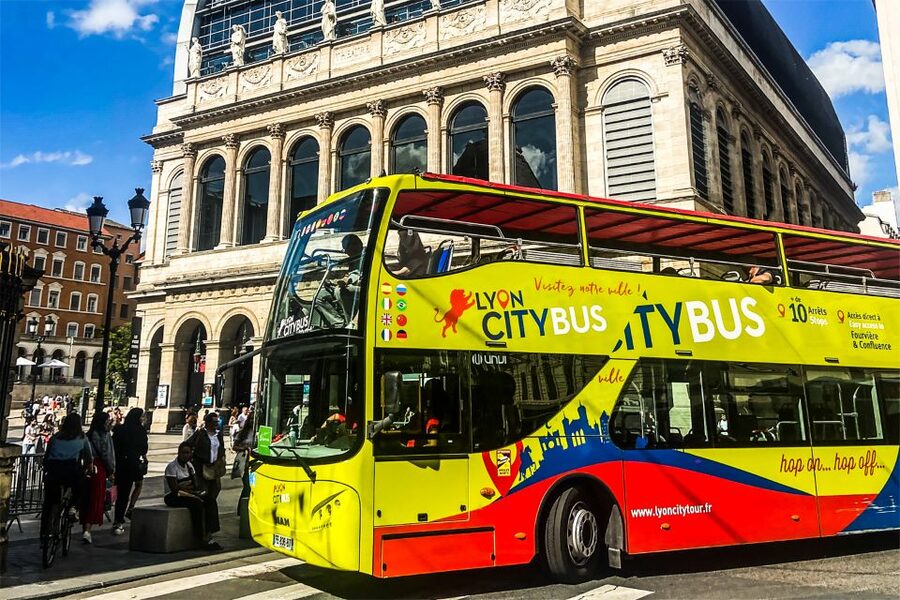
Your day begins at 15 Place Bellecour, which is one of the most useful places to start in Lyon. It’s central, easy to find, and it anchors the route so you can structure your sightseeing without guessing too much. If you want a one-day overview first, you’ll basically be building a shortlist for later in your trip—what to revisit, where to linger, and which views earned your extra time.
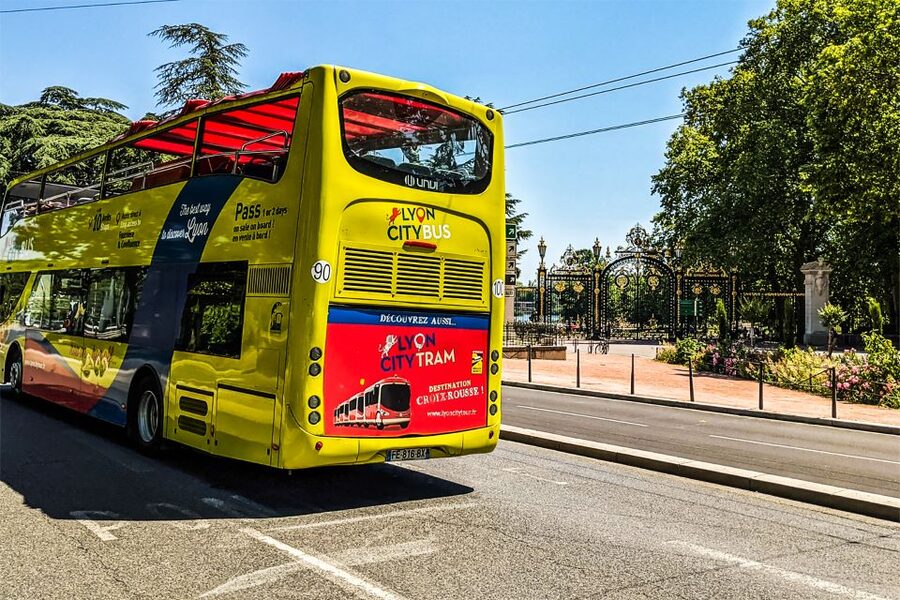
This is an open-top double-decker setup, which matters in a city full of slopes and viewpoints. Even when you keep it short, riding upstairs gives you better perspective for bridges, river views, and the way Lyon stretches between its historic center and newer districts. Bring a sun hat for bright days; Lyon can switch from calm light to strong sun quickly, and you’ll be in daylight for stretches.
A practical note: you meet once at Bellecour, then hop on and off repeatedly. That means your real success comes from timing. If you hop off and get impatient waiting for the next bus, the tour becomes less fun. So it helps to treat each stop as a mini-plan: pick what you want to do, set a rough time, then come back with buffer.
The Hop-On Loop: From Terreaux to Vieux Lyon in One Simple Ride
The bus route gives you a clean arc through classic Lyon: Place des Terreaux, the Painted Wall area, then into the old core. Even if you only stay onboard for a full circuit, you’ll start noticing patterns—how the city’s historic heart differs from the modern riverfront, and where the big sight anchors sit.
Here’s what each early stretch is best for:
Place des Terreaux (pass by). This is a good first “orientation” stop. You’re not meant to spend forever here on this bus, but it helps you connect the dots—what you see later on foot will feel more logical once you’ve already been exposed to the area from above.
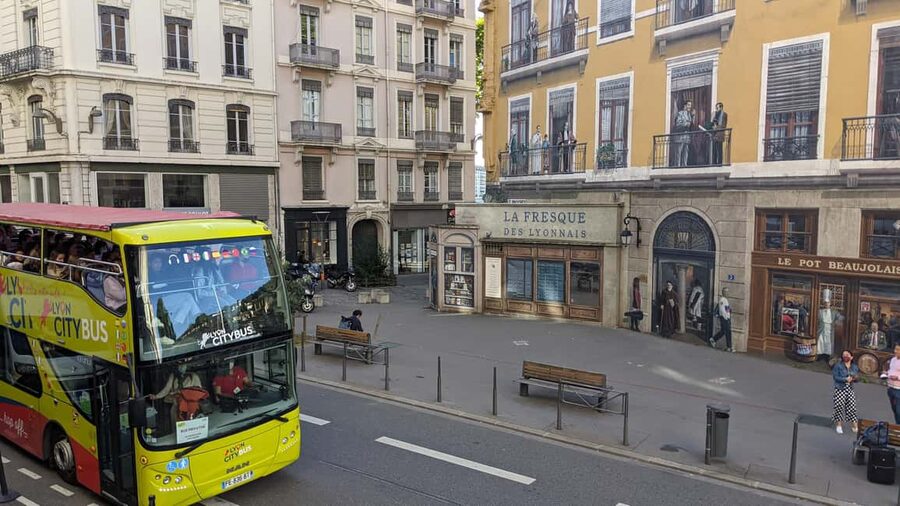
Fresque des Lyonnais (pass by). This is one of the big “okay, wow” moments. The Painted Wall is a landmark that feels like part of the city, not just a photo spot. If you care about street-art scale, you may want to hop off long enough to look closely from the sidewalk, since from the bus you mainly get the full composition.
Palais de Justice (pass by). This stop is more about architecture and atmosphere. Even if you don’t go inside, seeing it from the bus helps you understand why Lyon’s old and monumental layers feel so close together.
Vieux Lyon. This is the stop that turns the bus from sightseeing into actual wandering. Hop off here when you want to slow down and walk. Lyon’s old town is where you’ll likely spend the most time simply because it’s rewarding to explore streets at ground level.
One small reality check: the bus can move slowly through busy areas. That’s not a deal-breaker here—it’s part of the “ride and see” value—but it does mean you shouldn’t expect the bus to beat walking or metro for point-to-point speed.
Painted Wall to Mur Peint: Street Art With a View
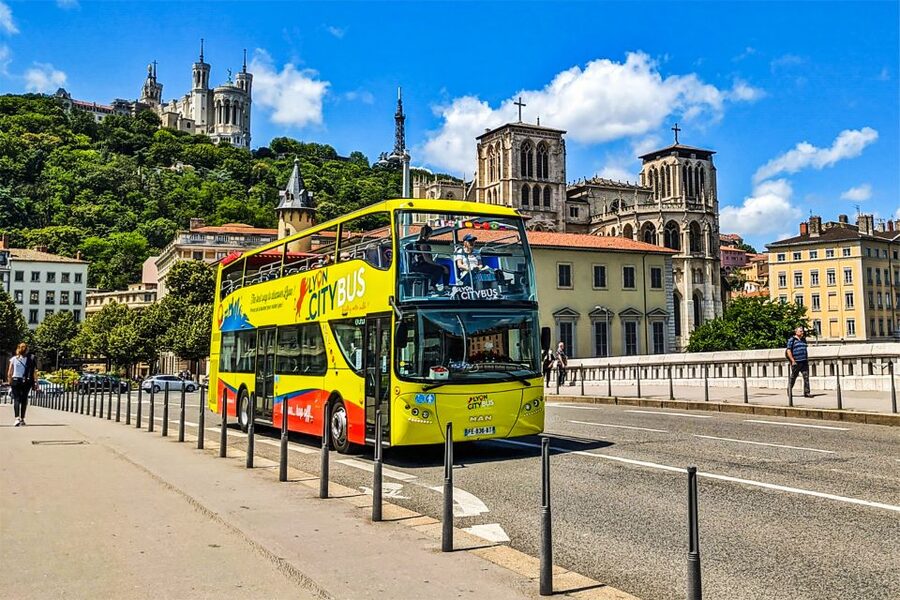
The tour doesn’t treat art as an afterthought. You get two mural-related stops that add a human, modern layer to the classic sightseeing list.
Fresque des Lyonnais and Mur Peint are both on the route, and together they make the city feel less like a museum and more like a living place. One is listed right on the schedule as a painted wall stop, and the other is identified as the mural area facing 49 Quai St Vincent. If you’re the type who likes photos that feel specific to Lyon, these are the stops that make your shots less generic.
A useful way to plan these stops: don’t rush them for the bus timing. The murals are the kind of thing that benefit from a brief stop where you can step back, look up, then come closer. If you’re only trying to catch the next route quickly, you’ll miss the details that make these murals memorable.
Also keep your head up on the open-top ride. From the bus, you can often catch mural views and riverfront cues even when you don’t hop off. That’s one advantage of this format: you’re building awareness even on pass-by stretches.
Fourvière: Basilica Views, Theatres, and That Big Hill Feeling
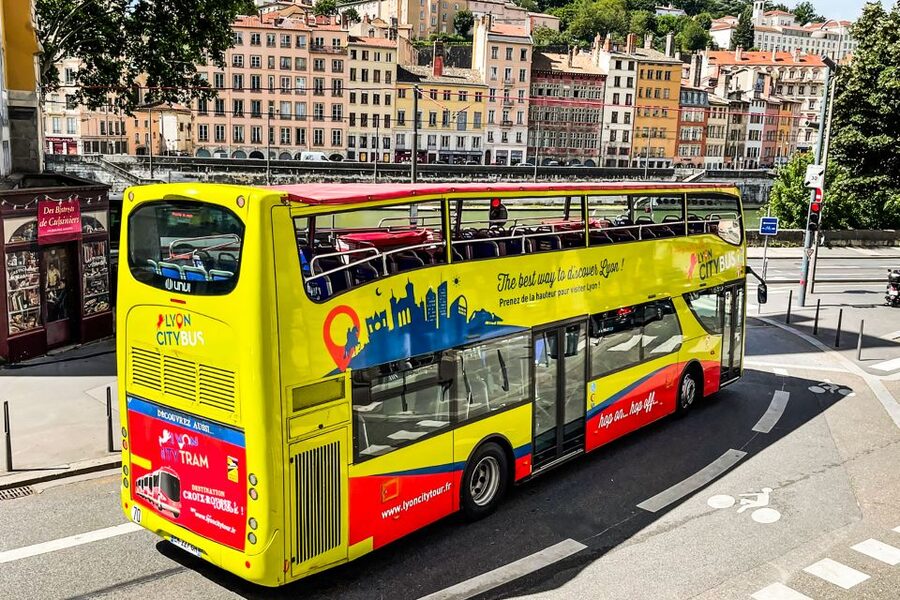
Fourvière is the star. It’s on the route as a dedicated stop (Fourvière: 3 Place de Fourvière) and it’s why many people choose a hop-on hop-off bus in the first place. Lyon’s topography is part of the charm, and Fourvière sits above it all. The bus route is designed so you can handle the hill without turning your day into a stamina contest.
This stop cluster also links to the Roman past through the Théâtres Gallo-Romains area (listed at 6 rue de l’Antiquaille). If you’re curious about Lyon before the modern skyline, this is where you’ll feel that time depth. And if you’re mainly here for the big view, you can focus on the basilica area and use the theatres stop as a bonus if you have energy for a short walk.
One practical tip from the way the route is set up: Fourvière is an area you might skip the most exhausting climbing for, because the bus drops you where you need to be. That doesn’t mean you’ll never walk—Fourvière still rewards foot traffic—but it reduces the “how do I get there” stress.
For best results, plan your Fourvière time as a window, not a quick photo. You’ll want a few minutes to settle into the view and decide what’s worth longer attention—basilica surroundings versus the nearby ancient-feeling areas.
Musée des Confluences: A Different Lyon Side
After the historic core and Fourvière, the route takes you to the Musée des Confluences area (listed at 86 Quai Perrache). This is one of the best “contrast” moves you can make in a single day. You’re shifting from older streets and hilltop views into a modern, river-and-museum vibe.
Even if you don’t go inside the museum (the bus stop puts you right in the vicinity), the Confluence area helps you understand Lyon as more than just old town. You get the sense of a city that grew forward, not just backward. That matters because the best Lyon visits usually include both: the romantic narrow streets and the contemporary river districts.
If you’re short on time, hop off just long enough to get your bearings around the museum area and snap a photo or two from nearby vantage points. If you have more time, this is the stop where a museum visit actually makes sense, because you can build a whole half-hour or hour around it without feeling like you’re running across town.
Getting the Audio Right With REWIND and Your Own Earphones

This tour is audioguided on smartphone through a free app called REWIND. There are no provided earphones, so you need your own. Bring headphones and make sure your phone is charged before you board. If your phone dies, your commentary goes with it.
The format is also flexible in a way that pairs well with hop-on hop-off sightseeing. You can stay on the bus to listen as you pass landmarks, or you can hop off and continue to follow along while you explore nearby streets. That’s a big quality-of-life feature, especially when you want to spend time in Vieux Lyon but still learn what you’re seeing.
There are also some real-world considerations. Some riders reported that audio can glitch or cut out, and a few mentioned that some audio points may not work consistently. So don’t rely on a single moment of audio to make or break your experience. If something sounds off, step back to a stable signal area, check that your app is playing, and continue. If you’re the kind of traveler who hates any tech hiccup, this is the one part of the tour to plan for.
Timing Reality: How to Avoid the Hop-Off Wait Trap
Hop-on hop-off tours live or die by timing. Your route is designed with multiple stops, but buses may not always feel evenly spaced. Some people have described long gaps at certain times and delays after hopping off, which can turn a relaxed day into a waiting game.
Here’s how to protect your day without stress:
- When you hop off, set a rough return time in your head (and don’t make your stop a “maybe I’ll be back soon” situation).
- If you plan a longer walk in Vieux Lyon or a focused visit around Fourvière, give yourself a buffer.
- If you want to see everything, don’t plan all major stops back-to-back. Mix one “big” stop with a pass-by or a short hop.
Also, keep an eye on seasonal departure times. For winter 2025 departures from Place Bellecour, times listed are 10 a.m., 12 p.m., 2:30 p.m., and 4:30 p.m. That doesn’t mean those are your only options year-round, but it does mean your day plan should start with the schedule you see for your travel dates.
And yes, the bus moves slow through congested streets. That’s not a flaw in the route—it’s a feature if you treat it as sightseeing rather than transportation. If you try to use it like a metro, you’ll feel the friction.
Stops You’ll Actually Want to Use (and What You Can Skip)
You’ll see 9 stops on the loop, and not every one is meant for a long visit. The trick is deciding what to treat as your “walk stops” versus your “ride-and-look stops.”
For walking time:
- Vieux Lyon: best for wandering on foot
- Fourvière (and nearby theatre area): best for viewpoints and short exploration
- Mur Peint / Fresque des Lyonnais: best if you want close street-art time
For fast orientation or photo snaps:
- Place des Terreaux (pass by)
- Palais de Justice (pass by)
- Musée des Confluences: can be quick or longer, depending on your museum interest
This balance matters because you’re on a loop designed to connect districts, not cram your schedule. If you hop off everywhere and rush everything, you’ll spend the day sprinting between stops. If you pick a few “real time” stops and let the rest be orientation, the tour becomes the smooth, confidence-building intro it’s meant to be.
Price and Value: $29 for One Day or 5€ More for Two
At $29 per person, this is priced like a classic sightseeing add-on. The value question is simple: does it save you from planning and provide enough return for the time you have?
In my view, it does—especially if you’re new to Lyon or you have one full day to cover a lot of ground. The route touches the big must-sees: Fourvière, Vieux Lyon, and the Painted Wall. It also adds Musée des Confluences so you’re not stuck in only one era.
The extra nudge is that you can upgrade to a 2-day pass for 5€ more, valid for two consecutive days. That small jump can be worth it if you want to re-visit a neighborhood without rushing. One day is great for orientation; two days are better for breathing room—especially in Vieux Lyon and around Fourvière, where your mood matters more than your checklist.
If you’re the kind of traveler who plans to revisit areas anyway, the two-day option is where this tour starts to feel like a real bargain. If you know you’ll be out walking most of the time and only need a quick intro, the one-day pass should be enough.
Who This Tour Fits Best in Lyon
This bus tour is a great match if you want:
- a fast orientation across old and newer Lyon
- easy access to the Fourvière hill area
- a simple way to create a sightseeing plan without complicated logistics
- smartphone audio so you can walk and still learn
It may be less ideal if you expect the bus to be your fastest way around town. The route is scenic, not speedy. And if you get easily bothered by tech audio hiccups, make sure your phone and headphones are dependable before you start.
If you’re traveling with mixed energy levels—someone who wants views, someone who wants old streets—hop-on hop-off format tends to reduce arguments. You each get your own pacing while still staying together around the same route.
Should You Book This Lyon Hop-On Hop-Off Bus Tour?
Book it if you want a practical first-day plan that hits Lyon’s headline sights without requiring a complicated route map. $29 is reasonable for a one-day overview, and the extra 5€ for a two-day consecutive pass is the smart move if you want time to actually linger in Vieux Lyon and absorb Fourvière properly.
Skip or reconsider if you’re traveling when you can’t tolerate delays, or if you’re expecting a bus that works like a rapid transit system. This is best treated as sightseeing with stops that let you shape your day.
FAQ
Where is the meeting point?
Meet at 15 Place Bellecour, Lyon.
How long is the pass valid?
You can choose a 1-day or 2-day pass. The 2-day pass is valid for two consecutive days.
Do I need headphones for the audio guide?
Yes. The tour uses a smartphone app called REWIND for audio commentary, and you’ll need your own headphones (single-use earphones are not included).
What are the main places you can see?
Key highlights along the route include Basilica Notre-Dame de Fourvière, the Painted Wall (la Fresque des Lyonnais), Vieux Lyon, and stops near Musée des Confluences. There are also stops for Théâtres Gallo-Romains and the Mur Peint area.
Is the bus wheelchair accessible?
Yes, the tour is wheelchair accessible.
What should I bring, and what is not allowed?
Bring your passport or ID card, sun hat, headphones, and a charged smartphone. The tour rules say no smoking, food (including food in the vehicle), bikes, and alcohol or drugs (including alcoholic drinks in the vehicle).