
This is an easy way to see Mexico City fast. With a hop-on hop-off setup and three circuits from downtown to Polanco and south, you get a practical overview without building a complicated day plan.
What I really like is the mix of big-name monuments and real neighborhoods. You’ll pass the energy of Reforma Avenue and the leafy, photo-friendly stretch around Roma, Condesa, and Polanco, then swap to the more historical feel near major temples and museums.
One thing to consider: the audio experience depends on the onboard setup. Also, headphones aren’t included, and there’s a recent report of unstable audio in English when the connection wouldn’t hold.
In This Review
- Key highlights that matter before you ride
- How the hop-on hop-off bus experience really works
- One ticket, three circuits: Green, Yellow, Blue
- Green Circuit (Downtown to Polanco): Zócalo views and Reforma’s big monuments
- Yellow Circuit (Downtown to Temples): Museums, Guadalupe area, and the Benito Juárez Hemicycle
- Blue Circuit (Downtown to the South): Coyoacán’s art stops, San Ángel parks, and UNAM
- Audio guide and the headphone reality check
- Getting your day to flow in a city that loves traffic
- Price and value: is $20 a good deal?
- Who this bus tour is best for
- Should you book this Mexico City hop-on hop-off bus tour?
- FAQ
- FAQ
- Where do I meet the tour staff?
- How long is the ticket valid?
- How many circuits are included?
- Which circuits cover which areas?
- Is the bus tour wheelchair accessible?
- Are hotel pickup and drop-off included?
- Is the on-board audio guide included?
- Do I need headphones?
- What should I bring with me?
- Is the tour affected by road events on Sundays?
- What is not allowed on the bus?
Key highlights that matter before you ride

- One day / 24 hours on a single ticket, starting when you first activate it
- Three circuits (Green, Yellow, Blue) so you can tailor your day and skip what you don’t want
- On-board audio guide that helps you connect what you see—streets, monuments, and the story behind them
- Downtown viewpoints like a panoramic look over the Zócalo area and famous landmarks along Reforma
- Souvenir-level sights with real walking options, including Coyoacán and UNAM-area stops
How the hop-on hop-off bus experience really works

Think of this as your moving orientation desk for Mexico City. Instead of zigzagging across the city with taxis or trying to read the streets yourself, you stay on the route you choose, get off to explore, then hop back on later at the next stop.
You get access to all three circuits with one day ticket. That’s the value play here: rather than paying separately for different routes or committing to one strict itinerary, you can build a day that makes sense based on your energy level and what you feel like seeing.
The tour takes place rain or shine, so bring clothes you can tolerate in heat and sudden drizzle. You’re also not allowed to bring food, drinks, or umbrellas onto the bus, so plan hydration and snacks before you board (or be ready to buy elsewhere between stops).
One ticket, three circuits: Green, Yellow, Blue

Your day is built around three routes that cover different parts of the city. The names help you keep your bearings:
- Circuit 1 (Green): Downtown – Polanco
This one is your sights-and-streets tour—downtown views, Reforma Avenue, and stylish neighborhoods like Roma and Condesa.
- Circuit 3 (Yellow): Downtown – Temples
More classic Mexico City history energy: major museums, the Basilica of Guadalupe area, and key monuments tied to national story.
- Circuit 4 (Blue): Downtown – South
This is where you head toward Coyoacán, Frida Kahlo’s Blue House Museum area, San Ángel, and the UNAM campus world.
A smart way to use this: treat the green circuit as your “first overview,” the yellow circuit as your “history hit,” and the blue circuit as your “slower, artsy-and-campus” day portion. You can do all three if you’re ambitious, or pick one and still feel like you got a full day out of it.
Green Circuit (Downtown to Polanco): Zócalo views and Reforma’s big monuments
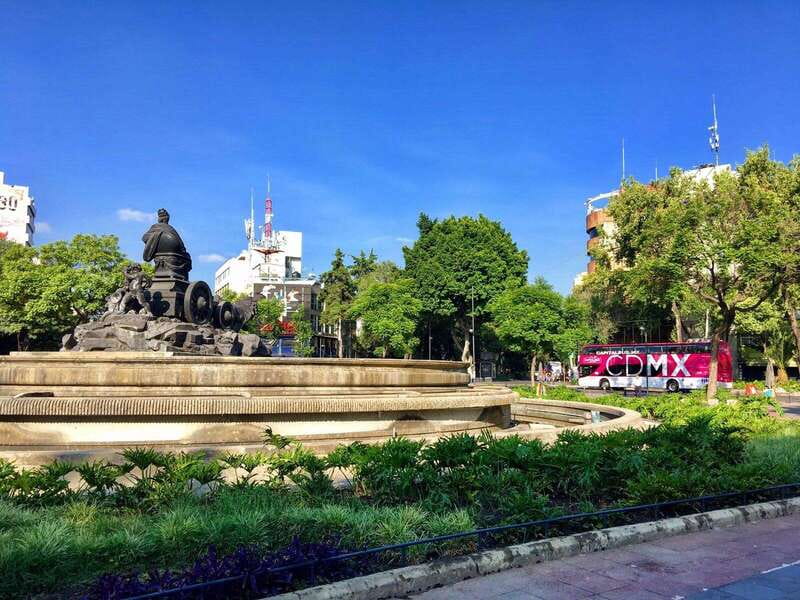
This route is designed for the moments you’ll want photos of—and for the sense of how Mexico City is laid out.
Start with the panoramic view of the Zócalo area. Even if you’ve seen it on screens before, seeing it from the bus gives you quick scale. It helps you understand how downtown anchors the city and why so many major streets radiate out from that core.
Then the bus brings you along Reforma Avenue, where the architecture shifts from classic to modern and the monuments feel placed on purpose. On this circuit, you’ll pass landmark stops including:
- The Angel of Independence
- Diana the Huntress
Those names are famous for a reason. The value here isn’t just the monument itself—it’s the way the bus route strings them together so you understand the boulevard’s role as a spine of the city. You’re not hunting each site one-by-one; the route carries you.
From there, the bus heads through Roma, Condesa, and Polanco. These neighborhoods aren’t just places to pass through; they’re the kind of areas where you’ll want to step off for a short walk, look at street life, and notice the different vibes—tree-lined blocks, elegant façades, and that more polished rhythm compared to downtown.
Tip: if you’re getting off near Reforma, give yourself time to walk a few blocks after you get off the bus. The streets nearby are part of the experience, not just the monument.
Yellow Circuit (Downtown to Temples): Museums, Guadalupe area, and the Benito Juárez Hemicycle
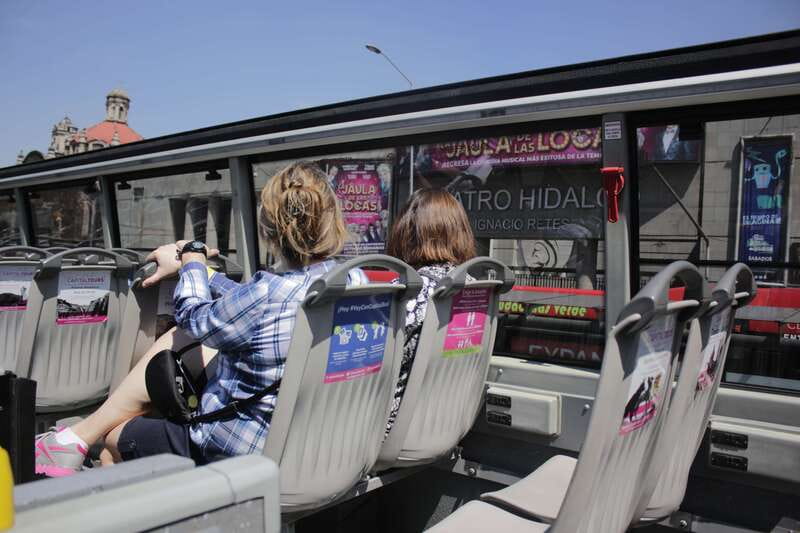
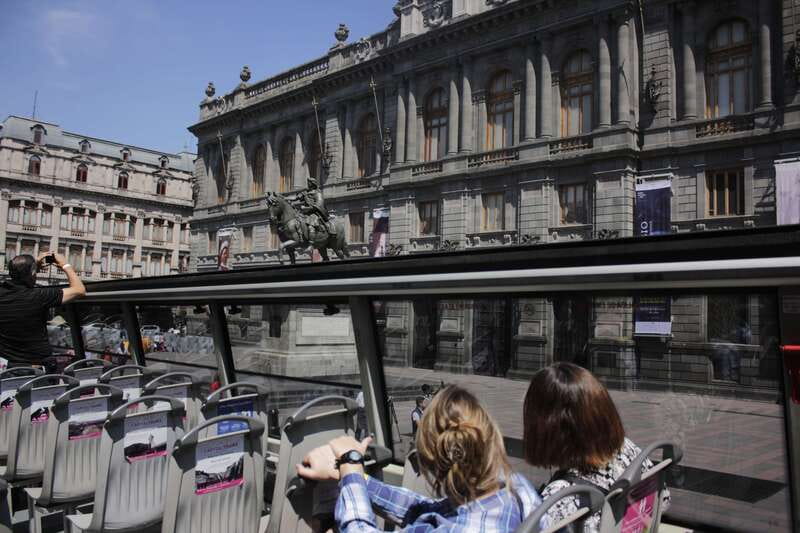
If Green is your “main boulevard” circuit, Yellow is your “national story” circuit. You’ll see buildings with a heavier historical role, spread across stops that feel like chapters.
A couple of key stops to look for include the Franz Mayer Museum. Even if you don’t go inside, the museum stop works well as a planning anchor. It puts you near the cultural core so you can decide on-the-spot whether you want to trade bus time for museum time.
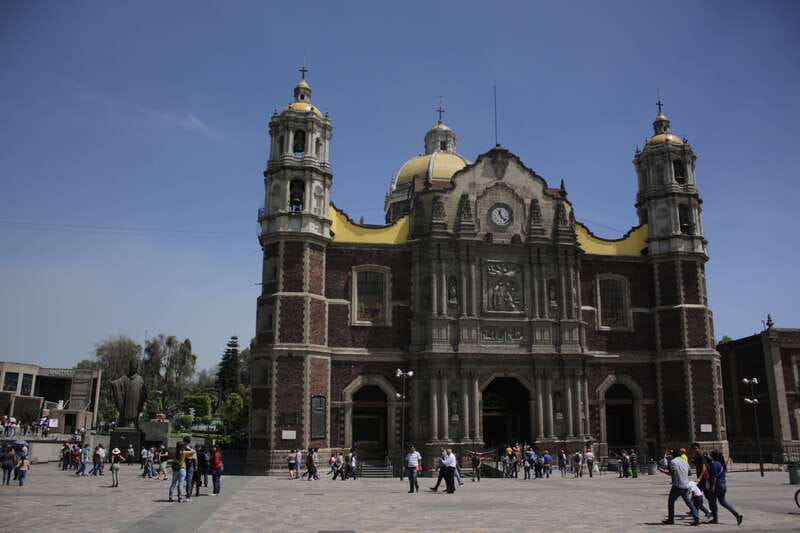
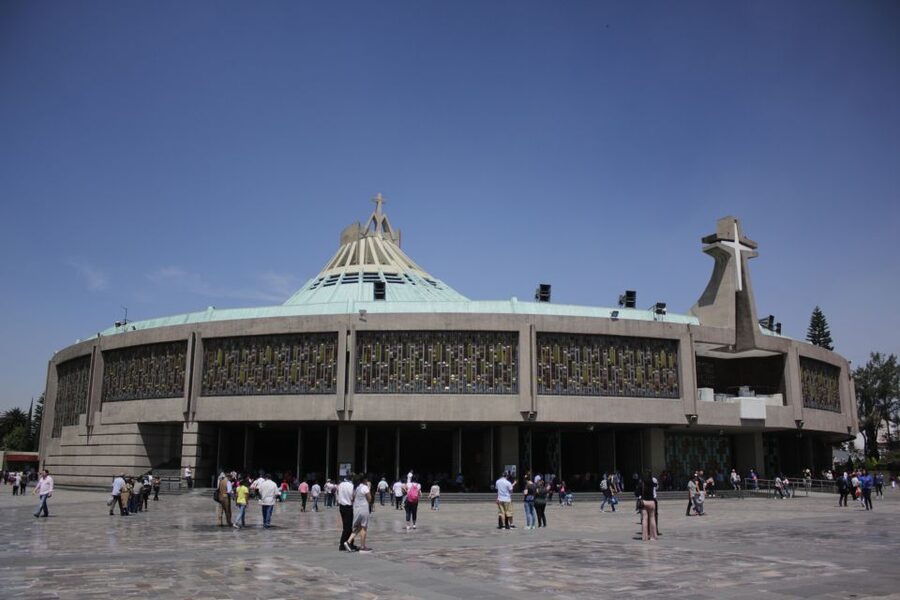
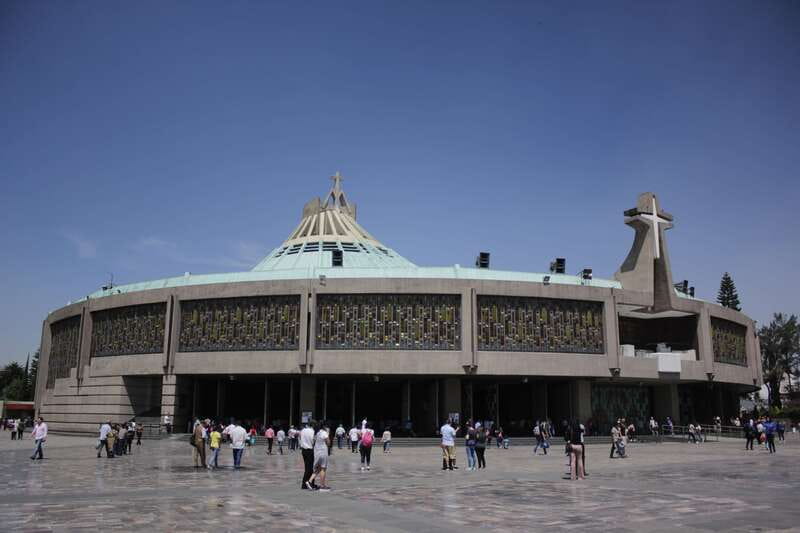
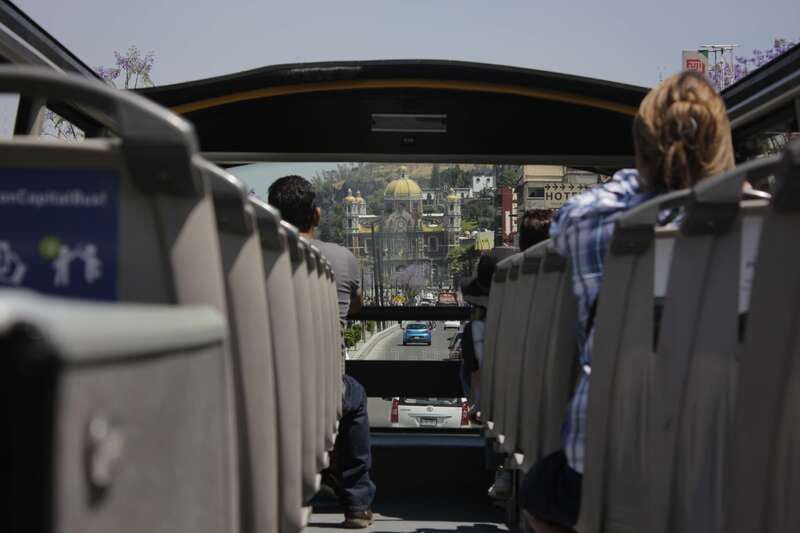
Then the route focuses on major religious and civic landmarks. You’ll pass the Basilica of Guadalupe area and also the Temple of San Judas Tadeo. These aren’t the kind of stops you skim. They pull you into the lived religion of Mexico City—people arriving, pausing, praying, and moving through the space like it matters in daily life.
One more major name on this circuit: the Benito Juárez Hemicycle. This is where the tour’s “history” theme feels especially tied to the country’s political identity. It’s a memorable monument to see from the bus because you get context from the surrounding civic layout—how monuments reflect what a society chooses to honor in public.
Why this circuit is worth your time: it’s not trying to be everything. It’s picking powerful landmarks and organizing them into a route so you don’t waste hours crossing the city just to reach one or two meaningful sites.
Blue Circuit (Downtown to the South): Coyoacán’s art stops, San Ángel parks, and UNAM
This route changes the mood. You move toward the south side, where the vibe feels more neighborhood and campus-adjacent than downtown-heavy.
The star here is Coyoacán, including the area where you can visit Frida Kahlo’s Blue House Museum. Even if you don’t go inside immediately, stepping off for a bit can help you understand why this neighborhood is so strongly tied to Mexican art culture. It’s the kind of place where the streets themselves feel like they belong to the story.
Next up: San Ángel and its parks. The route includes stops around the area’s green spaces, which is a nice break from monument-hunting. If your feet need a breather, this is where you can trade standing in traffic fumes for walking through calmer park surroundings.
Finally, you reach the National Autonomous University of Mexico (UNAM) campus area. A university stop sounds plain until you’re standing near one in Mexico City. It adds youthful energy and a different city rhythm. You’ll also get a sense of how much institutions shape daily life here.
This is a great circuit if you want variety. It’s the one that gives you a chance to slow down and explore at walking pace rather than rushing from viewpoint to viewpoint.
Audio guide and the headphone reality check
The tour includes an on-board audio guide, which is one of the most useful parts of a bus tour like this. When it works well, it turns each stop into something more than a photo moment by explaining what you’re seeing—monuments, streets, and the historical angle behind them.
But here’s the practical part: headphones are not included. Bring your own wired earbuds or any headphone that fits your device needs. If you forget, you’ll lose the point of the audio layer.
Also, keep in mind that audio reliability can be affected by the bus system. There’s at least one recent report of unstable audio playback in English, where the connection wouldn’t hold. I can’t promise what you’ll experience, but I’d still plan for the day with a backup approach: read a quick site rundown on your phone before you board, and use the audio as a bonus rather than your only source of context.
Getting your day to flow in a city that loves traffic
Mexico City is big, and the bus helps because it gives you a loop structure. But the real time-saver is not just riding—it’s deciding when to get off and how long to stay.
Here’s how I’d time it:
- Do at least one “anchor” stop early (Zócalo panoramic view or one of the Reforma monuments).
- Midday, aim for a more relaxed neighborhood segment (Roma/Condesa/Polanco for walking; San Ángel parks for breathing room).
- Late in the day, do the circuit that matches your stamina: Yellow for history-heavy monuments, Blue for Coyoacán/UNAM energy.
Since circuits are done on specific routes and you’re hopping on and off across different areas, give yourself wiggle room. Don’t stack three long museum-style stops in a row unless you know you’re up for serious walking.
One more schedule detail that matters: on Sundays from 08:00 to 14:00, Mexico City’s Ciclotón event affects roads. The buses use alternative streets during that window. That usually means your route may shift slightly, so don’t panic if the bus doesn’t take the exact same road line you expected.
Price and value: is $20 a good deal?
At about $20 per person for a 1-day ticket valid 24 hours (from first activation), this isn’t priced like a single attraction. It’s priced like a transport + orientation package.
You should think of the value in three layers:
- You’re covering three areas of the city with one ticket (Green, Yellow, Blue).
- You’re reducing navigation stress—no constant rides between far-apart sights.
- You’re adding context through the audio guide, as long as you can listen with your headphones.
You’ll get the best value if you actually hop off multiple times. If you stay on the bus the whole ride without exploring, it can start to feel like an expensive view pass. If you hop off for short walks—Reforma monuments, a neighborhood block or two, and at least one major stop you care about—then it feels like a bargain.
It also suits travelers who want flexibility. No hotel pickup is included, which means you control your start point and pacing.
Who this bus tour is best for
This is a strong fit for:
- First-timers who want a quick, guided sense of Mexico City’s structure
- Travelers who like seeing famous monuments but also want neighborhood exposure (Roma/Condesa/Polanco, San Ángel, Coyoacán)
- People who don’t want to plan a complex day of transfers between scattered sites
- Anyone who enjoys learning through an audio guide while moving through the city
It might feel less ideal for:
- Travelers who want a deep museum experience at every stop (a hop-on bus is best for seeing and choosing)
- Anyone who relies on the audio being perfect and prefers zero tech risk
Should you book this Mexico City hop-on hop-off bus tour?
If you want a practical first-day plan, I’d book it. The three-circuit layout is the key. It’s built to let you taste different parts of Mexico City without wasting half your trip figuring out where you are.
I’d book it especially if you’re aiming to hit major sights like Reforma’s monuments, the Guadalupe area, and the Coyoacán/UNAM side in one trip window. The price makes sense when you treat it as transport plus context—then get off and actually explore on foot.
Just go in with two smart prep steps: bring your own headphones, and plan for the fact that Sunday road changes (Ciclotón) can alter the road path.
FAQ
FAQ
Where do I meet the tour staff?
Meet staff wearing pink vests. They’ll validate your reservation and give directions. Arrive about 10 minutes early to exchange your reservation for the bracelet.
How long is the ticket valid?
Your ticket is valid for 1 day (24 hours) starting from when you first activate it.
How many circuits are included?
You get access to 3 different tour circuits in one day ticket.
Which circuits cover which areas?
Circuit 1 (Green) covers Downtown to Polanco with major Reforma Avenue monuments and neighborhoods like Roma and Condesa. Circuit 3 (Yellow) focuses on Downtown temples and key sites such as the Basilica of Guadalupe area and the Benito Juárez Hemicycle. Circuit 4 (Blue) covers Downtown to the South, including Coyoacán, San Ángel, and UNAM.
Is the bus tour wheelchair accessible?
Yes, the tour is wheelchair accessible.
Are hotel pickup and drop-off included?
No. Hotel pickup and drop-off are not included.
Is the on-board audio guide included?
Yes, an on-board audio guide is included.
Do I need headphones?
Yes. Headphones are not included, so bring your own if you want to listen.
What should I bring with me?
Bring a passport or ID card, a sun hat, and comfortable clothes.
Is the tour affected by road events on Sundays?
Yes. On Sundays from 08:00 to 14:00, the bus uses alternative streets due to Mexico City’s Ciclotón.
What is not allowed on the bus?
Pets are not allowed (assistance dogs are allowed). Also, food, drinks, and umbrellas are not allowed.