Milwaukee changes fast when you know where to look. This small-group sightseeing mix of walking and driving hits downtown landmarks, river culture, and newer neighborhood energy in just 2 hours, led by Mike. I like the way the tour gives you an honest sense of the city’s “then and now,” from City Hall-era grandeur to modern Milwaukee stops.
My favorite part is the pacing: you start on foot for the key sights, then switch to the bus so you cover more ground without feeling rushed. Highlights you’ll get time for include Black Cat Alley street art, a lakeside stop at the North Point Lighthouse, and a break near the Milwaukee Public Market so you can reset.
One thing to consider: there is some walking, and the time on the ground is limited—so if you want long, slow photo sessions at every house or landmark, you’ll have to pick your moments.
In This Review
- Key highlights you’ll feel on this tour
- A 2-hour Milwaukee orientation that fits a tight schedule
- Start at City Hall: a downtown walk with big-city landmarks
- From downtown to the river, you learn the story behind the shape
- Museum Mile and the East Side: public art meets modern Milwaukee
- Black Cat Alley: street art you can actually see up close
- Water Tower District and the Frank Lloyd Wright connection
- Lake Park to the North Point Lighthouse: Lake Michigan with room to breathe
- The Milwaukee Art Museum area and the Hollywood link
- Third Ward and Milwaukee Public Market: where time for food makes sense
- The return downtown: Pabst Brewing and Fiserv Forum
- Price and logistics: is $45 worth it for 2 hours?
- Weather and walking: what to plan for
- Who this tour suits best (and who should think twice)
- Should you book this Milwaukee sightseeing bus tour?
- FAQ
- How long is the Milwaukee sightseeing bus tour?
- How much does the tour cost?
- Where do I meet the tour?
- Is hotel pickup included?
- What stops can I expect to see?
- Is the tour in English?
- Is the tour affected by weather?
Key highlights you’ll feel on this tour
- A true 2-hour orientation that stitches together downtown, lakeshore, and the East Side
- Black Cat Alley street art as a real stop, not just a drive-by
- North Point Lighthouse views over Lake Michigan from Milwaukee’s Lake Park area
- Third Ward + Milwaukee Public Market timing for a restroom break and a snack
- Guide Mike’s humor and delivery that makes facts easier to remember
A 2-hour Milwaukee orientation that fits a tight schedule
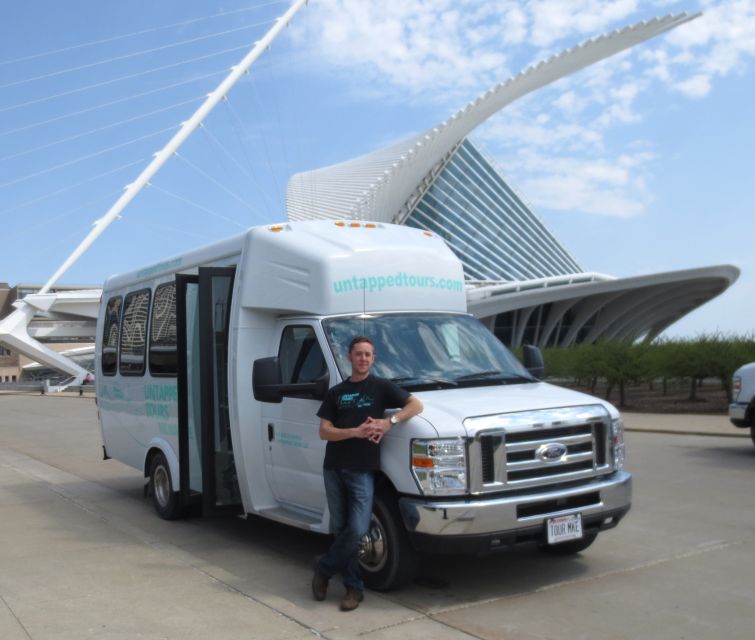
If Milwaukee is one of several cities on your trip, this tour is made for you. You’ll cover a lot of territory in 120 minutes without having to plan every turn yourself. It also helps you understand how neighborhoods evolved—why certain buildings look the way they do, and why people hang out where they do today.
What makes it work is the rhythm. You don’t just sit on a bus and stare out the window. You get short walks where they matter, and you get bus time where looking from the road is smarter than marching.
Best of all, this tour gives you a map in your head. After it, you’ll know which areas are for history, which are for views, and which are for food and casual exploring.
Start at City Hall: a downtown walk with big-city landmarks
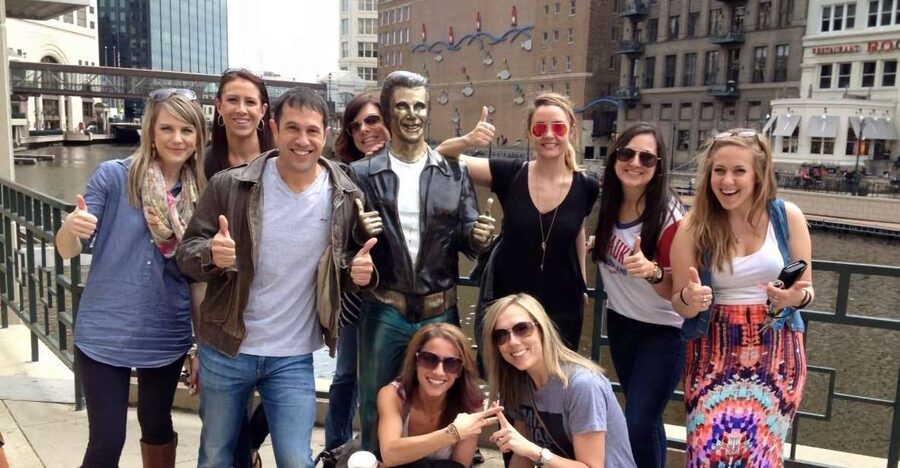
The meeting point is Milwaukee City Hall, under the clock tower in front of the gold sculpture at the corner of Water and Wells Street. That location is perfect because it anchors the whole experience in the city’s core.
From there, you’ll begin with a downtown walk that sets the tone fast. You’ll see the stately City Hall building, completed in 1895, which helps you understand how Milwaukee wanted to present itself when it was growing quickly. You’ll also pass by the landmark Pabst Theatre, another major downtown marker that connects the city’s cultural ambitions to its history.
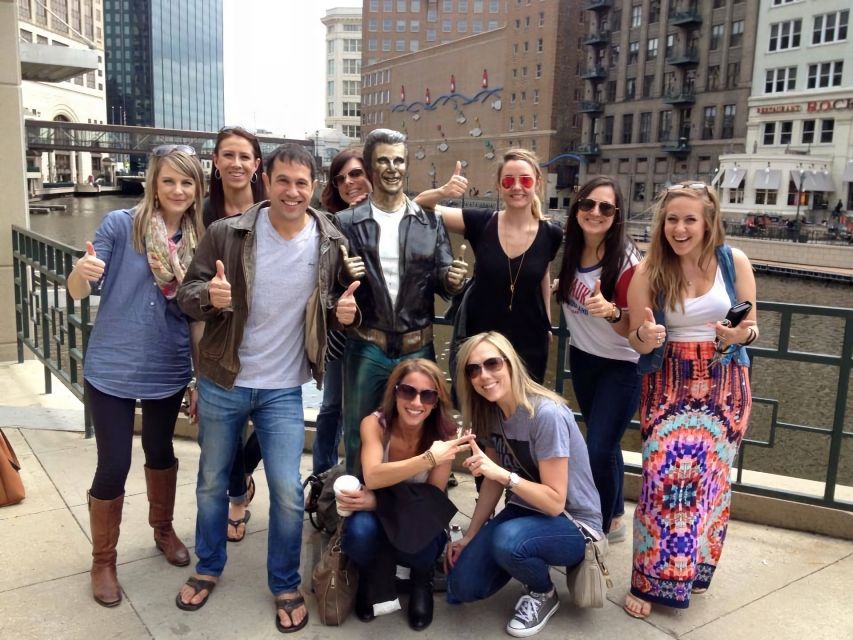
Then the walk turns toward the river. You’ll stroll along the water and catch a glimpse of a bronze casting of a 70s TV hero. It’s one of those small public-art moments that says a lot about Milwaukee’s sense of humor and how the city likes to place pop culture in shared spaces.
This walking start is smart. It’s early, so your legs are fresh, and it’s focused on sights that are hard to appreciate from inside a moving vehicle.
From downtown to the river, you learn the story behind the shape
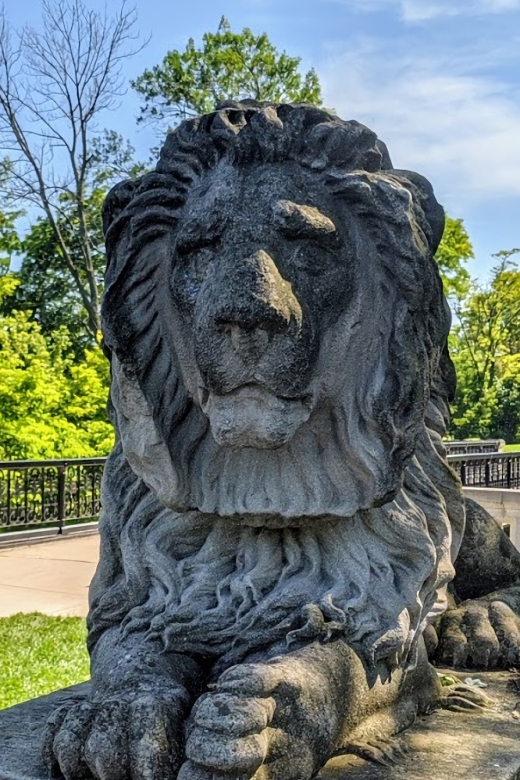
Once you’re back outside downtown landmarks, the tour starts layering context. On the driving portion, you’ll hear about Milwaukee’s history—moving from Indigenous presence to the French fur traders who helped shape the modern city.
You’ll also get a quick look at Milwaukee as a city that collects art in public spaces. As you drive past Sculpture Milwaukee, you’ll see an outdoor exhibition featuring art from around the world. Even if you’re not the kind of person who stops to read every plaque, the stop matters because it frames Milwaukee as a place where art shows up in everyday streets—not only in museums.
And this is where the guide shines. Mike’s explanations come with clear, conversational pacing, plus humor that keeps the facts from turning into a textbook.
Museum Mile and the East Side: public art meets modern Milwaukee
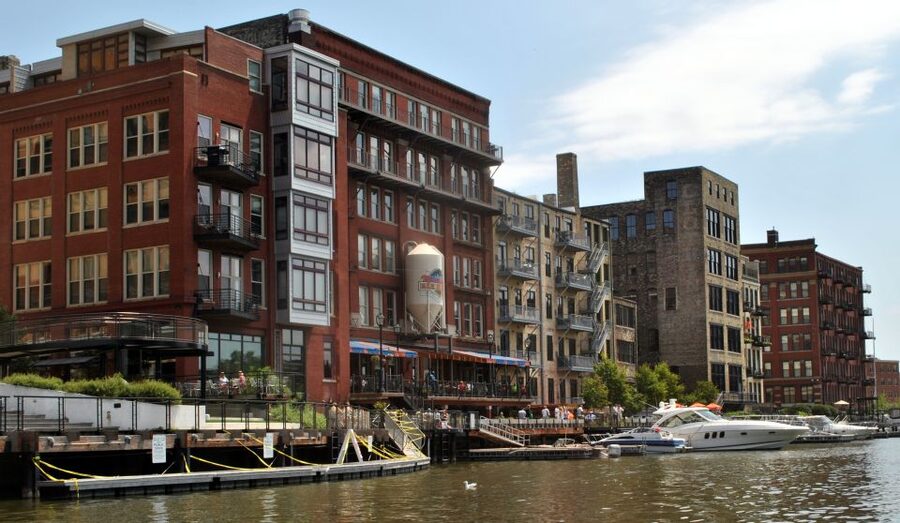
Heading north, you pass through the area near Museum Mile on the trendy East Side. The tour doesn’t ask you to pick a single interest; it steers you toward the pattern Milwaukee follows—neighborhoods shaped by industry and immigration, then gradually repurposed into places for dining, shopping, and culture.
You’ll also drive through a neighborhood with bars, restaurants, and local shops. That’s useful even if you don’t stop there, because it gives you a sense of where the city feels most social day to day.
Next comes one of the stops that feels very Milwaukee: Black Cat Alley.
Black Cat Alley: street art you can actually see up close
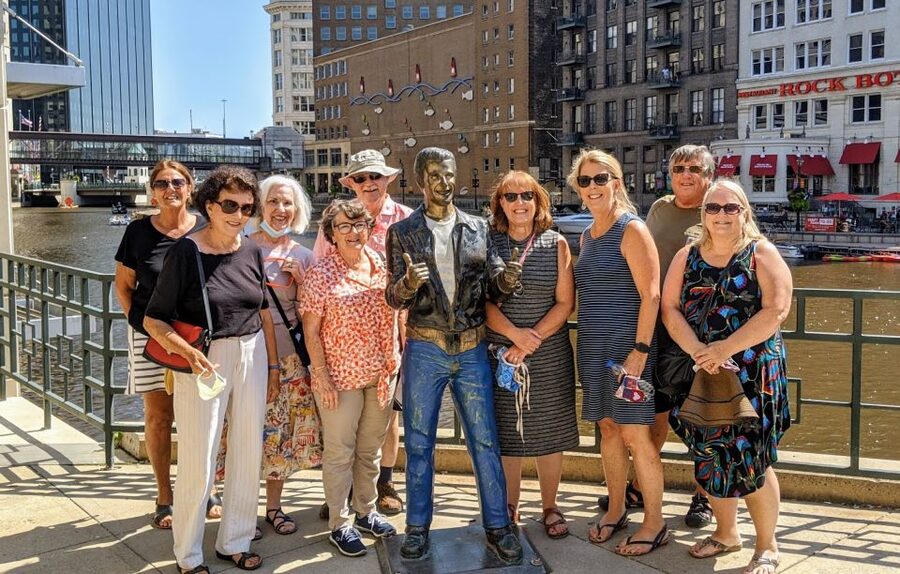
The first real stop on the driving route is at Black Cat Alley, described as Milwaukee’s premier street art gallery. This is the part of the itinerary that’s more hands-on than sightseeing-from-the-curb.
Street art is one of those things that can feel hit-or-miss if you only glance at it. Here, you’ll be able to slow down and take it in at walking speed. It’s also a great “texture” stop: it shows a different side of Milwaukee than the more formal architecture downtown.
I like this kind of stop because it helps you remember the city by details, not just big landmarks. After Black Cat Alley, the rest of the tour tends to make more sense, because you start seeing how Milwaukee uses art and identity to reinvent itself.
Water Tower District and the Frank Lloyd Wright connection
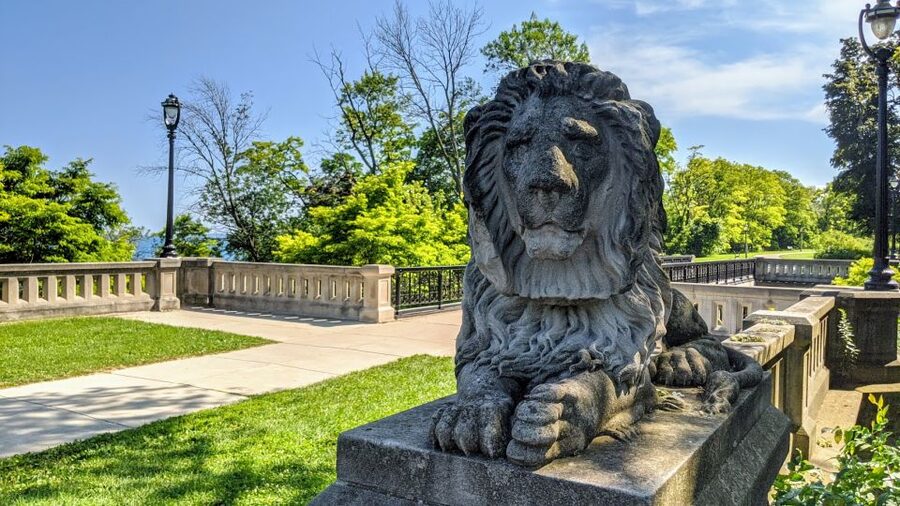
After Black Cat Alley, you’ll get back on the bus and enter the Water Tower District. From the road, you’ll glimpse homes of beer barons and industrialists—big, historic residences tied to Milwaukee’s brewing and manufacturing influence.
One standout detail here is the mention of a house designed by Frank Lloyd Wright. That’s the kind of fact that makes a short viewing feel meaningful. You’re not touring inside a Wright building (not stated), but you are seeing how Milwaukee connects local neighborhoods to famous architecture.
This stretch is also where you’ll start noticing how the tour balances old-school prestige with Milwaukee’s modern neighborhoods nearby. It’s a visual bridge.
Lake Park to the North Point Lighthouse: Lake Michigan with room to breathe
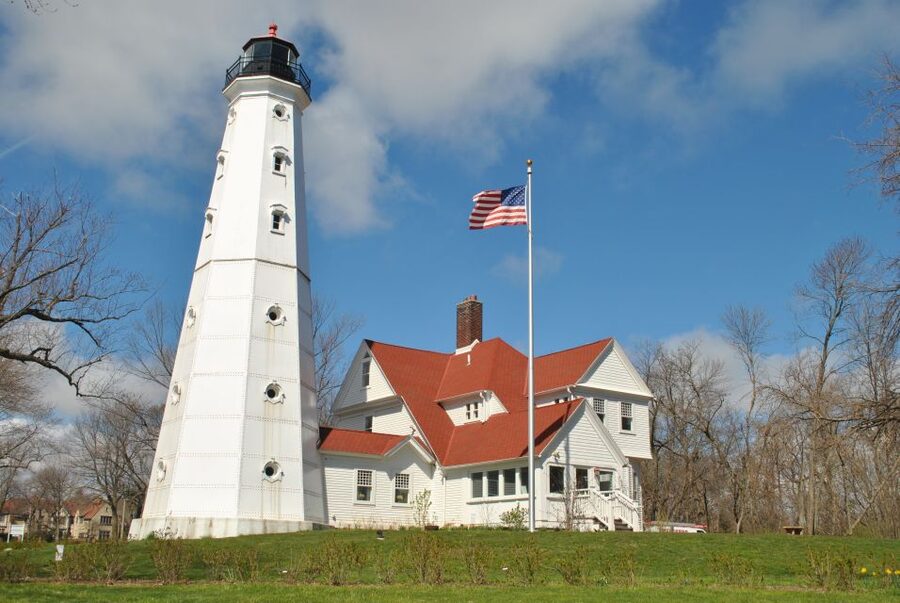
Next up is North Point Lighthouse in the Lake Park area. This stop is built around one of the simplest pleasures in Milwaukee: a strong view over Lake Michigan.
The tour also drives along the lakeshore toward the Milwaukee Art Museum, so even if you don’t have a long museum visit (the tour is short by design), you still get that “where am I?” sense that the lakefront provides. It’s also a nice change of pace—more open space, more sky, and fewer city blocks.
If you’re the type who likes to take a few photos and then move on, this is your stop. You get the payoff without losing half a day to planning and logistics.
The Milwaukee Art Museum area and the Hollywood link
The Milwaukee Art Museum is one of those places that many people recognize even if they’ve never visited. The tour notes it has appeared in multiple Hollywood hits, including Bridesmaids. That matters because it gives you a pop-culture anchor while you’re looking at a serious cultural institution.
You won’t get an in-depth museum experience here. This tour is for orientation. But seeing the museum from the outside and hearing why it’s famous helps you decide whether you want to come back later.
And you’ll likely want to. The point of this tour is to help you know what to prioritize next, not to cram everything into one day.
Third Ward and Milwaukee Public Market: where time for food makes sense
As you move along, you’ll pass by the Henry Maier Festival Grounds and then reach the Third Ward. This area is highlighted as a revitalized former industrial district—now a place with restaurants, theaters, and a real “go here for things to do” vibe.
One of the smartest touches is the quick stop near Milwaukee Public Market. The tour gives you time for a restroom and the option for a snack and drink. That matters more than it sounds, because a 2-hour tour can feel longer if you’re dehydrated or stuck needing to find a bathroom later.
Milwaukee Public Market also helps connect the tour’s themes: history, reuse, and present-day local life. You can grab something small, then use the tour’s stop list to decide where you’d like a longer visit afterward.
The return downtown: Pabst Brewing and Fiserv Forum
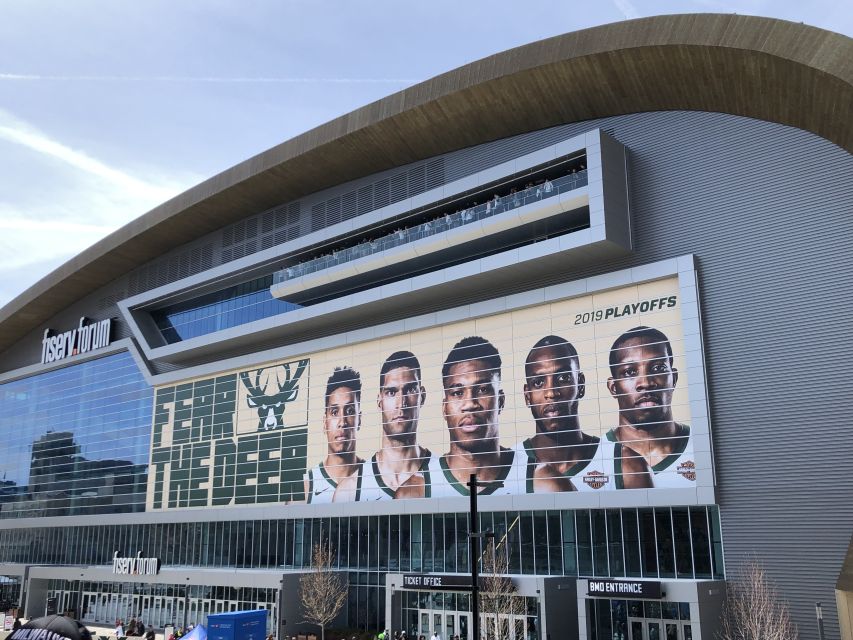
Heading back, the bus passes by the Pabst Brewing Company and Fiserv Forum Arena, home of the Milwaukee Bucks. These are big identity markers for Milwaukee—brewing as a legacy, sports as a shared modern experience.
Then you return to the City Hall area to conclude the tour. By the end, you’ve got a clear idea of how far-flung neighborhoods connect—and where you’d like to walk more on your own.
This is a tour I recommend early in your trip. It helps you stop “wandering” and start choosing.
Price and logistics: is $45 worth it for 2 hours?
At $45 per person, this tour lands in the mid-range for a guided city overview. Here’s why it can still feel like good value: transportation and a live guide are included, and the itinerary is designed to cover multiple neighborhood zones in a short time window.
It also stays small—each tour is limited to 14 guests—which usually means you’re not fighting for attention at every stop. The transportation quality is also strong, with 92% of reviewers giving it a perfect score, which tells you the ride itself is part of the experience, not a chore.
One practical note: there’s no hotel pickup or drop-off. You’ll meet at City Hall and then finish there, so plan to connect this with whatever else you’re doing nearby.
Weather and walking: what to plan for
The tour runs in all weather. That’s great for flexibility, but it also means you should dress for real conditions, not optimistic forecasts. Bring a layer and wear shoes that handle sidewalks and short stretches of walking.
Some walking is involved, but it’s not a multi-hour hike. The walking segments are focused on key downtown landmarks and river access, while the bus handles distance between neighborhoods.
Also, remember that you have limited time at each spot. You’ll see a lot, but you won’t get long stays everywhere—so if you have a must-see, aim to enjoy that stop fully and let the others set context.
Who this tour suits best (and who should think twice)
This is ideal if:
- You’re visiting Milwaukee for a short time and want a guided orientation.
- You like neighborhood context, not just individual photo stops.
- You want a guide who connects landmarks to stories and keeps it fun—Mike’s delivery is a major part of the experience.
You might rethink booking if:
- You don’t do well with any walking at all.
- You’re the type who wants extended time at museums or private attractions.
- You only care about one specific site and want a focused itinerary rather than a wide sweep.
For most people, the tradeoff is worth it. You’ll leave knowing where to go next, instead of starting from zero.
Should you book this Milwaukee sightseeing bus tour?
Yes, if you want a quick, well-paced overview that helps you plan your next moves. The combination of downtown walking, a street art stop at Black Cat Alley, a scenic lakeside break at North Point Lighthouse, and time near Milwaukee Public Market makes the 2 hours feel like it has real structure, not just random stops.
If you’re going to Milwaukee for the first time, this is a strong early booking. It gives you bearings fast, and it helps you avoid spending precious time figuring out what matters.
If you’re visiting for the long haul, consider it as your kickoff. You’ll get the map in your head first, then decide what deserves your second visit.
FAQ
How long is the Milwaukee sightseeing bus tour?
The tour lasts 2 hours.
How much does the tour cost?
It costs $45 per person.
Where do I meet the tour?
You meet at Milwaukee City Hall, underneath the clock tower in front of the gold sculpture at the corner of Water and Wells Street.
Is hotel pickup included?
No. Hotel pick-up and drop-off are not included.
What stops can I expect to see?
The route includes downtown sights plus stops such as Black Cat Alley, North Point Lighthouse, Milwaukee Art Museum area, the Third Ward / Milwaukee Public Market area, and passes by Pabst Brewing Company and Fiserv Forum.
Is the tour in English?
Yes. The tour has a live guide in English.
Is the tour affected by weather?
It operates in all weather, so you should dress appropriately for conditions.
If you want, tell me your travel dates and what you care about most (architecture, food, breweries, lake views, or sports). I can suggest the best order to do the rest of your Milwaukee day after this tour.