Mt. Fuji and Hakone in one day is the point. This Odakyu Group bus tour strings together Lake Kawaguchi views, a kimono experience, and Hakone’s volcanic Owakudani Valley without the stress of planning. One strong plus is how fast it gets you to the good stuff, starting from Shinjuku at 8:20 am and moving right away. A second plus I like: you get structured photo time with Mt. Fuji, and rain isn’t a deal-breaker because the photo session can move indoors. The main thing to watch is the classic Mt. Fuji condition: visibility changes by weather, and the tour notes that refunds won’t be issued if you can’t see it.
What feels most “worth it” is the mix of simple sightseeing and cultural add-ons. You’ll dress in kimono over your regular clothes at Fujisan Plaza, then visit Kawaguchi Asama Shrine and its famous red torii gate approach before heading into Hakone’s steam-and-sulfur zone. If your guide is someone like Maki (from an earlier English tour), you can expect a guided day that’s organized, energetic, and made to help you get the most from each short stop. Still, it’s a full 11-hour day, so you’ll want to like bus travel and compact timing.
Logistics also matter here, and this tour gives you a heads-up. There’s no restroom stop after departure until you reach Fujisan Plaza (about 1.5 hours), so plan ahead and use facilities before the bus leaves. Group size caps at 40, which helps the day feel manageable, but you should also arrive on time—late arrivals can have reservations canceled.
In This Review
- Key highlights to decide fast
- Why this 1-day plan works for most visitors
- The start in Shinjuku: timing and first reality check
- Fujisan Plaza and the kimono moment (what you’re really getting)
- Kawaguchi Asama Shrine: the red torii and the quiet approach
- Lunch at Tabi no Eki Kawaguchiko: flexible, not included
- Oishi Park: where the flowers do the talking
- Owakudani Valley: volcano energy in a controlled time slot
- Odawara and the return choice: back to Shinjuku or end near Hakone
- The real trade-off: short stops versus a full deep-dive day
- Who this tour suits best (and who should skip it)
- Quick practical tips before you go
- Should you book this Mt. Fuji and Hakone 1-day bus tour?
- FAQ
- How long is the Mt. Fuji and Hakone 1 Day Bus Tour + Kimono Experience?
- Where do I meet the tour?
- What time does the tour start?
- Is lunch included in the price?
- Does the tour include kimono dressing?
- What if it rains during the Mt. Fuji photo time?
- Where can I end the tour?
- Is there a restroom stop during the drive to the first location?
Key highlights to decide fast
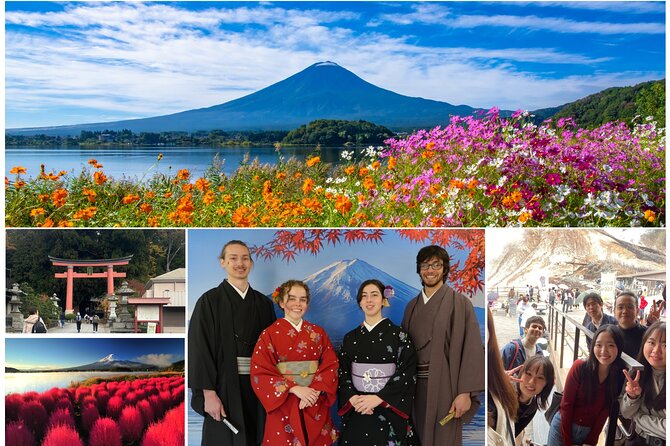
- Kimono dressing at Fujisan Plaza that you wear over your clothes, not as a full outfit overhaul
- Mt. Fuji photo time with an indoor option on rainy days
- Kawaguchi Asama Shrine with a red torii gate and a calm cedar-lined approach
- Owakudani Valley for real volcanic visuals: steaming vents and sulfur hot springs
- Two end options (and a third via Romancecar) so you can shape the day around your next move
- Odakyu Group operation with long-running local expertise in the Mt. Fuji and Hakone area
Why this 1-day plan works for most visitors
A lot of Fuji-and-Hakone plans collapse under the weight of logistics. You end up spending more energy coordinating trains and transfers than actually seeing places. This tour keeps the structure simple: one guided bus day starting in Shinjuku, with a sequence of stops that cover big highlights efficiently.
You’re also buying convenience in a way that matters. The day includes an air-conditioned vehicle, a professional English-speaking guide, and—if you choose it—a reserved seat ticket on the Odakyu Romancecar for the ride back to Shinjuku. That matters in Japan, where “easy” still costs time. Even with limited time at each stop, the route is designed so you don’t miss the iconic pieces.
Value-wise, the $104.34 price isn’t only about sightseeing. It’s a package that bundles guide time plus the kimono dressing experience. Lunch is not included, but the tour stops at a roadside station where you can eat locally without hunting for options on your own.
The start in Shinjuku: timing and first reality check
You meet at the Odakyu Sightseeing Service Center in Shinjuku South (Odakyu line Shinjuku Station south gate area), and the start time is 8:20 am. This is an early start, but it’s the kind that helps you get to Lake Kawaguchi while daylight is still friendly for photos.
Here’s the part I’d take seriously: after the bus departs, it goes directly to Fujisan Plaza, and there’s no restroom stop during that stretch (about 1.5 hours). If you need a bathroom break, do it before you gather.
Also note the tour’s own warning style: arrive on time because late guests may have their reservation canceled. That might sound harsh, but on a tight day schedule it keeps things from snowballing.
Fujisan Plaza and the kimono moment (what you’re really getting)

The first major stop is Fujisan Plaza, where the day adds its most fun “instant Japan” element. You pick a kimono from a variety of designs—described as colorful and including antique-style patterns. What makes this practical is that you wear it over your regular clothes, and it’s meant to be easy rather than a full ceremony-level change.
Important outfit tip: avoid sleeveless tops, especially in summer. The kimono goes over what you wear, so a sleeveless base can make the fit look off (and it can feel less comfortable).
One more practical note: kimono sizes are limited. If children are joining, you’re asked to provide their height when booking. Even if you’re an adult, it’s a good reminder that kimono “availability” is real and you’ll want to follow the fit process when staff help you.
What you also get here is the “Mt. Fuji as a backdrop” photo setup. Rainy day planning is built into the experience: if weather messes with outdoor visibility, the photo session can be done indoors. That’s not magic, but it is smart risk management for a one-day trip.
Kawaguchi Asama Shrine: the red torii and the quiet approach
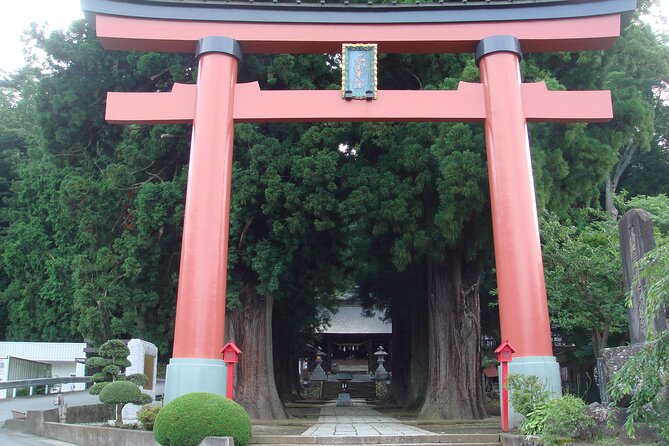
After the kimono stop, you head to Kawaguchi Asama Shrine. This shrine is known for being established to calm a major eruption of Mount Fuji, and the setting reflects that focus on stillness.
The highlight is the approach: a famous red torii gate, plus a calm line of cedar trees leading you toward the shrine grounds. This is a short stop (about 30 minutes), so you won’t have time for a slow wandering day-long ritual. But for a one-day tour, it’s a good hit: you get a strong visual moment and a spiritual tone without taking over your schedule.
Admission is free at this stop, so you’re spending your time rather than adding more costs.
Lunch at Tabi no Eki Kawaguchiko: flexible, not included
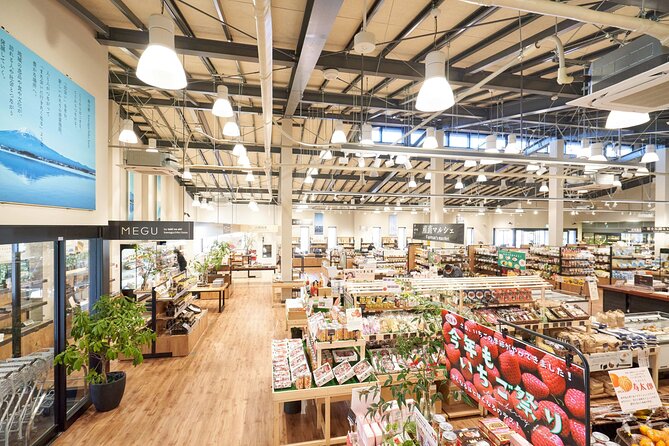
Next is Tabi no Eki Kawaguchiko Base, where you get about 50 minutes for lunch on your own. Lunch is not included, so this is your chance to eat without hunting for restaurants.
The tour describes options in the roadside rest area: a self-service restaurant with dishes made with local ingredients, and also a bakery for quicker bites you can grab to go. If you have dietary needs—vegan, gluten-free, halal, vegetarian, or allergies—the tour suggests bringing your own meal, because special accommodations may not be available.
This is one of those moments where a little prep can save the day. If you eat normally with few restrictions, you’ll likely find something that works. If your needs are strict, bring a backup snack or full meal so you’re not making stress decisions at the last minute.
Oishi Park: where the flowers do the talking
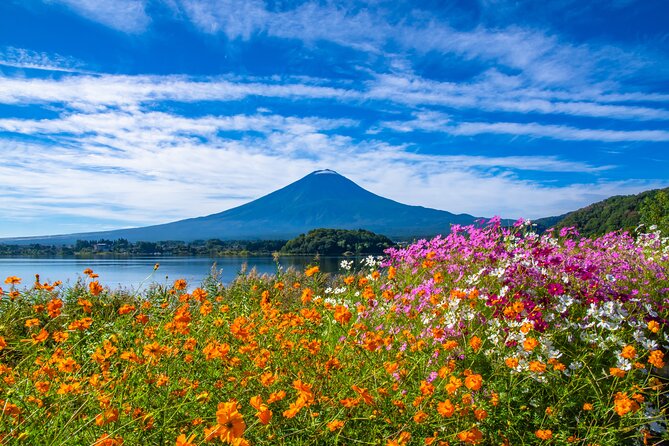
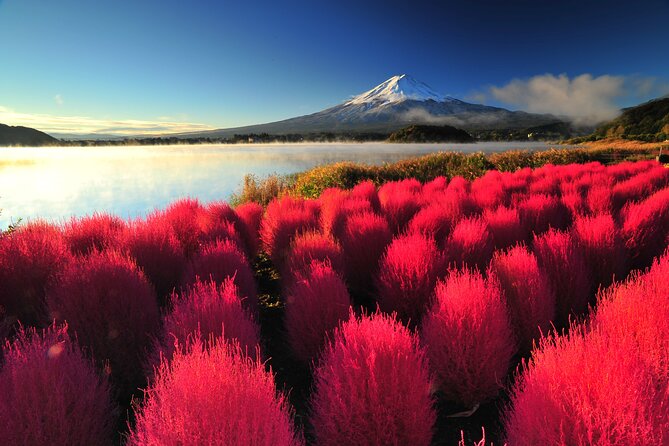
From there you go to Oishi Park, one of the most popular places for international visitors around Lake Kawaguchi. The big draw is the panoramic views and the seasonal flowers that frame those views.
The tour gives you 30 minutes here. That’s just enough time to walk a little, pick a viewpoint, and do photos before the bus calls time. If you come expecting a long garden stroll, adjust your expectations: this stop is about the viewpoint and the flower foreground effect, not a half-day hike.
Admission is free, which helps you treat it like a highlight you can enjoy without adding ticket fees.
Owakudani Valley: volcano energy in a controlled time slot
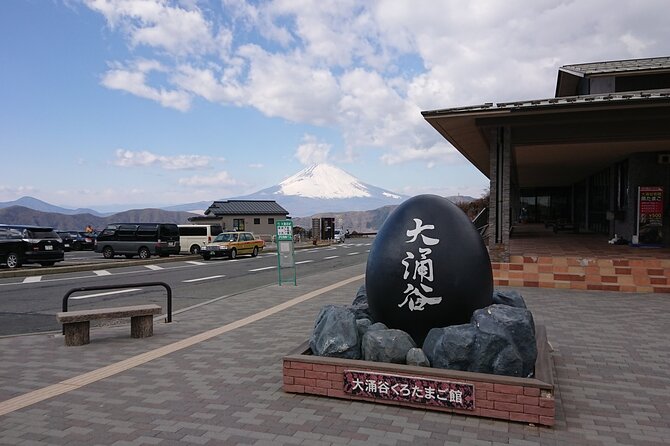
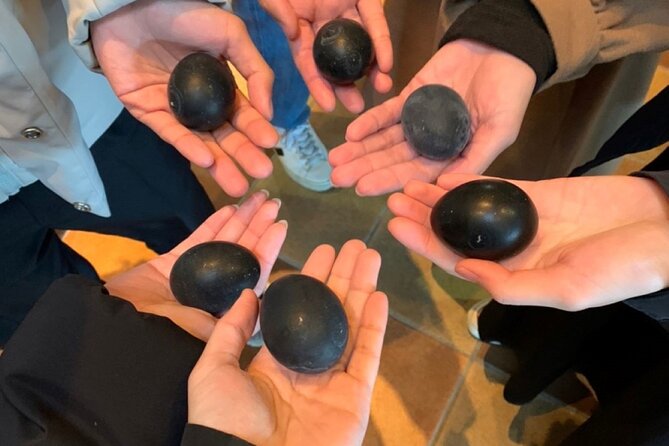
The heart of Hakone’s drama is Owaku-dani Valley (Owakudani). Here, you’re looking at volcanic activity: steaming hot springs and sulfur vents, with a sense of heat and activity that you can’t really replicate elsewhere.
This stop is about 30 minutes. Again, you won’t linger like you might on an independent day, but you’ll still get the main visuals that make Owakudani famous. The tour also notes you’ll have another chance to behold Mt. Fuji from this area, which can be helpful when visibility at Lake Kawaguchi isn’t perfect.
One practical mindset: volcanic sites can be intense on the senses—smell, steam, and the warm air. If you’re sensitive, bring a mask and be ready for the fact that this stop is more “active scenery” than “pretty postcard only.”
Admission is free at this stop too.
Odawara and the return choice: back to Shinjuku or end near Hakone
Your final movement depends on the plan you choose.
You’ll reach Odawara Station near the end of the day. If you selected the return to Shinjuku option, you transfer to the Odakyu Romancecar for a reserved seat ride back. It’s a comfortable way to end the day because you’re not hopping between trains with luggage and fatigue.
If you selected a different endpoint, the tour notes you can disembark at Kawaguchiko Station or Hakone-Yumoto Station (instead of going all the way back to Shinjuku). That can be a smart option if you’re planning to spend the next night near Hakone or simply want the trip to end closer to your onward route.
Either way, the day is designed to finish cleanly after a short Odawara transfer window.
The real trade-off: short stops versus a full deep-dive day
This tour is built around an 11-hour schedule, which means each stop is brief. That’s the trade-off for seeing Mt. Fuji and Hakone in one hit.
Here’s what I think you should optimize for:
- If you want the big icons quickly—Lake Kawaguchi views, Asama Shrine torii gate, Oishi Park flowers, and Owakudani steam—this works.
- If you want long hikes, time for museums, or relaxed soaking (onsen) moments, you might feel rushed. There’s no time in the provided plan for a full onsen experience.
So I’d treat it as a highlight sampler. Then, if you love what you see, you can always come back for more time in either Fuji or Hakone.
Who this tour suits best (and who should skip it)
This is ideal if you:
- Want a structured day with an English-speaking guide and less DIY planning
- Care about photo-friendly stops and the kimono cultural touch
- Are comfortable with bus travel and compact timing
- Want an easy way to link Fuji and Hakone without separate bookings
It might not fit as well if you:
- Need long, unhurried time at each place
- Are very sensitive to crowds or schedule pressure
- Have strong dietary restrictions and don’t want to bring backup food (because lunch isn’t included and special accommodations aren’t guaranteed)
Also remember temperature differences. The tour notes temperatures around Lake Kawaguchi can be significantly cooler than Tokyo. If you’re traveling outside peak summer, check the forecast and pack layers.
Quick practical tips before you go
A few small things make this day smoother:
- Use the restroom before you gather at the meeting point (no restroom stop before Fujisan Plaza).
- Wear comfortable shoes with good grip; you’ll do outdoor walking at multiple stops.
- Bring something for cool weather around Lake Kawaguchi; it can feel colder than you expect.
- If you’re counting on Mt. Fuji views, understand visibility is weather-dependent and refunds aren’t issued if you don’t see it.
And if you get a guide like Maki, you’ll likely enjoy the day’s flow—clear direction, friendly engagement, and enough time at each stop to actually enjoy it rather than just pass through.
Should you book this Mt. Fuji and Hakone 1-day bus tour?
Book it if you want the simplest path to the most famous scenes: Lake Kawaguchi, Kawaguchi Asama Shrine, Oishi Park flowers, and Owakudani’s volcano steam—plus the standout kimono dressing at Fujisan Plaza. The value is strongest when you’re the kind of traveler who likes structure, wants guided context, and doesn’t want to spend your day figuring out transport.
Skip or reconsider if you hate early starts, dislike schedule compression, or need long on-site time for sights like Owakudani or lunch. This is a highlights plan, not a slow travel day.
If you’re flexible, pack layers, and go in expecting Mt. Fuji visibility to be a gamble, you’ll likely leave with great photos and a day that feels genuinely efficient.
FAQ
How long is the Mt. Fuji and Hakone 1 Day Bus Tour + Kimono Experience?
The tour runs for about 11 hours.
Where do I meet the tour?
You meet at Odakyu Sightseeing Service Center – Shinjuku South, at the Odakyu line Shinjuku Station south gate area.
What time does the tour start?
The start time is 8:20 am.
Is lunch included in the price?
No. Lunch is not included, and you’ll have time to eat at the roadside station restaurant at Tabi no Eki Kawaguchiko.
Does the tour include kimono dressing?
Yes. You’ll do a kimono dressing experience at Fujisan Plaza, wearing it over your regular clothes.
What if it rains during the Mt. Fuji photo time?
The tour indicates that rainy days are not a problem thanks to an indoor photo setting.
Where can I end the tour?
You can disembark at Kawaguchiko Station or Hakone-Yumoto Station, or return to Shinjuku using the Odakyu Romancecar.
Is there a restroom stop during the drive to the first location?
No. The bus heads directly to Fujisan Plaza after departure, and there’s no restroom stop during that stretch. You should use the restroom before gathering.