
One day on Naxos can cover a lot—without renting a car. This bus tour takes you from the Temple of Demeter to classic village stops like Halki and Apollonas, with a guide adding context along the way. It is a practical way to see more of the island in a single shot, especially if you are short on time or want your logistics handled.
I especially like the focus on marble—from a 6th-century temple made of Naxos marble to a kouros statue in the countryside. I also like how the day mixes big-site history with small place energy: quiet villages, local views, and that feel of the Cyclades outside Naxos Town.
One possible drawback: if you care a lot about seat comfort, do not assume luxury. The bus may feel older, and armrests can be an issue for some people, so pack a little patience and dress for the ride.
In This Review
- Key highlights worth planning for
- Why This Naxos Island Bus Day Works
- Price and logistics: what $42.14 gets you
- First stop: the Temple of Demeter and Naxos marble
- Damalas: village views with Tragea Valley in the background
- Halki: former capital, olive country, and that old-town feel
- Apollonas: fishing village calm and the name behind Apollo
- The kouros outside Melanes: a quick countryside hit
- How the guide and pacing shape your day
- Weather reality: when rain changes the best views
- Lunch: plan for it, because you will need it
- Comfort on the road: air-conditioning helps, but check expectations
- Who should book this bus tour?
- Should you book this Naxos bus tour around the island?
- FAQ
- How long is the Naxos bus tour around the island?
- What time does the tour start?
- Where do you get picked up?
- Is hotel pickup and drop-off included?
- What is the tour price?
- Is lunch included in the tour?
- What language is the tour offered in?
Key highlights worth planning for
- Hotel pickup and drop-off from Naxos Town, Stelida, Agios Prokopios, Agia Anna, and Plaka
- English-led tour with a local multi-lingual escort
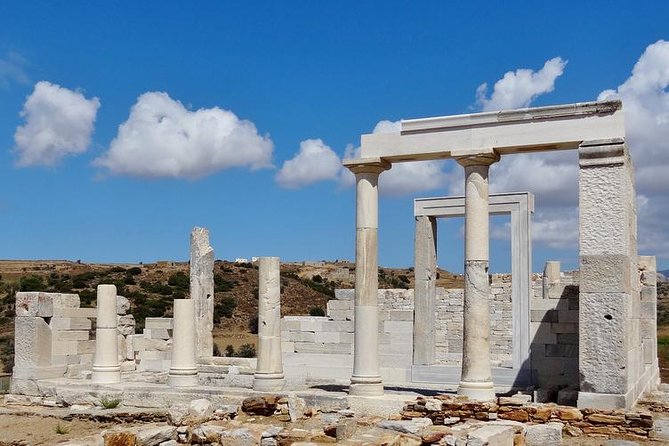
- Temple of Demeter: 6th-century BC, and marked with free admission for this stop
- Tragea Valley villages: Damalas and Halki, with views and old administrative ties
- Apollonas: an ancient fishing village tied to Apollo
- Kouros outside Melanes: a quick countryside stop that adds variety
Why This Naxos Island Bus Day Works
If your Naxos plan is a mix of beach time and one or two culture hits, this kind of all-day bus loop is a smart fit. You get a full chunk of the island in about 8 hours, without the stress of navigating narrow roads or figuring out where to park.
The tour is capped at 40 people, which matters. Larger groups often mean more waiting and less time at each stop. Here, the idea is that you spend your limited time looking at things, not standing around.
I also like the practical coverage. You are picked up from several popular bases—Naxos Town, Stelida, Agios Prokopios, Agia Anna, and Plaka—so you are not forced into a long commute before the fun begins. And since it includes both pickup and drop-off, the day stays simple.
Price and logistics: what $42.14 gets you

At $42.14 per person, you are paying for transport, a guide, and a structured route. The big value is that you do not have to line up buses, taxis, or a rental car just to see multiple regions.
Here is what is included:
- Hotel pickup and drop-off
- Air-conditioned vehicle
- Local multi-lingual escort
What is not included:
- Lunch
- Personal expenses
- Entrance fees (even though the listed stops are marked free)
That last point is important. The tour’s specific stops are marked free admission in the schedule you are given. Still, always assume entrance rules can vary if you add anything on your own. Bring a little flexibility and some cash in your day bag for unexpected extras.
Also, timing matters. You start at 9:00 am, and since it is an 8-hour format, you will want to treat it like a full day. Based on booking patterns, this tour often sells out earlier than you might expect—on average around 69 days in advance—so if you have dates in mind, do not procrastinate.
First stop: the Temple of Demeter and Naxos marble
The day kicks off at the Temple of Demeter, described as a 6th-century BC site built with Naxos marble. This is the kind of stop that gives you a real sense of why Naxos got famous in the first place.
Marble is not just a pretty word here. It is the material that shaped the island’s history and craft. On this tour, you do not just look at stone—you also pick up context about marble production and carving methods in ancient times. Even if you are not a history nerd, it helps you notice details instead of just snapping photos and moving on.
Time is short—about 20 minutes—so go in with a plan. Look for the way the site uses marble and how the materials connect to the island’s identity. If it is sunny, this is also a nice stop for clear photos. If it is cloudy or rainy, the vibe changes fast—so keep your jacket handy.
Admission is marked free for this stop, which is a plus if you are trying to keep costs down without sacrificing culture.
Damalas: village views with Tragea Valley in the background
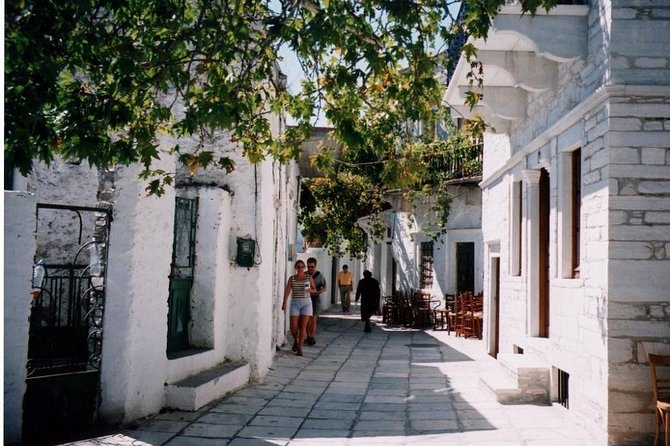
Next up is Damalas, a small village described as spread in an amphitheater fashion at the foot of Lagos hill, in the valley of Tragea. Translation: you get that classic Cyclades “low village on the slope” feeling, with views that can look great even when you are not on a beach.
You get about 1 hour 30 minutes here. That is enough time to wander a bit and take photos without feeling rushed. It also gives you a chance to just breathe. Damalas is the kind of stop that makes the bus day feel more like you stepped into local life instead of a checklist.
One practical tip: if the weather is bad, view points are the first thing to lose. A review mentioned rain cutting off some scenic views on the way back. So if you want the best sightlines, bring a rain layer that folds small—and keep your eye on the sky.
Admission is marked free for this stop, so you are not paying just to stretch your legs.
Halki: former capital, olive country, and that old-town feel
Halki (also known as Chalki) is the stop where the tour leans into the island’s inland story. It is about 16 km from Naxos Town and sits in central Tragea, an area known as the largest olive cultivation region of the Cyclades.
You get about 1 hour here, and that time is the right length. Halki has a long history and was once the capital of Naxos, plus its main administrative and trade center. Even if you only get a taste in an hour, the place helps you understand Naxos is more than sea and beaches.
From the vibe reported during the day, I also think Halki works because it is not only about stone and monuments. You get an old town feel, including mention of a small church visit as part of the experience. That small moment often ends up being the most memorable, because it breaks up the bigger, more obvious sights.
Admission is marked free here too.
Apollonas: fishing village calm and the name behind Apollo
Then you move toward the coast for Apollonas, a lovely fishing village named after Apollo. The schedule frames the name tie-in to Apollo as the god of light and music, and it also notes the village has been inhabited since ancient times.
You get about 1 hour 30 minutes here, which is a generous chunk of time for a seaside village. This is where you slow down and let the day shift gears from “look at monuments” to “walk and soak up atmosphere.” If you like watching daily life—boats, small streets, and the way coastal towns handle the day—this stop tends to land well.
A caution, based on typical bus-day rhythm: it can be tempting to treat Apollonas like a quick photo stop. Instead, give yourself a little wandering time. Even in a fishing village, a bit of extra walking can reveal small lanes and viewpoints you would miss if you rush.
Admission is marked free for this stop.
The kouros outside Melanes: a quick countryside hit
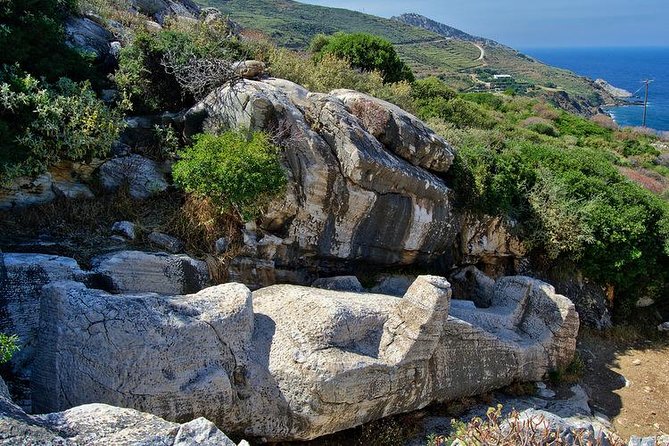
The final listed “wow” is a kouros statue outside the village of Melanes, in the Naxos countryside. This is a short stop—about 20 minutes—so it is best handled with low expectations and high focus: look, understand what you are seeing, then move on.
Kouros statues are a distinct type of ancient figure, and in a bus itinerary like this, they work because they add variety. After temple stone, village life, and coastal charm, you get a countryside reminder that ancient Naxos was spread across the island, not only concentrated in towns.
Admission is marked free here as well. Even if you only catch a glimpse, this is the stop that often helps the whole day feel connected: marble, ancient craft, and ancient presence in everyday places.
How the guide and pacing shape your day
The tour runs with a local multi-lingual escort, and the tour is listed as English-offered. In practice, you should assume English is your main working language. One review specifically complained about a lack of German explanations when German was expected. So if that matters to you, confirm language availability before you go, rather than assuming it will be automatic.
Guide style matters a lot on a bus day. In the positive feedback, the guide came across as friendly and able to connect the dots—especially on marble and local methods. When the guide is sharp, you stop treating each stop as random scenery and start seeing the island’s logic.
Pacing also matters. You are moving on and off the bus multiple times during the day, and time per stop varies from 20 minutes to about 1.5 hours. The best approach is simple:
- Stay ready to exit the bus quickly
- Keep your essentials in a reachable spot
- Take photos early if you are worried about weather later
And yes, roads can be narrow. One review thanked the bus driver for navigating confidently. That is exactly what you want to hear on a tour like this—steady driving lets the guide do the talking and you do the looking.
Weather reality: when rain changes the best views
This is Greece, and weather happens. One experience report noted rain prevented a scenic view on the way back. That is not unusual on an island day: your route includes viewpoints and open stretches, and those are the first to lose their magic when clouds roll in.
If rain shows up:
- Bring a light rain jacket you can pack easily
- Expect more gray, less dramatic views, and fewer “wow” photo moments
- Shift your focus to what still works: villages, architecture, and the guide’s explanations
The tour still covers the main stops even in poor weather. Just know that the views are a weather-dependent reward, not a guarantee.
Lunch: plan for it, because you will need it
Lunch is not included. That means you have two realistic strategies: eat before you go, or plan to buy something during the tour break.
One review criticized the lunch break as happening in a small town with little to do and suggested it would be better placed elsewhere with more lunch options. You should treat this as a heads-up: even if you find a decent bite, you may not have a full shopping or sightseeing menu during lunch time.
My practical advice: pack a small snack and water if you are the type who gets hungry fast. It can save your mood when the lunch stop is brief or quiet.
Comfort on the road: air-conditioning helps, but check expectations
The vehicle is air-conditioned, which is a big plus on warm days. But there is also feedback about an older bus and broken armrests. That does not mean the tour is unsafe or unmanageable—it just means you should not expect brand-new seating.
If you are sensitive to seat comfort:
- Choose a seat where you can move your legs comfortably
- Bring a small travel cushion or folded layer if you tend to feel every bump
- Wear shoes you can walk in for short village strolls
Again, it is about setting expectations. The tour’s strength is the route and time usage, not fancy interior comforts.
Who should book this bus tour?
Book it if:
- You want major Naxos sights in one day without car logistics
- You like a mix of marble history and village wandering
- You want pickup from your hotel area and a clear start at 9:00 am
- You appreciate guided explanations, especially about how Naxos marble was made and used
Consider skipping (or choosing another format) if:
- You need a specific language beyond English and you cannot risk not getting it
- You are very picky about bus comfort and seat condition
- You prefer to explore independently with flexible stops
This tour suits couples, solo visitors who want structure, and groups that would rather ride together than coordinate separate rental vehicles.
Should you book this Naxos bus tour around the island?
I think it is a good booking if you want a guided island overview with hotel pickup, a manageable group size, and a day that mixes big cultural anchors with smaller village stops. The price is reasonable for an organized transport-heavy day, and the marble theme ties the stops together in a way that feels more than random driving.
My recommendation hinges on two things: language expectations and your comfort with older vehicle seating. If English works for you and you want the day laid out, this tour delivers a lot of Naxos into one efficient schedule.
If either of those points is a deal-breaker, you might prefer a different style tour or a more flexible rental plan. But if you want the easy win—see several regions, understand them, then get back to your beach days—this one is worth serious consideration.
FAQ
How long is the Naxos bus tour around the island?
It runs for about 8 hours.
What time does the tour start?
Pickup starts for a 9:00 am departure.
Where do you get picked up?
Pickup is available from Naxos Town, Stelida, Agios Prokopios, Agia Anna, and Plaka.
Is hotel pickup and drop-off included?
Yes. Hotel pickup and drop-off are included for the areas listed above.
What is the tour price?
The price is $42.14 per person.
Is lunch included in the tour?
No, lunch is not included.
What language is the tour offered in?
The tour is offered in English, and it includes a local multi-lingual escort.