The night tour hits different in New Orleans. I like how it keeps you outside the French Quarter while still stopping at major haunted corners, with a licensed guide sharing eerie stories. The air-conditioned bus helps you stay comfortable as the city turns spooky.
You’ll visit places tied to Marie Laveau at Bayou St. John and spend time at St. Louis Cemetery No. 3, so it’s not just rumors from the curb. I also like the camera angle here: the lore is built around what you might capture when the light goes dim.
One watch-out: this tour is more history-and-legend than nonstop jump-scare energy, and some stops are shorter than you might wish. If you’re chasing maximum time inside every cemetery, plan your expectations around viewing, listening, and brief moments off the bus.
Dead of Night Highlights at a Glance
- Licensed guide storytelling focused on haunted spots beyond the French Quarter
- Bayou St. John and Magnolia Bridge rituals tied to Marie Laveau and St. John’s Eve
- St. Louis Cemetery No. 3 layers from yellow fever burial overflow to later leper-colony history
- Charity Hospital Cemetery as a known hotspot for ghost sightings
- Katrina memorial stop honoring tombs of 85 unidentified victims
- City Park break for Cafe du Monde on your own time and dime
In This Review
- Dead of Night Bus Tour: a practical way to see New Orleans after dark
- Rampart Treehouse meetup: timing, comfort, and night-ready habits
- Bayou St. John and Marie Laveau lore by the Magnolia Bridge
- St. Louis Cemetery No. 3: yellow fever overflow and leper-colony layers
- Charity Hospital Cemetery: where the stories turn more paranormal
- Katrina memorial tombs: the most respectful stop on the route
- City Park and Cafe du Monde: a daytime-style reset
- How scary is it, really? the guide makes or breaks the mood
- Photo tips for ghost stories: what to do before the lights go out
- Who this tour suits best (and who should skip it)
- Should you book New Orleans Dead of Night Ghosts and Cemetery Bus Tour?
- FAQ
- How long is the Dead of Night Ghosts and Cemetery Bus Tour?
- What is the meeting point for the tour?
- What is included in the price?
- Are alcoholic drinks allowed on the bus?
- What should I bring for the tour?
- What’s the cancellation window?
Dead of Night Bus Tour: a practical way to see New Orleans after dark
This tour is built for people who want the spooky side of New Orleans without losing hours in traffic or awkward wandering. For $55 per person and about 2 hours, you get a paced route that moves between several meaningful sites after dark, with a guide doing the heavy lifting.
What makes it feel worth it is the format. You’re not hustling between far-apart neighborhoods on your own at night. Instead, you’re riding in an air-conditioned vehicle with a small-to-mid sized group (up to 28) and stopping when the stories land.
Also, the route is intentionally outside the French Quarter, along the kinds of streets where the city’s graveyard lore and voodoo legends feel more grounded than showy. If you like New Orleans when it’s quieter, this hits that mood.
One more value point: it’s not just a bus ride. You actually step out at cemeteries and key sites, and the night setting is part of the experience.
Rampart Treehouse meetup: timing, comfort, and night-ready habits
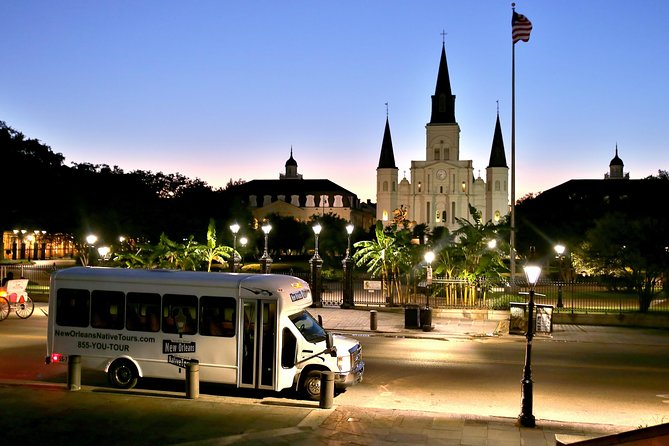
The tour starts at Rampart Treehouse, 740 N Rampart St. You’ll use a mobile ticket, and then you’re placed into the rhythm of the evening with your guide as the bus rolls out.
The big practical win is comfort. You’re in an air-conditioned bus, which matters in New Orleans when you’re out after dark and the weather refuses to cooperate. You’ll still want to dress for the night air and keep a layer handy, since you’ll be outside at stops.
Bring your camera, but also bring patience. Several locations are old, dark, and full of stone texture and shadows, which can make it tough to get photos quickly. I’d rather you show up with a plan—charge your battery, clear your memory card, and be ready to take a few shots fast when the group pauses.
You’ll also likely get a short break mid-tour for practical needs. In the real world, that matters on a night tour, especially if you’re spending time standing around to hear stories and then stepping into cemeteries.
Bayou St. John and Marie Laveau lore by the Magnolia Bridge
The first stop takes you to Bayou St. John, tied to 19th-century voodoo rituals associated with Marie Laveau. This is the kind of location where the legend isn’t vague. It’s anchored to real landmarks and repeat traditions that still show up in local memory.
There’s also a detail that makes this stop feel specific: the Magnolia Bridge over the bay is described as a ritual site every St. John’s Eve. That gives you something to picture as you stand nearby at night and listen to the story spiral around the landscape.
What I like about starting here is the tone. You’re not dropped straight into tombstones. Instead, you ease into the idea that New Orleans has multiple belief systems running at the same time—spiritual, cultural, and historical—sometimes side by side.
What to watch for: the vibe here can shift depending on how the night’s light hits the water and the bridge. If you want photos, don’t wait for the perfect second. Take a test shot early, then adjust. Night photography always feels harder than daytime, even for experienced shooters.
If voodoo lore, local spirituality, and the way rumors become tradition interest you, this stop is a strong start. If you’re only into purely haunted-cemetery stuff, you may find it more “story land” than scary-proofs.
St. Louis Cemetery No. 3: yellow fever overflow and leper-colony layers
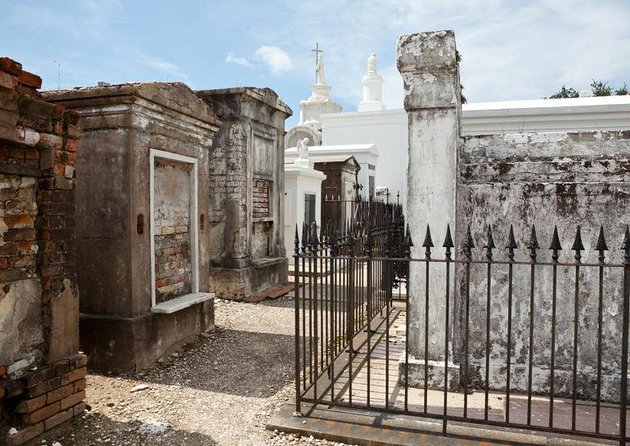
Next comes St. Louis Cemetery No. 3, built in the 1800s when yellow fever epidemics forced the city into burial overflow and ran out of room. That alone makes the cemetery feel heavy in a way that’s not just spooky branding.
The tour frames the site as a layered space—literally. There was a period when it functioned as a place tied to a leper colony, including a cemetery of its own. Think of it as a burial landscape that carries multiple chapters at once.
That layering is where the tour’s tone gets more than horror-movie. The stories connect the stones to real public health fear, overcrowding, and the way cities respond when they have no good options left. It’s part of why the ghost tales feel plausible here: suffering left a map.
In the best moments at this stop, the guide’s pacing matters. You’re standing in a dense setting, listening to how people were buried and why certain spaces were used. Then the night makes the shapes look older, taller, and stranger.
Practical note: plan for relatively short time on-site at each stop. You’ll get enough to feel the place, but not unlimited wandering. I’d treat this as an atmospheric visit plus story time, not an all-night photo shoot.
Charity Hospital Cemetery: where the stories turn more paranormal
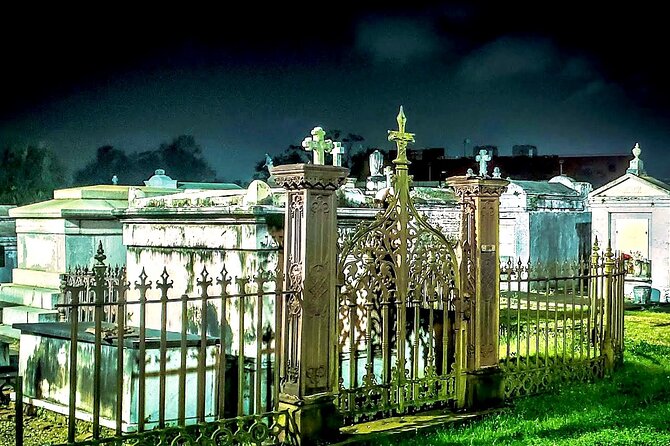
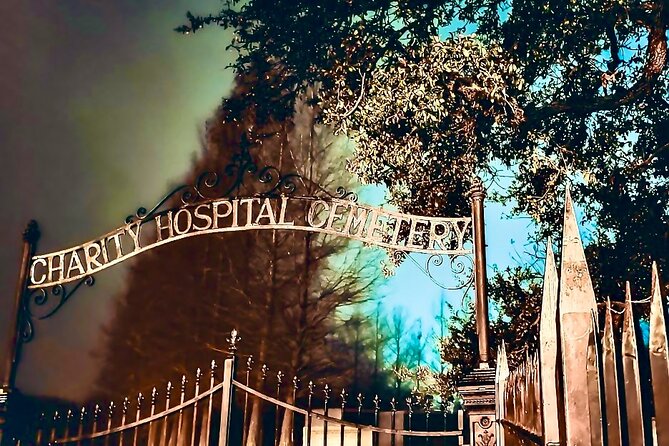
After St. Louis Cemetery No. 3, you head to Charity Hospital Cemetery, described as a spot with ample ghost sightings. This is the part of the tour where the “haunted” framing ramps up more clearly.
What matters here is how the tour handles the blend of fear and history. Instead of treating paranormal claims like a cartoon, the guide ties the setting to the hospital area’s past and the way heavy places collect tales.
If you’re hoping for a stop that feels explicitly paranormal, Charity Hospital Cemetery is one of your main targets. The night atmosphere helps, but so does hearing what people believe is present in the space.
For your expectations: this isn’t marketed as a scientific investigation. It’s more like a guided walk through belief, rumor, and place-based storytelling. If you want proof-proof, bring a calm mindset and just enjoy the vibe.
Also, keep your voice low in cemeteries. It helps you take the space seriously, even if you’re there for spooky entertainment. That respect shows up in the photos too.
Katrina memorial tombs: the most respectful stop on the route
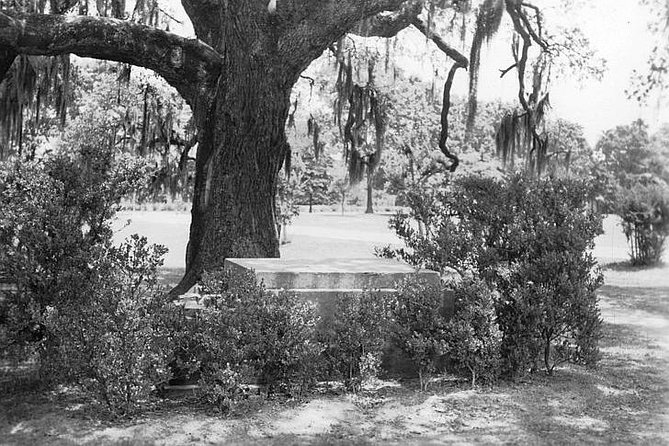
One of the most sobering parts of the tour is the stop honoring victims of Hurricane Katrina. You’ll visit a memorial home to tombs of 85 unidentified victims.
This stop shifts the emotional temperature of the night. You’re no longer chasing eerie excitement. You’re asked to pay respects, and that changes how the group moves and listens.
I like this inclusion because it prevents the tour from turning into pure theatrics. New Orleans horror lore often circles around tragedy, and Katrina is a modern tragedy that the city still carries. Even if you came for ghosts, this is the moment that anchors the tour in real human loss.
Photo note: in this kind of stop, take your pictures if you want, but don’t force it. If you’re unsure, pause and let the moment land before you raise your camera.
If you go in expecting the memorial to be “dark and cinematic,” you might find it more quiet and muted than dramatic. That can be a good thing, and it keeps the tour balanced.
City Park and Cafe du Monde: a daytime-style reset
The tour ends in New Orleans City Park, where you get a break and the chance to grab food at Cafe du Monde (own expense). This is a smart way to close a night tour.
It gives you a buffer after cemeteries and heavy stories. Even though it’s still at night, the park stop feels like a reset button: stand, breathe, snack, and tell your friend which part got under their skin.
If you’re into the classic New Orleans rhythm, this is where the experience connects back to everyday life. Beignets and hot drinks make the tour feel less like a single scary event and more like an evening with a beginning, middle, and calming end.
Timing matters here. You’ll likely get a short window, so decide quickly if you want to order or just grab something simple. If you’re with a group, coordinate your order so you don’t lose time when the tour wraps up.
How scary is it, really? the guide makes or breaks the mood
The headline promise is ghosts and haunted cemeteries, but the actual feel comes down to what your guide emphasizes. The people leading these tours tend to be highly energetic and big on story delivery, and that changes the whole experience.
In particular, names like Christian show up often in the tour feedback for being energetic and passionate, with a strong way of connecting New Orleans history to present-day life. Drew, Israel, Perry, and Shannon also come up as guides tied to enthusiastic storytelling and good attention to the blend of spiritual and historical angles.
That blend is the core style of this tour. You’ll hear spine-chilling tales, but you’ll also get context about the city’s layers of belief and hardship. For many people, that’s exactly what makes it fun.
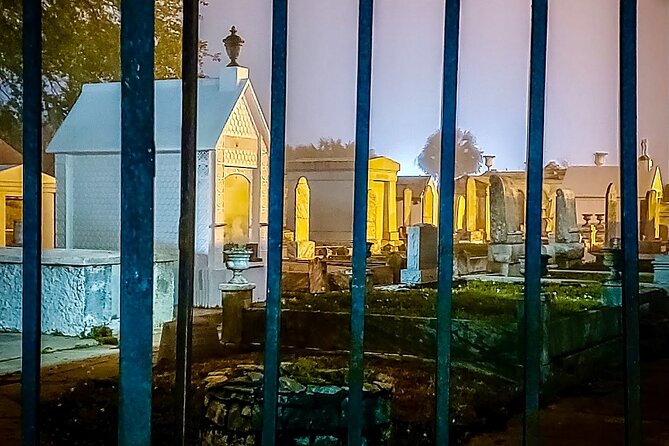
Still, there is a fair caution to keep in mind. Some people find the experience a bit more history-focused than ghost-focused, and some wish there was more time inside the cemeteries. A common theme is that you might spend more time near the gates or looking from specific viewpoints, with just one stop offering more freedom to explore.
So here’s my practical take: if you want a tour that’s genuinely educational and atmospheric, you’ll likely enjoy it. If you want a tour that feels like constant hauntings with long cemetery wandering, you may feel slightly underfed.
Photo tips for ghost stories: what to do before the lights go out
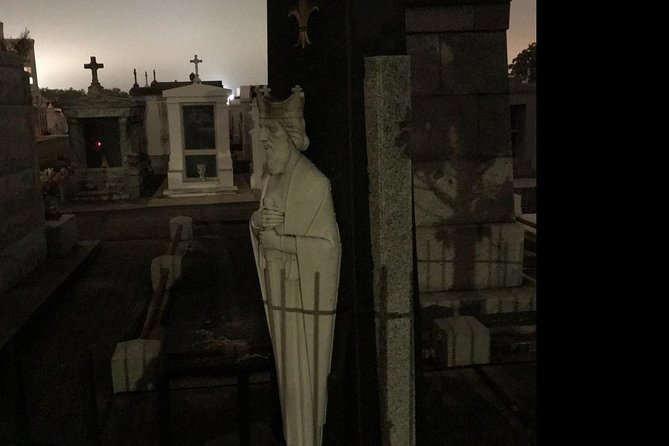
The tour clearly leans into the idea of capturing ghostly moments on camera. If that’s your goal, you can improve your odds without pretending the camera will magically prove anything.
Start with your basics. Clean your lens, turn on the highest quality photo setting your phone or camera allows, and avoid heavy zoom, which makes noise worse in low light. Night shots often look better when you move your body a step rather than relying on digital zoom.
When the group pauses, take a quick “baseline” shot first. Then follow with one or two experimental frames. That gives you something to compare, especially if you’re looking for light artifacts, fog-like effects, or odd streaks.
Also, don’t let photo hunting drag you off the flow. The guide’s story timing helps set the mood, and you’ll get more out of the stop if you listen first and shoot second. A good approach is: hear the story, look around, take photos, then ask one question if there’s time.
Finally, keep it respectful. If a cemetery feels too quiet or solemn in that moment, step back from the camera for a minute. That balance makes the night feel less like a challenge and more like an experience.
Who this tour suits best (and who should skip it)
This tour is a great fit if you want a structured night in New Orleans that includes voodoo lore and multiple cemetery stops without having to plan transportation yourself. The air-conditioned bus, licensed guide, and short on-site pauses work well for couples, solo visitors, and groups who want a guided route.
It’s also a strong match if you like the stories that connect belief, tragedy, and the city’s physical layout. The Katrina memorial stop alone makes this more than a goofy Halloween outing.
You might consider a different option if you’re mainly chasing long, unsupervised cemetery exploration or you want nonstop “ghost evidence” theatrics. Since the experience includes history framing and short stops, it can feel more guided lecture plus atmosphere than all-night haunting.
If you’re visiting for the first time and want one evening that shows the darker side of New Orleans beyond the French Quarter, this is a smart pick.
Should you book New Orleans Dead of Night Ghosts and Cemetery Bus Tour?
I’d book it if you want a night tour that’s built for comfort, pacing, and story-first spooky. At $55 for about 2 hours with a licensed guide and multiple cemetery-related stops, it’s good value for what you get: transportation, interpretation, and time in key places.
I’d hesitate only if you’re expecting lots of time inside every cemetery or you want pure supernatural action with minimal history. This tour leans into legend plus context, and that style won’t match every horror mindset.
If you like the idea of starting at Bayou St. John, then moving to St. Louis Cemetery No. 3, and ending with City Park beignets, you’re already describing the kind of evening this tour is built to deliver.
FAQ
How long is the Dead of Night Ghosts and Cemetery Bus Tour?
It runs for about 2 hours.
What is the meeting point for the tour?
Meet at Rampart Treehouse, 740 N Rampart St, New Orleans, LA 70116. The tour ends back at the meeting point.
What is included in the price?
The tour includes a professional guide and an air-conditioned vehicle.
Are alcoholic drinks allowed on the bus?
No. Alcoholic drinks are not allowed on the bus.
What should I bring for the tour?
Bring your camera if you want to take photos. Also dress for nighttime conditions since the tour operates in all weather.
What’s the cancellation window?
You can cancel for a full refund if you cancel at least 24 hours before the tour starts.