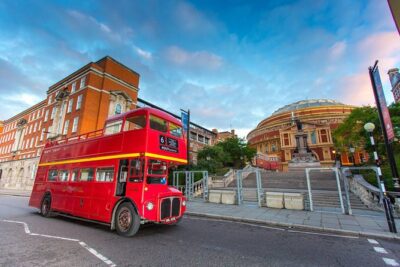
New Orleans at night has a different mood. This Night Cemetery Insiders bus tour keeps it practical while still feeding your curiosity about how locals were laid to rest. I especially like the combination of real cemetery design details and a guide who turns the stories into something you can picture; I also like that you get bus transport so you are not juggling directions after dark. One thing to consider: you will do some walking on cemetery ground, and it can be uneven in spots.
You meet in the French Quarter area by Voodoo Tavern and PoBoys at 1140 Decatur St, then head out for an experience that runs about 2 hours. The group stays small (up to 32 people), tickets are handled by mobile, and the tour is in English. If you want spooky vibes, you will get them—but the bigger win here is understanding why these burial places look the way they do, and how events like Hurricane Katrina still echo in the stones.
In This Review
- Key Things I’d Actually Plan Around
- Why This Night Bus Tour Feels Like a Smart Move
- Getting There: Voodoo Tavern and PoBoys Is the Easy Anchor
- First Cemetery Stop: Masonic Temple Cemetery #2’s Odd Geometry
- How the Guides Shape the Mood (Kendall, Bob, Henry, Trish)
- Second Cemetery Stop: Charity Hospital Cemetery, Katrina, and Odd Fellows
- Bus Ride, Timing, and How Much Walking to Expect
- Price and Value: What $30 Buys You in the Real World
- What to Wear and Bring for a Night Cemetery Visit
- Who Should Book This and Who Might Skip It
- Should You Book Night Cemetery Insiders?
- FAQ
- Which cemeteries does the tour visit?
- Does this tour include Marie Laveau’s tomb?
- Do you visit the Hurricane Katrina Memorial?
- Is there parking near the meeting point?
- How early should I arrive?
- What should I wear for this tour?
Key Things I’d Actually Plan Around
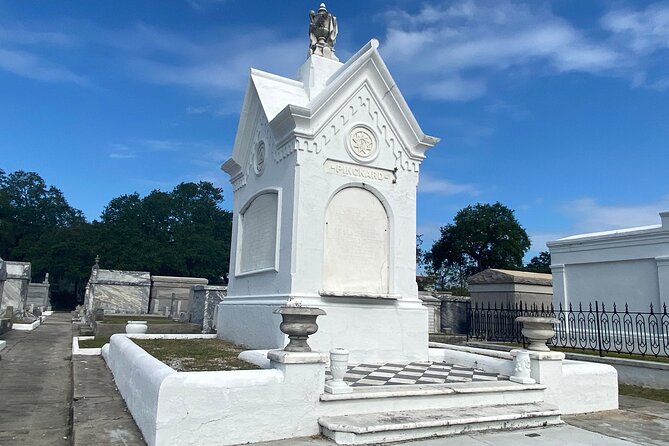
- Two cemeteries, two different burial worlds, including a Masonic setting and a Katrina-focused memorial area
- Story-led access at night, with guides using photos, myths, and local context to shape the visit
- Bus transport for an easy schedule, so you spend your energy on the stops, not street-finding
- Up-close looks at unusual tomb layouts, including Masonic-square-and-compass geometry
- A practical late-night format, often with departures late enough that comfortable layers matter
Why This Night Bus Tour Feels Like a Smart Move
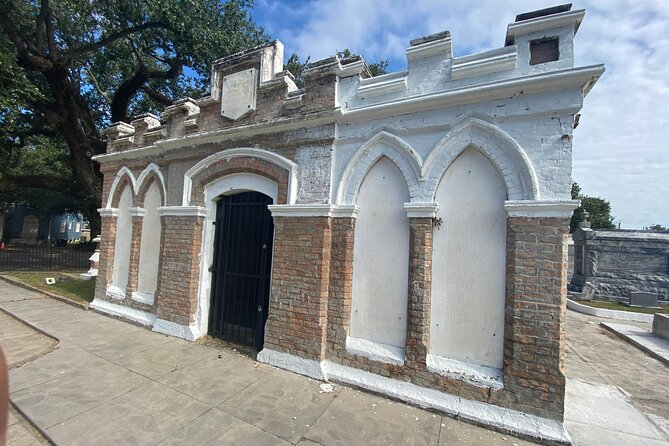
This tour is built for doing cemetery sights after dark without making your evening a logistics puzzle. For many people, New Orleans already runs late, and cemeteries are not the kind of place you want to navigate alone if you are tired, hungry, or trying to catch a short window.
The standout advantage is how the guides connect burial traditions to what you can literally see. In a Masonic cemetery, the layout isn’t just decoration—it reflects how lodges pooled resources and how the community wanted members remembered. Then the second stop shifts from symbols and tomb styles to how real disasters shaped what’s left behind, including the lasting effects tied to Hurricane Katrina.
Value-wise, the $30 price feels reasonable when you think of what’s included: guided access, time inside the cemeteries, and bus transportation that keeps the whole schedule tight. You are not paying extra for every little piece of the night.
Getting There: Voodoo Tavern and PoBoys Is the Easy Anchor
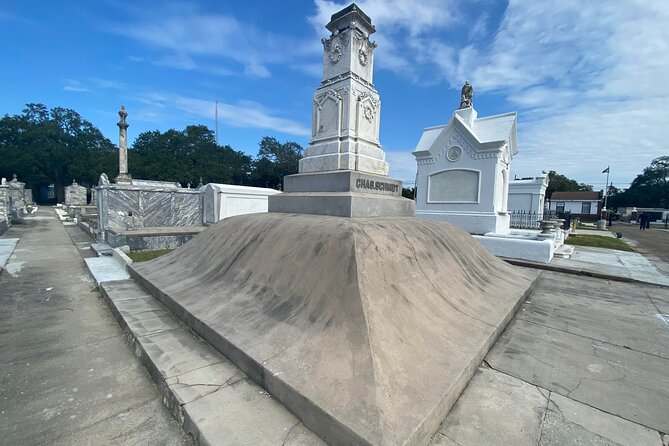
Your meeting point is right in the French Quarter orbit: Voodoo Tavern and PoBoys at 1140 Decatur St. The tour ends back at that same spot, which is a big deal if you do not want to re-plan your route after dark.
Parking is described as limited nearby. The practical move is to walk in if you are already close, or use public transportation or ride share. If you are driving, give yourself extra time because the area can be slow.
Plan to arrive at least 30 minutes early. This is the kind of tour where being punctual saves you from standing around in the dark, guessing where your group is headed.
First Cemetery Stop: Masonic Temple Cemetery #2’s Odd Geometry
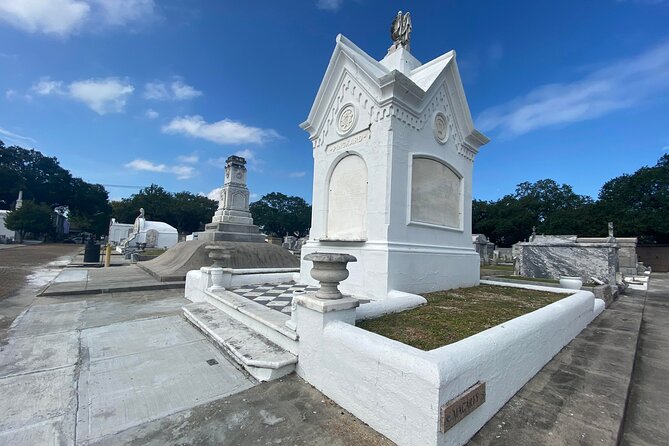
If you like cemetery design, this part is where the tour earns its keep. The Masonic Temple Cemetery #2 has a character that feels different from the Catholic cemeteries most people picture in New Orleans.
A few details that make it interesting:
- It was founded in 1865 by the Grand Lodge of the State of Louisiana Free and Accepted Masons.
- The cemetery is laid out across two oddly shaped city blocks with Conti Street bisecting it.
- The overall footprint and the internal walkways echo the Masonic emblem—think square and compass.
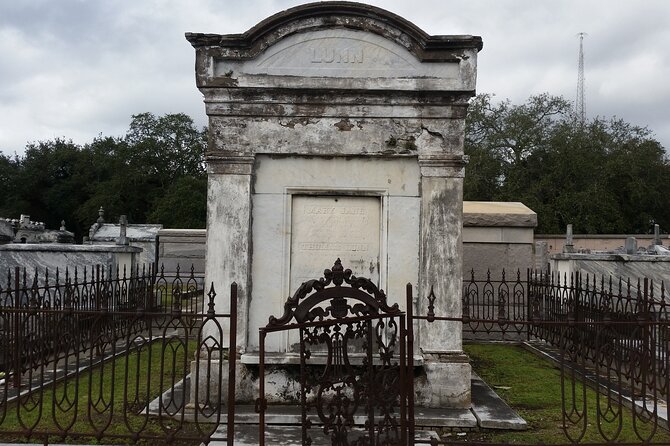
- It’s enclosed with cast-iron picket fences, and oak trees line the northern and western edges.
Walking through it, you’ll notice the tombs sit compactly in rows, parallel to Bienville Street, with a wide paved promenade running through the center. That central walk is not random—it’s there to connect smaller paths that thread between rows.
What to watch for: the way the layout guides your sightlines. This cemetery is designed so you do not just wander; you see patterns. That’s why a good storyteller matters here. Without the explanation, it can feel like a maze of older stones.
The tour includes entry here (the admission ticket is built in), and you spend about 40 minutes at this first stop.
How the Guides Shape the Mood (Kendall, Bob, Henry, Trish)
The tour experience can vary based on the guide, and you can feel the difference between a story-first approach and a facts-first lecture.
One guide named Kendall has been praised for making the presentation personal and fun, with extra photos that added context. That same style included bringing up how Hurricane Katrina affected parts of the cemetery, plus myths and superstitions people associate with cemetery lore. Another named guide, Trish, earned strong marks for being animated and clearly able to translate the history into something you can follow at night.
On the other end, a guide named Bob (described with the undertaker nickname) received criticism for spending a long stretch on Masons and Shriners topics, and the group felt it dragged. That same experience also only involved one cemetery stop, which left some people wanting more time and more variety.
My practical advice: if you are the type who wants the spooky stories to hit quickly, look for departure times and guides known for storytelling pace. If you love Masonic structure and fraternal detail, any guide who leans into that background can still be a good fit. Either way, the cemetery is the star—the guide is the lens.
Also, if you enjoy ghost-story style material, one guide-style angle includes discussion of myths and even references to ghost photos. That is not guaranteed to be the entire focus, but it is part of what some guides bring to the experience.
Second Cemetery Stop: Charity Hospital Cemetery, Katrina, and Odd Fellows
The second stop shifts from symbol-heavy design to a more human, event-driven story. Here, the tour centers on the Katrina Memorial Cemetery at Charity Hospital Cemetery, with context around what happened after major disasters.
A key detail you should know going in: the guide brings the story through the lens of multiple crises tied to New Orleans medical and burial history. That includes mention of a yellow fever outbreak and its aftermath at Charity Hospital’s graveyard, followed by the lasting effects of Hurricane Katrina.
At this stop, you’ll be able to pay respects at the Hurricane Katrina Memorial Cemetery, then continue to the Odd Fellows Rest. The Odd Fellows detail is presented as a reserved area linked to a society that many people do not hear about in typical New Orleans tours. Even if you are not a fraternal-history nerd, the point is clear: burial sites here aren’t just grave markers. They’re also records of community networks and how people organized care when disaster struck.
What makes this stop valuable is the mix of solemn and specific. You’re not just hearing that Katrina was awful—you’re seeing how memorials and burial grounds respond to it over time.
Bus Ride, Timing, and How Much Walking to Expect
The whole experience runs about 2 hours. The bus transportation keeps the plan smooth, especially for night departures. Since you are going to cemeteries, expect cool-down walking between stops and time on foot once you arrive.
The amount of walking is described as fair, but mostly on flat surfaces and not considered strenuous. Still, cemeteries are rarely perfectly even. Footing can change from paved areas to rougher ground, so bring shoes you trust.
One practical note: wheelchair access is not listed as available. The tour covers uneven ground within the cemeteries, which you should assume means mobility can be a challenge.
If you are booking late in the evening, dress for comfort first. You might be out after typical dinner hours, and one late-night departure example included a very late start (around 11pm). Layers, a hat if needed, and sunglasses can be useful, even at night—depending on weather and the walk back to the meeting point.
Price and Value: What $30 Buys You in the Real World
At $30 per person for roughly two hours, this tour becomes a solid value if you care about two things: guidance and access. Cemeteries are not always straightforward to visit at the right hour, and the bus component matters when you want your night to stay simple.
You’re also getting:
- Transportation provided by bus
- A guide-led route through two cemeteries
- Admission ticket included for at least the Masonic stop
- Mobile ticket handling
- English-speaking guide
The small-group limit (up to 32) also helps. You’re not lost in a crowd where your questions get swallowed.
Where value can dip: if you arrive expecting a heavy dose of ghost stories or a constant thrill ride, you might find some guides lean more into fraternal history or general explanation. That mismatch is not about the price—it’s about expectations.
What to Wear and Bring for a Night Cemetery Visit
This is a night activity, so comfort counts. The tour suggests comfortable shoes and layered clothing based on weather. A hat and sunglasses are also listed, which may sound daytime-only—until you’re walking around under lights and cooling off between stops.
Bring:
- Comfortable shoes with grip
- Layers you can add or remove
- A light jacket if you tend to get cold at night
If you’re traveling with service animals, service animals are allowed.
For families: the tour is described as appropriate for ages 6 and above, but it does include morbid tales that can be scary for younger kids. If you’re bringing children, you’ll want to gauge how they handle creepy stories and night settings.
Who Should Book This and Who Might Skip It
You should book if you want a guided night walk through New Orleans burial traditions that actually explains what you’re seeing. This works well for people who like history with visuals—layout details, tomb styles, and memorial reasoning—plus anyone who wants a structured way to see cemeteries you might not visit on your own.
It’s also a good fit if your schedule is tight. The tour format is built to fit into an evening without turning it into a long multi-stop day.
You might skip if:
- You want minimal walking on uneven surfaces, since wheelchair access is not available.
- You expect the tour to be mostly ghost stories with little structure. The content can shift depending on guide style, and some explanations may take longer than you’d like.
Should You Book Night Cemetery Insiders?
I think this is an easy yes if your goal is two cemetery stops in a tight time window with a guide who helps you read the symbols and the stories behind them. The Masonic cemetery design details are the kind of thing you’d miss if you just showed up and wandered, and the Charity Hospital / Katrina focus adds real context beyond spooky vibes.
Book it if you can handle night walking and you like your New Orleans with a side of memory and meaning. Just pick your expectations: you’re signing up for guided interpretation—sometimes with extra myth-making—rather than a purely jump-scare ghost tour.
If you prefer a faster pace and more straight-up haunting, keep an eye on guide style when you book. If you love historical structure and how communities organized themselves, you’ll likely find plenty to appreciate.
FAQ
Which cemeteries does the tour visit?
The tour typically visits the Masonic Cemetery #1 and the Katrina Memorial at Charity Hospital Cemetery.
Does this tour include Marie Laveau’s tomb?
Marie Laveau’s tomb is in St. Louis cemetery 1, and it is not included on this tour.
Do you visit the Hurricane Katrina Memorial?
Yes. You’ll be able to pay respects at the Hurricane Katrina Memorial Cemetery and learn about the lasting effects of Hurricane Katrina.
Is there parking near the meeting point?
There is limited on-street parking near the meeting location in the French Quarter area. Walking, public transportation, or a ride share are recommended.
How early should I arrive?
Arrive at least 30 minutes before the scheduled departure time.
What should I wear for this tour?
Wear comfortable shoes and layered clothing (based on weather), and consider bringing a hat and sunglasses. The tour does include some walking.