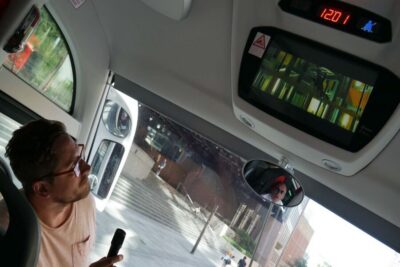
A bus ride can save your Rome days. This hop-on hop-off loop is a fast way to get your bearings, then choose what you want to walk into (and what you’ll save for later). You get regular departures, an onboard audio guide, and a route that hits both big-name landmarks and smart walkable streets.
I especially like the Wi‑Fi onboard, which helps you map your next move while you’re still rolling. I also like the audio commentary plus a multilingual assistant, so you’re not stuck guessing what you’re looking at from street level. Add the city map and single-use earphones, and the whole thing feels built for self-guided touring.
One thing to consider: the experience can feel hot and stop-and-go, because much of the fleet is open-air and re-boarding can take time. Plan for sun, and be ready to wait at bus stops during busy periods.
In This Review
- Key things to know before you board
- Why this hop-on hop-off loop works for first-time Rome
- Getting on at Via Giovanni Giolitti 34 (Termini) at 9:00 am
- Staying connected and informed: Wi‑Fi, earphones, and the onboard assistant
- Route walk: what you’ll see at each stop
- Stop 1: Termini Station area (Via Giovanni Giolitti, 34)
- Stop 2: Basilica of Santa Maria degli Angeli e dei Martiri
- Stop 3: Via di San Gregorio
- Stop 4: Via del Circo Massimo (along the Circus Maximus)
- Stop 5: Piazza Venezia and Altare della Patria area
- Stop 6: Lungotevere Tor di Nona, 7 (Tiber riverfront)
- Stop 7: Via Ludovisi, 48 (Ludovisi area near Via Veneto and Spanish Steps)
- Stop 8: Via Barberini, 14 (near Trevi Fountain and Quirinal Palace)
- Line frequency and re-boarding: how to avoid long waits
- Tickets and boarding hiccups: what to have ready
- Heat, open-top buses, and comfort (especially in summer)
- Value for your money: what’s included, what you’ll still pay for
- Should you book this Rome hop-on hop-off bus tour?
- FAQ
- How long is the Rome hop-on hop-off bus tour?
- Where do I start, and what time does the tour begin?
- Is Wi‑Fi included on the bus?
- Does the tour include audio commentary?
- What languages are available?
- Are entrance tickets to attractions included?
- Is food or drinks included?
- What is the cancellation policy?
- Are routes and transfers included, or is it only one stop?
Key things to know before you board
- Wi‑Fi on board keeps you connected while you plan your next walk.
- Audio commentary with single-use earphones helps you understand what you’re seeing.
- You control the pace with hop-on hop-off access across the full route network.
- Green line tends to be frequent (about every 10 minutes), while other lines run less often.
- Expect no entrance fees on the bus since it’s mainly for passing sights and walking afterward.
- Heat can be real since many buses are open-air, with only some offering A/C.
Why this hop-on hop-off loop works for first-time Rome

Rome is made for wandering, but it’s also a city where distances add up. This kind of bus tour gives you a moving “atlas.” You ride, listen, and spot the landmarks you’ll want to circle back to on foot—without burning half a day just trying to figure out where everything is.
The payoff is simple: you get a clean overview early, then use the time you saved to enjoy the actual streets. You’ll pass major sights and also catch the smaller streets that make Rome feel like Rome, not like a checklist.
The route is also useful if you want to build your own mini-itinerary. You’re not locked into one stop or one entry ticket. You can hop off near the places that match your interests—art and architecture, ancient ruins, river strolls, or central piazzas—then return when you’re ready.
Getting on at Via Giovanni Giolitti 34 (Termini) at 9:00 am
Your day starts near Rome’s transport hub. The first stop is at Via Giovanni Giolitti, 34, right by Termini Station. This matters because Termini is where getting around gets easiest—by metro, trains, and many bus connections.
The tour’s start time is 9:00 am, and the ride time for a loop is listed at about 1 hour 20 minutes. In practice, treat that 1h20 as the “rolling orientation” portion. The hop-on hop-off part is about what you do after that—walking segments, photo stops, and return boarding when the next bus arrives.
Practical tip: arrive a few minutes early, especially if you’re traveling during peak hours. Termini-area queues can move fast or feel chaotic, depending on the day.
Staying connected and informed: Wi‑Fi, earphones, and the onboard assistant
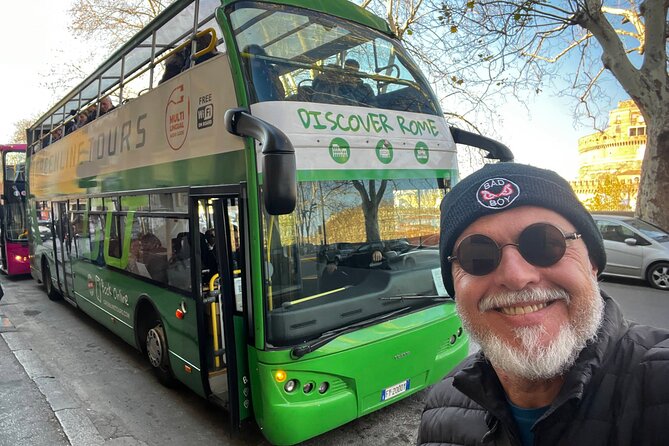
This isn’t just a bus with a view. You get onboard Wi‑Fi, and that’s a big deal in Rome. You can check your walking route, look up the next stop, or quickly confirm what entrance you’ll need later (since the bus experience itself doesn’t include site entries).
You’ll also have audio commentary as you travel. The tour includes single-use earphones, which is handy when you want to listen without sharing one headset. There’s also a multilingual assistant onboard, which can be useful if you want quick help understanding the route or finding the best place to hop off.
The tour includes a map of the city too. I like having this in hand because it helps you translate what you’re hearing into where things actually are. Once you know your bearings, Rome gets easier to navigate on foot.
Route walk: what you’ll see at each stop
The route is designed around “see it from the bus” moments and then “step out and explore” opportunities. Remember: the experience notes that it does not include entrance fees, so you’ll pass many sights from the road and then decide where to pay to enter.
Stop 1: Termini Station area (Via Giovanni Giolitti, 34)
You begin in the Termini zone, a sensible starting point if you’re using trains or want easy transfers. From here, you’re positioned to work your way through central Rome without wasting time. If you’re jet-lagged or short on energy, starting at a major transport node reduces stress.
Stop 2: Basilica of Santa Maria degli Angeli e dei Martiri
At Basilica of Saint Mary of the Angels and Martyrs, you’re looking at a major example of Baroque-era church architecture with a fascinating origin story. The site was once an ancient Roman bathhouse, later transformed into a church by Michelangelo in the 16th century.
What I like about this stop is the mix of scales. You’re not just seeing a pretty building—you’re seeing how Rome reuses and reshapes older spaces. If you pause here, you’ll get that “how did they build this?” feeling that makes Rome so addictive.
Possible drawback: you may want more time than a quick bus stop. If you hop off, consider whether you’ll enjoy slowing down inside, or whether you’ll treat it as a photo and return to the route.
Stop 3: Via di San Gregorio
Via di San Gregorio is the kind of street I love because it’s practical. It sits close to the ancient ruins of the Circus Maximus, and it sets you up for a walkable day.
This area is also lined with everyday Rome details—cafes, boutiques, and trattorias—so it’s not only about monuments. It’s about how people actually move through the city when they’re not sightseeing.
Best use: hop off here if you want a calmer stretch between the big “wow” stops. The street can work as a base for walking toward the Colosseum area and the Roman Forum/Palatine zone.
Stop 4: Via del Circo Massimo (along the Circus Maximus)
Via del Circo Massimo follows the line of the ancient Circus Maximus, once the site of major chariot races. Today, it’s a street you can use like a corridor—ride until you’re oriented, then walk for views and atmosphere.
One smart reason to stop here is the geography. You’re positioned near the kind of angles that make the Palatine Hill and Roman Forum feel close enough to reach on foot. It’s also a nice place to grab a gelato and keep moving at a comfortable pace.
Drawback to plan around: if it’s a hot day or you’re pressed for time, walking the whole stretch might take longer than you expect. Decide how much walking you truly want before you get off.
Stop 5: Piazza Venezia and Altare della Patria area
Piazza Venezia is a strong central waypoint. The area is dominated by the imposing Altare della Patria (Monument to Vittorio Emanuele II), and from this zone you get clear sight lines toward major landmarks like the Colosseum and the Roman Forum.
This is where the bus tour shines as an orientation tool. Even if you don’t enter anything right away, you’ll see how wide the city stretches and where your next walk should start.
Possible drawback: it can get crowded around the square. If you hate crowds, use this stop like a quick orientation break, then hop back on or walk a short distance to a quieter street.
Stop 6: Lungotevere Tor di Nona, 7 (Tiber riverfront)
At Lungotevere Tor di Nona, 7, you shift gears. The bus brings you to the Tiber River for a more relaxed feel, with a riverside backdrop that gives you a break from constant monument-hunting.
This stop is ideal if your body wants a gentler moment: stretch your legs, take photos, and enjoy the river air for a while. It’s also a nice change of pace if you’ve already done the dense central sights.
What to keep in mind: this area is described as more tranquil than the busiest center. That’s good for calm, but you might want to plan a specific time to return to the bus.
Stop 7: Via Ludovisi, 48 (Ludovisi area near Via Veneto and Spanish Steps)
Via Ludovisi, 48 places you in an upscale neighborhood known for elegant streets and historic buildings. This stop sits near big-name Rome zones like Via Veneto and the Spanish Steps.
If you like walking through stylish streets, browsing shops, or grabbing food in a more polished setting, you’ll likely enjoy this part of the route. It also helps break the day into “ancient Rome” and “modern elegance” sections.
Drawback: if your main goal is ancient ruins, you might feel this stop is less direct. Think of it as a contrast stop—worth it if you want variety.
Stop 8: Via Barberini, 14 (near Trevi Fountain and Quirinal Palace)
Via Barberini, 14 brings you back toward the historic core. It’s positioned close to Trevi Fountain and the Quirinal Palace, with classic Rome street energy—shops, historic facades, and convenient access to central attractions.
This is a good end-of-day stop. By the time you reach this area, you’ll often know which sights you want to revisit on foot. If you’ve been using the bus for orientation, this is where your “next steps” can become a real walking plan.
Possible drawback: you may find you need more time here than you expect. If you’re trying to do everything in one day, decide what you’re willing to skip.
Line frequency and re-boarding: how to avoid long waits
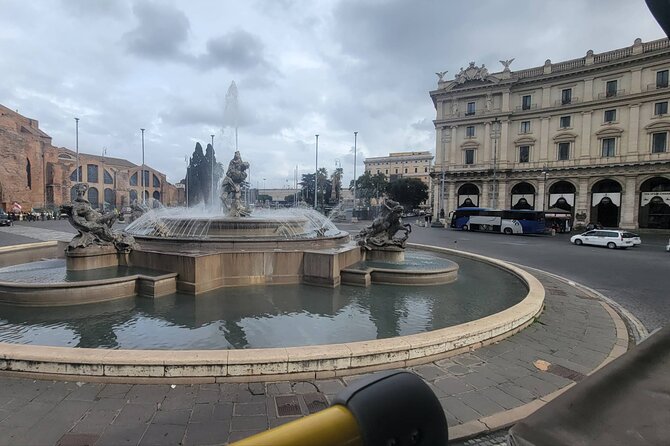
Hop-on hop-off can be amazing when timing works. It can also be annoying when you miss the bus.
Here’s the key pattern to understand: the route network uses multiple lines. The green line is the one with frequent service—around every 10 minutes. The blue line and orange line run with about 30 minutes frequency, and they go outside the historic center.
So if you’re staying mostly central and want the shortest waits, focus on the more frequent line. If you’re okay spending extra time for broader coverage beyond the core, the longer-interval lines can still be useful.
One strategy I recommend: when you first start, consider staying on for a full loop before you decide where to hop off repeatedly. That way, you’re not guessing which stop is best when you’re standing there with heat on your neck and buses coming and going.
Also plan for possible waiting. Depending on where you want to re-board, you might deal with waits of 30 minutes or more. Build buffer time into your day.
Tickets and boarding hiccups: what to have ready
This tour is set up for easy self-guided use with a mobile ticket and an electronic voucher. You’ll also want your ticket information available when you line up at stops.
Based on real-world issues people run into, the most common problems are about matching the ticket format to what staff expect at boarding and following correct pickup instructions. Sometimes tickets that show one type of code can cause delays if the staff are looking for a different code style. Other times, people accidentally end up at a stop used by a different bus operator.
My advice: before you board, check that you’re at the correct stop for your operator and that your voucher details are easy to show on your phone. If something looks off, ask the onboard or stop staff right away so you’re not stuck waiting in the wrong line.
Heat, open-top buses, and comfort (especially in summer)
Rome summers can punish you. This fleet is largely open-air: the operator runs ten open buses, and only two of them have air conditioning.
That means your ride comfort can vary depending on which bus you get. If you’re sensitive to heat or you’re traveling in hot months, you’ll want to treat this as a comfort planning problem, not an afterthought.
If you’re riding open-air, shade and water matter. Use sunglasses, take breaks when you hop off, and don’t assume every ride will feel the same from stop to stop.
Value for your money: what’s included, what you’ll still pay for
This tour’s best value is that it saves time. You get full access to all bus routes, plus helpful extras like Wi‑Fi, a map, audio commentary, and single-use earphones. You also get a multilingual assistant onboard, which can help you get unstuck quickly.
What’s not included is just as important: the tour does not include entrance fees for sites, and it does not include food and drinks. It also generally works as a pass-by plus hop-off walking model, so you’ll likely still buy tickets for museums or attractions that require entry.
So here’s the value math I’d use: if you’ll spend some time walking and then choosing a few paid sights, this bus helps you spend your money where it actually matters. If your plan is to pay for everything and you don’t need orientation, it might feel less efficient.
Should you book this Rome hop-on hop-off bus tour?
Book it if you’re doing Rome for the first time, want a flexible day, and like the idea of building your own walking itinerary from a moving overview. It’s also a strong choice if you want Wi‑Fi, audio guidance, and a route that touches both iconic stops and walk-friendly streets.
Skip it (or switch plans) if you need guaranteed A/C, dislike waiting at stops, or you want an experience where the bus itself includes entry tickets. In hot weather, comfort can swing depending on the bus you catch.
If you do book, my best practical tip is simple: ride the loop once, pick your top two or three stops for walking, then return with a clear plan for how long you’ll spend on foot before re-boarding. That’s how you turn a basic sightseeing bus into a genuinely useful Rome day.
FAQ
How long is the Rome hop-on hop-off bus tour?
The duration is listed at about 1 hour 20 minutes (approx.) for the ride time.
Where do I start, and what time does the tour begin?
The tour starts at 9:00 am at Via Giovanni Giolitti, 34, near Termini Station.
Is Wi‑Fi included on the bus?
Yes. The bus includes Wi‑Fi onboard.
Does the tour include audio commentary?
Yes. You’ll have audio commentary as you travel, with single-use earphones included.
What languages are available?
The experience is offered in English, and there is a multilingual assistant onboard.
Are entrance tickets to attractions included?
No. Entrance fees are not included. You mainly pass by sights and can explore them on foot.
Is food or drinks included?
No. Food and drinks are not included.
What is the cancellation policy?
You can cancel for a full refund if you cancel up to 24 hours in advance of the experience start time.
Are routes and transfers included, or is it only one stop?
You have full access to all bus routes, so you can hop on and off across the network.