A route where you control the pace. This one-way hop-on hop-off bus from Port Elizabeth to Cape Town turns the Garden Route into something you can shape yourself, with no time limit on your ticket. You pick where you get on, where you get off, and how long you hang around, then adjust as you go using the hop log. It’s built for the 1-suitcase-and-a-plan crowd, with a comfortable ride in a small 19-seater bus and the practical add-ons you’ll actually use.
I really like two things about this service: the door-to-door pickup/drop-off from a wide range of accommodation options, and the flexibility of an itinerary you can change without losing the whole plan. The bus is described as semi-luxury and runs shared, so you get comfort without the stiff, expensive tour vibe.
One possible drawback: you’re working with a limited schedule, meaning there may be only one bus per day per stop, so you can’t always jump at the exact time you want.
In This Review
- Key things to know before you go
- How the one-way format gives you real control
- Inside the ride: a 19-seater semi-luxury bus that stays human-scale
- The “hop log” is what makes this more than just transportation
- Planning your Port Elizabeth to Cape Town route in stretches
- What each stop is good for (and the trade-off you’re making)
- Bike and surf gear: the small feature that can change your whole trip
- Comfort, group size, and why “shared” can still feel easy
- Price and value: does $199 make sense for your style?
- Who this one-way bus suits best (and who should skip it)
- Should you book Baz Bus Port Elizabeth to Cape Town?
- FAQ
- How much does the one-way Baz Bus cost from Port Elizabeth to Cape Town?
- Is this a one-way trip or round trip?
- How flexible is the ticket?
- Can I change my itinerary after booking?
- Is there pickup and drop-off from my accommodation?
- Does the bus allow bikes or surfboards?
- When should I be ready for pickup?
- How many people are on the bus?
- What’s the cancellation policy?
- What can I expect about service frequency?
Key things to know before you go

- One-way, flexible hop-on hop-off: choose stops in the direction of Cape Town with no time limit.
- Small-group feel: the max is 22 travelers on board.
- Pickup and drop-off near your bed: offered at 200 accommodations across about 40 towns/cities (some pickup is listed as selected hostels).
- Bike and surf-friendly: there’s a trailer you can use for items like a bike or surfboard.
- You can update your plan: unlimited itinerary changes are allowed up to 12 hours before departure.
How the one-way format gives you real control
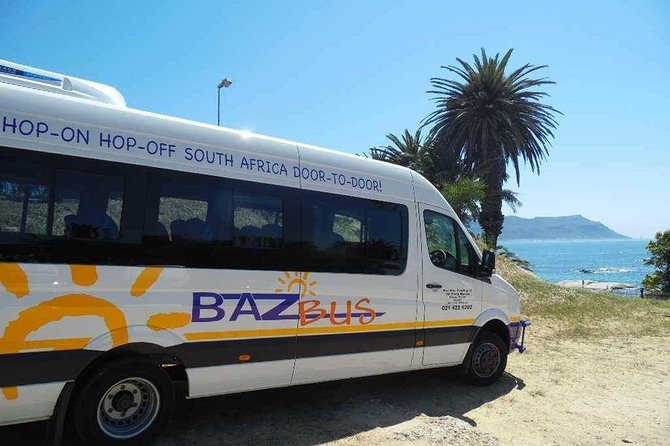
Most transport between Port Elizabeth and Cape Town forces you into a rigid plan. This one-way Baz Bus flips that idea. You’re not booking a single out-and-back transfer with fixed stops. Instead, you’re buying a stretch of freedom—and you use it by choosing where you get on and off along the route between the two cities.
The big value is psychological. When the route is flexible, you stop feeling like you’re always rushing to “do enough.” You can take a slow morning, arrive later because you’re not waiting for some strict tour-group rhythm, and then decide on the fly whether the next town gets a short stop or a proper overnight.
This also helps if your trip has a rhythm problem. Maybe you arrive in South Africa with a list of must-sees, then reality—weather, energy, or transport connections—nudges those plans. With this setup, you can adjust your hop pattern instead of cancelling the entire journey.
Inside the ride: a 19-seater semi-luxury bus that stays human-scale
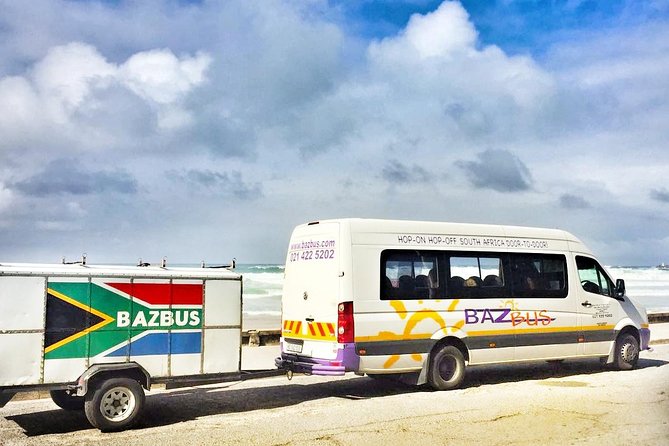
The bus is described as 19-seater semi-luxury, shared with other independent travelers. That matters more than it sounds. A small vehicle keeps the trip from feeling like a cattle call, and it makes it easier to hear driver instructions and updates.
You’ll also have a more practical experience inside the vehicle. Semi-luxury usually means you’re not trapped in the most basic transport setup. Add that the service includes a friendly, helpful and experienced driver, and it becomes the kind of ride where you feel comfortable asking questions or confirming what your next hop looks like.
There’s also a real small but important detail: the service allows a trailer for gear like a bike or surfboard. If you’re moving at the slower pace of outdoor travel—cycling or surfing—that option can save you time and hassle compared with trying to manage equipment through standard transport.
The “hop log” is what makes this more than just transportation
The hop-on hop-off part is the headline, but the tool that makes it work is the hop log. You can update your itinerary there, which is what keeps you from turning flexibility into confusion.
Here’s how to think about it: your ticket is flexible, but you still need to manage timing at the stops. The listing asks you to keep your itinerary updated and to be ready 15 minutes prior to your pick-up time. That’s the kind of instruction that prevents the most common frustration: arriving late, missing your vehicle, then needing to improvise.
Plan to check the hop log before you leave each town. That’s how you stay in control of your own route instead of reacting to it. And because itinerary changes are allowed up to 12 hours before departure, you’re not locked into your first choice once you see how a town is going for you.
Planning your Port Elizabeth to Cape Town route in stretches

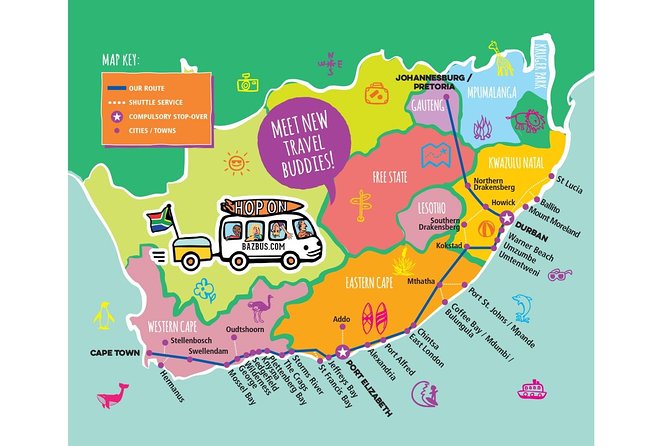
This is a one-way route that runs between Port Elizabeth and Cape Town, with pick-up and drop-off across 200 accommodations in around 40 cities, towns, and villages. You can pre-book stretches in advance or book sections as you travel, depending on how you like to travel.
What you’re really buying is the ability to build your trip like a set of “chapters.” Each chapter is a town, and each chapter has a time length you decide. The schedule constraint is real, so you can’t treat it like a private car. But you can still shape the journey more than with most fixed bus routes.
A smart way to use this style of planning:
- Choose 2–3 towns you’re confident you want to spend time in.
- Add 1–2 additional hop points that work as backups.
- Keep one extra night as a buffer so you’re not forced to move the moment you feel tired.
Because the ticket has no time limit, you can also slow down if your trip changes shape. That’s especially useful if you’re traveling in a season where weather or road conditions affect your plans.
What each stop is good for (and the trade-off you’re making)

You won’t have one pre-set “this is the stop order” tour schedule. Instead, you’ll pick from stops along the route—big towns, smaller towns, and everything between. Since the exact list of stops isn’t fixed for everyone, the best approach is to judge stops by what you want that day, not by what the schedule says.
Think of stops in three practical categories:
1) Towns for logistics and reset
These are places where you can do the everyday stuff well: laundry, groceries, a proper meal, and a place to feel human again. The trade-off is that staying here too long can make you feel like you’re delaying the fun part. Use them as a base, not as an identity.
2) Towns for views and “walk out the door” exploring
Coastal and scenic areas usually reward you with quick wins: you step out, you get perspective, and you can move at your own pace. The trade-off is time. If the next hop has limited departures, you might have to plan your “go for a sunset” moment so you still catch the daily bus.
3) Smaller villages for atmosphere and unforced wandering
Smaller stops tend to feel simpler and more relaxed. You might find it easier to slow down, talk to locals, and take photos without feeling like you’re in a crowd. The trade-off is services can be lighter, so if you need banking, specific stores, or certain tours, you may need to do them when you reach a larger town.
Across all categories, the same thing holds: the flexibility is real, but the bus schedule still sets a rhythm. The main downside people point out is that the bus can be limited—so you should build your days around catching the daily departure rather than expecting unlimited timing.
Bike and surf gear: the small feature that can change your whole trip

If you’re bringing a bike or surfboard, the trailer attached to the bus is a big deal. Standard buses often make you choose between traveling light and traveling with your gear. Here, you’re allowed to bring the extra items you’d want for an active route.
This is valuable for two reasons:
1) You protect your trip style. If you planned to cycle part of the Garden Route, you don’t want to ditch the bike because transportation gets annoying.
2) You reduce decision fatigue. Instead of scrambling with last-minute alternatives for equipment, you can stick to your plan and focus on where you want to spend time.
Just remember that you still need to coordinate your hop timing. Gear adds a little time to boarding, so make sure you’re ready early since the rule is to be ready 15 minutes prior.
Comfort, group size, and why “shared” can still feel easy
A shared bus can sound stressful, but this one is capped at a maximum of 22 and uses a compact 19-seater style. That size usually creates an easier vibe than bigger coaches.
Also, the service includes a friendly, helpful and experienced driver, which is one of those details that matters when plans shift. In real life, shifts happen—weather changes, people want an extra night, or a hop decision changes with your mood. When the driver is experienced and the operation runs like a system, you spend less time troubleshooting and more time traveling.
One more practical note: the service includes accommodation pickup and drop-off listed for selected hostels (while pickup/drop-off coverage is described broadly at 200 accommodation). So when you’re choosing where you’ll start and where you’ll jump off, check that your specific lodging is included for pickup. That avoids the classic surprise of arriving at your stop expecting door-to-door service when your accommodation only has drop-off.
Price and value: does $199 make sense for your style?

At $199 per person, this isn’t the cheapest option. But it can be strong value when you compare what you’re avoiding: the time and effort of piecing together multiple transport bookings, plus the friction of not being picked up near your accommodation.
Here’s what you get that lowers your real cost, even if the sticker price looks steep:
- One-way hop-on hop-off with a no time limit structure.
- Pickup and drop-off from a wide range of accommodation choices.
- Unlimited itinerary changes (up to 12 hours before departure).
- A small vehicle with semi-luxury comfort and a driver who’s there to keep things moving.
- A trailer that can handle things like a bike or surfboard.
You also avoid one big hidden cost: the stress cost. When transport is predictable, you make better decisions about where to spend your days. If you’re the kind of traveler who wants to wander and adjust, this price can feel reasonable fast.
If, on the other hand, you already have your route and timing nailed down and you’re hopping between towns only once, you might find cheaper point-to-point options. In that case, the value comes less from flexibility and more from convenience.
Who this one-way bus suits best (and who should skip it)
This fits best if you:
- Want to keep your schedule flexible without planning every single connection.
- Like the idea of choosing your own stops and then spending your time where it clicks.
- Need near-door pickup instead of battling long taxi rides or distant stations.
- Bring active travel gear like a bike or surfboard.
It’s less ideal if you:
- Need multiple departures per day at the same stop. The service is flexible, but the schedule can be limited—so you can’t always craft a perfect timetable down to the hour.
- Hate shared transport and prefer private cars with custom routes. This is shared by design.
If your trip is short and you already know exactly where you’ll sleep each night, you may not use all the flexibility. But if your plan is evolving—either by choice or because South Africa changes your mood in real time—this option earns its keep.
Should you book Baz Bus Port Elizabeth to Cape Town?
If you want a smooth, human-scale way to move along the Garden Route without locking yourself into a fixed tour schedule, I think this is a smart booking. The big reason is control: you can decide where you get off, how long you stay, and then change your mind without starting over.
Book it if convenience matters—especially the accommodation pickup/drop-off idea—and if you want a setup that works for active travel with a bike or surfboard. It’s also a good choice if you like the social side of shared transport, but still want enough comfort that long stretches don’t feel grim.
Skip it if you know you’ll be frustrated by limited departures per stop or if you want total control over timing. In that case, you might prefer private transport or a more fixed itinerary.
FAQ
How much does the one-way Baz Bus cost from Port Elizabeth to Cape Town?
The price is listed at $199.00 per person.
Is this a one-way trip or round trip?
It’s a one-way service from Port Elizabeth to Cape Town.
How flexible is the ticket?
There is no time limit on the ticket, and you can hop on and off where you want along the route in one direction.
Can I change my itinerary after booking?
Yes. You can make unlimited itinerary changes up to 12 hours before departure.
Is there pickup and drop-off from my accommodation?
Pickup and drop-off are offered from a list of over 200 accommodations between Port Elizabeth and Cape Town, with accommodation pickup and drop-off noted for selected hostels.
Does the bus allow bikes or surfboards?
Yes. There is a trailer attached so you can bring along your bike, surfboard, or similar items.
When should I be ready for pickup?
You need to be ready 15 minutes prior to your pick-up time.
How many people are on the bus?
The maximum group size is 22 travelers.
What’s the cancellation policy?
You can cancel for a full refund if you cancel at least 24 hours in advance of the experience’s start time.
What can I expect about service frequency?
The schedule is limited; one review notes it runs once a day in each spot, so you’ll want to plan your time around that rhythm.