
First you get a smart walking route, then panoramic bus time. This Oslo combo gives you Vox City Walks storytelling on foot plus a 24-hour hop-on hop-off double-decker ride to see the big-name landmarks like the Opera House, Akershus Castle area, and the Viking Ship Museum.
I especially like that the walking tour connects the city’s ideas—why Oslo is called the Tiger City, what the Nobel Peace story means, and why the name Christiania mattered. One thing to watch: the bus portion can hit crowding at busy morning stops, including the University area, so you’ll want a flexible plan.
In This Review
- Key highlights you’ll actually use
- Why this Oslo combo makes sense for a first visit
- Where you meet (and how to find the right guide)
- Walking Oslo’s Sentrum: Karl Johan, the Parliament area, and the Tiger City story
- Christiania on foot: the old Oslo core and the 300-year name shift
- Nobel Peace Prize Center plus Aker Brygge: turning landmarks into context
- The hop-on hop-off bus: panoramic views and smart stop-hopping
- How to ride the bus without wasting time
- Vox City app: the self-guided route you’ll actually finish
- Price and value: what $82 buys you in Oslo time
- Best for: who this pass fits (and who should consider alternatives)
- Should you book this Best of Oslo pass?
- FAQ
- FAQ
- How long is the Oslo pass valid?
- Where does the walking tour start?
- Can I hop on the bus at different stops?
- What are the bus tour operating hours?
- What languages are offered for the live walking guide?
- Is there an audio guide, and what languages are included?
- Do I need to download an app for the self-guided part?
- What is not included in the price?
Key highlights you’ll actually use

- Nobel Peace context: learn why the Nobel Peace Award story is tied to Oslo and why it’s unique outside Sweden
- Sentrum to Christiania: walk the modern center and the older core to see how Oslo’s layout and identity evolved
- Tiger City clues: catch the symbol trail linked to Oslo’s nickname, including the Fire Tower and Tiger Sculpture area
- Double-decker panoramas: hop around more than 11 stops for wide city views and fast repositioning
- Vox City app support: download the app with QR access for an extra self-guided walking route after the tour
Why this Oslo combo makes sense for a first visit
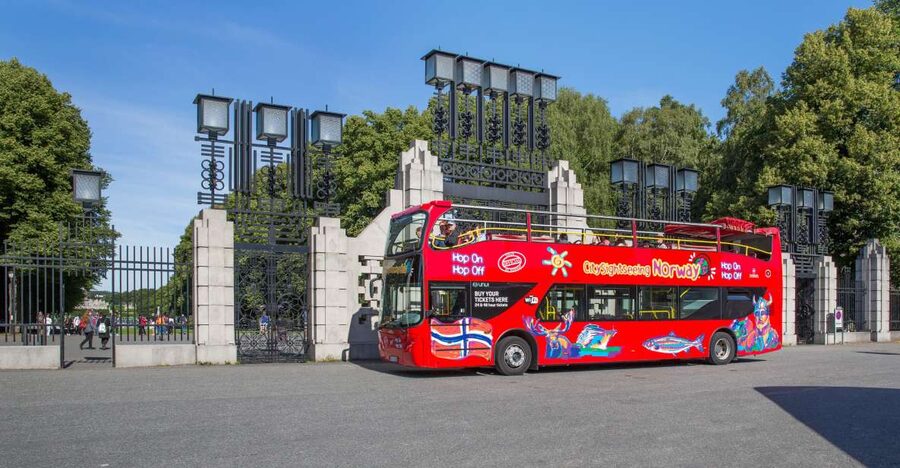
Oslo can feel spread out until you stitch it together with a plan. This pass does that in two ways: you start with a structured walking tour in the core, then you switch to a bus for getting between neighborhoods without burning your whole day on transit.
What you get is a day shaped around the most visit-worthy parts of the capital—especially Sentrum and the historic center called Christiania—plus enough bus stops to keep your timing under control. If you’re the type who likes to look closely while walking, but also wants an easy “big picture” ride, this format fits.
The main tradeoff is the hop-on hop-off logistics. If you hit the wrong time window at a popular stop in the morning, you can end up waiting for the next bus while other groups (like cruise ship crowds) are trying to board.
Where you meet (and how to find the right guide)

The tour starts at the University Aula, near the statue of P.A. Munch. The Vox City Walks guide wears a dark blue branded uniform, so you’re not left guessing.
This same spot is also listed as Stop 1 on the city sightseeing route, which is useful. It means you can start your day in the same place you can later hop on the bus, rather than doing the “find-this-stop” scramble after you’re already walking and sightseeing.
Practical tip: arrive a bit early. Even if the walking portion starts on time, getting settled helps you start the route focused instead of distracted.
Walking Oslo’s Sentrum: Karl Johan, the Parliament area, and the Tiger City story
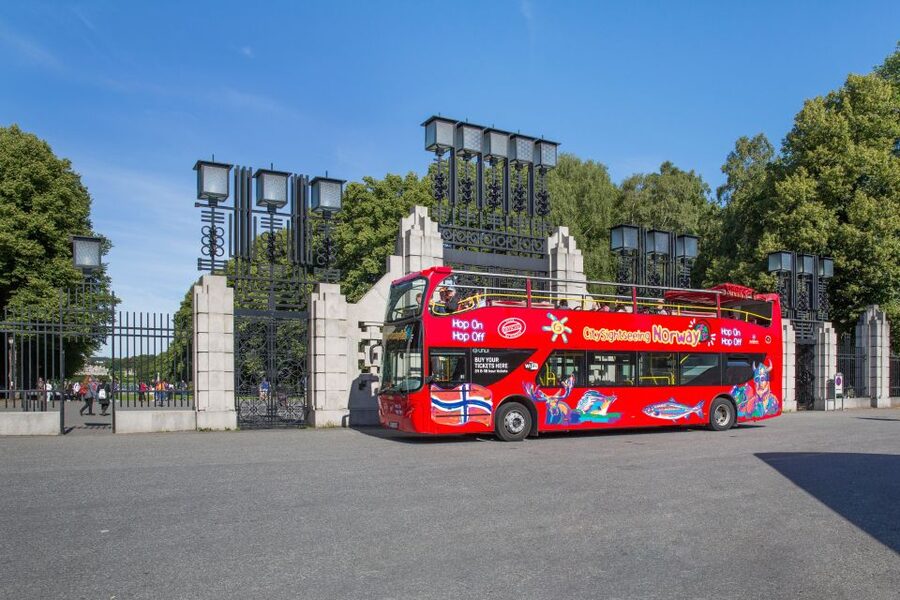
Your walking route centers on Sentrum, Oslo’s diverse city center. You’ll cover the classic landmarks that frame the Norwegian capital’s public life and street rhythm.
Here’s what this part is really good at:
- It gives you the “why” behind what you’re seeing, not just the what.
- It links neighborhoods and monuments so they start to feel like a coherent city, not a list of buildings.
You’ll pass key civic and landmark points such as the Norwegian Parliament area and Karl Johan Street—the main street vibe where Oslo’s visitors and locals both funnel through. You’ll also see the Grand Hotel along the way, which helps anchor the more formal side of the city.
Then comes the Tiger City theme. Oslo is nicknamed the Tiger City, and this walking tour turns that into a trail you can spot in the streets. You’ll stroll by the Fire Tower and the Tiger Sculpture, plus other symbolic spots connected to that idea. If you’re the kind of traveler who enjoys learning a city’s nickname and then looking for the evidence, this is one of the most satisfying parts of the day.
Possible drawback: walking pace and street density. The core areas are compact, but you still want comfortable shoes. If your legs are already tired from a long travel day, you’ll feel it before you reach the bus.
Christiania on foot: the old Oslo core and the 300-year name shift
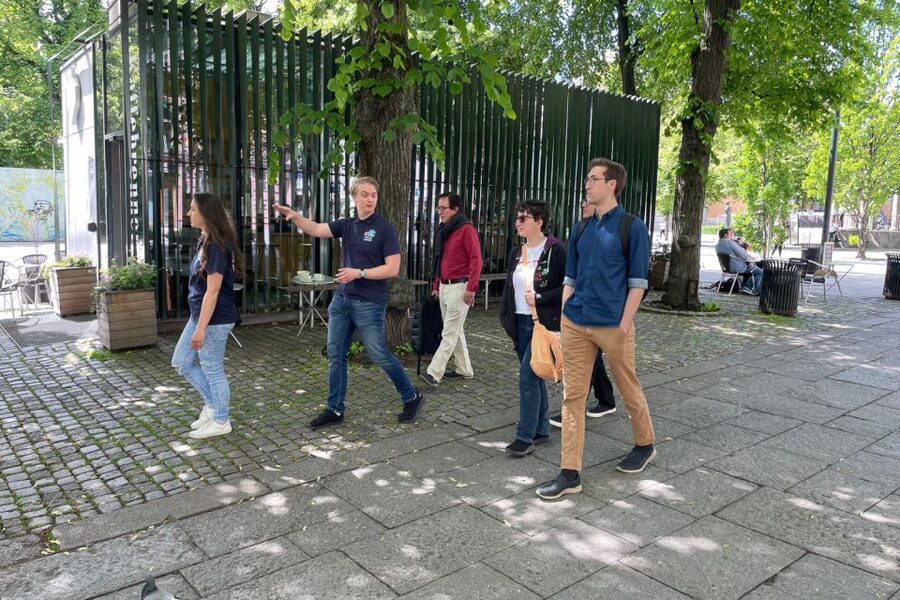
After the Sentrum section, you head toward Christiania, described as the historical center of Oslo. This is where the walking tour adds meaning. Instead of just saying you’re seeing old buildings, it explains how the capital changed identity over time.
One specific detail included is the reason Oslo changed its name for 300 years. That’s the kind of fact that makes the city’s story click, especially when you walk past the older civic and ceremonial points.
Along this segment, you’ll encounter sights connected to Oslo’s older layers, such as:
- Stortorvet Gjestgiveri and surrounding historic blocks
- Glasmagazinet and Kvadraturen
- Oslo Cathedral
- Gamle rådhus (Old Town Hall) and Oslo Second City Hall
- Ceremony Pier, for a waterfront-feeling endpoint
This part also helps you understand Oslo’s relationship to water. Even without getting on a boat, the walk keeps nudging you toward the idea that the city’s character is tied to the harbor and shoreline.
If you prefer “history you can point to,” this walk part is a strong match. It’s not a museum day, but it gives you enough story to make the streets feel purposeful.
Nobel Peace Prize Center plus Aker Brygge: turning landmarks into context
Your highlights include the Nobel Peace Prize Center and Aker Brygge, and the walking tour is designed to give you the background so these places don’t feel like random stops.
The Nobel Peace angle matters because it ties Oslo to a specific global identity. The tour includes the story about the Nobel Peace Award and notes it as the only one outside Sweden, which helps you understand why Oslo takes this theme seriously. You’re not just seeing the building; you’re getting the explanation that makes the landmark feel relevant.
Then there’s Aker Brygge, the kind of waterfront area that’s easy to understand the first time you see it. Even if you don’t spend a long stretch here, it helps you picture how Oslo balances official landmarks with a lively harbor setting.
How to use this: keep your eyes open for photo moments, but don’t block your walking rhythm waiting for the perfect shot. If you plan to return later, use the walk to learn where things are and how the city’s layout flows.
The hop-on hop-off bus: panoramic views and smart stop-hopping
Now you switch gears to the City Sightseeing double-decker bus. The bus tour is built around speed and perspective. From the upper deck, you get panoramic city views as you move around.
You’ll also get a practical learning angle. The bus tour is set up with strategically placed stops—listed as over 11 stops—and each stop comes with facts related to Oslo museums and sights. That’s helpful if you want the broad “what this area is about” before you decide what to explore deeper.
Big-name stops you can target include:
- Akershus Castle area
- Oslo Opera House
- Viking Ship Museum
- Museums associated with Kon-Tiki and Cultural History
Timing matters. The bus operates between 10:00 AM and 4:00 PM, so you’re not running it all day like some city passes. You’re using it as a controlled, high-value window.
A key consideration from real-world logistics: boarding can get tight at the University area in the morning. The pass starts close to Stop 1, but buses can fill up and you may have to wait for the next one when cruise ship crowds are lining up. Your best move is to not depend on exactly one bus arrival. If you can, hop on at a less crowded stop after your first stretch, even if it adds a short walk.
How to ride the bus without wasting time
Here’s a simple strategy that fits the way this pass is structured.
First, do enough walking early to know your bearings around Sentrum and Karl Johan. Then, use the bus to jump to areas you’d otherwise struggle to reach efficiently on foot.
Second, think in “one-side” sightseeing blocks. For example, when you’re on the upper deck, you can scan the next neighborhood and plan where you’ll hop off next. The tour’s format helps because it’s not only transportation—it’s also an audio + fact guide in motion.
Third, keep your hop count flexible. The ticket covers 24 hours, but the bus operating hours are limited. Use the 24-hour validity as a planning buffer, not as a promise that every hour is equally good.
If you’re traveling with limited mobility energy, the bus is your friend. It lets you see more key areas while saving your legs for the walk portion and any specific stops you want to enter on your own.
Vox City app: the self-guided route you’ll actually finish

After the tours, you can download the Vox City app using the QR code on your voucher. This is included, and it’s meant to extend your day beyond the guided walk and bus.
The app offers a curated audio-guided route through main quarters. You’ll also find an extra set of sights listed for the self-guided route, including:
- Frogner Stadion
- Trinity Church
- Karl Johan’s monument
- Grensen
- Aamodt Bridge
…and more
You might not do every stop, but that’s the point. Oslo is walkable, yet it’s also easy to lose time searching for the next viewpoint. The app helps you keep moving with purpose after the official guiding stops.
Also note: the pass includes complementary mobile-app time, and the guided portions include an audio guide available in English, French, German, Spanish, and Italian. Even if you only listen in English, it’s handy if someone in your group prefers another language or if you want to replay sections.
Price and value: what $82 buys you in Oslo time
At $82 per person for a package that combines a guided walking tour and a 24-hour hop-on hop-off bus ticket, the value is about time saved and context gained.
You’re paying for two things at once:
- A guided route on foot that teaches stories about Nobel Peace, Christiania, and Oslo’s Tiger City theme
- A practical transportation-and-orientation tool via the double-decker bus, with stops near major sights
What’s not included matters for your planning. The pass does not include:
- Entry tickets to attractions
- Food and drinks
- Public transportation tickets
So think of it as a strong framework for the day, not a “pay once, see everything inside” pass. If you want museum entrances (and Oslo has a few that can’t be ignored), budget extra on top.
The best value usually comes when you’re smart about decisions. Use the bus to scout where you’ll want to go next, then pick just a couple of entries you genuinely care about. Otherwise you risk paying for a bus you only half-use.
Best for: who this pass fits (and who should consider alternatives)
This pass is a great match if you:
- Want an organized way to cover Sentrum and Christiania without getting lost
- Like storytelling tied to street-level landmarks
- Plan to use the bus for jump points around Oslo rather than doing everything by foot
- Appreciate an app-based add-on route after the main guiding ends
You may want to rethink if you:
- Can’t handle crowds at popular boarding points in the morning
- Expect to hop off repeatedly but only have a very narrow time window (bus hours end at 4:00 PM)
- Want fully included museum entry tickets (this pass doesn’t cover admissions)
If you’re primarily museum-focused, you might use the walking tour for context and then build the rest of your day around fewer, high-priority museum entries.
Should you book this Best of Oslo pass?
If you’re doing your first (or early) visit to Oslo and you want both street-level stories and fast sightseeing transportation, I’d say yes. The combination of the walking tour with its Nobel Peace + Christiania + Tiger City context, plus a double-decker hop-on hop-off option, is a solid way to get oriented and see a lot without over-planning.
Just be realistic about the bus portion. Have a plan B for boarding at the University area—don’t bet your schedule on getting the first bus right at the start. With that mindset, this pass can turn a limited day into a well-shaped Oslo experience.
FAQ
FAQ
How long is the Oslo pass valid?
The pass is valid 1 day, from the first activation.
Where does the walking tour start?
Tours depart from the University Aula near the statue of P.A. Munch. The guide wears a dark blue Vox City Walks uniform.
Can I hop on the bus at different stops?
Yes. You can hop on at any designated City Sightseeing stop around the city.
What are the bus tour operating hours?
The bus tour runs from 10:00 AM to 4:00 PM. You should check the partner website for the latest updates.
What languages are offered for the live walking guide?
The live tour guide is available in English and Norwegian.
Is there an audio guide, and what languages are included?
Yes. Audio guide access is available in English, French, German, Spanish, and Italian.
Do I need to download an app for the self-guided part?
Yes. You’ll scan the QR code on your voucher to download the Vox City app and access the included self-guided walking route.
What is not included in the price?
Entry to attractions, food and drinks, and public transportation tickets are not included.