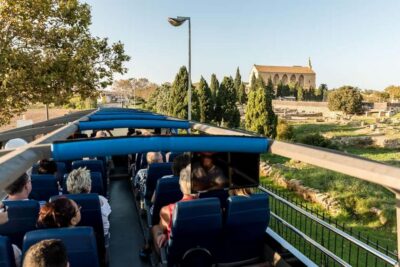
Philadelphia goes by fast from the top deck. This hop-on hop-off bus is a quick way to see the big-name landmarks of Philly without stressing over directions, and I love the open-top, double-decker views plus the live onboard commentary that turns street names into a story (I’ve heard guides like Nick and Naomi deliver that part especially well). You get flexibility too: hop off where you want, then hop back on when you’re ready.
One thing to keep in mind: it’s not always a perfect, clockwork experience. On bus-tour days with crowds, detours, or audio hiccups (a couple guides had microphone trouble), you may wait longer than the ideal schedule and you might need to flag the bus down to get picked up.
If you want an easy first look at Philadelphia, this format is hard to beat, especially when you follow the simple strategy many people use: do the whole loop first, then ride again to spend time where you actually want to linger.
In This Review
- Quick Hits Before You Ride
- How the Hop-On Hop-Off Loop Really Works in Philly
- Starting at Independence Visitor Center: Your Best First Move
- Independence Hall Area: Liberty Bell, Betsy Ross, and the US Mint Zone
- Constitution Center and Downtown Arch Street: Where the Stories Turn
- Reading Terminal Market and Center City West: Eat First, Then Explore
- City Hall to the Parkway: Big Architecture Views on the Bus
- Barnes Foundation and Rodin Museum: Art Stops That Don’t Feel Random
- Eastern State Penitentiary: A Different Side of Philly History
- Philadelphia Museum of Art and the Rocky Steps: The Photo Moment
- Franklin Institute to Rittenhouse: Parkway to Parks and People-Watching
- Pine Street and South Street: The Fun Hops for Shops and Snacks
- Vietnam Veterans Memorial and Penn’s Landing: The Scenic Close
- Price and Value: Is $39 a Smart Deal?
- What Can Go Wrong: Wait Times, Pickup Confusion, and Audio Issues
- Who This Tour Fits Best (and Who Might Prefer Another Plan)
- Should You Book This Philadelphia Hop-On Hop-Off City Tour?
- FAQ
- How long is the Philadelphia Hop-On Hop-Off City Tour?
- How often does the bus arrive at each stop?
- Do I need to print my ticket?
- Is live commentary included, and what language is it in?
- Are entrance fees to attractions included?
- Is the tour wheelchair accessible?
- Can I bring pets onboard?
Quick Hits Before You Ride

- Do the full loop first. Get your bearings, then return to the stops that call your name.
- Top deck time is prime time. Views beat photos taken while buried in traffic lines.
- Listen for the stop announcements. Some guides clearly cue upcoming stops, and it makes hopping off smoother.
- Build in patience. Buses usually run every 20–25 minutes, but real life can stretch that.
- Plan for audio issues. If you can’t hear well, shift seats and stay alert for the next stop cue.
- Use the food stops on purpose. Reading Terminal Market is one of the smartest places to hop off for lunch and snacks like a cheesesteak or a soft pretzel.
How the Hop-On Hop-Off Loop Really Works in Philly
This tour is designed for one simple goal: help you see a lot of Philadelphia with less walking and less route anxiety. You start, ride the loop, and use the stops as your own personal menu. Most of the time, you’ll be on an open-top double-decker, so you’re basically sightseeing while moving.
The live narration matters more than you’d think. A good guide helps you connect the dots between neighborhoods—why Independence-area history is clustered where it is, how the city layout shapes what you see from the bus, and which areas are worth your time if you only have one day.
It’s also built for different travel styles. If you love museums, you can hop off more often. If you’d rather wander a park or take photos, you can hop less and still get the big highlights. Just remember: entrance fees and attraction tickets are not included, so the value comes from transportation plus commentary, not admission.
Starting at Independence Visitor Center: Your Best First Move

Most people will want to start at the Independence Visitor Center area, at the southwest corner of 6th and Market Street. This is the most natural way to begin because so many of Philly’s headline sites connect to this zone.
Here’s the practical tip: give yourself extra time to locate the correct pickup spot. Some riders found the signs hard to spot, and once you’re confused at the stop, you end up losing the very time you hoped to save by using a bus.
Also, don’t overpack your first ride with hopping off. The smartest pattern is to ride the full loop first, then do a second pass on your must-sees. That way, you won’t accidentally leave a favorite area too early and regret it later.
Independence Hall Area: Liberty Bell, Betsy Ross, and the US Mint Zone
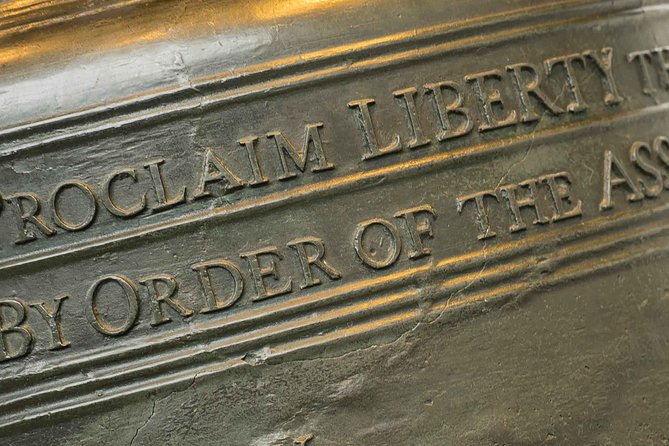
This section is why many people book the tour at all. You’ll pass right through the Independence-area core, which is where Philly’s national-story reputation comes from. Plan for big visuals from the bus, then decide where you want to walk up close.
Early on, you’re staged around stops like Independence Visitor Center and nearby Independence Mall access. That’s where you’ll find the Liberty Bell/Independence Hall orbit—perfect for photos from the top deck, and ideal for hopping off when you want to go at a slower pace.
Then the route shifts toward Betsy Ross and the Philly Tour Hub area. If you like early American history, this is a convenient stop because you can step out, orient yourself, and come back without needing a car or complicated transit changes.
Next you’ll hit the US Mint / Ben Franklin’s Grave area. Even if you don’t go in everywhere, the bus makes it easy to “sample” these landmarks and decide what’s worth your time for the rest of the day. This is also where it helps to listen closely during narration—what you’ll hear often tells you what kind of visit fits your style.
Constitution Center and Downtown Arch Street: Where the Stories Turn
As the bus heads along major downtown corridors, you get a different kind of Philly. Here, the emphasis shifts from the founding era to how the country’s story kept developing in Philly’s orbit.
A key stop in this zone is the National Constitution Center area. It’s a good hop-off point if you want a structured museum-style visit, but it’s also useful even if you only want to glance and decide later. When you’re touring by hop-on hop-off, it’s okay to treat some stops as scouting missions.
You’ll also move through central transit-and-retail territory around Arch Street. That matters because Philly sightseeing is not just about monuments. It’s also about how the city lives around those monuments—street corners, crowds, and the “real day” feeling you only get when you’re near busy blocks.
One small drawback: downtown can get congested. If traffic slows the bus, don’t panic. It’s a city issue more than a tour issue. Just keep your timing flexible, especially around peak hours.
Reading Terminal Market and Center City West: Eat First, Then Explore
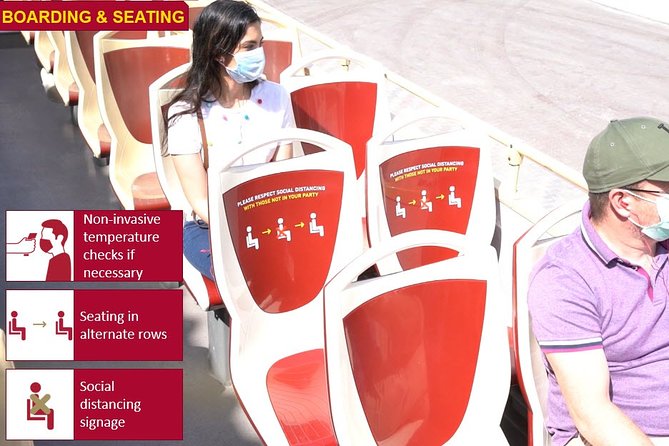
If you’re the kind of person who gets cranky when sightseeing steals your lunch hour, this is your section. The Reading Terminal Market / Convention Center Marriott / Macy’s area stop is one of the best places to hop off because you can grab a bite without losing your place on the route.
Philadelphia is famous for food, and the tour itself gently nudges you toward classics like a cheesesteak and a soft pretzel. Even if you don’t go full “tourist chow-down,” this is the area where you’ll find plenty of options nearby, which makes your day feel easier.
Center City West is another helpful portion of the loop because it keeps you close to shopping and services. That’s not glamorous, but it’s practical. When you need water, a quick snack, or a place to reset your energy, it beats wandering too far from the bus route.
City Hall to the Parkway: Big Architecture Views on the Bus
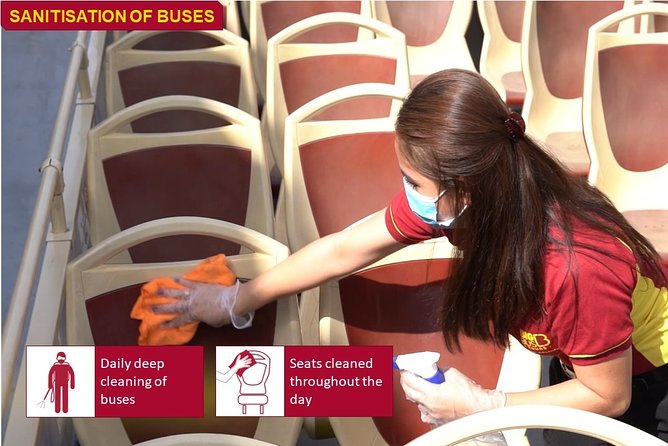
The route continues toward City Hall and Love Park, which gives you a strong sense of downtown layout. From the top deck, you can usually get a better overhead view than you can on foot, and it helps you understand where the major east-west streets run.
Then you’ll pass the Cathedral Basilica of Saints Peter and Paul area, including nearby sister-city references. If you like architecture, this is a stop that can be worth a short walk just to see the scale and style up close. Even if you only stay on the bus, the bus angle gives you a good “first look.”
From here, the route feeds into one of Philly’s signature museum corridors near Benjamin Franklin Parkway. This is where you start stacking in options: art stops, memorial stops, and the kind of grand building frontage that makes the city feel confident and historical at the same time.
Barnes Foundation and Rodin Museum: Art Stops That Don’t Feel Random

Two of the most focused art stops along the route are the Barnes Foundation and the Rodin Museum areas. The bus format makes this easier because you’re not guessing how to connect museum time to everything else you want to see in one day.
What I like about these stops is that they give you a choice. You can hop off for more time if you’re an art fan, or you can keep moving if you’d rather save your energy for the most famous sites like the museum steps.
If audio is clear during your ride, the narration helps put these stops into context. If you can’t hear as well, don’t worry—your eyes do a lot here. You’ll see why these areas are magnets for visitors, and that’s usually enough to decide.
Eastern State Penitentiary: A Different Side of Philly History
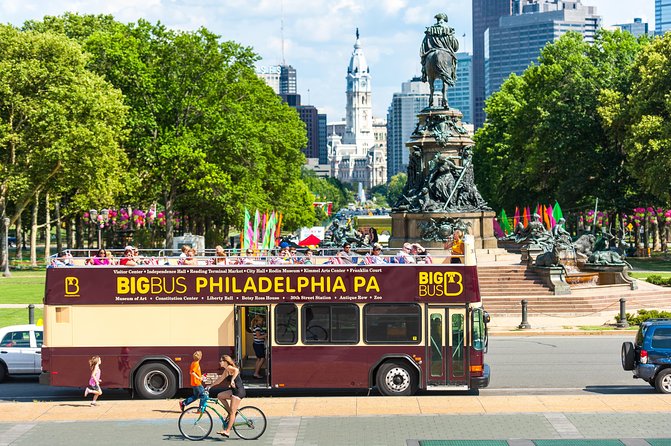
Eastern State Penitentiary is a standout stop on this route, especially if you want your history not just celebratory, but complicated. From the bus, you get quick orientation. Once you hop off, you have control over how long you want to spend.
Here’s the practical advice: treat this as a visit you schedule with care. The penitentiary-type sites often feel like they deserve real time. If you try to “power through” every stop, you’ll burn out before you reach the most famous outdoor photo spots.
So if Eastern State is on your list, use it like a main event. Take your time on that stop, then ride the bus again later when you’re ready to shift back into scenic sightseeing mode.
Philadelphia Museum of Art and the Rocky Steps: The Photo Moment
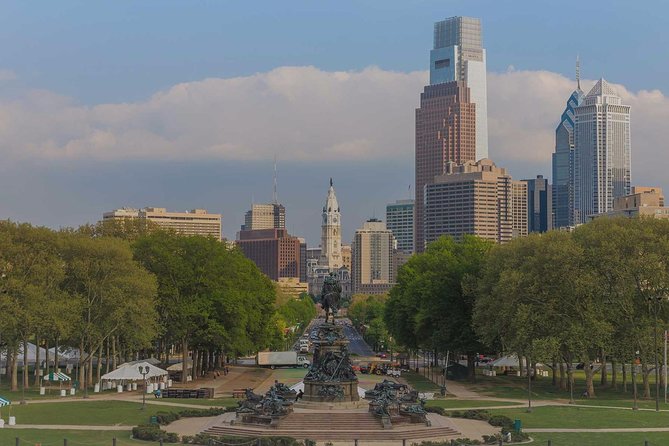
If there’s one stop most people picture, it’s the Philadelphia Museum of Art area and the famous Rocky Steps. The tour gives you a chance to hop off for that experience without committing to a full walking day from elsewhere.
From the bus, you’ll get a sense of the climb and the layout. Then, when you hop off, you can pace yourself—short stroll, stairs and photos, or a longer visit if that’s your thing. The big win here is control. You don’t have to “finish” the place in one go just to catch the next bus.
One caution: branches and overhangs can be real in street trees and near buildings. If you’re sitting on the upper deck, keep an eye up. A rider once had tree branches hit them, and that’s the kind of minor annoyance that’s easy to avoid by moving your seat slightly if needed.
Franklin Institute to Rittenhouse: Parkway to Parks and People-Watching
As you head onward, you’ll reach areas like the Franklin Institute / Logan Circle stop. This is a good pivot point if you want something more science-leaning or family-friendly, since it’s a hub-like area where people often spend time before moving on.
Then you continue toward Shops at Liberty Place and the Bellevue / Rittenhouse Square area. These stops are useful because they let you shift from museums and historic sites into “life in Philly” mode—parks, shopping corridors, and that lively center-city feel.
Rittenhouse Square is especially handy for a reset. Even if you don’t go into every store or attraction, hopping off here can turn a sightseeing day into a more normal, enjoyable day. You get space to breathe, take photos, and watch the city work.
Pine Street and South Street: The Fun Hops for Shops and Snacks
The tour continues with stops around Pine Street and then onto South Street / Head House Square. This is where Philly feels less like a museum and more like a street festival year-round.
These stops are ideal if you like casual browsing, people-watching, and quick detours. The hop-on hop-off format keeps it low-stakes. You can spend 30 minutes wandering and then get back on before your next “must-see” stop.
If you’re planning snacks, this is a smart way to do it. Instead of eating at random points, you’re choosing areas designed for food and strolling. It saves time and keeps you from feeling rushed.
Vietnam Veterans Memorial and Penn’s Landing: The Scenic Close
Near the end of the loop you’ll reach the Vietnam Veterans Memorial area and then head toward Penn’s Landing and the waterfront. This closing stretch is a big part of why the tour feels like a “day in Philly” rather than just a bus that drops you at museums.
Penn’s Landing / waterfront areas give you open-air views and a calmer pace than the densest downtown zones. It’s a nice finishing point if you still have energy left, or if you want to hop off, take photos, and just enjoy the change of scenery.
If you’re sensitive to exhaust odors, you might prefer the breezier spots or seating choices that put you away from the street-level flow of fumes. One rider noted exhaust smell as a drawback, and being strategic about where you sit can help.
Price and Value: Is $39 a Smart Deal?
At $39 per person, this tour is a value when you use it as transportation plus guided storytelling, not as a substitute for attraction tickets. You’re paying for a flexible route with live English narration, up to 25 hop-on/hop-off stops, and the kind of efficiency that saves you time across a spread-out city.
What makes the price feel more reasonable is how much you can cover without navigating. In a city like Philadelphia, the “getting there” part can eat your day if you’re hopping between neighborhoods. This bus keeps you moving along key corridors and lets you decide what to slow down for.
Also, the tour includes map guidance and multiple ticket durations (1, 2, or 3 days). Even though the main loop time is about 1 hour 30 minutes, the real advantage is your ability to re-ride and re-choose. If you only want one day, ride the loop once, then spend the rest of your time at the places you cared about most.
If you’re traveling in a busy period, book early. The tour is often purchased about 13 days in advance, so grabbing your spot ahead of time can be the difference between smooth timing and last-minute hassles.
What Can Go Wrong: Wait Times, Pickup Confusion, and Audio Issues
Hop-on hop-off tours live in the real world. That means waits happen, especially if there’s congestion, construction, or detours. Some riders found the pickup sign locations unclear, and a few reported long waits at certain stops. If that happens to you, don’t assume the tour is broken—plan to adjust.
Another issue to watch for: bus pickup behavior can be inconsistent if there are no visible riders waiting at a stop. A good habit is to stand where the bus can see you and clearly signal when it approaches.
Audio can also vary. Some riders noted microphone trouble, which meant they missed parts of the narration. If you run into that, shift seats, face forward, and use the visible stop signs outside to stay oriented.
Finally, crowding can get intense at prime sightseeing moments. If you’re doing this with kids or you hate standing in lines, pick your hop-off timing wisely—avoid stacking your stops all at once.
Who This Tour Fits Best (and Who Might Prefer Another Plan)
This tour fits best if you’re:
- Visiting Philly for the first time and want a quick, organized overview
- Short on time and want to see multiple major areas without constant transit planning
- Traveling with family and need a plan that doesn’t collapse into a long walking day
- Interested in history and art, but also want flexibility to choose what to deepen
It may not fit you as well if you:
- Hate waiting around for scheduled transport
- Want guaranteed, exact timing at every single stop
- Need quiet, low-stress conditions all day (crowds and audio can vary)
If you’re the kind of traveler who likes to build a day from scratch and you already know Philly well, you might not get as much value. But if you want guidance from the bus and freedom with the stops, this is built for that.
Should You Book This Philadelphia Hop-On Hop-Off City Tour?
I’d book it if you want a low-effort way to connect the dots across Philadelphia’s most famous landmarks—especially if you plan to ride the whole loop first, then return to the spots you truly care about. At $39, the value hinges on how you use it: hop off strategically, eat or reset at high-convenience areas like Reading Terminal Market, and treat the tour as your guided transportation backbone.
Skip it if your priority is one or two deep, specific attractions and you’d rather spend your time on foot or using taxis for exact schedules. But if you’re aiming for a full, flexible day with a big range of stops, this tour is a practical way to see the city without turning your vacation into a map-checking exercise.
FAQ
How long is the Philadelphia Hop-On Hop-Off City Tour?
It’s about 1 hour 30 minutes.
How often does the bus arrive at each stop?
A bus arrives approximately every 20–25 minutes.
Do I need to print my ticket?
No. You can show a printed or electronic version of your ticket at any stop to board.
Is live commentary included, and what language is it in?
Yes. Live onboard commentary is included in English.
Are entrance fees to attractions included?
No. Attraction tickets and entrance fees are not included.
Is the tour wheelchair accessible?
Yes, wheelchair-accessible vehicles with lifts operate on the route, but not all vehicles are equipped. If you require an accessible vehicle, you need to note it in the Special Requirements box.
Can I bring pets onboard?
No pets are allowed onboard, except ADA service animals.