Riga makes sense fast when you ride the loop. I like the 12-language headset narration and the chance to hop off for architecture in the Art Nouveau district; the tradeoff is that the whole ride is fairly short, so you’ll need to pick what matters most.
You board near Triangula Bastion (11.Novembra Krastmala 17) and can use the pass for up to 48 hours after first activation. That extra wiggle room helps if your day includes museums, meals, or just wandering streets longer than planned.
Key points at a glance
- Triangula Bastion start point: easy to find in the Old Town, with buses running through the day
- 11 main stops + extra stops: enough structure to plan photo stops without overthinking it
- Headset audio in 12 languages: choose your language and follow the story of what you’re seeing
- 3-district route: from river views to the center’s monuments and into Art Nouveau facades
- UNESCO-listed architecture areas: Romantic details, masks, mythical monsters, and Alberta Street
In This Review
- Where Riga starts: boarding at Triangula Bastion
- The rhythm of hop-on hop-off: how long you’re really on the bus
- Pardaugava and the Daugava river: where the views set the tone
- Old Town monument moments and the center’s big names
- Art Nouveau speed-run: masks, monsters, and Alberta Street
- Harbor and ferry-terminal views: a calmer side of Riga
- 12-language audio: how to use the headsets properly
- Price and value: when $29 feels fair, and when it doesn’t
- Who this hop-on bus suits best
- Should you book the Riga Red Bus Hop-On Hop-Off Grand Tour?
- FAQ
- Where do the buses depart from?
- How long does the tour take without stops?
- How often do additional buses run?
- How many stops are included?
- What languages are available for the audio commentary?
- How long is the ticket valid after activation?
Where Riga starts: boarding at Triangula Bastion
This hop-on hop-off tour is built for one thing: getting your bearings. The buses depart from the stop by Triangula Bastion at 11.Novembra Krastmala 17, in the Old Town area. That matters because Riga’s sights are spread enough that a simple walking plan can feel long, but the city is compact enough that bus hops still keep your day moving.
Buses run from 9:45 AM to 3:45 PM (with extra services depending on season). If you’re visiting in June–September, there are additional departures every 60 minutes; in October–May, the gap stretches to about 1.5 hours. In plain terms: plan to be ready at your stop when you want to hop, because you might not get a quick next bus the moment you change your mind.
Your ticket is designed for flexibility. Even though this is listed as a 1-day activity, the pass is valid for up to 48 hours after first activation. I like that because it turns a rigid “one-day tour” into something you can shape around how long you actually want to linger at Old Town viewpoints or architecture streets.
Also note the practical step: you’ll exchange your voucher on the bus by showing your booking number to the driver. It’s simple, but don’t leave it until the last second.
The rhythm of hop-on hop-off: how long you’re really on the bus
The ride without stopping is about 60 minutes. That’s the key number for expectation-setting. If you treat it like a moving sightseeing highlight reel, you’ll get a lot out of it. If you expect it to feel like a long guided day with time for every stop, you’ll likely feel rushed.
Think of it like this: you can do the loop for orientation, then use the hop-on part to return to the places you care about most. The pass includes a Riga city map plus a detailed guide of the routes and their stops, which is useful because the tour only works well if you can quickly match “what I’m seeing” with “what stop I should use.”
A note on the experience flow: the route touches three districts. That means you’ll be watching the city change as you go—first the riverfront and the old skyline, then the central monument zone, then the architecture-heavy streets.
One thing to keep in mind from the way people describe using it: stop visibility can be hit or miss. If you rely on spotting the stop marker at street level, give yourself a little extra attention when you’re near intersections. Have the map out for those moments, not just when you’re settled on the bus.
Pardaugava and the Daugava river: where the views set the tone
The tour’s story begins by heading toward Pardaugava, a river-view area on the left bank of the Daugava. This segment is a good way to start because it gives you context. Riga’s Old City looks best when you understand how the river shapes the skyline and where the main historic core sits.
As the route crosses the Stone Bridge, you get the classic panorama of the Old City—often referred to as the City of the Golden Cockerels. Even if you’re not a “roof details” person, this is the point where you start seeing Riga as more than a set of isolated landmarks. It’s a single, recognizable historic whole.
This is also where I’d plan your first photo moments. If you want one or two “I’m in Riga” pictures, this is the moment to grab them, then decide if you want to hop off later for closer exploring.
Practical tip: keep an eye on the bus windows and the order of sights. The narration is pre-recorded and multilingual, and it’s easiest to follow when you’re not busy digging for your phone or translating on the fly.
Old Town monument moments and the center’s big names
After the river and the panorama, the tour moves toward the city centre, where most of the headline sights cluster. You’ll pass the Boulevard Ring, and that’s a useful way to see how Riga’s grand avenues frame the older core.
This central stretch includes major civic landmarks such as the Monument of Freedom, the Opera House, and the Powder Tower. If you only have one day and you want the “main Riga” picture set, these are the stops that usually matter most.
You’ll also get a quick look at the Riga Central Market, described as the largest covered market in Europe. Even if you don’t go inside, seeing it from the route helps you understand why this place is a Riga institution. If you’re the type who likes local food, crafts, or simply watching daily life, you’ll probably want to plan at least a short stop here later.
One practical reality: this tour is designed to show you a lot fast, not to force you into long ticket lines at every landmark. The included map and route guide help you decide which sights are worth hopping off for and which you can appreciate from the bus.
If you’re the kind of visitor who likes to compare buildings side-by-side, this middle portion is your bridge between the Old Town feel and the architecture streets that come next.
Art Nouveau speed-run: masks, monsters, and Alberta Street
Riga’s Art Nouveau is a major reason to choose this type of bus tour. The route moves through architectural areas quickly enough to keep the day rolling, but it’s focused enough that the details still land.
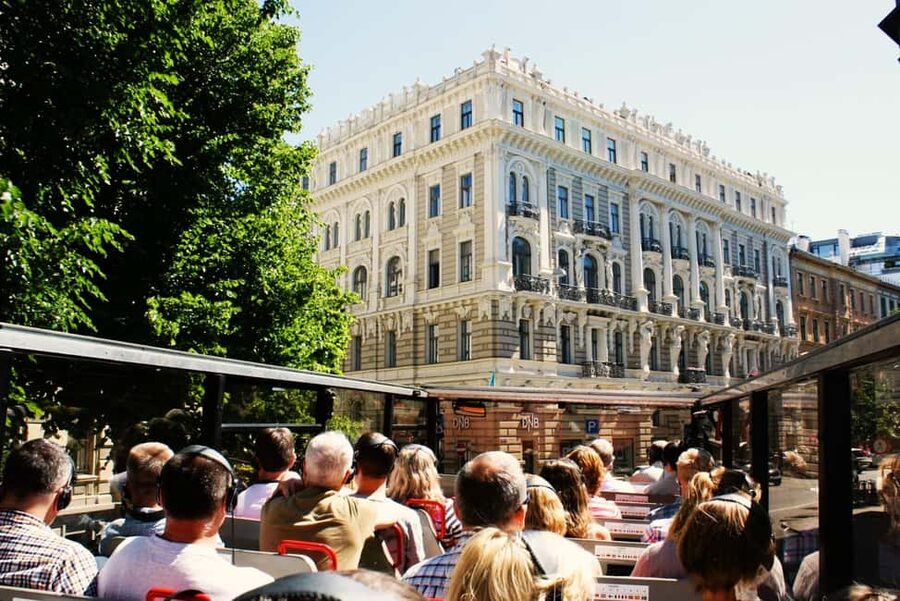
You’ll see a range of styles, including Romantic facades and decorative Art Nouveau. The bus narration highlights the fantasy in the stonework—things like stone masks and mythical monsters. This isn’t just decoration for decoration’s sake; it’s part of Riga’s identity, and you’ll start noticing recurring motifs once your eye is tuned.
A star of this segment is Alberta Street, which features facades linked to architect Michael Eisenstein. This street is well known for how playful and expressive the buildings can be, and this tour gives you a fast path to understand why people talk about it so much.
Even better: the facades in this area are included in UNESCO architectural heritage. That UNESCO connection is worth paying attention to because it explains the bigger picture. These aren’t random pretty buildings; they represent a recognized European design moment and a distinct Riga interpretation.
If you only hop off once for architecture, this is where you’ll probably be happiest doing it. Step out, walk a bit, and let your eyes catch the details your bus window can’t frame.
Harbor and ferry-terminal views: a calmer side of Riga
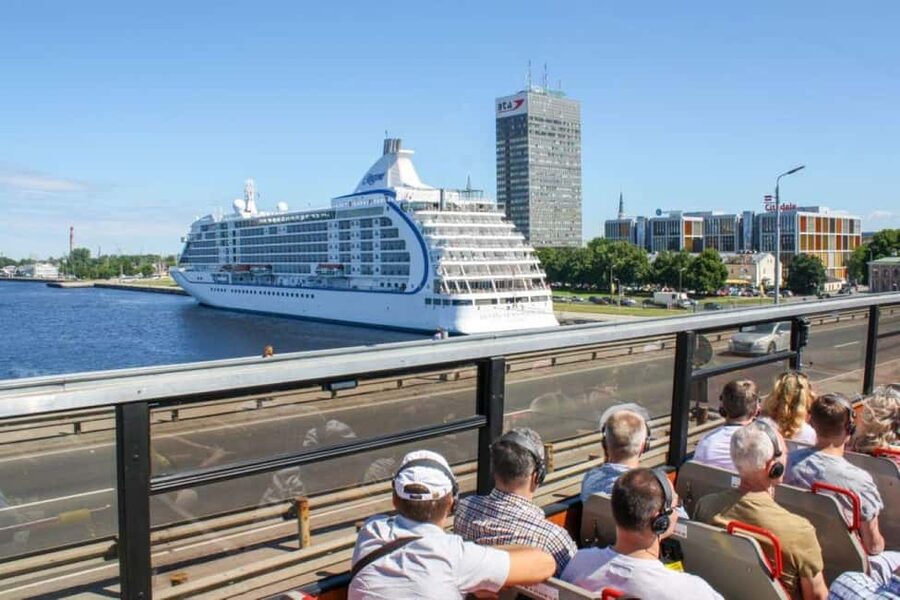
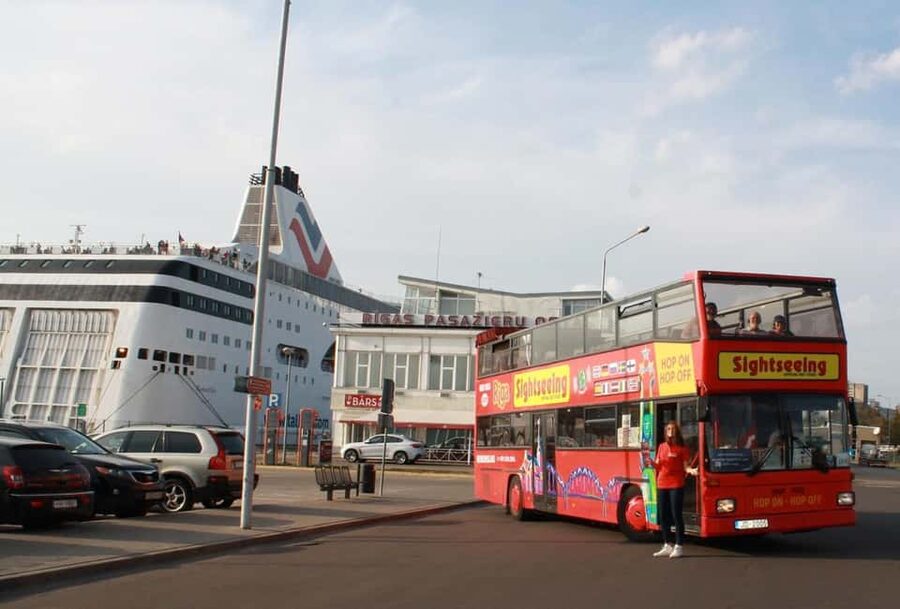
Toward the tour’s later stretches, you’ll reach the harbor area and see the Riga Ferry Terminal. This is a nice contrast to the more historic core you’ve been seeing.
Even though the tour can’t turn this into a deep harbor exploration, it gives you the sense of Riga as a working port city—not just a museum-like Old Town. If you’re planning future trips to nearby Baltic destinations, seeing the ferry terminal helps you connect dots between Riga’s street life and its routes out.
This is also where the bus ride can feel less intense. After the monument names and the architecture highlights, the harbor segment offers a more open view and a different pacing for your eyes.
12-language audio: how to use the headsets properly
The tour includes pre-recorded commentary broadcast via headphones in 12 languages: Russian, Latvian, English, German, Swedish, Norwegian, Finnish, Spanish, French, Italian, Lithuanian, and Polish. I like this setup because it turns the ride into an on-the-spot mini guide you can follow without downloading an app.
That said, the audio experience can depend on your seat and headset setup. Some people find that the narration doesn’t always feel perfectly matched to the exact location outside the window, and you may need to adjust during the ride to get your preferred language. If you care about the commentary, take a quick moment at the start to get settled with the language you want.
Use the audio as a prompt, not a crutch. When you hear a landmark being named, glance at where you are through the window and check your map right after. That way, if you decide to hop off later, you’ll know where you are in the story.
A small but important note: you’ll have two route options in practice, often described with color labels. This can help you avoid backtracking if you’d rather return to a place in a different loop. Still, since the full ride without stops is about an hour, you’ll want to choose whether you’re doing a quick orientation pass or a more selective hopping plan.
Price and value: when $29 feels fair, and when it doesn’t
At around $29 per person, the tour is priced like a “time-saver” and “orientation tool,” not like an all-day guided replacement for walking. If you’re visiting Riga for a day and want the big highlights plus architecture context, this pass can be good value because it compresses a lot into one organized loop.
What makes it feel worth it:
- You get headsets plus a map, so you can connect sights to meaning.
- You cover multiple distinct zones in one ride: river panorama, monuments, and Art Nouveau streets.
- The pass is valid up to 48 hours, which gives you a chance to return for details without buying a second ticket immediately.
What can make it feel pricey:
- The core ride time is short, roughly 60 minutes without stops. If you hop off at one or two key points, great. If you expect a long sit-down, take-it-slow tour, it may disappoint.
- The hop-on rhythm depends on season and frequency. In lower season, the gap can stretch, so last-minute hopping can feel inconvenient.
- If your top goal is “maximum time outside,” you might prefer paying for a couple of targeted paid activities instead of a bus loop.
My take: this is a smart buy when you want a fast framework for Riga, then you’ll follow up on your favorites by walking, eating, and exploring on your own.
Who this hop-on bus suits best
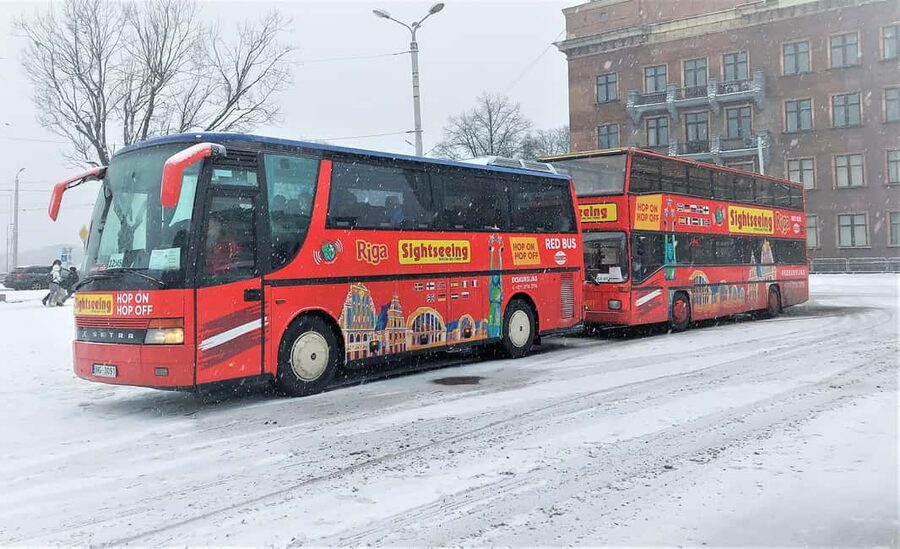
This tour fits best for:
- First-time visitors who want a quick, organized picture of Riga
- People who love architecture and want a guided-feeling introduction to Art Nouveau details
- Families and casual sightseers who want an easy way to cover more ground without constant route planning
It might feel less ideal if:
- You want a slow, deep, stop-at-everything day
- You’re allergic to time limits and waiting for the next bus
- You strongly prefer walking-only days and don’t like using vehicles at all
If you book it, you’ll get the most satisfaction when you treat the bus ride like a map you can hear. Let it point your attention, then use your feet for the part you actually want to memorize.
Should you book the Riga Red Bus Hop-On Hop-Off Grand Tour?
Yes—if you want an efficient way to understand Riga in a day, especially the sweep from Old City views to Art Nouveau streets. The headset commentary in 12 languages, the Art Nouveau and UNESCO facades, and the classic central landmarks are strong reasons to choose it.
Wait a moment before buying if you’re hoping for lots of off-bus time per stop or a very long guided experience. The loop is designed to be quick, so you’ll need to come with a plan: pick one or two places to hop off for real exploring, and let the rest be your visual orientation.
If that sounds like your style, this pass is a practical way to get your bearings fast and enjoy Riga without turning your day into logistics.
FAQ
Where do the buses depart from?
Buses depart from the stop near Triangula Bastions at 11.novembra krastmala 17 in Riga, Old Town.
How long does the tour take without stops?
The full tour duration without stops is approximately 60 minutes.
How often do additional buses run?
In June–September, additional buses depart every 60 minutes. In October–May, additional buses depart every 1.5 hours.
How many stops are included?
There are 11 main stops and around 6 additional stops along the routes.
What languages are available for the audio commentary?
Audio commentary is available in 12 languages including English, German, French, Finnish, Italian, Spanish, Norwegian, Russian, Latvian, Lithuanian, Polish, and Swedish.
How long is the ticket valid after activation?
Tickets are valid for 2 days (up to 48 hours) from the first activation.