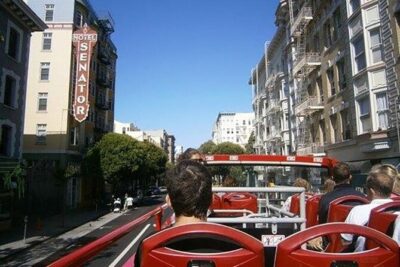
Rome moves fast. This pass helps you keep up. With unlimited hop-on hop-off access on an open-top double-decker, you get panoramic views while still having the freedom to choose your next stop, from the Colosseum area to Vatican City. I especially like how the schedule lets you build your own rhythm instead of sitting through a fixed march-and-visit plan. One thing to plan around: in practice, the last buses may finish earlier than you expect, so don’t count on a super late ride.
The big win is flexibility. You can start at any of the listed stops, look for the pink I Love Rome bus by Gray Line, and board by showing the QR code from your email. You also get free Wi-Fi on board, which is useful when you’re hopping between stops and checking what’s open.
This is the kind of tour that works for both first-timers and people returning to Rome. You’ll still do the big names, but you control the pace, breaks, and photo stops. Just remember that ticketed attractions like the Colosseum and Vatican Museums aren’t included, so you’ll want a simple plan for when you’re ready to pay and enter.
In This Review
- Key points to know before you ride
- How the hop-on hop-off pass works across Rome
- Open-top panoramas and audio that speed up your orientation
- Stop-by-stop: Termini and St. Mary Major (good starting points)
- Colosseum Archaeological Area: what to do now that Stop 3 is closed
- Circo Massimo and the Mouth of Truth (Stop 4)
- Piazza Venezia and Foro Romano (Stop 5)
- Vatican City: Sistine Chapel and St. Peter’s nearby (Stop 6)
- Spanish Steps and a shopping stretch (Stop 7)
- Barberini and Trevi Fountain: coins, photos, and gelato breaks (Stop 8)
- Price and value: is $54 a smart use of your time?
- Timing quirks and how to avoid common problems
- Who this hop-on hop-off pass fits best
- Should you book this Rome hop-on hop-off bus pass?
- FAQ
- Where can I start this hop-on hop-off bus tour?
- Do I need a ticket on my phone to board?
- Is this pass valid for more than one day?
- Are the Colosseum and Vatican attraction entrance fees included?
- Is there Wi-Fi on the bus?
- Is Stop 3 at the Colosseum always available?
Key points to know before you ride
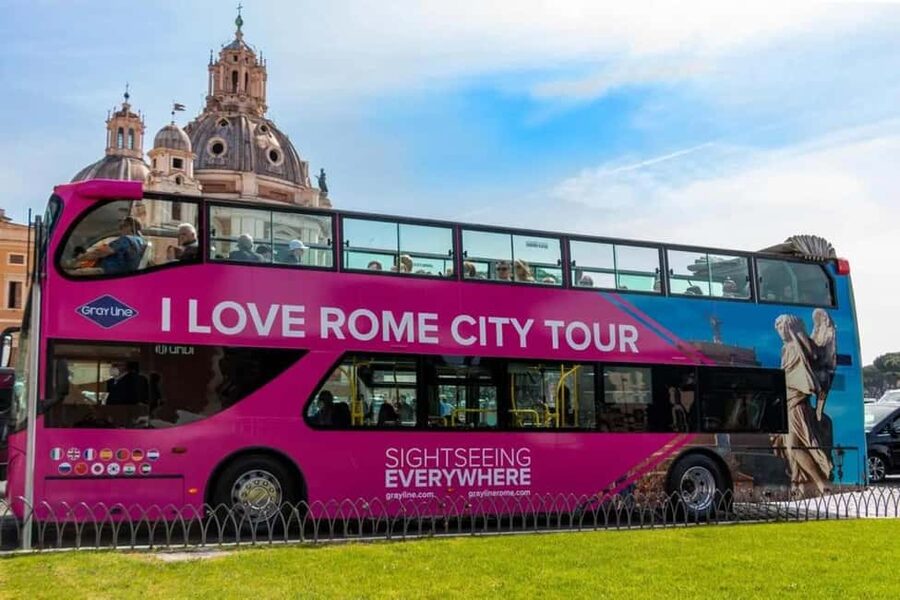
- Panoramic open-top views from a double-decker setup that makes Rome look postcard-ready
- Unlimited hop-on hop-off for a full day, starting when you first activate your pass
- Audio commentary that helps you connect what you’re seeing with what you’re learning
- Start anywhere with listed stops, using the pink I Love Rome bus by Gray Line
- Colosseum Stop 3 closure from November 7 until further notice, with nearby alternatives
- Free Wi-Fi on board for maps and quick check-ins while you move
How the hop-on hop-off pass works across Rome
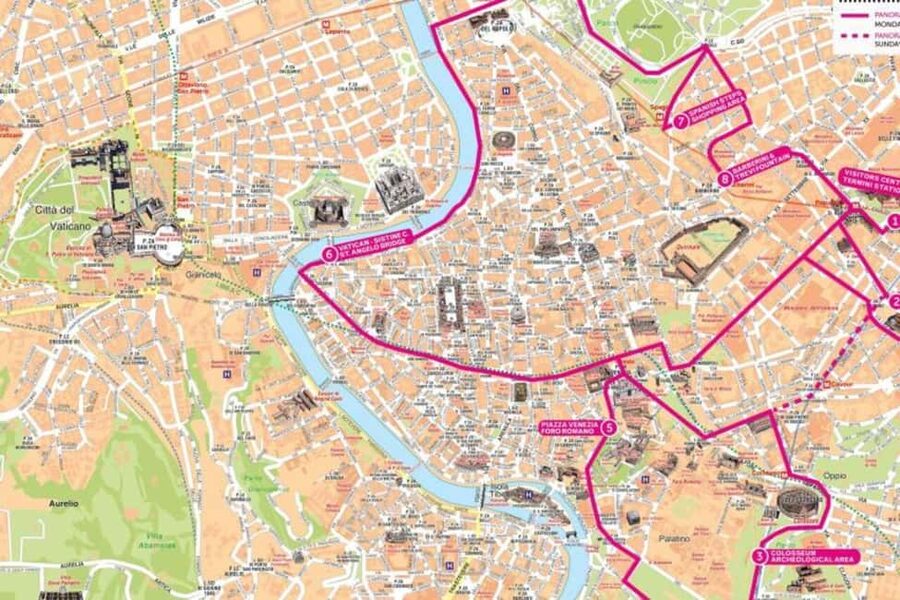
This is a one-day bus pass. It’s valid for 1 day starting from your first activation, and you can ride as much as you want during that window.
You can board at any of the eight stops listed on the route. The practical advantage is huge: if you’re staying near a certain area or want to start closer to the action, you’re not stuck trekking to one single meeting point.
To board, you’ll show the QR code from your email, and you’ll want to find the pink I Love Rome bus by Gray Line at your chosen stop. There’s also a route map and schedule provided, plus a note that bus frequency is regular but can shift on holidays or special events. Translation: give yourself a little cushion and don’t build a tight minute-by-minute day.
Open-top panoramas and audio that speed up your orientation
Rome is visually intense, and an open-top bus helps you get your bearings fast. From up high, you can spot the scale of the city and understand how the sights line up along the main routes, without fighting traffic chaos on foot.
I also like having audio commentary while you ride. It doesn’t replace being on the ground, but it helps you make sense of what you’re gliding past. So when you hop off at a stop like Piazza Venezia or Circo Massimo, you’re already primed for what you’ll see next.
Add to that the free Wi-Fi on board. That matters more than it sounds. If you hop off to grab gelato or wander streets between stops, Wi-Fi can help you confirm your next bus location and timing without burning data.
Stop-by-stop: Termini and St. Mary Major (good starting points)

Termini Station (Via Giovanni Giolitti, 32) is a smart place to start if you’re arriving by train or you want maximum transit convenience. Even if you plan to see the classics later, starting here often makes your day smoother because you’re already in the main Rome travel hub.
St. Mary Major (Piazza dell’Esquilino, 12) is a second early option on the route. It’s useful if you want to begin with a major church area before heading toward the headline stops like the Colosseum, Vatican City, and Trevi Fountain.
The main drawback at these early stops is also the simplest: you might be tempted to hop on and off quickly without building enough time for the big entrances later. If you do a ton of mini-stops early, you can run out of energy before you reach the sights that require payment and time inside.
Colosseum Archaeological Area: what to do now that Stop 3 is closed
Your pass includes a stop at the Colosseum Archaeological Area (Stop 3), but there’s a key change. Starting November 7th and until further notice, Stop 3 is temporarily unavailable for boarding and alighting.
The tour specifically advises using the nearest alternative stops:
- Stop 4: Circo Massimo
- Stop 5: Piazza Venezia – Foro Romano
So if you had your day built around stepping off at the Colosseum stop, plan to walk the last stretch from the alternatives. This is usually manageable, but it does change your timing and how you structure photo breaks.
Why this still works: Piazza Venezia is named right alongside Foro Romano, and Circo Massimo is paired with the Mouth of Truth, so you’re not losing all related sights. You’re just rerouting how you reach them.
Circo Massimo and the Mouth of Truth (Stop 4)
Stop 4 is labeled Circo Massimo – Mouth of Truth. This is a great stop when you want an iconic Rome moment that’s quick to reach and fun to fit into a hop-on schedule.
In practical terms, this stop also becomes your lifeline when the Colosseum stop is closed. If you’re aiming to see the classic monuments but can’t board or alight at Stop 3, this gives you a workable entry point.
The only real consideration: since this stop substitutes for the Colosseum area during the closure, you’ll want to allow a bit more walking time than you’d normally plan. Build in the wiggle room, especially if you’re also planning to visit somewhere later like the Vatican.
Piazza Venezia and Foro Romano (Stop 5)
Stop 5 is Piazza Venezia – Foro Romano. This is one of the best-labeled stops on the entire route because it connects directly to the Roman Forum area, not just a broad sightseeing zone.
If you like doing big sights early in the day, this is a good bet. It’s also a strong option while Stop 3 is down, since the tour explicitly lists this as an alternative to the Colosseum stop.
The drawback is simple: Foro Romano and surrounding areas usually reward time spent on foot. If you hop off, take a few photos, and rush straight back to the next bus, you may feel like you barely touched the place. Use this stop for an actual walking block, not just a curbside view.
Vatican City: Sistine Chapel and St. Peter’s nearby (Stop 6)
Stop 6 is Vatican City – Sistine Chapel & St. Angelo Bridge. This stop is ideal for those big, high-demand landmarks because it drops you where you need to be for the Vatican zone.
Two important notes for your planning. First, entrance fees to places like the Vatican Museums aren’t included, so you’ll need separate tickets and/or payment for any paid entry areas. Second, Vatican plans often involve lines, so don’t schedule this stop as a quick in-and-out unless you’re confident about timing.
The upside of the bus pass here is that you can control your entry timing. If you find you’re early, you can use the time to wander around the area and cross at St. Angelo Bridge. If you’re late, you at least still have a flexible ride schedule to get you to the next major photo stop.
Spanish Steps and a shopping stretch (Stop 7)
Stop 7 is Spanish Steps – Shopping Area (Via Ludovisi, 35). If your goal is a classic Rome photo circuit, this is one of the easiest stops to use because the name tells you exactly what you’ll be walking toward.
This stop is also handy for a change of pace. After you’ve done heavy monument time, Spanish Steps can feel like a reset. You can linger, people-watch, and pick up something small to eat before heading to Trevi Fountain.
The main consideration is crowding and walking time around stairs and viewpoints. With a hop-on pass, you can usually wait for the next bus, but you still want to budget a little time to move comfortably between photo points.
Barberini and Trevi Fountain: coins, photos, and gelato breaks (Stop 8)
Stop 8 is Barberini & Trevi Fountain (Piazza Barberini, 12). Trevi Fountain is one of the stops the tour highlights directly, including the idea of tossing a coin. That’s exactly the kind of moment that benefits from having a bus pass nearby because it’s hard to time a visit around crowds without changing your plans.
This is also one of the best spots on the route for a mid-afternoon break. You’ll be in a classic area for gelato and simple wandering between landmarks, and the bus gives you an easy way to leave when you’re done.
A practical planning tip: Trevi is popular, so decide ahead of time what you want most. If you want the fountain itself, prioritize time there. If you also want photos from nearby angles, add a little extra walking time before you catch the next bus.
Price and value: is $54 a smart use of your time?
For $54 per person for a 1-day pass, the value comes down to how many major stops you’ll actually fit into your day.
If you plan to visit several headline areas like:
- Colosseum/Foro Romano zone
- Vatican City
- Trevi Fountain
- Spanish Steps
…then the pass starts to feel worth it fast. You’re paying for transportation between distant parts of the city plus the open-top view and audio orientation.
If you only care about one or two areas, you might be better off with a cheaper plan or targeted transit. The reason is that the pass has the strongest payoff when you’re hopping repeatedly and using Rome’s spread-out distances to your advantage.
Also, remember what’s not included: entrance fees to major attractions like the Colosseum and Vatican Museums. Your total trip cost will rise if you go inside multiple paid sites. The bus pass still helps, but it’s not a skip-the-ticket purchase.
Timing quirks and how to avoid common problems
Even with a flexible pass, you should plan like Rome runs on real-world energy, not perfect timing.
One issue to watch for: the bus operation may end earlier than the late hours shown on some ticket information. So if you’re thinking of doing a last ride near closing time, build in a cushion and don’t wait until the edge of the day.
Another practical concern is station coverage and stop completion. There can be days when not every listed station gets served exactly as expected, which makes having your route plan handy important.
Here’s what helps:
- Start from a stop you can reach easily and board with your QR code ready
- Keep your hop schedule flexible, especially for your big paid-entry moments
- When you arrive at a stop, quickly confirm where that bus is going before you commit
This isn’t about panic. It’s about reducing friction so you keep enjoying the ride.
Who this hop-on hop-off pass fits best
This is a strong choice if you want:
- A simple way to see Rome’s headline sights without locking into a tight tour timetable
- Open-top views that make getting around feel like sightseeing
- Audio commentary to connect the dots between different neighborhoods
It’s also a good fit if you’re traveling solo or with mixed ages, because you can hop off when you want and wait for the next bus when you need a break.
You might want to choose something else if your style is very “early entry, long visits.” The bus pass makes it easier to move, but you’ll still need separate time and paid entry planning for major attractions.
Should you book this Rome hop-on hop-off bus pass?
Book it if you want an easy, flexible day that hits the biggest landmarks with minimal hassle. The open-top panoramas, free Wi-Fi, and audio orientation make it a smart way to spend your first hours in Rome without getting stuck in complicated logistics.
Skip or rethink it if you’re only aiming for one paid site and a couple quick photos. At that point, you may not use enough of the hop-on value to justify the $54 price.
And if you’re traveling during the Colosseum Stop 3 closure window, still consider booking. Just plan your Colosseum-area time using the alternatives at Circo Massimo (Stop 4) or Piazza Venezia (Stop 5) so your day doesn’t get derailed.
FAQ
Where can I start this hop-on hop-off bus tour?
You can start at any of the listed stops: Termini Station, St. Mary Major, Colosseum Archaeological Area, Circo Massimo – Mouth of Truth, Piazza Venezia – Foro Romano, Vatican City – Sistine Chapel & St. Angelo Bridge, Spanish Steps – Shopping Area, or Barberini & Trevi Fountain.
Do I need a ticket on my phone to board?
Yes. You should show the QR code from your email when boarding.
Is this pass valid for more than one day?
No. It’s valid for 1 day, starting from when you first activate it.
Are the Colosseum and Vatican attraction entrance fees included?
Entrance fees to attractions like the Colosseum and Vatican Museums are not included.
Is there Wi-Fi on the bus?
Yes. Free Wi-Fi is included on board.
Is Stop 3 at the Colosseum always available?
No. Starting November 7th and until further notice, Stop 3 – Colosseum is temporarily unavailable for boarding and alighting. The tour advises using Stop 4 (Circo Massimo) or Stop 5 (Piazza Venezia) instead.