
San Sebastián looks best from the top deck. This open-top double-decker loop lets you explore the city at your own pace, with an audio guide that explains what you’re seeing as you ride. You get to sample the Belle Epoque vibe, the Old Town area, and major viewpoints without racing a tight schedule.
The main thing to watch is that the audio experience depends on working audio ports and clear seat-level listening. On a day when weather is off, that can feel annoying even if the bus route itself is solid.
In This Review
- Key highlights at a glance
- First ride: starting by Teatro Victoria Eugenia
- Price and value: is $18 a smart buy?
- How the hop-on hop-off day actually works
- Route overview: the loop you can tailor
- Aquarium and Paseo Nuevo: kick off with the waterfront mood
- San Telmo and Parte Vieja: Old Town from street level and from above
- Plaza Guipúzcoa to the station area: central city connections
- Gros and Playa Zurriola/Kursal: beaches that change the vibe
- La Concha and La Perla: your main panoramic payoff
- Ondarreta, Peine del Viento, and Igueldo: viewpoints and sea air
- Barrio del Antiguo and Palacio Miramar: quieter edges of the same story
- Catedral Buen Pastor and the Urumea bridges: architecture you can read from the bus
- Stop-by-stop strategy: don’t ride the whole loop every time
- Audio guide and open-top comfort: what you’ll get in practice
- Timing matters: frequency, last departures, and event detours
- Who should book this bus tour?
- The bottom line: should you book it?
- FAQ
- How long is the ticket valid?
- Can I hop on and off all day with the same ticket?
- Where is the first stop for boarding?
- What languages are available for the audio guide?
- How often do buses depart?
- Which days is the service available?
- When is the last departure?
- Is the bus wheelchair accessible and covered for rain?
Key highlights at a glance
- One-day flexibility: same ticket, hop on and off all day
- Audio in 8 languages: Spanish, Basque, Chinese, English, French, German, Italian, Russian
- Belle Epoque views: Parte Vieja and key architecture from the bus
- Bay of La Concha panoramas: your best bet for quick skyline-and-sea angles
- Plenty of stop options: from beaches to viewpoints to the Miramar area
- Rain-ready comfort: a sliding roof helps when the sky turns
First ride: starting by Teatro Victoria Eugenia
You start at Calle Republica Argentina 2, right in front of teatro Victoria Eugenia. I like this because it’s a clear landmark. You can show your voucher, board, and you’re rolling fast instead of wandering for a bus stop.
The tour ends back at the same meeting point. That matters if you’re planning dinner or you want a simple “last bus back” moment without needing a separate transport plan.
Price and value: is $18 a smart buy?
At about $18 per person for a 1-day hop-on hop-off ticket, the value is really about how you use the day. If you treat the bus as your moving base, it can save time and walking energy—especially if you’re mixing beaches, Old Town, and viewpoints.
You’re not paying for a guided march. You’re buying time. And time is what you need in a city like San Sebastián where you’ll want to stop for photos, linger for a coffee, and maybe re-route on the fly.
The route also gives you both city texture and big scenery. You’ll pass Belle Epoque architecture, ride by historic bridges over the Urumea River, and keep coming back to the Bay of La Concha for wide views.
How the hop-on hop-off day actually works
This is a true hop-on hop-off format. You can stay on for the full loop, or jump off at any stop and return later with the same ticket.
The bus frequency is every 1 hour, but it runs only Friday, Saturday, and Sunday until further notice. That’s not a small detail. If you’re visiting on a weekday, you may find the plan less useful, even if you love the idea of the audio guide and the viewpoints.
Plan your day with the last departure in mind too. The last departure is 5:30 PM until October 30, and 4:30 PM in November and December. If you tend to start slow, you’ll want to get your “big viewpoint” stop done earlier.
Route overview: the loop you can tailor
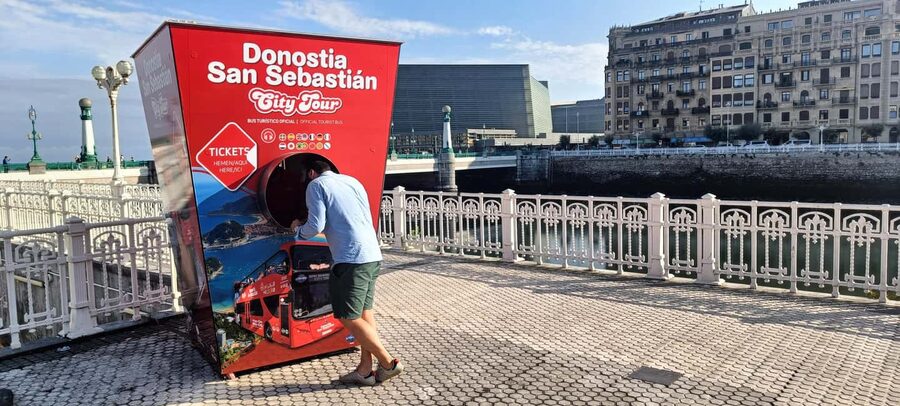
The stops are your menu. Start along the waterfront, work through the Old Town and central landmarks, then fan out toward beaches and lookouts. On the back half, you go past the Miramar Palace area and finish with more city-and-coast sights.
Stops on the route include:
Aquarium/Paseo Nuevo; San Telmo/Parte Vieja; Plaza Guipúzcoa; Estación de tren-bus/Tabakalera; Gros; Playa Zurriola/Kursal; La Concha; La Perla; Playa Ondarreta; Peine del Viento; Funicular Igueldo; Barrio del Antiguo; Palacio Miramar; Catedral Buen Pastor.
Because the itinerary can shift due to city events, keep a little wiggle room in your schedule. San Sebastián is an active place, and road closures happen.
Aquarium and Paseo Nuevo: kick off with the waterfront mood
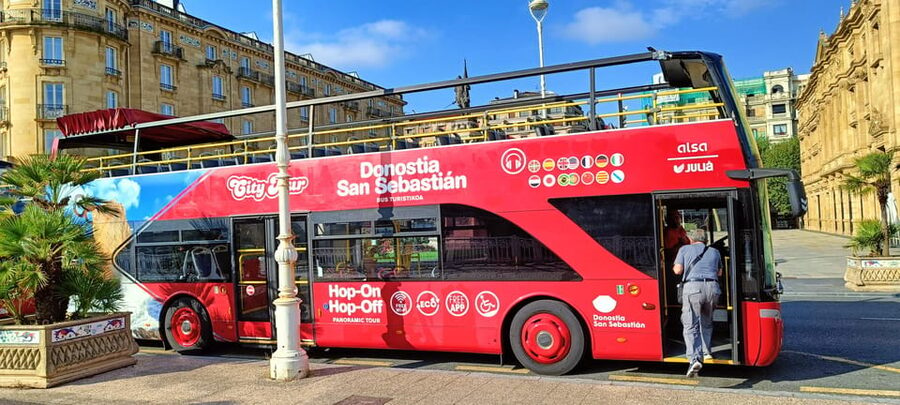
Your first stop is the Aquarium/Paseo Nuevo area. Even if you don’t go inside the aquarium, this is a good start because it gets you facing the water early. You’ll set your bearings fast, which makes the rest of the day easier.
From here, the bus route quickly connects you to the city’s central flow. That’s the whole point: you’re not committing to one neighborhood. You’re building a day that fits your energy.
San Telmo and Parte Vieja: Old Town from street level and from above
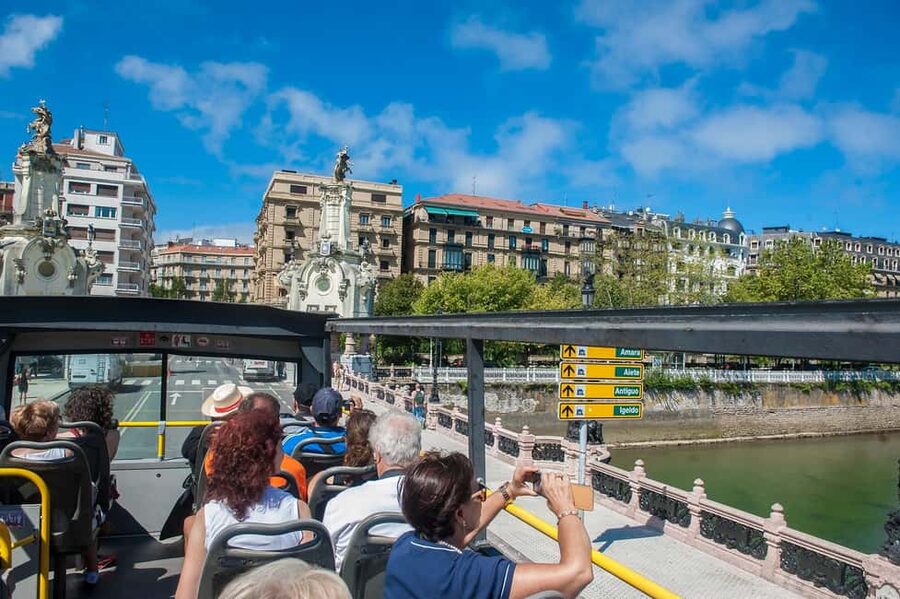
One of the best reasons to use this bus is how it handles Parte Vieja. You get dropped at San Telmo/Parte Vieja, so you can hop off and explore on foot when you want the street scene.
What you’re really buying is control over pacing. Old Town is perfect when you want to drift. It’s less perfect if you’re trying to cover everything in a straight line. The bus lets you do it your way.
This is also where Belle Epoque details start to matter. The bus ride makes those building features easier to catch, even if you don’t stop every few minutes.
Plaza Guipúzcoa to the station area: central city connections
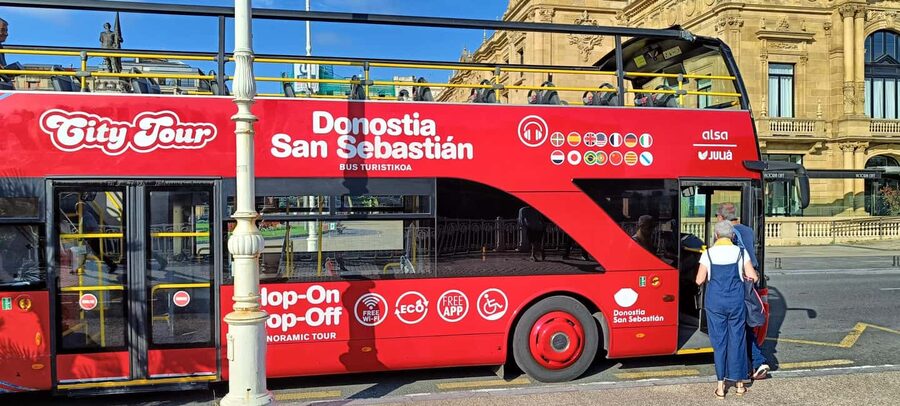
Next up: Plaza Guipúzcoa, then the Estación de tren-bus/Tabakalera zone. I like these stops because they act like hubs. If you need to adjust your plan—meet someone, take a break, or simply move toward a different part of town—you’re not stuck.
This is also a handy stretch if you like “city walking.” You’re close enough to hop off and wander between sights without being forced into one long grind.
Gros and Playa Zurriola/Kursal: beaches that change the vibe
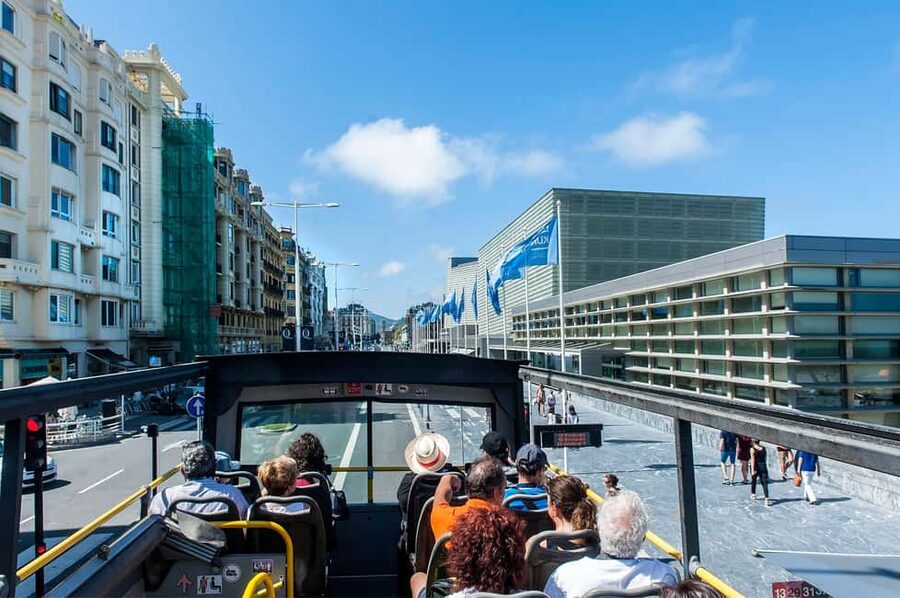
After the central area, you roll into Gros, then you hit Playa Zurriola/Kursal. This is the part of San Sebastián that feels more open and coastal, with a bigger horizon and more space than the Old Town streets.
I’d use these stops strategically. If your feet are tired, you can stay on the upper deck and watch. If your feet feel fine, you can step off for a quick walk along the promenade and then re-board when you’re done.
La Concha and La Perla: your main panoramic payoff
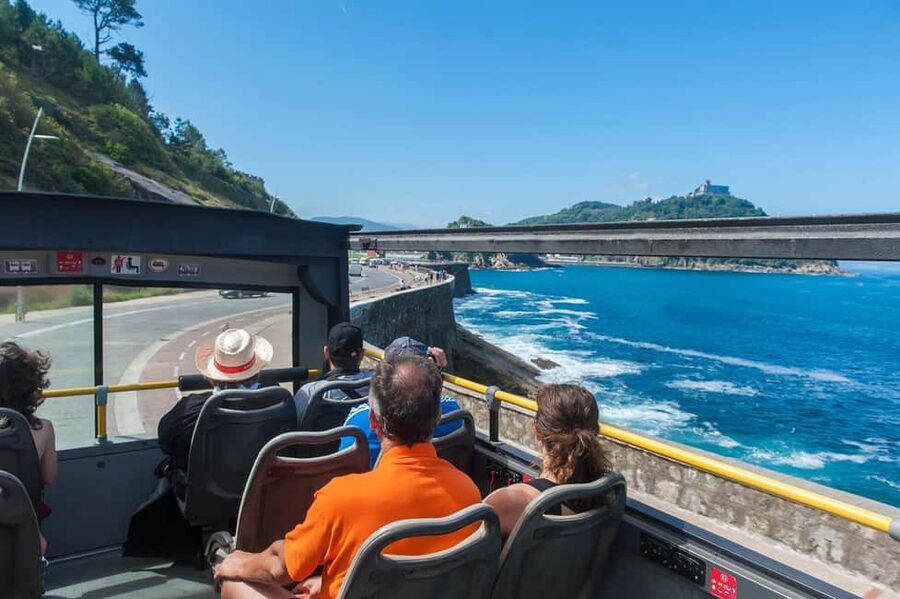
If you only get one “big view” from the bus, make it La Concha. The Bay of La Concha is one of the city’s defining pictures, and the route is designed to give you those wider angles without you having to plan every viewpoint on your own.
Then you continue to La Perla, which keeps the sea-and-town feeling going. Think of this as your “slow down and look” segment.
If the day is clear, linger here. If it’s windy or rainy, stay closer to the bus ride and use stop time for quick photos instead of long sightseeing.
Ondarreta, Peine del Viento, and Igueldo: viewpoints and sea air
Next are Playa Ondarreta, then Peine del Viento, and Funicular Igueldo. This is where the route becomes more viewpoint-focused.
Even without getting fancy, the names tell you what you’re going to want: open sight lines and a strong connection to the coast. I love using stops like these when I want to see the geography that makes the bay feel so dramatic.
You can hop off for a shorter walk and then re-board. The bus rhythm is built for that kind of stop-start touring.
Barrio del Antiguo and Palacio Miramar: quieter edges of the same story
You then reach Barrio del Antiguo and Palacio Miramar. This area shifts the feel again—less “one more photo” and more “pause and enjoy.”
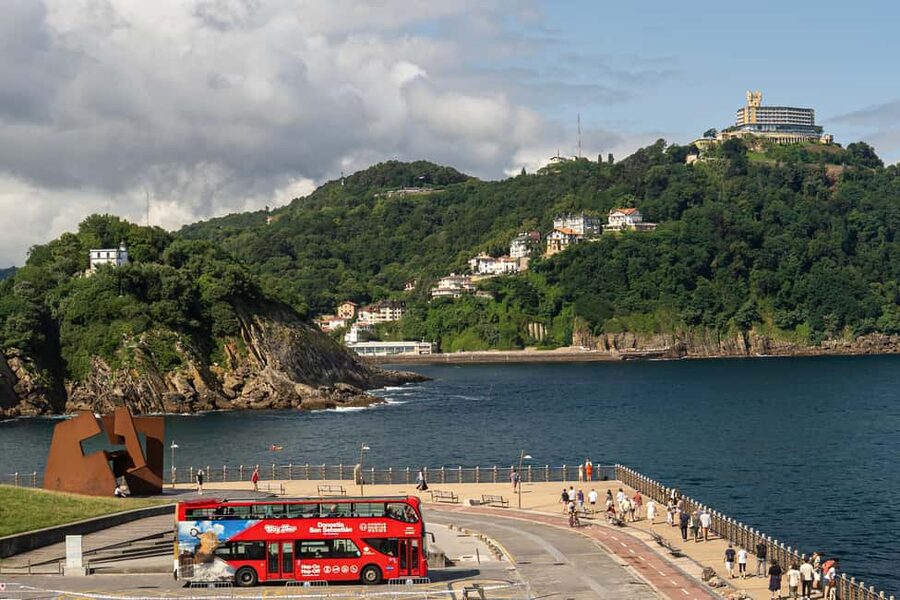
Miramar is a key reference point for the tour, and it makes sense. You’re moving from sea-facing viewpoints into a more historic, set-on-the-hill feel where the city’s layout becomes easier to understand.
Use this part of the day if you want the tour to help you slow down. Hop off, look around briefly, then get back on if you still want to catch other beaches before evening.
Catedral Buen Pastor and the Urumea bridges: architecture you can read from the bus
The route includes Catedral Buen Pastor at the end stretch. I like that the bus puts you near a landmark finish so your ride doesn’t feel like “just scenery.” It has an ending point you can connect to.
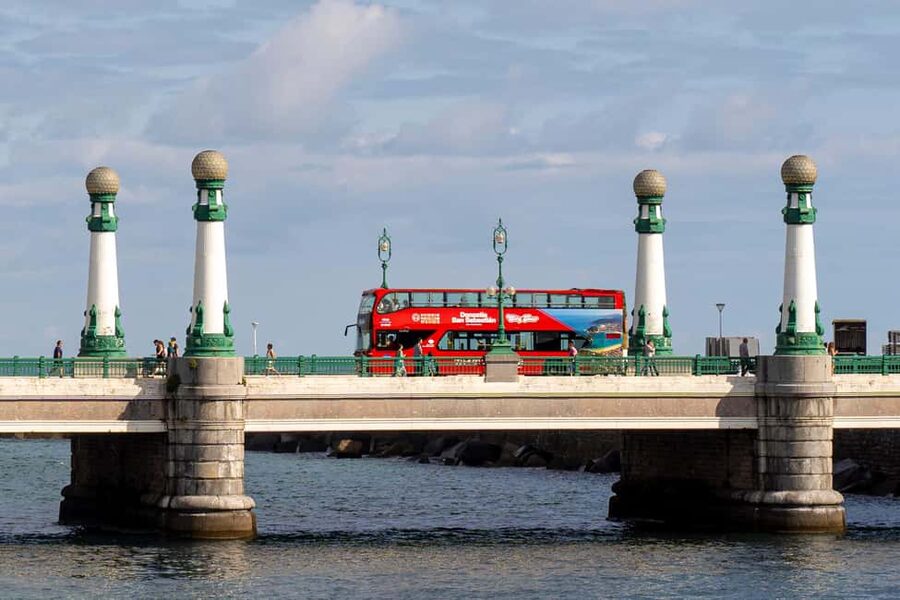
Along the way, you’ll also see historic bridges across the Urumea River. Bridges are great “mental map” tools in any city. When you notice what crosses the river and where the main lanes go, you start to understand why the neighborhoods feel like separate worlds.
Stop-by-stop strategy: don’t ride the whole loop every time
The biggest trick with hop-on hop-off is avoiding the temptation to stay on the bus for everything. Instead, use the route in chunks.
Here’s an easy way to break it up:
- Morning: start at Teatro Victoria Eugenia, ride toward Parte Vieja and the central viewpoints.
- Midday: spend time near La Concha and the beach stretch you’re most interested in.
- Afternoon: switch to the hillsier viewpoint segment near Peine del Viento and Igueldo, then finish near Miramar and Catedral Buen Pastor.
This keeps you from wasting time backtracking on foot. It also makes the bus feel like a tool, not a waiting room.
Audio guide and open-top comfort: what you’ll get in practice
The bus includes an audio guide available in 8 languages. That’s a strong plus because you can tune your narration to your comfort level and not rely on your own reading.
But here’s the practical side. Some seats rely on audio ports, and if those ports fail or aren’t working smoothly, you lose part of the value. I’d plan to take in the sights visually even if you love the narration.
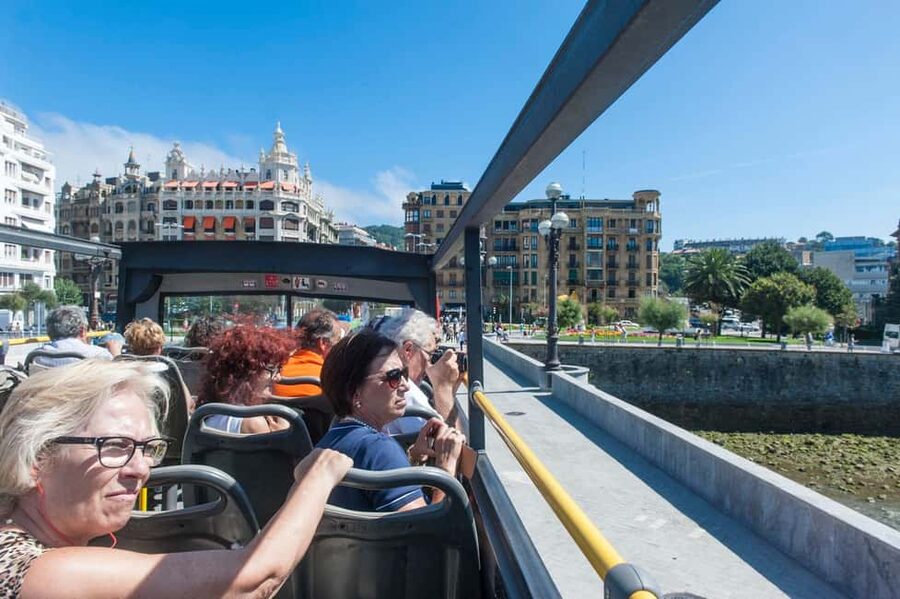
Comfort wise, you’re on an open-top double-decker, which is perfect for panoramic Bay of La Concha shots. And yes, there’s a sliding roof in case of rain, which helps you keep going instead of abandoning the route.
Timing matters: frequency, last departures, and event detours
This bus runs every 1 hour, but only Friday, Saturday, and Sunday until further notice. If you’re planning for a Tuesday-to-Thursday trip, this might not be your best solution.
The last departure timing also matters. If you’re traveling in cooler months (November to December), the last departure is 4:30 PM. Build your “viewpoint stops” earlier and keep an eye on how long you want to linger on the water.
And remember: the itinerary can change due to demonstrations, sports events, cultural events, official acts, and public works. When that happens, don’t panic. It just means the bus may reroute, so stay flexible if you’re locked into a walking plan.
Who should book this bus tour?
This hop-on hop-off format is a great match if you:
- Want a low-stress way to see Parte Vieja and the Bay views
- Like planning a flexible day where you choose what to walk
- Prefer listening to an audio guide instead of following a tight live script
- Need an easier way to cover multiple neighborhoods in limited time
It’s also a strong option if you have mobility needs. The bus is wheelchair accessible and designed for reduced mobility. If rain is a concern, the sliding roof adds comfort without stopping the day.
The bottom line: should you book it?
Yes, if you want an easy, self-guided way to get oriented and enjoy San Sebastián’s big selling points—especially La Concha Bay and the Old Town area. For $18 with a 1-day ticket and an audio guide, the value is best when you plan to hop off more than once.
I’d think twice if your trip falls on a weekday (since service is limited to Friday-Sunday) or if you’re the type who needs perfect audio at every moment. A few small audio glitches can turn a great format into an average one.
If you book, do this: start earlier in the day, use the bus as your map, and give yourself time to enjoy one or two stops fully instead of “collecting” all of them.
FAQ
How long is the ticket valid?
Your ticket is valid for 1 day, counted from the first time you activate it.
Can I hop on and off all day with the same ticket?
Yes. You can use the same ticket to hop on and off throughout the day.
Where is the first stop for boarding?
The first stop is at Calle Republica Argentina 2, in front of teatro Victoria Eugenia.
What languages are available for the audio guide?
The audio guide is available in Spanish, Basque, Chinese, English, French, German, Italian, and Russian.
How often do buses depart?
Buses run every 1 hour.
Which days is the service available?
The schedule is available Friday, Saturday, and Sunday until further notice.
When is the last departure?
The last departure is 5:30 PM until October 30, and 4:30 PM in November and December.
Is the bus wheelchair accessible and covered for rain?
Yes. The bus is wheelchair accessible, and it has a sliding roof to help in case of rain.