
Stavanger in a day is easier when your legs get a break. This open-top double-decker hop-on hop-off tour gives you a fast overview and a smart way to pick what to explore longer, especially if your time is limited. I especially like two things: the quick way the route pulls you toward Stavanger’s most famous sights, and the photo angle you get from the top deck near the Petroleum Museum and the Old Town area.
The biggest consideration is logistics. On busy cruise-port days, buses don’t always feel as frequent as you’d hope, and you can end up waiting before the next bus. Also, at $51 for a one-day ticket, you’ll want to be honest about whether you’ll actually use the hop-on freedom or if you’d prefer walking more of the city.
In This Review
- Key things I’d plan around
- Why Stavanger’s hop-on route works on a short visit
- Starting at Strandkaien Cruise Terminal: how to plan your day
- Old Town and cathedral views from Breiavannet to Stavanger Cathedral
- Petroleum Museum: the stop that gives you real Stavanger context
- Museums for history and archaeology: St. Petri Church to Stavanger Museum
- Art and parks: Museum of Art, Mosvatnet Park, and where to pause
- Ledaal Royal Residence: a smart photo stop near the top deck
- Onboard audio in 8 languages and WiFi: useful, but don’t expect miracles
- Price and value: is $51 worth it in Stavanger?
- Should you book this Stavanger bus tour?
- FAQ
- How long is the Stavanger hop-on hop-off bus tour?
- What time does the first bus depart, and when is the last departure?
- How often do the buses run?
- Where is the meeting point?
- How many stops are on the route?
- Is the audio guide included, and in which languages?
- Is onboard WiFi included?
- Do you need to purchase attraction tickets separately?
- When does this tour operate?
Key things I’d plan around
- The loop is short: you get a 50-minute ride and then you choose what to extend.
- Hop-on hop-off means timing matters: buses run every 30 minutes, so don’t assume instant jumps.
- It’s designed for cruise-port days: it only operates when a cruise ship is in port between June and September.
- Old Town + big museum hits: you’ll pass the cathedral area, plus the Petroleum Museum and other museum stops.
- Audio guide + WiFi are built in: headphones are included, and onboard WiFi is free.
- It’s not a private tour: it’s public sightseeing with fixed stops, so you get crowds at the peak.
Why Stavanger’s hop-on route works on a short visit

Stavanger can be a great stop because it’s compact, but you still want time to breathe in the city—then zoom to museums without turning your day into a walking test. This tour does that job well. You’re on an open-top bus, so you can actually look around as you move between neighborhoods, and you’re not stuck with a view that’s all windows and glare.
The route is built around places that make sense for first-timers. You start at the port area, then the trip heads toward the cathedral zone and the historic parts of town. After that, it clusters major museum stops together—especially oil, archaeology, and art—so you can hop off once and keep your momentum.
And because it’s hop-on hop-off, you can tailor the day. If you only want the big sights, you can spend less time on the bus. If you like museums (or you’re traveling with someone who does), you can hop off and turn the route into a flexible museum circuit.
Starting at Strandkaien Cruise Terminal: how to plan your day
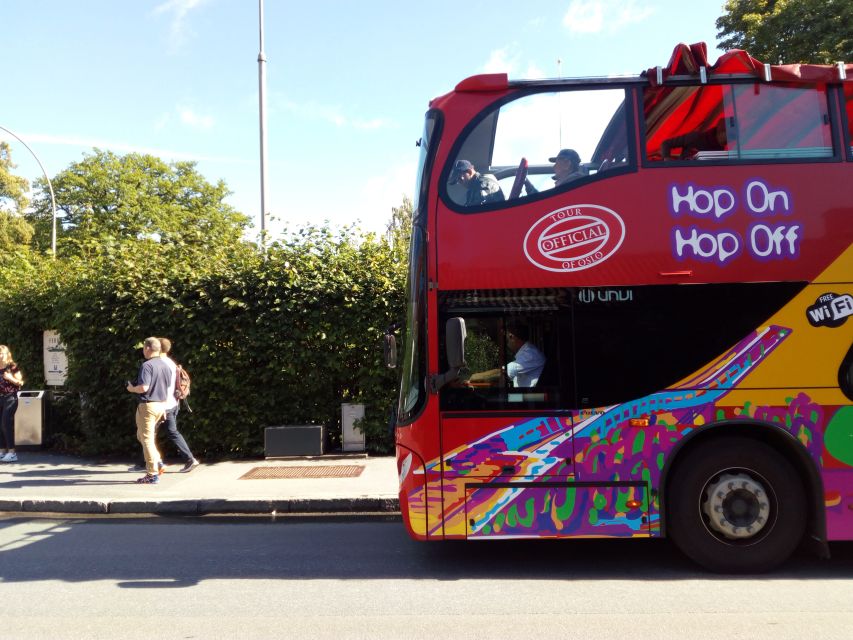
The practical anchor here is your first boarding point: Stavanger’s Strandkaien Cruise Terminal. The tour ticket is designed so you can get on and off at stops along the way, but the first stop is where everything “starts” for the route.
Timing is the other big planning piece. The first bus departs at 10:00, and the last one departs at 16:00 from stop 1. The ride itself is listed at 50 minutes, and buses run every 30 minutes, so you get enough rhythm to see several key stops—if you’re ready to move promptly when the bus arrives.
One more thing you shouldn’t ignore: this tour only operates when there’s a cruise ship in port between June and September. If you’re visiting in the off-season, the route may simply not be running, so checking availability matters. It’s a tour that fits cruise-day schedules, not a year-round city circuit.
Old Town and cathedral views from Breiavannet to Stavanger Cathedral
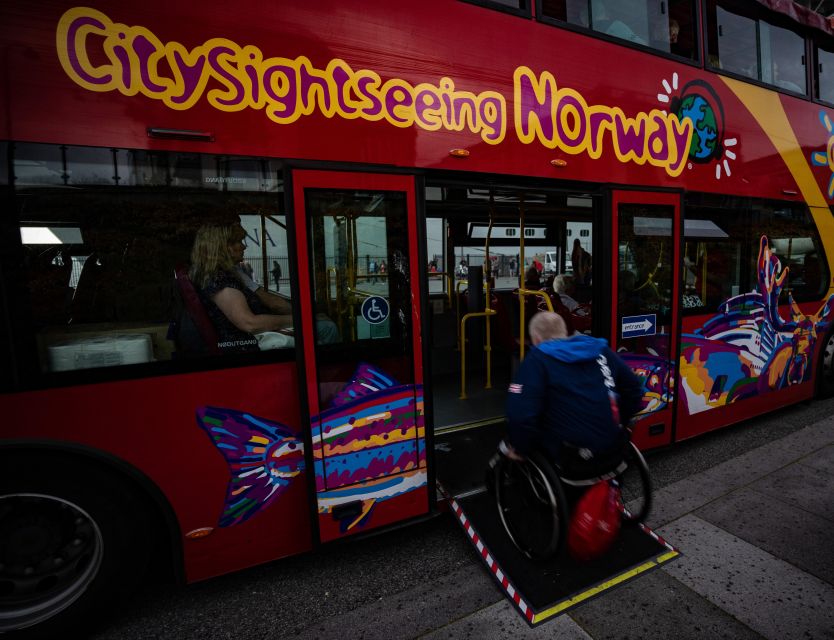
One of the best “first hop” options is the cathedral area. The route brings you through Breiavannet / Stavanger Cathedral and then Stavanger Cathedral itself, which is exactly the kind of sight that works even if you only step out briefly.
Why this matters: cathedral zones are where you learn a city’s layout fast. From the bus, you get the sweep of the area. Once you’re off, you can slow down and actually take in the architecture and the space around it. There’s also a practical touch: the tour includes a stop at the tourist information station area, and from there it’s a short walk to the cathedral. That’s useful when you want to avoid guessing your way through the center.
Even if you’re not a serious church-architecture person, the cathedral stop is a smart use of time. It’s one of those places where the city’s identity becomes visible right away. And because you’ll be on an open-top bus earlier, you’ll probably enjoy the contrast between the port morning and the more grounded feel of the historic center.
Petroleum Museum: the stop that gives you real Stavanger context

If you want one reason to do this tour, it’s the Petroleum Museum. The bus route passes it more than once, which tells you the stop is central to the experience. The museum is on the port side area of Stavanger, and the building’s design is distinctive enough that even from the bus you’ll notice it.
Stavanger’s reputation as Europe’s oil and energy capital isn’t just a slogan here—it shapes what you see, what you learn, and what you photograph. The Petroleum Museum is the point where that story becomes physical. The museum is also described as a memorable landmark on the coast, so it works as both a learning stop and a “I’ll never forget that building” stop.
A helpful way to think about this: if you’re only going to spend money on one attraction during your day, this is the one that’s tied directly to the region’s identity. You’re not just sightseeing. You’re connecting the city’s present to its energy history, then using the bus to stitch together the rest of your route.
Museums for history and archaeology: St. Petri Church to Stavanger Museum

After the main oil anchor, the route keeps feeding you reasons to hop off. You’ll see St. Petri Church and the Museum of Archaeology, both in the general historic part of the route. The value of these stops is simple: they add a human-time layer beyond oil.
Not every museum experience will be your favorite. But when a route includes both archaeology and church architecture, it helps you understand that Stavanger didn’t just become an energy hub overnight. The city’s older roots show up in the details—how the buildings sit in the town, and what the museum themes cover.
Then you reach Stavanger Museum, which is the option you’ll want if you prefer natural and cultural history. This is also a practical stop because it’s one of the places where you can spend longer without losing the rest of your itinerary. If you hop off and stay an hour, you’re still positioned to catch another bus later to return toward the next cluster of stops.
Art and parks: Museum of Art, Mosvatnet Park, and where to pause

The tour also includes a strong art option: the Museum of Art. What I’d flag for your planning is the scale of what’s inside. The museum is described as having over 2,600 artworks, which signals you’re not looking at a tiny collection. If you like art, this stop can become a real afternoon chunk even on a tight schedule.
There’s also a stop at Mosvatnet Park. A park stop is underrated on a hop-on hop-off bus day because it gives your eyes a break between museums. Even a short walk around a park area can help you reset after time indoors. It’s the kind of stop that makes a one-day ticket feel more complete.
The museum-to-park sequence is exactly how I like to structure short visits: one or two “heavy” indoor stops, then a light outdoor reset, then back to photos and transit. This route gives you that chance without forcing you into a rigid schedule.
Ledaal Royal Residence: a smart photo stop near the top deck
If you like recognizable landmarks, the route includes Ledaal Royal Residence. The big advantage here is what you can do even if you don’t spend time inside. The tour description points out that you can get brilliant photos of the building from the top deck, which is a key benefit of taking a hop-on hop-off bus instead of just walking the city randomly.
This stop is also a good “plan B.” If you hop off at the art or museum and you’re not sure how long it will take, you can still time your day so you catch the Ledaal photo moment before you head back toward the next bus.
Even if you’re not a monarchy-history person, it’s a useful waypoint. It’s an easy target with a clear payoff: you know what you’re going to photograph, and you can keep the rest of your day flexible.
Onboard audio in 8 languages and WiFi: useful, but don’t expect miracles

The onboard experience is practical. You get an audio guide with headphones, and it’s available in Spanish, English, French, German, Italian, Japanese, Norwegian, and Russian. That’s great if you’re traveling with people who prefer different languages, or if you want to stay tuned without reading every sign.
There’s also free WiFi onboard. I like having that on a sightseeing bus day because it helps you map the next stop or check opening hours right before you hop off. It’s not a substitute for planning, but it helps keep you from guessing.
One caution: audio isn’t always perfect. I’ve seen enough real-world snags that I’d treat audio as helpful, not guaranteed. Keep an eye on the headset connection and be ready to rely on the stop names and your own quick scanning when audio cuts out.
Price and value: is $51 worth it in Stavanger?
At $51 per person for a one-day ticket, the value depends on your style. This isn’t a “ride for fun” thing. It’s a “save time and cover targets” thing.
If you use the hop-on part well—meaning you actually hop off at multiple stops and spend time in at least a couple of attractions—you’re likely to feel the money was spent wisely. The route includes big draws like the Petroleum Museum, plus cathedral-area sightseeing and other museum stops that can take longer than you expect.
If you plan to stay on the bus the whole time, it’s harder to justify. Some people find that half the route could be done on foot, and that can make a paid bus ticket feel less efficient. Also, if you’re on a cruise day with heavy demand, the bus frequency can matter more than you’d think. When you’re waiting on the next bus, the time-saving advantage shrinks.
My practical advice: treat this as a “coverage ticket,” not a replacement for walking. Do the bus early to get oriented, then hop off at the stops you truly care about, especially the museum clusters. If you’re only curious about one big attraction, you might find a shorter, more direct plan better fits your budget.
Should you book this Stavanger bus tour?

Book it if:
- You want a fast overview of Stavanger with minimal effort.
- You’re traveling in a cruise-port window (June to September) and want a day plan that fits that schedule.
- You like museums and want the day organized around clusters like petroleum, archaeology, history, and art.
Skip it (or rethink) if:
- You only need one attraction and prefer to walk directly to it.
- You’re visiting outside the June–September cruise schedule, because the tour may not run.
If you’re unsure, make your decision based on one question: will you hop off at more than one stop and actually use the bus as a time-saver? If the answer is yes, this ticket is a solid way to see the key highlights of Stavanger without turning your day into an exhausting march.
FAQ
How long is the Stavanger hop-on hop-off bus tour?
The tour duration is listed as 50 minutes.
What time does the first bus depart, and when is the last departure?
The first tour departs stop 1 at 10:00, and the last tour departs stop 1 at 16:00.
How often do the buses run?
Buses run every 30 minutes.
Where is the meeting point?
The first tour stop is at the Strandkaien Cruise Terminal, and you can hop on and off at any of the stops along the route.
How many stops are on the route?
The tour is advertised with 12 tour stops along the route.
Is the audio guide included, and in which languages?
Yes. An audio guide is included, with Spanish, English, French, German, Italian, Japanese, Norwegian, and Russian.
Is onboard WiFi included?
Yes. Free onboard WiFi is included.
Do you need to purchase attraction tickets separately?
Yes. Entry into attractions is not included, so you’ll pay separately for museum or other admission if needed.
When does this tour operate?
It operates only when a cruise ship is in port between June and September.