
Stockholm is easier when you have a map that moves. This hop-on hop-off pass is built for land-and-sea sightseeing, so you can ride the city highlights and then hop off when something grabs you. I especially like the real-time tracking in the app and the option to stay onboard for the audio commentary in English.
One thing to watch: there are multiple hop-on hop-off operators using similar red buses, and some stops can be easy to confuse the first time.
If you want a low-stress way to get your bearings fast, this fits the bill. The ticket gives you full use for either 24 or 72 hours, which is key in Stockholm where you can either hop off for museums or just let the loop show you the shape of the city.
In This Review
- Key points to know before you go
- Why this bus-and-boat pass makes sense for Stockholm
- Ticket length: 24 vs 72 hours (and when each one pays off)
- Finding the right bus: red-bus confusion is real
- Using the audio guide and staying on the top deck
- Bus route: what each stop is best for
- Gustav Adolfs torg
- Gamla stan
- Fjällgatan
- Medborgarplatsen
- The Royal Palace
- Kungsträdgården
- Nybroplan
- Vasa Museum
- Skansen
- Nordiska museet / Vasamuseet
- Karlaplan
- Stureplan
- Hötorget
- Cityterminalen
- Rådhuset
- Stockholm City Hall
- Boat route: the water view you can’t fake
- Royal Palace (boat stop)
- Nybroplan (boat stop)
- Vasa Museum (boat stop)
- Skeppsholmen
- Gröna Lund
- Masthamnen Cruise Terminal
- Fotografiska Museum Stockholm
- Slussen
- Price and value vs taxis, and when it’s not the best deal
- Reliability: clean rides, friendly drivers, and how to avoid time-wasters
- Who should book this Red Sightseeing combo?
- Should you book this hop-on hop-off bus and boat?
- FAQ
- How long is the experience?
- Is the ticket valid for 24 or 72 hours?
- Can I hop on and off at different stops?
- What languages are available for the audio guide?
- Do I need to show a barcode on my ticket?
- Do children get free entry?
- What happens if weather is poor, or if I cancel?
Key points to know before you go
- Land-and-water route in one ticket: Bus sights plus a canal-style boat route lets you see Stockholm from two angles.
- Pick your pace with hop-on hop-off stops: You can get off at some stops, then rejoin when you’re ready.
- Audio guide in 15 languages: You can choose English, or switch to another language when you want.
- Plan with real-time location tracking: The app helps you avoid long waits between bus and boat departures.
- A barcode matters: Have your ticket barcode ready, and don’t rely only on a booking confirmation.
Why this bus-and-boat pass makes sense for Stockholm

Stockholm can feel like a collection of neighborhoods stitched together by water. This tour is built for that layout. You get a single ticket that mixes the big sights from the road with a boat route that shows the waterfront vibe you can’t fully catch from land.
I like that you can treat it like a guided orientation on day one. Ride enough to understand where you are, then use your free time (museums, viewpoints, waterfront walks) to go deeper. Stockholm is also a city where walking is doable, so having this as a flexible tool beats forcing yourself to do everything on foot.
The price is around $24.03 per person, and the value comes from the time window. You’re not just paying for a one-time ride; you’re paying for 24 or 72 hours of hop-on hop-off access, which helps if you’re juggling weather, energy levels, and museum priorities.
Ticket length: 24 vs 72 hours (and when each one pays off)
The ticket is valid for 24 or 72 hours, and you’ll use it by hopping on and off the bus and the boat. That choice matters more than it sounds.
If you’re doing a tight schedule with one full day plus a shorter second day, a 24-hour ticket can be enough to hit the main highlights and one or two museum stops. If you want to actually build a mini plan—bus loop one day, boat loop another day, and then come back for anything you missed—72 hours is where it gets comfortable.
A practical tip: don’t force yourself to stay on the ride the whole time. One of the easiest ways to “get value” is to ride the loop once, then pick a couple of stops for real exploring. Stockholm is walkable, and once you learn the rhythm, you’ll spend your time where you want, not where a schedule demands.
Finding the right bus: red-bus confusion is real

This is the most important logistics lesson. At least two companies run hop-on hop-off routes with red buses, and stop signage can be confusing if you’re arriving for the first time. I’d treat your first pickup point like a navigation challenge, not a sure thing.
Here’s what helps:
- Arrive a few minutes early and watch for the correct operator name on the bus.
- Use the app’s real-time tracking to confirm which vehicle is actually coming.
- If you’re at a stop and you see a bus you’re not sure about, wait a minute. Mismatching companies can waste a lot of time.
One more barcode reminder from real-world experience: don’t assume a booking confirmation alone will be enough. Make sure the barcode you’re supposed to use is ready to show.
Using the audio guide and staying on the top deck
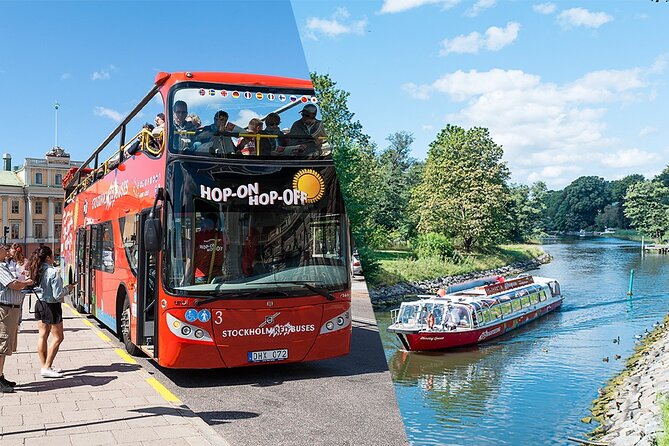
You can stay onboard and listen to the audio commentary, and the audio is offered in 15 languages. That’s great if you want background while you’re moving between neighborhoods.
Two small but useful things:
- Grab the audio headphones/headset right away when you board. One person noted they didn’t realize they needed earbuds until they were already on the upper level.
- The narration works best when you pair it with what you’re actually seeing. If you know which stop you’re approaching, the commentary becomes much more useful and less like background noise.
Also, don’t panic if the audio doesn’t feel like a deep lecture. The tour’s real strength is that it gets you to the right places fast. Use the audio as the context, not as the entire reason for the trip.
Bus route: what each stop is best for
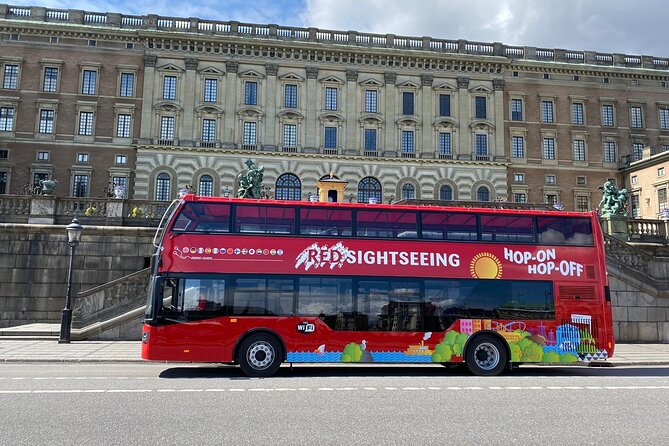
The bus route threads through Stockholm’s central sights in a loop that’s perfect for orientation. You can treat it as a moving map, then get off at the stops that match your mood—history, museums, waterfront access, or just wandering.
Below are the bus stops in order, plus how I’d use each one.
Gustav Adolfs torg
This is a strong start point because it’s a major anchor in the city center. If you’re jet-lagged or it’s drizzly, riding from here gives you an easy overview without committing to a long walking day.
Gamla stan
Old Town is one of those areas you’ll want to see up close. Use this stop to hop off and do the slow, curious walk where you’re not trying to make museum deadlines.
Fjällgatan
This stop is a good choice if you like viewpoints. Even if you only step out briefly, it’s the kind of place where the bus proximity can help you grab a quick photo break.
Medborgarplatsen
This area helps you understand the city’s “between” zones—how neighborhoods connect. If you want a break from museums but still want to explore, you can hop off here and walk a bit, then rejoin later.
The Royal Palace
This is an obvious “must-visit area” stop. Use it as your access point to explore around the palace area on your own time, then return to the bus when you’re ready to move on.
Kungsträdgården
This stop is good for strolling. If your day needs a change of pace—green space, café breaks, and a breather—hop off and enjoy the open-air feel before continuing.
Nybroplan
Nybroplan is helpful as a transition stop, especially if you plan to combine the bus with the boat. It can set you up for waterfront wandering without you having to fully map it out yourself.
Vasa Museum
This is a top museum priority stop, and it’s a great example of how the hop-off model works. If you want to spend time inside, this is your cue to get off and make it a real museum block.
Skansen
Skansen works as a “choose your own adventure” stop. It’s a great option when you want a longer stop from the bus to turn the city view into a full-time visit.
Nordiska museet / Vasamuseet
This stop is useful because it gives you another museum option after Vasa-area sightseeing. If you’re museum-happy, you can stack visits here and save time on transit.
Karlaplan
Karlaplan is a nice stop for stretching your legs if you’re doing the loop more than once. It can break up your day so you’re not bouncing between the biggest ticket items only.
Stureplan
Stureplan is central and convenient, so it’s a good hop-off point if you need shopping or people-watching time. Use it to reset your day and reposition before your next museum stop.
Hötorget
This is another practical middle stop. If you’re thinking about snacks or a quick bite, hop off here and then rejoin when you want to keep moving.
Cityterminalen
If your day includes planning transport between neighborhoods, this stop can help you reposition without stress. It’s also a useful “I want to get back to main streets” location.
Rådhuset
This stop works well if you want to add civic Stockholm landmarks to your day. Even if you don’t linger, it’s a good photo-and-walk break before continuing.
Stockholm City Hall
This is a strong ending stop for sightseeing. After a full loop, you’ll have the context for why this location matters, and it’s a simple anchor if you want one last “big sight” before you call it a day.
Boat route: the water view you can’t fake

The boat portion adds a whole different angle. Even if you’ve already seen the waterfront from streets, the boat route makes Stockholm feel like a city made of islands and channels.
The boat stops run from Royal Palace toward the waterfront and across to major terminals and viewpoints. Here’s how I’d use the boat stops.
Royal Palace (boat stop)
Starting by water near the palace area helps you see the shoreline and the city’s layout immediately. It’s a nice way to get a fresh perspective right after you’ve done bus orientation.
Nybroplan (boat stop)
This reinforces the earlier bus connection. It’s helpful if you want to line up bus and boat so you’re not backtracking across town.
Vasa Museum (boat stop)
If you’re doing museums, this is where the pass becomes efficient. You can pair the museum stop with a water route rather than relying only on road transit.
Skeppsholmen
This stop is a good “walk it off” location. If you hop off for a bit, you’ll get a calmer, more scenic stretch than a pure street-only route.
Gröna Lund
Use this stop if you want a lively break. It’s also a good option when you want your sightseeing to include a bit of energy rather than only museums and landmarks.
Masthamnen Cruise Terminal
This is a logical “big transport” stop. It’s useful if your day includes cruise-ship areas or if you want a more open waterfront vantage point.
Fotografiska Museum Stockholm
This stop is ideal if you like modern culture stops without losing time. The hop-on model means you can choose how long you want to spend here and then rejoin the boat.
Slussen
This is a strong wrap-up water stop. If you’re doing a full day loop, this helps you connect the waterfront view back to central walking routes.
Price and value vs taxis, and when it’s not the best deal

At $24.03 per person, this tour isn’t trying to replace taxis or public transit. It’s trying to do something else: remove the guesswork.
In Stockholm, taxis can be expensive, and you quickly see the cost of repeated rides when you’re moving between scattered sights. This pass acts like a cost-controlled way to bounce between neighborhoods without studying maps every hour.
That said, you shouldn’t buy this blindly if your plan is mostly “walk and see everything.” Stockholm is also a walking city, and if your schedule is tight, you might find one bus loop (about 1.5 hours for a loop) is all you need. On days where weather is perfect and your energy is high, you may still prefer public transit or on-foot routes.
My practical rule:
- If you want a guided-feel plan without booking a bunch of timed tours, buy it.
- If you already have everything mapped for walking, consider public transit as your baseline and use this only for the boat angle.
Reliability: clean rides, friendly drivers, and how to avoid time-wasters

A lot of the positive energy here comes down to the basics: clean vehicles and helpful drivers. When you’re hopping on and off repeatedly, that comfort matters more than you’d think.
The app also changes the vibe. With real-time location tracking, you can plan your next hop instead of standing there hoping the next bus is close. One person even called out that the frequency felt strong, with buses and boats showing up often.
Still, allow a small buffer the first time you use it. If you start at the wrong stop or board the wrong operator’s bus, you’ll lose more time than you save.
Who should book this Red Sightseeing combo?

This is a strong fit if:
- It’s your first time in Stockholm and you want an efficient city overview
- You like mixing museums with casual wandering instead of a strict itinerary
- You want both land and waterfront sightseeing without booking separate guided tours
It might be less ideal if:
- You already know every stop and you’re planning a mostly walking day with public transit as backup
- You dislike audio tours and would rather just explore without stopping or listening
Should you book this hop-on hop-off bus and boat?
Yes, with one condition: plan for the first-stop search. Once you’ve found the correct red bus operator and you’ve got your barcode ready, this is an easy way to get around Stockholm without constant map-work. The combo of bus views plus the boat route is where the pass earns its keep.
If you’re curious, short on time, or arriving with jet lag and rain in the forecast, this is the kind of tour that helps you get your bearings fast and then make smarter choices after you see the city’s layout. If you’re traveling slowly and already set on walking, use a 24-hour ticket or even treat the pass as a “boat day” tool rather than your entire sightseeing plan.
FAQ
How long is the experience?
It runs for about 1 hour 30 minutes (approx.). This works well for a loop-style overview.
Is the ticket valid for 24 or 72 hours?
Yes. Your ticket is valid for either 24 or 72 hours, and you get full use within that time window.
Can I hop on and off at different stops?
Yes. You can disembark at some or all of the stops, depending on what you want to see.
What languages are available for the audio guide?
The audio guide is available in 15 languages, including English.
Do I need to show a barcode on my ticket?
You’ll want your ticket barcode ready. One account noted that a confirmation document alone wasn’t accepted, so it’s smart to have the barcode accessible.
Do children get free entry?
Children up to age 7 travel for free when accompanied by an adult.
What happens if weather is poor, or if I cancel?
You can cancel for a full refund if you cancel at least 24 hours before the experience start time. If the experience is canceled due to poor weather, you’ll be offered a different date or a full refund.