Tokyo looks different from up here. In a single 60-minute loop, I like how the GPS-based guidance keeps you oriented with audio in eight languages, and how the open-top double-decker setup gives you nonstop sightlines instead of stop-start sightseeing. The one thing to plan around: in heavy rain, the roof may be closed and the tour can get canceled.
For this price point, it’s a smart way to sample Tokyo’s big-name sights without spending the whole day commuting between neighborhoods. You also get that real Tokyo feeling—wind off the water, rush-hour roads, and views you’d otherwise only catch if you planned a stack of separate tickets.
In This Review
- Key Highlights Worth Noting
- Hato Bus at Tokyo Station: Fast to Find, Easy to Start
- Why the GPS Audio and 8 Languages Are the Real Power Here
- Double-Decker Open-Top: The Best Part Is the Uninterrupted Views
- The Route: Tokyo’s Big Names, Passed Like a Best-Of Mix
- Hibiya Park: A Green Pause Before the Icons
- National Diet Building: Government Takes Center Stage
- Toranomon: Tokyo’s Mid-City Office Feel
- Tokyo Tower: The Angle You Came For
- Rainbow Bridge and Tokyo Bay: The Breeze Moment
- Odaiba: Futuristic Tokyo, Seen at Speed
- Toyosu: A Step Toward the Newer Waterfront Areas
- Tsukiji Outer Market: The Food District Without the Crowd Work
- Kabuki-za: Theater Tokyo in One Glance
- Ginza: The Classic Shopping District Finish
- Comfort Rules You’ll Actually Care About on Tour Day
- Price and Value: $14 for a One-Hour Orientation Pass
- Who This Tour Fits Best (And Who Might Want Something Else)
- Should You Book This Tokyo Open-Top Bus Tour?
- FAQ
- Where do I meet for the Tokyo open-top bus tour?
- How long is the tour?
- Is this a hop-on hop-off bus?
- What languages are available for the audio guidance?
- Do I need to bring earphones or a smartphone?
- Can I eat on the bus?
- What happens in rain?
- Is hotel pickup included?
- Can children join for free?
Key Highlights Worth Noting
- GPS automated guidance (8 languages) so you can follow along without guessing
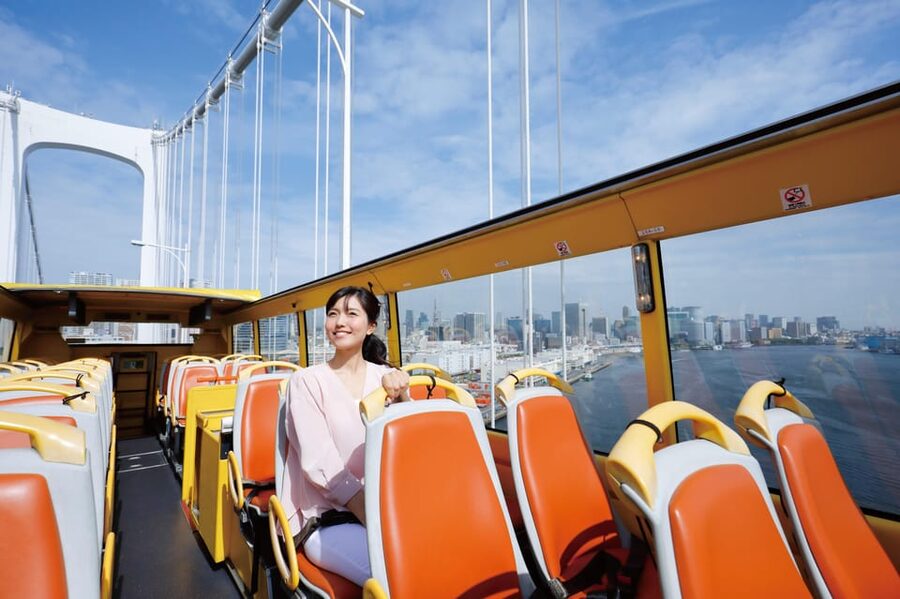
- Double-decker open-top views with continuous panoramas (not hop-on hop-off)
- Tokyo Tower angles you don’t usually get from street level
- Rainbow Bridge to the bay breeze plus the pass through Odaiba
- Classic Tokyo mix from Hibiya to Tsukiji Outer Market to Ginza
- Simple on-board rules that keep the ride smooth (no eating; bring earphones)
Hato Bus at Tokyo Station: Fast to Find, Easy to Start
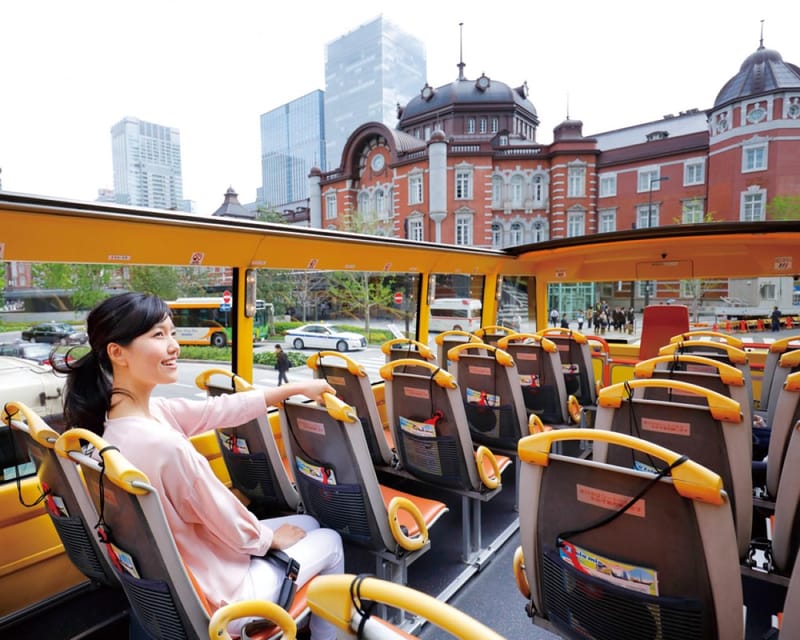
The ride starts and ends at the Hato Bus stop at Tokyo Station—near the JR Tokyo Station Marunouchi South Exit. If you come out there and turn left, it’s about a two-minute walk straight ahead to a yellow bus stop.
This matters more than it sounds. When you’re only on the bus for an hour, you don’t want to burn time tracing bus lines or figuring out where the boarding ramp is. This meeting point is one of the easiest in the city to locate because Tokyo Station is the hub most people already plan around.
One practical note: bring a smartphone you can use in Japan, since you’ll need it for your own audio setup. (The bus has audio guidance, but you still need your phone and earphones.)
Why the GPS Audio and 8 Languages Are the Real Power Here
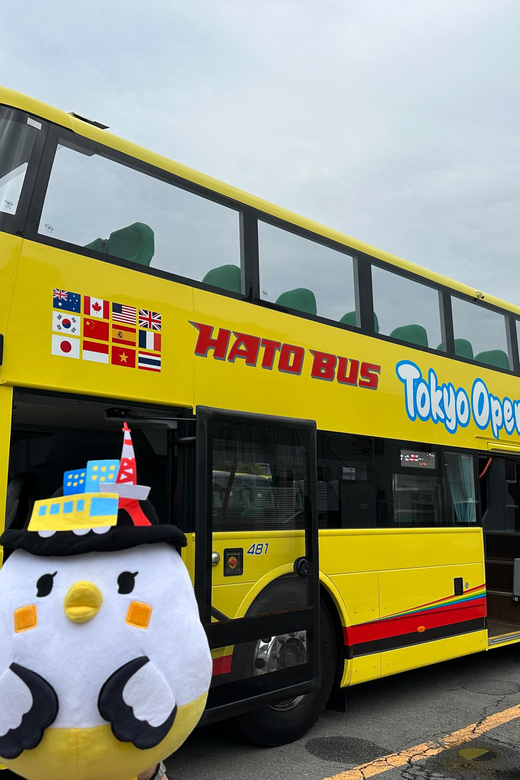
The tour isn’t just a bus ride. The value is that you’re guided in eight languages with GPS-based automated audio: English, Chinese, Korean, Spanish, French, Thai, Indonesian, and Vietnamese.
You’ll also have a Japanese-speaking live guide on board. Even if you don’t speak Japanese well, that’s useful because it helps the bus feel coordinated—people get the basics, and you’re not stuck staring at buildings like they’re random.
If you’re the type who likes to know what you’re looking at—rather than just snapping photos—GPS guidance is what turns the route into a real “see Tokyo” experience instead of a drive-by.
And yes, you’ll want your own earphones. The system is provided, but earphones aren’t included. Plan to bring a spare set if you tend to lose them. (Tokyo will not babysit your earbuds.)
Double-Decker Open-Top: The Best Part Is the Uninterrupted Views
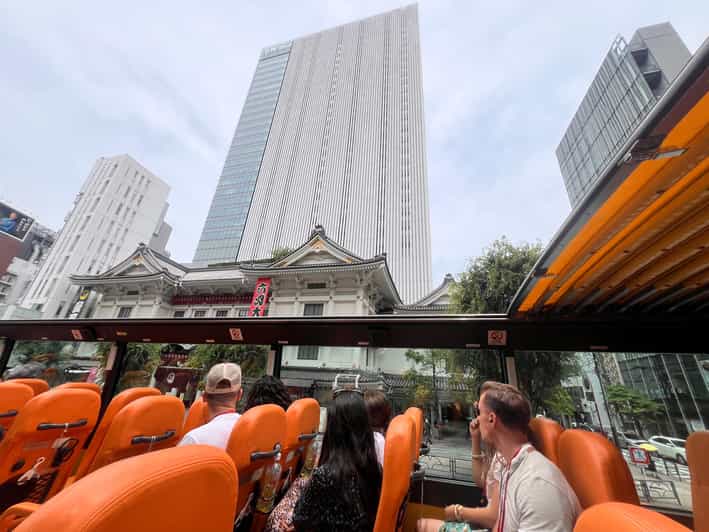
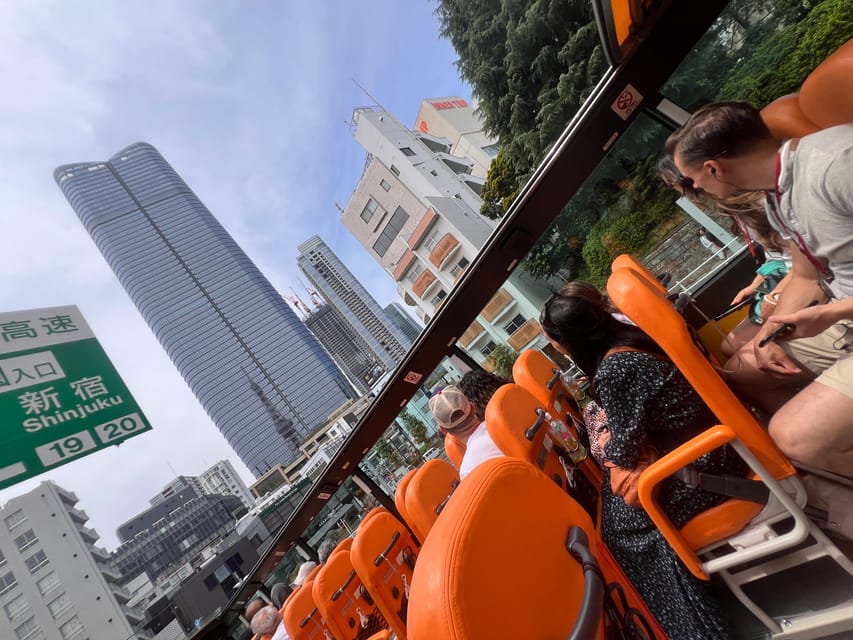
This is a double-decker open-top bus, and the big payoff is uninterrupted views from up high. You don’t get the typical “stop, wait, start again” frustration. Since it’s not hop-on hop-off, the route stays smooth and you keep moving through Tokyo’s key corridors.
From your seats, you’ll get wide angles across landmarks you’d normally approach from sidewalks. Tokyo is dense and layered—so seeing the city from above helps you understand how neighborhoods connect.
The tradeoff is weather. In rain, the roof may be closed, and the tour can be canceled due to bad weather or heavy rain. When it’s clear, the experience feels like the bus itself is your sightseeing platform. When it rains, it turns into more of a normal covered ride.
The Route: Tokyo’s Big Names, Passed Like a Best-Of Mix
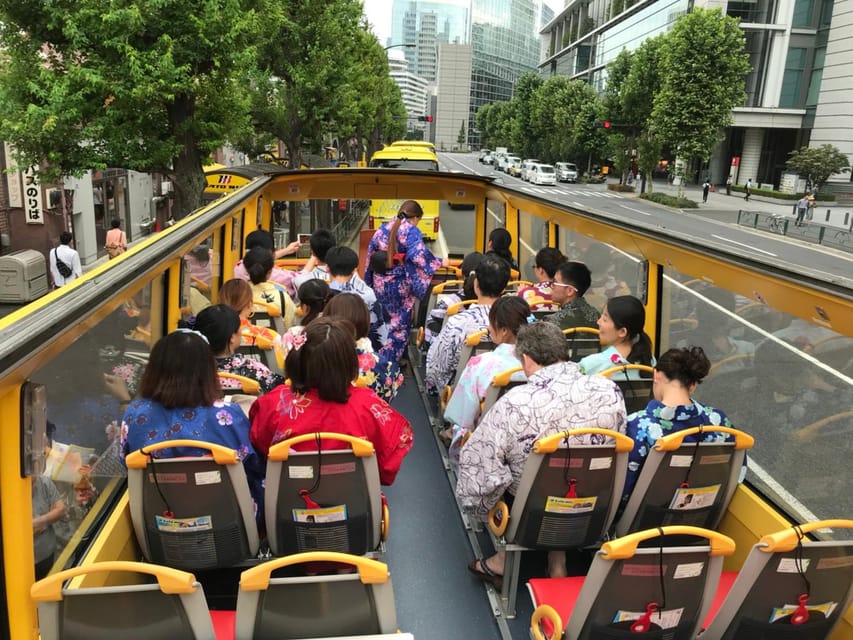
You’ll pass a set of landmarks that show off both government Tokyo and skyline Tokyo. The overall flow is designed so you get a strong “first visit” sampling in a single hour.
Hibiya Park: A Green Pause Before the Icons
You’ll pass by Hibiya Park, which is a nice reset when the rest of the ride becomes fast-paced and urban. Even from the bus, seeing a large green space near central Tokyo helps you grasp the city’s planning—how open areas sit alongside major roads and districts.
National Diet Building: Government Takes Center Stage
Next comes the National Diet Building area. This is one of those places where architecture is part of the story. From the bus, you can spot the scale and the formal layout without needing to plan a separate visit just to orient yourself.
If you like understanding what a place “runs on,” this stop in the route gives you that context fast.
Toranomon: Tokyo’s Mid-City Office Feel
Passing through Toranomon gives you a different texture than the government zone. This area is associated with major office districts, and you’ll see the city’s workday rhythm in how buildings stack up along the streets.
From above, you can also get better at reading Tokyo’s geography—where wide roads pull things together and where districts start to feel separate.
Tokyo Tower: The Angle You Came For
Then you hit Tokyo Tower, and this is where the ride earns serious photo points. The cool part is not just that it’s famous—it’s the multiple viewpoints you can catch from the bus as you pass by.
This is one stop that often feels awkward on foot because traffic, sightlines, and building clutter can block your view. On the bus, you get clearer angles and a sense of how the tower sits inside the broader skyline.
Rainbow Bridge and Tokyo Bay: The Breeze Moment
After Tokyo Tower, the bus passes Rainbow Bridge with Tokyo Bay in the background. This is the part of the ride that feels more like a real Tokyo scene than a postcard: the air changes near the water, and you get that sense of scale—roads stretching across the bay, the city opening up, and the horizon showing through.
If you’re going to stand for photos, this is the stretch where you’ll feel most of the open-top magic—when weather allows.
Odaiba: Futuristic Tokyo, Seen at Speed
Next is Odaiba. You’ll see a different Tokyo vibe here—more modern city shapes compared with the older central districts. From the bus, you won’t slow down to explore, but that’s not the point of this tour.
It’s a “get oriented quickly” experience. Odaiba works well in a one-hour format because you can grasp its waterfront identity and how it connects back to central Tokyo.
Toyosu: A Step Toward the Newer Waterfront Areas
The bus also passes Toyosu. Even if you don’t stop, it helps round out the bay-side story. You start to see how Tokyo’s newer waterfront areas sit along the same water corridor as Rainbow Bridge and Odaiba, forming a coherent picture.
If you’re planning a future trip to one of these places on your own, this pass makes it easier to decide which one you actually want to go back to.
Tsukiji Outer Market: The Food District Without the Crowd Work
You’ll pass by Tsukiji Outer Market. This is a big one for first-timers because Tsukiji is closely linked with Tokyo’s food culture. The bus doesn’t replace exploring the market on foot, but it gives you location context—where it is in the city and how it sits among nearby districts.
This is also a good moment to mentally mark where you’d like to spend time later. If you’re the type who plans a second trip to Tokyo, the bus is great for creating that list.
Kabuki-za: Theater Tokyo in One Glance
Next is Kabuki-za, which signals a cultural Tokyo side—classic performance culture next to modern city streets. From the road, you’ll likely notice how prominent the theater district feeling is. Even without entering a venue, the sight helps you understand that Tokyo is more than just business and towers.
Ginza: The Classic Shopping District Finish
Finally, you’ll pass through Ginza, one of Tokyo’s most recognizable shopping and dining zones. This is a strong ending point because Ginza feels like a recognizable “clean finish” to a loop through big landmarks.
By the time you reach Ginza, you’ll have a better sense of where you are and which direction to head after you get back near Tokyo Station.
Comfort Rules You’ll Actually Care About on Tour Day

This ride has clear boundaries to keep things simple.
- No eating is allowed on the bus.
Drinks in plastic bottles are permitted.
- The bus roof may be closed in rain. In bad weather, the tour may be canceled.
Also plan your tech setup. Bring a smartphone that can be used in Japan and your own earphones. GPS devices and earphones aren’t provided for rental. There’s also a note that if the audio system has technical issues or your earphones malfunction, you won’t get a refund. In other words: test your earphones at home before you leave.
One more small-but-important detail: the experience uses automated guidance, so having your phone ready helps. You don’t want your battery dead when you’re trying to follow the narration.
If you’re thinking this tour is a good “set it and forget it” plan, it is—just don’t treat it like a picnic bus.
Price and Value: $14 for a One-Hour Orientation Pass
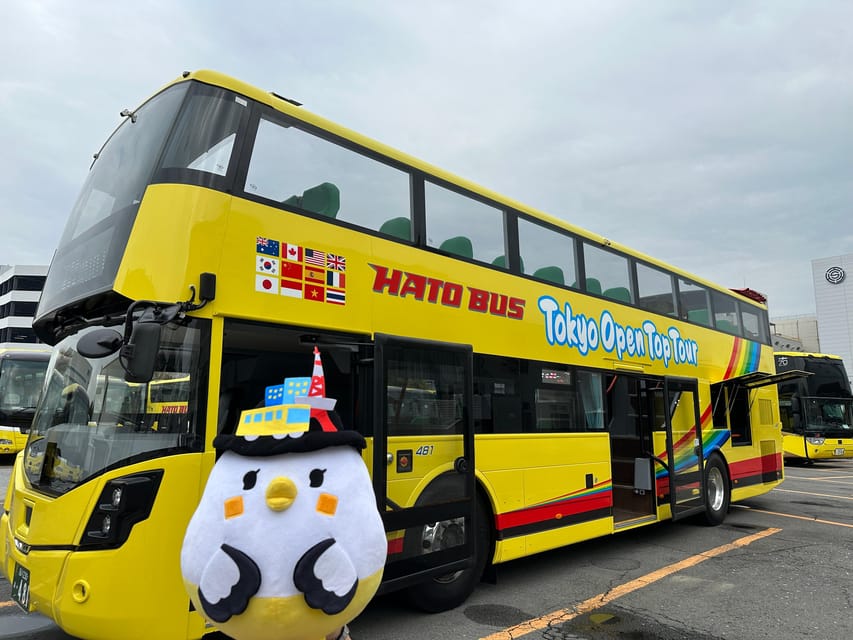
At $14 per person for a 1-hour ride, the value depends on what you want from Tokyo.
If your goal is orientation—seeing major landmarks efficiently, understanding how Tokyo’s districts connect, and collecting photo angles without paying for multiple attractions—this ticket is a good deal. You’re getting a guided experience (Japanese-speaking live guide + GPS audio) plus the big advantage of uninterrupted open-top panoramas.
If you’re hoping to “experience” one neighborhood deeply—like actually shopping inside Tsukiji or spending hours around Kabuki-za—this won’t replace that. It’s a sweep. It’s meant to be fast and panoramic.
For most first-time visitors, or anyone short on time between trains, it’s a practical way to get your bearings and still feel like you did something distinctly Tokyo.
Who This Tour Fits Best (And Who Might Want Something Else)
I think this is a strong match if you’re:
- On a tight schedule but want major sights in one go
- A first-timer who wants to understand Tokyo layout and skyline relationships
- Photo-minded and excited by Tokyo Tower and bay views
- Comfortable using GPS audio and your own earphones
It might be less ideal if:
- You hate weather uncertainty and you’re visiting during a high-rain stretch
- You want long stops to explore shops, markets, or cultural venues
- You don’t want to rely on a smartphone setup
If you fall into the “I want a guided orientation” camp, you’ll probably feel the best payoff.
Should You Book This Tokyo Open-Top Bus Tour?
Book it if you want a fast, guided way to see the highlights around Tokyo Station and central Tokyo—plus Tokyo Tower and the bay corridor—without building a complicated day plan. The GPS audio in eight languages is a real help, and the open-top double-decker setup makes the views feel like part of the experience, not a side effect.
Skip it (or think twice) if your schedule is fragile due to weather, because the tour can cancel in heavy rain and the roof may close. Also skip it if you need extended time in neighborhoods like Tsukiji or Ginza. This is a pass-through tour, not a deep exploration.
If you’re flexible, have your earphones ready, and you want big views with minimal planning stress, this is one of those simple tickets that makes your first hours in Tokyo feel easier.
FAQ

Where do I meet for the Tokyo open-top bus tour?
You meet at the Hato Bus Tokyo Office near the JR Tokyo Station Marunouchi South Exit.
How long is the tour?
The tour lasts 1 hour.
Is this a hop-on hop-off bus?
No. It is not a hop-on hop-off service.
What languages are available for the audio guidance?
GPS automated guidance is available in English, Chinese, Korean, Spanish, French, Thai, Indonesian, and Vietnamese.
Do I need to bring earphones or a smartphone?
Yes. Bring a smartphone that can be used in Japan and your own earphones. GPS devices and earphones are not provided for rental.
Can I eat on the bus?
Eating is not allowed on the bus. Drinks in plastic bottles are permitted.
What happens in rain?
In case of rain, the bus roof may be closed. The tour may also be canceled due to bad weather or heavy rain.
Is hotel pickup included?
No, hotel pickup and drop-off are not included.
Can children join for free?
Children under 6 years old without a seat can join for free (one child per adult).