Tokyo gets covered fast on this day tour. I like this one because it strings together Meiji Shrine, Asakusa, and Tokyo Skytree in a single loop, with an air-conditioned coach and guides like Aya and Sora keeping the day moving smoothly across the city. Add in an audio headset in multiple languages and you’ll spend more time looking up and eating, less time figuring out where to go next.
Two things I really like: the matcha + Asakusa food time gives you more than photos, and the skip-the-line Tembo Deck at Skytree turns a ticket headache into a straightforward plan. One drawback to plan for: the schedule is full, and there’s more walking than you might expect for a “coach tour,” plus the Bay Cruise can be swapped out on certain days or if conditions prevent it.
In This Review
- Key Takeaways
- Is $122 a good deal for 10 hours of Tokyo?
- Shinjuku start: the Love Statue pickup and why it matters
- Meiji Shrine: a forest break right inside the city
- Imperial Palace area and the art of seeing Tokyo’s layers fast
- Asakusa Nakamise: snacks, photos, and the matcha payoff
- Lunch in an Asakusa izakaya style: karaage + tofu set
- Akihabara, Ueno, and Kappa-bashi: tech, knives, and food replicas
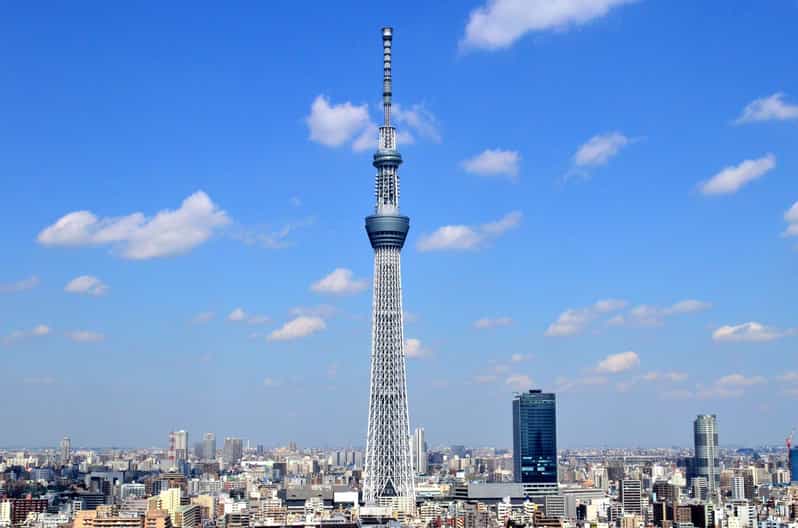
- Tokyo Skytree Tembo Deck: 350 meters and the “why” behind the view
- Odaiba and the Bay Cruise under Rainbow Bridge
- If the cruise is off: Hamarikyu Garden or Fukagawa Edo Museum
- What you’ll likely feel: fast pacing, real walking, and tour-guide energy
- Who this tour fits best (and who should skip it)
- Should you book Tokyo: Meiji Shrine, Asakusa, Skytree Bus Tour and Cruise?
- FAQ
- How long is the Tokyo Meiji Shrine, Asakusa, Skytree, and cruise tour?
- Where does the tour start and how do I get there?
- Is Tokyo Skytree included, and is it skip-the-line?
- What food experiences are included in Asakusa?
- Is lunch included in the price?
- Is the Tokyo Bay Cruise always included?
Key Takeaways
- Skip-the-line access to Tokyo Skytree Tembo Deck (350 meters) for big views without the long wait
- Matcha experience in Uji-style premium tea plus options like matcha gelato or matcha beer
- Asakusa food time: Nakamise Street snacks, then an optional local set lunch
- Tokyo Bay Cruise under Rainbow Bridge (but it may be replaced by Hamarikyu Garden or Fukagawa Museum)
- Real city mix: shrine forest calm, imperial Tokyo formality, tech/market streets, then modern waterfront
Is $122 a good deal for 10 hours of Tokyo?
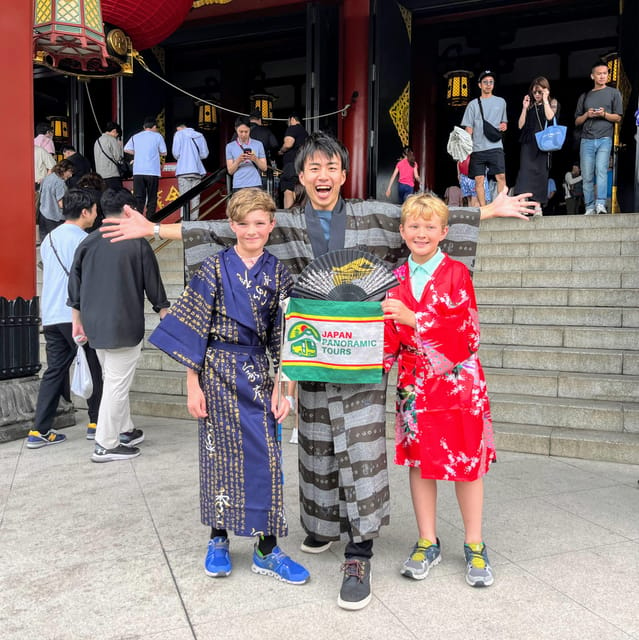
At $122 per person for a 10-hour day, this tour is priced like a “value with structure” option. You’re paying for the fact that Tokyo is spread out: the coach handles the transfers, you get a professional English guide, and you receive admission to the one big ticket stop that usually eats time—Tokyo Skytree Tembo Deck.
You also get a couple of built-in experiences that are hard to reproduce on your own in one day: a matcha experience and an Asakusa lunch that’s framed like a local pub meal (karaage and tofu set, if you choose lunch). The Bay Cruise adds another “Tokyo postcard” moment—when it’s running.
Where the value can wobble: lunch quality and time distribution are always personal. And if you’re hoping for a slow stroll day, this isn’t that. It’s a full circuit, with walking plus a lot of shifting between districts.
Shinjuku start: the Love Statue pickup and why it matters
The day begins in central Tokyo, with pickup options that include the Shinjuku Love Object area (and there’s also a meeting point option in Ginza). That location choice matters. If you’ve ever tried to piece together multiple neighborhoods in one day, you know the first win is avoiding long commutes from far-off hotels.
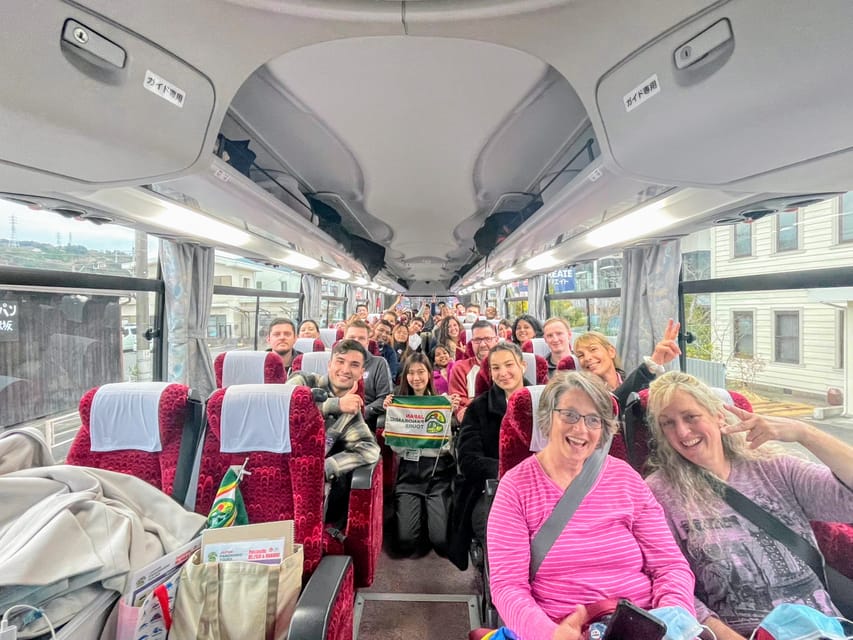
Once you’re on board, you’ll get the practical stuff that makes long tours less stressful: an air-conditioned coach, Wi-Fi, and an English-speaking guide who keeps timing tight. There are also audio headsets (Spanish, French, Italian, German, Portuguese, Ukrainian) if you want the extra layer while you listen to the guide. Even if you only use English, the headsets help when the bus is moving and you miss a key detail.
Meiji Shrine: a forest break right inside the city
The tour kicks off with Meiji Jingu Shinto Shrine, one of Tokyo’s most famous shrines, dedicated to Emperor Meiji. The big reason this stop works on a day tour is the contrast: you start in Tokyo traffic and then step into a forested shrine space where your brain goes quiet.
You’ll get about an hour here. That’s enough time to walk the main approach, notice the shrine atmosphere, and get your photos without feeling like you’re sprinting. The caution is simple: bring comfortable shoes and keep expectations realistic. An hour sounds long until you’re dealing with crowd flow and the “pause-take-a-breath” moments you’ll want to build in.
A nice bonus of going early in the day is that it sets your tone. Tokyo can feel loud; Meiji Shrine makes the city feel slower, even if only for a short window.
Imperial Palace area and the art of seeing Tokyo’s layers fast
After passing key neighborhoods and landmarks like Harajuku and the National Diet Building, you’ll reach the Imperial Palace area for a shorter stop (around 30 minutes). The palace complex sits on the site of Edo Castle, so you’re looking at a location with deep symbolism, even if you don’t see the living quarters.
What you’ll actually do in the outer palace area can vary. The tour includes options such as the East Garden or a stop around Nijūbashi Bridge in the Outer Garden. Either way, it’s a useful snapshot of Tokyo’s “formal” side—symmetry, ceremony, and carefully maintained grounds.
The tradeoff is time. Thirty minutes is just enough for orientation and a couple of strong photos. If you want more, you’ll use your energy wisely and then plan to return on your own later.
Asakusa Nakamise: snacks, photos, and the matcha payoff
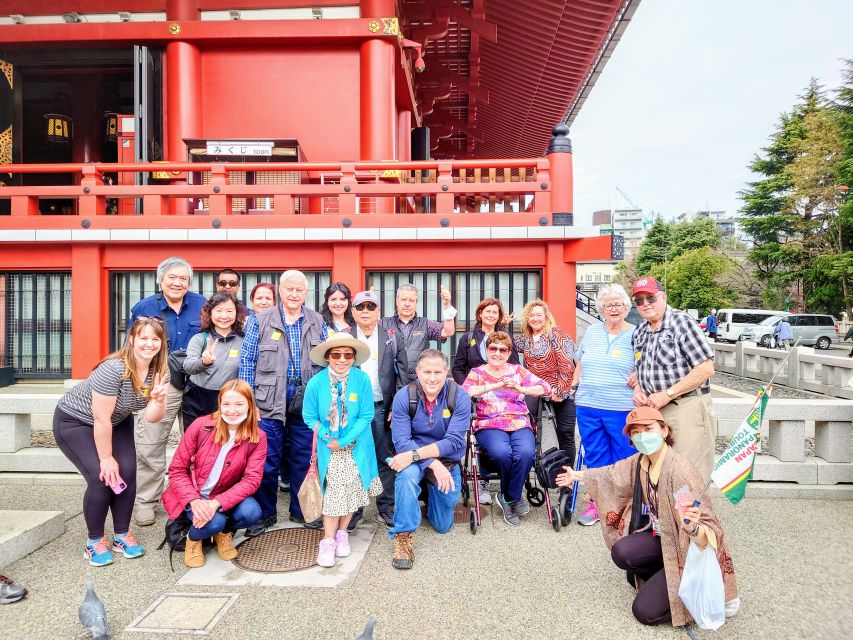
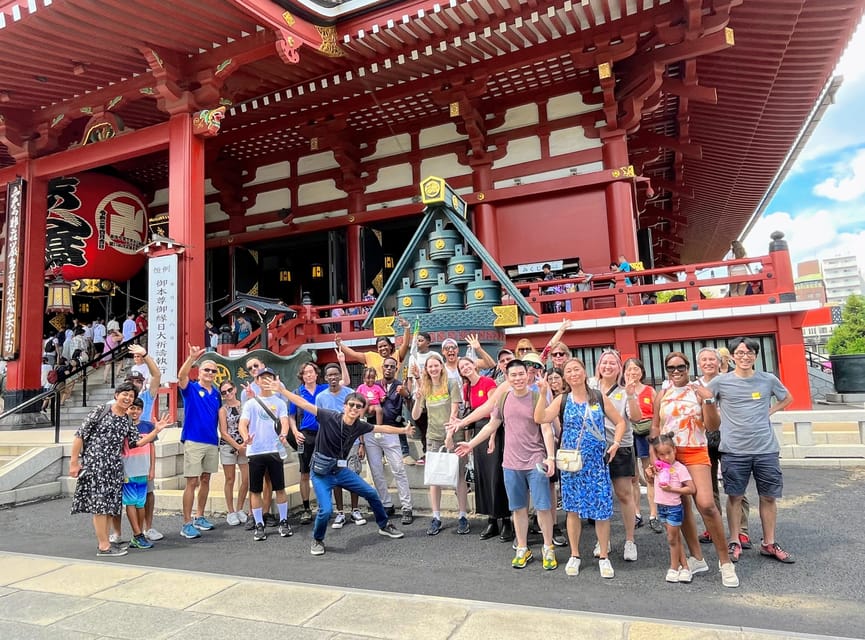
Then you hit Asakusa, where the day shifts from big landmarks to street-level Tokyo. You’ll spend time around Nakamise Avenue, plus the classic photo target: Kaminarimon Gate with its red lantern.
You get a short food tasting window and then a separate block of free time. That structure is smart. It lets you try things without committing to a full meal immediately, then gives you room to linger for shopping, souvenirs, or just wandering side streets at your own pace.
What makes Asakusa especially good on a guided day is that it’s easy to turn it into a one-neighborhood day. This tour prevents that by keeping you moving while still giving you enough slack to enjoy the atmosphere.
And yes—the matcha part is a real highlight. You’ll do an authentic Uji matcha experience featuring a “premium” style using first flush tea from Uji, Kyoto. Depending on timing and what’s available, you may also get options like sweet matcha gelato or matcha beer. If you’re a matcha fan, this is the kind of stop where you actually taste the difference, not just buy a packet and move on.
One small logistics note: the matcha store is closed on May 14, and on that date you’ll receive matcha souvenirs instead of the experience.
Lunch in an Asakusa izakaya style: karaage + tofu set
Lunch is optional, but it’s built into the schedule as an included add-on if you choose it. The set meal is described as a local-style combination with karaage (Japanese fried chicken) and tofu. You’ll also get a soft drink with lunch.
A key value point here is that the tofu is made using locally produced soybeans and is made at the store daily. That detail matters because it’s one of the few chances you’ll get on a one-day tour to eat something you can’t easily recreate from a random convenience store meal.
Diet notes are important:
- If you book vegetarian or gluten-free, you need to indicate it at booking.
- The lunch menu includes no pork or seafood, but the dashi stock contains fish broth, so it’s not fully seafood-free in the ingredient sense.
- Gluten-free lunch options are listed as grilled chicken, rice, and tofu.
- Muslim-friendly, allergy-friendly, and lactose-free meals aren’t available. For serious allergy concerns, the guidance is to book without lunch.
If you’re thinking about value: the lunch add-on is usually where guided tours win or lose. Here, it’s framed as a Japanese set meal that’s designed for foreigners to find approachable and filling without a complicated ordering process.
Akihabara, Ueno, and Kappa-bashi: tech, knives, and food replicas
Between the major sightseeing stops, the coach also passes through areas that help you understand Tokyo’s different economies. You’ll go by Akihabara, Ueno, and Kappabashi market street.
This is one of my favorite types of “bonus stops,” because you get visual context without losing time at a formal museum. In Kappabashi, you can spot kitchen items like knives and tools, and—very Tokyo—food replica displays that look almost too real. Even if you’re not shopping, seeing these displays teaches you something about Tokyo’s attention to detail and sales culture.
The drawback is that this is mostly pass-by viewing rather than structured free time. If you want long browsing in these markets, you’ll use your own day afterward to return. But as part of a one-day highlights loop, it works well.
Tokyo Skytree Tembo Deck: 350 meters and the “why” behind the view
Next comes the big ticket: Tokyo Skytree. You’ll visit the observation area at the Tembo Deck (350 meters) with skip-the-line admission, plus time in the Sora-machi shopping area.
This is where the tour earns its keep. Skytree is famous enough that lines can eat your day. Getting in with prearranged entry helps you spend more time taking in the city and less time waiting behind strangers in line with the same idea.
What you should do here:
- Spend your first minutes looking in directions before you start filming.
- Don’t try to photograph everything; choose a couple of skyline angles and then just watch the city move.
This is also the part of the tour that rewards good timing. If the weather is clear, your views will feel like a cheat code for orientation. You’ll see how far Tokyo stretches and how districts connect.
A common tradeoff from the experience: people sometimes wish they had a touch more time at Meiji Shrine or slightly less time at Skytree. The fix is simple—pick your priorities before you go. If skyline views are your thing, you’ll appreciate Skytree’s focus.
Odaiba and the Bay Cruise under Rainbow Bridge

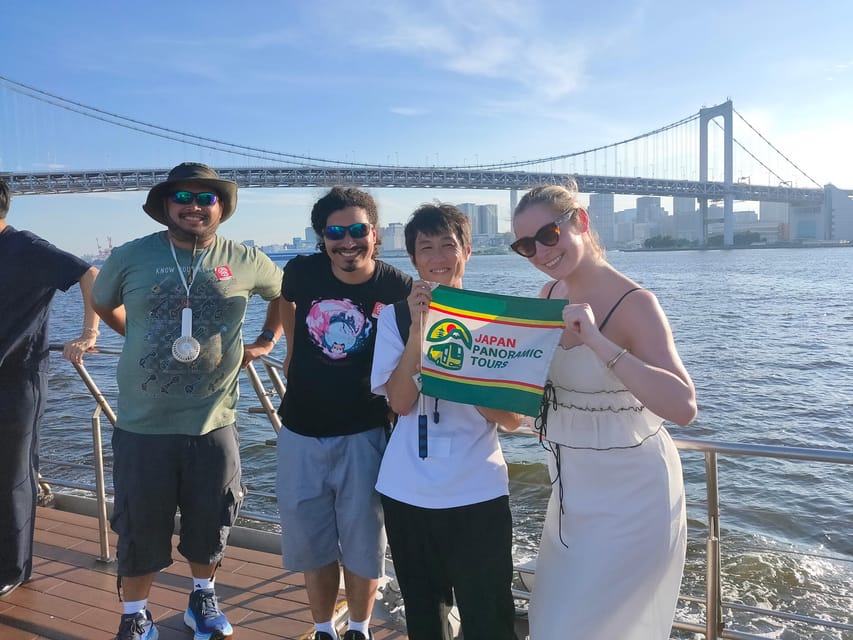
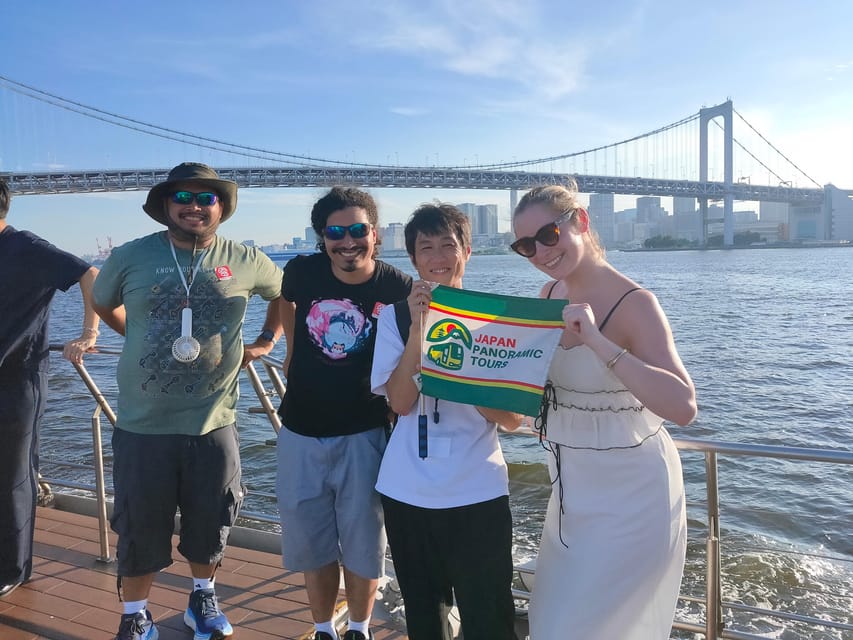
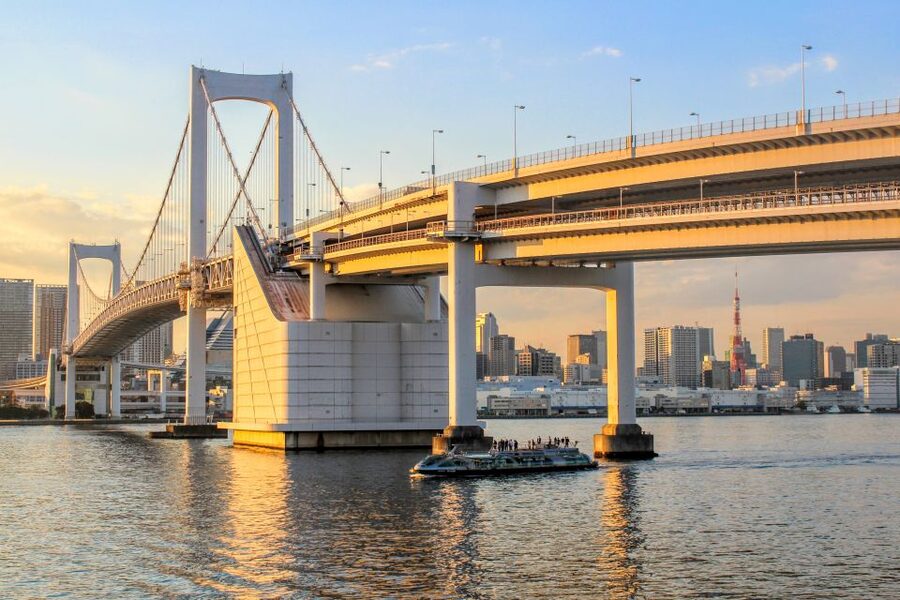
After Skytree, you’ll head to Odaiba, then finish with a Tokyo Bay Cruise. The cruise runs most days, and you’ll be treated to a ride that goes under Rainbow Bridge, followed by views of Tokyo’s skyscrapers.
The time block is short (around 20 minutes), but the timing matters. The cruise is often the “final postcard moment” that makes the whole day feel like more than a list of landmarks.
Still, don’t build your day around the assumption that the cruise is guaranteed. The tour notes that the cruise can be replaced:
- If it’s Tuesday, it may be replaced with Hamarikyu Garden or the Fukagawa Edo Museum.
- Sometimes there’s no cruise due to high tide or technical maintenance.
- If the cruise doesn’t run and you visit the alternate option, no refund is given.
If you’re the type of traveler who really needs water views, you should take that contingency seriously. If you’re flexible and happy with a good alternative, you’ll still end the day feeling like Tokyo delivered.
If the cruise is off: Hamarikyu Garden or Fukagawa Edo Museum
On days when the Bay Cruise doesn’t run, the tour pivots to either Hamarikyu Garden or the Fukagawa Edo Museum. The option depends on the day, and it’s presented as a substitution rather than an extra.
This is a smart way to keep the schedule from collapsing. A garden like Hamarikyu gives you a calm counterpoint after Skytree and Odaiba’s modern energy. A museum like Fukagawa Edo Museum can be a good way to connect back to the Edo period theme you started earlier at the Imperial Palace area.
The main consideration is expectation. If you wanted a cruise because you love boats and waterfront, you may be disappointed if it’s swapped out. But if you’re open to a different kind of Tokyo “wow,” it’s an easy adjustment.
What you’ll likely feel: fast pacing, real walking, and tour-guide energy
The tour’s promise is clear: see a lot in one day. That means it’s not the slow, wander-at-your-own-pace style. Even with an air-conditioned coach, you’ll do real walking at Meiji Shrine, around Asakusa, and at Skytree.
One recurring theme from the experience: it can hit 11,000+ steps depending on your pacing. So if you book this, do it with smart footwear and a plan to keep moving.
The other factor is the guide. Names you may hear in this tour’s rotation include Aya, Sora, Levin, Hiro, Yuta, Yui, Lisa, and Tsubasa. The praised pattern across these guides is that they keep the day organized, answer questions, and give helpful direction so you don’t lose time. That matters more than you’d think: Tokyo rewards momentum, and a good guide protects your time.
Who this tour fits best (and who should skip it)
This tour makes a lot of sense if:
- You’re in Tokyo for a short stay and need a fast orientation to classic + modern highlights
- You want skip-the-line Skytree entry without researching ticket logistics
- You like food experiences, especially matcha and an Asakusa-style lunch add-on
- You’re okay with guided pacing and the tradeoff of less free time than a self-guided day
You might skip it if:
- You’re extremely mobility-limited. The tour is stated as not suitable for people with mobility impairments.
- You hate walking and prefer a low-step itinerary.
- You’re counting on the Bay Cruise as your one must-see. It can be swapped out.
Should you book Tokyo: Meiji Shrine, Asakusa, Skytree Bus Tour and Cruise?
I’d book it if you want a structured “Tokyo highlights” day that still leaves you room to taste, shop, and look around—especially because the tour includes Tembo Deck entry and an actual matcha experience instead of just passing by landmarks. The $122 price starts to feel reasonable when you factor in transport, guidance, and admission.
I’d think twice if you’re chasing a slow, restful itinerary or you’re tightly focused on the Bay Cruise happening no matter what. The tour can pivot, and you need to be okay with that plan B.
If you go in ready for a busy day—comfortable shoes, a flexible mindset, and an interest in both old and new Tokyo—this is the kind of tour that can save you an extra day of planning.
FAQ
How long is the Tokyo Meiji Shrine, Asakusa, Skytree, and cruise tour?
It’s listed as a 10-hour experience.
Where does the tour start and how do I get there?
Pickup starts in central Tokyo with options including Shinjuku at the Love Object area and a Ginza meeting point. The exact meeting point can vary by option booked.
Is Tokyo Skytree included, and is it skip-the-line?
Yes. Tokyo Skytree Tembo Deck (350m) entry is included, with skip-the-line admission.
What food experiences are included in Asakusa?
You get time for Asakusa food tasting, and you can select an optional lunch. The matcha component is also included as a matcha drink (or options like matcha gelato, depending on what’s offered).
Is lunch included in the price?
Lunch is included only if you select the lunch option (a set meal with a soft drink). If you don’t select lunch, you’ll skip that meal.
Is the Tokyo Bay Cruise always included?
It’s included except on Tuesday and may also be replaced if the cruise cannot operate due to high tide or technical maintenance. If it’s replaced, the tour visits Hamarikyu Garden or the Fukagawa museum, and no refund is given in that case.