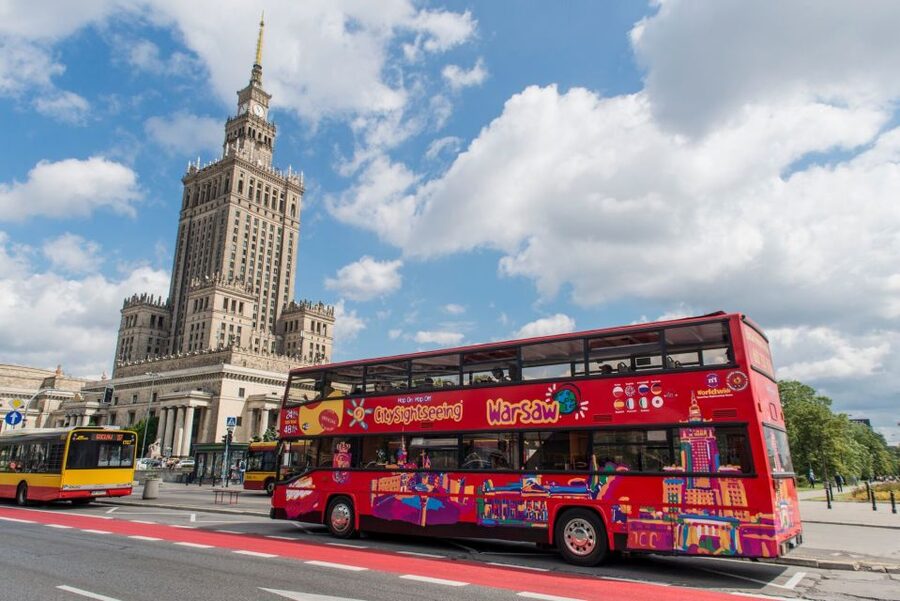
Warsaw can feel big and fast. This hop-on hop-off bus tour turns it into something you can actually manage, with two routes, multilingual audio, and plenty of chances to get out where you care most. The tour starts at the Palace of Culture and Science, then fans out to landmark squares, major museums, and the neighborhoods that give Warsaw its character.
What I like most is the mix of “see it now” stops plus “stay longer” options. You get an easy intro to the Old Town atmosphere, and you also pass major culture hits like Warsaw Rising Museum and the National Museum area without needing a map.
One drawback to plan around: the buses don’t run super frequently, so the hop-on part only works well if you time your hops. On some schedules, you may wait close to an hour or more for the next bus, and traffic can shift timing.
In This Review
- Key takeaways before you buy
- Getting your bearings at the Palace of Culture and Science
- Red vs Blue routes: the plan that makes sense in real life
- Blue Route stops: Old Town, Chopin, and the park break
- Norblin Factory Museum and the Warsaw Rising Museum area
- Zacheta Gallery and the central art stop
- Old Town plus Castle Square
- Chopin Museum and National Museum
- Three Crosses Square and Lazienki Royal Park
- Constitution Square and Downtown
- Red Route stops: University, science, Praga, and memorial streets
- Grzybowski Market Square and Warsaw University Library
- Copernicus Science Center and the National Stadium
- Praga and Multimedia Fountain Park
- Muranowska and the Museum of Polish Jews History
- Warsaw City Hall area and Downtown
- The onboard audio guide: great tool, test it first
- How long is the tour, and how often will you wait?
- What you get when you do 24, 48, or 72 hours
- Entrance tickets and food: what’s not included
- Practical rules and small comfort tips
- Price and value: is $41 worth it?
- Should you book the Warsaw hop-on hop-off bus?
- FAQ
- How long is the hop-on hop-off bus tour?
- Where does the tour start?
- What stops and sights are included on the routes?
- Are tickets to attractions included in the price?
- What language options are available for the audio guide?
- Are headphones provided?
- Can I cancel or change my plans?
Key takeaways before you buy
- Two route choices (Red and Blue): they share key central sights, so you can mix and match without chaos.
- Audio in 11 languages with headphones: handy for history and architecture when you do not want to read a guidebook.
- Strong lineup of museums and memorials: Warsaw Rising Museum plus National Museum fit a wide range of interests.
- Old Town access is built in: get your bearings fast, then repeat stops on the way back.
- The real trick is timing: bus frequency varies, so ride smart if you plan multiple hops.
- Practical onboard reality checks: some departures can have audio/headphone issues, so test early.
Getting your bearings at the Palace of Culture and Science
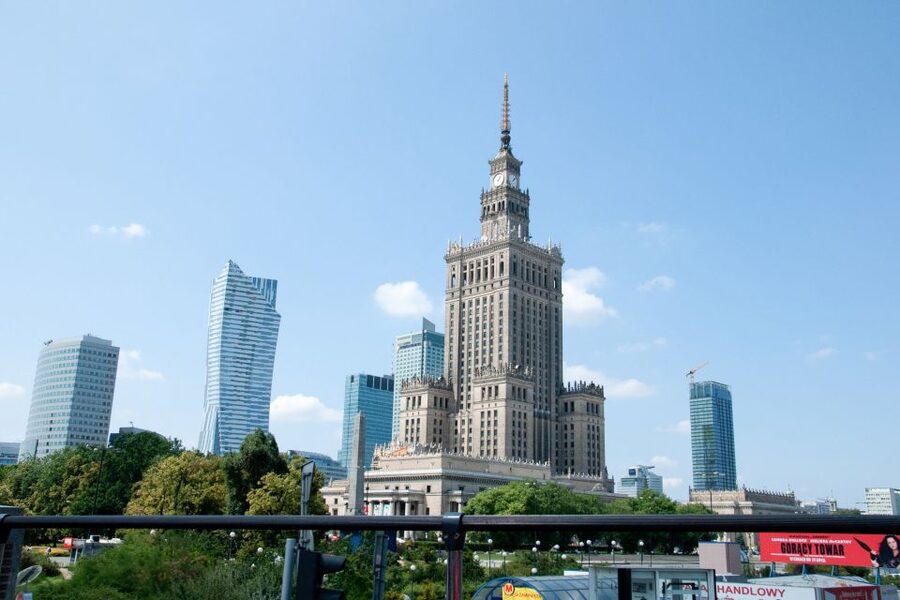
Most hop-on tours start with something scenic. This one starts with something unmistakable: the Palace of Culture and Science at Dworzec Centralny 12, the tall landmark that anchors a lot of Warsaw’s skyline. It’s also where you can take in wide city views from the 30th floor before you start exploring by bus, which helps the rest of the day click into place.
That “first views, then streets” flow matters. Warsaw’s neighborhoods can feel like separate worlds, so having that top-down reference point makes later stops easier to understand. If you like to photograph big monuments, this starting landmark is a great warm-up.
Also, the tour is built for flexibility. You can start and end at any allocated stop, and your ticket covers 24, 48, or 72 hours of hop-on hop-off riding. That turns the bus into both a first-day overview and a second-day shortcut.
Red vs Blue routes: the plan that makes sense in real life
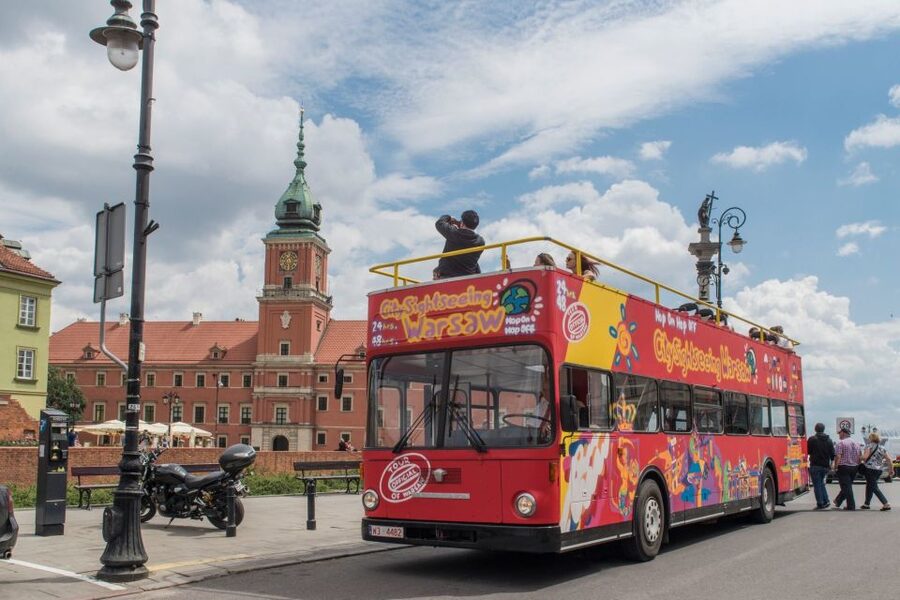
This tour runs on two panoramic loops: the Red Route (70 minutes) and the Blue Route (60 minutes). They intersect regularly, so you can switch lines when you want to re-center near the Old Town, the central squares, or the museum-heavy stretches.
Here’s the scheduling reality to keep in mind. Between 10:30am and 12:40pm, buses run every 160 minutes. Between 12:40pm and 3:50pm, buses run every 190 minutes. The exact timing can also shift with traffic, which is normal in a city with busy roads.
So what should you do? My best advice is simple: treat the first ride as your “map in motion.” Do most of a full loop once, get the layout in your head, then use your saved energy to hop out at the stops you care about most on the way around again. If you try to hop constantly on the very first pass, you can burn time waiting.
Blue Route stops: Old Town, Chopin, and the park break
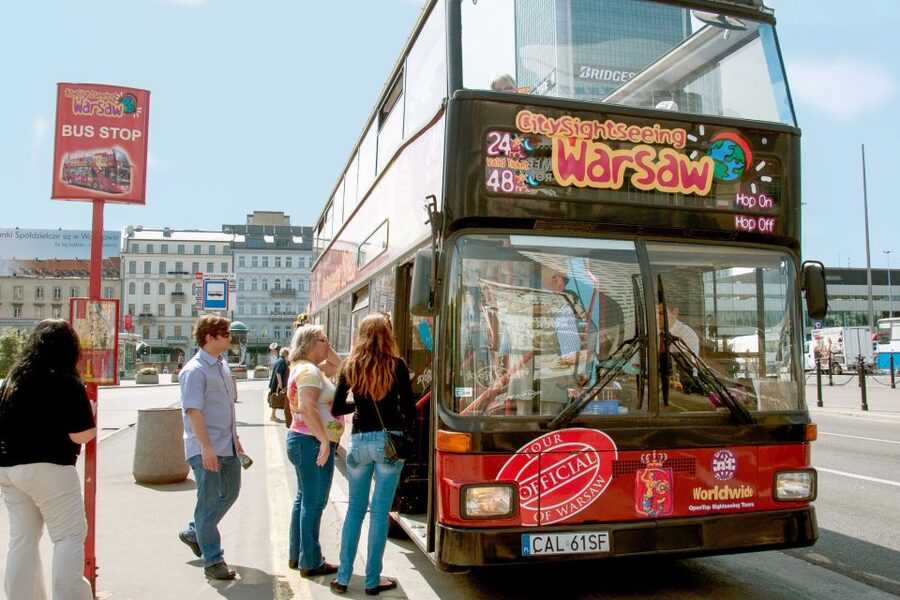
The Blue Route is the one I’d choose if you want a strong mix of culture, classic central sights, and a green pause. It starts where you’ll likely begin your day too: back at the Palace of Culture and Science (Dworzec Centralny 12), then heads toward key central points.
Norblin Factory Museum and the Warsaw Rising Museum area
Right after the Palace, the route goes through the area around Norblin Factory Museum, then reaches the Warsaw Rising Museum. This is one of the big “time me” stops for the city’s modern identity. The museum’s story is presented with over 1,000 exhibits, which makes it a powerful stop even if you only have a short window.
If you hop off here, plan your visit around your energy. This is not a quick photo-only stop. It’s a place where the audio guide won’t replace the exhibits.
Zacheta Gallery and the central art stop
Later, you’ll see Zacheta Gallery on the route. This is a good option if you want a dose of contemporary culture without committing to a whole day inside a big museum.
Old Town plus Castle Square
Then the bus hits Old Town (Stare Miasto) and Castle Square (Plac Zamkowy). Old Town is one of those areas where you immediately feel the atmosphere shift, even from the street. This is where you can hop off for wandering, then return later if you want a second look in different light.
A practical note: Old Town is also one of the best places to “re-visit” by bus, because you can compare angles and pace without getting lost.
Chopin Museum and National Museum
The route also includes the Chopin Museum and the National Museum. If classical music and Polish art are your things, this stretch is a straight shot into your interests. The National Museum is especially notable in the tour concept because it houses over 400 works by Poland’s greatest artists.
If you are short on time, choose one of these museum stops rather than trying to do both. You’ll get a better experience out of a focused plan.
Three Crosses Square and Lazienki Royal Park
The Blue Route continues to Three Crosses Square, then to Lazienki Royal Park (Lazienki Krolewskie). This is the “slow down” segment. It’s tied to the tour highlight of the Lazienki Krolewski Palace architecture, and it’s a great place for a walk break if the weather cooperates.
Constitution Square and Downtown
Finally, you’ll ride toward Constitution Square and back through Downtown (Centrum). This last stretch helps you connect what you saw earlier to how Warsaw functions today—busy, practical, and very much alive.
Red Route stops: University, science, Praga, and memorial streets
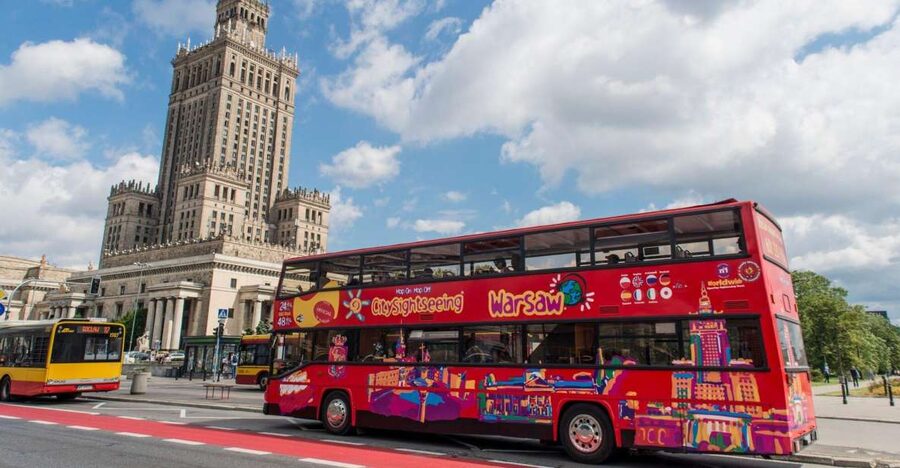
The Red Route is longer (70 minutes) and leans into a different side of the city. It shares the Palace start, then takes you past different “big pillars” of Warsaw: education, science, sports, and the more textured neighborhoods.
Grzybowski Market Square and Warsaw University Library
Early stops include A- Grzybowski Market Square (Plac Grzybowski), plus Warsaw University Library (Biblioteka Uniwersytecka). These are strong orientation points for understanding the city’s layout beyond the postcard zone.
If you like to see how people actually live, these stops can be more useful than another monument photo.
Copernicus Science Center and the National Stadium
The route continues with Copernicus Science Center, and then National Stadium. The Copernicus stop fits families and anyone who prefers hands-on learning. The National Stadium area is more about the scale and setting—this is a good “big Warsaw” window, especially if you like architecture and urban planning.
Praga and Multimedia Fountain Park
One of the most interesting parts of the Red Route is the jump toward Praga. It’s on the route as E- Praga (Okrzei), and then you’ll move to Multimedia Fountain Park (Bolesl). These stops help you feel how Warsaw extends beyond the central core.
The Multimedia Fountain Park is also a good pick if you want something lighter in tone. Even if you do not stay long, the location is a nice change from museums and squares.
Muranowska and the Museum of Polish Jews History
The route includes MURANOWSKA and the Museum of Polish Jews History. This is one of the stops that adds weight to the tour. If you want Warsaw’s story told directly, this is a key place to get off and spend time.
Warsaw City Hall area and Downtown
The Red Route ends up at Warsaw City Hall (Plac Bankowy) and continues through Downtown (Centrum). It’s a good way to anchor the last impression of the city around government and civic spaces.
The onboard audio guide: great tool, test it first
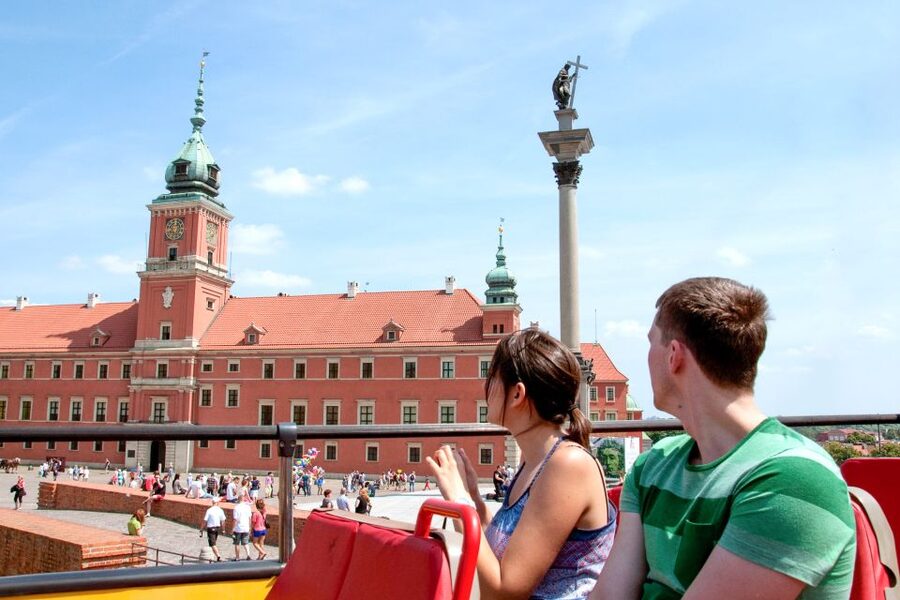
This tour includes an audio guide with headphones and supports Spanish, English, French, German, Italian, Japanese, Polish, Russian, Hebrew, and Chinese. That’s a lot of coverage, and it’s especially helpful on routes where the landmarks are visible but the details are not obvious from the street.
Audio works best when you match it to what you can see outside. When the narration starts, I like to glance at the big landmark first, then listen for what makes it important. That way the story sticks instead of becoming background noise.
One practical caution: some riders reported issues like headphone ports not working, sound not working at first, or audio that felt delayed or out of sync. Your fix is easy—test the headphones at your first stop and be ready to switch ports if one is dead.
Also note that the Russian audio has been described as outdated and made of short segments with silence between them. If you rely on that language, bring a backup plan for understanding (like quick reading of signage at your stops).
How long is the tour, and how often will you wait?
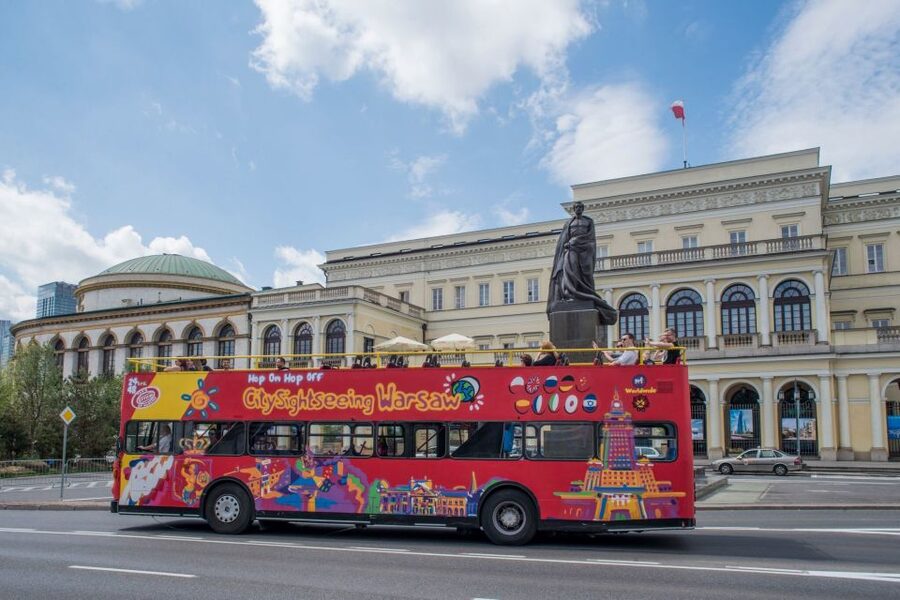
The total loop time differs by route. The Blue Route runs about 60 minutes, while the Red Route runs about 70 minutes. That means you can do a full circuit fairly quickly, especially if you just want the orientation and not a deep stop-by-stop day.
But the “how often” is where the hop-on experience can make or break your day. The bus intervals change by time of day: every 160 minutes in the morning window, then every 190 minutes later. Traffic can also change timing.
This is why I treat the hop-on feature like a strategy, not a guarantee. If you want to hop off at multiple museums, do your hop-offs near stops that matter most to you, then accept that the schedule may stretch your day.
If you’re visiting with kids, plan for one main museum stop plus maybe one shorter stop like Old Town wandering or the park area. You’ll keep the experience fun instead of turning it into a transport-only loop.
What you get when you do 24, 48, or 72 hours

The ticket flexibility is one of the better value points here. With 24, 48, or 72 hours, you can repeat routes without feeling like you must cram everything in one sitting.
Here’s a pattern that usually works well:
- Day 1: ride mostly through the route you choose first, hop off once or twice, then return for the big photo moments.
- Day 2 (if you have it): focus on the stops you skipped on Day 1, especially museums and memorials.
This approach matters because museum stops are not the same as square stops. You can watch people and buildings from the bus all day. Inside stops need your time and attention, and the 24/48/72-hour structure lets you match the bus to your stamina.
It also helps if the weather is unpredictable. The tour works in rain because you are always back on the bus with minimal walking between stops. (Old Town can also be slippery, so having the bus as your reset is useful.)
Entrance tickets and food: what’s not included
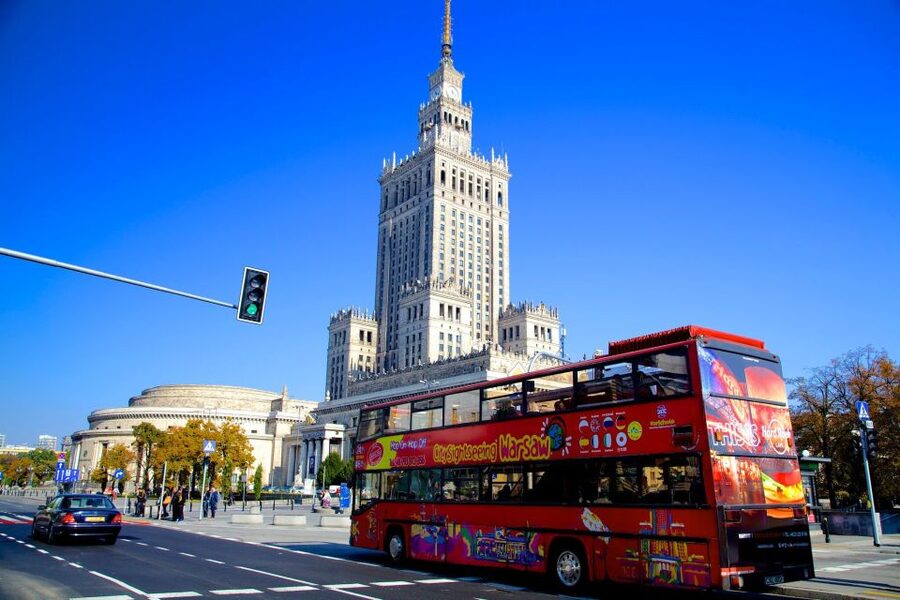
This tour includes riding and the audio guide, but it does not include entry tickets to attractions. It also does not include food and drinks.
So you should think of the bus as your “transport + narration layer,” not a bundled sightseeing package where everything is paid for. If a museum or palace is your top priority, plan to buy that ticket separately (or at least plan your time around it).
For food, Warsaw has options near many of these stops, but the tour data does not list where. I suggest you keep a little cash or card ready if you hop off and decide to eat on the go.
Practical rules and small comfort tips
A few practical notes so your day stays smooth:
- No pets on the tour.
- No smoking.
- Mobile and paper vouchers are accepted.
- You can use vouchers at any stop along the routes.
Comfort-wise, bring your own patience for traffic. There were reports of delays due to congestion, and some drivers needed time to fix onboard sound. A flexible mindset helps more than you’d think.
Finally, if you’ve ever used standard headphones on bus tours, you know the fit can be hit or miss. If you have a favorite pair, bring them. If not, at least be ready with a quick check at the start.
Price and value: is $41 worth it?
At $41 per person, the value depends on what kind of Warsaw trip you want.
If you have limited time and want to see the main areas without navigating transit, it can be a strong deal. You get the ability to ride 24/48/72 hours, hop off at lots of landmark stops (more than 20 stops across two routes), and use audio in 11 languages. That combo can save time and stress, which is usually the real cost on a short trip.
If you love long walking days and detailed guidebooks, the tour is still useful as a shortcut between neighborhoods, but you may not need the full ticket. In that case, pick your route, focus on your top 3-5 stops, and do not try to turn it into a constant hop-on marathon.
Bottom line: this is a good value for orientation, families, and first-timers. It’s less ideal if your priority is ultra-frequent hopping with minimal waiting.
Should you book the Warsaw hop-on hop-off bus?
I’d book this tour if:
- You want a simple way to see Old Town, central squares, and major museums.
- You like audio narration and want it in your language.
- You want a flexible schedule across 24 to 72 hours.
- You want something that works even when the weather turns.
I’d think twice if:
- You hate waiting and expect very short gaps between buses.
- You want lots of frequent, quick stops in a short time window.
- You are planning multiple long museum visits in one day without backup time.
If you fit the first group, you will get the big-picture Warsaw view you came for—and then you can decide what deserves a deeper walk.
FAQ
How long is the hop-on hop-off bus tour?
The Blue Route takes about 60 minutes, and the Red Route takes about 70 minutes.
Where does the tour start?
Stop 1 is the Palace of Culture and Science at Dworzec Centralny 12. You can start and end at any of the allocated stops.
What stops and sights are included on the routes?
Both routes include central landmarks such as Old Town (Stare Miasto), Downtown (Centrum), and major attractions like the Warsaw Rising Museum and the National Museum, plus many other stops listed for the Red and Blue lines.
Are tickets to attractions included in the price?
No. Entry tickets to attractions are not included.
What language options are available for the audio guide?
The audio guide is available in Spanish, English, French, German, Italian, Japanese, Polish, Russian, Hebrew, and Chinese.
Are headphones provided?
Yes. The tour includes an audio guide commentary with headphones.
Can I cancel or change my plans?
There is free cancellation up to 24 hours in advance for a full refund, and you can reserve now and pay later.