
Gettysburg can feel like a history textbook until you see it from the ground up. This 2-hour guided battlefield bus tour turns the story of the three-day battle into a clear, real-world route, with stops at the places you’ve heard about for years. Two things I really like: the comfort of an air-conditioned coach (yes, even in chilly months), and the way the National Park guide keeps the big picture tied to what you can actually see out the windows.
One heads-up: the tour is packed with facts, and the microphone volume can feel too strong for some people. If you’re noise-sensitive, bring earplugs and sit where sound feels best.
In This Review
- Key highlights to look for
- Why this 2-hour Gettysburg Battlefield bus tour makes sense
- Getting on board at the Gettysburg Tour Center (and why it’s a win)
- The guide’s job: making the three-day battle feel understandable
- Stop 1: Your first battlefield orientation stop with an admission ticket
- Devil’s Den: rock formations, family-friendly terrain, and intense context
- The Little Round Top area view: seeing the hill that shaped choices
- Pickett’s Charge location: imagining the gap between armies
- Comfort, group size, and the sound system reality check
- Value check: is $43 worth it for Gettysburg in 2 hours?
- When you should book this bus tour (and who might prefer something else)
- Should you book the Gettysburg Battlefield Guided History Bus Tour?
- FAQ
- How long is the Gettysburg Battlefield guided history bus tour?
- What does the tour cost?
- Where do I meet the tour?
- Is the tour on an air-conditioned coach?
- Are there guided stops at key battle sites like Devil’s Den and Pickett’s charge?
- Does the tour include admission somewhere during the experience?
- Does the tour include hotel pickup or drop-off?
- What language is the tour offered in?
- How large is the group?
- What happens if the weather is bad?
Key highlights to look for
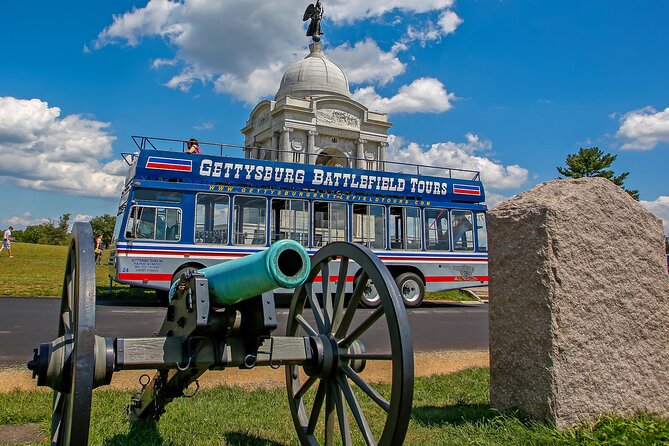
- Air-conditioned coach that keeps the route comfortable for the full 2 hours
- National Park guide narration that follows the battle’s flow across the three-day fight
- Major stops including Devil’s Den, a Little Round Top area view, and the Pickett’s Charge location
- Photo-and-walk moments: you can step off at key points, not just stare out the glass
- A small group size (max 40) that makes it easier to hear the guide and ask questions
- Clean, comfortable transport praised by many guests, plus big windows for battlefield views
Why this 2-hour Gettysburg Battlefield bus tour makes sense
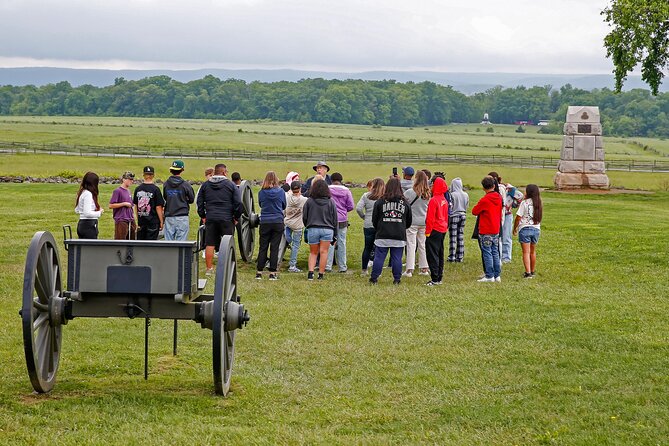
Gettysburg is big, and first-timers often run into the same problem: you drive around, see a few monuments, and still feel like you’re missing the storyline. This tour solves that by doing the hard part for you—organizing the battlefield into a guided route you can follow quickly.
The time window is also ideal. At about 2 hours, you get oriented and leave with names and locations that will click when you go back on your own. It’s a strong choice if you want one smart, guided hit of battlefield context without turning your day into a full logistics project.
Getting on board at the Gettysburg Tour Center (and why it’s a win)
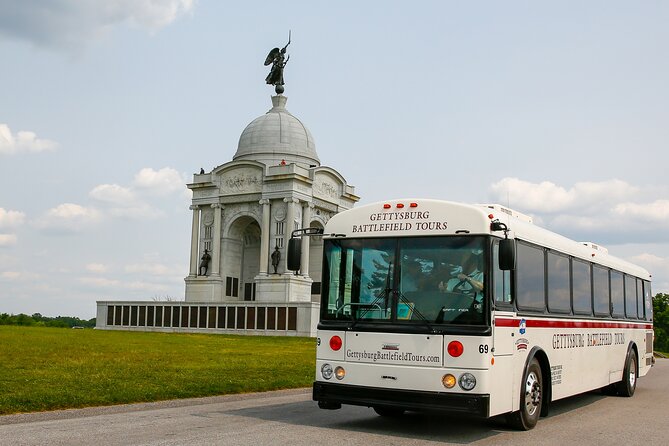
You meet at the Gettysburg Tour Center, 778 Baltimore Street, Gettysburg, PA. It’s the kind of meeting point that works because it’s central, and you don’t waste time hunting down directions or figuring out where the bus actually loads.
The tour starts by getting you into the coach and out onto the battlefield fields with minimal fuss. The coach ride matters here: the battlefield is spread out, and air-conditioning helps a lot on hot days. Even in winter, multiple reviews mention a warm, comfortable bus setup, which makes the whole experience feel easier.
Practical tip: plan to arrive a bit early so you can check in calmly and get seated before the guide starts. Also, since this tour ends back at the same meeting point, you don’t need a second round of figuring out transport.
The guide’s job: making the three-day battle feel understandable
The main value isn’t that you pass famous landmarks. It’s that the guide explains the phases of the three-day battle and connects decisions to terrain. Gettysburg isn’t just “where armies met.” It’s a map full of cause-and-effect, where hills, rock outcrops, and open fields shape what commanders can attempt.
That storyline is what helps you stop feeling lost. When you stand somewhere like Devil’s Den or look across the gap between positions, you’re not just sightseeing—you’re picturing how the fight played out in real space.
From the people who have led these tours, you’ll see a clear theme in the feedback: guides like John, Christine, Paul, and Christina have been praised for explaining the battle clearly and in a chronological way. And drivers such as Cheryl and Stacey are mentioned for smooth, comfortable transport and friendly help. If those names show up for your date, it’s worth booking that departure.
Stop 1: Your first battlefield orientation stop with an admission ticket
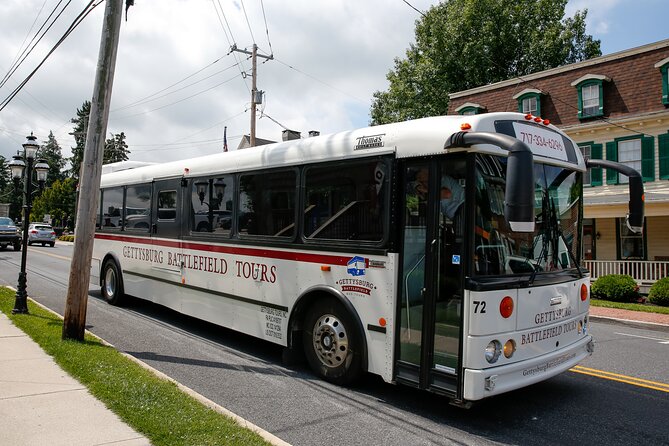
The tour begins with a stop at Gettysburg Battlefield Bus Tours and then continues to key scenic locations. One of these segments includes an admission ticket tied to the Battle of Gettysburg stop, which helps you understand what you’re seeing rather than guessing.
Why this matters: Gettysburg has a lot of names. Without a quick orientation, you can end up reading plaques and monuments but still not knowing why they’re there. This early stop acts like your mental map—so later when you’re at Devil’s Den or looking toward the high ground, you understand what the battle needed from the land.
You’ll spend only a short amount of time at each stop, so think of this as a fast primer that gives you just enough clarity to make the rest of the route more meaningful.
Devil’s Den: rock formations, family-friendly terrain, and intense context

Devil’s Den is one of the most talked-about spots for a reason. It’s a rock formation located below Little Round Top, and the area is something you can explore on foot in a way that feels hands-on.
What makes this stop worthwhile on a bus tour: you get the explanation in real time while you’re there. The guide’s description helps you connect the “what happened” with the “why here.” That’s the key. Rocky terrain can change the flow of movement and visibility, so it’s never just scenery.
Also, Devil’s Den is described as something the whole family can explore, which suggests it’s not only for hardcore history fans. If you’re traveling with kids or anyone who gets restless in museums, this kind of stop tends to land well because people can actually see and move around.
Drawback to consider: since the tour is time-limited, this is not a long hike. If you want extended walking and deeper research, you’d pair this bus tour with extra independent time afterward.
The Little Round Top area view: seeing the hill that shaped choices
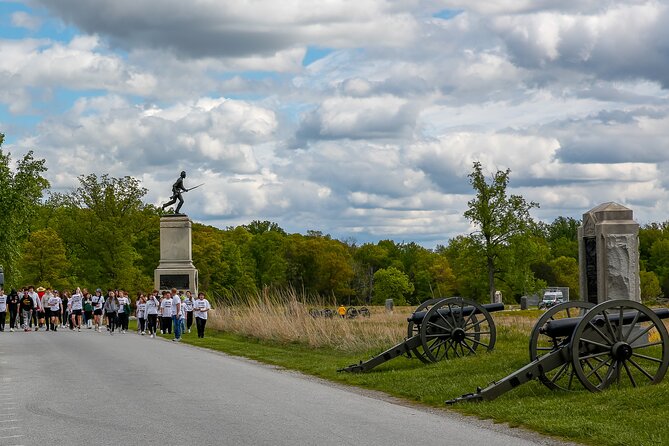
One of the tour’s stops is a unique view across the battlefield, including a monument on top of a hill. This is the kind of moment that makes Gettysburg click fast: you can see how distance, elevation, and sight lines matter.
Little Round Top matters because high ground affects what forces can do—where they can fire, where they can hold, and how exposed they feel. From the perspective of a guided bus tour, this stop is a shortcut to understanding the battle’s mechanics without you needing to memorize a military map.
This is also where your camera comes into play. The windows on the coach can help with battlefield viewing during transit, and the walk-and-look moment gives you a chance to take in the view without glass between you and the horizon.
Small practical note: for best photos, bring a phone strap or secure your camera bag. You’ll be standing and looking at monuments and terrain, and short stops can still be a bit of a shuffle.
Pickett’s Charge location: imagining the gap between armies
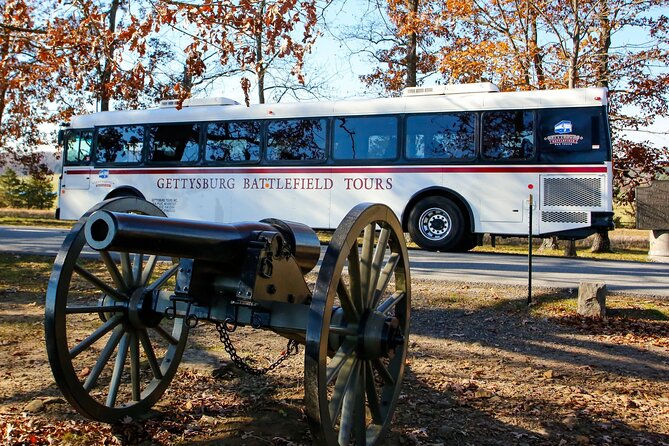
Another major stop focuses on the location of Pickett’s charge. Even if the details sound familiar from books or documentaries, standing near the spot helps you understand the scale of the attempt and why it was so dangerous.
The guide explanation is what turns this into more than a named battlefield point. You’re meant to look across the space between positions and picture the intensity of the fighting and its impact on the end result.
This stop is especially valuable if you’ve always wondered how one “big moment” fits into the entire three-day arc. A good guide keeps reminding you that major assaults didn’t happen in a vacuum—they were shaped by earlier movements, terrain advantages and disadvantages, and the exhaustion of troops.
Balanced expectation: you won’t spend hours here. If you’re hoping for deep soldier-by-soldier stories at one single spot, you’ll need additional independent time. But for grasping what happened and why it mattered, this stop is one of the best uses of your 2 hours.
Comfort, group size, and the sound system reality check
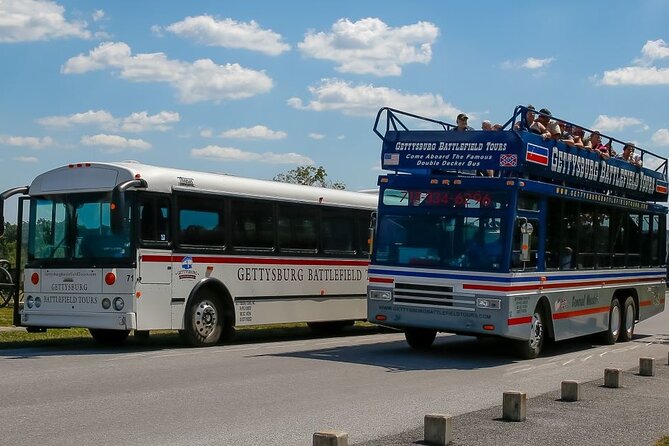
The coach is a big part of the experience. You get air-conditioned transport, plus a setup that many guests describe as comfortable and clean. Windows are also a standout—people mention large windows that make it easier to see battlefield monuments and terrain while the guide speaks.
Group size is capped at 40 travelers, which is a sweet spot. You’re not packed into a tiny bus, and you’re not dealing with a huge crowd where everyone gets lost in the noise. That size also tends to make it easier to hear the guide and ask questions when the opportunity comes up.
Now, the one drawback to plan for: in at least one feedback note, the microphone volume was described as piercing. That doesn’t mean it will be a problem for you, but it does mean you should take it seriously if you’re sensitive to audio. Bringing earplugs is a simple move, and choosing a seat where sound isn’t bouncing off the walls can help.
Also, if you like to snack between stops, you might want to bring a small bottle of water and a light snack. The ride length and stop pacing make it realistic to keep your energy up without turning it into a full meal.
Value check: is $43 worth it for Gettysburg in 2 hours?
At $43 per person, this isn’t free, but it’s not priced like a private tour either. The value comes from three things you can’t easily replicate on your own in the same short time:
- You get a licensed guide explanation focused on the battle’s flow across three days.
- The bus route reduces driving time between scattered key sites.
- You stop at several major named locations—Devil’s Den, a Little Round Top area view, and the Pickett’s charge site—without having to plan each turn.
If you’re the kind of visitor who enjoys reading plaques, you might think you could do this yourself. But Gettysburg plaques won’t tell you how each place fits into the overall story the way a strong guide can in real time. The bus adds efficiency, and the guide adds meaning.
The best way to think about the price: you’re paying to compress a lot of orientation into a short, comfortable window. That’s a fair trade when you’re only in town for a day, or when you want a first pass that sets you up for deeper independent exploring later.
When you should book this bus tour (and who might prefer something else)
This tour fits you well if:
- You’re visiting Gettysburg for the first time and want the story connected to the ground.
- You want major sites without spending most of your trip stuck behind a wheel.
- You enjoy guided explanations that follow a clear arc from the start to the end of the battle.
- You want comfort—especially with an air-conditioned coach and manageable timing.
You might consider a different option if:
- You’re already deeply trained in Gettysburg details and want long, site-by-site time at one location.
- You’re extremely noise-sensitive and don’t want to use earplugs.
- You need lots of hotel-to-attractions logistics. This tour does not include hotel pickup and drop-off, so you’ll drive or use local transport to reach the meeting point.
For families, Devil’s Den is a good sign: it’s described as something the whole family can explore. For history buffs, the chronological, fact-heavy delivery style praised in feedback can be a big plus.
Should you book the Gettysburg Battlefield Guided History Bus Tour?
My take: yes, book it if you want a fast, guided way to understand why Gettysburg changed the Civil War’s direction. The combo of a comfortable air-conditioned coach, a guide-led battle narrative, and stops at Devil’s Den, Little Round Top area views, and Pickett’s charge makes this one of the simplest ways to get real context without turning your day into a driving marathon.
If you’re deciding between this and doing everything alone, choose the bus tour first. It gives you the names, the sequence, and the terrain logic you’ll want when you explore further on your own. If sound might bother you, pack earplugs and sit where it feels comfortable.
FAQ
How long is the Gettysburg Battlefield guided history bus tour?
It runs for about 2 hours.
What does the tour cost?
The price is $43.00 per person.
Where do I meet the tour?
The tour departs from the Gettysburg Tour Center at 778 Baltimore Street, Gettysburg, PA 17325, USA.
Is the tour on an air-conditioned coach?
Yes. Transport is provided by an air-conditioned coach bus.
Are there guided stops at key battle sites like Devil’s Den and Pickett’s charge?
Yes. The tour is designed to include major Gettysburg battlefield locations, including Devil’s Den and the location of Pickett’s charge, along with other significant viewpoints.
Does the tour include admission somewhere during the experience?
One of the scenic stops includes an admission ticket.
Does the tour include hotel pickup or drop-off?
No. Hotel pickup and drop-off are not included.
What language is the tour offered in?
The tour is offered in English.
How large is the group?
The tour has a maximum of 40 travelers.
What happens if the weather is bad?
The experience operates in all weather conditions, and it requires good weather. If it’s canceled due to poor weather, you’ll be offered a different date or a full refund.
If you tell me when you’re going (month) and how sensitive you are to loud audio, I can help you pick a practical time slot and seating strategy for this route.