
Glasgow’s highlights roll past fast. This hop-on hop-off tour lets you pace yourself on an open-top double-decker with full recorded (and sometimes live) commentary, plus stops near major sights like Glasgow Cathedral and Kelvingrove. I like the flexibility of getting on and off as you choose, and I also like how the narration helps you make sense of what you’re seeing without studying a map. One thing to watch: stop locations can change during construction, and some days can include longer waits if buses don’t show up as expected.
I also like that you can plan a simple “first-day orientation” loop, then hop off for museum time, photos, or a walk between neighborhoods. Start early and you’ll feel like you’re driving your schedule, not the other way around. If you get unlucky with traffic or a delayed bus, that flexibility can still save you, but you should build in buffer time.
In This Review
- Key points before you ride
- Why a hop-on hop-off bus fits Glasgow so well
- Price and value: what you’re really paying for
- Timing that actually matters: buses, loops, and getting your day back
- Red Route: George Square to Kelvingrove and the river stops
- Stops around the city center (easy orientation)
- West-to-east city streets and museums (where you’ll choose your day)
- University + Kelvingrove museum belt (big payoff)
- Toward arts and bus connections (good wrap-up)
- Yellow Route: electric-bus afternoon option with west and river coverage
- Key Yellow Route stops worth planning around
- Commentary, live guides, and what to listen for
- Where you’ll probably spend your time: museums, cathedrals, and river stops
- Common hiccups and how to avoid them
- Who should book this bus tour in Glasgow
- Should you book the City Sightseeing Glasgow hop-on hop-off bus?
- FAQ
- FAQ
- How long is the tour loop?
- How often do buses run on the Red Route?
- What days does the Yellow Route operate?
- How long is my ticket valid?
- Is there live commentary or only recorded audio?
- What languages are available for audio on the Red Route?
- Does the Yellow Route use electric buses?
- Where does Stop 1 start if there are updates during construction?
- What is the first and last departure time on the Red Route?
- Are attraction entry tickets included?
Key points before you ride
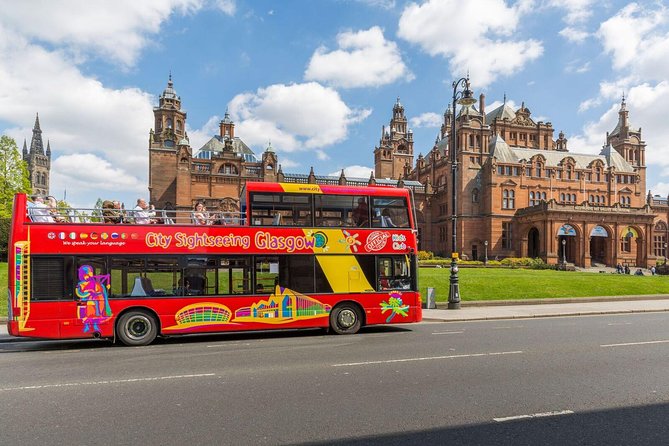
- Two route choices (Red and Yellow): pick one for a quick overview or do both if you want extra coverage, with the Yellow Route running in high season.
- 90 minutes per full loop: it’s long enough to see a lot, short enough that you can still explore on foot.
- Recorded commentary plus live guide on Red: English audio on the Yellow Route, and Red offers narration in multiple languages plus free headphones.
- Electric buses on the Yellow Route: quieter ride and a greener feel on the days it runs.
- Stop changes happen: Stop 1 and Stop 7 have updated locations at times, so check the day-of info before you commit.
- Best viewing is from upstairs: it’s the easiest way to get clear views and better photos.
Why a hop-on hop-off bus fits Glasgow so well
Glasgow is a city of neighborhoods that grew in layers, so the easiest way to understand it is to move through it. From the top deck, you get that “oh, that’s where everything is” moment, especially around the Victorian-era center and the river corridor. You’re not just riding. You’re learning the city’s layout in real time as the commentary points out landmarks.
I like that the tour is built for pacing. If you want to stay on for the full loop, you can. If you want to get off for a quick stop near a specific sight, you can. That matters in Glasgow because good walking pockets are right near major attractions, but they can still take time to reach without a plan.
The other big win is that the narration turns big names into a sense of place. Glasgow Cathedral, Merchant City, the Barras area, the museum belt around Kelvingrove, and the river museums are all tied together by the route, so you don’t feel like you’re seeing random buildings.
Price and value: what you’re really paying for
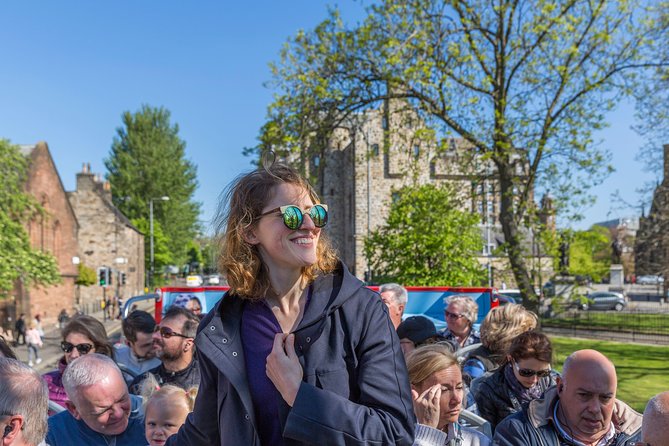
The price shown is about $27.62 per person, and your ticket is valid for one or two calendar days from your first use. That’s how this tour earns its value: it isn’t only transportation. It’s also a structured “orientation lesson” that keeps you from wasting hours bouncing between stops you guessed correctly.
If you only have one day, a single route can still work if you treat it like a big warm-up: ride, get the lay of the land, then hop off only where you truly want more time. If you have two days, doing a second route can be useful, but keep expectations realistic because some parts overlap in coverage.
Also, the tour does not include entry tickets or food. That’s normal for hop-on hop-off buses, but it changes the math. You’re paying for riding time and commentary, not museum tickets. If you’re planning to visit lots of indoor attractions, this bus is still a great way to choose which ones to prioritize.
Timing that actually matters: buses, loops, and getting your day back
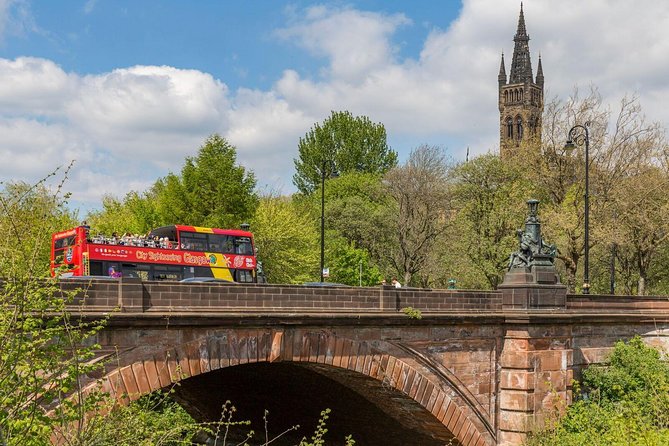
Each full loop takes about 90 minutes, and the Red Route runs every 30 minutes. That frequency is what turns this into a practical sightseeing plan instead of a gamble. It’s why the tour works well as your first activity: you’re setting yourself up for better decisions all day.
Red Route timing is also simple: first departure from Stop 1 at 10:00am and last at 4:00pm. Yellow Route timing is shorter for the season: first from Stop 1 at 9:45am and last at 4:15pm. If you’re trying to complete more of the route, starting earlier helps, because you’ll lose less time to waiting and traffic.
One practical tip from real-world experiences: starting later can cut the day short. I’d plan to begin early enough that you still feel in control even if one bus runs a bit behind.
Red Route: George Square to Kelvingrove and the river stops
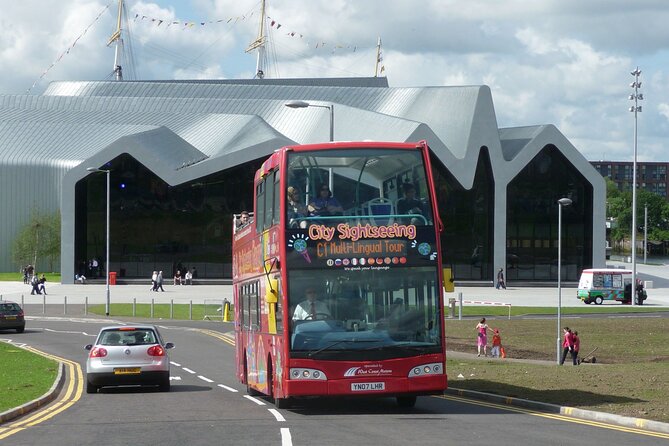
The Red Route runs all year. In many periods, you may also catch a live guide on the Red Route (April to September, with live commentary noted through Sunday 19th October 2025), which can make the trip feel more like a guided city conversation than a headset tour.
Here’s how the Red Route landings feel in order, and what each stop helps you do.
Stops around the city center (easy orientation)
George Square (Stop 1 / sometimes listed as George House) is your anchor point for the city core. If you’re trying to hit major landmarks quickly, this is where you start your mental map. One operational note: at times, Stop 1 can be located on Cathedral Street in front of the Charles Oakley Building, and it may operate as pick-up and drop-off only, so double-check before you arrive.
Glasgow Cathedral (Stop 2 / Cathedral Square) is one of the city’s most recognizable stops. It’s a good choice for photos and for setting a baseline for architecture before you move outward.
Merchant City (Stop 3 / Blackfriars Street) is where you’ll notice the shift into shopping and older streets. It’s a strong stop if you want to mix quick browsing with sightseeing.
The Barras (Stop 4 / 18 London Rd) is a different vibe, more gritty-market energy than the polished center. If you like street-level Glasgow, this is a good “wander after the bus” landing.
Glasgow Green (Stop 5, listed by map pin) gives you open space and a break from constant street views. It’s a good stop for people who want a little breathing room before museum time.
St. Enoch Centre (Stop 6 / The Scottia) is practical: it’s a place you can use as a hub for getting your bearings and stepping into indoor options nearby.
West-to-east city streets and museums (where you’ll choose your day)
St Vincent Palace (Stop 7 / St. Vincent Place) is a major hub on this route, but there’s an important update to know: Stop 7 can relocate to St. Vincent Street past West Nile Street, and it becomes the main starting and ending point of the tour at those times. Also, some later departures from Stop 7 can terminate on Cathedral Street rather than completing the full route, so plan around the time you board.
Argyle Street and Radisson Blu area (Stop 8 / temporarily moved at times) is a flexible stop because it connects you to commercial streets and lots of walkable side options.
Marriott Hotel (Stop 9 / Argyle Street) is listed as a stop, but it can be out of use during updates, so don’t rely on it as a guaranteed landing. If you need that area, be ready to reroute via the closest active stop.
Hilton Garden Inn (Stop 10 / Tunnel Street) is another “use it to move” stop. It helps if you’re splitting your day between the center and the museum districts.
SEC Centre (Stop 11 / Conference Centre) is useful for shows and events areas. Even if you’re not going inside, it helps frame the modern part of the city layout.
Pumphouse Visitor Centre / Clydeside Distillery (Stop 12) is a great river-adjacent stepping stone. It sets you up for water views and for connecting to the museum area without walking miles.
Riverside Museum (Stop 13 / Riverside Transport Museum) is one of the strongest “get off and explore” landings. If you care about design and transport history, you’ll want more time than a quick photo.
Woodlands area (Stop 14 / Burnbank Bowling Club) is more local-feeling. It’s a good stop when you want Glasgow that doesn’t feel like a postcard only.
University + Kelvingrove museum belt (big payoff)
University Library (Stop 15 / University of Glasgow) helps you connect Glasgow’s architecture to its academic side. It’s also a clean place to orient yourself if your plans include museum time later.
Boyd Orr building (Stop 16) ties into the university zone. Think of this as a “stay in the campus pocket” stop.
Kelvingrove Museum (Stop 17 / Blantyre Street) is one of the best-known museum stops on the route. If you want one big museum day, this is where you usually plan it.
Sauchiehall Street / Kelvingrove Hotels (Stop 18) is where the street life starts to match the museum zone. It’s a good landing if you’re hungry, shopping, or planning a walk between major sights.
Toward arts and bus connections (good wrap-up)
Charing Cross (Stop 19 / Garnet Street) is handy because it sits near transport connections and walkable corridors.
School of Art (Stop 20 / 294 Sauchiehall St) is an arts-side stop if you want a creative vibe rather than only landmark photos.
Royal Scottish Academy of Music and Drama, RSAMD (Stop 21 / Renfrew St) gives you another “institution” feeling in the route sequence, and it can be a good place to pause if you’re planning a cultural evening.
Buchanan Bus Station (Stop 22 / Killermont Street) is an excellent end point for practical reasons. If you’re heading elsewhere after your bus time, this helps you connect out.
Then you loop back toward your starting area.
Yellow Route: electric-bus afternoon option with west and river coverage
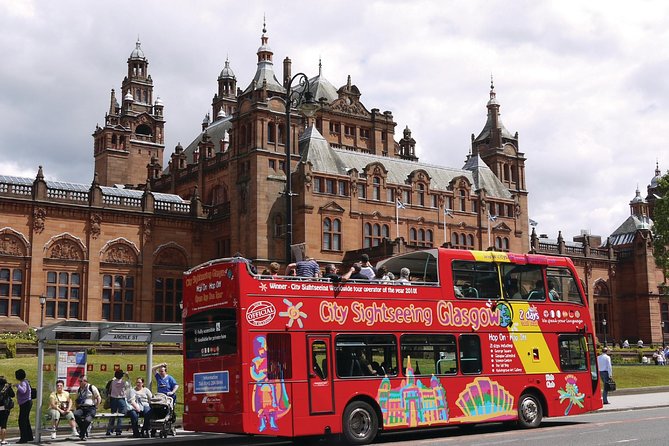
The Yellow Route runs during high season (4th April to 29th September). It uses electric buses, and the commentary is an English audio guide. If you like a quieter ride and you want a second pass through the city, this is the one to consider.
A simple way to use it: do Yellow later in the day if you already know where you’re going. Otherwise, it’s still fine for orientation, but you’ll do more repeating than with a totally brand-new route.
Key Yellow Route stops worth planning around
George Square and Cathedral Square (Stops 1 and 2) start in the same general core areas. That makes the Yellow Route easy to layer after Red.
Drygate / Tennent’s Brewery (Stop 3) is a strong city-culture stop. It’s a good pick if you want a more modern Glasgow angle.
Merchant City High Street (Stop 4 / Blackfriars Street to High Street) keeps you in the shopping and historic street pocket.
Barrowlands (Stop 5 / Ross Street) is where Glasgow’s live music energy shows up. If you’re timing a night out, it’s handy to know where it is on the map.
Celtic Park (Stop 6 / 2 Dalserf Pl) is a must-know stadium area stop if football is part of your trip.
Bridgeton Cross and Bandstand (Stop 7) gives you a neighborhood perspective. It’s not just about monuments; it helps you feel the different parts of the city.
West Brewery (Stop 8 / 6 Binnie Pl) supports that industrial-to-modern story Glasgow carries.
The Barras again (Stop 9 / 18 London Rd) repeats the area, which is fine if you want to spend more time there. It also shows why Yellow can feel partial-repeat if you just did Red.
McLennan Arch (Stop 10) is another local landmark along the route.
Broomielaw and Alexander Bain House (Stop 11) is a river-side anchor. It’s helpful for anyone who likes the waterfront vibe.
Finneston Quay (Stop 12) is another river stop for views and walking around without planning a separate trip.
Science Centre (Stop 13 / 62 Golspie St) is a strong family-friendly option on paper and a great stop for hands-on curiosity. It also works for adults who enjoy modern exhibits.
Govan Stones and War Memorial (Stop 14) pulls you into an older, heavier-feeling area. It’s a good contrast to the museum belt farther west.
Fairfield (Stop 15) is tied to that river-side stretch of the route.
Ibrox Stadium (Stop 16 / Govan Road area) is another big stadium stop. If you want the sports side of Glasgow mapped out, it helps.
SEC Centre and Pumphouse / Distillery (Stops 18 and 19) bring you back toward the museum-heavy river area again, which is why Yellow after Red can feel like “more of the same” unless you’re using it strategically for specific stops.
Riverside Museum (Stop 20) and Kelvingrove (Stop 21) are the major repeats that still feel worth it because they’re standout sights.
Hidden Lane (Stop 22 / 1032 Argyle St) is a great “quick wander” stop if you want a side street moment without committing to a long detour.
Blythswood Square (Stop 23) gives you an elegant pause in the route.
Nelson Mandela Place (Stop 24 / Renfield Street) finishes your day with a modern city-center connection point.
Commentary, live guides, and what to listen for
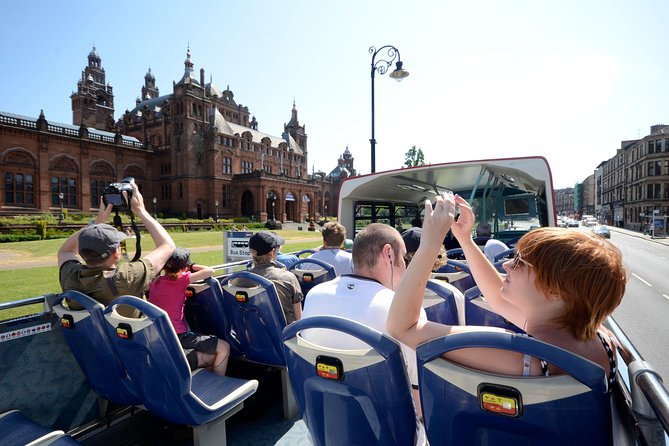
This tour is built around audio. On the Red Route, you get recorded commentary available in 7 languages plus free headphones. On the Yellow Route, you get English audio guide only. Either way, it’s your “moving museum label system.”
When the Red Route has a live guide, it changes the tone. People have mentioned named narrators like Luke, Jim, and Brian who combined facts with humor and kept things easy to follow. The live component also tends to turn the bus into a mobile Q&A, especially when drivers help with boarding timing and directions.
If you prefer maximum clarity, sit where you can hear. Open-top buses can be noisy, so try to position yourself so the sound carries, and consider staying toward the front or a quieter side of the upper deck when it’s breezy.
And one more practical note: some experiences show that live narration can be the reason people stayed longer on the bus and used the service again later. If you’re the type who hates missing context, time your ride for live-guide hours when possible.
Where you’ll probably spend your time: museums, cathedrals, and river stops
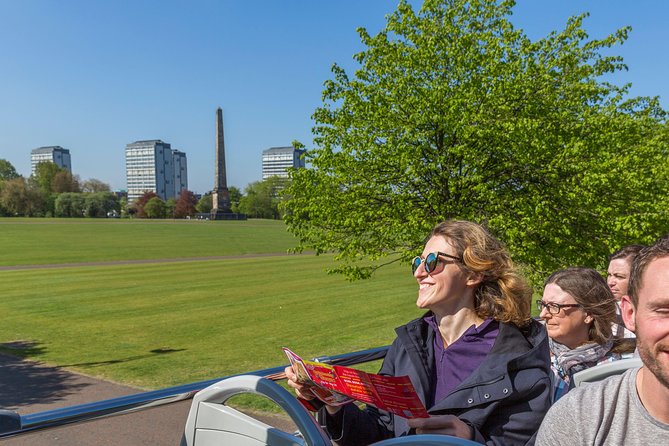
The most “use your feet after the bus” stops are the ones that are easy to enter and worth the walk. Glasgow Cathedral is a good first landing if you like historic buildings. Merchant City and the Barras are good if you prefer street-level exploration over ticketed attractions.
For indoor time, the museum clusters matter most. Riverside Museum and Kelvingrove are the two that naturally convert bus time into a proper visit. Start your planning around those, then fill in the gaps with shorter stops like St. Enoch Centre, SEC Centre, or the university area where you want a change of scenery.
Also, the route is designed so you can choose your day without rigid planning. If you want a short “look and learn” ride, stay on for the loop. If you want a longer day, hop off and build a chain of nearby sights.
Common hiccups and how to avoid them
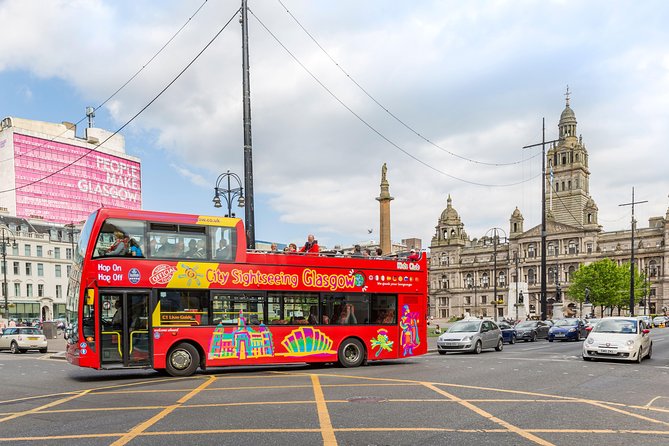
This is where you set yourself up for fewer headaches.
Some operational updates can affect your experience: Stop 1 and Stop 7 can relocate, and some stops can be out of use during updates. That means you should not show up late and assume the old stop name still works. Give yourself extra time to confirm where you should be waiting.
Waiting time can also get weird. A few experiences mention long waits when buses didn’t show, buses appearing inconsistently, and buses skipping expected pickups. Traffic and construction can also slow things down. If your schedule is tight, build a buffer and have a backup plan like a taxi or rideshare.
Finally, communication at the stop matters. Some people reported that app/chat support didn’t respond quickly during problems. So if something feels wrong, your best move is fast action: ask a driver on the spot, try the nearest open stop, and keep moving rather than waiting for a reply.
Who should book this bus tour in Glasgow
I think this tour is ideal if you:
- Want an easy first-day overview and a simple way to choose what to do next.
- Like flexible travel where you can hop off for one sight at a time.
- Have limited time and want commentary to turn the city into something you can recognize later.
- Prefer planning around a route instead of hunting for stop locations all day.
It may be less ideal if you:
- Have a strict timetable and can’t absorb a delay.
- Hate waiting outdoors in cold or wet conditions.
- Expect every stop to work perfectly every time, even during construction and operational changes.
Should you book the City Sightseeing Glasgow hop-on hop-off bus?
If you want your first or second day in Glasgow to feel organized, I’d book it. The combination of flexible hop-on hop-off riding plus route-based commentary gives you real value fast, especially around the central sights, the museum cluster, and the river stops.
Choose the Red Route first if you want the all-year backbone and possibly live narration. If you have the time and you’re traveling in high season, add the Yellow Route for electric-bus variety and extra coverage, but don’t expect it to feel completely different from the Red in every section.
If you’re worried about construction changes, the best decision tool is timing: start earlier, keep an eye on updated stop locations, and give yourself a little buffer.
FAQ
FAQ
How long is the tour loop?
The Red Route takes about 90 minutes per loop.
How often do buses run on the Red Route?
Buses run every 30 minutes on the Red Route.
What days does the Yellow Route operate?
The Yellow Route operates during high season, from 4th April to 29th September.
How long is my ticket valid?
Your sightseeing pass is valid for one or two calendar days from the time of first use.
Is there live commentary or only recorded audio?
Red Route can include a live guide (April to September). Yellow Route provides an English audio guide.
What languages are available for audio on the Red Route?
Red Route recorded commentary is available in 7 languages, with free headphones.
Does the Yellow Route use electric buses?
Yes, the Yellow Route uses electric buses.
Where does Stop 1 start if there are updates during construction?
At times, Stop 1 is located on Cathedral Street in front of the Charles Oakley Building and may operate as pick-up and drop-off only.
What is the first and last departure time on the Red Route?
On the Red Route, the first tour from Stop 1 is at 10:00am and the last tour from Stop 1 is at 4:00pm.
Are attraction entry tickets included?
No. Entry to attractions is not included, and food and drinks are not included unless specified.