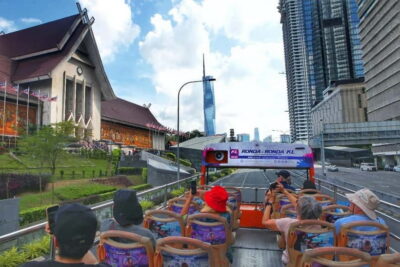
Paris can feel huge. This makes it manageable fast.
This Hop-On Hop-Off setup is a smart way to clock Paris highlights on your own time, with a route that reaches major sights like the Eiffel Tower, Notre Dame, the Louvre area, and the Musée d’Orsay. I also like that you get an audio walking tour on your smartphone, so you’re not stuck just staring out the window.
I especially liked the all-in rhythm: ride the bus when you’re tired, then jump off and explore when you’re ready. If your option includes it, the Seine river cruise adds a very different view of the city without you needing to plan a separate ticketed day. You also get practical extras like a free map, free Wi-Fi, and the Big Bus app with live bus tracking.
One watch-out: this experience depends on a working mobile ticket and the apps tied to it. If your phone has trouble activating or downloading audio, you may lose time figuring it out, and not every bus trip always has audio working smoothly.
In This Review
- Key highlights you’ll feel in your day
- Why the 24- or 48-Hour Hop-On Hop-Off format works in Paris
- River cruise add-on: when it’s the best value in the whole package
- Rewind audio walking tour on your phone: good backup, not a replacement
- Stop-by-stop: what each major stop is really good for
- Stop 1: Eiffel Tower area at Quai Branly
- Stop 2: Champ de Mars at Avenue Joseph Bouvard
- Stop 3: Palais Garnier area at 15 rue Scribe
- Stop 4: Big Bus Tours Paris office at 11 avenue de l’Opéra
- Stop 5: Louvre area near Pont des Arts
- Stop 6: Notre Dame area at 3 rue Lagrange
- Stop 7: Musée d’Orsay facing Orsay Museum
- Stop 8: Champs-Élysées at the 156 avenue des Champs-Élysées area
- Stop 9: Grand Palais at Avenue Winston Churchill
- Stop 10: Place du Trocadéro and 11 Novembre at Avenue Paul Doumer
- The big practical trade-offs: stop spacing, audio, and app dependence
- Price and value: what you’re really paying for
- Who should book this (and who should consider another plan)
- Should you book the Big Bus + Rewind audio bundle?
- FAQ
- How long is the hop-on hop-off and audio experience?
- What options are available for the bus pass?
- Does the package include a Seine river cruise?
- What does the self audio walking tour include?
- Is Wi-Fi and a map included?
- Are attraction tickets included for the big sights?
- Can I cancel for a full refund?
Key highlights you’ll feel in your day
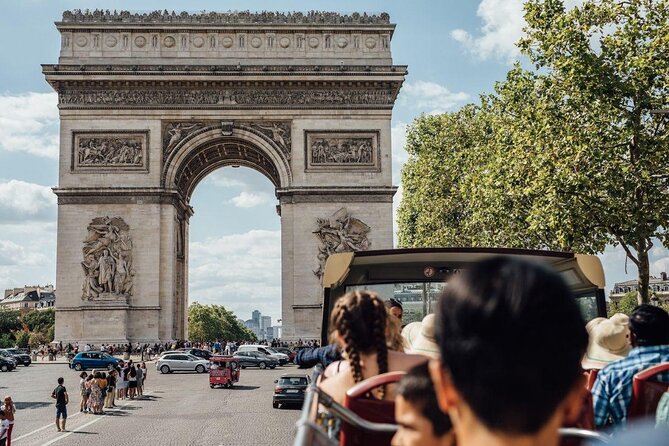
- Flexible 24 or 48-hour hop-on hop-off timing lets you move at your pace, not the crowd’s
- Live bus tracking in the Big Bus app helps you time crossings and avoid long waits
- Rewind audio walking tour gives you a self-led option beyond the views from the top deck
- Seine cruise option brings you a classic Paris perspective if you pick that package
- Practical ride extras like a poncho for rain, headsets support, hand sanitizer, and Wi-Fi
Why the 24- or 48-Hour Hop-On Hop-Off format works in Paris
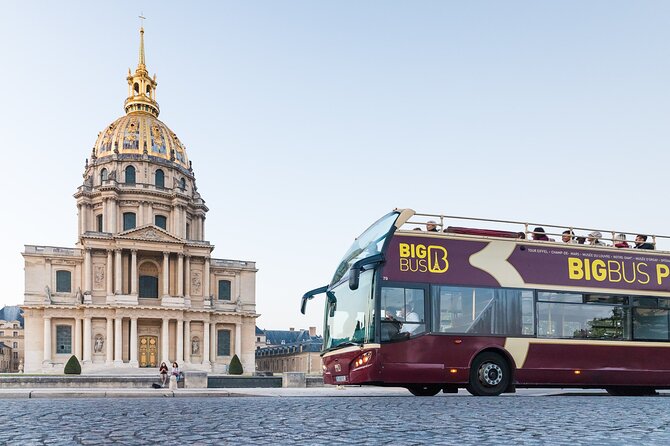
Paris is a place where one good plan can save you energy. This bus pass does that by acting like a moving spine through the city. You’re not trying to walk every famous spot in one marathon day, and you’re not stuck waiting for a fixed group schedule.
The pass comes as 24-hour or 48-hour options. That matters because Paris sightseeing can easily spill into mornings and late afternoons, when the light is better and the streets feel calmer. With hop-on hop-off, you can ride first to orient yourself, then go back on foot for the parts you care about most.
Also, the route design is built around recognizable landmarks. With stops tied to places like the Eiffel Tower area, the Louvre area near Pont des Arts, and Notre Dame, you get practical “get off here” access rather than just passing them from far away.
River cruise add-on: when it’s the best value in the whole package
If you choose a package that includes the Seine river cruise, it’s the part that tends to make the day feel special fast. Even if you do nothing else, the river view changes how you understand Paris. You’ll also break up the sightseeing rhythm, which is useful because the bus ride is mostly about movement and quick context.
From what you can expect, the cruise acts like a second angle on the same landmarks you see by bus. That’s exactly how it boosts value: you’re paying once for a bus overview, then getting a complementary perspective that doesn’t require extra transfers across town.
If you’re deciding whether to add it, I’d weigh your schedule. If you have only one busy day, the cruise can turn your “I saw the sights” day into a “I felt the city” day. If your time is tight, picking the package with the cruise is usually the easiest win.
Rewind audio walking tour on your phone: good backup, not a replacement
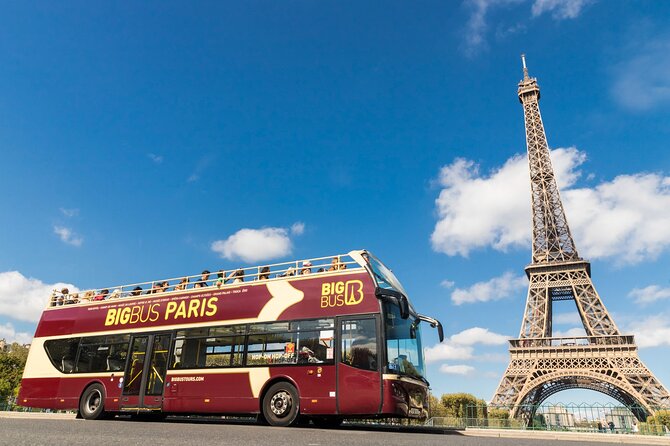
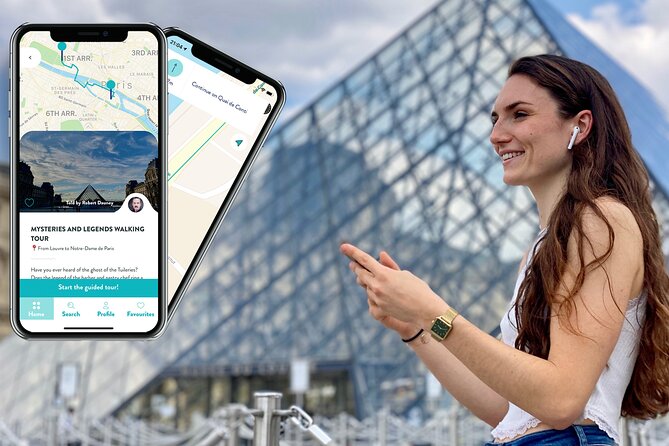
This package includes one out of ten 1-hour self audio-guided walking tours from the Rewind app. That’s not the same as hiring a live guide, but it can be a solid tool when you want details while staying independent.
Here’s how I’d use it: treat it as your “slow down” moment. The bus gives you the big map in your head. The walking audio gives you a chance to look closer—street-level context, not just monument-level views.
One practical note: since it’s app-based, your experience depends on your phone behaving. Keep your confirmation ready, and plan to test audio access before you’re standing around with time ticking away.
Stop-by-stop: what each major stop is really good for
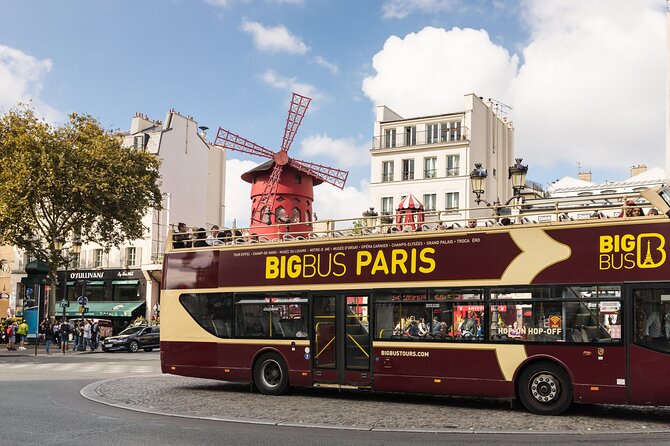
This route hits the Paris favorites people actually end up caring about. The trade-off is that the route has a limited number of stops (you’ll want to plan walking time), and some sights aren’t right at the curb.
Stop 1: Eiffel Tower area at Quai Branly
Quai Branly is a handy landing zone because it positions you on the river side of the Eiffel Tower area. You’ll use this stop to get oriented, take photos with the tower in frame, and get a sense of how the Seine cuts through the city.
If you want the Eiffel Tower moment to feel “worth the climb,” arrive when you still have energy. If you’re conserving time, treat this as the view-and-plan stop, then explore a second angle from another nearby area later.
Stop 2: Champ de Mars at Avenue Joseph Bouvard
This is your “closer to the gardens” area for Eiffel Tower views. Champ de Mars is a classic Paris open space, and it works well for a short walk break between bus segments.
Consider this a stop for breathing room. When Paris crowds get thick, open space helps reset your day without you losing sightseeing time.
Stop 3: Palais Garnier area at 15 rue Scribe
This stop is a good cue for a different side of Paris: grand architecture and the theatre district vibe. It’s also useful if you want a more elegant, city-center feel beyond the famous river and cathedral zones.
Timing matters here. If you hop off and linger, it can turn into a “quick peek” that lasts longer than you planned, mainly because the buildings look great from multiple angles.
Stop 4: Big Bus Tours Paris office at 11 avenue de l’Opéra
This is less of a “sight” stop and more of a practical one. If you’re starting your day, this type of stop can help you sort your bearings quickly because it’s tied to the operator.
It can also be helpful mid-day if you need a reset. Think of it as your base point for regrouping and re-planning before you head to the Louvre or Notre Dame zones.
Stop 5: Louvre area near Pont des Arts
This is the stop you’ll use if “major museum district” is your target. Being near Pont des Arts is a smart positioning move because bridges connect you to multiple walking directions through central Paris.
The drawback is that the Louvre area can feel big on foot. So even though the bus puts you close, you still need to budget time for walking, especially if you want to see more than one nearby landmark.
Stop 6: Notre Dame area at 3 rue Lagrange
If you’re aiming for the Notre Dame neighborhood, this stop is built for that. The location supports a cathedral-focused walk, and it’s also the kind of stop where you’ll naturally wander into adjacent streets.
Just don’t assume you’ll be instantly at the main view the moment you step off. Some parts of the area can require a short walk to reach the best vantage points, and that can add up.
Stop 7: Musée d’Orsay facing Orsay Museum
This stop is strong for people who want a classic museum stop plus river proximity. Musée d’Orsay is an area where you can combine sightseeing with a slower pace, since the surroundings are inviting for walking.
If you’re short on time, use this stop to pick a single priority: either museum exterior viewing and photos, or a quick riverside loop before you get back on the bus.
Stop 8: Champs-Élysées at the 156 avenue des Champs-Élysées area
This is your “Paris main boulevard” stop. It works best when you want to experience the scale and straight-line perspective of the avenue.
One caution: Champs-Élysées is a busy zone. If you want calm, go early or later in the day, and don’t build your day around shopping pressure. Use it as a sightseeing pass-through unless you truly plan to linger.
Stop 9: Grand Palais at Avenue Winston Churchill
This stop helps you reach another iconic architectural stop. It’s a good option for photos, a short look around, and connecting to nearby central sights on foot.
Like other central stops, the “bus close vs. bus exact” gap exists. You may still walk a bit to hit your best angles and nearby cross-streets.
Stop 10: Place du Trocadéro and 11 Novembre at Avenue Paul Doumer
This is a strong finishing stop because it’s built around the Trocadéro area—one of the best viewpoints for that big Paris postcard feeling. If you time it well, you’ll see the Eiffel Tower vibe from a different perspective than your first stop.
Plan this as a sunset or late-afternoon goal if you can. Even if you don’t go inside anywhere, the public viewpoint energy makes this stop feel like payoff.
The big practical trade-offs: stop spacing, audio, and app dependence
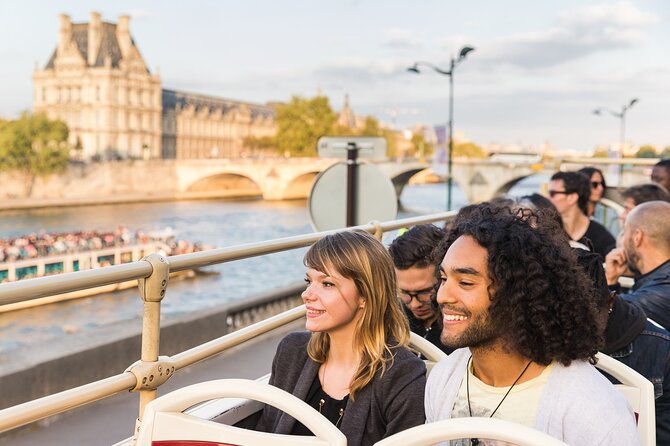
The bus is a time-saver, but it’s not a “walk zero” experience. The number of stops is limited, and some sights are not right next to the stops. You’ll likely do some walking in between, and if you stack multiple museums back-to-back, your feet will keep score.
Audio is also a key piece of the experience. The core idea is self-guided, so the recorded guidance matters. I’d plan for the possibility of occasional audio glitches on the bus (one trip may not provide audio), which can make it harder to match what you see with what you’re hearing.
Then there’s the mobile side: mobile ticket, app-based audio (Rewind), and the Big Bus app for live tracking. That’s convenient when it works, but it adds risk if your phone battery is low or the app fails to activate. I’d treat this like a normal museum day plan: charge your phone, keep your confirmation handy, and don’t wait until you’re at the curb to test audio.
Price and value: what you’re really paying for
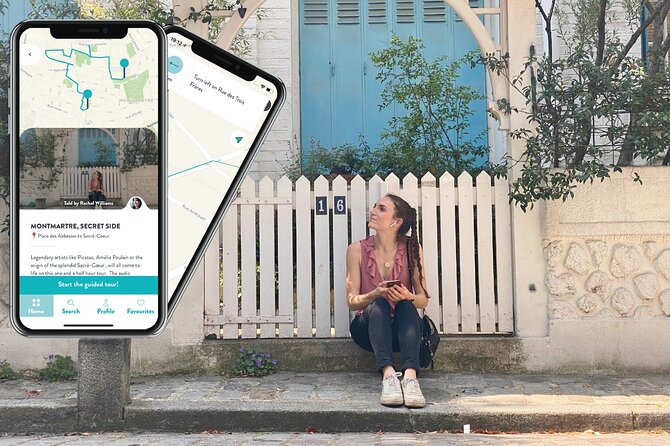
At $52 for the overall experience, you’re not paying just for bus seats. You’re paying for a bundle approach: bus access (24/48 hours), a self audio walking tour, a free map, Wi-Fi, and the Big Bus app with live tracking. If you add the Seine cruise, that’s another paid-feeling experience folded into the same day.
This can be good value if you’re arriving with limited time and want a fast overview with flexibility. It’s also cost-effective compared with doing several separate private tours, especially if you’re skipping taxis and using the bus as your backbone.
It may feel less like a bargain if you’re the type who only wants one or two areas and then wants deep entry tickets. The bus stops bring you to sights, but attraction tickets aren’t included, so you’ll still spend money once you pick what you want to enter.
Who should book this (and who should consider another plan)
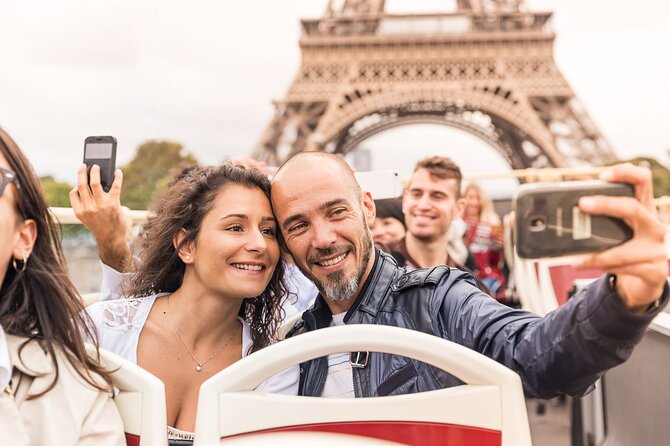
This works best for you if:
- you want flexibility over a single fixed guided tour
- you like using apps for self-guided context (Big Bus live tracking and Rewind audio)
- you want a quick overview of Paris highlights across multiple neighborhoods
It may be frustrating if:
- you strongly prefer live narration over recorded audio
- your phone tends to fail with ticket activation or app downloads
- you hate walking gaps between the bus stop and the final sight photo point
If you’re traveling as a couple or small group, the independence is ideal. You can pause, walk, and regroup without negotiating with a guide or a set itinerary.
Should you book the Big Bus + Rewind audio bundle?
I’d book it if you want a practical Paris overview that doesn’t lock you into one day’s timing. The best parts are the convenience of hopping on when you need a break and the way the route hits the big-name landmarks without you needing advanced planning.
I’d think twice if your plan depends heavily on perfect app performance. For safety, bring a charged phone and keep your confirmation ready, and aim to test audio early so you don’t lose the most valuable hours of your day.
If you do book, add the Seine cruise when you can. It’s the part that most often turns an efficient sightseeing day into a memory you’ll actually want to talk about.
FAQ
How long is the hop-on hop-off and audio experience?
The tour duration is listed as about 2 hours. With a 24- or 48-hour hop-on hop-off ticket, you should be able to pace the day around your schedule rather than a single fixed block.
What options are available for the bus pass?
You can choose either a 24-hour or 48-hour hop-on hop-off ticket, depending on the option you select.
Does the package include a Seine river cruise?
That depends on the package option. A river cruise is included only if you choose an option that adds it.
What does the self audio walking tour include?
You get one out of ten self audio-guided walking tours from the Rewind app, and it’s 1 hour long.
Is Wi-Fi and a map included?
Yes. The experience includes a free map of Paris and free Wi-Fi, plus access to the Big Bus app with live bus tracking.
Are attraction tickets included for the big sights?
No. Attraction tickets are not included, so you’ll need to purchase entry separately if you want to go inside.
Can I cancel for a full refund?
Yes. You can cancel for free up to 24 hours before the experience start time for a full refund. If you cancel within 24 hours, the amount paid is not refunded.