Basel can feel big until you see it from the right angle. This sightseeing bus tour uses an iPad audio guide so the city’s main landmarks start making sense fast. I like that the narration is tied to what you’re actually passing—so you’re not just looking at buildings, you’re getting the story behind them.
Two wins: the ride is comfortable, and you get extras that make the trip pleasant in almost any weather, including free WiFi and traditional Läckerli on board. The only real catch I’d plan for is that the timing between audio and the bus location isn’t perfect every time, and the built-in photo stops can be brief because the city bus has to keep moving.
In This Review
- Key highlights you should know
- Getting your bearings from Tinguely Brunnen to the Old Town core
- What I like about the narration style
- How the iPad audio guide ride works (and why it feels practical)
- A small timing note to plan around
- The 2-hour route: what you’ll see and what it means
- Stop 1: Tinguely Brunnen (starting point and tone-setter)
- Pass by: Markthalle Basel, St. Paul’s Church, and the synagogue
- University of Basel and the Bernoullianum
- The Fischmarkt fountain and Marktplatz (civic heart vibes)
- Kanton Basel-Stadt and the Middle Bridge
- Stop 11: Jakob’s Basler Leckerly Manufaktur (taste moment)
- St. Johanns-Tor and St. Johanns-Park (photo stop)
- Novartis Campus, older settlement area, and the shift to modern Basel
- Dreiländereck (photo stop 10 minutes) and the city’s big geography
- Stücki Park and Roche-era sights
- Museum Tinguely and the art-and-design thread
- Basel City Wall, Basel Paper Mill, and the craft of making
- Fine Arts Museum Basel and the Cathedral zone
- Stories you’ll hear: names, politics, and the human side of Basel
- A note on sensitive topics
- Stops you can use like a strategy (not just a ride)
- Comfort, WiFi, and the Läckerli detail
- About the shopping-style moments
- Price and value: is $30 worth it?
- Who should book this Basel bus tour
- Should you book the BaselCitytour sightseeing bus tour?
- FAQ
- How long is the Basel sightseeing bus tour?
- What does the tour cost?
- Where do I meet the bus?
- What’s included in the price?
- Are there opportunities to get off the bus?
- Is there an audio guide, and what languages are available?
- Is food provided besides the Läckerli?
- What should I bring?
- Can I cancel for a refund?
Key highlights you should know
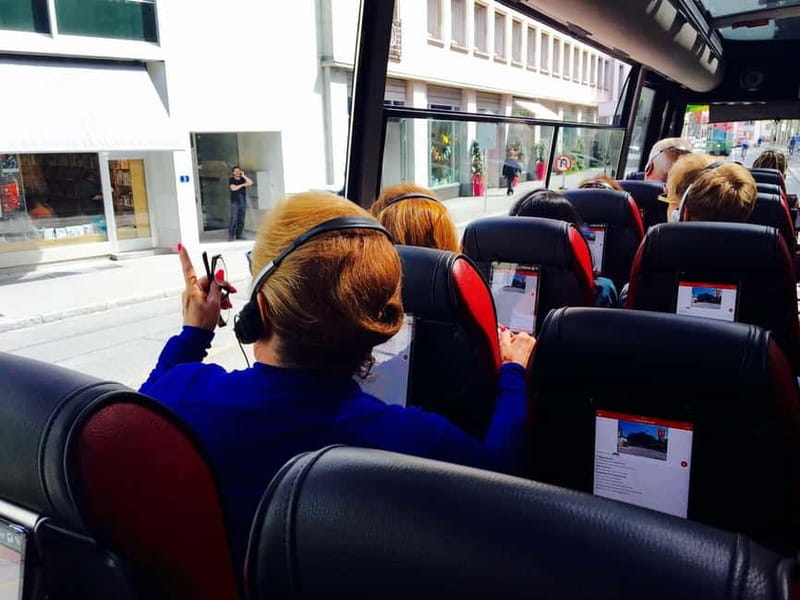
- iPad audio guide in 8+ languages, with a tablet-style guide that helps you follow along
- 12 boarding and alighting stops, so you can hop off where you want to linger
- Free onboard WiFi plus Läckerli, which turns a rainy day into a workable plan
- Photo stops timed into the route, including 7 minutes at St. Johanns-Park and 10 minutes at Dreiländereck
- Stories behind Basel’s skyline, from art and architecture to big names like Jean-Tinguely, C.G. Jung, and Lenin
Getting your bearings from Tinguely Brunnen to the Old Town core
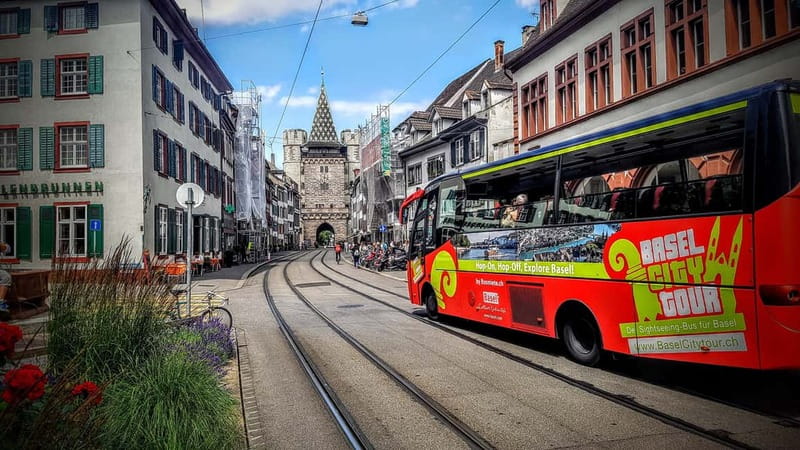
The tour starts opposite the Tinguely Fountain, in front of Stadtcasino, right where you’ll spot the bus in the parking zone. That’s a smart place to begin because it puts you close to the center while still letting you widen out into the city. If you’re arriving fresh and want the layout of Basel in your head, this format does the job quickly.
From the start, you’ll be oriented to Basel as a city of layers: old-town streets and gates on one side, and modern industry and culture on the other. You’ll hear about 2000 years of history while the bus rolls past major landmarks in and around the center—so it feels less like a lecture and more like a moving map.
What I like about the narration style
The audio guide covers art, architecture, economy, politics, and how Basel developed over time. The tour also uses multiple famous names to anchor the story: Christoph Merian, C.G. Jung, Hermann Hesse, Theodor Herzl, Anne Frank, and Jean-Tinguely are all part of the mix you’ll hear about. It’s a lot of material, but the bus route keeps it grounded in what you’re actually seeing.
How the iPad audio guide ride works (and why it feels practical)
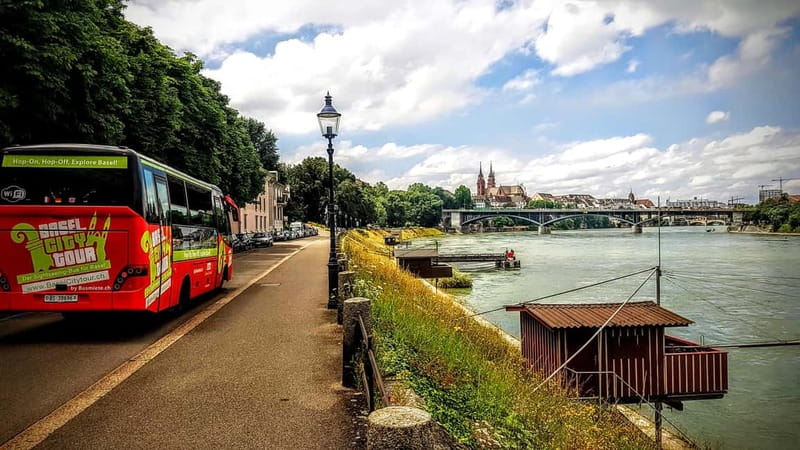
You’re not relying on your phone and weak cell signal for this one. The experience provides an iPad audio guide app (with the app download included), plus free onboard WiFi if you want to check anything while you ride. If you like to look up details while you travel, this makes it easier to keep moving without getting lost afterward.
The languages are clearly listed: Chinese, English, German, Italian, Japanese, Arabic, French, and Spanish. That’s useful even if you’re traveling with someone who doesn’t want to do translations, and it’s also a big plus when you want the narration to match your comfort level.
A small timing note to plan around
One thing to keep in mind: the audio doesn’t always line up perfectly with the bus’s exact position. It’s usually close enough to follow the theme, but if you’re the kind of person who wants pinpoint accuracy, treat it as a guide that you use alongside your window views. Also, the photo stops exist because the bus can’t stop freely everywhere in a busy city.
The 2-hour route: what you’ll see and what it means
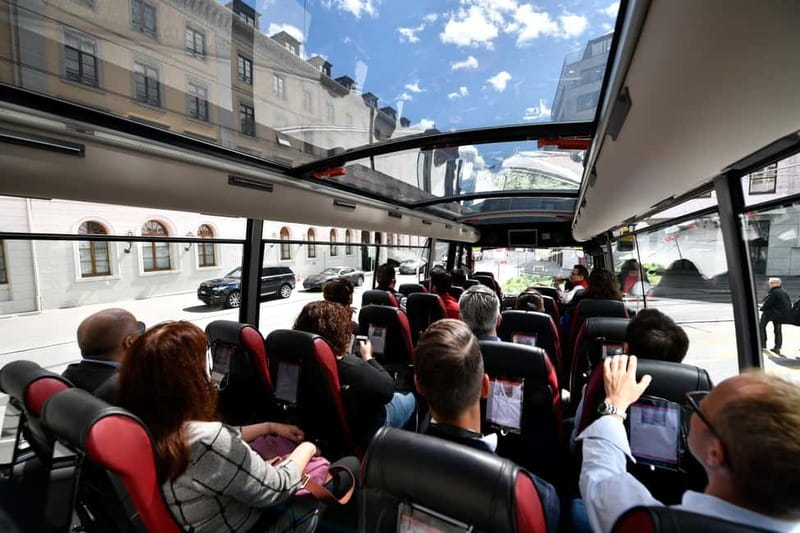
This isn’t a walking tour. You’ll be on a panorama bus with a route built around sights you can appreciate from the street and through the windows. The tour runs about 2 hours, and you’ll have multiple points where you can get off at the 12 boarding and alighting stops.
I’ll walk you through the route in plain terms—what you’ll likely notice, and what the narration helps you connect.
Stop 1: Tinguely Brunnen (starting point and tone-setter)
You begin at the Tinguely Fountain near Stadtcasino. It’s a nice way to start because Jean Tinguely represents one side of Basel: playful, modern art in a city that also cares deeply about design. Even if you know nothing about Basel, starting here gives you a cultural anchor right away.
Pass by: Markthalle Basel, St. Paul’s Church, and the synagogue
As the bus moves along, you’ll pass Markthalle Basel, St. Paul’s Church, and the Synagogue of Basel. This cluster matters because it shows Basel as a working city, not just a postcard. The market hall hints at daily life and local rhythms; the religious sites add depth to the city’s long timeline.
University of Basel and the Bernoullianum
Next come the University of Basel area and the Bernoullianum. These stops help explain why Basel is a city of learning as much as craft and trade. If you enjoy the brains-behind-the-city angle, you’ll like how the audio ties education to broader ideas and historical figures.
The Fischmarkt fountain and Marktplatz (civic heart vibes)
You’ll pass the Fischmarkt fountain and Marktplatz Basel, the kind of central area where Basel’s identity concentrates. This is where the audio shifts toward civic life: how policy, economy, and architecture shaped what you see today. It’s also the section where it starts to feel like an introduction you could build on with a second day walking.
Kanton Basel-Stadt and the Middle Bridge
The route brings you past Kanton Basel-Stadt and the Middle Bridge. Bridges in Basel are not just crossings; they’re part of the city’s structure between neighborhoods and along the river corridor. If you’re trying to understand how Basel connects itself, this is where the geography starts to click.
Stop 11: Jakob’s Basler Leckerly Manufaktur (taste moment)
Then you hit a food-focused break at Jakob’s Basler Leckerly Manufaktur for a food tasting. Even if you’re not a sweet person, this is a helpful pause because you’re not stuck with only window viewing. Läckerli, the traditional Basler hard spice biscuit, also shows up as a free treat on board the bus, which is a cozy little detail for the ride.
St. Johanns-Tor and St. Johanns-Park (photo stop)
You’ll pass St. Johanns-Tor, then reach St. Johanns-Park for a photo stop (7 minutes). This is one of the moments where you can step off—or at least position yourself—for a clearer view. If the weather is calm, this stop gives you a better chance at a memorable shot than quick street-level passing.
Novartis Campus, older settlement area, and the shift to modern Basel
The tour continues with Novartis Campus and then Keltische Siedlung bei der alten Gasfabrik. That pairing is telling. Basel’s story doesn’t move in a straight line from old to new; it layers. The narration uses these changes to explain economic development and why major modern institutions took root here.
Dreiländereck (photo stop 10 minutes) and the city’s big geography
At Dreiländereck, you get another photo stop (10 minutes). The name points to the special geography of Basel—this is where the idea of place expands beyond one country in people’s minds. Even if you only take a few photos, the audio helps you understand why this point matters.
Stücki Park and Roche-era sights
You pass Stücki Park, then head toward the Roche side of the city, including Hoffmann-La Roche and Roche Tower in the overall highlights. These spots are part of Basel’s modern economy. If you want to understand why architecture and public space look the way they do, the narration’s economy angle is useful here.
Museum Tinguely and the art-and-design thread
You’ll pass Museum Tinguely, tying the tour back to art you saw at the start. This helps the whole experience feel less random. You’re basically getting a single theme—Basel’s identity through art and design—running in the background while you travel to older historic sites too.
Basel City Wall, Basel Paper Mill, and the craft of making
Next are Basel City Wall, Basel Paper Mill, and Schöneck Brunnen. These are the stops that make Basel feel tangible. Paper, walls, and fountains aren’t just pretty; they signal how cities protected themselves and built industries. The audio’s architecture and economy focus makes these feel more meaningful than a quick glance.
Fine Arts Museum Basel and the Cathedral zone
The route ends with Fine Arts Museum Basel and Basel Cathedral in the highlighted experience, plus nearby landmarks like Elisabethenkirche as part of what the tour covers. This is where you get the “classic Basel” feeling—monuments that anchor the skyline and show the city’s long artistic and religious traditions.
Stories you’ll hear: names, politics, and the human side of Basel
One of the strongest parts of this tour is that it doesn’t only talk about buildings. The narration includes people and themes that stretch across centuries. You’ll hear about Lenin, Theodor Herzl, C.G. Jung, Johann Peter Hebel, Wolfgang Goethe, and Hermann Hesse, plus Basler names like Felix Sarasin and Wettstein.
The art and architecture layer is also explicit. Jean-Tinguely is a clear example, but so is the way the narration links museums and major institutions to what Basel values. If you’re the type who likes your travel with context, this tour gives you enough names and concepts to make your next day of exploring more focused.
A note on sensitive topics
The audio touches on complex political subjects, including a reference related to colonization of Palestine and current humanitarian issues. The presentation can feel more like an overview than a deep treatment, so if that topic matters to you, plan to look for additional, more detailed sources on your own during the rest of your trip.
Stops you can use like a strategy (not just a ride)
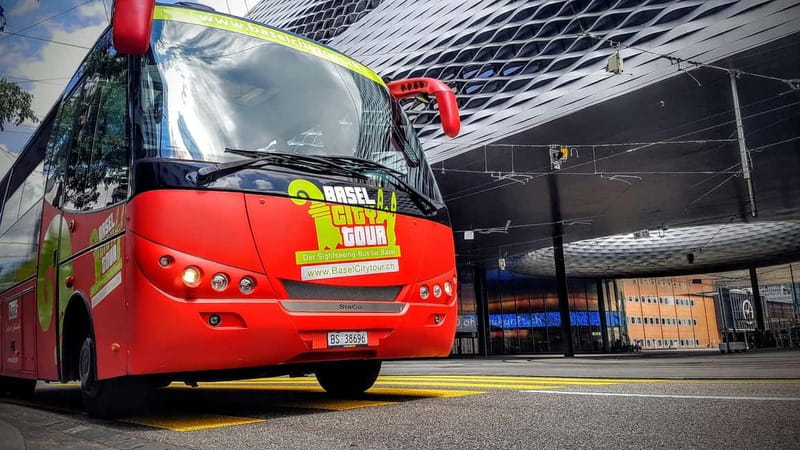
The tour has 12 stops for boarding and alighting. That matters because you’re not locked into a single nonstop viewing loop. If you’re curious about one museum stop, you can plan to get off and then rejoin later, depending on timing and what you want to prioritize.
The two scheduled photo breaks—7 minutes at St. Johanns-Park and 10 minutes at Dreiländereck—are useful for getting shots that don’t require sprinting. Just remember: a city bus in traffic can’t behave like a private van. Keep your expectations practical and you’ll get the most out of the timing.
Comfort, WiFi, and the Läckerli detail
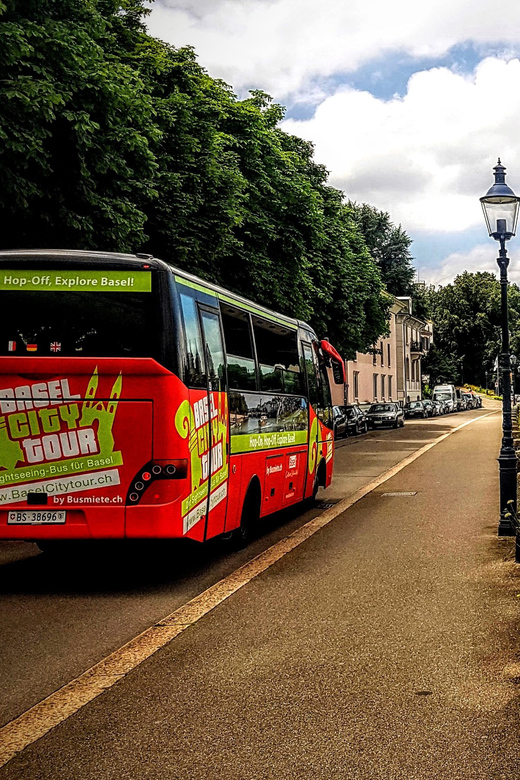
The tour provides free WiFi on board and a traditional Läckerli sweet. That little edible detail is more than a snack. It’s a gentle “Basel check-in” that makes the experience feel local, especially if you’re doing this right after arrival.
There’s also a food-tasting stop at Jakob’s Basler Leckerly Manufaktur. The free onboard Läckerli is included as part of the ride experience, while the tasting stop is a specific point where you’ll encounter more of that local biscuit culture.
About the shopping-style moments
One review concern centered on promotions tied to cake products, including a mention of Nestlé. If you strongly dislike upselling—even mild in-taste moments—treat those segments as brief and focus your attention on the actual landmarks and narration.
Price and value: is $30 worth it?
At about $30 per person for roughly 2 hours, you’re paying for convenience plus context. You’re getting an iPad audio guide experience, free WiFi, and included Läckerli. More importantly, you’re getting a guided orientation route that connects a lot of Basel landmarks in one go.
If you’re short on time, this is a strong value because it compresses many different parts of Basel—historic gates and bridges, major museums, and modern industry—into one efficient plan. If you already know Basel well or you love long museum visits, you might find a single museum-focused day more satisfying. But for first-time orientation, the price feels reasonable.
Who should book this Basel bus tour
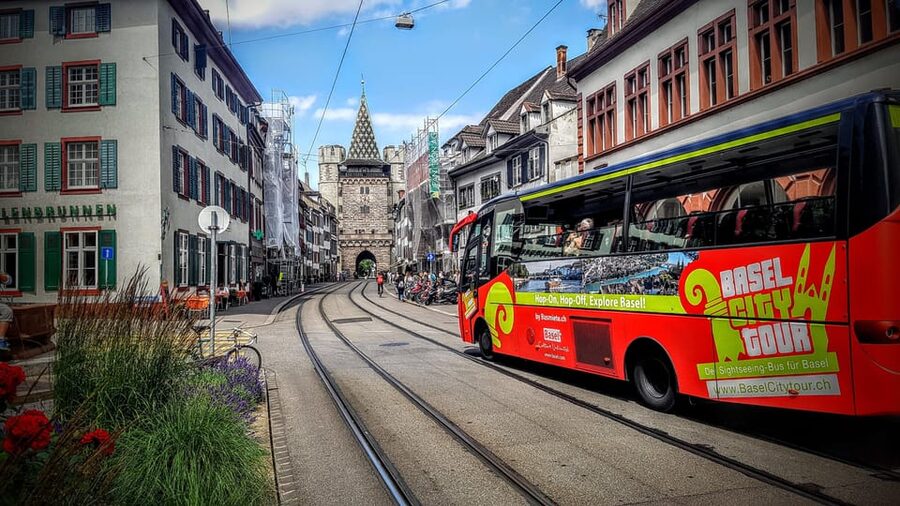
This tour fits best if you:
- want a fast, structured overview of Basel’s center and beyond
- prefer a narrated route instead of map-only exploring
- like art and architecture stories but don’t want to research each stop in advance
- are traveling in mixed weather and want something that stays comfortable
It might be less ideal if you need very exact audio-to-location timing, or if you expect long, deep discussions of sensitive political history. In that case, use the tour as your starting point, then add more targeted reading or museum time.
Should you book the BaselCitytour sightseeing bus tour?
Yes—if you want a practical introduction to Basel with an audio guide that links what you see to why it matters. The combination of landmarks, multi-language narration via an iPad app, free WiFi, and the Läckerli touch makes it an easy first-day or rainy-day plan.
If you care a lot about precision or you’re sensitive to how complex topics are summarized, just go in with that mindset: take what helps you, and plan extra depth elsewhere in your trip.
FAQ
How long is the Basel sightseeing bus tour?
The tour duration is 2 hours. Starting times vary, so you’ll want to check availability for the day you plan to go.
What does the tour cost?
The price is $30 per person.
Where do I meet the bus?
Go to the bus stop opposite the Tinguely Fountain, in front of Stadtcasino, in the bus parking zone.
What’s included in the price?
The included items are a panorama bus ride around the center of Basel, an iPad with the audio guide app (plus a free download), free WiFi on board, a traditional hard spice biscuit (Läckerli), and 12 stops for boarding and alighting.
Are there opportunities to get off the bus?
Yes. The tour includes 12 bus stops where you can board or alight, and there are also photo stops (including 7 minutes at St. Johanns-Park and 10 minutes at Dreiländereck).
Is there an audio guide, and what languages are available?
Yes. The audio guide is included, and it’s available in Chinese, English, German, Italian, Japanese, Arabic, French, and Spanish.
Is food provided besides the Läckerli?
You’ll have a food tasting stop at Jakob’s Basler Leckerly Manufaktur during the route, and you’ll also receive Läckerli on board.
What should I bring?
Bring weather-appropriate clothing and a charged smartphone.
Can I cancel for a refund?
Yes. Free cancellation is available up to 24 hours in advance for a full refund.