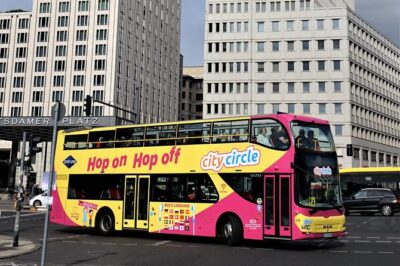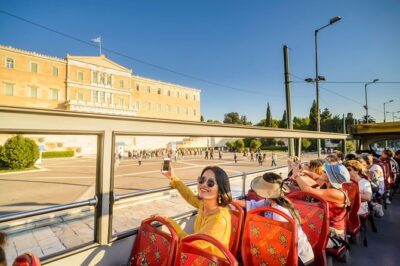
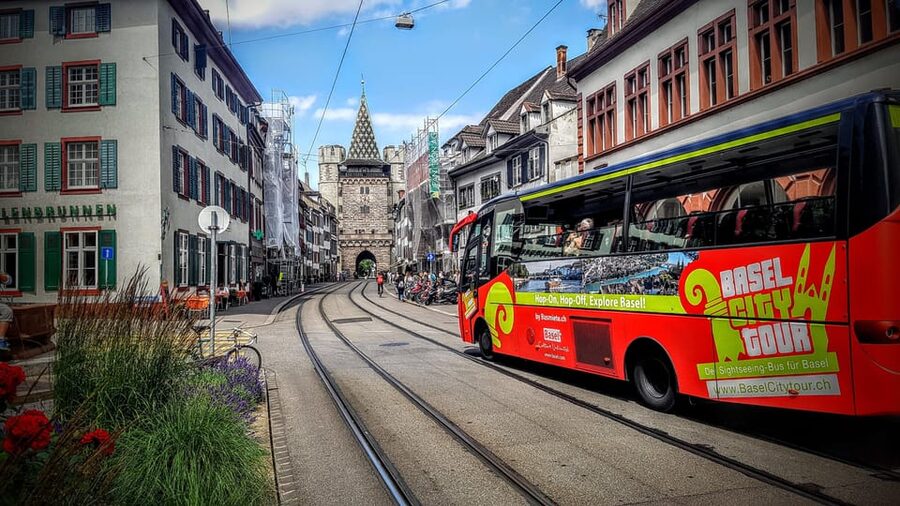
Basel rolls by in two calm hours. This sightseeing bus tour gives you a panorama ride plus an iPad audio guide that stitches together art, politics, and big-name people as you pass through the city center and beyond. You’ll see major landmarks on one loop, from Basel Cathedral and Town Hall to the Tinguely areas, with built-in stories covering roughly 2000 years of Basel.
I especially like the way the narration matches what you’re seeing from the bus, and I like that you get 12 boarding and alighting stops—so the tour works as orientation, not a one-shot ride. The tradeoff? The experience depends on the iPad/headset working well; if your device glitches or the audio falls out of sync, you’ll lose some of the context that makes the tour feel smart.
In This Review
- Key takeaways before you ride
- Why this panorama bus tour makes sense for your first Basel day
- Meeting point and how to avoid the start-of-tour confusion
- The iPad audio guide: multi-language, timed to sights, and built for pictures
- Getting your bearings in Basel’s old center: squares, churches, and famous façades
- Town Hall, cantonal government, and the Middle Bridge view
- Food stop at Jakob’s Basler Leckerly Manufaktur: läckerli as a real Basel taste
- St. Johanns-Tor and St. Johanns-Park: where you actually get time to look
- Dreiländereck and the modern edge: parks, venues, and the long view
- Roche Tower, Novartis Campus, and how the narration links industry to identity
- Museum stops: Tinguely, fine art, and the Cathedral finale
- Basel’s river moments: St. Alban-Fähre and the feeling of moving through layers
- Photo stops and boarding flexibility: make this tour work for your pace
- Comfort, timing, and what to bring on a 2-hour ride
- Who should book this BaselCitytour bus ride
- Should you book this Basel sightseeing bus with iPad audio?
- FAQ
- How long is the Basel sightseeing bus tour?
- What is the price for the tour?
- Where do I meet the tour?
- Is an audio guide included?
- What languages are available for the audio guide?
- Is Wi-Fi provided on board?
- Is food included?
Key takeaways before you ride
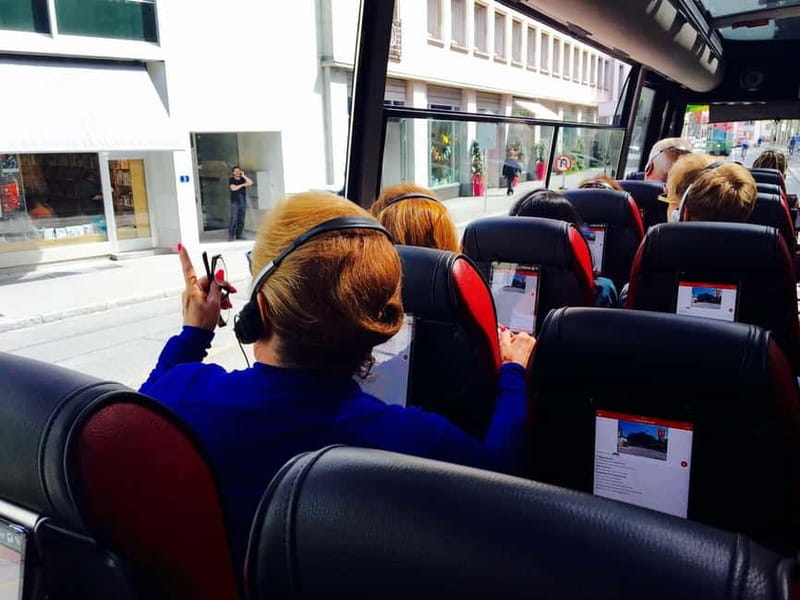
- iPad audio guide with video-style visuals and multiple languages, so you can follow even if you’re not fluent in German.
- 12 stops for on and off access across the center, which helps if you want to hop out near a museum or viewpoint.
- A tight 2-hour overview that hits famous Basel sites like Basel Cathedral, Fine Arts Museum Basel, and the Tinguely Museum area.
- Free Wi‑Fi on board plus a traditional hard spice biscuit (läckerli) as part of the ride.
- Longer photo moments at spots like St. Johanns-Park and Dreiländereck, when you actually get time to look.
- Stories that connect old Basel to modern Basel, including names tied to science, philosophy, and the city’s business world.
Why this panorama bus tour makes sense for your first Basel day
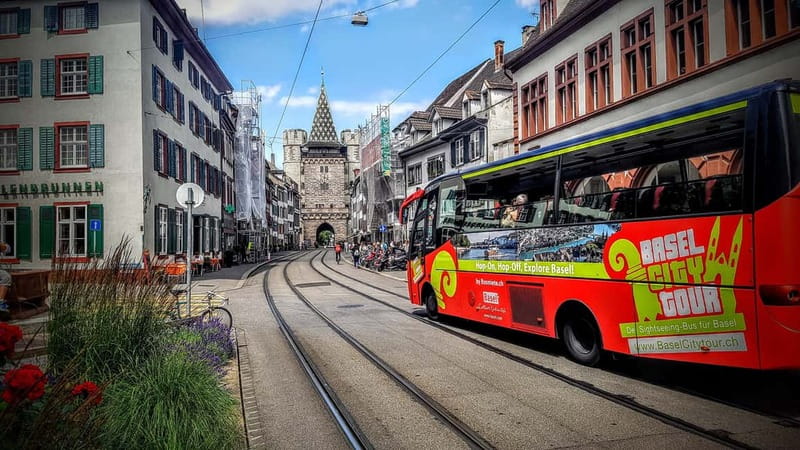
Basel is compact, but it still has enough sights to scatter your focus if you walk everywhere. This tour is built for getting your bearings fast: you sit back, move at a steady pace, and let the guide point out what matters.
What I like about the format is that it’s not trying to be a museum substitute. You’re getting a street-level overview of places you’ll likely want to revisit later—churches, squares, bridges, and the city’s art scene—without spending a full day crisscrossing on foot.
At $25 per person for 2 hours, the value is strongest if you’re new to Basel or you’re short on time. You’re paying for transportation plus the iPad audio experience, and you’re also getting free Wi‑Fi and a small snack, so it feels like you’re using the whole package rather than just buying a bus ride.
Meeting point and how to avoid the start-of-tour confusion
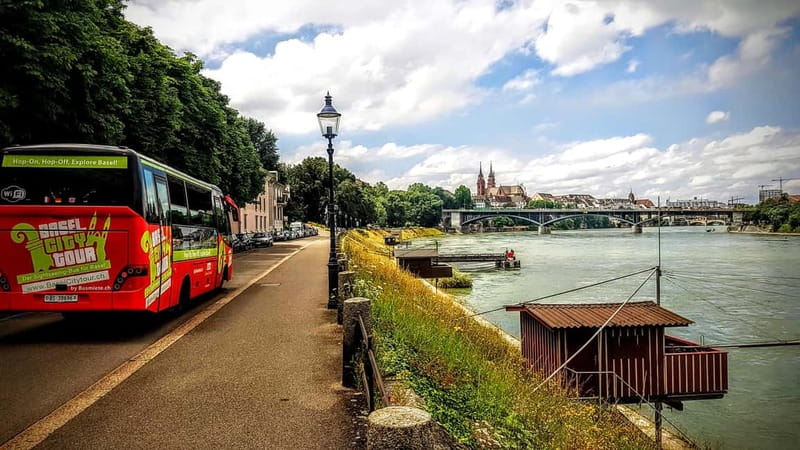
You meet at the bus stop at Steinenberg 4, opposite the Tinguely Fountain, in front of Stadtcasino, in the bus parking zone. That description is specific enough to work if you’re looking carefully, but it’s worth arriving a few minutes early so you’re not hunting while the first narration starts.
Once you’re aboard, you’ll be using an iPad with an audio guide app. You’ll want a charged smartphone too, not because you must use it for the tour, but because it’s always smart in a city where you may want maps, backups, or messaging if plans change.
And if you’re sensitive to sound quality, plan on using the included audio with care. A couple of common issues can pop up on device-based tours—like a headset not working correctly on one side—so check that right away once you sit down.
The iPad audio guide: multi-language, timed to sights, and built for pictures
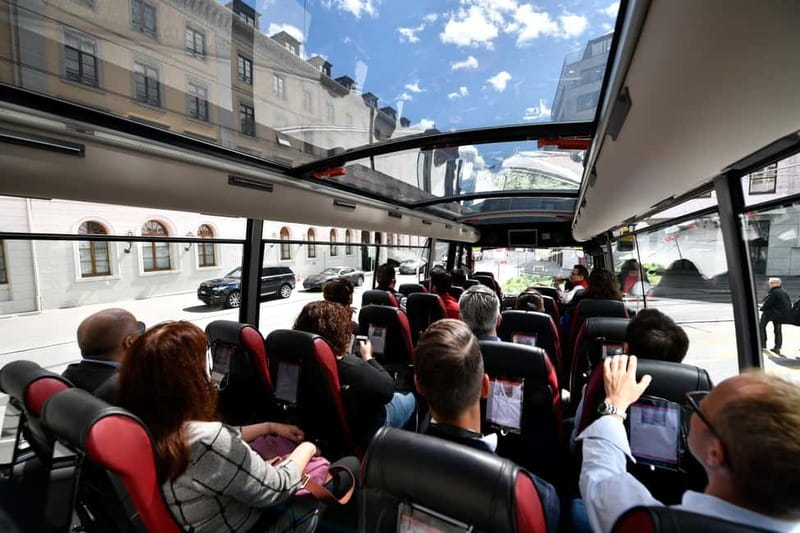
This is one of those tours where the audio is the main event. The guide comes through in your chosen language—Chinese, English, German, Italian, Japanese, Arabic, French, and Spanish—and it’s delivered via the iPad app rather than only a traditional handheld speaker setup.
What makes it useful is the structure: you’re shown visuals and you get narration tied to what you’re passing. In a city like Basel, where you can easily miss small details from the street, that built-in matching helps you connect the dots.
One practical note: the audio can be slightly off in timing if everything doesn’t line up perfectly. So if you notice the narration starts a moment early or late, don’t panic—just keep listening and look toward the next landmark the moment the story shifts.
Getting your bearings in Basel’s old center: squares, churches, and famous façades
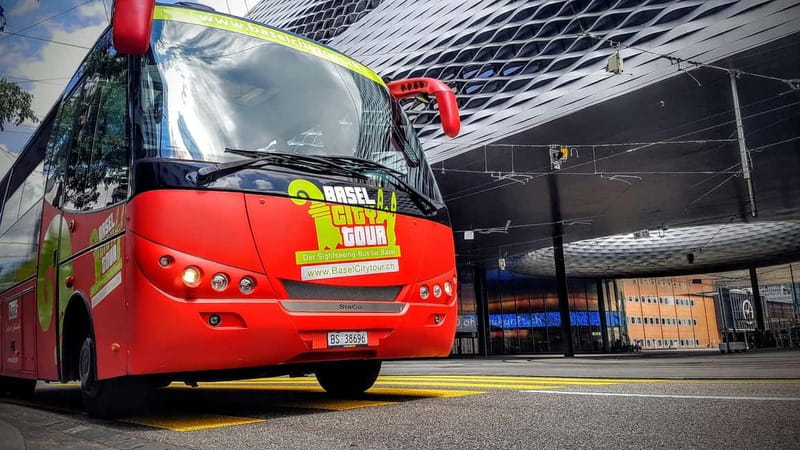
The tour begins near the Tinguely Fountain, which is a good signal that this won’t be only medieval stone and church towers. As you roll onward, you pass through the core where Basel’s older identity shows up in layers.
Early highlights include the Markthalle Basel area, St. Paul’s Church, and the Synagogue of Basel. You also go by the University of Basel and the Bernoullianum, which gives the tour a “Basel thinks” feeling—science and scholarship show up right alongside religious and civic architecture.
Then you hit the market-and-square vibe: the Fischmarkt fountain and Marktplatz Basel are the kind of places where Basel’s day-to-day life would feel very normal, even if the buildings around them are centuries old.
Town Hall, cantonal government, and the Middle Bridge view
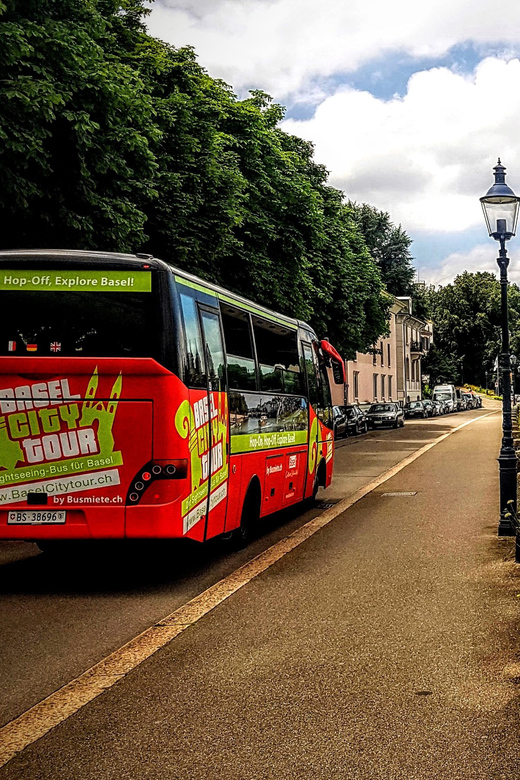
When the bus crosses through the civic core—passing Kanton Basel-Stadt and the Town Hall area—you start seeing Basel as a working political center, not a postcard. The narration leans into politics, economy, and how the city developed, so these stops feel like a framework for the rest of what you’re seeing.
The Middle Bridge is a key moment in any Basel tour because it changes your angle on the city. Even if you don’t get off the bus here, it helps your brain map where you are: this is where the old center meets the river rhythm.
This is also where the stories tend to connect symbols and names you’ll hear elsewhere on the tour. You’ll pick up references to Basel-linked figures and themes—like Wettstein and even the Basilisk—which gives the city a personality rather than just a list of sights.
Food stop at Jakob’s Basler Leckerly Manufaktur: läckerli as a real Basel taste
You’ll get a built-in break for a food tasting at Jakob’s Basler Leckerly Manufaktur. This matters more than it sounds because Basel has a reputation for crafts and traditions, and the läckerli is one of the simplest ways to taste that identity.
On paper, the tour includes free Läckerli. I’d treat that as a “check when you board” moment. If you don’t receive it where you expect, ask early rather than waiting—because this is the one part of the experience you can’t recreate from memory if you end up missing it.
If you enjoy food souvenirs, this stop also sets you up for an optional extra purchase later. Even if you only take what’s included, it gives you an edible benchmark for what Baselland sweet culture tastes like.
St. Johanns-Tor and St. Johanns-Park: where you actually get time to look
One of the best parts of the route is that it isn’t only passing-by views. At St. Johanns-Park, you get a photo stop with about 7 minutes. That’s enough time to step back from the curb, find a good angle, and take a few photos without feeling rushed.
The tour also passes St. Johanns-Tor, which helps connect the center to older defensive or boundary concepts. Even without getting off, the narration makes this area feel like a transition between old Basel’s structure and newer city growth.
This stretch is also a good reminder: Basel isn’t only famous for cathedrals and museums. It also has working neighborhoods and streets where history sits next to everyday life.
Dreiländereck and the modern edge: parks, venues, and the long view
You’ll make a photo stop at Dreiländereck with about 10 minutes set aside. It’s one of the moments where the bus gives you a small window to step outside the constant motion, refocus, and take in how Basel meets different directions.
From there, the tour leans more modern. You pass areas like Stücki Park, and you’ll go by sites connected to industry and big brands, including Thomy Fabrik and stops tied to major business campuses.
You’ll also see an urban “event” layer in Tattoo Basel and the Exhibition Center Basel area. The narration isn’t just scenic; it’s tying Basel’s economy and development to places where the city gathers.
If you like architecture and planning, this portion is worth paying attention to because the stories connect names in the business world—like Novartis and Fritz Hoffmann-La Roche—back to the locations you’re passing.
Roche Tower, Novartis Campus, and how the narration links industry to identity
Two big tech-and-health-care anchors show up: Novartis Campus and the area around Hoffmann-La Roche. On a bus tour, these sites can sometimes feel generic from the window.
Here, the iPad audio helps because you’re not just seeing buildings; you’re hearing how Basel’s development ties into modern institutions. You also hear about major architects and creators—like Herzog & De Meuron—which makes it easier to look past glass and see design decisions.
This portion of the ride is especially helpful if you want a balanced understanding of Basel: the city isn’t stuck in the past, and the audio makes sure you don’t miss that.
Museum stops: Tinguely, fine art, and the Cathedral finale
The tour includes a stop near Museum Tinguely, plus the bus passes sites tied to Basel’s larger art scene, including Fine Arts Museum Basel.
Tinguely matters because he represents Basel’s experimental streak. The narration connects Jean-Tinguely to the experience, so when you see the museum area, it feels like a specific story point rather than just another building.
Later, you pass major cultural anchors like Schöneck Brunnen and the Fine Arts Museum Basel area. Then you reach the spiritual and historic centerpiece: Basel Cathedral, with Elisabethenkirche also mentioned along the way.
If you care about architecture and symbolism, this arc works well. The tour builds from civic and market life, then shifts to art and museum culture, then lands at the big religious landmarks where Basel’s older identity feels most concentrated.
Basel’s river moments: St. Alban-Fähre and the feeling of moving through layers
Basel lives with the river, and the tour reflects that. It passes the St. Alban-Fähre, a river connection that gives you a sense of how movement and daily life link up with older city structure.
Paired with the Middle Bridge earlier, these river moments help you understand why Basel has such a strong “both sides” vibe. Even if you only stay on the bus, you’ll finish with a mental map of where the old center sits relative to the river.
I also like how these stops support the audio’s broader themes. The narration references history and development across centuries, so the river becomes more than a view—it becomes a timeline you can feel.
Photo stops and boarding flexibility: make this tour work for your pace
A big advantage here is the 12 stops for boarding and alighting. That means you can treat the bus as a loop you dip into, rather than a strict schedule you endure.
Photo stops like St. Johanns-Park and Dreiländereck are especially helpful if you want to capture Basel without spending time figuring out where to park or which street to walk. If you’re traveling with someone who wants breaks, you’ll also appreciate the way these pauses break up the ride.
Just keep in mind you still need to be ready when the bus moves on. Bring patience for city traffic and the fact that a bus can’t stop forever in a busy center.
Comfort, timing, and what to bring on a 2-hour ride
This is a covered bus, and the tour runs for 2 hours. If the weather is warm, you might find the bus still feels a bit warm depending on ventilation, and the ride can feel longer if you’re dressed for cool indoor life.
Bring weather-appropriate clothing, and bring a charged smartphone as a backup. If you’re taking photos, keep an eye on battery life because you’ll likely want pictures at photo stops.
On the equipment side, check your audio quickly. I’d rather spend 30 seconds confirming your headset is working than miss the main narration because a side is quiet or the iPad isn’t responsive.
Who should book this BaselCitytour bus ride
Book it if you want:
- A fast overview of Basel’s center without committing to a long walk
- An audio guide that touches art, architecture, economy, and politics
- A tour that includes museum-area stops like Tinguely and art-focused highlights
- A realistic starting point for planning the rest of your trip
You might choose something else if you:
- Want only one type of attraction, like strictly churches or strictly museums
- Dislike tours where the narration can include serious or political topics. The audio can reference heavy historical and modern issues, and if that format bothers you, keep your expectations aligned.
Should you book this Basel sightseeing bus with iPad audio?
If you’re arriving in Basel and want orientation without guesswork, I’d say yes—this tour is a strong first move. The iPad audio guide does the heavy lifting, and the ability to hop off at 12 stops turns the 2 hours into more than a quick spin around town.
At $25, the value is best when you’ll actually use the audio and take advantage of the stops. Go in ready to check your headset and follow the visuals on the iPad, and you’ll come away with a Basel map in your head—and a clear list of what you want to see again up close.
If you’re short on time, bad weather is a factor, or you just don’t want to decide where to start, this is a practical way to get Basel’s big story told in one ride.
FAQ
How long is the Basel sightseeing bus tour?
The tour lasts 2 hours.
What is the price for the tour?
The price is $25 per person.
Where do I meet the tour?
Meet at the bus stop at Steinenberg 4, opposite the Tinguely Fountain, in front of Stadtcasino in the bus parking zone.
Is an audio guide included?
Yes. You use an iPad with an audio guide app, and you can download the audio guide app for free.
What languages are available for the audio guide?
The audio guide is available in Chinese, English, German, Italian, Japanese, Arabic, French, and Spanish.
Is Wi-Fi provided on board?
Yes, there is free Wi‑Fi on board.
Is food included?
Yes, you get free Läckerli, a traditional Basel hard spice biscuit.